Monthly Archives: February 2019

2019 Trip 2: Arizona: Feb. 16-17

Lou and Joyce’s house in Flagstaff

Phoenix Feb. 17

Flagstaff Arizona is a town of 70,000 people in northern Arizona, a jumping off place for tourists to the Grand Canyon. It is also home to Northern Arizona University, Lowell Observatory, and some companies manufacturing plants like W.L. Gore and Nestle Purina. Most importantly for us, it is where Chris’ brother Lou and his wife Joyce have their future retirement home.

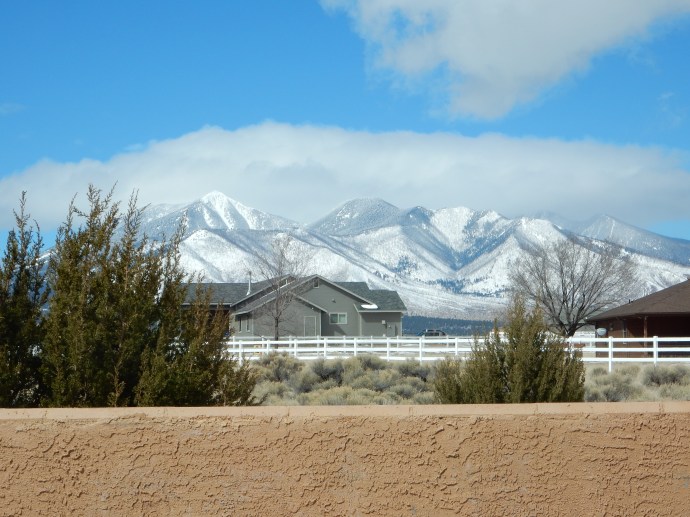
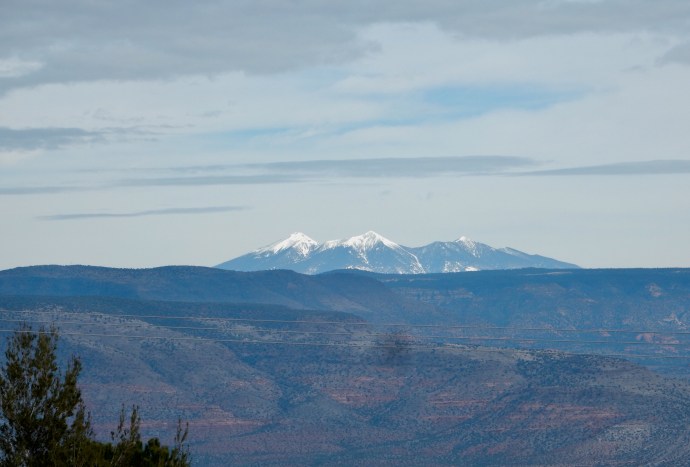
A view of San Francisco Peaks, Flagstaff

When here, we take life easy and throw in a few visits to local attractions. We try some new and some familar restaurants and usually go for a few hikes. This trip was less about hiking and more about relaxation. Lou and Joyce have a home in view of the San Francisco Peaks which include Humphreys Peak, the tallest in Arizona at 12,637 feet. It is a pleasure to look out the windows at differing times of the day and during varying seasons of the year.

San Francisco Peaks from Lou and Joyce’s house

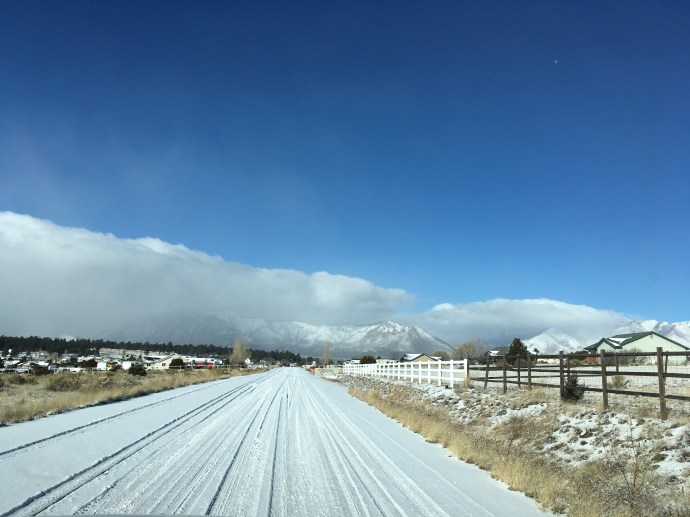
The weather in Flagstaff has both cold and snow (after all, it does have a ski peak and is at 7,000 feet in elevation). This weekend was cool with snow showers so the pictures here show nice contrast between the mountains and blue skies. What we don’t show is the 6-9 inches forecast for Sunday afternoon and Monday night after we will have returned to Phoenix.

After returning to Phoenix, we chose to visit the Arizona Museum of Natural History. The choice was not difficult; many museums are closed on Sundays and those which would normally be open on Monday are closed due to Presidents Day. Tuesday will have to be our day to visit other museums. The Arizona Museum of Natural History is in Mesa AZ, a town of 440,000 people but yet a suburb of Phoenix (a town of 1,5000,000 people and the fifth largest in the U.S.).

The Arizona Museum of Natural History is about 74,000 s.f.of space located in the old Mesa City Hall with additonal expansions. We would summarize the place (unfairly probably) as rocks and dinosaurs. Yes, there are exhibits on Native Americans, and some other topics. If we knew before what we know now, we would have passed it by. It strikes us a place for parents and grandparents to take their kids where they can quickly scan important topics and leave without learning much.

Leaving Flagstaff, heading for Phoenix

Ed and Chris. Phoenix Feb. 17

Categories: road trip, travel | Tags: , | Leave a comment

2019 Trip 2: Arizona: Feb. 14-15

At the Museum of Northern Arizona

Flagstaff AZ. February 15

We left Prescott Thursday morning, driving to Flagstaff in a steady rainstorm. Unusual for this section of Arizona, the rain produced a flash flood warning for a wide swath of northern Arizona. Creek beds that are normally dry and rocky were full of running water. Not a great day for exploring outdoors so we stopped at the Phippen Museum showcasing art and heritage of western art.

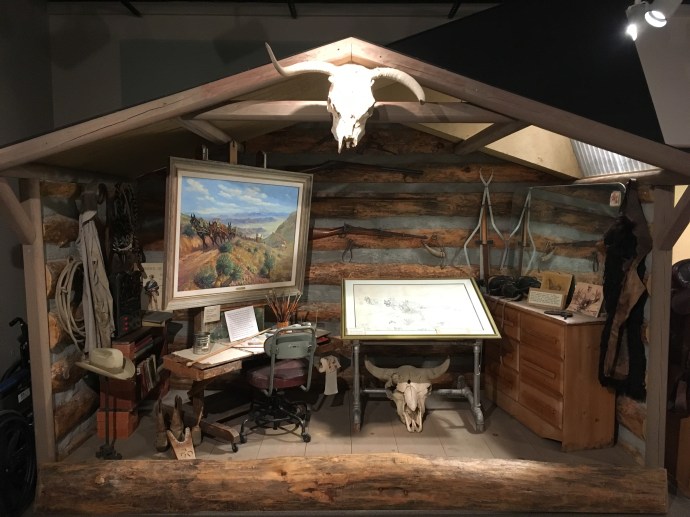
Studio of George Phippen

The Phippen Museum was founded by George Phippen, one of three artists who founded the Cowboy Artists of America association. Phippen also drew calendars for Brown and Bigelow, once upon a time a major calendar producer based in St. Paul, MN. His children kept up the sculpting tradition with foundries located in the Prescott area. On display were sculptures by Chris Navarro, a former bull rider; and sculptures by Solon Borglum, a well-known early 20th century sculptor of western works and monumental works included at locations like Vicksburg National Military Park.

One small section mentioned Tom Mix, a famous movie actor of the early 1900s. He was a star of silent films, making close to 300 movies. More than half of them were Westerns. Mix moved to Prescott, which is why the gallery has a section about him.

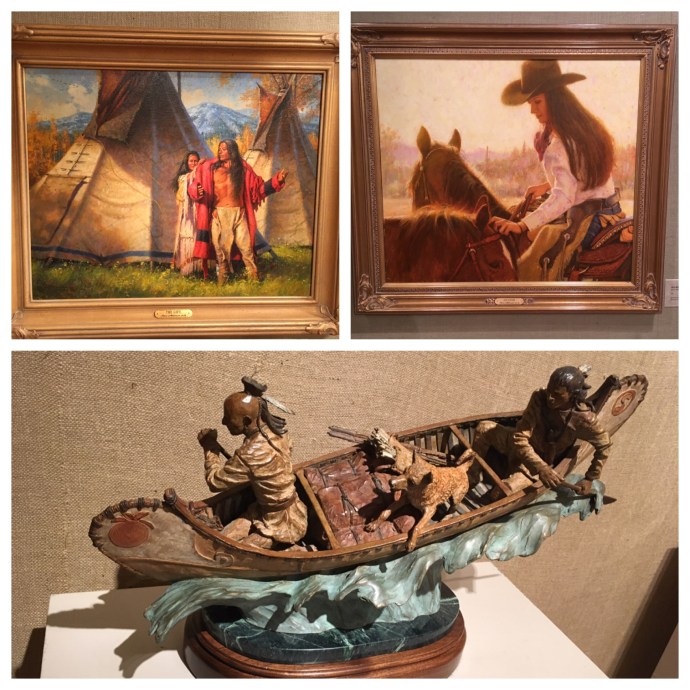
Sample work from local artists at Phippen Museum in Prescott

The exhibit the three of us enjoyed the most, however, was a display of paintings and sculptures by local artists. The variety of works were more inspiring and colorful, factors that appeal to my basic artistic sense.

Our arrival in Flagstaff occurred with more rain and temperatures in the mid-thirties. Snow was on the ground in high elevations and sun-protected locations. Fortunately, the temperature never reached the freezing mark so icy conditions did not prevail. Winds were strong and stayed that way through the night, along with continued rain.

Native Peoples of the Colorado Plateau exhibit

Friday morning though was clear and cold and Chris, Joyce, and I ventured out to the Museum of Northern Arizona. The Museum has recently renovated their 1980 exhibit on “Native Peoples of the Colorado Plateau”. The renovation was 10 years in the making and the museum collaborated extensively with members of each of the tribal communities. The main goal of the tribal communities was to explicitly state “We are still here”; not a cold rendition of old history.

The exhibit showcases each community, where they live, their history, current members, arts and cultural activities, and a message from at least one member of each community. We thought it was well done and we spent most of our visit in this gallery. A visitor begins by touring a gallery discussing the geology of the Colorado Plateau; since geology has such a substantial impact on how life has been and is being formed here.

Pottery display at Museum of Northern Arizona

Other galleries cover traditional exhibits of pottery and jewelry. A new exhibit showcases art of contemporary Native American artists. The exhibit has a neat twist; artists used skateboards as their canvas. Skateboarding is not the focus, just a different type of canvas to be used which grabs ones attention to its uniqueness and yet uniform size.

One specific artist painting on skateboards

The museum is 90 years old and portrays a timeline of the development of the museum along with outside influences. Chris found this section quite interesting. After the museum we picked up Lou and had lunch at the Galaxy Diner where malts and shakes were the focus but not the only foods we enjoyed for lunch.

Ed and Chris. Feb. 15

Categories: road trip, travel | Tags: , , , , | Leave a comment

2019 Trip 2: Arizona: Feb. 13

The Verde Canyon Railroad crossing a trestle along the 20 mile trip our to Perksinville

Prescott, AZ. February 13

Mingus Mountain Road is a designated scenic highway and today’s journey took us on the road for times two and three on this trip. The road goes through canyons and wooded hillsides of the Prescott National Forest on a twisty road with switchbacks and ends up in Jerome. Views are of the San Francisco Peaks, Mogollan Rim, and red sandstone cliffs. We were on our way to Clarkdale, AZ, home to the Verde Canyon Railroad.

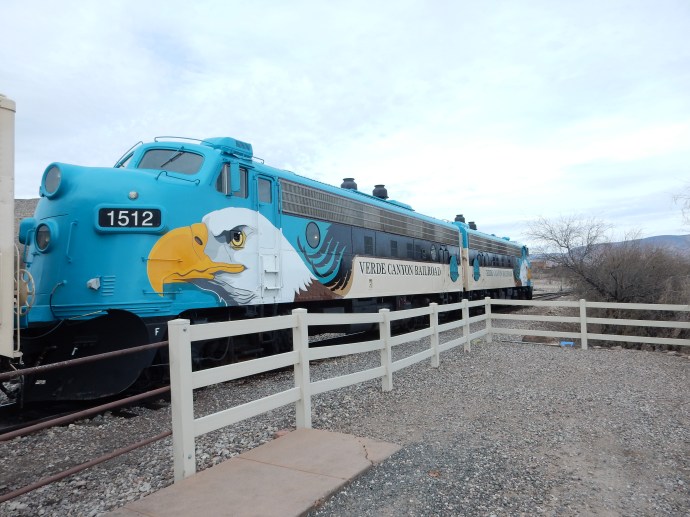
Riding the rails was our primary activity for the day. The Verde Canyon railroad takes us from Clarsdale, home to a major cement producing factory, through the Verde River valley, to Perkinsville ghost ranch. The rail line transports finished cement and raw materials to the main BNSF line in the morning and transports people on excursion journeys in the afternoon. The rail line was completed in 1895 as a spur line to transport copper from the smelters to the outside world. The line was built by all manual labor in one year; the area was too remote to have mechanical equipment shipped in.

One of the first sites we see as the train leaves the station is the 40 acre, 40 foot deep pile of slag left over from 40 years of copper smelting. Slag is the molten byproduct of applying heat to the copper ore dug out of the mines in Jerome to extract the base mineral. The slag is poured out of pipes and the resulting piles, while looking like sand, are solid rock. In contrast, tailings are the unused rock and water used in mining the copper ore from the ground.

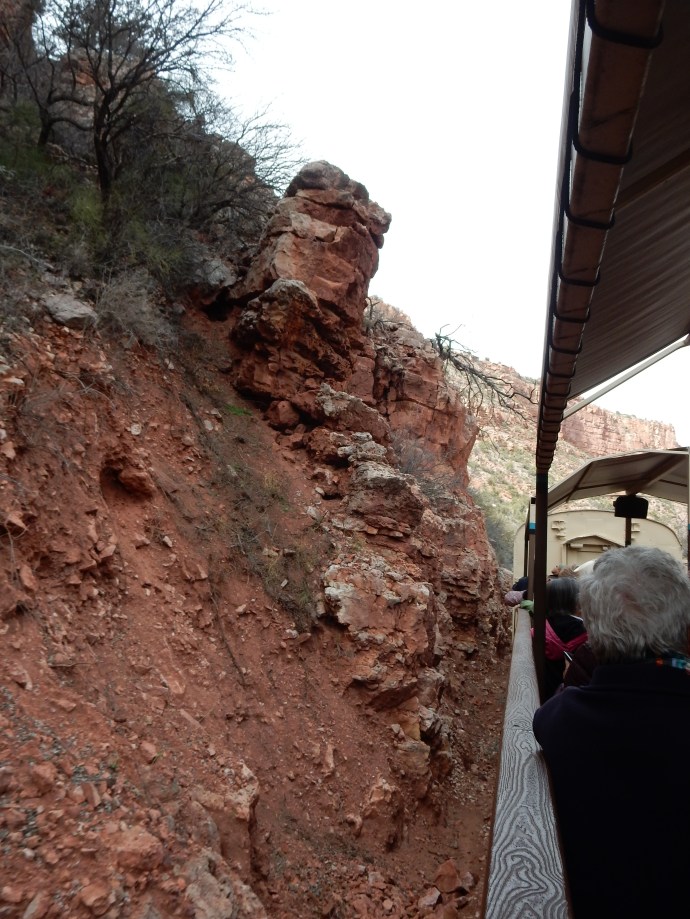
Once we leave the slag piles behind, though, the view is of plains, mountains, the Verde River, and the protected areas of two national forests and a wilderness area. Train trestles cross creeks and gullies that while dry today, must handle the flow from periodic flash floods. Train passengers must keep hands and heads inside since rock walls are just inches away. The coach cars are your base seating but each coach car has an open air car where passengers can sit or stand without windows or walls blocking the view. The winter’s leafless trees provide a view of the river not possible in other seasons. All the while, various colored cliffs and mountains loom in the background, providing a color contrast not presented by green leaves. Looking up, periodic cliff dwellings of the Sinagua peoples can be seen along the 20 miles of railroad track. All in all, it is a three and one-half to four hour journey.

Since this excursion was about scenery and not a history of Jerome or Clarkdale or mining or even the railroad, the rest of the blog will focus on what we saw. Hopefully you will enjoy the trip.

One of the views coming over Mingus Mountain

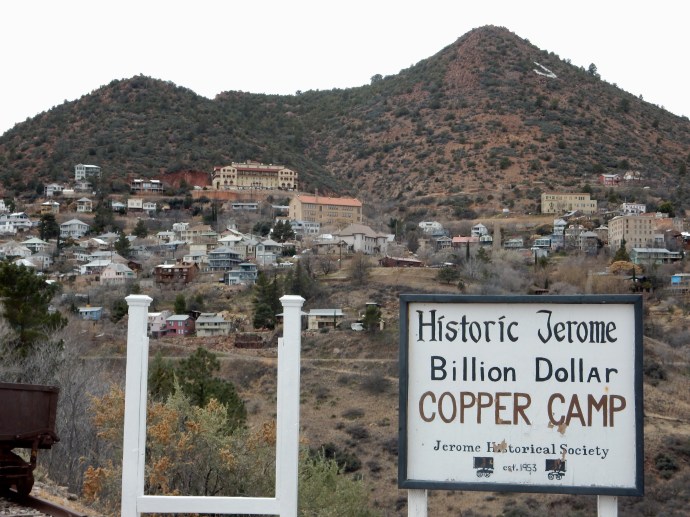
Jerome AZ, former mining boom town, now home to 444 souls.

Starting the journey

Our locomotives

The Verde River

Sinagua cliff dwelling

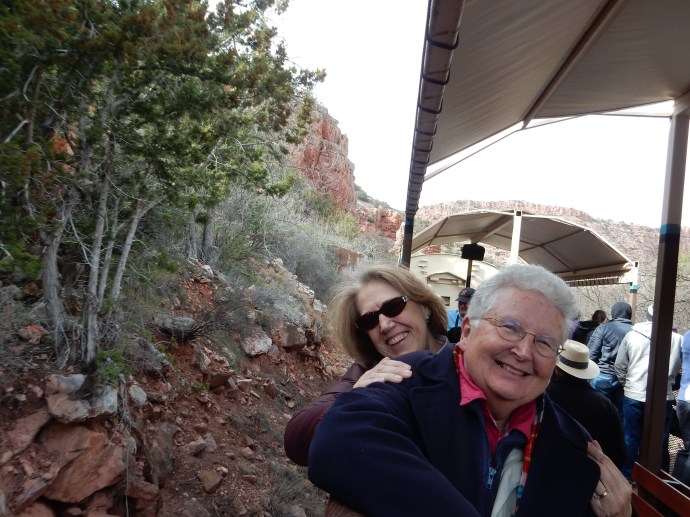
Joyce and Chris on the Verde Canyon Railroad

Riding close to the rock walls

During the journey

Along the journey

River, trees, rocks

Chris and Ed. Feb. 14

Categories: road trip, travel | Tags: , , , | Leave a comment

2019 Trip 2: Arizona: February 11-12

Chris and Joyce by Arizona Sycamores at Montezuma Castle National Monument

Prescott, Arizona February 12

Yes, there are still portions of Arizona we have not traveled to, through, or around. Prescott is one and Payson is a second. Hopefully this trip will cover both of them, although weather issues may derail Payson.

Tuesday, however, was glorious weather wise. Sunny and no wind. Prescott is north of Phoenix and our drives took us to elevations ranging from 3,000 to 7,000 feet. Prescott itself is at just under 5,400 feet above sea level. The temperature reached into the high 50s. We landed Monday night and I am sure we looked foolish to some since we were carrying a winter coat. Our car did not have a snow brush or ice scraper but you know, not everyone who lands in Phoenix stays there. Snow and ice and rain are all forecast for some time during the ten days of our trip.

But for Tuesday, we forgot about the future forecast and enjoyed the sun. We were not alone. After stopping in Scottsdale and picking up Joyce, Chris’ sister-in-law, our first stop was Montezuma Castle National Monument. The National Monument is a few miles east of Interstate 17 that traverses the mountains between Phoenix and Flagstaff. The drive there provides a pleasant view of the valleys between the mountains. The visitor center parking lot was almost full, including a cement mixer. Evidently many others took advantage of the weather and decided to visit this location, a national monument preserving the site of native peoples who lived in this Verde River valley.

Montezuma Castle National Monument, Arizona

The hike from the visitor center to the area of the cliff dwellings was short. Part of the walk was closed off as a crew was installing a concrete base for a new solar energy installation. Evidently, however, the contractor was too optimistic that the concrete could be pumped the 800 yards from the parking lot to the work site. Some of the concrete was being transported by a mechanized wheel barrow device while the rest of the crew was figuring out what to do next.

We discovered the construction issue during our pleasant and informative chats with park staff and volunteers. Yes, we also learned about the significance of the Sinagua people who built the five-story, 20-room dwelling during the period of time between 1100 and 1300. For unknown reasons, these people left the area in the early 1400s. Moving on, they populated other areas of Arizona. Numerous clans of Hopi Indians claim ancestry to the Sinagua and there are cultural and linguistic ties to others such as the Zuni, Yavapai and Pima.

The Sinagua are frequently separated by archaeologists into northern Sinagua, around Flagstaff and its related monuments, and the southern Sinagua. The southern Sinagua found the Verde River valley a good place to provide for themselves with running water and fertile land. The cliff dwelling at Montezuma was not the only location where they lived but this is one of the best preserved. The cliff here with its limestone base proved a reasonable location; living in the cliffs saved valuable agricultural land, and the cliff dwellings moderated the summer and winter temperatures.

Montezuma Well

Montezuma Well is a second section of the National Monument, about 10 miles away. The well site is a lake located in a limestone sink and fed by continuously flowing springs. The lake waters seep out into a nearby creek which passes Montezuma Castle on its way to the Verde River. The Sinagua people who lived in this area had constructed an irrigation system for farming. (See our earlier post about Casa Grande Ruins in Coolidge AZ from 2018 Trip 4.)

The well jumps out at you as you ascend a hill to the crest of the limestone sink. Several ducks enjoyed the water and easy feeding. Ruins of small houses and pueblos are nearby. The lake and creek seem out of place here in the desert but these creeks were a vital survival tool then and still are today as the Verde River is one of the few perennial streams in Arizona.

The largest Arizona Sycamore in the state, located at Montezuma Well

The two volunteers, husband and wife, staffing this site are part of the Volunteers in Park program. They live in their RV while volunteering here for three days per week. They have been here since August and then will move in May to North Cascades National Park. If it were not for the need to have an RV, Chris and I would have opted for that opportunity long ago. It was the husband who pointed out the largest Arizona sycamore tree in the state that had sprouted at the base of one of the cliffs where the water from the lake seeped into the creek. We found the bark of the tree stunning in its primarily white color and the form emphasized by the lack of leaves in winter. Arizona Sycamore trees were used by the Sinagua as the main beams in the Montezuma Castle dwelling and are still supporting the roof there after some 6-700 years.

One last comment about this national monument. The names Montezuma Castle and Montezuma Well were given by early American settlers who believed the structure had been constructed by the Aztecs. They were wrong but the name has remained.

Lunch was a choice between the casino and a Sonic. We opted for Sonic since this one had inside seating and I was hoping for a malt. My hopes were dashed as the powers that be had removed the malt option from the menu here, the manager did not know why. I did not complain, I saved a heap of calories.

A view of and from Tuzigoot National Monument

On to our third stop, Tuzigoot National Monument. Tuzigoot is located near the Verde River and consists of the remains of a 110 room pueblo with some second and third story rooms. The Sinagua who lived here also left the area around the 1400s. Excavation and refurbishment of the site led to the realization that the construction methods for the pueblo here differed from those used by the Northern Sinagua by Flagstone. No one knows why.

Tuzigoot is built into a hillside providing a great view of the surrounding area including the former gold mining town of Jerome built into the mountainside and the large cement factory owned and run by Salt River Pima-Maricopa Indian Community. The old mining operations left huge piles of tailings that polluted the water into azure blue. Not until the 1980s did residents have the ability to use new environmental laws to force compliance and begin remediation efforts. Phelps Dodge, the successor to the original mines fought the remediation efforts for two decades but in the early 2000s, the effort began.

The current owner, Freeport McMoRan Copper and Gold, has continued the remediation with numerous positive results. However, it takes decades at least to fully mitigate the damage and heavy metals continue to leach out of old mines and mine buildings. Slag from tailings piles still is being mined for minerals. The tailings ponds which covered acres of land leading to Tuzigoot have been covered but a visitor does not immediately recognize that the air pollution from the smelter which had been located in the air killed the native trees and the farming industry in the valley.

Near the top of Mingus Mountain Pass at 7,000 feet

Today we found the town of Jerome transformed into a cutesy shopping destination. Built on the mountainside, one named Cleopatra, Jerome went from nothing to a mining boom town of 15,000, to a ghost town, to a small community of 450 with artists, boutique shops and restaurants. We only drove through it today on our way over Mingus Mountain to our lodging in Prescott. Prescott has a population of 42,000.
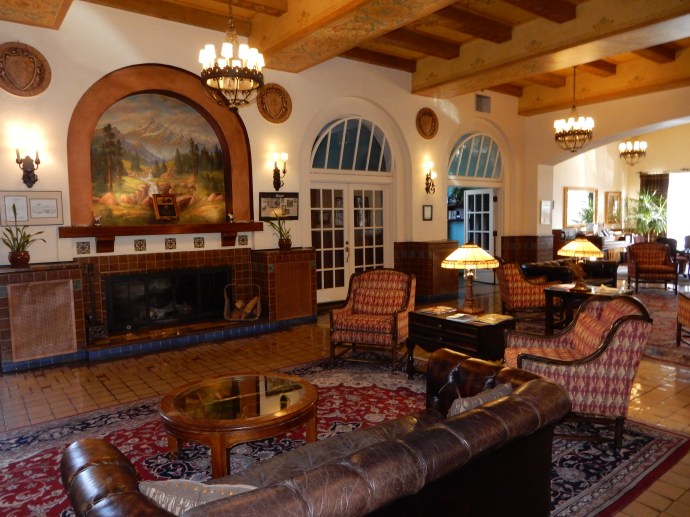
The lobby of the Hassayampa Inn

We are staying at the Hassayampa Inn, a historical hotel built in 1927 and restored in 1985. The vintage 1927 elevator has to be run by staff who helped us bring our luggage upstairs. After that, we walked the stairs although we were told that staff promptly answers the bell to operate the elevator as needed, or desired, by guests. The building still looks in good condition although rooms are small. Dinner was excellent.

The view partially up Mingus Mountain looking over the valley where Tuzigoot is located

Ed and Chris. Feb. 13

Categories: road trip, travel | Tags: , , , , , | Leave a comment

Blog at WordPress.com.