Monthly Archives: April 2018

2018 Trip 3: April 11: KY and TN

Gatlinburg, TN April 11

Great Smoky Mountains at dusk from Roaring Fork Motor Trail

Two very different activities have occupied our last 24 hours. After completing yesterday’s blog, we realized it was still sunny and decided to go for a short drive. The Roaring Fork Auto Tour seemed to fit the bill, highly rated and seemingly just minutes from our lodging.

Roaring Fork Motor Trail at dusk, Great Smoky Mountains National Park

I say seemingly because it turns out the auto tour is a one-way drive and we were located at the end of the tour. This was discovered after ten minutes of driving around and ten minutes spent at Ely’s Mill, a local, looks like it is 100 years old, weather-beaten arts and craft store at the end of the trail. I think they survive by visitors like us getting lost and stopping in the store for directions. They had a pre-printed map all ready for visitors and plenty of stories. The store even carried T-shirts with pockets; unfortunately for them, I stocked up last Christmas with Duluth Trading Company pocketed T-shirt gifts.

A farm site carved out of the forest along Roaring Fork Motor Trail

The one-way auto trip rises up towards the top of mountains, traversing numerous ecosystems. Portions of the area were within the fire zone of November 2016. Hazy views that symbolize the name and nature of the Great Smoky Mountains are a primary gift of the ride. Hard as it was for us to believe, farming was a major economic factor in this region prior to the creation of the park. “Hardscrabble” life certainly fits the situation here. The isolation of the area created pockets of farming community that lived relying almost entirely on their abilities.
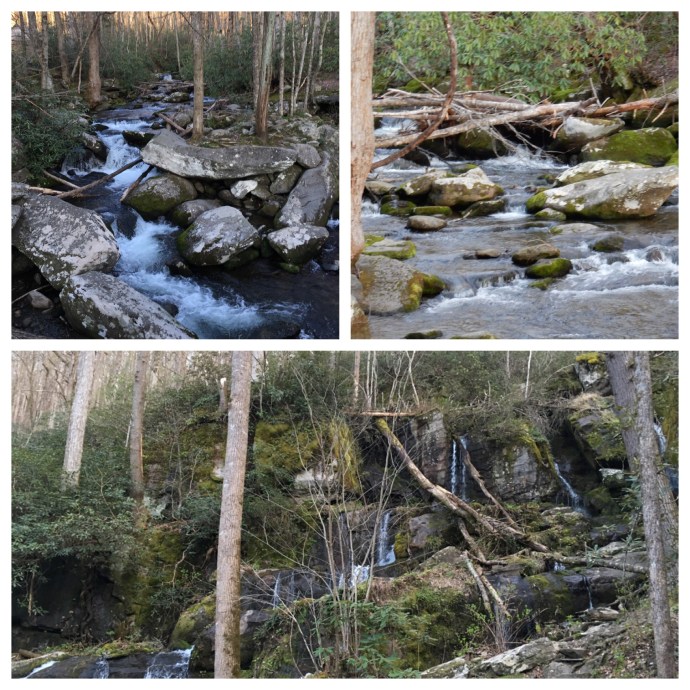
Roaring Fork Creek top; Place of a Thousand Drips bottom; along Roaring Fork Motor Trail Great Smoky Mountains

Mountain streams with clear, fast, cold water rushed down the hillsides. We passed over several creeks and passed by several small waterfalls. Different wildflowers appeared along the roadside than we had observed in the Elkmont region. The one way route meant no need to worry about oncoming cars but translated into waiting behind cars that had stopped on the roadway to take a picture. One of them later turned out to be a Knoxville woman who had grown up in the St. Paul suburbs. The trip turned out to be a very pleasant end to an already nice day.

Then we came to today, Wednesday. Our goal was to visit Oak Ridge TN, about 90 minutes away. Oak Ridge is home to the NPS Manhattan Project, one of the three national sites secretly created to develop the atomic bomb used to end WWII. We had not purchased tickets in advance; 16 tickets are available for advance purchase and 16 tickets are available on a first-come, first-served basis. Chris wisely called them Tuesday and they explained most tours sell out quickly. She recommended getting to Oak Ridge before 9 AM to get in line for the last 16 tickets. We did.

The Manhattan Project National Historical Park was established in 2015 to preserve portions of WWII-era sites where the United States developed the first atomic weapons. The other two sites are Los Alamos NM (which we have visited) and Hanaford WA. The project was top-secret; so much so that Vice-President Harry Truman knew nothing about the project until after the death of President Franklin Roosevelt.
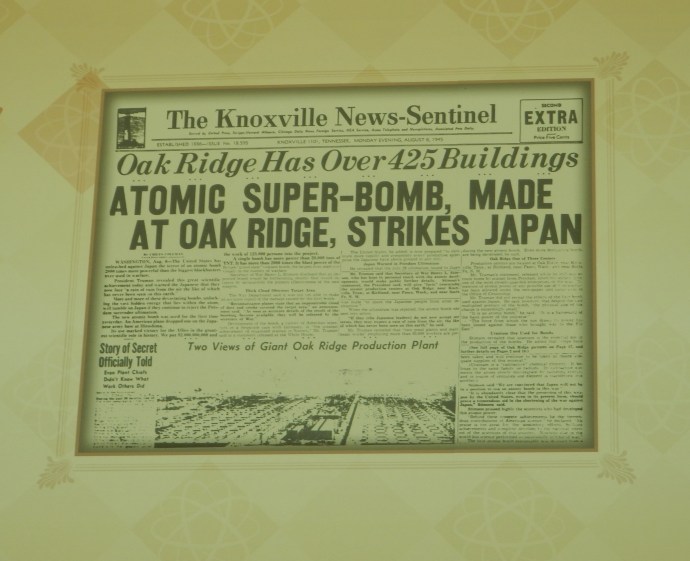
Local Knoxville paper after atomic bomb dropped and veil of secrecy lifted

Oak Ridge’s secrecy was stunning. Some examples of the scope include that a town of 70,000 people was constructed along with research and manufacturing facilities. Schools, hospitals, grocery stores were built. Oak Ridge had the seventh largest transit system in the country at the tine. At Oak Ridge, 13% of the nation’s electrical output was consumed here but no one knew why. 300 miles of road were built or improved, 55 miles of railroad track. The community knew it had some WWII effort behind it, but nothing more.

So what was here? Well, that was what we tried to find out today. A 40,000 square foot museum is open to all, but the three-hour bus tour which left at 11:30 AM is only open to 32 people. I am not a scientist and I may not be well able to describe Oak Ridge but I will give it my best effort.

Oak Ridge had three primary facilities; X-10 Graphite Reactor, K-25 Gaseous Diffusion Process Building, and the Y-12 Beta-3 Racetrack. The identifiers (X-10, K-25, and Y-12) are completely random to not provide any hint as to the purpose of each during the war years. The X-10 graphite reactor was a pilot plant to convert Uranium 238 into plutonium 239. The plutonium was eventually sent to Hanford which was the world’s first large-scale plutonium processing reactor. The building where this was conducted is still standing and we visited it during the bus tour.
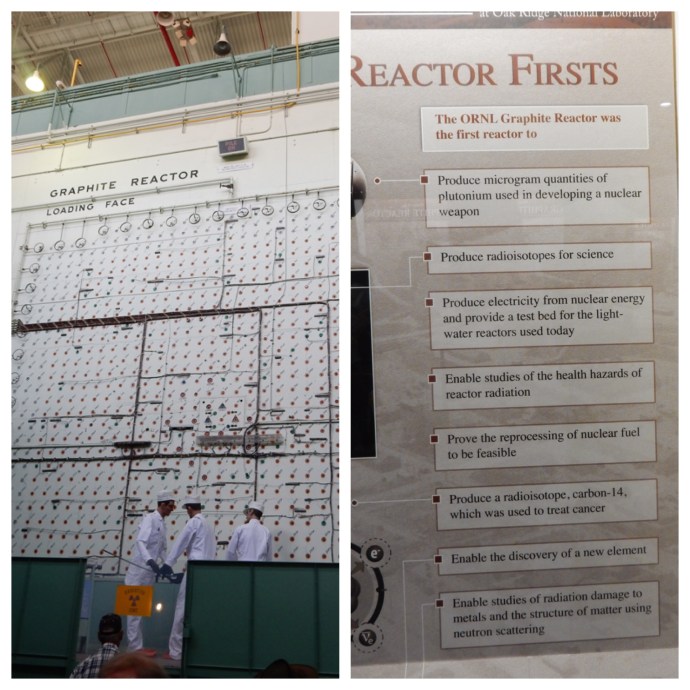
Graphite Reactor

X-10 has evolved into Oak Ridge National Laboratory, a scientific research facility under the Department of Energy. Basic scientific research is conducted here with facilities open to researchers from around the country. One of the largest supercomputers in the world is located here.

The K-25 Gaseous Diffusion Process was a huge building, half a mile by 1,000 feet, larger than the Pentagon. It was used to produce weapons grade U-238 from natural supplies of Uranium 235. The process here produced uranium 238 on the principle of that molecules of a lighter isotope would pass through a porous barrier more easily than molecules of a heavier one-U-238 being the heavier one. This plant alone employed 12,000 workers during WWII. Gaseous diffusion was the only uranium enrichment process used during the Cold War. The huge structure has been taken down and site clean-up and environmental remediation are underway to allow the land to be used for development by private business.

Y-12 was the facility producing uranium 238 under the third process. Here charged uranium particles are sent via a calutrons, essentially a mass spectrometer used to separate isotopes of uranium, through a series of huge electromagnets. Because copper was in such demand for military needs during the Second World War, Y-12 borrowed $300 million of silver from the U.S. Treasury to run the electromagnets. (I asked-the silver was returned by 1976.) Both the K-25 process and the Y-12 process were new technology and the buildings were constructed not necessarily knowing how, or if, the entire process would work out.

Moon box built at Y-12

Y-12 has evolved through the years to maintain a presence utilizing new technology. Y-12’s unique emphasis is the processing and storage of uranium and development of related technologies. Y-12 thus is responsible for maintaining the security and effectiveness of the U.S.nuclear weapons stockpile; for securing vulnerable nuclear weapons around the world and making that weapons marterial available for peaceful uses; and to provide fuel for the U.S. nuclear navy. Y-12 also has unique production capabilities so it undertakes special assignments like designing and making the two air-tight “Moon Boxes” that went on each of the Apollo missions to the moon to bring back soil and rock samples.

Y-12 employes 4700 people today in the Oak Ridge area. Security is tight, and admittance to the Y-12 (or Oak Ridge National Laboratory) is restricted. We passed through security checkpoints and had to provide proof of identification before being allowed to sign up and again before boarding the tour bus.

Our thoughts? The history was fascinating. The experience less great. The auto tour was overlong, the tour guides not offering much enlightenment in lay terms. We were told this was a not to miss experience, but in our opinion, the museum would have been sufficient. Learning how the government came in and removed the 3,000 people living here in less than a month was eye-opening. So was the massive construction crews efficiency, such as the fact that during one period a house was being completed every 30 minutes, while maintaining a veil of secrecy. As one might expect, African-Americans played a major role in the effort but segregation was still a reality. Young female high school graduates were a majority of the workers in the Y-12 process, tending to gauges and dials in the complex process while not understanding why the gauges and dials were important.

Evidently, this museum is being down-sized but up-graded technically in the next few months. The upgrade is needed, a number of exhibits spoke of history in the sciences that last occurred in the early 2000s. While this is a National Park Service site, we saw no rangers. The site is managed by the American Museum of Science and Energy. Supposedly the rangers were being relocated to the nearby Children’s Museum, why we could not fathom. Our visit there to obtain a NPS passport book stamp did not discover any rangers either. The Manhattan Project Historical Park is termed a partnership park with split responsibilities with other agencies. I have seen that partnership work much better at other park units.

We finished the day with dinner at home and listening to an entertainer sponsored by the resort. He played guitar and fiddle while telling stories and cornball jokes.

Ed and Chris April 12

Categories: road trip, travel | Tags: , , , , , , , | Leave a comment

2018 Trip 3: KY and TN: April 10: Caves and Crafts, Booze and Bluegrass (Music and Horses)

Gatlinburg, TN. April 10

Great Smoky Mountains National Park

While Congaree National Park may have had us hiking Sunday till we were ready to drop, Great Smoky Mountains Park today had us strolling along the river, basking in the sunshine, listening to the relaxing hum of rushing water, and delighting in wildflowers. We purposely made this a day to just enjoy nature.

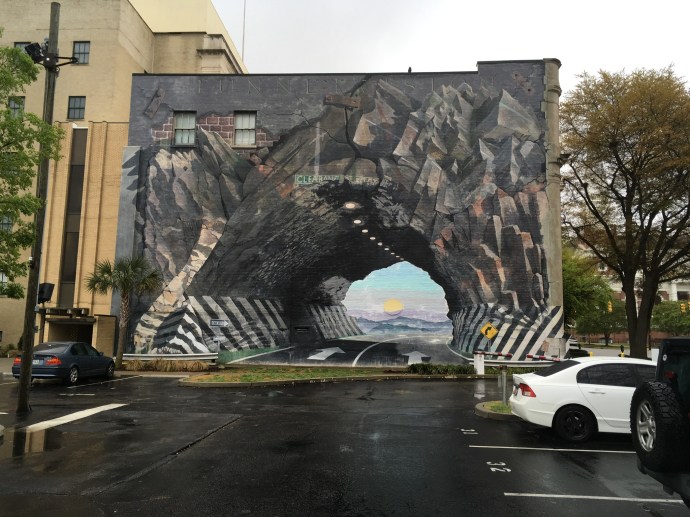
Tunnel Vision mural in Spartanburg SC

Columbia SC was left behind us on Monday as we left the Palmetto State for the Volunteer State. On our way out of town, we made a slight detour to observe a well-known mural. Tunnel vision was painted forty years ago and still looks great. The artist was paid $3,000 and it took him a year to complete it. Even on a gloomy, rainy morning it was impressive.

The drive from Columbia to Gatlinburg is only about 240 miles but we decided to break it up with lunch in Spartanburg, SC. We chose Wade’s, a restaurant in business since 1947. It is known across the South, earning the award Best in the South by Southern Living magazine in 2008 (besting Paula Deen’s restaurant in the process) and last year won six top awards in Spartanburg. The place is busy, each day they bake 3500 yeast rolls.

Lunch at Wade’s in Spartanburg SC

Wade’s advertising used to feature a humorous take on vegetables (Bean Me Up Scottie, Tweet Potato, Collared Greens, Beananza, Hollywades, etc.). They have advertised heavily around vegetables; Have you had your Veggies Today, and menu choices are meat plus one veggie, meat plus two veggies, or meat plus three veggies. We did it different, we chose the lunch buffet where you select your one meat and then fill your plate with as many veggies as you want. Chris had five veggies, I had six, choosing from 12-15 options. (Chris wants you to know that the creamed corn was great.)

The drive through the mountains to Gatlinburg started in rain but ended just in cloudy weather. We chose the option of driving through the park rather than the Interstates. The views were just so-so, but still it was trip down memory lane as we had been to Great Smoky Mountains National Park in October 2015. That year we stayed at a Westgate timeshare, this year we are staying at Tree Tops Resort, another timeshare. As this is being written, I am looking out the window watching and listening to a mountain creek.

You may not recall but Great Smoky Mountains National Park and the neighboring towns of Gatlinburg and Pigeon Forge were the scene of a tremendous fire in November 2016. The fire, caused by two juveniles, burnt 11,000 acres within the park boundaries, much of it east of Highway 441, the road we took over the mountain. We could see scorched tree trunks on our drive.

Even worse for this area, drought and wind conditions spread the fire into Gatlinburg and a bit of Pigeon Forge. The resort we stayed at in 2015, Westgate, suffered heavy damage. Some photos of Westgate buildings showed only the concrete stairways still standing afterward. Our current resort, Tree Tops Resort, also suffered several buildings destroyed. We are staying in one that was spared and construction is underway on replacing the destroyed buildings. Fire damage is haphazard, completely destroying some buildings and skipping over others. On the road to Tree Tops, concrete foundations and driveways exist as lonely markers to what had been someone’s home. 14 people died and over 1700 structures destroyed or damaged.

Little River, Great Smoky Mountains National Park

Today our park visit focused on the Elkmont area. Elkmont had been a resort area in the early 1900s, some of the cabins remain and have been preserved. Other cabins are still here but need further funding before restoration can occur. Little River and several creeks are in this portion of the park and here we went to listen and enjoy the solitude of the park. Last week was spring break and it was extremely busy. The last week of April is their wildflower festival and hordes are expected.

To see wildflowers today, we had to focus on the small and sporadic early bloomers. I could not tell you the names, you will see several in the photos. It is too early for dogwood, Mountain laurel, and rhododendrons. I guess we might have to return once more in May or June to see those blooming. My hopes are high that by the time we leave Saturday morning, the improved weather that is forecast will bring more petals into focus.

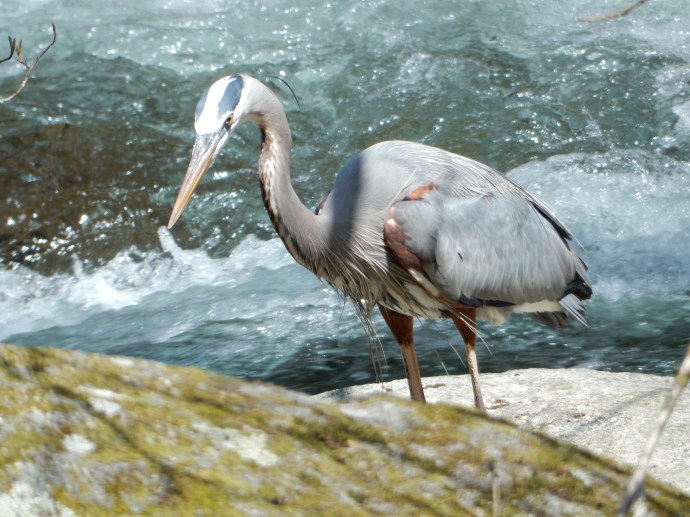
Great Blue Heron In Little River, Great Smoky Mountains National Park

The Little River with its clear water, rapids, and mesmerizing sound was the highlight of the two hikes. We did spot a Great Blue Heron and a badger. No bears yet. We have been eating in the timeshare, stocking up at the local grocery. A different adventure awaits tomorrow.

Ed and Chris. April 11

Epilogue: Snippets on life in America from Chris
Day 26: As I sit writing this snippet, I can hear a babbling creek outside our open window. It is a relaxing sound. I can sit on the beach for hours and just look across the expanse of the Atlantic Ocean. The crashing waves of Lake Superior on the North Shore are a reminder of water’s potential fury.

Categories: road trip, travel | Tags: , , , | 3 Comments

2018 Trip 3: KY and TN: April 8- 9: Caves and Crafts, Booze and Bluegrass (Music and Horses)

Gatlinburg, TN April 9, 2018

Congaree National Park, SC, on the boardwalk with bald cypress kness

Yesterday, Sunday, was primarily spent at a national park, Congaree National Park. Three years ago I am not sure I had heard of Congaree. As we looked over our map of the 417 U.S. National Park Service sites and checked out unvisited sites, this Congaree National Park stuck out. Then we combined that fact with our desire to spend more time in Kentucky and Tennessee, a desire that was on our list prepared in 2012 of U.S. destinations to visit. Congaree is not in KY or TN, but is on a reasonable line from Miami Beach to Tennessee and Kentucky and then on to Minnesota. Finally, we read more about national parks and Congaree was frequently cited as a park with significant environmental resources.

Congaree National Park in South Carolina

So what is Congaree? Congaree is 26,000 acres, 57% of which is wilderness area. Much of the park is bottomland forest, subject to frequent flooding. Congaree is an oasis of old-growth hardwood trees, uncut when much of southeastern U.S. was being de-forested starting in the late 1800s to provide wood for the booming population and economy of the new industrial United States. This area of forest was owned primarily by a lumber company led by a Francis Beidler. The company stopped timbering due to the difficulty of harvesting and transporting the lumber out of this wet and remote area. However by the 1960s, the company was starting to log the area.

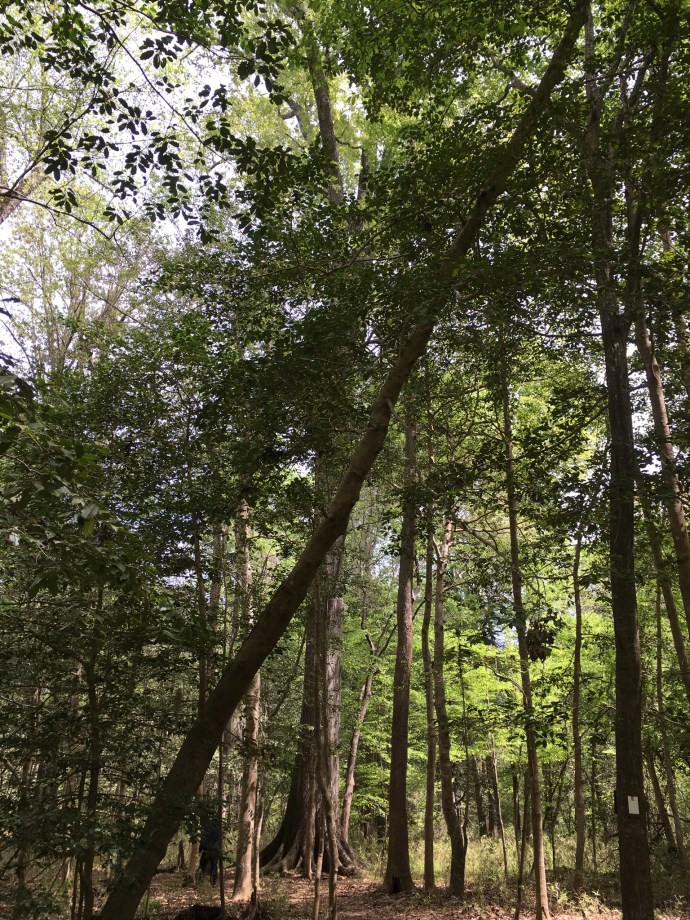
Tall trees at Congaree National Park

Congaree, due to being ignored, is believed to be home to the largest contiguous area of 130 to 160 foot tall trees in the eastern United States. The park has 15 champion trees, the largest known of their species. It was protected from further logging in 1976 by designation as the Congaree Swamp National Monument. In 2003, the National monument designation was broadened to that of a national park by an act of Congress.

When a tall tree falls, does anyone in the forest hear it?

Congaree offers canoe excursions which we skipped since they require each person to know how to swim (I can’t). We focused on hiking, taking 3 hours to tramp 9-10 miles through the woods. A portion of the hike was on a 2.5 mile boardwalk that exhibits the relationship between flooding and the specific trees that can grow in those circumstances, bald cypress, water tupleo, American beech, loblolly pine, among others. The bald cypress is an interesting tree, with wood that is resistant to rot and water. The tree has “knees” that protrude from the water. The function of the “knees” is still unknown.

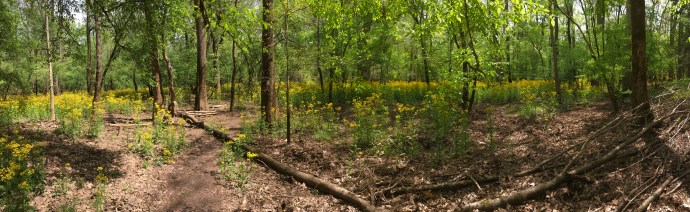
Hiking at Congaree National Park

The rest of the hike was through a variety of woods on paths a bit muddy after it rained here on Saturday. We were fortunate that the weather was dry today and slightly cool. The amount of water and swamp can produce vast numbers of mosquitoes. The “mosquito meter” on the wall at the park remained at a very low level.

Congaree is home to a unique biological feature. Each spring, fireflies congregate here and as part of their mating ritual, they light up on a synchronized basis. Thus, in the evening, you would look out over the swamp area and “boom” all of the fireflies would be glowing and then “boom” all of the fireflies would not be glowing. The timing varies but is currently expected to happen around May 11-22. Obviously, we will miss it. If you plan to come, make sure to get here early and check out the park’s website for timing updates and tips on courteous behavior.

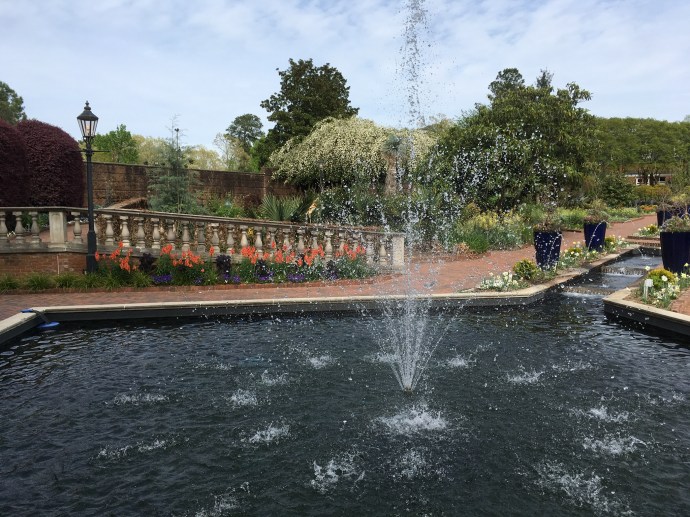
Riverbanks Botanical Garden Columbia South Carolina

After the three-hour hike, we drove to Riverbanks Zoo and Botanical Garden. We were hoping to see a profusion of blooming flowers. The sun had come out and this idea seemed a pleasant way to end the day. Riverbanks is a very nice combined zoo and gardens with rides for kids also. It comes across as a great place to spend the day for families. We devoted our time to the gardens which were colorful but were too small to present an overwhelming presence by themselves.

After an Italian dinner, we spent the evening with our Evergreen hosts. Another amazing couple with a plethora of interesting anecdotes, people they have met, and places they have visited.

Ed and Chris. April 10

Categories: road trip, travel | Tags: , , , | Leave a comment

2018 Trip Three: KY and TN: April 6-7

Columbia, SC. April 8

Harris Neck Wildlife Refuge, Georgia

Friday April 6
Driving Day. Hassle Day. Road Construction causing traffic delays Day. Unlike Atlanta, the delays and stop and go traffic, particularly in northern FL and southern GA were not caused solely by traffic but by road construction, stopped cars along the roadway, or roads narrowing from three lanes to two. Somehow, it made the delays easier to handle.

We were able to be on the road by 8 AM. Our destination for the day was Darien, GA. Nothing dramatic, just a location that did not push us too much on Friday and left us with a relatively short drive on Saturday. Our research had uncovered a U.S. Fish and Wildlife Refuge called Harris Neck that was only 20 miles past Darien. It was open until sunset and was our secondary target if tine would allow.

Anhinga at Harris Neck Wildlife Refuge, Georgia

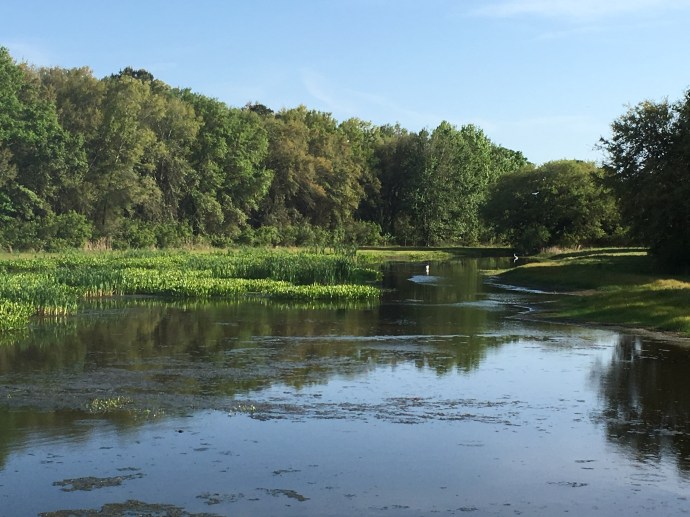
Well we arrived at the refuge at 5:30 PM and it was a relaxing end to a harried day of driving. The refuge offers a driving route with several stops with views that might be worth stopping. The first stop was a beaut; we saw two alligators (one was a female with three young gators), an anhinga, two blue herons, and a large egret rookery full of white egrets. We drove the four mile route, stopping a few more times but no other stop rivaled that of the first one.

As mentioned, Darien was just an overnight stop. It appears that Darien has lost population, lost wealth, lost commercial establishments, etc. It is not far from Brunswick GA, which is a gateway to wealthy off-shore islands like St. Simons, Jekyll Island, etc. and the third largest port for roll-off containers in the U.S. Evidently, Darien is not sharing any spin-off business.

Saturday April 7
Saturday was a rainy day as we drove up to Columbia SC. Congaree National Park is just southeast of Columbia and was the primary reason for visiting here. Columbia is also the state capital and we targeted the late afternoon tour of the Capitol as our stop for Saturday. Sunday would be Congaree. Traffic was okay, we got our early and thus made it to Columbia to add one more item to our visit schedule, the South Carolina State Museum.

You may remember from two weeks ago that we visited the Tennessee State Museum and we were not at all impressed. The South Carolina Museum, however, was great and well worth a visit if any of you are ever in the area. The residents of South Carolina must agree, the place was always busy in contrast to the near emptiness of the Tennessee Museum. We arrived in time to score a free, 90 minute docent tour and I would have been happy to spend another 90 minutes or more exploring the displays more closely. The museum is four floors and is housed in an old, cotton mill. Inside you can still see the brick walls from the mill.

The first floor has an artists’ gallery with works from artists with some connection to the state. A planetarium is also located here. On the second floor, are displays concerning natural history, a 4D theater and a cafe with good food. The third floor is home to science and technology connected to South Carolina. For instance, the man who invested the laser was from South Carolina; and the state at one time was the home of more NASA astronauts than any other state in the US.

Part of the telescope collection at South Carolina State Museum, Columbia South Carolina

The fourth floor has displays about cultural history, an observatory, and a telescope gallery. A South Carolinian, Robert Ariail, was a major collector and restorer of American made telescopes and one entire room is devoted to his collection. The history of South Carolina takes up much of the floor, and in my opinion, their organization and summary of the history of South Carolina well represents on accurate summary. For instance, they noted that until the 1930s, South Carolina had a majority of African-American residents. Our docent was quick to point out to us that more Revolutionary battles were fought in South Carolina than any other state. Before the Civil War, South Carolina was the wealthiest state. After the Civil War as slaves were freed, it became the least wealthy and has remained one of the ten poorest. It is currently ranked 43rd from the top.

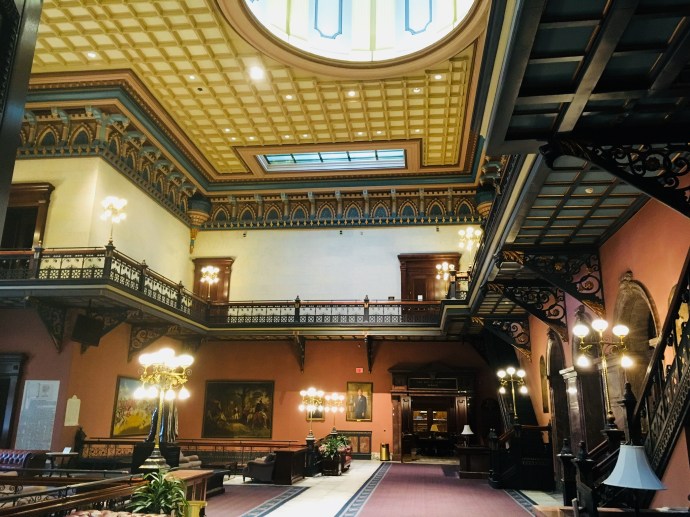
South Carolina State House, Columbia SC

After lunch in the cafe, we headed for the South Carolina State House and a 2:30 PM tour. The capitol building is the third one built for the state, the first two were destroyed by fire. The building was started before the Civil War but the Reconstruction Era was difficult economically and this building was not completed until 1907. It is small, housing only the two chambers and major executive offices. The light, the artistic use of granite and marble, and strategic use of statues, art, and wall coverings produces a pleasing appearance without being overwhelming. Outside, the southerly location has provided a much more robust profusion of flowering shrubs than we had seen in Kentucky or Tennessee.

South Carolina State House, Columbia SC

As non-South Carolinians, we noted the conflicting presentation about segregation in the State House and its grounds. For instance, the difference in reverence for two of the their most well-known politicians. Storm Thurmond served for over 60 years in the U.S. Senate and his statue has a central place outside on the grounds. To us, he represents one of the South’s most determined segregationists. John Calhoun, who served as a U.S.Vice-President, Secretary of War, Secretary of State and a U.S. representative and senator, has a statue in the lobby. He is pivotal figure in U.S. history, including as a leading and strong proponent of segregation. In Minneapolis, however, Lake Calhoun, named after him, just had its name changed due to his segregation ties. He had no real ties to Minnesota and his other accomplishments in life were given little weight over the segregation views. There is a wonderful African-American history monument on the grounds of the State House. And the state finally removed the Confederate flag that was flying proudly on the State House grounds.

Before church we walked portions of the University of South Carolina campus, located in downtown Columbia. It is a beautiful campus, again the flowers and shrubs helping to accent the buildings. Numerous banners along the walkways helped to educate us to the University’s high standing academically.

Dinner was just a few blocks from the State House at Noonah’s, voted Columbia’s best restaurant for desserts for about a gazillion years. After a quick appetizer, we chose our desserts and had made an excellent choice in an Amaretto bread pudding and a praline apple pie.

Lodging tonight and Sunday are at an Evergreeners home not far from the University. They tend to travel more globally than we do so it was informative to learn of the trips and ideas we could incorporate if and when we start travel overseas.

Ed and Chris, April 8

Categories: road trip, travel | Tags: , , , , , , , , , | Leave a comment

2018 Trip 3: April 4-5: KY and TN

Miami Beach, FL April 5

Birds in Biscayne Bay, part of Biscayne National Park

Wednesday we returned to the beach. It was a quiet day, people-watching-wise. Sunny and warm, in the 80s, causing us to rent the umbrella and lounge chairs to make sure I did not turn lobster red in the south Florida sun. The afternoon forecast was for rain around 3 PM; it came at 2:30 PM.

At first we thought we would ride out the rain on the beach. No lightning, it was warm, we would have been wet if we had gone in the ocean, etc. But the rain continued, came down harder, temperature started dropping, wind started blowing the rain under the umbrella, etc. so we packed up and got wet walking back to our time-share. The rain and humidity continued long enough to make us feel justified in leaving the beach. Dinner was left-over chicken from previous nights, nothing fancy.

Thursday we left Miami Beach by 8 AM to drive south to Biscayne National Park. The national park is primarily water, islands and keys, and land underwater. It takes about an hour to reach it, and traffic was reasonably clear. Biscayne National Park’s visitor center is near Homestead Florida, a town that had been heavily destroyed by Hurricane Andrew twenty-five years ago in 1992.

In 1990, Homestead’s population was 27,000. Today it is estimated at 67,000. We saw evidence of the new housing development along with expansive nurseries growing palm trees, etc. for the Miami area market. We even passed two huge landfills, one we were told had grown enormously with construction debris from Hurricane Andrew; the second, smaller one growing now with construction debris from Hurricane Irma when it hit here and at the Keys last fall. Airplanes from the neighboring Homestead Air Force Base were frequently overhead. We passed the Homestead Speedway, a NASCAR racing circuit location.

But eventually we arrived at ocean side, the Biscayne National Park. To learn more about the park, we took a three-hour boat ride with a park ranger out to one of the keys, Boca Chita Key. It takes one hour to reach Boca Chita Key across the bay, you have one hour on the key, and a one hour boat ride back.

Creation of the park has an interesting story; like many NPS sites it was born out of controversy of competing interests. As Florida was developing in the 1950s and 1960s, a group of commercial interests were pushing for a major shipping port and a commercial/residential complex to be located on the shore and the keys in this area. At the same time, environmental groups were recognizing the unique value of Biscayne Bay.

The commercial interests went so far as to bulldoze a “highway” six lanes wide and seven miles long down the middle of one of the keys to limit its natural value. They lost. President Johnson signed legislation creating Biscayne National Monument in 1968. It was upgraded to a national park in 1980. It currently comprises over 170,000 acres, 95% of which is water, stretching from south of Key Biscayne to north of Key Largo.

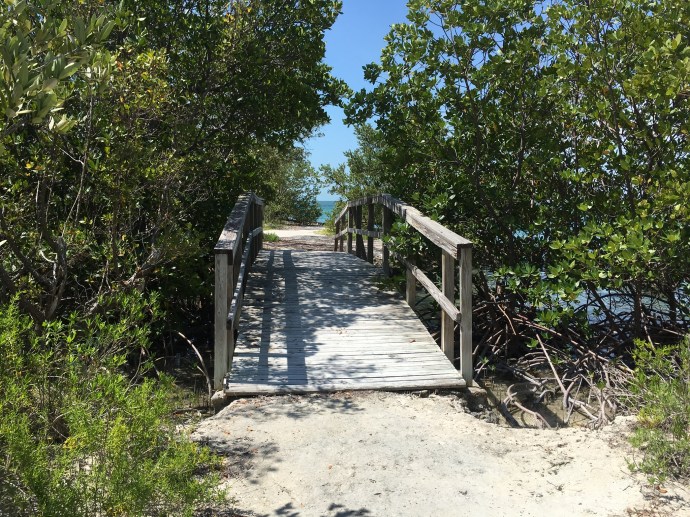
Red Mangrove trees while hiking on Boca Chita Key, part of Biscayne National Park

First off, you should understand the difference between a “key” and an “island”. An island was created by geological forces; deposits of sand, uplift of the earth’s core, volcanic action, etc. A key was created by the actions of biology, coral reefs. The islands and shoreline are formed by limestone deposits, the bottom of the bay is only six to eight feet below the water level. In some areas the bottom as just a few inches of dirt and soil, while in other areas the dirt on top of the limestone deposits is deep enough to grow saltwater grasses. Both keys and islands exist here and protect the shoreline from wave and storm action by the presence of the rock/coral outcroppings and the mangrove forests located on them. Mangrove forests, of red, black and white mangrove species, also exist on the shore of the mainland.

Our boat ride out was on calm water, clear skies and temperature around 80 degrees F. We only saw one sting ray, no dolphins and plenty of birds. The ranger told us the history of the park and the diversity of plant and fish life here. Two power plants south of here were constructed prior to the National Monument, early operation allowed for direct dumping of their hot “cooling” water and the heated water practically killed life in the Biscayne Bay. The plant operators (willingly or not, I am not sure) switched to an on-land recycling system to cool their water and the bay has since thrived. The plant and fish life here are a feeding grounds for all sorts of larger fish, on up the food chain.

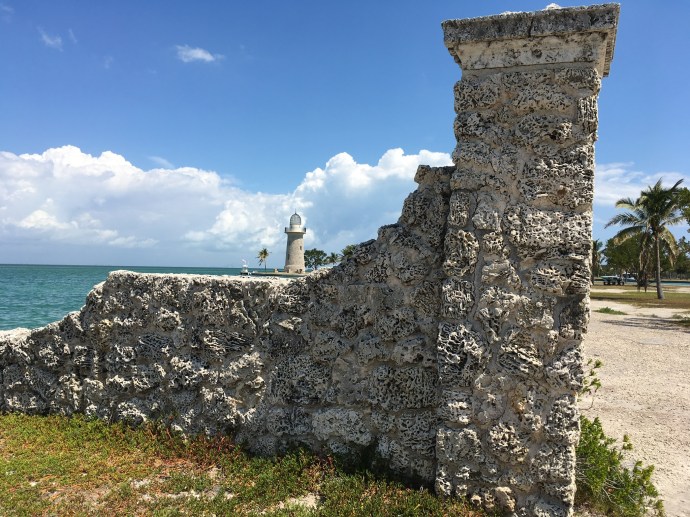
Fake lighthouse on Boca Chita Key, part of Biscayne National Park

Boca Chita Key was the site of a rich man’s toy; Mark Honeywell of the Honeywell thermostat company, was one of many rich people locating a warm second home retreat in Florida, starting back in the late 1880s. His house on Boca Chita Key was built in 1937 and included a fake lighthouse. We climbed up to the top of the lighthouse when we toured the island. He only stayed a few years as his wife died here from a fall.

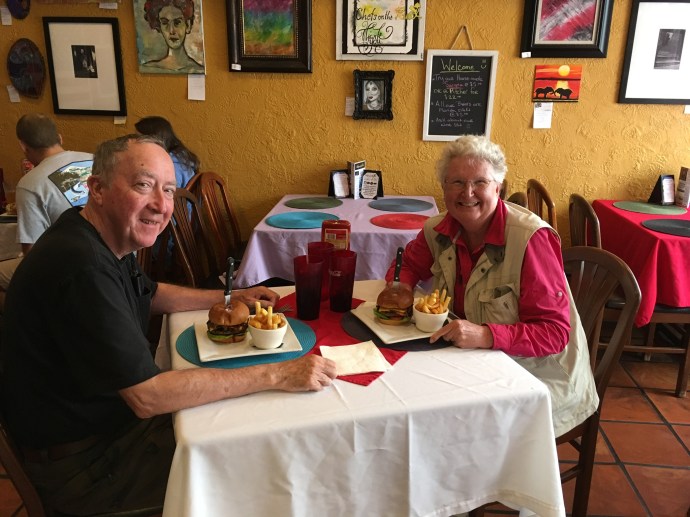
While I could say more about Biscayne National Park, I will just conclude with the comment that the three-hour trip was fun, educational, and cost-effective. We were pleased to make the trip. Our decision was enhanced as once again the clouds rolled in and rain cleaned our car as we left the park for a late lunch. We were hungry for a burger, not having one for quite a while. A recommendation led us to “Chefs on the Run” in Homestead where we had a delicious burger and fries. We brought back a homemade chocolate cake which we have not tasted yet.

Chefs on the Run in Homestead FL

Tomorrow we leave Florida, driving back north with stops in Georgia, South Carolina, Tennessee and Kentucky.

Ed and Chris. April 5

Epilogue: Snippets on life in America from Chris
Day 21: Unless you are a direct descendant of Native Americans-one of the approximately 562 indigenous groups, then you are a descendant of immigrants to this land. How white does one’s skin need to be an American? What a frightening time we are living in. And the hatred is fueled by our president. Diversity is one of the factors that made this country great.

Categories: road trip, travel | Tags: , , , , | 1 Comment

2018 Trip 3: April 1-3: KY and TN

Miami Beach, April 3

Miami Ship Channel

Sunday morning was Easter and we headed over to Miami proper to attend 11:30 AM Mass at the first Catholic church in Miami, Gesu Catholic Church. The current church building goes back 90 years. The first Jesuits landed here in 1568, said Mass, met with the Tequesta Indians (none remaining in the area today, any still alive accompanied the Spaniards to Cuba when Spain gave up Florida), performed a religious play for the settlers, and complained about the mosquitos. The service was long, with incense, blessings, over-talked homily, and the first free-for-all Communion service I have seen in years. Everyone just got up at once and started going forward; normally it is much more organized, going up row by row.

Gesu Catholic Church in Miami

We hightailed it over to the Miami History Museum, just a few blocks away. A 1 PM docent tour was our goal and we made it just in time. The docent wanted to wait for any last-minute attendees, so we did-to no avail. It was Chris and I and the docent. The gentleman appeared to be a college student who knew his history well. He gave us a forty minute talk as we toured the exhibits, starting with pre-historic times to current development. Paleo-Indians are thought to have arrived in Florida around 10,000 B.C. The Seminole Indians in Florida are descendants of Creek Indians of Georgia who refused to go on the Trail of Tears that President Jackson and Congress ordered beginning in 1830 removing all Native Americans from the southeast to what is now Oklahoma.

He seemed keen for us to recognize that the Everglades were once more vast than currently; the development of canals and drainage ditches for agriculture and later urban development resulting in a much reduced waterway with major negative environmental impacts. We had a general sense of Florida development, with boom and bust land sales in the 1920s and the big boom after WWII. It is now the 8th largest metro area in the U.S.

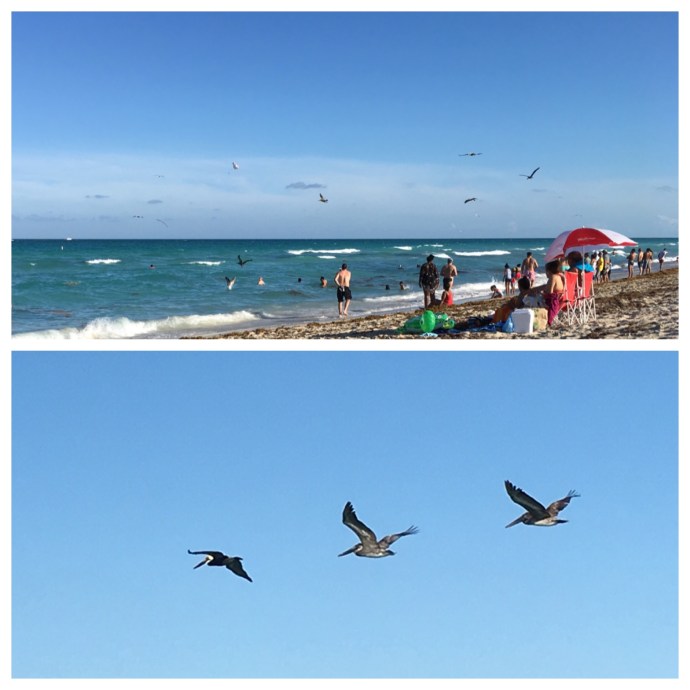
Pelicans getting their evening meal at South Beach

Sun and sand and surf were our late afternoon companions. We picked up some towels from the front desk, the blanket from our car and headed to the beach. Besides the normal people-watching, we were entertained by a flock of pelicans who demonstrated their aerial acrobatics as they dove for fish right in front of us. A dad and his four kids raced to build a combined dike and pool before the incoming tides destroyed it. It was a battle between late afternoon sun and increasing shade; and a battle between the sand fort and surging seas. Shade and seas were the victors. We stayed late enough to watch the four scheduled cruise ships departing the Port of Miami. Dinner was take-out from the local, uniquely Miami Beach sandwich shop two blocks away with dinner in our unit.

Monday was all day beach. We were there by 9:30 AM; this time renting an umbrella and two lounge chairs right by the ocean. We did not leave until 5 PM, watching two of the four scheduled cruise ships depart. Our memorable people-watching event of the day was a group of five who were at the beach as long as we were. Our constructed story for the five consists of Mom (Brazilian or French, recently divorced from her rich husband, and she has had some physical enhancements performed), her twin teen-age daughters, her teen-age son, and her much younger than her personal trainer/masseuse (PT/M). The PT/M must have rubbed several bottles of suntan lotion onto her body, along with some onto the three teenagers, although admittedly more on the daughters. Three couples from probably the Newark-New York area happened to move their chairs closer to the beach later in the afternoon. The three women turned their chairs back to the late afternoon sun and got an up close and personal view of the lotion application process. They had a great time watching and commenting. In contrast, Chris and I were much more restrained.

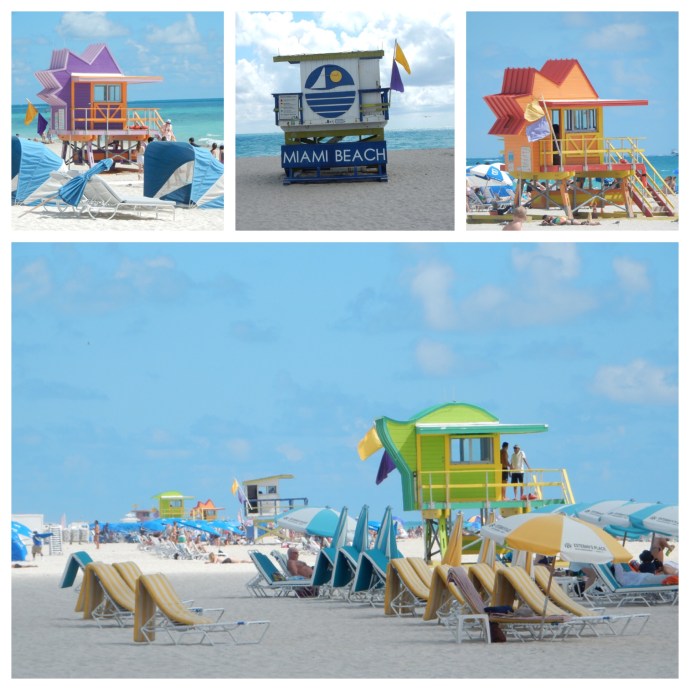
Several of the iconic Miaim Beach Lifeguard stations

We reminisced about past Miami Beach experiences: the severely ill or anorexic woman doing her yoga exercises; or the man who had obviously hired a woman for the day and was taking pictures of her in different poses; or the photo shoot (never did determine what the purpose of the shoot was) that involved both horses and bulls and young women; or the young men tossing bean bags at each other aiming for the other’s genitals; or the rainy weather that had us strolling the convention center looking for exhibits and vendors that did not involve us paying for admission; or the hours we used to spend at the library checking work emails (now that goes back a while); or the hucksters practicing age discrimination by visiting many young people on the beach to offer them free admission to night clubs but somehow never came over to us; or the young couple where the man spent the entire day on his cell phone talking to his investment advisor.

Dinner was at an Irish pub but we did not eat Irish. Instead, surprisingly good chicken and pork meals with excellent sauce provided enough food for last night’s dinner and a take-home container for later in the week.

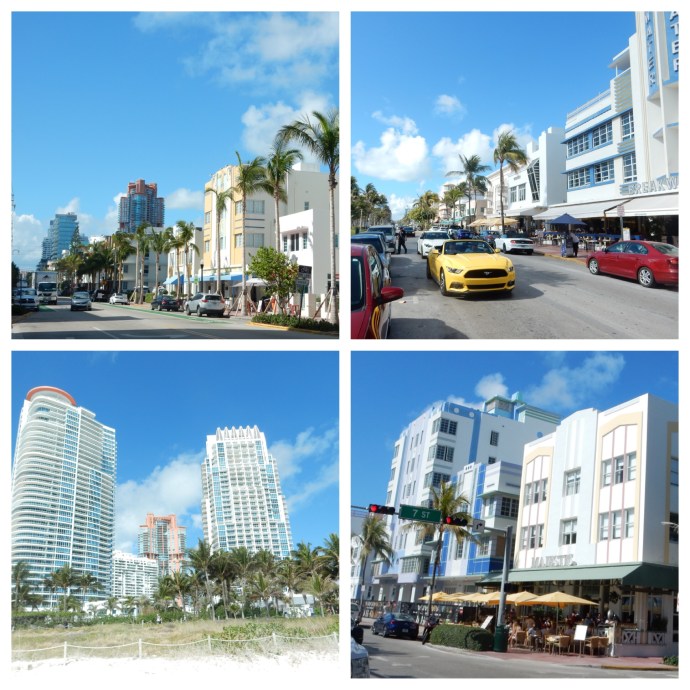
Daytime views of Ocean Drive Miami Beach

Today, Tuesday, we went for a walk down to South Pointe, the southern end of Miami Beach that has developed remarkably in the last 5-8 years. The Miami Ship Channel is there with opportunities to obtain close views of the ships passing through. Nothing dramatic today though although we have been there previously when cruise ships have gone out. Several hotels, most notable being the Ritz-Carlton, the Tides, the Raleigh, are still closed and undergoing renovations from last fall’s hurricane.

The afternoon was back on the beach, nothing dramatic to report. Dinner was our splurge for the week, eating next door at the LT Steak House in the Betsy Hotel. Live jazz was the inducement to spend a bit more than usual.

Ed and Chris April 3

Epilogue: Snippets on life in America from Chris
Day 19: When did leisure time develop in our society? Many communities that we visit depend on big and small tourism. The railroads moved, manufacturing closed, farming changed. Towns that wanted to continue vibrant latched on to a tourist niche-art, nature, music, a unique experience. Come visit and spend your money here.

Categories: road trip, travel | Tags: , , | Leave a comment

2018 Trip 3: March 29-31: KY and TN

Miami Beach FL. March 31

Cruise ship leaving Miami as seen from our lodging in Miami Beach

As promised, the blog posts are stretching out as we do more relaxing than traveling. The breakfast at Battleview B and B lived up to Chris’ comments about B and B breakfasts; nutritious and wide-ranging in items offered. Our plan was to not rush out the door since Atlanta is but 100 miles away and we hoped to avoid its rush hour traffic. Well, the plan was adhered to but the hope of avoiding traffic was fruitless. We even added on an extra, spontaneous stop hoping it might get us past traffic jams.

Breakfast at Battleview B and B

As we were driving down the road, a sign for Kennesaw Mountain National Battlefield Park appeared. Google Maps was still showing red for heavy Atlanta traffic and we had not visited Kennesaw back in the fall of 2016 when we were last in this area. Who can pass up the chance to obtain one more National Park Service stamp in their NPS “Passport to Your National Parks”? Not us; we are around 220 of 417 and still adding more.

Kennesaw was busy, we had to park in the overflow parking lot a block away. This site is part of the battle for Atlanta as Union General William T. Sherman was pressing Confederate General Joseph E. Johnston for control of the area. Sherman was on his march to the sea plundering and burning supplies, buildings, manufacturing and transportation to destroy the Confederates ability to wage war. Atlanta was a key site. Kennesaw Mountain was the last major mountainous area between Chattanooga and Atlanta and Johnston had fortified the area well.

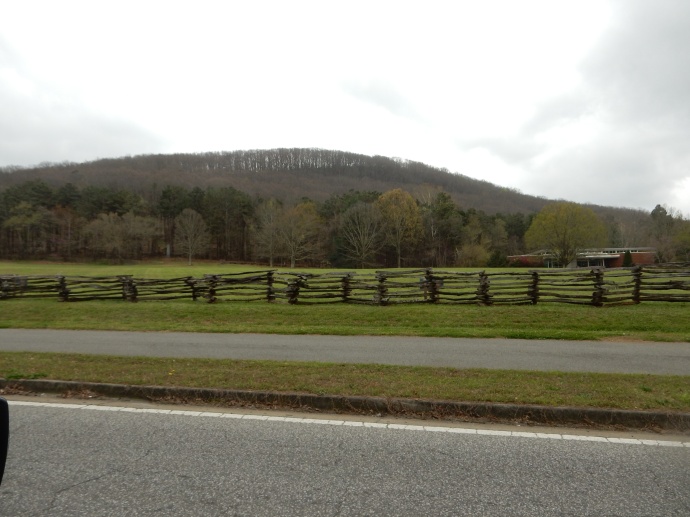
One view of Kennesaw Mountain

It was May of 1864 and the North was getting tired of war; Lincoln was facing opposition from General McClellan for re-election as President and it seemed only a major victory could provide for his re-election. A series of minor skirmishes and flanking maneuvers were not providing a victory although Sherman was getting closer to Atlanta each time. In late June 1864, a series of full force battles at Kennesaw Mountain forced the Confederates to give up the fortified positions and retreat. By early September, Atlanta was in Union hands and Lincoln had the victory that guaranteed his re-election two months later.

One poignant circumstance was detailed in the video and displays. At the “Dead Angle”, the fighting was fierce and numerous bodies, primarily Union, were left in the middle of the Battlefield with troops on either side of the bodies. After two days of a lull in the battle here, the two sides agreed to a brief cease-fire to bury the rotting bodies of the dead and tend to the wounded. Union and Confederate troops worked together to accomplish this, even going so far as to share food and water and spend some time in games of chance. When the cease-fire ended, they went back to killing and maiming each other.

We resumed our travel and arrived in the Atlanta area around 12:30 PM. The traffic was horrendous, six to eight lanes in either direction, fully clogged and moving slowly. We later discovered two facts: A. Atlanta is ranked number 8 in the world for traffic problems; and B. A couple from Atlanta we met later in the day indicated they had been driving there at the same time and thought the traffic was actually better than usual for that time of day.

Miami Beach Friday evening

Lake City Florida was our overnight stopping point before the final drive to Miami Beach. Miami is another traffic hotspot but we lucked out on Friday and had no major issues arriving at our lodging by 3 PM. Our room was ready and after unloading, we headed up the street to have a late lunch at the Front Porch, one of our usual hangouts. After a restful nap, we walked the boardwalk and enjoyed the almost full moon. This week, there are no major conventions or events going on; just spring breakers and regular tourists so the streets and walkways were quieter than usual. A pleasant way to wrap up the day.

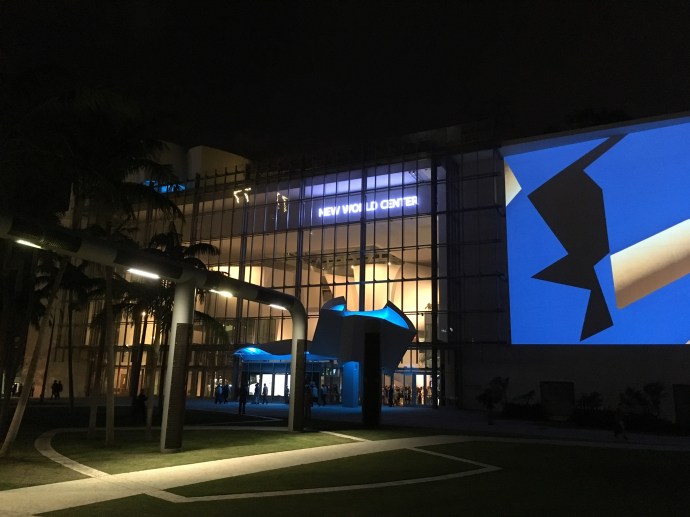
On Saturday, we used the whirlpool and roof top area to relax and enjoy the weather. Saturday evening we headed over to the New World Symphony. New World is a training ground for musicians who aspire to join major orchestras as professional musicians. The students have already received bachelor and master degrees from major colleges around the country. 87 students receive up to three years of paid training; the goal for many is to land a gig prior to the three years being completed. Chris and I have been coming to their performances for years; they used to be housed in an old movie theater on Lincoln Drive. Now they have a Frank Gehry designed campus including a performance venue, practice rooms and living accommodations.

Home of the New World Symphony in Miami Beach FL

Before the concert, two of the musicians gave an informal discussion of the evening’s music, then answering questions about the music and their own background. Tonight’s music was described as relatively new compositions in a minimalist style. We were told the composers were more interested in process and in presenting rhythm and tonality. I hope that you understand that better than I did. Once I heard the music, though, the comments made more sense. Even I could recognize set tones being repeated with varying background changes.

My two favorites were the first piece: A Short Ride on a Fast Machine by John Adams; and the last piece: many loves by Samuel Adams (son of John Adams who was also the conductor for the performance). Fast Ride is well-known and one can hear recordings of it on the Internet-it is only four minutes long.

Ed and Chris April 1. Happy Easter

Epilogue: Snippets on life in America from Chris
Day 16: Sorry family in MN and MA. After two weeks on the road, we have finally arrived to sun and warmth-Miami Beach. We all know that we cannot control Mother Nature. Fortunately, we are driving this trip so we have multiple types of jackets, shoes, and warm headgear.

Categories: road trip, travel | Tags: , , , , | Leave a comment

Blog at WordPress.com.