Monthly Archives: March 2017

2017 Trip Two: Tour of Texas March 30

Lumberton, TX. Friday March 30

Our one time on this trip to see the Gulf of Mexico in Texas

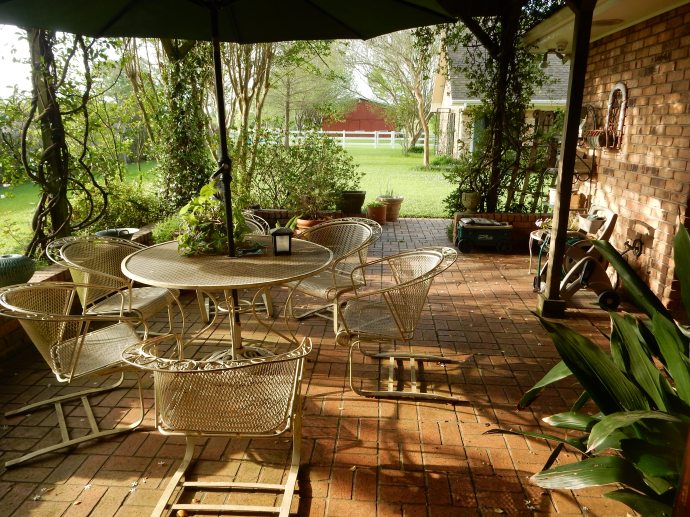
Our patio at the Savoy B & B in Lafayette LA

Rice, ranching, and roseate spoonbills; our day in a nutshell. We left our great B & B in Lafayette, the Savoy B & B, with fond memories. Overnight the area received a real soaking of rain, the morning began cloudy but cleared up as the day went on.

Views from our Thursday drive

Back roads continue to be our primary choice. We use Google maps more frequently now than the Rand McNally atlas; choosing less traveled options, roads that frequently are not even on the atlas. The view is a more varied countryside, hence the views of rice paddies today and sugar fields the last two days. We pass run-down homes and sub-divisions of large, expensive brick homes.

Twice in the last week though, Siri has dictated errors from the Google Maps plan. Once we were routed off a portion of Interstate, reversed direction, and had to turn around at the next interchange to get back to the planned route. The other time when the traffic got slightly heavy, we turned at the next signal light, making a right, left, right and rejoined our original road two blocks farther along. You wonder what is happening but don’t have time to stop and check the directions before you arrive at the questionable direction location.

Roseate Spoonbills

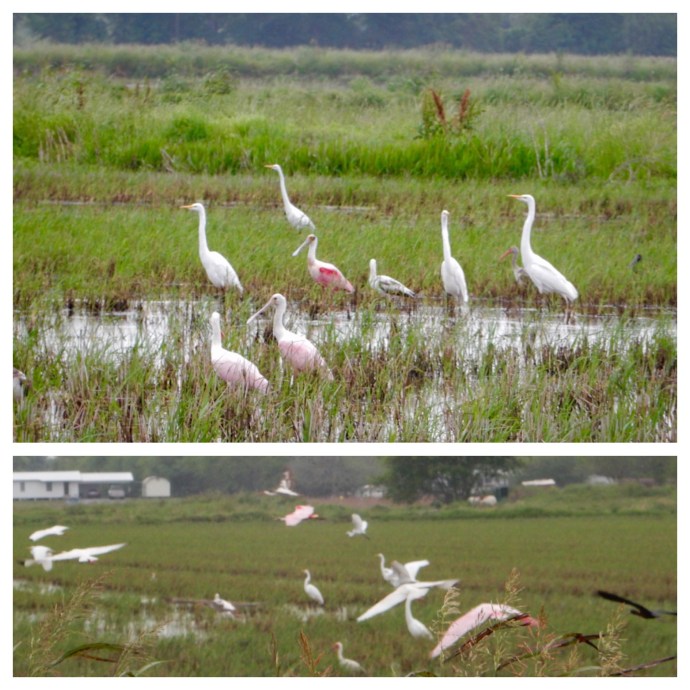
Our route today took us along Creole Nature Trail, the road closest to the Gulf of Mexico. The Gulf was not normally in view but marshes and waterways next to it were. As we were driving along, we came across a mass of birds in the fields, numerous roseate spoonbills among them. Their pink color made for a great contrast to the white and black of the other birds. This road was so little used, we stopped the car in our lane and took pictures with no worries of cars coming up from behind us.

The Rand McNally was used to direct us to a side trip to see the Gulf. Chris said it was just a five-mile jog to a public access beach. The view was not overwhelming, there were some oil rigs in the distance, but a pleasant diversion.

Much more interesting was Pintail Drive, a three-mile trail in Cameron Prairie National Wildlife Refuge, south of Lake Charles Louisiana. (We ran into a Minneosta couple here that had also been on our swamp tour in Lafayette, LA.) A forty-five minute slow drive showcased alligators, turtles and countless birds of types we could not identify.

Along pintail wildlfie drive in Cameron Preserve

Along Pintail Wildlfie Drive in Cameron Preserve

Along Pintail Wildlfie Drive in Cameron Wildlife Preserve

Did you know alligators do not eat during the winter months? When spring comes, they need heat more than food to get their body back into full operating mode. Once they heat up and get energy, they will start eating-and then go onto mating.


Video-alligators use an open mouth to help regulate body temperature

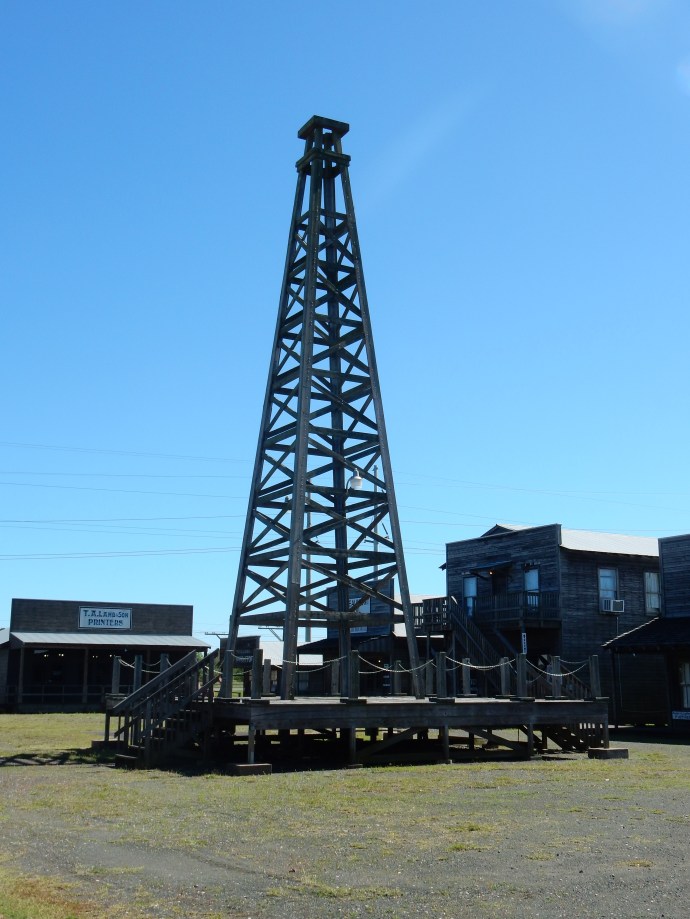
A final stop before bedding down for the night at the Book Nook Inn in Lumberton Texas was the Spindletop-Gladys City Boomtown Museum. Spindletop was the first true oil gusher in 1901 and really ushered in the wide-spread use of oil as a fuel. Mobil/Exxon, Gulf, and Texaco all got their start here.

A replica of an early oil derrick at Spindletop Museum

I had been confused by pictures showing oil derricks in the hundreds sort of cheek to jowl. Evidently in those early days, lease rights were parceled out in lands as small as 1/64 of an acre. Spindletop’s big push lasted only 10 years but it gave the impetus for this stretch of Texas and Louisiana to produce and refine oil and for cities like Port Arthur to become shipping cities.

Ed and Chris. Lumberton TX. March 31

Categories: road trip, travel | Tags: , , , , , | 1 Comment

2017 Trip Two: Tour of Texas March 28-29

Lafayette, Louisiana. Wednesday March 29

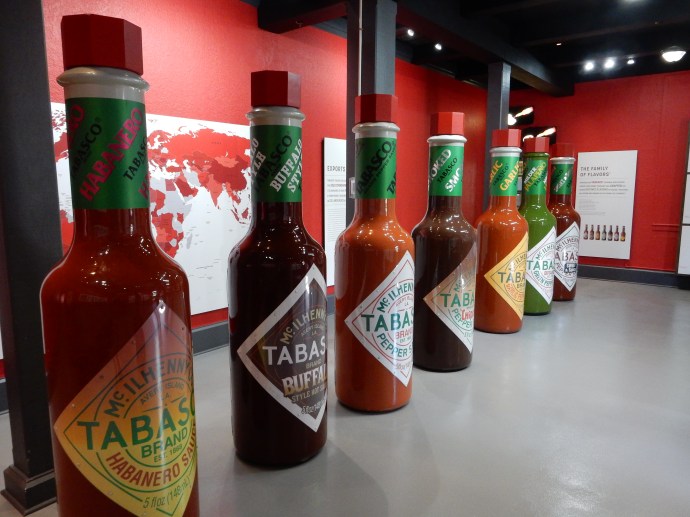
Tabasco Sauce oversize bottles at the factory tour

Zydeco. Cajun. Acadian. Tabasco. Bayou. Sugar. Oil. Crawfish. Catfish. Alligators. Floods. What do you think of when Louisiana and its delta area are mentioned? We have spent an enjoyable two days touching on all of those and other aspects of life in the area between New Orleans and Lafayette.

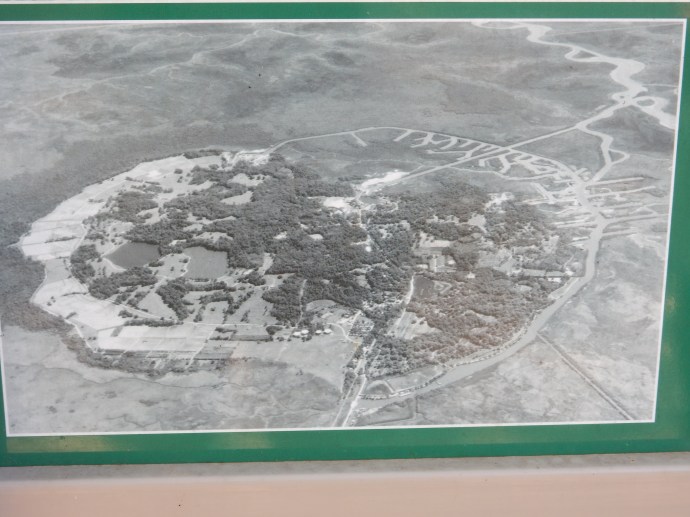
An aerial view of Avery Island

Tuesday we made a stop at Avery Island. First off, Avery Island is not an island in the usual sense. It is an area of land (2200 acres) rising above the marshy, more flat ground in this section of Louisiana. So the islands stand out and above from the rest of the landscape; there are several “islands” in this area. Some of these islands are unique in that they are salt domes, pillars of salt tens of thousands of feet deep, deposited eons ago and now mined for the salt. Cargill mines the salt under Avery Island.

On Avery Island, the McIlhenny family began growing peppers and preparing their unique sauce, Tabasco Sauce, after the Civil War. The family still runs the business and makes the sauce here on Avery Island, growing the peppers, using the local salt, preparing and mixing the sauce, then bottling and shipping it from here. We toured the factory and watched the process in action.

On a side note, there is another salt dome and mine less than 10 miles from Avery Island. In 1980, by mistake, a Texaco Oil Company rig drilled into a Diamond Crystal Salt Company salt mine. A hole was punched into the roof of the mine and the lake (Lake Peigneur) drained into the cavern that had been created from years of mining. The cavern was so large and deep, water from the nearby bayou flowed in reverse, the freshwater became saltwater, geysers spewed out of the mine, and a waterfall began where the water now flowed into the mine opening. No one died and nine of eleven barges sunk during the disaster later popped out of the whirlpool. Today the mine is closed but the dome is still used as a storage and hub facility for pressurized natural gas. Just a tidbit for your edification.

Side note number 2. In 2012, another salt dome collapsed. Bayou Corne sinkhole was a dome with numerous caverns. Drilling created a weakness and gas and oil escaped into the dome. The sinkhole is swallowing land and discharges gas into the water and air. Hundreds of families have been evacuated and many will eventually be relocated.

Side note number 3. In 2002, the American Chemical Society recognized the 1843 invention by a free man of color named Norbert Rillieux who invented the multi-state evaporator for refining sugar as one of the greatest inventions of chemical engineering. It paved the way for greater efficiencies in sugar production. Rillieux owned part of the land that Chalmette Battlefield of Jean Lafitte National Park is located on.

Side note number 4. Oil was discovered in this area in 1901. Off-shore oil drilling began in 1947. We observed numerous oil field supply companies and airports with more helicopters than airplanes.

Back to the fun stuff. The McIlhenny family also runs Jungle Gardens and Bird City. This is a 170 acre botanical garden and wildlife refuge, also on Avery Island. Touring the gardens and factory were a pleasant afternoon diversion. The gardens are nice but once again very little blooming plants were to be seen. I was expecting the azaleas or iris or camellias to be in flower. Where are the bountiful blooms of gardens like the Portland Oregon Rose Garden or the gardens at Richmond and Norfolk VA, etc? The best part of Jungle Gardens was Bird City, a nesting area for egrets and herons.


Bird Island video

Tuesday morning, besides watching sugar cane fields and refineries, driving along bayous, seeing more ships, marveling at huge live oak trees with their spreading branches, we visited the Wetlands Acadian Cultural Center in Thibodaux LA-part of the Jean Lafitte National Historical Preserve. Together with the visit Wednesday afternoon at the other Acadian Cultural Center in Lafayette, we read and heard about the history of the French Acadians in Louisiana.

This blog has already mentioned the intermingling of cultures that has given flavor to Louisiana; Spanish, African, Canary Islands, several Native American tribes, Irish, German, Chinese, and Filipinos. One of the most notable cultures is that of the French, particularly the French Acadians.

The history is complicated but essentially French settlers came to that part of Canada we now consider as Nova Scotia but which was called Acadia at that time. Later the settlers spread to Prince Edward Island and Cape Breton Island. Over several decades in the late 1600s and up to the middle 1700s, control of this portion of Canada switched between the British and the French. When the British controlled the area, they sought pledges of allegiance or at least neutrality, from the French living in Acadia. However, around 1750, the British controlled the area and were fearing the French would try to re-take Acadia.

The British became more forceful with the French Acadians who resisted a full pledge of allegiance. In response, the British began a seven-year process of forced deportation of the Acadians. A brutal process that separated men, women and families; the Acadians were shipped to American colonies and back to France. Most American colonies did not want them, the Acadians were denied entry, were separated among many towns, and many died of disease. For instance, Massachusetts never allowed the refugees off the ships and 1500 died of smallpox. Virginia sent their 1500 exiles off to camps in England. In South Carolina, 940 escaped to the interior of the colony while some escaped to go back and fight the English in Acadia. In Pennsylvania, many of the 450 exiles were imprisoned for not giving up their children to English-speaking families. Over time many of the Acadians exiled to American colonies returned to France, and too independent to live under royal rule in France after being gone for so long, they decided to try a new spot in America. Combined with French from the West Indies, Louisiana became their new home. Louisiana was under French or Spanish rule, depending on the year, and the French Catholic Acadians were welcome here.

The Acadians in this area preferred to settle on the levees, the fertile high banks along the slow-moving rivers. Surveyors would parcel out land to them including fertile land, waterfront for fishing rights, and back country land for grazing animals. (This is not dissimilar to the process used in Hawaii to give natives pieces of land in a pie shape to include ocean, hilly terraces and mountainous land.) The term Cajun became the English pronunciation of Acadian. Their French is still spoken here, although dissimilar from continental French.

The Acadian culture was almost lost. In 1916, Louisiana undertook legal steps to forbid the teaching of French and the Acadian culture and two generations suffered by not learning their history. Not unlike the efforts made by the U.S. government to undo Native American culture.

Scenes from Lake Martin

Wednesday morning we took a two and a quarter-hour swamp tour. We are staying at the Savoy Bed and Breakfast at Lafayette LA. The owner gave us the name of a company, Cajun Country, that he recommended to replace one we were contemplating that is run cooperatively with the National Park Service. Cajun Country gave us an excellent experience. This is not our first swamp tour. We have completed ones at the Okeefenokee Swamp in Georgia, the Everglades in Florida, and Horicon Marsh in Wisconsin. Still, it is not our everyday experience.

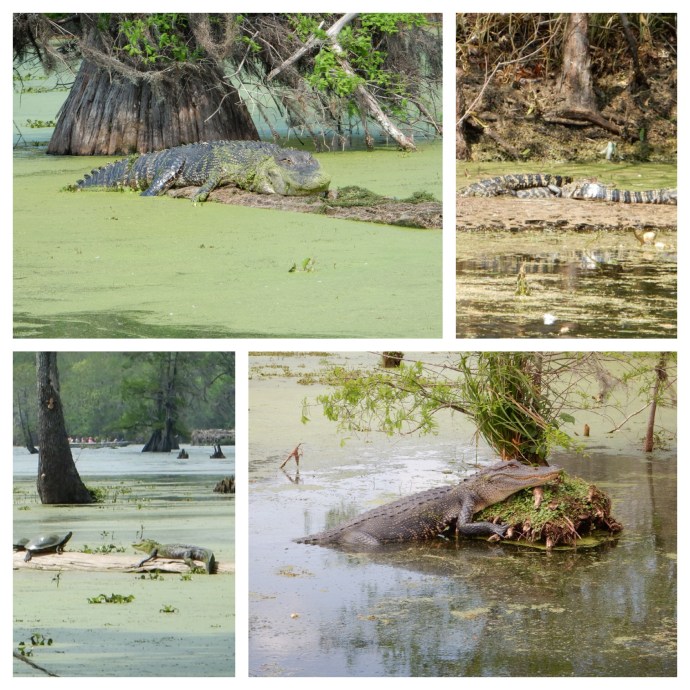
Alligator collage

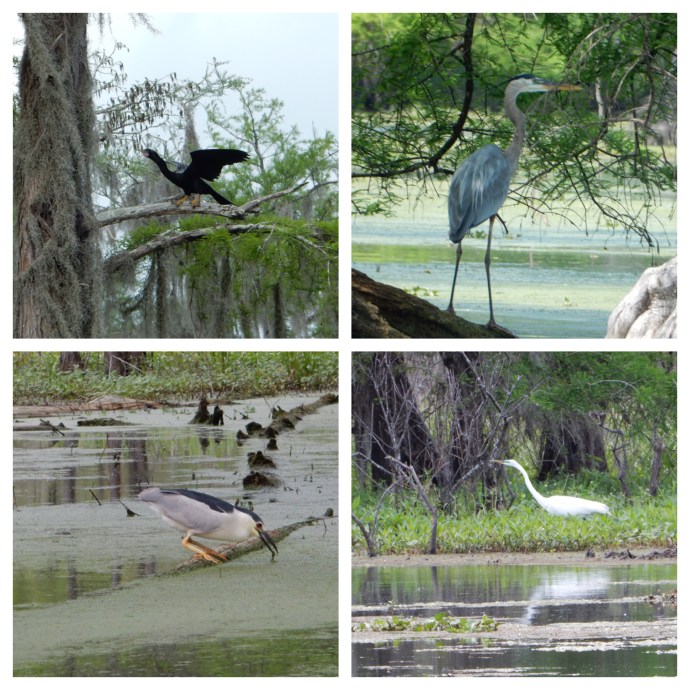
Bird Collage from Lake Martin

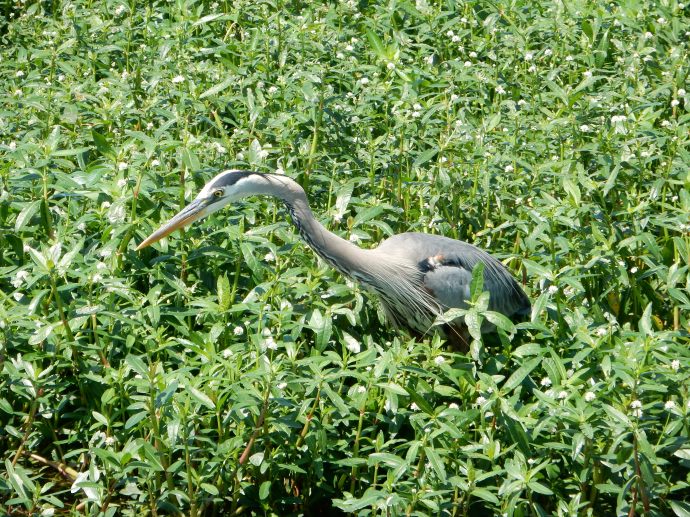
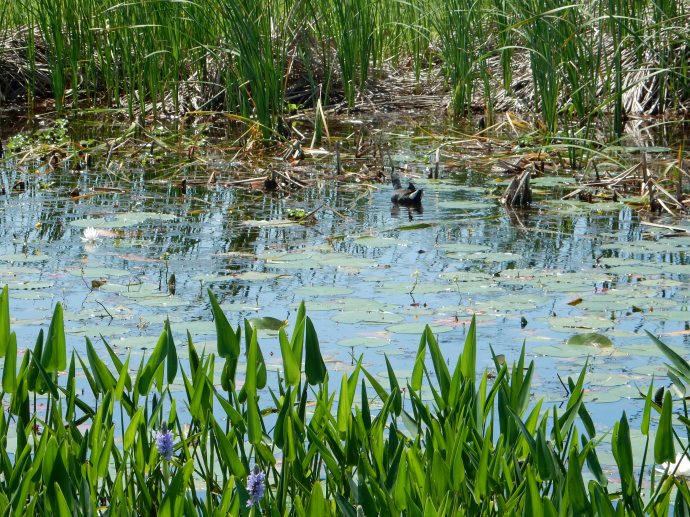
As our guide stated: “A marsh is a lake with trees in it.” Lake Martin runs between four and seven-foot of water and is now managed by The Nature conservancy. Together with the nearby Cypress Island Preserve, 10,000 acres of land, water, forest, and marsh are protected. Great Blue Herons, Great Egrets, Roseate Spoonbills, Anhingas, Cormorants, Whistling Ducks, etc. breed here and we observed all of those species. Alligators and turtles were everywhere, from small to large.

We ended the evening with dinner eating Cajun food and listening to Cajun music at a local restaurnt also recommended by our Savoy B & B host.


Video

Ed and Chris. March 29

Categories: road trip, travel | Tags: , , , , , , , , , , | 4 Comments

2017 Trip Two: Tour of Texas March 27

New Orleans, Louisiana Monday March 27

Longue Vue House and Gardens, one of today’s stops

A rag-tag group of diverse soldiers, mainly untrained, saved the United States. Back in 1812, the United States was still a rough, unrespected experiment in government. European powers were doing their usual wars against each other. Britain was stopping United States ships and “impressing” males into service in the British Navy. Basically, they needed sailors in their Navy and took any able-bodied male on captured ships and pressed them into involuntary service and made them British Sailors. When protests by the U.S. had no impact, the U.S. declared war on Britain in 1812. In addition, the Brits were still influencing Native Americans to resist the U.S. The United States also had ambitions to take over Canada.

The Monument at Chalmette Battlefield, site of the Battle of New Orleans Jan. 1815

The British were hampered by still fighting Napoleon but he and the French were defeated in the spring of 1814. Fresh troops were sent to quell the U.S. One effort coming south out of Canada stalled after a defeat at Lake Champlain. The British were successful in burning the White House in D.C. but Fort McHenry in Baltimore held off British ships and that effort failed.

A third attack was sent out of the West Indies and headed for New Orleans. The British had 10,000 well-trained troops with experienced commanders. The US under General Andrew Jackson had only about 1,000 trained troops. In order to repel the British, the U.S. troops were fortified with free black men, with Choctaw Indians, with state militias from Kentucky and Tennessee, pirates of Jean Lafitte, and volunteers from all walks of life in New Orleans, many of whom were recent immigrants from the Canary Islands, from Germany, from Ireland, and French Acadians from Canada.

We won. The British had a two to one advantage in soldiers when the battle began. When the battle ended, the British had lost (dead, wounded and captured) ten times as many soldiers; 2,000 to 20 for the U.S. By all rights, the British should have won. Bad luck, wet and muddy ground, a few poor decisions, some poor timing, and the death on the battlefield of top commanders hindered the British.

A view of where the earthen ramparts would have been for the Battle of New Orleans

The Americans were aided by great marksmanship by the militia from Kentucky and Tennessee, by smart tactics, and by well-constructed ramparts that negated artillery impact and protected the Americans from British fire.

This we learned at Chalmette Battlefield, part of the Jean Lafitte National Historical Park and Preserve. Two videos, displays, and an excellent presentation by the NPS Park Ranger told us this and much more. The presentation was well-attended as the talk is timed for the arrival of passengers on a paddle wheel boat coming downriver from New Orleans.

Chris and I chose to drive down. Driving gave us more flexibility and saved us time. It also took us through the Ninth Ward, an area of New Orleans that was particularly hard hit by Hurricane Katrina. We chose not to take photos of the area. One observes homes and businesses still destroyed 12 years after the hurricane. There are also many rebuilt structures and structures undergoing rehabilitation. The use of stilts and concrete foundations to raise the living areas of buildings several feet into the air is marked. The exhibit at the Presbytere we saw on Sunday mentioned that there has also been an attempt to use more environmentally and long-lasting materials in reconstruction.

I did notice one sign advertising an upcoming festival sponsored by an Irish-Italian-Islenos social group. Diversity is still thriving. A different feel is given to the area by the shipping and petrochemical facilities which loom large over the landscape everywhere.

The New Orleans population is recovering. It had been just under 500,000 at the time of the hurricane and is estimated to be just under 400,000 today. The 2010 census had it at 343,000 people. Right after Katrina, it was estimated to have gone as low as 200,000 people.

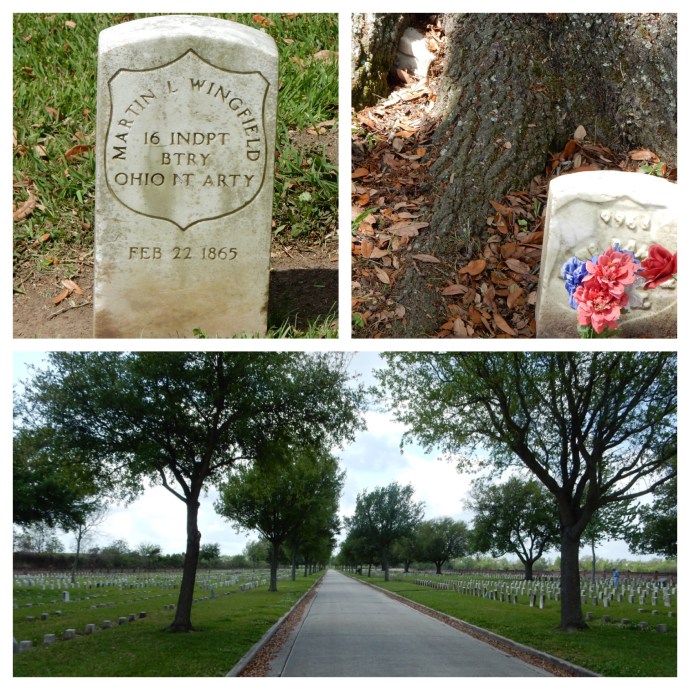
We did not ask the park rangers how the battlefield had been damaged. However, part of the Chalmette battlefield is the Chalmette Battlefield cemetery and we also took in a cemetery tour by a student volunteer docent. She indicated that the cemetery which is right next to the battlefield was covered by eight feet of water. The brick wall and headstones were damaged. Unique to the New Orleans area, graves at this cemetery are below ground. There is a build up of silt from years ago flooding and this is considered high ground. You may know that graves in most cemeteries in New Orleans are above ground due to the high water table. We had observed that and a funeral march at an earlier visit.

Chalmette Cemetery

The cemetery is not for dead from the Battle of New Orleans. It began as a cemetery for Union dead during the Civil War for bodies that could not be sent north for burial. Many graves are marked as “unknown.” It is also used for veterans from other wars since the Civil War and all available space has been reserved or used. This cemetery was the first in the area to be integrated; one sees headstones marked “colored troops” from the Civil War. A female Union soldier is buried here. You may have read that some women dressed as men and served as soldiers in the Civil War. Pay was good and most went undetected until injured or death.

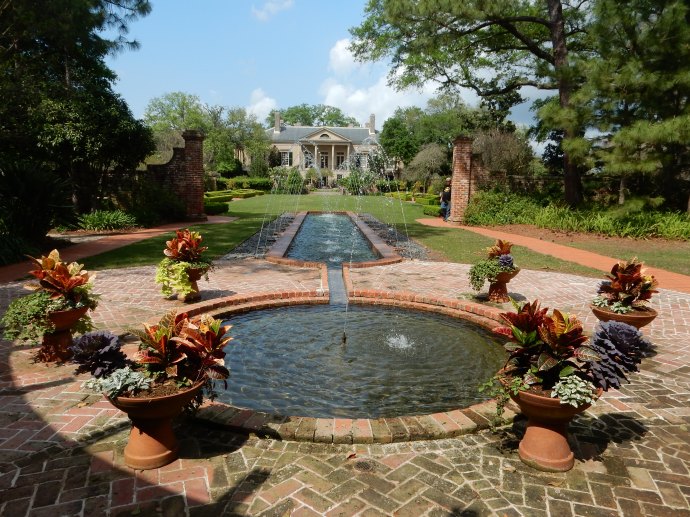
Our next stop was Longue Vue House and Gardens; a mansion built by Edith and Edgar Stern. She was a daughter of the Sears company founder. The docent here was candid. The hurricane devastated the grounds and the basement, unique for New Orleans, of the home but the house itself was not damaged. The grounds were laid out extensively. The first home on the site was moved away so the current mansion (over 20,000 s.f.) could be built to maximize the view of the gardens from all rooms. The owner over the years had shared cuttings from the plants here with other gardens around the country. When the gardens had to be re-built, they contacted those gardens and received back cultivars of the original garden plantings to recreate the gardens.

New Orleans is known for a series of fantastic plantations but we had no desire to see more great houses built on the backs of slaves. Longue Vue House was a reasonable compromise. The husband and wife admitted they lucked into money. Their philanthropy in the New Orleans area is well-known.

Longue Vue House

The house was the second home in the South to have air conditioning. Several of the rooms were “decorated” by the practice of going to Europe and purchasing a whole room of an estate house that was being destroyed or for sale. Each room had a view of some part of the extensive gardens that were designed by Ellen Biddle Shipman.

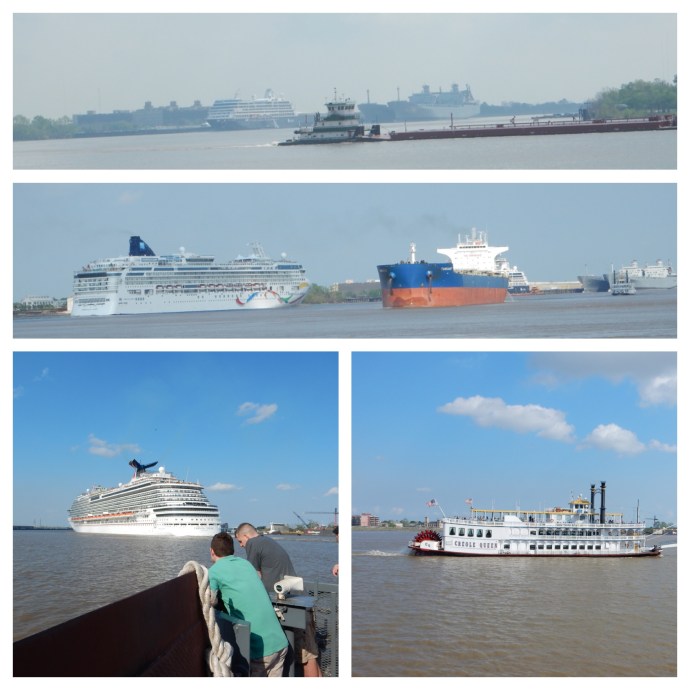
After we returned to our lodging, we took a later afternoon walk along the levee, watching the ships traveling along the Mississippi.

Ed and Chris.

Categories: road trip, travel | Tags: , , , | Leave a comment

2017 Trip Two: Tour of Texas March 26

New Orleans Louisiana Sunday March 26

St.Louis Cathedral flanked by the Cabildo on the left and the Presbytere on the right.

A sugar surge is keeping me energized as I write this post. Pralines (sugar, pecans, butter, milk and vanilla) from the New Orleans School of Cooking sit before me. Hopefully I will resist enough not to overdose on them.

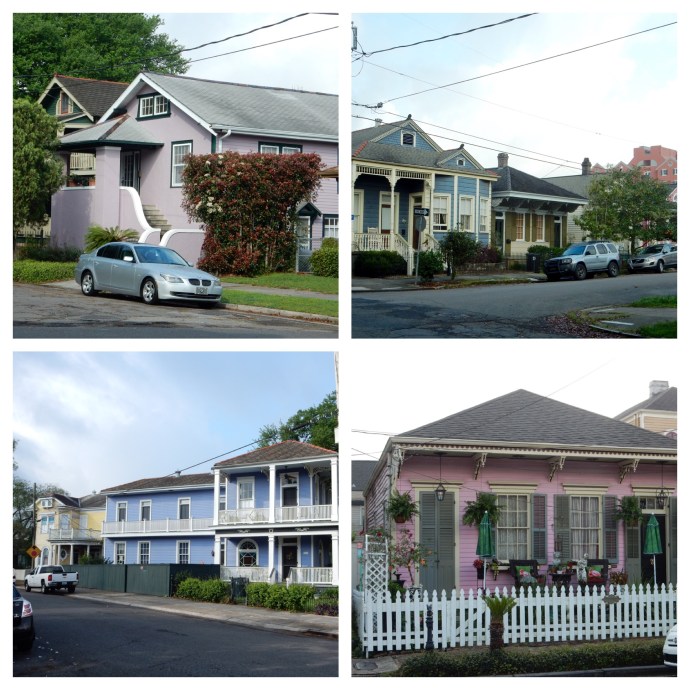
Some examples of homes in Algiers Point

Today was the opposite of yesterday. Early morning clouds and fog gave way to sunshine, a mild breeze, and temperatures in the high 70s. Algiers Point was settled in 1719 but many buildings burnt down in a major fire in the late 1800s. Wood homes seem to predominate in the historic district and are colorfully decorated. Chris and I walked numerous blocks marveling at the varied colors. On the negative side, in this area the streets are poorly paved and sidewalks in rough condition when they exist. Utility poles and wires are everywhere. I can not profess to be an expert on the area; when we drove 3 miles tonight to a grocery store, we encountered much better streets and new home construction. A former Navy base is being re-developed into a mix of public and private offices, businesses and housing.

From what we can tell, most of Algiers Point escaped major destruction during Hurricane Katrina. It is on higher elevation although walking on the levee this morning made that difficult to believe. During Katrina, there were incidents where the mostly white residents of Algiers Point shot blacks who were escaping the floods. News reports indicated that the whites were claiming they were protecting their homes from looters but facts proved otherwise. They shot first and asked questions later. The men shot all had legitimate reasons for being in the area. Issues I can not fully resolve for you.

Walking along the levee at Algiers Point. On our way to the ferry

After walking the neighborhood and the levee, we arrived at the Algiers Point Ferry Terminal. We took the ferry across the Mississippi RIver to a dock at Canal Street. The ferry charges $2 per person, exact cash only. We had to use some quarters to have the exact change. For the return trip, we had to make sure we bought just one post card to have four one dollar bills with us. We did encounter two women on the return trip asking people waiting in line if they had change. We saw them on the ferry so evidently they found a Good Samaritan with change.

There is a fancier river walk along the downtown New Orleans side of the river which we took to our first destination, the New Orleans Jazz Museum at the Old U.S. Mint. The first floor of the museum is dedicated to history of the mint. It had some unique roles in that during the Civil War it was seized by the State of Louisiana and used briefly to mint coins for the state and later for the Confederacy. Since New Orleans was re-taken by Union forces by the middle of 1862 and the Confederacy ran out of silver and gold bullion early on in the war, not many Confederacy coins were minted here. Items on display include a coin press and a gold bullion scale.

The second floor has exhibits about New Orleans Jazz and Louis “Satchmo” Armstrong. Displays discuss his upbringing here before he later moved to Chicago and New York. The last trumpet he used before his death is on display. There is an additional exhibit of art by southern artists, focusing on self-taught artists.

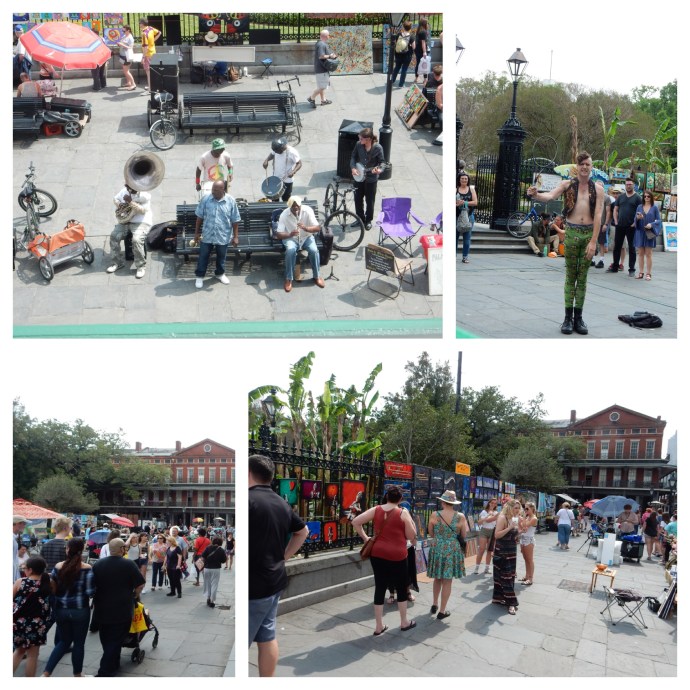
A collage of Jackson Square scenes

We left the Mint and headed to Jackson Square. Jackson Square is a large green space, with St. Louis Cathedral, the Cabildo Museum (history) and the Presbytere Museum (culture) flanking the Cathedral on the northwest side of the square. Three sides of the square were home to artists selling their wares and buskers performing for the tourists. One or two musical groups were always performing so you were serenaded as you strolled along inspecting the art. Even inside the two museums, you could hear the music. (Jackson Square is named after Andrew Jackson, the hero of the Battle of New Orleans where the Americans defeated the British in the War of 1812.)

The Cabildo was a pleasure. Three floors of displays on the history of New Orleans. There was so much info, I fear most of it went in one eyeball and out the other. When the museum covered the Battle of New Orleans, it mentioned how Andrew Jackson did not follow-up after the battle on his promises to the citizens. One of his actions was to not repeal martial law after the battle, waiting until the whole war was declared over. When a newspaper editor dared to write that the martial law could be lifted, he had the writer tossed into jail. When the judge said the writer was entitled to a public trial, he judge was tossed into jail. Gee, do we have a president who admires Andrew Jackson now? During his presidential elections, Jackson did not carry the city.

Some other tidbits.

The town early on had a Catholic heritage. The Catholics liked to go to Sunday Mass and then go out and eat, socialize, party on Sunday afternoon. When Protestants moved in, they were shocked at this scandalous behavior that did not keep holy the Lord’s Day.

New Orleans had six to ten times the number of saloons as were in Boston or Philadelphia.

New Orleans in its formative years had a wide variety of immigrants from Germans to Irish to French to Santo Dominguians to Canary Islanders etc that contributed to the mixed population. They called it the gumbo of the people. Yet, this did not stop anti-immigrant fever sporadically or the profitable discrimination against Indians and blacks.

Due to the early surrender of New Orleans, the Union government made an effort to test some Reconstruction plans here. Sort of “Reconstruction Light”. But actually due to the easy defeat, the citizens never faced the hardships of war. Thus the residents of New Orleans were more of a hassle to deal with than a pitched battle. They resisted the efforts and that helped lead to the eventual “Radical Reconstruction” that followed the Civil War with harsh enforcement. Louisiana was one of the last three Southern states to have rule by the military ended. Military forces left the state in 1877.

French quarter views

After the Cabildo (previously home to governmental functions), we went to the Presbytere Museum (previously associated with religious functions). The Presbytere focused on Hurricane Katrina (2005) and Mardi Gras. The Katrina exhibit had video of the storm, the damage and the stories of individual people. It discussed the geography of the area, the engineering failure that led to the horrendous flooding, and the actions of people who have destroyed the natural features of the land to help minimize the effects of major storms. The great flood of 1927 (the one that Herbert Hoover led the reconstruction for and which helped him to be elected President) was a major impetus in the levee building which now protects the city from river flooding. That same levee building makes the city more susceptible to hurricane flooding.

The Mardi Gras exhibit was informative but less interesting. Possibly this is due to our having seen the Mardi Gras museum in Mobile which covers the subject quite well also.

The Mississippi RIver at New Orleans is a busy river

All in all, a tiring yet informative day.

Ed and Chris

Categories: road trip, travel | Tags: , , , , , , | Leave a comment

2017 Trip Two: Tour of Texas March 22-25

Sunrise Miami Beach March 23 from our hotel

New Orleans, Louisiana. Saturday March 25

The last four days have been, and will be, the most casual and slowest paced of the entire 60 day trip. I saw no need to write a post saying nothing much happened so I have waited until several occurrences cobbled together can make an interesting post.

Wednesday the 21st was an excellent beach day. We spent all day at the beach, nothing earth-shattering occurred. But isn’t that the point of just relaxing at the beach?

Thursday, our nightly destination was Ocala Florida. An hour out of Miami Beach we visited the Morikami Museum and Japanese Garden in Delray Beach. 110 years ago, a Japanese graduate of New York University came up with the idea of starting a colony of Japanese farmers in southern Florida. The colony was called Yamato, after a name used for Japan. The colony had ups and downs and never really made a continuing success. One of the colonists, George Morikami, stuck it out. However WWII intervened and over 6,000 acres of the land owned by the Japanese, and other U.S. residents, was taken by eminent domain for a military base. After the war, George Morikami bought land back and in his later years donated it to the county for a park and museum to preserve the memory of that early 20th century Japanese community.

Photos from Morikami Gardens in Delray Beach Florida

We toured the gardens first, as the weather was projected to turn rainy and windy. The gardens are spread over 16 acres and present a series of styles of gardens from Japan. As are most Japanese gardens, the theme is reflection and contemplation. A visitor is not presented with masses of flowering trees, shrubs, and plants. Benches are placed strategically and a reflective moment can be spent observing the interplay between the rocks, plants, water, etc.

The original museum is now used to display information about the original settlement. The settlement had difficulty establishing long-term continuity due to the difficulty in attracting Japanese women to marry the young , single men that were the original settlers. Second, competition from Cuban grown fruit decreased revenues. Finally, the land boom in Florida in the 1920s meant many of the settlers could sell their land for a better return than farming and they sold out and moved on. Then, the remainder got wiped out as mentioned above when the military base took their land.

This original building also is a hands-on learning area for children. Finally there was a wall display that demonstrated how KitKat candy bars took off in popularity in Japan. Uniquely Japanese flavors were added to KitKat, such as Kyoto powdered green tea KitKat and Shinshu apple KitKat.

The new museum building had an exhibit on Japanese Art Deco from the period of the 1920s and 1930s. It failed to mesmerize us.

Our second destination before Ocala was the Wakodahatchee Wetlands, a 50 acre wetlands established on utility land. It is a great bird watching area introduced to us by my cousin Chris and her husband Nelson. However, all of the parking places were occupied and there was a line of cars waiting to pounce on the first newly vacated parking space. We did not wait and continued our drive to Ocala.

Leaving early was fortunate as several downpours enveloped us as we made our way northwest along the Florida Turnpike. During one particular outburst, we pulled over along the side of the road with numerous other cars and trucks since we could not see the road or vehicles in front of us.

Ocala lodging was with a great Evergreen couple. We had several points of synergy including a connection to living in Pennsylvania previously. The Ocala area is huge with horse farms. Horses are bred and trained here and horse auctions are big business. The Ocala airport is used to send horses around the world.

Chris and Ed in Niceville. The husband of the Evergreen couple took up painting after retirement.

Friday we drove to Niceville Florida. Niceville is in the Florida panhandle. We have toured in the area on previous trips and this was meant as a stopover on our way to Texas via New Orleans. We spent the night with an Evergreen couple. When we set this night up, the couple had indicated that on Friday nights they helped serve dinner for a church function and we volunteered to help out.

We got a tour of the Crosspoint United Methodist Church in Niceville and its church facilities and programs at its main campus. The church now has five churches in the Niceville area and seems to be dramatically serving its population through numerous ministries. The function we were at was the CR Recovery dinner. CR Recovery is a Christ centered recovery program for all types of hurts, habits, and hang-ups. The program takes the 12 step AA program and adapts it to a 12 step program with biblical comparisons. They combine it with an eight step recovery program again tied to biblical comparisons. Chris and I had helped serve dinner and clean up afterwards. It was a popular night, we gave out all of the food so the four of us went out to Panera’s for dinner.

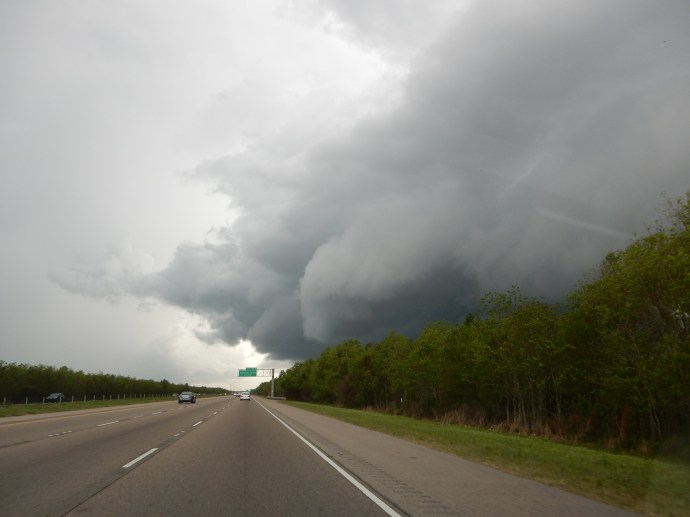
Thunderstorm approaching as we drove to New Orleans

Saturday the 25th we drove to New Orleans and once again got hit with thunderstorms. It was still raining when we arrived in the city and traffic was slow in the French Quarter as pedestrians were anxious to cross the street without getting too wet. Our only stop was at the Jean Lafitte National Historical Park Visitor Center. Surprisingly, the center is closed on Sunday and Mondays due to budget cuts. The orientation film was not working but we viewed the displays and obtained information from the ranger about the site. There are actually six locations as part of the National Historical Park and we plan to visit several of them over the next few days.

We have had to plan our visits in New Orleans tactically since Sunday, Monday, and Tuesday are all days in which museums and historical sites are closed. We are here through Tuesday morning. Our lodging for the three nights is through Airbnb in Algiers Point, an old neighborhood on the West Bank of the Mississippi River across from downtown New Orleans. The rain and clouds gave us limited time to explore on Saturday, but it appears to have some unique features. Most of the homes are brightly painted and we will have some photos for you in our next post.

the front of the Appetite Repair Shop in Algiers Point New Orleans

The community is not overly served with restaurants but we found a unique spot for dinner. The Appetite Repair Shop is 240 square feet in size ( I counted the floor tiles for a measurement), only open Thursday-Sunday from 5 pm until the food is gone, and only serves take-out. When we arrived at 6 PM, we were sixth in line. It took half an hour to get our food. The chef-owner cooks each person’s order from a limited menu that changes daily. We spent our time in line talking to the other customers and getting their life stories.

Most menu items were noted as “Hot”, “Spicy”, or “Silly Hot”. We chose the already prepared banana pudding, crackaroni and cheese (an upgraded mac and cheese), and Moroccan carrots and chickpeas salad. All were excellent. We went to bed after seeing some smokestacks of ocean-going ships in the distance over the banks of the levee.

Ed and Chris
March 26, 2017

Categories: road trip, travel | Tags: , , , , , , , | 2 Comments

2017 Trip Two: Tour of Texas March 20-21

Miami Beach Florida March 21. Tuesday

Today will be a photo post primarily. We took an urban hike of five miles along the boardwalk today and spent much of yesterday on the beach. Today would have been a good beach day but we decided to get exercise and re-explore the area.

There is an alternating paver sidewalk/raised boardwalk system that extends from much of the area from 46th St to around SouthPoint at the Miami Ship Channel (down to 1st St.) except for a few blocks from about 3rd to 5th. It is a fantastic way to get exercise and view both ocean and the high rises as it runs between the buildings and the dunes. Other than feral cats and bike riders on the boardwalk portion (where they hadn’t oughta be), there is little hassle.

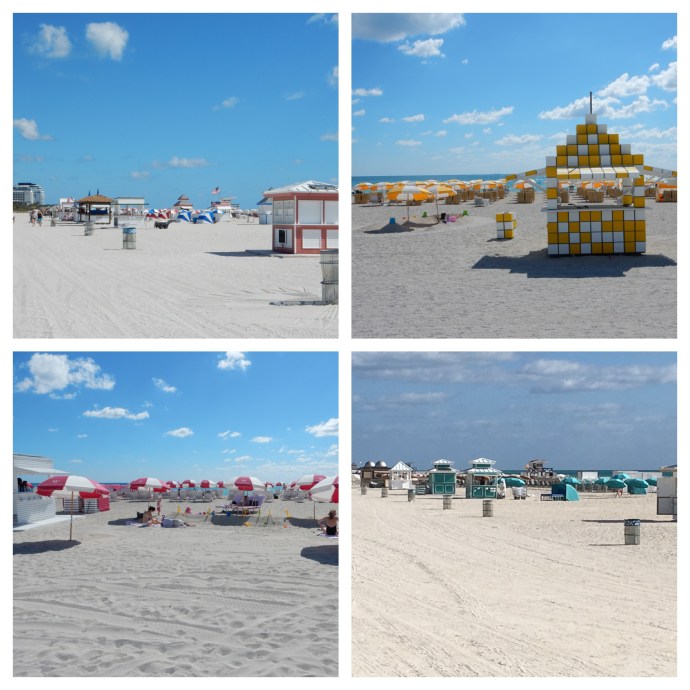
The various condos/hotels/apartments have their own booth where people get umbrellas and beach chairs. Some of the booths are color coordinated with the color or style of the hotel.

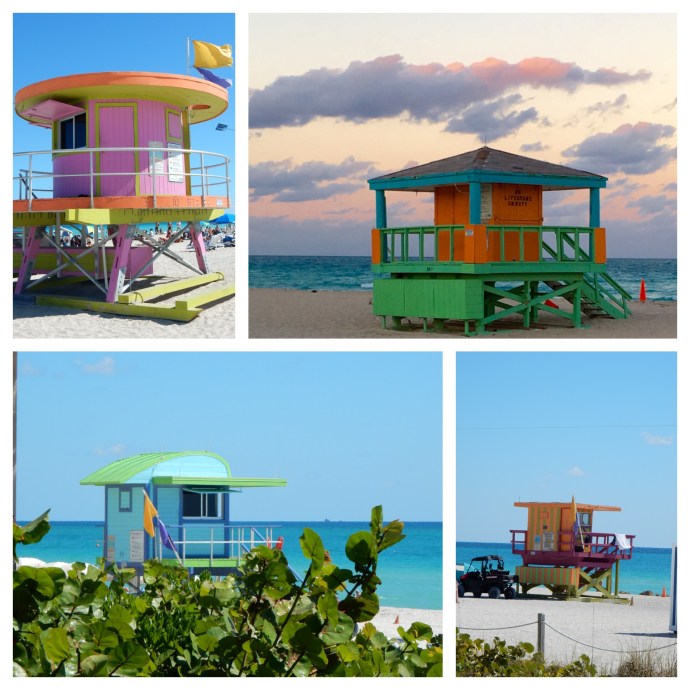
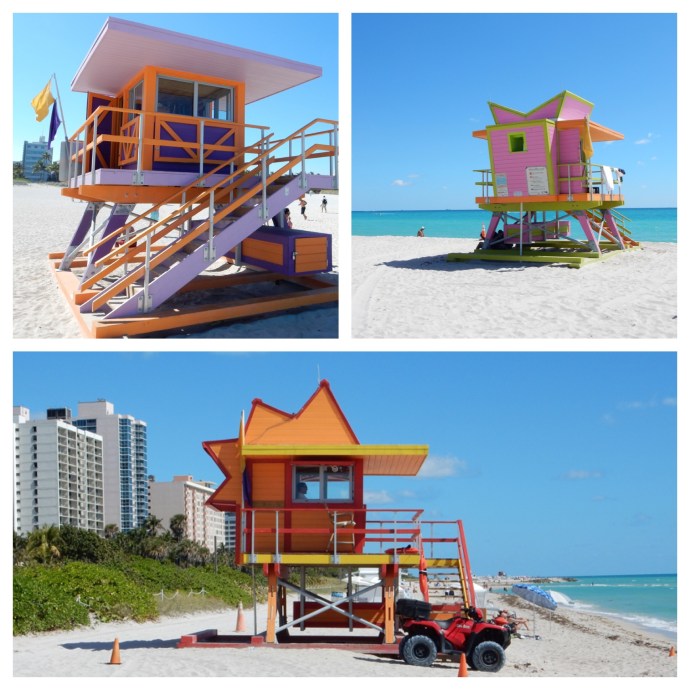
South Beach is known for the unique lifeguard stands lining the beach. No two are the same. Bright colors and styles differentiate them.

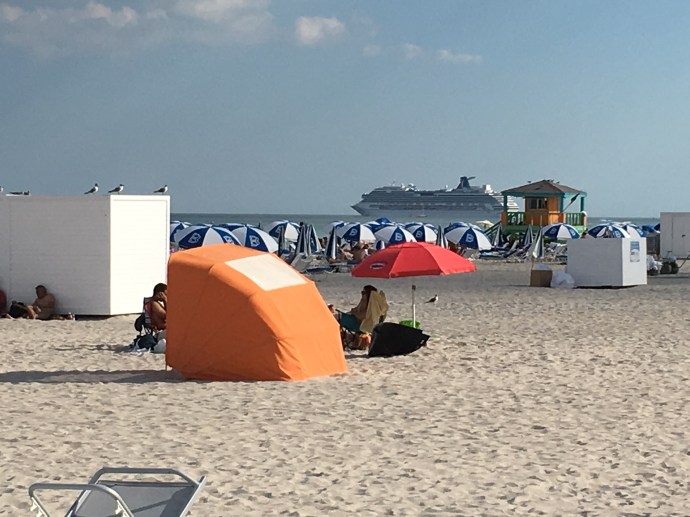
Cruise ships go out Thursday through Monday so nothing today but here is a shot from Monday.

Ed and Chris. March 21

Categories: road trip, travel | Tags: , | 2 Comments

2017 Trip Two: Tour of Texas March 18-19

Miami Beach Florida, March 19

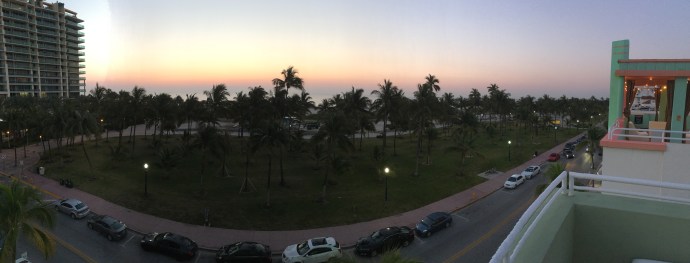
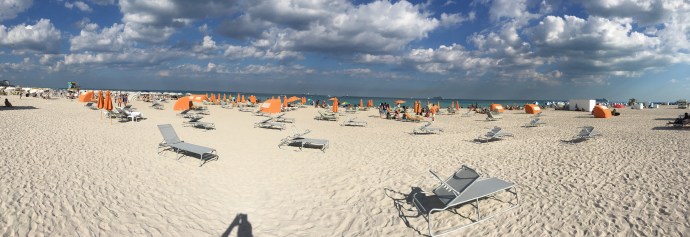
Panoramic view of South Beach at the end of the day on Sunday March 19

“Toto, I have a feeling we are not in Kansas anymore.” How true that it is. Crowds throng along the sidewalks. Mopeds, roller bladers, cars, bikes and people all seem to compete for the same space on the streets, with little regard for traffic lights or lanes. That last is actually somewhat reasonable given that traffic moves so slowly at crowded times. U-turns, double parking, stopping to chat from car to sidewalk, all are constant occurrences. Coming across the causeway from the mainland, there are skyscrapers lined up along the shore as far as the eye can see.

Sidewalks are always busy. Some walkers wait for the lights, most do not. Many forget that the sidewalk has to be shared with people going in the opposite direction. Of course, with restaurants taking up more than half of the sidewalk for al fresco dining, walking is even more of a challenge but people watching is enhanced.

The Beach was jammed today (Sunday). Normally we arrive around 10:30 as we did today and get an umbrella and beach chairs in the front row. Today we were in row three. Sat next to a nice family from Vancouver BC that are heading out for a 4 day cruise tomorrow. Six cruise ships departed between 4:15 PM and 5:10 PM. Numerous foreign languages heard on the beach; I thought Trump was scaring foreign tourists away? There were a lot more selfie sticks being used than I remember from previous years.

La Sandwicherie, a hole-in-the-wall frequent stop for take-out dinner (salads and sandwiches) is open from 8 AM to 5 AM, closing only for three hours. The closest Walagreens is only two blocks away but has no pharmacy. It is basically a convenience store. It is relatively new, much cleaner and better prices than the old, run-down grocery we used to frequent. I had to ask three staff members before I found one who knew the closest Walgreens that had a pharmacy. That Walgreens is three blocks in the other direction. We went there tonight but the pharmacy closed at 5 PM on Sunday. We got used to 24 hours pharmacy back home. Suntan lotion and food seemed to be the big sellers; this Walgreen also sold beer, wine, and alcohol.

Several of our favorite places are being renovated. This happens constantly down here. It is amazing how long it takes to complete the work, we can go several yearly trips before a place re-opens. The hotel next to us, the Betsy, has taken over an old hotel across the alley and is renovating the old hotel and connecting the two buildings. Another hotel and restaurant a block away is wrapped in plastic with workers going in and out. No idea what is happening.

Our place, the Hilton Grand Vacation Club timeshare looked different to us as we walked back tonight. Then we realized, the two building comprising the HGVC property were both bathed in green LED light. Previously each building had its own color in neon lights.

So, yes, we have left the prairies of Kansas and Nebraska behind. The forests and farm fields of Mississippi, Georgia, and Alabama are gone. Concrete, asphalt and steel have replaced it, along with sand beaches and blue oceans.

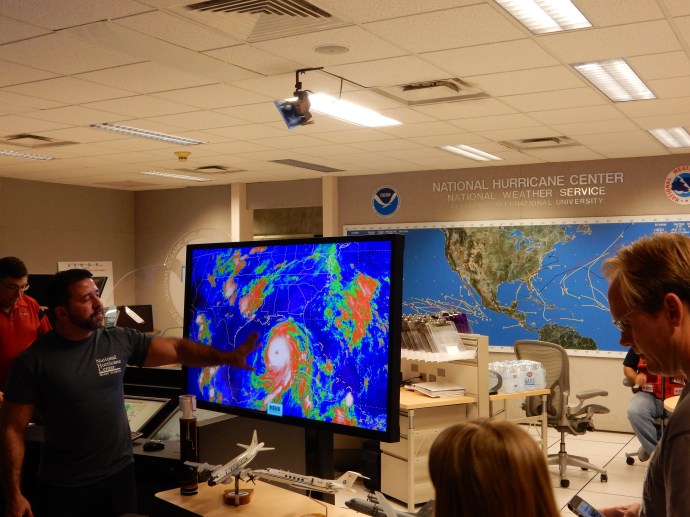
Speaker at the National Weather Service National Hurricane Center tour

Saturday was projected to still be a little too cool and breezy for the beach. I was reading the Miami Herald and there was a short blurb that the National Weather Service and National Hurricane Center were having an open house. What the hey, why not go? So we did. It was a 45 minute drive out there which included two wrong turns. Only two was pretty good. We were using Google directions but sometimes the spoken direction was different from the wording on the freeway traffic signs. Even at 70 mph we guessed correctly on several of the differences but did miss two of them.

The two agencies are part of the National Oceanic and Atmospheric Administration and share one concrete and steel hardened facility west of the Miami airport. A guided tour was offered in groups of about 25. The two missions collaborate and support each other while still being distinct. The Hurricane Center focuses on tracking severe storms in the Atlantic and eastern Pacific. They will also provide weather and wave information to mariners, like cruise ships and freighters. There is a room that converts into an emergency weather media center during hurricanes.

The National Weather Service will take the broad hurricane forecasts prepared by the Hurricane Center and localize the impact. They deal with local emergency management teams to inform them which communities will be spared and which will likely be struck by the storm.

One of the speakers had piloted the planes that fly directly into the storms when they are occurring. Another guy, not a pilot, recalled being onboard one of the planes as it flew through the storm and admitted he had gotten sick. We did ask if they could address climate change and they answered “No”. On the issue of budget cuts, they just said they were awaiting details.

This place is open 24/7, 365 days a year. The data they collect helps prepare for emergencies from hurricanes to fires and floods. Our reading indicates the NOAA is proposed to be cut 17% in Trump’s budget. How penny wise and pound foolish.

The Weather Service sends up two Weather balloons each day to gather weather data. The balloon goes up 100,000 feet before disintegrating and releasing an instrument package tethered to a parachute which brings it slowly back to earth. THe data is relayed back here. If I heard correctly, there are 1000 locations around the world that release a balloon at the same time. During severe weather, the Weather Service will release four balloons a day. For this open house, a third balloon was released at 1 PM. We all got to do the countdown and watch the balloon float off into the atmosphere.


Video of balloon launch

Ed and Chris. March 19

Categories: road trip, travel | Tags: , , , | 2 Comments

2017 Trip Two: Tour of Texas March 16-17

Miami Beach, FL. March 17

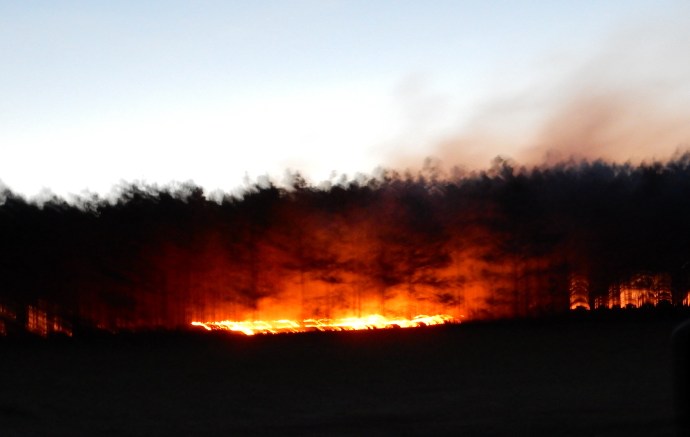
Early morning ground cover fire in Georgia

This is a short post, more to let you know we are still around. Thursday, March 16 was our driving day from Fort Gaines GA to Miami Beach FL, about 580 miles. A 7 AM departure produced a 6:30 PM arrival with stops and traffic. Other than a constant flow of heavy-footed Florida speeders, the only notable items were two areas where the landowners appeared to be burning the undergrowth or old corps in their fields.

We had dinner at a regular spot of ours, the Front Porch cafe. It is less than a block from our lodgings at the Hilton Grand Vacation timeshare on Ocean Drive. The Front Porch always has tasty food at reasonable prices. Reasonable restaurant meal prices can be a challenge in Miami.

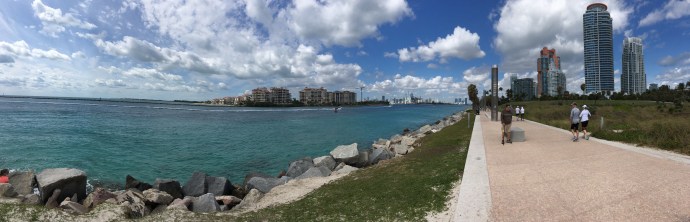
The Miami Ship Channel at South Pointe

On Friday, Miami Beach was cool. It was up to 70 but with a 15 mph wind. We hiked down to SouthPoint and the Miami Ship Channel where cruise ships and freighters enter and leave the city. In the afternoon we spent an hour on the beach, mainly bundled up to avoid the wind. The next few days should be warmer.

Chris on the beach Friday

Friday evenings the Wolfsonian Museum of Florida International University has free admission and a docent tour. The Wolfsonian focuses on items, not just art, from around 1850 to 1950. They had a special exhibition on Dutch design currently on display so enjoyed that before dinner at Spiga. Spiga is an Italian restaurant we have visit frequently and is only three blocks from our lodging.

The lobby of the Wolfsonian with vinyl prints highlighting the Danish modern exhibit, More is More.

As usual, the streets are crowded in Miami Beach although there is no major event happening. Spring breakers are still here but nothing overwhelming.

Ed and Chris. March 17

Categories: road trip, travel | Tags: | 1 Comment

2017 Trip Two: Tour of Texas March 14-15

Fort Gaines, Georgia Wednesday March 15
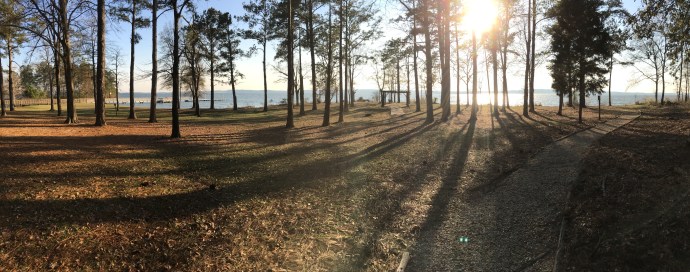
A view of George Walters lake from George Bagby State Park

Wednesday, March 15
Quite the contrast from the red soil peanut farm and farm business of President Jimmy Carter to President Donald Trump’s gold gilded Trump Tower. Carter has only been ranked 26th of 43 presidents (Trump obviously has not been rated yet.). However, Carter’s style, humble beginnings, and morality stand in sharp contrast to the current president.

We bring this up because we spent part of today touring the Jimmy Carter National Historic Site in Plains GA. (His Presidential Library is in Atlanta.) The site includes his boyhood farm home, his school, and his 1980 presidential campaign headquarters in the Plains railroad depot. (The depot had been closed and it became the campaign HQ since it was the only available large facility in Plains that had a bathroom.)

Carter was born in 1924 into a middle class family. We viewed the farm home the family moved to in 1928 on a farm that raised cotton, peanuts, corn, watermelon, sweet potatoes and sugar cane. A vegetable garden and livestock provided additional nourishment. The farm grew to over 300 acres and his father added a “store” that stocked provisions needed by locals who could not easily get into Plains three miles away. The Carter family later added electricity in 1937 and a windmill came in 1935 to provide running water to the house. The shower faucet was a large pail with holes punched in the bottom.

Like most farm kids, Carter worked on the farm with mixed enthusiasm. One hated task was something called “mopping” the cotton, a term I had not heard of previously. Mopping was done to poison boll weevils that were devastating to the cotton crop. Boys would take a mixture of arsenic, molasses, and water and apply it with a cotton mop to the bud of each cotton plant. His legs, feet, and pants would become covered with this goo-which also attracted insects.
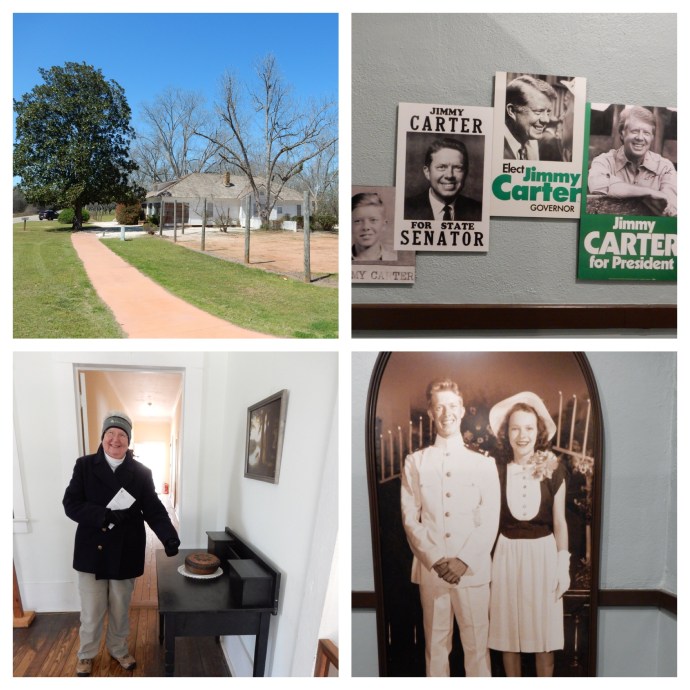
A montage of Carter Historiccc site photos: boyhood home, Chris by black desk, Carter election signs, Jimmy and Rosalyn wedding

Carter’s mother “Miss Lillian” was a nurse and frequently gone from the home when the kids came home from school. On a black desk by the front door, she would leave a “to-do” list of chores that had to be completed. At age 68, Lillian Carter joined the Peace Corps serving in India.

Carter has stated that both of his parents played a strong role in his development. He won an appointment to the Naval Academy and married Rosalyn after graduation. He was on a fast track to rise high in the ranks when his father died in 1953. When he returned to Plains for the funeral, he realized what a positive impact his father had on individuals in the community. He decided to resign his commission and return to live in Plains and run the family farm and business. Rosalyn was not pleased, she was getting used to Navy life and seeing the world. She indicated she pouted for about a year before learning to like and accept life.

Carter grew the business and decided to enter political life with his first position being on the local school board. He went on to the Georgia State Senate, then Governor, and finally President. The pace upward was not without hardship. The school position created local animosity when their plan to consolidate schools was seen as a ploy to integrate schools. His first Senate campaign required a judicial challenge to overcome election fraud by the entrenched politicians who thought he was too liberal. His first run for governor was a loser and he ended up $66,000 in debt.

Race wise, Carter was a product of his times. He grew up in segregation and accepted it. He was not hard-core, accepting black friends and neighbors. He refused, as a local businessman, to join the White Citizens Council, which cost his business needed revenue until the issue died down. His family’s effort to allow local blacks to enter their Maranantha Baptist Church was defeated soundly. (Carter has stated his religious beliefs were minor until he lost the race for Governor and spent time reflecting on his life.) Nevertheless, he was not a leader in the segregation efforts of the 1960s but as he became Governor, he pushed extensively for inclusion of blacks and women into state government.

Carter has credited his teachers, and his principal, at Plains for pushing him to excel. His principal, Miss Julia Coleman, used to tell her students to study and work hard and even a child from Plains could grow up to become the U.S. President. She died in 1973, not seeing her protegé become President. Carter said at his inauguration one of her famous sayings: “We must adjust to changing times and still hold to unchanging principles.”

While Carter only served for four years, he and Rosalyn have led a post-presidential life that exemplifies the concept of working for the benefit of all mankind. He still teaches Sunday School and he and Rosalyn join other members of their small church community to cut grass and maintain the church facilities. They have established the Carter Center that focuses on peace, nation-building, and eradication of diseases in third world countries.

Carter also still volunteers for Habitat for Humanity. We left Plains for Americus GA, 10 miles away to have lunch and visit the Global Village and Discovery Center of Habitat for Humanity. Lunch was first of course. Our chosen spot, listed in AAA, was full and we walked to a local independent bookstore and cafe. We did not buy any books but did have a croissant sandwich made on the premises.

On the left, two slum, pre-Habitat housing shots; on the right, a new home outside and inside

Habitat has its headquarters in Americus due to history. The founders of Habitat were members of a “commune” called Koinonia located just outside Americus. Koinonia started in 1942 and due to its acceptance of people of all races, it was targeted by the Ku Klux Klan in the 1950s. They survived and prospered, growing more when a wealthy couple, Millard and Linda Fuller, sold their possessions and became its leaders. Fuller recruited Jimmy Carter and that added to the acceptance and prestige of Habitat. (Fuller was fired in 2005 over a combination of a disagreement in management philosophy and some allegations of improper behavior.)

In any event, Habitat is now recognized worldwide as a leader in building sustainable homes for people in poverty. The Global Village recreates a collection of “before” and “after” housing. A visitor walks down a street of shacks typically found in slums around the world. Then the scene changes and one views typical homes constructed in various countries, adapted specifically to the weather and building materials of the specific country.
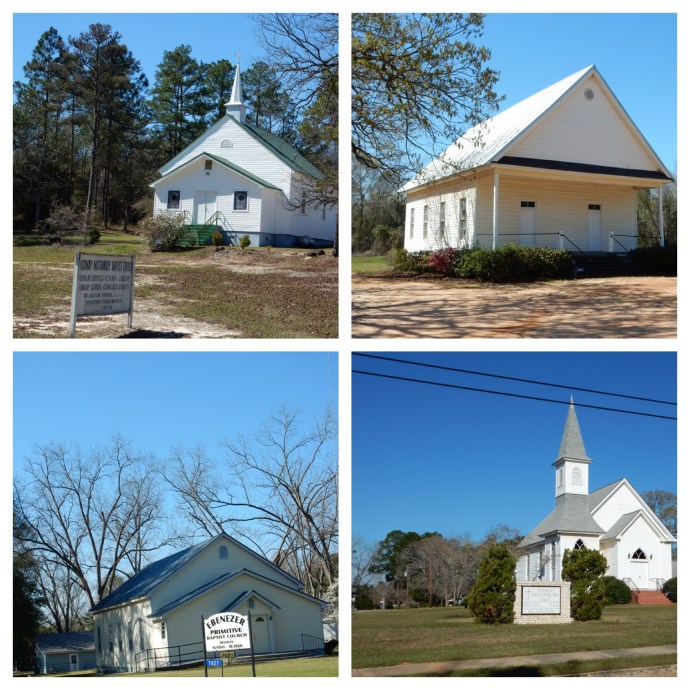
Four of the many small churches we passed along the back roads

We returned to our lodging, once more driving down two lane roads, viewing red clay farm soil, noting the numerous small churches dotting the countryside, and observing the acres of forest that are the backbone of the lumbering business in Georgia. One final stop was visiting The Walter George dam and lake on the Chattahoochee River. The lake is what we can view from our lodging at George Bagby State Park. The Chattahoochee River is a source of contention between Alabama, Georgia and Florida. I do not know all the details, but evidently Florida believes the Atlanta metropolitan area is sucking up too much water and depriving the mussel industry in Florida of sufficient water resources. The staff member at the visitor center was doubtful of any near term resolution.

Tuesday, March 14
This post covers Tuesday and Wednesday. We did not believe Tuesday was robust enough to post by itself. We left Oxford Alabama and drove to Horseshoe Bend National Military Park. Yup, two lane roads, rural countryside, and a gray, drizzly day to boot. Horseshoe Bend was one of two battles which Andrew Jackson won and which propelled him to the Presidency of the United States. Horseshoe Bend was the determining battle of the Creek Indian War. (The second was the Battle of New Orleans-part of the War of 1812.)

The Creek Nation lived in what is now Georgia and Alabama. As the European settlers expanded across the country, the Creek Nation was split between groups; one that was willing to cooperate with the settlers and adopt their ways and goods versus the second which wanted to hold fast to their traditional culture, way of life, and land. As these things will do, a series of small atrocities led to a complete war between the US and the more traditional Creeks in 1813-1814. (While during the time of the War of 1812, this was a separate conflict.)

An aerial view of Horseshoe Bend where the battle was fought

Andrew Jackson lead the U.S. military troops and suffered two early defeats. With reinforcements, he pursued the Creeks who were spending the winter at Horseshoe Bend with their families behind a strongly built barricade across the neck of the bend. At the end of March 27, 1814, 800 of the 1,000 Indian warriors were dead and their families sold into slavery. In August of 1814, the Treaty of Fort Jackson stripped the Creek of their remaining lands (most already ceded in earlier treaties). The treaty made no differentiation between the Creeks who fought and those who wanted to live like the Europeans.

In 1828, Jackson became President and in 1830 signed the Indian Removal Bill requiring southeastern U.S.tribes to move west of the Mississippi River in a dreadful forced march called the “Trail of Tears.”

Art Museum of Auburn University

After Horseshoe Bend, we spent a little time in Auburn Alabama, home of Auburn University. We visited the Art Museum of the university which had a special exhibit of works by Jiha Moon. She is a Korean born artist now living in Atlanta. It was not spectacular but succeeded in using up time before we checked in to George Bagby State Park in Fort Gaines, GA.

Walking the Chattahoochie Trail at George Bagby State Park in Fort Gaines GA

We are staying in the lodge here, built in 1988. The rooms are like old style highway motel rooms, but clean and neat. Not fancy, no Ritz Carlton; although I have only stayed in a Ritz Carlton once and it was on another organization’s dime. Tuesday after arrival, we took a walk through the trails while the sun was still somewhat warm. We were a little confused on the trail, not lost, just confused. I blame it on the poor quality of the map, not the map readers. Wednesday we stuck to the paved trail, no confusion ensued.

There is a restaurant here. None of the literature we recall reading indicated the restaurant was seasonal; i.e., it was closed Tuesday night. The nearest open restaurant was a five table pizza/barbecue place 20 miles away. We made it before they closed and the food was tasty.

Two other groups are staying at the park. A group of utility line workers repairing storm damage and a group of GA DNR water rescue instructors. Due to the DNR group, the restaurant was open for breakfast and dinner today (Wednesday) and may be open early enough Thursday that we can eat and leave. Thursday is a long driving day down to Miami Beach, over 550 miles so it is likely there will be not be a post Thursday evening.

Ed and Chris

Categories: road trip, travel | Tags: , , , , | Leave a comment

2017 Trip Two: Tour of Texas March 13

Anniston, Alabama Monday March 13

A panoramic view of the Talladega Scenic Drive

Twenty four years ago, I was responsible for the move of the law firm I was administering from one old building to a brand new building that was constructed for us in Harrisburg PA for ourselves and a few tenants. Over that weekend, about 8 of us completed the details after the movers finished dropping off all of the furniture and equipment at 2 AM Saturday morning March 13. As they left, it started to snow. Over 20 inches of snow fell that weekend, the winds howled, and the Pennsylvania Governor closed the roads in the state. Now on March 13, 2017, the northeast section of the U.S. is having another good snowstorm. I feel for folks up there.
Our weather here in northern Alabama was not a snow storm but unpleasant enough that it impacted our plans for the day. The day was cool, breezy, and rainy/drizzly. We had hoped to do more walking in the northern Alabama foothills of the Appalachian mountains. We left Gadsden and drove the Appalachian Highlands Scenic Byway and the Talladega Scenic Drive to Cheaha State Park.

Four views along the Talladega Scenic Drive

The Appalachian Highlands Scenic Byway is a standard two lane route nestled in the valley below the mountains. The low clouds only allowed for a partial view of the mountains. The Talladega Scenic Drive was constructed in Talladega National Forest specifically to connect to Cheaha State Park, home to the highest point in Alabama. This scenic drive is constructed similar to the Shenandoah Drive or Blue Ridge Parkway. It has limited connections. It is two lane. It is smooth. It is designed with vistas in mind. It is on top of the mountains presenting views down in to the valleys. It is enjoyable to drive.

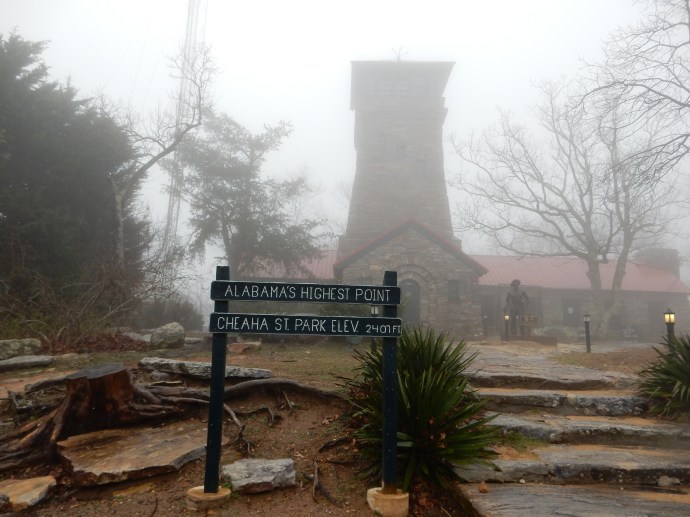
The Bunker Observation Tower, 2407 feet above sea level, at Cheaha State Park, highest elevation in Alabama

Cheaha State Park is eerily similar to the highest point in another state, but for the life of me I can not remember which one. There is a circular design at the top,, with cabins around the edges. There is a stone restaurant at the end of the one way drive. In the middle of the circular, one-way drive is a stone blockhouse at the highest point in the state. The stone block house has stairs climbing to the top and the design looks exactly the same. There is an observation area. There is a USGS brass marker embedded in the concrete out front. One difference, today’s weather was cloudy and foggy and practically nothing could be seen out of the observation windows. I will probably wake up in the middle of the night remembering which state this observation tower resembles.

Given the weather, we chose not to do any hiking. I guess we could have, but it was not going to be pleasant and so we skipped it. Our second choice was a museum of natural history in Anniston Alabama. Oops, today is Monday, that traditional day for all museums to be closed. Third choice was a new national monument to be run by the National Park Service. However, this national monument is so new it has no visitor center. It is the Freedom Rider National Monument.

This national monument recognizes an error in the civil rights movement and specific acts of violence and courage that occurred in and around Anniston. In May 1961, a group of white and black freedom riders were riding on a Greyhound bus. At the Anniston Alabama bus station, the bus was attacked by a mob that threw rocks, broke windows, and slashed tires on the bus. The bus left the station for Birmingham but had to pull over about 6 miles west of town due to tire damage. The mob had followed the bus and when the bus pulled over, the mob attacked again and threw burning rags into the bus. With difficulty, the riders found their way to the Anniston hospital, which provided no real treatment. Once again the freedom riders were under siege by the mob. No police intervention occurred. Eventually deacons from a local Baptist Church rescued the riders and drove them to Birmingham. Even with the intervention of Attorney General Robert Kennedy, the ride could not be completed.

The downtown Anniston plaque about the bus burning and the photographer

A local freelance photographer had been tipped off the night before the bus ride that there might be some “action” at the bus depot. When challenged at the bus station the following morning by mob members, he lied and said that the head of the local Ku Klux Klan had sent him. They let him stay. His pictures of the burning bus were published locally and nationally.

After the photos were published, other freedom riders came forth. A few days later, and under further attack, they were able to complete the bus ride. By the end of the summer, the number of freedom riders multiplied dramatically across the South. The local photographer was haunted and threatened by members of his community. He and his family had to be given federal police protection around the clock. Eventually he moved out of Anniston and never returned.

Let us hope and pray that we are not returning to a time when hate crimes will multiply across America.

After lunch at a local barbecue restaurant, we stopped at a local antique store and did some shopping. Unusual for us but necessary since we could not yet check into the hotel. We did buy one set of notecards.

We ended up checking into the hotel early and doing laundry.

Ed and Chris. Anniston Alabama. March 13

Categories: road trip, travel | Tags: , , , , | 2 Comments

Blog at WordPress.com.