Monthly Archives: May 2016

2016 Trip Four, Southwest Discoveries, May 30

Moenkopi, AZ. May 30

Where am I? What time is it?

Well I am in Arizona, a state in the Mountain Time Zone. BUT, Arizona does not observe daylight savings time as do the other states in the Mountain Time Zone. BUT I visited a National Park Service site in Arizona and the National Parks in Arizona are on daylight savings time. BUT I am staying at the Moenkopi Legacy Inn on Hopi reservation property which does not observe daylight savings time. BUT I had dinner at the Hogan restaurant in Tuba City, right across the highway from the Moenkopi Legacy Inn, and Tuba City is in the Navajo Nation, which does observe daylight savings time. Huh?

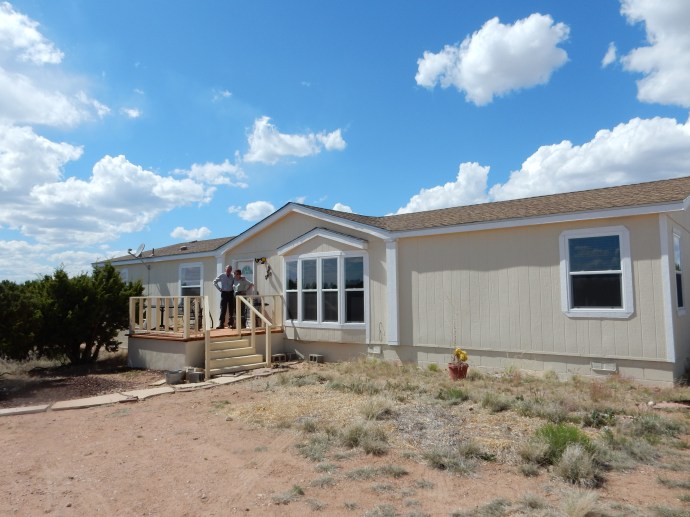
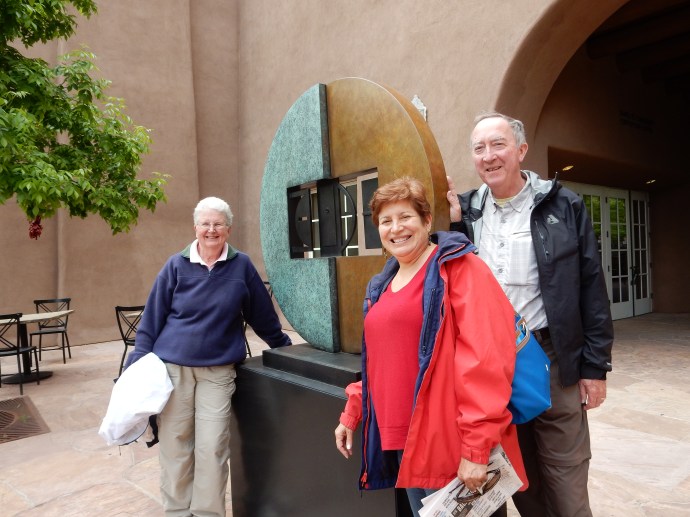
Joyce and Lou, our hosts in Flagstaff

Joyce and Lou, our hosts in Flagstaff

Cameron's Trading Post

Cameron’s Trading Post

We said good-bye to Lou and Joyce in Flagstaff and headed up to Navajo National Monument, about 150 miles northeast of Flagstaff. About an hour into our journey, we stopped at Cameron’s Trading Post. Cameron’s dates back to 1916 when a bridge was built over the Little Colorado River gorge. Like the Hubbell Trading Post we visited earlier on this trip, Cameron’s was a place for trading and bartering among whites, Navajo, and Hopi. Unlike Hubbell, Cameron’s is but one mile from a turnoff to the Grand Canyon and has re-made itself into a modern-day tourist stop for bus groups and families on their way to the Grand Canyon or Lake Powell. Cameron’s is an employee owned company, so congrats to them.

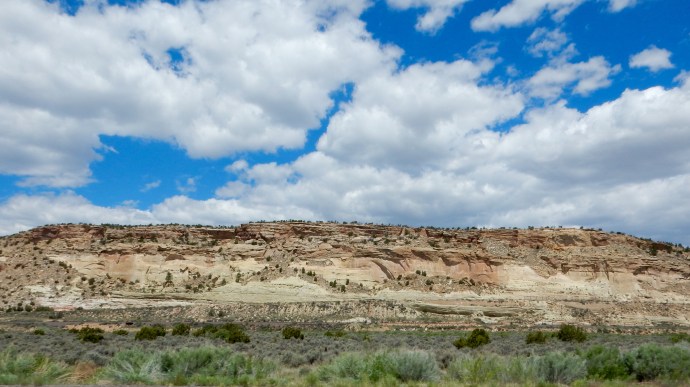
Along the drive from Flagstaff to Navajo National Monument

Along the drive from Flagstaff to Navajo National Monument

The Little Colorado River was completely dry underneath the bridge. I do not know if that is due to drought, normal seasonal variation or the taking of river water for irrigation and other human uses prior to the bridge. The gorge is deep and one can visualize why it would be a barrier for white settlement.
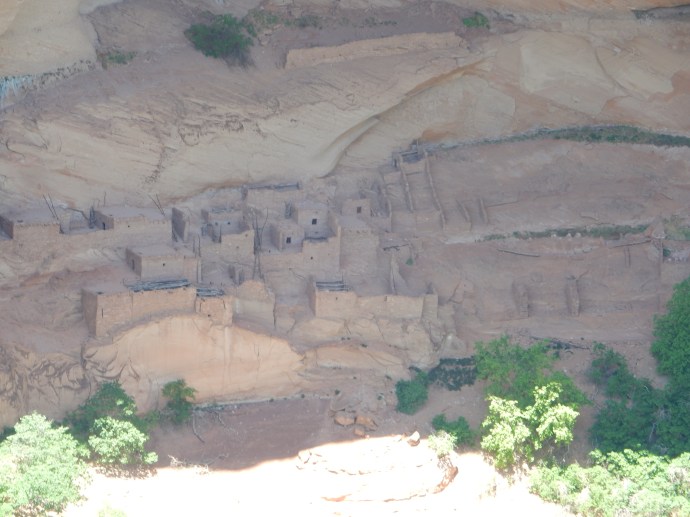
Betatakin cliff dwelling at Navajo National Monument

Betatakin cliff dwelling at Navajo National Monument

We bought nothing here and kept on moving. Navajo National Monument was established in 1909 to protect pueblo dwellings established by the Anasazi, or Ancestral Puebloans. The dwellings here are built into alcoves in the cliffs and are protected from the elements. We were not timely to take a tour down to the actual dwellings, but hiked out to an overlook to view Betatakin, one of three dwelling sites in the monument.
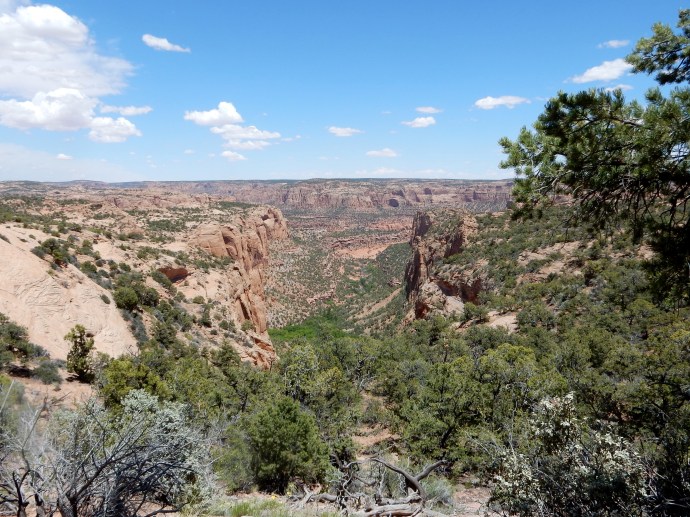
View into the valley at Navajo National Monument

View into the valley at Navajo National Monument

The valley here had been occupied with villages of farmers for hundreds of years. Valley dwellers built Betatakin and two other cliff dwellings. Betatakin was only inhabited for 50 years; speculation is because of drought or enemies but no one knows for sure. They only inhabited them for 50 years, from 1250 to 1300. The inhabitants moved on, speculation is that they intermingled with Hopi, Zuni, and other Pueblo groups. Betatakin is smaller than Chaco and other sites we visited but the dwellings are well preserved. (The word pueblo can mean both the architectural style of building and also can mean the cultures that have built and lived in villages of this style.)

After the hikes, we retraced our steps to Tuba City and visited the Navajo Interactive Museum. This museum shows Navajo, who prefer to be called Dine, history, culture, creation stories, etc.

A short history, my summary so you might wish to explore further on your own, about the conflict between Hopi and Navajo. First, the Hopi are a peaceful, farming people. They did not fight the US Army when whites came out to settle the West. The Navajo did, and were forced from this area on “The Long Walk of the Navajo” to New Mexico in the 1860s where they were imprisoned for four years. They suffered terribly on the walk, during imprisonment, and after being released.

The Hopi, since they did not fight, do not have a treaty with the US. The Navajo, after 1860s, returned to this area and settled in many cases on what had been considered Hopi land. US treaties with the Navajo gave them land which had been considered Hopi. Over the years, the Navajo have been successful, whether right or wrong, in having court opinions and Congressional actions solidify their hold over previous Hopi land. Now, the Hopi live on a reservation surrounded by the Navajo Nation and are vastly outnumbered by the Navajo, about 20,000 Hopi to 300,000 Navajo.

These ongoing land disputes and access to spiritual locations continue to cause rifts between the two tribes. An additional factor seems to be Peabody Coal which has large mining operations on the reservation. Navajo seem more inclined to authorize coal mining, Hopi do not.

Tomorrow we go to a Hopi cultural center.

Ed and Chris May 30

Categories: road trip, travel | Tags: , , , | Leave a comment

2016 Trip Four, Southwest Discoveries, May 27-29

Flagstaff Arizona. May 29

Driving to Valles Caldera

Driving to Valles Caldera

Southwest US scenery has been the focus of the last few days. Friday we drove to Valles Caldera northwest of Los Alamos, NM. We received our first backcountry permit. Before you get too excited, it was still primarily driving over rutted dirt roads instead of backpacking and camping in the wilderness.

Entrance area of Valles Caldera National Preserve

Entrance area of Valles Caldera National Preserve

Valles Caldera was made a national preserve last fall. Prior to that time, it was a managed by a trust and was supposed to generate enough fee income to cover its costs. It did not. The post Native American history of the area goes back to Spanish land grants and includes over grazing by sheep and over timber cutting of old growth trees. The trust was supposed to be a means to preserve the land without costing the US any money. Eventually Congress approved purchasing the land for $101,000,000. Part of the land reverted to the Santa Clara pueblo.

View from the back country of Valles Caldera

View from the back country of Valles Caldera

The National Park Service control is so new, there is no park brochure yet. The preserve covers a 13 mile depression created by a volcanic eruption over a million years ago. The backcountry permit allows one to traverse 12 miles into the preserve to view the mountains and meadows. Only 35 permits are allowed per day.

A portion of the area burnt by the 2011 fire

A portion of the area burnt by the 2011 fire

The preserve is also home to over 2,000 elk-none of which we saw. In 2011 there was an enormous fire in this area, threatening the buildings at Las Alamos Lab and the town of Los Alamos. The fire was eventually stopped short of the town and the lab but thousands of acres at Valles Caldera, Bandelier National monument, and Jemez Mountains were burnt. The fire created more open area, which provides grasslands for the elk to feed. More options for feeding means less concentration of elk in Valles Caldera. Ergo, no elk did we see.

Driving to the back country

Driving to the back country

The drive goes through a series of valleys surrounded by mountains. The highest in the preserve is at 11,250 feet. The road is dirt, passable by regular cars at slow speed. We made our way towards the end of the road and had a picnic lunch. The wind was strong so we ate in the car, peanut butter and jelly sandwiches.

Ed and Jude at her home in Santa Fe

Ed and Jude at her home in Santa Fe

Driving to Flagstaff

Driving to Flagstaff

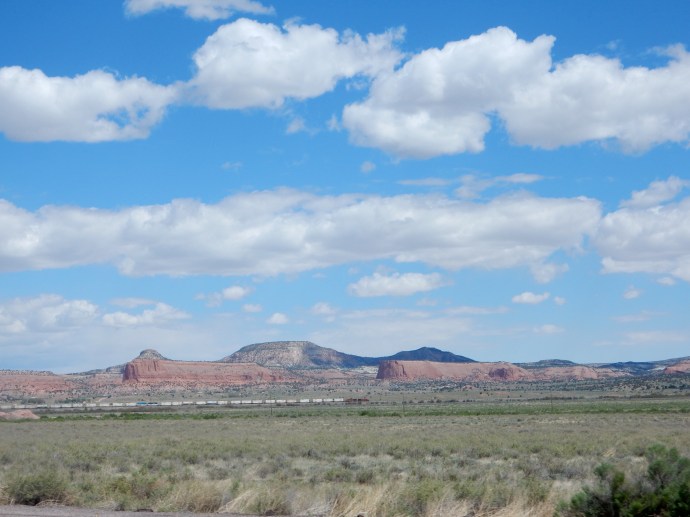
Driving to Flagstaff in Arizona with BNSF train near base of mountains

Driving to Flagstaff in Arizona with BNSF train near base of mountains

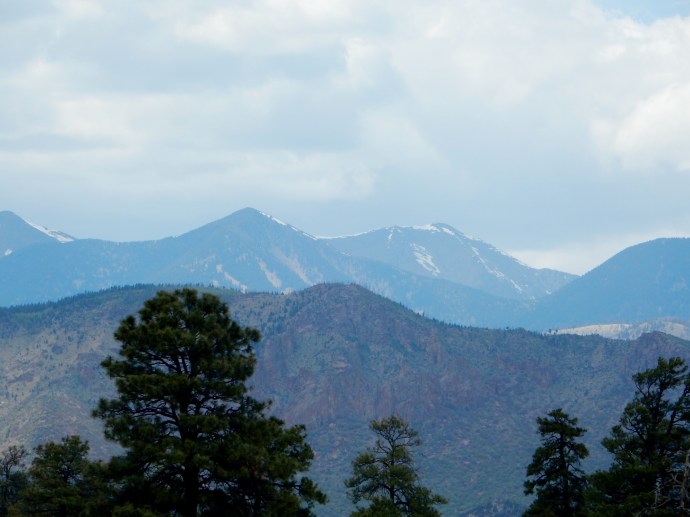
San Francisco Mountains at Flagstaff, AZ

San Francisco Mountains at Flagstaff, AZ

Saturday we left Jude’s and drove the 400 miles to Flagstaff to Lou and Joyce’s home. This drive was completely on Interstates so the ride was easy. There is a small forest fire burning south of Flagstaff which affects air quality and visibility but it does not appear to be serious.

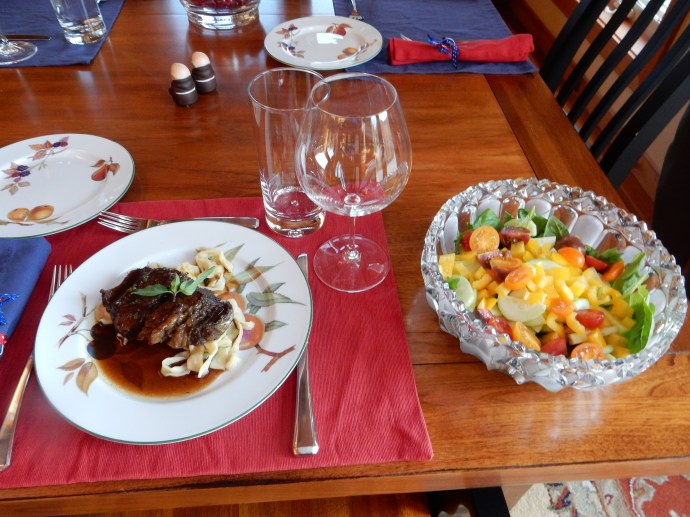
Dinner at Lou and Joyce's house

Dinner at Lou and Joyce’s house

We are relaxing in Flagstaff before we enter the last phase of this trip: brunch this morning, a walk this afternoon, Italian dinner tonight and star/planet viewing with Lou’s telescope tonight. The planned highlight of the next 10 days will be visiting the north rim of the Grand Canyon, but who knows what else will occur?

Ed and Chris

Categories: road trip, travel | Tags: , , , | Leave a comment

2016 Trip Four, Southwest Discoveries, May 26

Santa Fe, NM. May 26, 2016

The lobby of the St. James hotel in Cimarron NM

The lobby of the St. James hotel in Cimarron NM

The free continental breakfast at the Budget Host was discarded in favor of breakfast 42 miles away at the St. James Hotel in Cimarron, NM. The St. James was built in 1872 when Cimarron was home to the Wild West and it still has bullet holes in the dining room to prove it. It is stated that at least 26 people lost their lives in the saloon or hotel. The Earp Brothers, Buffalo Bill Cody, and Jesse James were all outlaws who visited here. The hotel is still operating, run by one of the owners of Express Ranches-a major cattle operating company with two large ranches around Cimarron. We came for the food, though, and breakfast was worth the drive.

The 42 miles were on a road where cattle, pronghorn, and bison were roaming. The bison were probably part of the stock being raised on the Vemejo Park Ranch of Ted Turner. We passed by the ghost coal mining town of Dawson. The 42 miles were an easy viewing sight of plains on either side of the road with mountains to our west. This part of the day was a prelude to the mountain driving to follow after breakfast.

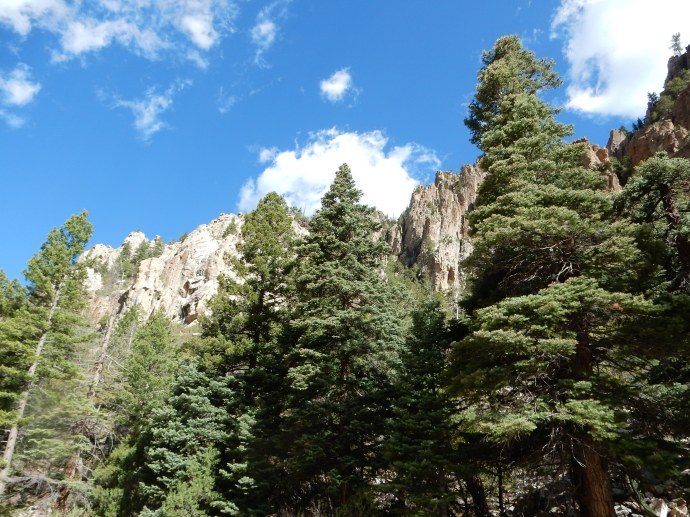
Driving through the mountains of New Mexico

Driving through the mountains of New Mexico

Most of the day’s journey was through mountains-usually with (my words) “real” trees instead of the scraggly piñon we were used to seeing. We drove through Carson National Forest, Rio Grande Gorge, Rio Grande del Norte National Monument and also passed the site of the Chevron molybdenum mining operation.

I had thought we would pass closer to the snow-capped mountains we had seen in the distance during our Wednesday late afternoon drive but no such luck. Evidently those mountains were in Colorado. There was snow in scattered places on a few mountains but nothing for a photo opportunity. The rivers and streams we passed were running strong, but lakes were obviously well below their normal levels.

Taos NM was to be the host of a motorcycle rally this weekend. Red River, one town on our route and on the “circle tour” of Taos, was preparing for them with scads of vendors setting up their tents and wagons. It was a little early for the mass arrival of motorcycles but a sprinkling were observed throughout our journey.

Rocky Mountain Bighorn Sheep

Rocky Mountain Bighorn Sheep

One highlight of the drive was seeing a Rocky Mountain Bighorn Sheep. These animals have been one of the most difficult for us to spot. This Bighorn was spotted when we drove in to the Carson National Forest visitor center. We lucked out, when we came out of the center it was no longer in sight.

Molybdenum mining reclamation site

Molybdenum mining reclamation site

The molybdenum mining operation was also overwhelming even though we could not view its entire operation. As we drove along Highway 38 east of Questa, we came across an immense mountainside that looked like it had been bulldozed and terraced. It was dramatic and we had no idea what it was. When we reached the Carson Forest office, the staff member indicated it was a molybdenum mining site and was being reclaimed. Molybdenum is a critical ingredient in making steel alloys. Mining had been open-pit, now was underground, although actual mining depend on mineral prices and whether it is economically viable to run the mine.

Before writing this post, I did a quick check on the Internet and according to Amigos Bravos, an environmental watchdog, the site has been placed on the Superfund list, the mine has excavated 360 million tons of acid-generating waste rock that cover more than a thousand acres around Questa, the Red RIver is unable to handle the amount of acid mine drainage, local wells are contaminated, etc. The whole story is complicated but seems to me to indicate once again our inability to control necessary mining operations without causing damage for future generations.

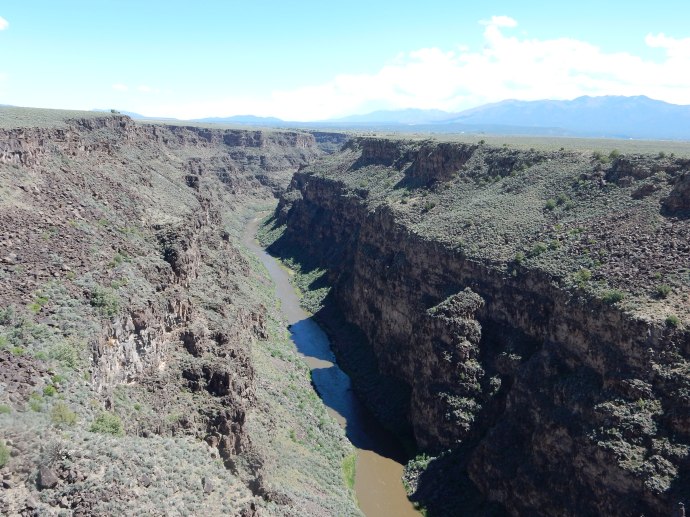
Rio Grande Gorge

Rio Grande Gorge

Enough of the depressing stories. We continued on to the Rio Grande Gorge bridge. This bridge carries highway 64 over the Rio Grande River. Usually we see the Rio Grande in the Albuquerque NM area where the water has been siphoned off for irrigation and municipal drinking water. In addition, the river is much wider in Albuquerque. Up here, the river runs faster in a narrow channel and has historically carved a deep and wide gorge. The views from the bridge bring bus loads of people to view the gorge and take pictures.

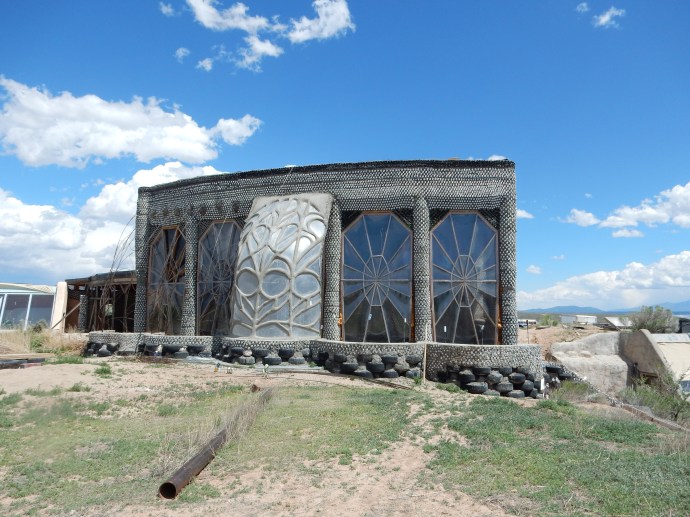
Earthship Biotecture demo building

Earthship Biotecture demo building

Earthship Biotecture

Earthship Biotecture

Just north of the bridge is an operation called Earthship Biotecture. This was started by a guy named Michael Reynolds over forty years ago. In their words: “Earthships heat and cool themselves passively, produce their own electricity, collect their own water, treat their own sewage and grow a significant amount of their own food.

So, for instance, in our tour of a demonstration home, the foundation is made from recycled car tires with rammed dirt inside of it. Walls are concrete with bottles and can used to decorate and provide filler. Rain water is collected from the roofs into cisterns and re-used for toilet flushing, to irrigate food bearing plants, etc. The operation trains people from around the world on the process of building homes in this sustainable environment. There are three different communities in the Taos area in which homes designed by them have been built.

Rio Grande del Norte National Monument

Rio Grande del Norte National Monument

Hiking in the National Monument

Hiking in the National Monument

Our last stop was to take a hike in Rio Grande del Norte National Monument. This National Monument was just created in 2013 and is operated by the Bureau of Land Management. It encompasses 240,000 acres of land owned by the BLM. We went hiking along a trail that overlooks the Rio Grande. Later on our way back to Jude’s, we saw a group of rafters going down the river.

Ed and Chris

Categories: road trip, travel | Tags: , , , | Leave a comment

2016 Trip Four, Southwest Discoveries, May 25

Raton, NM May 25

New Mexico’s state motto is “Land of Enchantment”. It could be “Land of Volcanoes”.

Capulin Volcano National Monument

Capulin Volcano National Monument

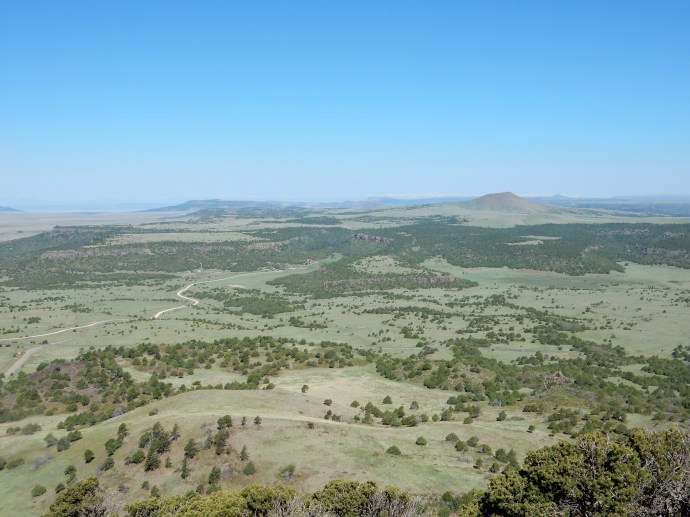
Today we visited Capulin Volcano National Monument, east of Raton near the Colorado border, and discovered that New Mexico has more volcanoes than any other U.S. state. We were quite surprised; it certainly would not have been our guess. We would probably have placed it around 10th. The volcanoes are inactive but as one can see driving along I-25 in northern NM, volcano cones are quite evident. In addition, many of the mesas and uplands in this area are the result of various types of lava flows or volcanoes.

Lava boulders near Capulin

Lava boulders near Capulin

Capullin formed somewhere around 60,000 years ago. It is part of the Raton-Clayton volcano field,some 8,000 square miles in northeast New Mexico. It is a classic cone volcano, where eruptions spewed gas and lava up through a vent in the earth. The debris falls back to earth in a cone shape around the vent. At Capulin, lava also flowed from around its base, creating a stable foundation. Lava flowed for miles all around the cone, eventually covering 16 square miles. Vegetation later took hold on the slopes as time and erosion broke down the cinders and boulders into soil. Small wildflowers were growing along the paths.

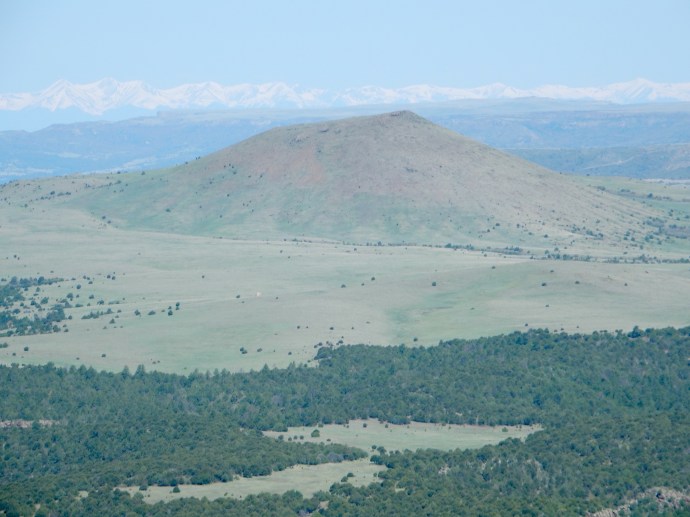
View looking at other volcanoes and lava flow ridges, etc. from Capulin Volcano

View looking at other volcanoes and lava flow ridges, etc. from Capulin Volcano

The National Monument was created to preserve this classical example of a cone volcano. We went on three hikes here. The first was around the lava flow at the base of the volcano. The hike had only minor hills to climb, but the footing on the lava and cinder rocks was a challenge.

A view from the rim walk on Capullin

A view from the rim walk on Capullin

Chris along the rim walk

Chris along the rim walk

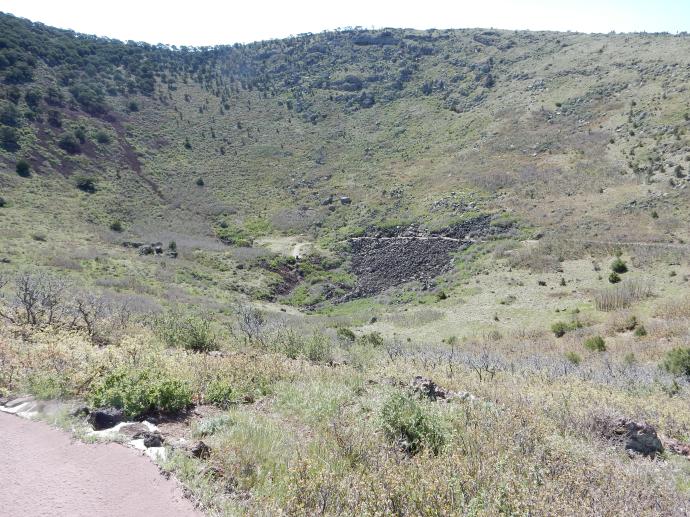
The visitor center is at an elevation of 7,242 feet. There is a road leading up, stopping at a parking area at 7,877 feet above sea level. Then you hike up (and down) 305 more feet along a mile long loop trail aroound the rim. The views are fantastic. Today it was windy (we took our hats off for about one half of the walk so they would not blow away) and the temperature at 9 AM was about 70 degrees F. I did experience a bit of vertigo. The path starts out right along the cliff edge but it is paved so that helped me to keep my footing. Later on, it widens out. In the distance are other volcanoes; Sierra Grande is the highest at 1,000 feet above Capulin. The third hike was only half a mile, descending another 105 feet into the crater vent.

Looking west toward snow capped mountains

Looking west toward snow capped mountains

Looking into the vent at Capulin Volcano

Looking into the vent at Capulin Volcano

Before and after the volcano hikes, we took two snack and water breaks. Our lodging, the Budget Host in Raton, was better than I had expected but the continental breakfast did not have many options that appealed to me (other than cold milk). And as it turned out, there was no lunch break today, only another snack. The small towns we went through are devoid of food options.

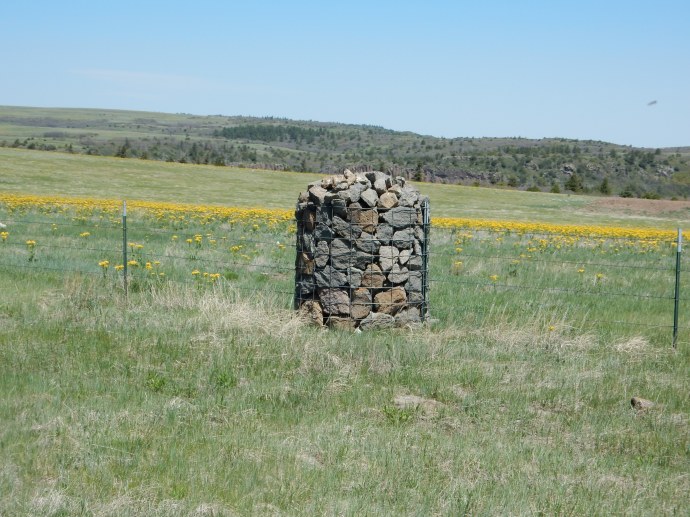
On Johnson mesa, numerous fence posts are made from stones

On Johnson mesa, numerous fence posts are made from stones

Our next stop was Sugarite Canyon State Park and we drove back roads on top of the mesa to reach it. Pronghorn, cattle and horses were in frequent view. We stopped at a little back roads church that had been thriving during the mining days. Today, cattle ranches surround it and the local churches try to take turns holding services in it throughout the summer. The doors were supposed to be unlocked 24/7 but we were unable to get them open. Birds loved the church though, there were numerous bird nests along the outside roof line.

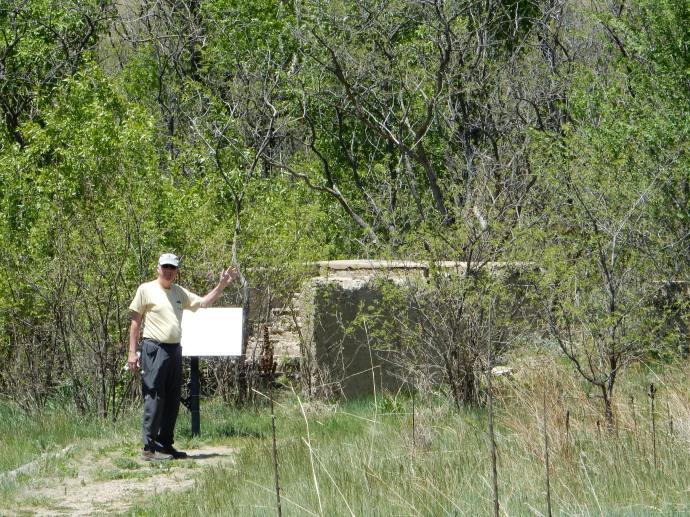
Ed inspecting ruins at Sugarite Canyon State Park

Ed inspecting ruins at Sugarite Canyon State Park

Sugarite Canyon State Park is nestled up against the Coloado border, just a few miles from Raton. Over time at Sugarite, two levels of peat were laid down from time when the central US was a sea. The peat hardened and became coal. Those coal layers were covered by basalt and sandstone from land uplift and volcanic action. The coal layers are quite thick.

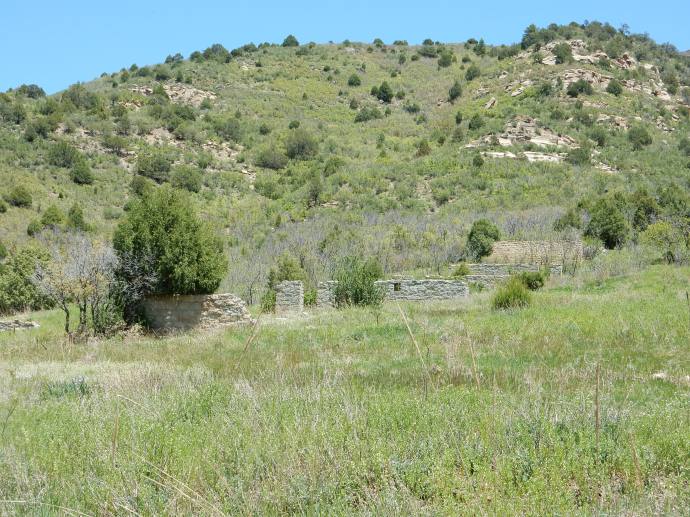
More ruins from Sugarite Canyon coal company town

More ruins from Sugarite Canyon coal company town

From 1912 to 1941, Sugarite was a company coal town run by the St. Louis, Rocky Mountain and Pacific Railroad. Between 400 and 1,000 people lived here and mined coal. The mines closed and a state reclamation project has stabilized the slag beds and now a park is situated in this canyon.

The company town was built on the slopes of the canyon below the coal mines. Only the foundations are left, but the one mile trail up the side of the canyon has markers and displays at various sites, highlighting the buildings which stood there decades ago. The park also includes several lakes that had been created to provide water for the City of Raton and for the Santa Fe railroad. Mines in the area are closed and company towns demolished. This park and its hike provided room for the imagination to visualize the scene when it was lively.

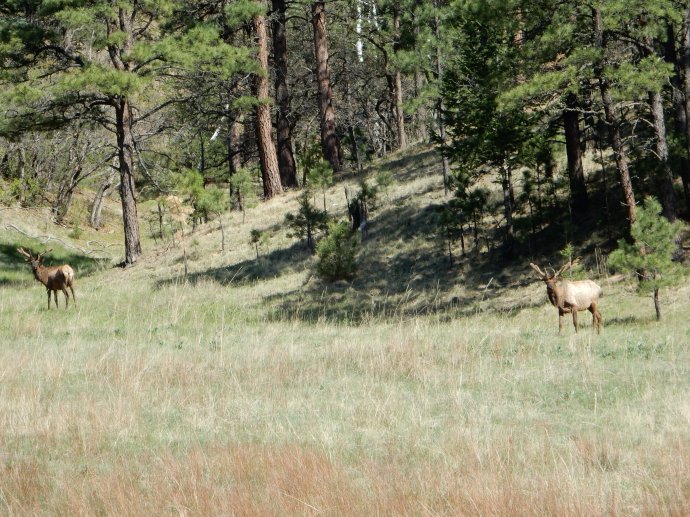
Elk along our drive to find Ted Turner's "farm"

Elk along our drive to find Ted Turner’s “farm”

A view along our drive to see a portion of Vermejo  Park Ranch

A view along our drive to see a portion of Vermejo Park Ranch

When we left the park, we returned to Raton and stopped for ice cream at Patchwork Phoenix. The proprietors mentioned a drive into the mountains that might have elk, bear, and deer visible. The road is along part of the property owned by Vermejo Park Ranch. This ranch is owned by Ted Turner and is considered the largest privately owned continuous property in the US. The ranch focuses on various ecological and animal preservation efforts. It also offers lodging at various properties. At Casa Grande, you can have exclusive use of the lodge, with meals, for 8 guests for about $5,000 per night. Needless to say, this information is from their web site, not from personal experience. In any event, we took a 30 mile ride down a state road bordering part of the property and only saw two elk.
Dinner was back (we ate there last night) at Mulligans, the restaurant at the Best Western Plus, the “only full service hotel” in Raton. Food was good with decent menu options. Thursday we head back to Santa Fe.

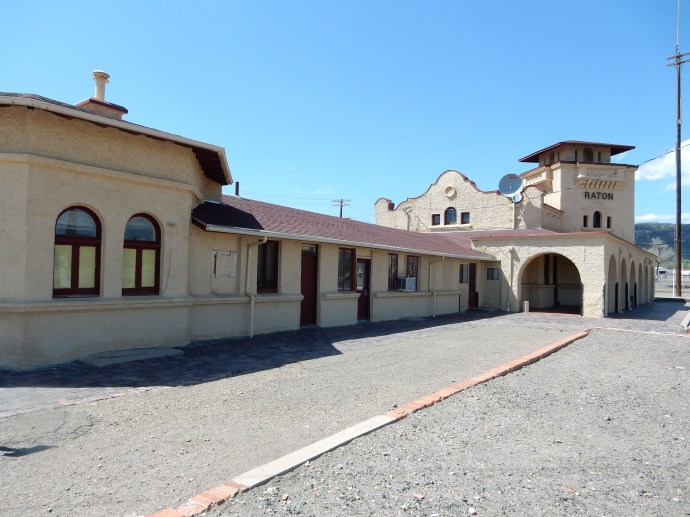
Amtrak station in Raton NM

Amtrak station in Raton NM

Ed and Chris

Categories: road trip, travel | Tags: , , , | Leave a comment

2016 Trip Four, Southwest Discoveries, May 24

Raton, NM. 5/24/16

The Distribution Hub of a Young America. That is one description of Fort Union National Monument.

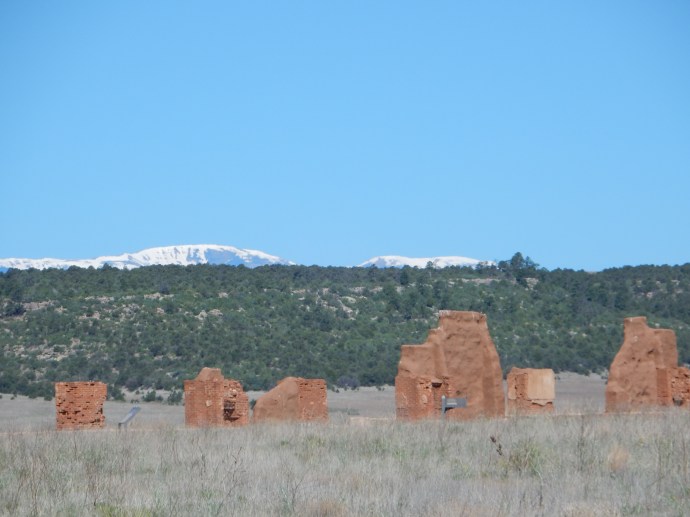
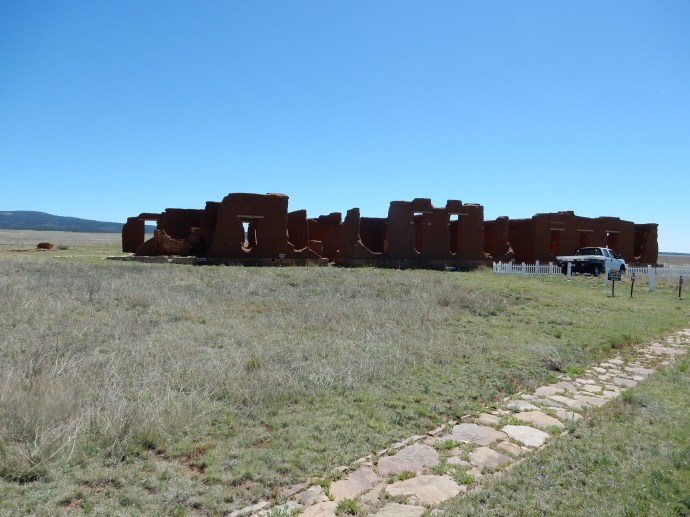
Fort Union National Monument, NM

Fort Union National Monument, NM

We are on a two night, three-day swing through northeastern and north central New Mexico. Fort Union is one hundred miles northeast of Santa Fe by interstate. For once, we were happy to leave behind two lane roads at 45-60 m.p.h.and zip along at 75 mph. We are still in mountains, the elevation is usually somewhere between 6 and 7,000 feet above sea level. Once again, the terrain changes. Santa Fe scrub brush and small pines changes to full-grown trees east of Santa Fe in the mountains to change again to wide, grassy fields good for feeding cattle and horses. There is probably 50 times as many cattle and horses in the fields here compared to northwestern NM. The fields just look much richer, not grassy fields like the Midwest, but still fuller than previously.

Another view of Fort Union

Another view of Fort Union

Fort Union is a preserved, but not restored, Army post dating from 1851 to 1891. It is located at the confluence of two branches of the Santa Fe Trail. The mountain branch went over the extremely difficult to cross Raton pass which was desirable for its safety from Indians and better water supply. The Cimarron branch had water shortages and Indian raids but was shorter. Both routes had heavy traffic once Mexico opened the area for settlement after its independence from Spain. When the US won the area in the Mexican-American War, oxcart traffic and settlers increased tremendously. The US Army was charged with protecting them.

Walls of the storehouse area of Fort Union

Walls of the storehouse area of Fort Union

During the Civil War, Fort Union troops helped to repulse Confederate attempts to control the Colorado and California gold fields. After the Civil War, until the railroads finished their lines into Santa Fe and Albuquerque, Fort Union once again protected the settlers and wagon trains. Wagon trains that might be lined up three or four wagons abreast as they traveled along the Santa Fe Trail had to merge into one line as they reached the fort where they had to be inspected and registered before proceeding on to Santa Fe.

Hospital at Fort Union

Hospital at Fort Union

But Fort Union was more than just a military post protecting against Indian attacks. It served as the quartermaster supplying 23 Western forts with materials. Fort Union was the largest military post in the 1800s Southwest frontier. The fort was clearly divided into two separate compounds (post and quartermaster), each controlled by its own military command. It had a 24 bed hospital that served civilians and military.

The fort influenced the local area. Supply depot work had been done in Santa Fe previously but now this area out on the high prairie was growing food for the people and animals stationed at the fort, or traveling through to Santa Fe. While the fort boomed, farmers had a ready market for their crops and hundreds of civilians worked on wagon repairs, laundry, blacksmithing, clerical functions for the quartermaster, etc.

When abandoned in 1891, the fort was just left to sit. Over time, residents of the area raided the fort for building materials, etc. It was not until 1954 that it was made a national monument. The act creating the monument specifies that the NPS is to preserve but not restore the fort. Our visit took us around the two compounds where displays and building foundations give a feel for the immensity of the operation here 140 years ago.

View from picnic table at Maxwell National Wildlfie Refuge

View from picnic table at Maxwell National Wildlfie Refuge

Maxwell National Wildlife Refuge was our second stop and a bust. The visitor center was not open (it was supposed to be open) and few trails were listed for hiking. We had a picnic lunch and moved on. Raton was just 30 miles away and I was afraid we would be bored for the remainder of the afternoon.

Maxwell National Wildlfie Refuge

Maxwell National Wildlfie Refuge

I wanted to stop at McDonald’s for a Coke and fries. Chris was not ready for food. We agreed on a compromise, the Raton Museum. It seemed like a typical small town museum, with collections of various local related topics. It would have been ho-hum and a 10 minute visit except for the Collections Steward who gave us a personal hour-long tour of the museum with a narrative that was both insightful and detailed.
A few items that we learned are:
A. Raton was founded due to the Atchison, Topeka and Santa Fe need for a rail yard after its trains went over (or before they went over) the 7800 foot above sea level Raton Pass.
B. The area is rich in coal. While no mining occurs now, the coal supply here could be mined yet for hundreds of years. Mining, in company owned towns, made and broke several towns in the region.
C. One of those company towns, Dawson, was owned by Phelps Dodge who recruited new immigrants fresh off the boat. Two major accidents here killed 263 in 1913 and 123 killed in 1923. Dawson is now a ghost town, the company razed the buildings.
D. Raton used to have 12,000 people. Now it has 6,000. The closing of the mines, the closing of the rail yards, the closing of ARF Electronics, etc. had left the town in difficult shape. Over 800 homes are for sale.
E. The Amtrak station here is the busiest in the state, due primarily to the Philmont Boy Scout camp located west of town by Cimarron. Many of the 22,000 scouts who come here in the summer arrive via Amtrak.
G. The Colfax county war went on for 13 years as people who had settled on land owned by Lucien Maxwell were being evicted as squatters despite what had been seen as an oral agreement to sell the land to the settlers in return for years of paying 50% of the crops to Maxwell. The Maxwell side eventually won.

We had a great time listening to the stories attached to the items on display. The Collections Steward made us realize the depth and color that lie behind many small towns. One can, and we have, jump to quick conclusions about a community based on a quick drive-through. No photographs were allowed, sorry.

Ed and Chris

Categories: road trip, travel | Tags: , , , , , | Leave a comment

2016 Trip Four, Southwest Discoveries, May 23

Santa Fe, NM. May 23 Monday

Petroglyphs again. On May 19, we wrote about the petroglyphs we observed along the historic trail just minutes from Jude’s house. Today, we drove an hour to Petroglyphs National Monument in Albuquerque where over 24,000 petroglyphs have been identified. Petroglyphs National Monument was created in 1990 to preserve 12 square miles of land on the west mesa across the Rio Grande River in Albuquerque that was facing immediate development pressure. Previous efforts had created a state park, but the area preserved was not inclusive enough. Five years of furious research prepared the way for the national monument status. Today, the eastern and northern ends of the monument are surrounded by urban development.

From the back of Rinconada Canyon looking east to Albuquerque, escarpments to left and right, Sandia Mountains in background

From the back of Rinconada Canyon looking east to Albuquerque, escarpments to left and right, Sandia Mountains in background

To understand why the petroglyphs are here, one first needs to understand a bit of geology. I will make it brief and very concise (recognize we are talking about actions over millions of years). First, the subsidence of land created the Rio Grande Rift, a thirty mile wide valley extending 500 miles from Mexico up into Colorado. Second, land uplift created the Sandia Mountains along the east edge of the rift. Third, six volcanoes in the middle of the rift in the Albuquerque area spewed out enough lava to create a 17 mile escarpment of very hard basalt rock. Fourth, the Rio Grande River created a source of irrigation and a natural migration path for human activity from Colorado to Mexico.

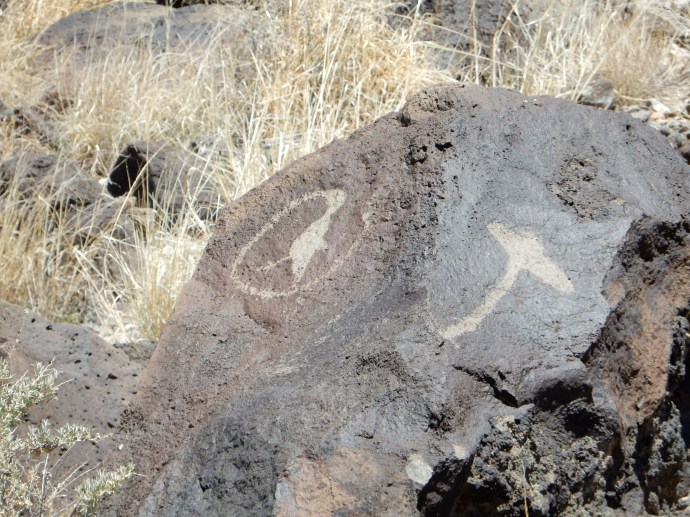
One of many petroglyphs

One of many petroglyphs

The basalt escarpment is close to the Rio Grande River, and as humans have traveled along the river they had this urge to leave a message for following generations carved into the basalt rock. The surface rock was chipped away, leaving a gray symbol on the black rock. These symbols are sometimes recognizable and other times not so much. Some of the symbols date from the 1600s since sheep are shown, an animal not native to the U.S. Most pre-date the Spanish arrival, estimated to go back as far as 1000 BCE.

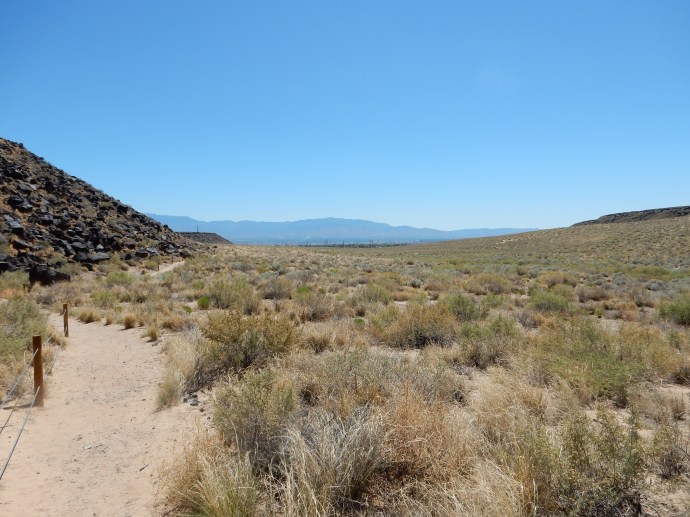
The Monument has four major visiting areas. We went to two of them. At Rinconada Canyon we hiked out,and back, 1.2 miles along the escarpment to view numerous petroglyphs carved into the rock. Many are still very clear from the trail. In general, we were not able to get as close to the petroglyphs as we did last week here along La Cienguilla trail. Rinconada Canyon gives a clear view across the valley to the Sandia Mountains and to Albuquerque. The river is a minimum of two miles from the escarpment; the land in between was cultivated for crops.

Two of the volcanoes

Two of the volcanoes

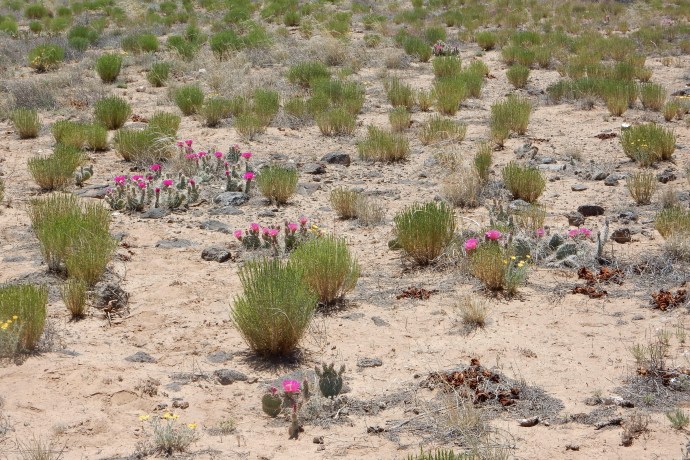
After Rinconda we drove over to the west side of the monument and viewed the volcanoes area. The separate volcanoes stand out along the flat mesa. Chris and I hiked out to JA Volcano but were prevented from climbing to the summit due to trail restoration work (which was not noted until you were just ready to start the climb up). Along the way, desert flowers were blooming; a mix of yellow, white, pink and orange. Not as profuse or vibrant as summer wildflower in the mountains, but still amazing to view.

A view of desert flowers

A view of desert flowers

The volcano top is clearly rimmed by black rock. The flat mesa up here is basically the top of the escarpment of which we were earlier walking along the bottom at Rinconada Canyon. The view of Albuquerque was even better up here. After a picnic lunch, we headed out to our second stop.

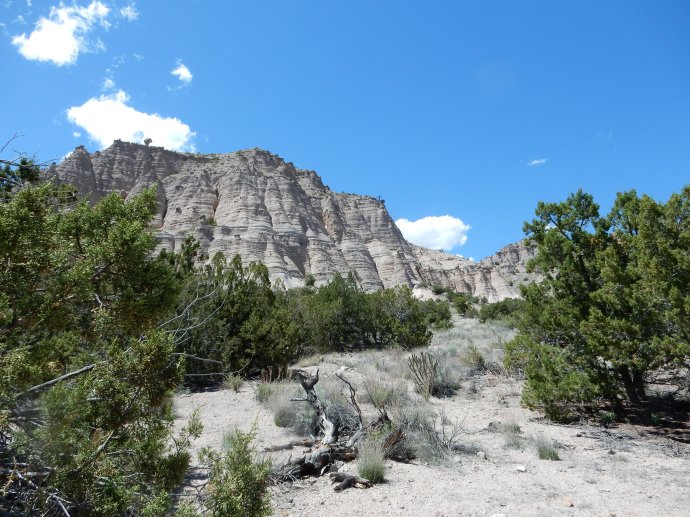
White cliffs of Kasha-Kutuwe

White cliffs of Kasha-Kutuwe

Kasha-Kutuwe

Kasha-Kutuwe

Kasha-Katuwe, or Tent Rocks, is a National Monument managed by the Bureau of Land Management. This was not our first time here, we had been here with Jude many years ago but wanted to stop in one more time. “Kasha-Katuwe” means “white cliffs” in the traditional language of the pueblo. It has been a national monument since 2001.

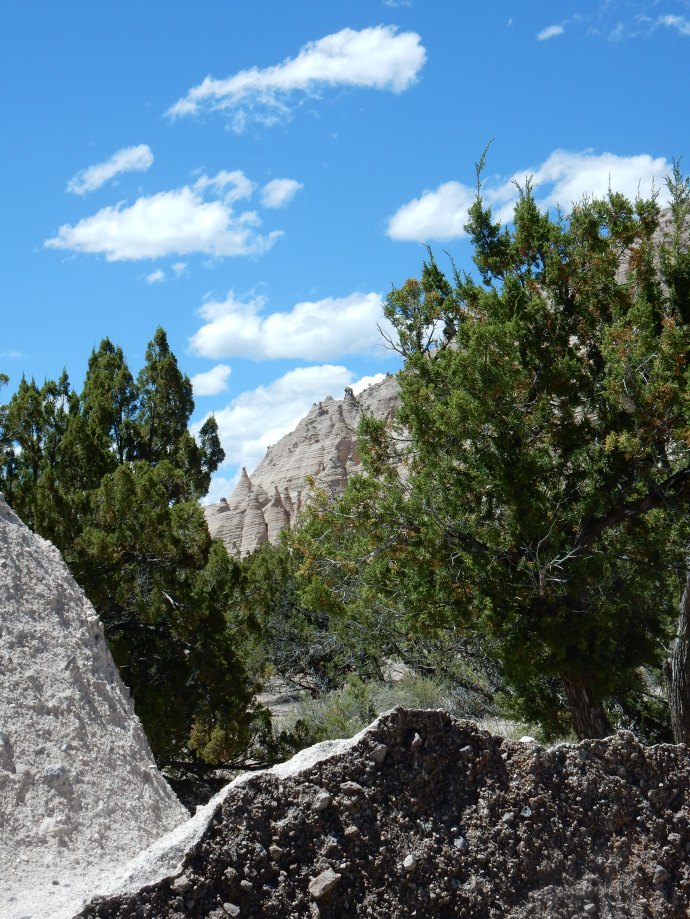
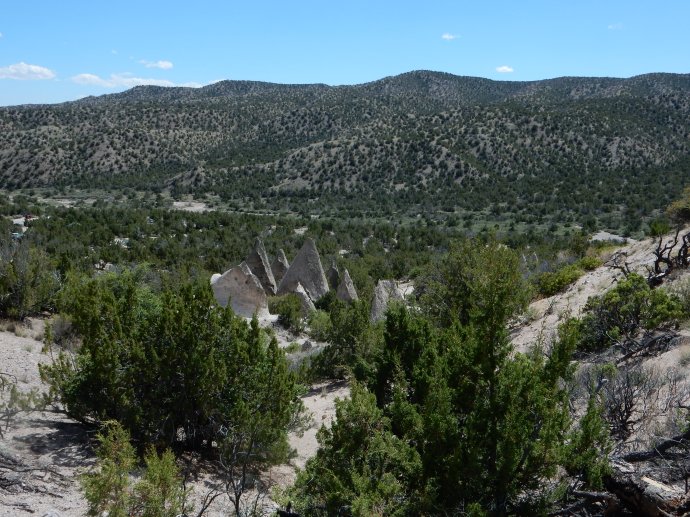
Tent rocks-showing why the area was named that by Anglos.

Tent rocks-showing why the area was named that by Anglos.

Explosions from the Jemez volcanic field, shaped by wind and water, have created slot canyons, hoodoos topped by cap rocks, and steep cliffs. We did another hour hike here and talked to two guys from Amarillo TX who took our photo in one of the slot canyons. Another group included a woman from Minnesota now living in Honduras.

Ed and Chris in slot canyon at Kasha-Katuwe (tent rocks)

Ed and Chris in slot canyon at Kasha-Katuwe (tent rocks)

Ed and Chris. May 23

Categories: road trip, travel | Tags: , , , | Leave a comment

2016 Trip Four, Southwest Discoveries, May 22

Santa Fe, NM Sunday May 22

Abiquiu NM rock formation

Abiquiu NM rock formation

It isn’t just Sedona AZ that has red rocks.

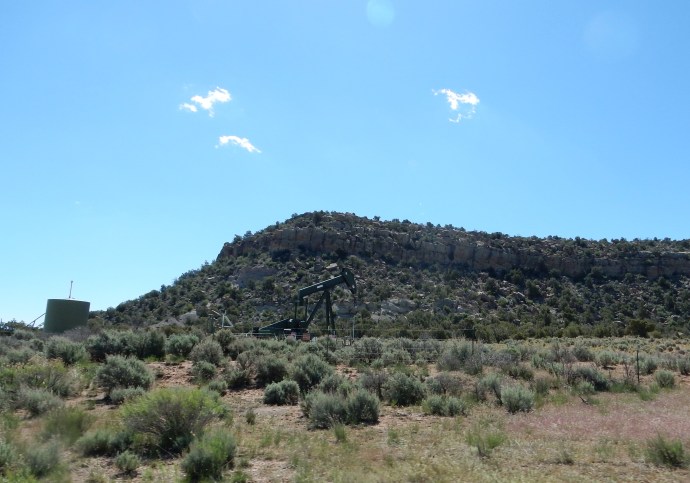
Oil drilling in NM

Oil drilling in NM

This was a travel day; a day to return to Santa Fe via a new road, exploring northern western and north central New Mexico. The area is still arid, but we drove from high elevation desert to high elevation almost forested land. We left Farmington and continued almost due east to Chama on US 64, usually less than 20 miles from the Colorado border. From Chama the drive was southerly on US 64 and then US 84, through a mix of privately owned land, Indian reservations, and national forests.

Cowboys rounding up cattle

Cowboys rounding up cattle

The oil and gas drilling continued until Chama and then pretty much disappeared. Horse and cattle raising were big users of the land, with a much heavier proportion of horse raising than we had seen previously.

Echo Amphitheater rock formatiion in NM

Echo Amphitheater rock formatiion in NM

We believed the scenery to be worthy of a state designated scenic byway, although it is not so labeled. As we drove east, the valleys were wide and green. The mountains started having actual trees on them, not just rock and scrub brush. In the distance, we could see mountains with snow still on them; usually the snow-covered mountains were in Colorado although north of Santa Fe there was still a bit of snow on the top of the Sange de Cristo mountains.

Towns are small to non-existent. The largest two were Chama at a population of 1,000 and Dulce at 2,500. Chama is one end of the Cumbres and Toltec steam train ride that is a round trip into southern Colorado through the mountains. Dulce is the tribal headquarters of the Jicarilla Apache reservation.

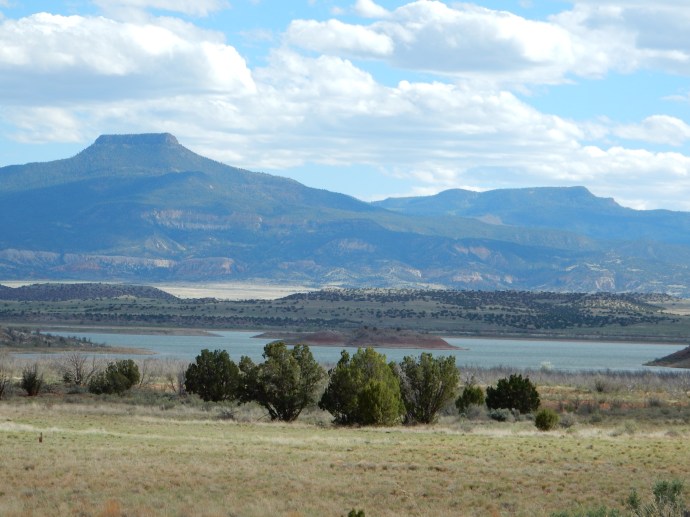
Abiquiu Lake in NM

Abiquiu Lake in NM

The top scenery though was around Abiquiu. Some of you may recognize the name as the location made famous in many of Georgia O’Keefe’s paintings. O’Keeffe (1887-1986) came here in 1934, returning for many summers, and then moved here permanently in 1949. Ghost Ranch was her initial living location.

Ghost House at Ghost Ranch

Ghost House at Ghost Ranch

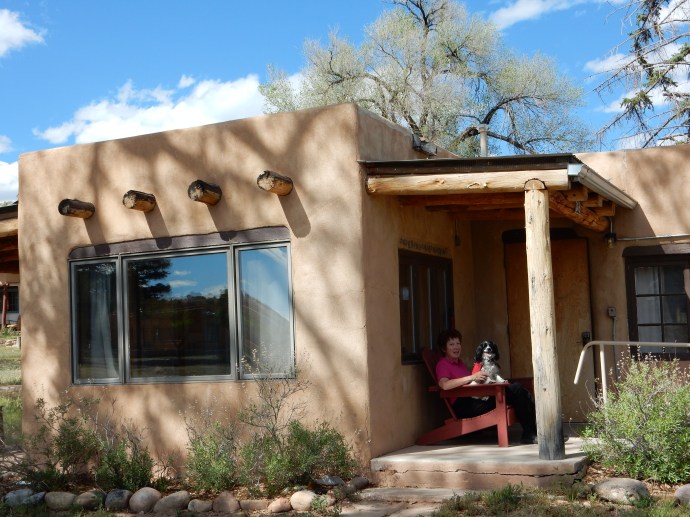
Jude and Lacey at O'Keeffe Cottage

Jude and Lacey at O’Keeffe Cottage

Ghost Ranch dates back to the 1766 land grant of the Spanish King, with large tracts of land given to individuals to encourage settlement. Land was divided, sold, inherited, lost in poker games and today the community recognizes this mixed settlement of Native American, Spanish, Mexican Indian, Portuguese, and Anglo people.

Mesa view from O'Keefe Cottage

Mesa view from O’Keeffe Cottage

O’Keeffe came here when Ghost Ranch was a dude ranch, catering to wealthy and famous Easterners. She returned over summers, eventually buying two properties reflecting summer and winter homes. Today it is a retreat and educational center run by the Presbyterian Church which preserves the land from development.

Rock formation around Ghost Ranch

Rock formation around Ghost Ranch

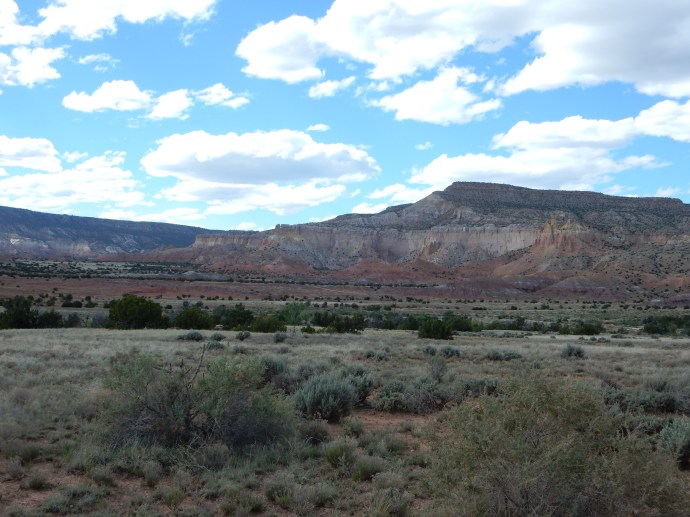
Red Rocks around Ghost Ranch and Abiquiu

Red Rocks around Ghost Ranch and Abiquiu

In Abiquiu the red rock formations jump out at you. Yes, yellow and white cliffs exist also, sometimes right alongside the vibrant red cliffs and all of them topped by a bright blue sky. We stopped at Ghost Ranch and spent time wandering around and taking pictures. We could have gone hiking on numerous trails, but the drive from Farmington was once again slow and we ended up spending the full day driving and viewing the sights from Farmington to Santa Fe. Thus, most of today’s post is pictures.

Ghost Ranch area

Ghost Ranch area

Panoramic view looking towards Ghost Ranch

Panoramic view looking towards Ghost Ranch

Ed and Chris

Categories: road trip, travel | Tags: , , , | Leave a comment

2016 Trip Four, Southwest Discoveries, May 21

Farmington, NM. May 21

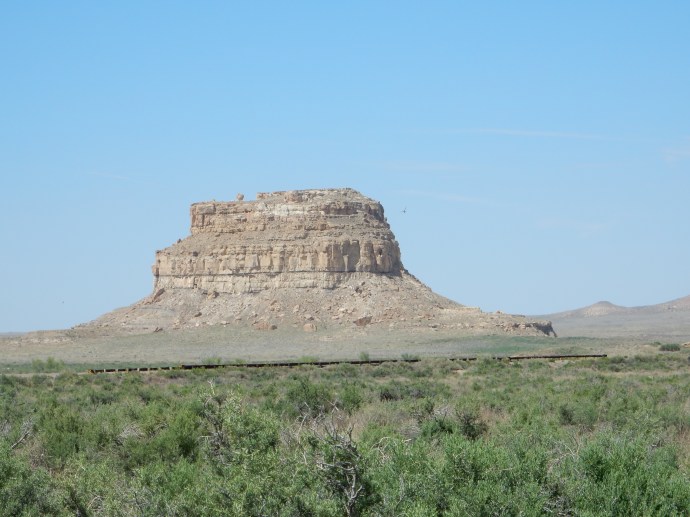
Fajada Butte in Chaco Canyon rises 300 feet from canyon floor-used to mark equinoxes and solstices

Fajada Butte in Chaco Canyon rises 300 feet from canyon floor-used to mark equinoxes and solstices

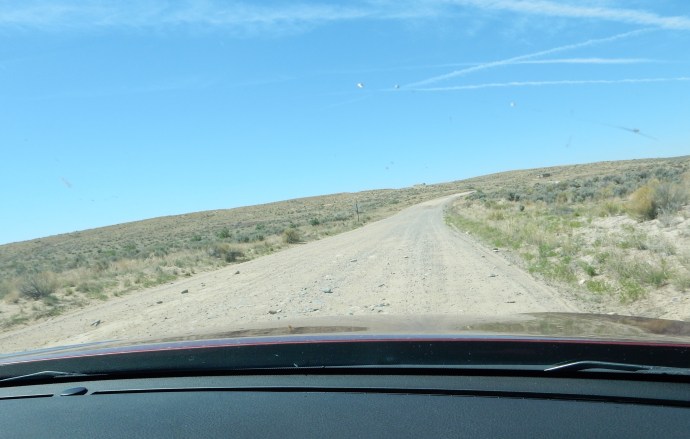
Another rocky road with washboard type ruts was the reason we are spending two nights at the TownePlace Suites in Farmington (which has been a great place to stay). When we planned this visit to Chaco Culture National Historical Park, all of the literature and advice mentioned the 13 miles of dirt road leading into the park. Travel time from Santa Fe to this park would be 3.5 hours one way. If we were going to enjoy the park, an overnight stay of at least one night would be necessary. As you know now, we decided to spend two nights in Farmington.

Viewing the dirt road portion of our trip

Viewing the dirt road portion of our trip

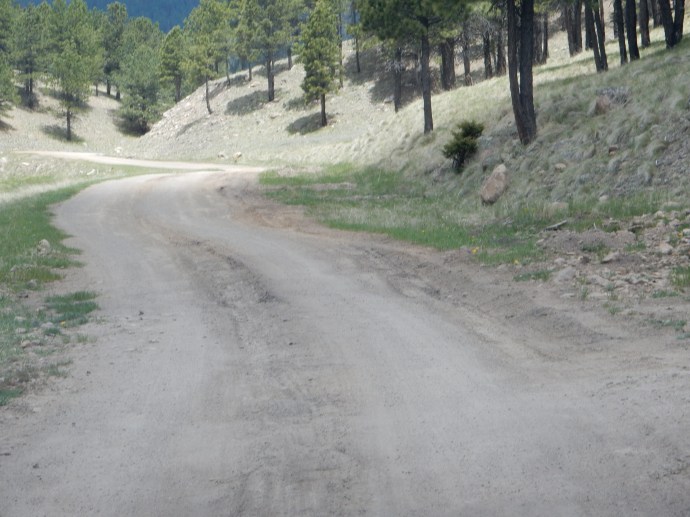
The drive from Farmington to the park turnoff is only 50 miles along US 550. Easy. After the turnoff is about 8 miles of paved county road. Not bad. Then comes the 13 miles of rutted dirt road which took us 42 minutes to drive; no stops along the way. Average driving sped was thus less than 20 mph. Jude was driving her Subaru which we hope will not need an alignment or suspension work after the trip in and then out. Road pictures do not show the washboard effect very well; the road did not have huge holes or rocks threatening the undercarriage but the washboard effect made the ride a real jarring experience. Once you get inside the park boundaries, the roads are all paved. Overall, the 24 miles from the turnoff takes another hour.

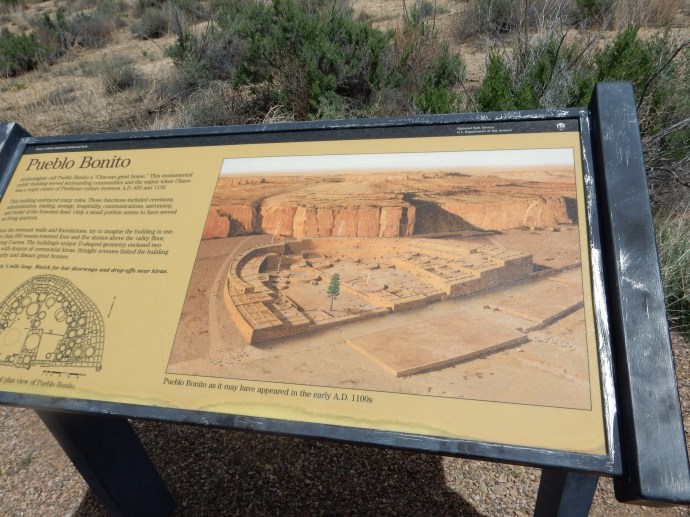
Drawing attempting to show Pueblo Bonito as it would have been around 1100

Drawing attempting to show Pueblo Bonito as it would have been around 1100

Chaco was the epicenter of this area as the native people here constructed roads, great houses, kivas, etc. of monumental proportions to support their far-reaching commerce and social organizations. Do we know why it started or why it ended? No. Archaeology and oral traditions only go so far in answering the myriad of questions raised when one views these excavated ruins (more are underground and unexcavated). The great houses, like Pueblo Bonito, began rising in the mid-800s and were emptied by the late 1100s.

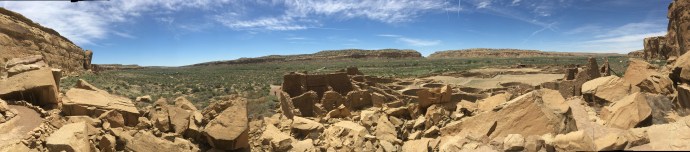
Panoramic view of Chaco Canyon

Panoramic view of Chaco Canyon

Oral tradition says that Chaco represents a place where various Indian clans stopped and lived during their sacred migrations. Migration patterns seem to be a continuing theme; that the Pueblo people are on a continual migration and the “abandonment” of various locales is just part of their life journey. Archaeologists do know that Chaco was an important center for a collection of great houses in this part of New Mexico. Trade to the Pacific and Mexico seemed to be centered here as well-constructed roads and paths lead out into all directions. For over 300 years, Chaco seemed to unify and attract numerous diverse peoples.

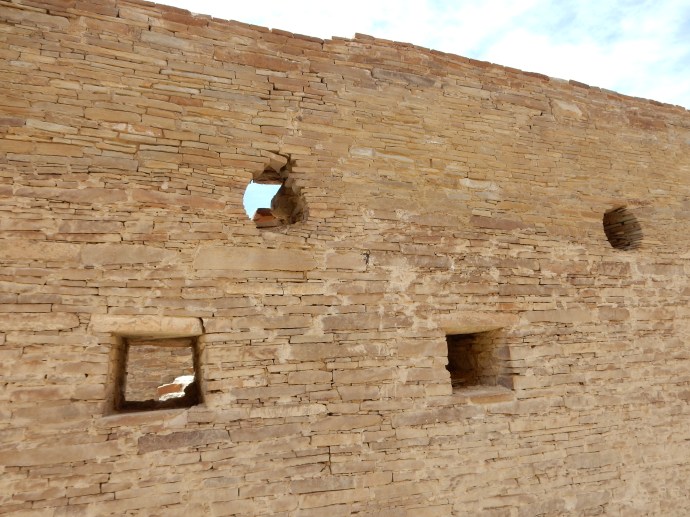
Detail of wall construction with windows and openings where roof beam had been

Detail of wall construction with windows and openings where roof beam had been

The architecture of the buildings shows that a central plan was created and followed for decades to complete the community. Pueblo Bonito was four stories high and had 600 rooms. The walls we observed were three feet thick with varying pieces of sandstone laid in a mud mortar; then finished with carefully selected and shaped stones. Evidently, plaster was applied as a finish coat but this layer has eroded away over time. Still, looking at these ruins makes one appreciate the great efforts at planning and control that would have been necessary to construct them.

View looking down into a plaza area of Peublo Bonito; huge rock in foreground collapsed from the canyon wall in 1941, destroying 30 rooms.

View looking down into a plaza area of Peublo Bonito; huge rock in foreground collapsed from the canyon wall in 1941, destroying 30 rooms.

The food supply for this vast area was little discussed. It is obviously arid but native tribes had success in low water agriculture. It seems doubtful that enough food could be grown in the neighboring area for the many people who lived here and food must have been imported.

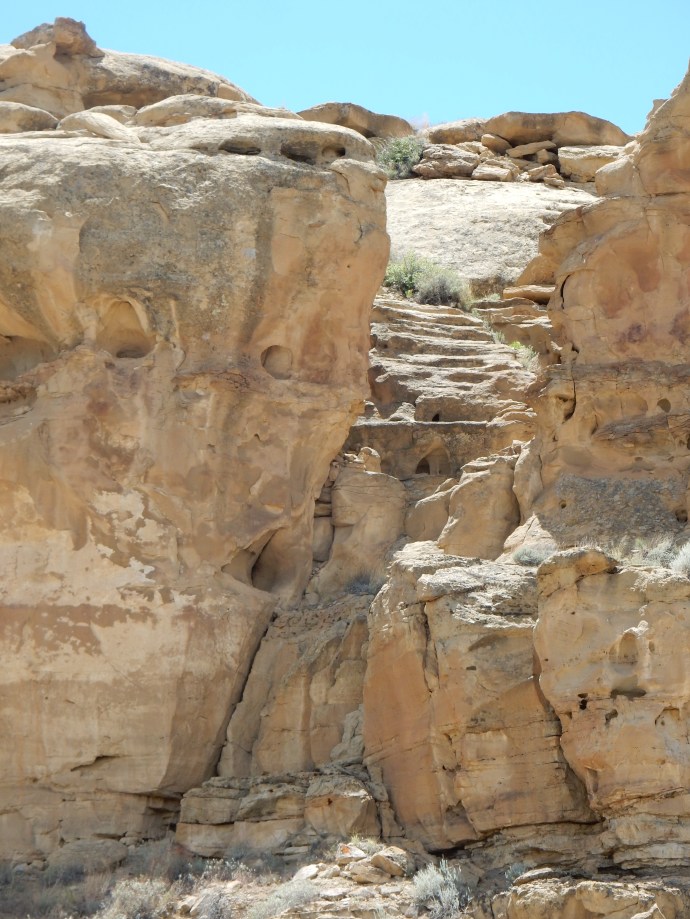
Stairs carved into canyon walls to facilitate foot traffic

Stairs carved into canyon walls to facilitate foot traffic

Current theories are that these great houses and numerous kivas were built to support the large number of visitors for trading and ceremonial activities; that the actual number of year round residents was much less than the number of rooms would indicate. Food storage and importation would have been necessary to feed the visitors. From oral traditions, it appears that visitors to Chaco came from Hopi, Zuni, Acoma, Zia, Laguna and other Rio Grande pueblos, as well as interaction with Navajo peoples.

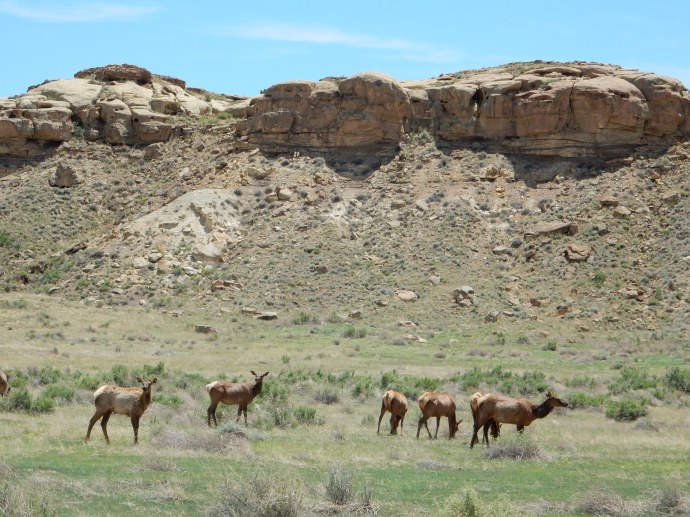
Elk herd living in the canyon

Elk herd living in the canyon

As noted at Aztec Ruins, wood beams used for roof construction came from forests 40 to 60 miles away. It is estimated that as many as 225,000 trees were cut for the buildings in Chaco Canyon. They must have cut them there, peeled off the bark, and allowed them to dry to make them easier to carry all the way back to Chaco Canyon. What social structure was in place to organize this and get cooperation from people to erect these massive buildings over hundreds of years??

Chaco is now, and must have been at an earlier time, considered a sacred place where various tribes could come together peacefully to trade, pray, and interact.

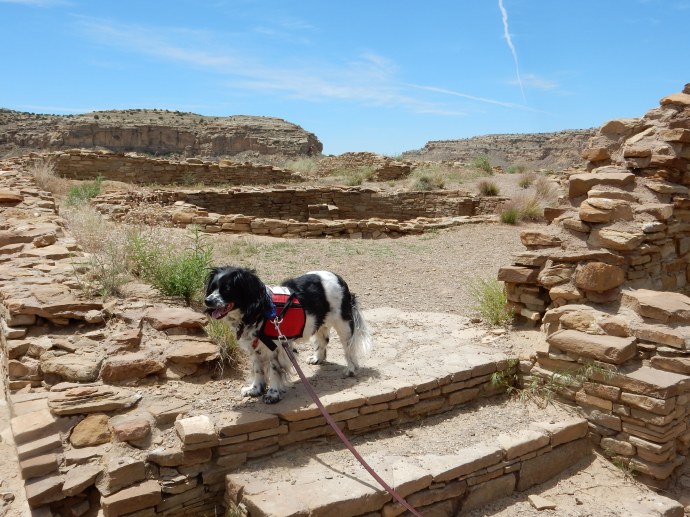
Jude's dog Lacey

Jude’s dog Lacey

I will admit we hiked less than usual. We could have climbed to the top of cliffs and looked down on the ruins but did not. I think the time to get here did dampen our enthusiasm to undertake longer, steeper hikes. In any event, we came away better informed and deeply impressed.

Ed and Chris

Categories: road trip, travel | Tags: | Leave a comment

2016 Trip Four, Southwest Discoveries, May 20

Farmington, New Mexico. May 20

Along US 550

Along US 550

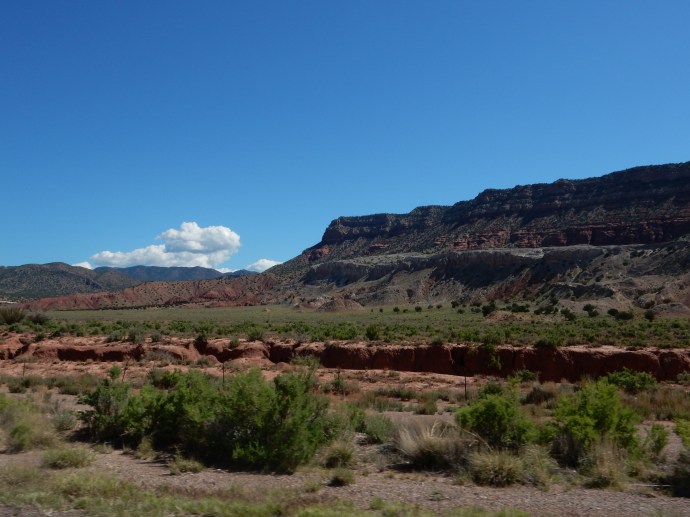
Utah gets all of the love and attention about its great scenery and national parks. However, our drive today up US 550 from Bernalillo to Farmington New Mexico was a dramatic expanse of mountains, rock formations, and high desert vegetation. The scenery was not our goal, but since the ride was four hours with a picnic lunch, beautiful scenery made the drive so much more pleasant.

Along US 550 in NM

Along US 550 in NM

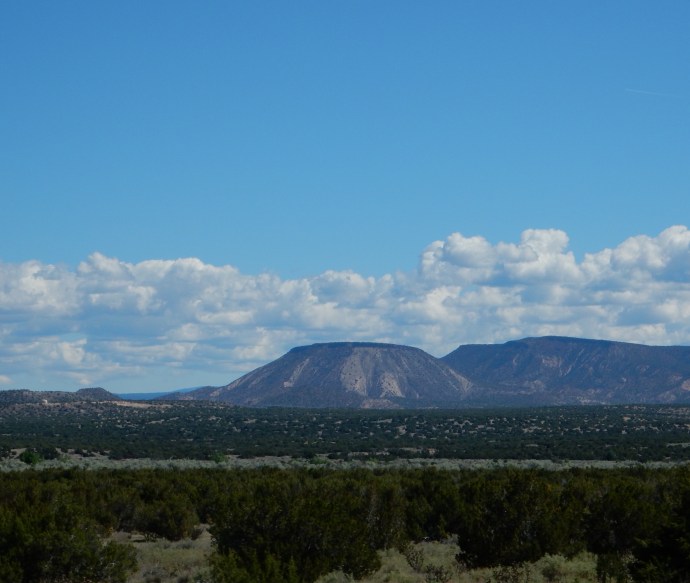
Along US 550 in New Mexico

Along US 550 in New Mexico

The route generally runs up and down between 6,000 feet above sea level and 7,000 feet above sea level. A few small towns, a few Native American casinos, but plenty of views. Most of the human habitation was less than dramatic. The economy seems to run on oil and gas mining and cattle ranching. Farmington, our host community for the next two nights, has a population of 45,000 and is the major shopping and services center for the Four Corners (where Arizona, Utah, New Mexico, and Colorado join) region.

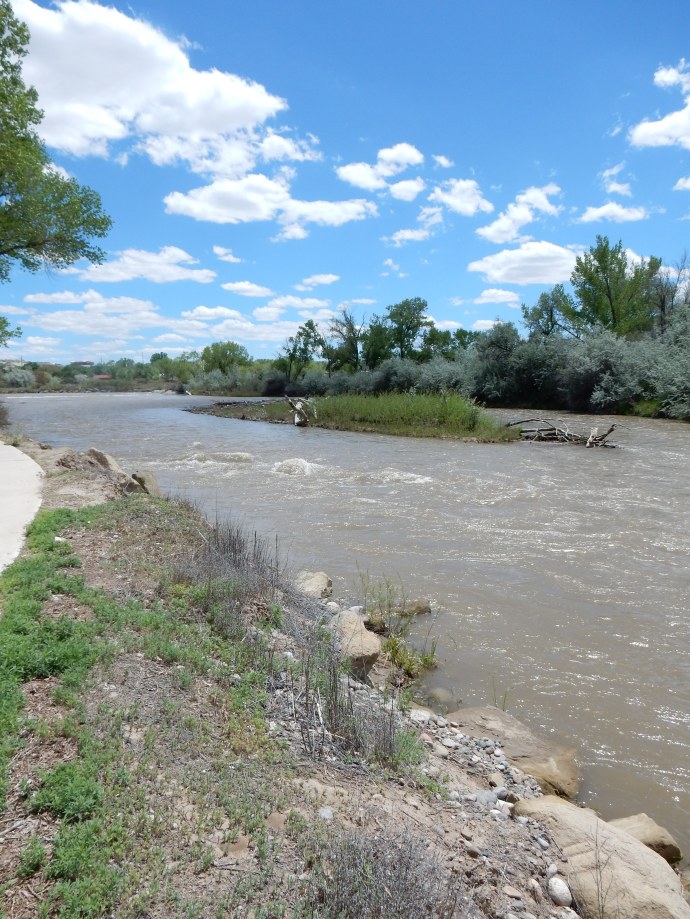
We had packed a lunch and sought out a pleasant site to have it. Aztec NM seemed a likely spot. The Animas River flows through town and Google Maps showed a large park along the river downtown. Jude reminded us though that the Animas River was the location of that major EPA mine reclamation spill last August. The spill occurred during mine reclamation when 3 million gallons of toxic waste were dumped into the Animas and San Juan rivers. The rivers turned orange.

The Animas River in NM

The Animas River in NM

Local news here still debates how well the Animas River has recovered and the long term impact of the spill. Water for irrigating Navajo nation farms has not yet been turned on. Last year their crops were a total loss. Local communities have not been fully reimbursed for their costs to try to control and mitigate the spill effects. In a sad commentary, other newspaper articles today reported that the bankruptcy of major coal companies threatens mine reclamation projects. States like NM have allowed coal companies to fund reclamation projects out of current cash rather than advance funding of the projected reclamation costs. Bankruptcies threaten the future ability to control environmental damage and restore the land.

I had talked with a park ranger at Salinas Pueblo the other day who discussed how lucky NM, a poor state, was to have mining and oil/gas companies paying royalties to keep taxes down. I wonder how excited she will be when the minerals are gone, the school kids are not educated, and the landscape is destroyed. (New Mexico high school graduation rates for 2012-13, as quoted by Governing magazine, were the second lowest state rate in the country.) If you give away your mineral riches without using them to educate your young, what kind of crime is that to your descendants?

But we still had lunch along the river. The water was brownish but I did not know if that is its normal hue. We saw several people fishing in a pond that seemed to be a backwater of the river. I guess the issue is beyond us. The picnic table was sheltered, clean flush bathrooms were nearby, and the setting peaceful.

Inside the reconstructed Great Kiva at Aztec ruins

Inside the reconstructed Great Kiva at Aztec ruins

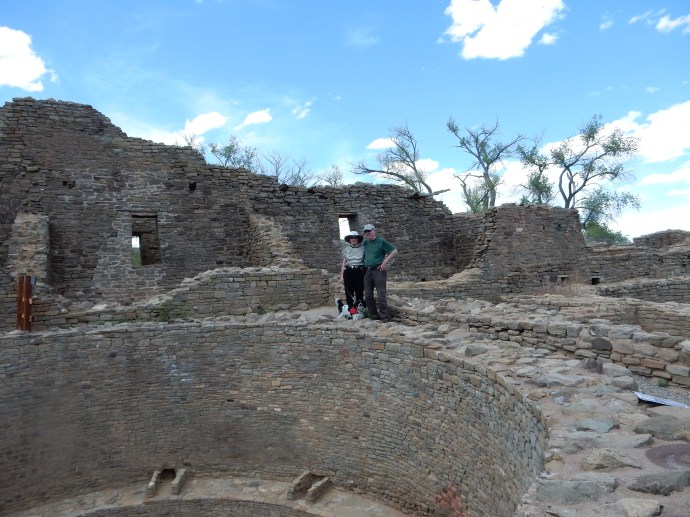
Aztec Ruins

Aztec Ruins

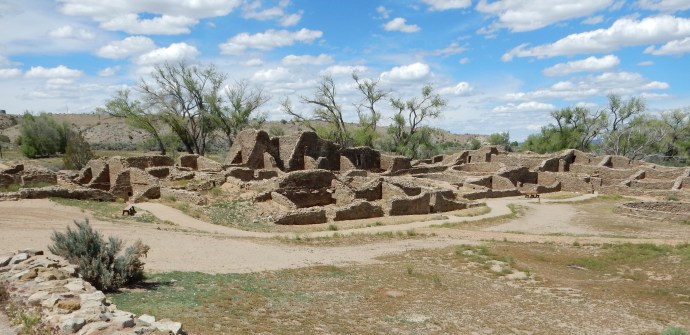
Our major reason for coming this way is to visit Chaco Culture National Historical Park. We will do that tomorrow. Today we visited Aztec Ruins National Monument. Hopefully you are saying: “But the Aztecs were nowhere near northern New Mexico.” You are correct, the Aztecs never came this way. Early Anglo settlers made the mistake, knowing only popular stories about the Aztecs and thinking they built the structures here, they called the area Aztec. The name has remained.

Jude and Ed at Aztec Ruins

Jude,Lacey and Ed at Aztec Ruins

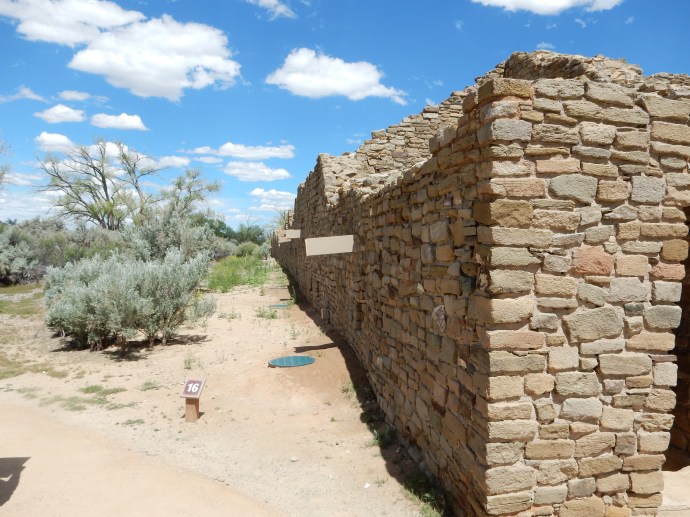
The buildings here were the work of ancestral Puebloan people, constructed between the late 1000s and late 1200s. By the late 1200s, the people had moved on. Again, we do not know the reason. They left behind a well-preserved planned community of great houses, kivas, roads, small residential pueblos, etc. Great detail and organization was necessary to complete this community. The largest of the houses had at least 500 rooms rising to three stories. They hand carried special logs at least 30 miles for the great roof beams. Some of the roofs are still intact after 900 years. The north wall of the West Ruin lines up precisely with the sunrise of the summer solstice and sunset of the winter solstice.

The north wall of the West Ruin

The north wall of the West Ruin

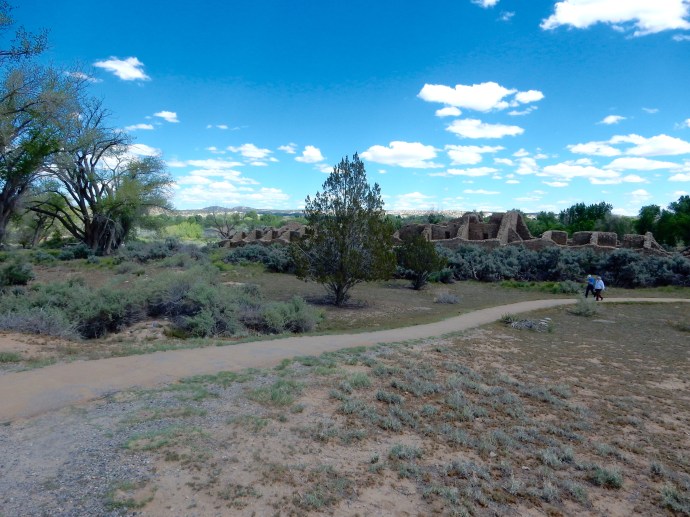
The West Ruin at Aztec Ruins

The West Ruin at Aztec Ruins

The ruins were re-discovered by Europeans (Native Americans never considered them “lost”) in 1859. The West Ruin was in a fair shape of preservation with some walls 25 feet tall and many rooms undisturbed. Luckily the first Europeans here recorded what they saw as Anglo settlers looted the area for building material over the next forty years. Under private ownership starting in 1889, the site began to be preserved. In 1916 the New York American Museum of Natural History began excavations. Most of the buildings we see were simply excavated and stabilized, The Great Kiva was reconstructed. In 1923, Aztec Ruins was designated a National Monument.

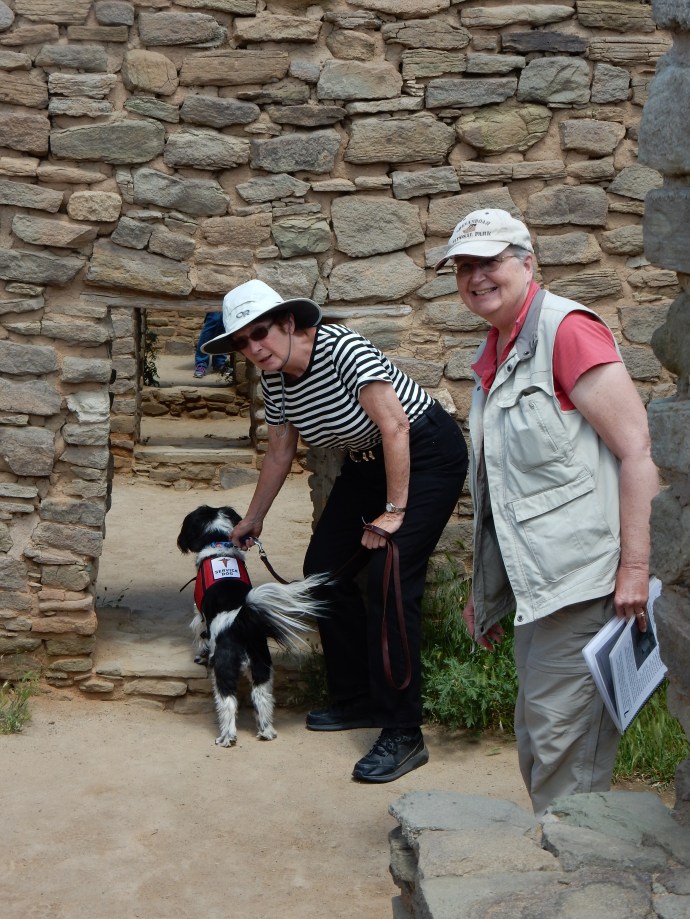
Going through the first of many low doorways at Aztec Ruins

Going through the first of many low doorways at Aztec Ruins

After watching the introductory video, we explored the site, amazed at the size, complexity, and preservation. Our exploration included walking through two foot wide doorways that are less than four feet high. We escaped without hitting our heads or scraping our backs. All in all, it was an enriching experience, a great way to prepare us for the larger Chaco Culture site we visit tomorrow.

Categories: road trip, travel | Tags: , , , , | Leave a comment

2016 Trip Four, Southwest Discoveries, May 19

Santa Fe, New Mexico May 19

Petroglyphs

Petroglyphs

Petroglyphs up close and personal. Numerous national and state parks trumpet their collection of petroglyphs, including Petrified Forest National Park that we just visited. However, today we saw as many, clearly defined petroglyphs in one space as any other location we have visited. La Cienguilla Petroglyph site is a little known location along the El Camino Real de Tierra Adentro National Historic Trail. The site was just 15 minutes from Jude’s house and made for an easy morning trip.

Climbing to the Petroglyph site

Climbing to the Petroglyph site

One of many collections of petroglyphs

One of many collections of petroglyphs

The petroglyphs are located along a cliff; reaching them involves hiking a rock-strewn path that challenges your footing more than your endurance. We were the only people looking at them today. The views of the nearby mountains are also great. The ‘glyphs are clearly defined and easy to recognize. Interpretation of meaning is still difficult, though.

Chris, Beth, and Ed

Chris, Beth, and Ed

Our afternoon excursion was truly interesting. We had not been to the New Mexico History Museum in downtown Santa Fe before. We were blessed by having a personal, docent tour by a friend of Jude’s, Beth. Our hour-long tour covered only a portion of the museum but was organized to give us a snapshot of life lived in New Mexico by “normal” people up until 1912. Of course, the hour-long tour was a little longer than her usual tour due to our peppering Beth with questions.

New Mexico has a long and involved history. According to a Pueblo elder, for the Native Americans, this landscape (which we consider as a desert) was “their Walmart”. The land and animals provided food, shelter and clothing. When the Spanish arrived, their whole world changed.

The rest of the US probably forgets about the early exploration by the Spanish in the 1500s, including a settlement near today’s Espanola NM in 1539. The Puebloans were willing to make adjustments to their lifestyle to secure the new implements and animals brought to this continent by the Spanish. The adjustments soon became one-sided and the 1680 Pueblo revolt succeeded in kicking the Spanish out. But in 1692, the Spanish returned with a vengeance and re-conquered the land and its people. They were not in favor of “Anglos” coming down into New Mexico, so the state remained a blend of Spanish/Mexican/Indian people and cultures.

Beth mentioned a new exhibit opening next week which will discuss the role of “Jewish” immigration to the New World. Spain had a multi-religious tolerance under the Moors but when the Spanish Monarchy was re-established, Jews became increasingly unwelcome. Eventually they were forced to convert, practice their religion underground, or leave. Many Jews converted under pressure and a large number of them moved to the New World where opportunities seemed greater.

A reduced scale model of the wagons used to transport goods on the Santa Fe Trail

A reduced scale model of the wagons used to transport goods on the Santa Fe Trail

In 1821, Mexico successfully threw off the Spanish yoke. Mexico was more open to Anglos and increased trade with the US and settlers from the US was a new chapter in the future state’s history. Trade was mainly along the Santa Fe Trail, with ox drawn carts the main method of transportation. By 1846 (this is a quick summary of history you are gathering), hostilities broke out into the Mexican-American War. The US won and in 1848 New Mexico was part of the United States. Due to US uncertainties about this land full of Catholics, Indians,and former Mexicans, the territory did not become a state until 1912.

Railroad expansion was the next dramatic change agent here. More immigrants, increased trading opportunities, and the making or breaking of communities by where railroad tracks were laid set the current population pattern in the state. Mining and cattle raising became strong forces in the state’s economy.

I think our next trip to Santa Fe may involve a second visit to this museum to add to our basic level of understanding of this rich and varied state.

The Santa Fe Animal Shelter and Humane Society complex nestled under the mountain view (the white building is not part of the complex)

The Santa Fe Animal Shelter and Humane Society complex nestled under the mountain view (the white building is not part of the complex)

On the way back to Jude’s, we stopped at the Santa Fe Animal Shelter and Humane Society. Jude does volunteer work for this group and her service dog “Lacey” came from here. We were given a detailed tour by the Adoption Director and came away overwhelmed by the complex and forward-thinking operations undertaken here. They run: an adoption program; a veterinary clinic; a dog behavior modification facility; a home for stray and homeless animals; and a “trap-spay/neuter-release” program for feral cats. The Shelter has modified its procedures to make sure the animal enclosures are large. The larger enclosures, along with several daily exercise activities for cats and dogs produces a healthier population which ends up being adopted more quickly than is average for a US animal shelter. Quite impressive.

On our way into the buildings, we observed an adoption counselor advising a new pet owner about proper care of his pet. The counselor was providing the owner with a new owner orientation package that was one of Jude’s first tasks here as a volunteer.

Dinner at Jude's

Dinner at Jude’s

At the end of the long day, dinner was at Jude’s: a baked salmon, broccoli, quinoa, and pecan dish. Very tasty and good for us also.

Ed and Chris.

Categories: road trip, travel | Tags: , , , , | 2 Comments

Blog at WordPress.com.