Monthly Archives: October 2015

2015 Trip Six, Great Smoky Mountains, Oct. 10-11

Gatlinburg TN Sunday Oct. 11
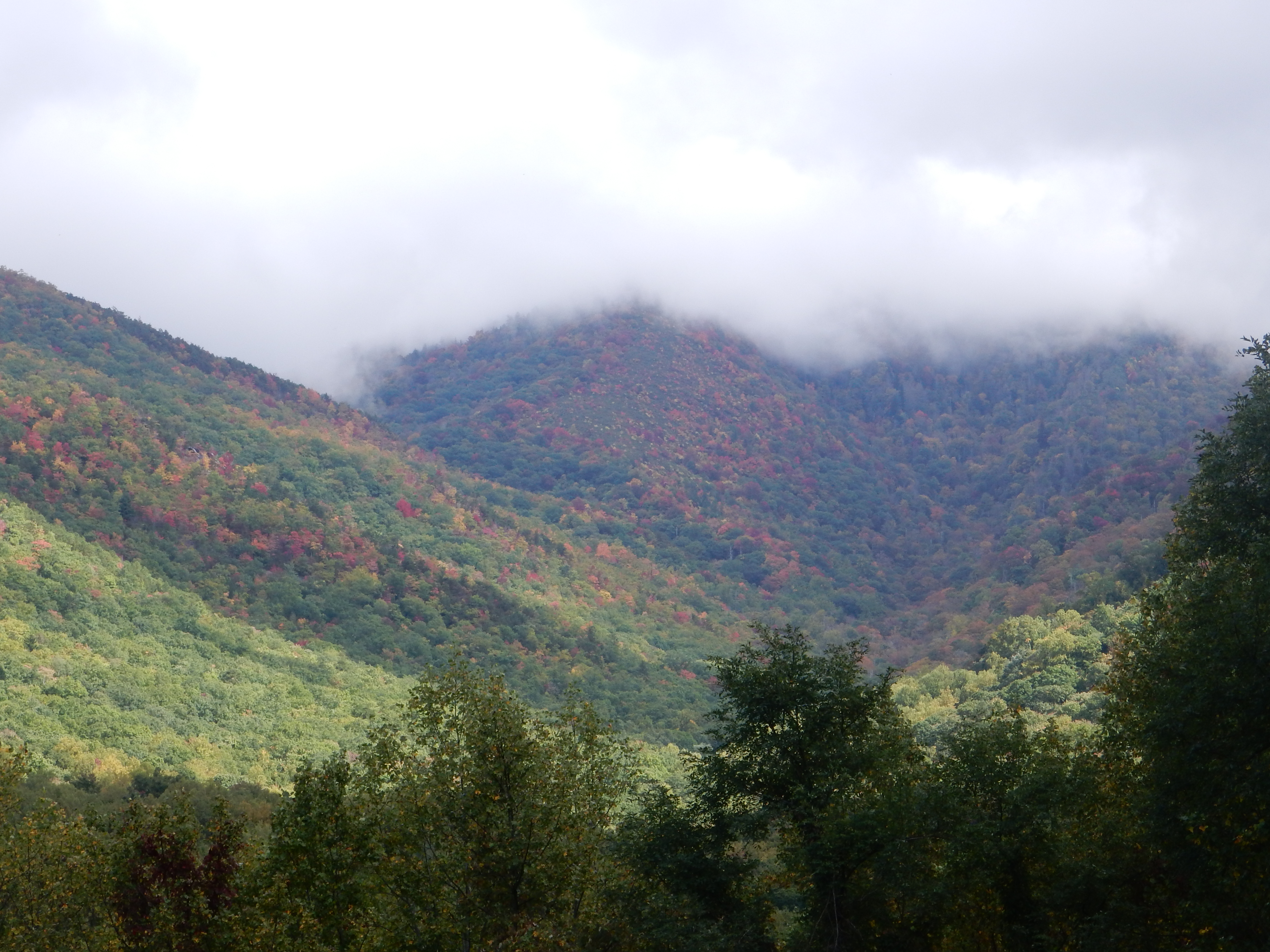
View from Newfound Gap Road Sunday in Great Smoky Mountain Park

View from Newfound Gap Road Sunday in Great Smoky Mountain Park

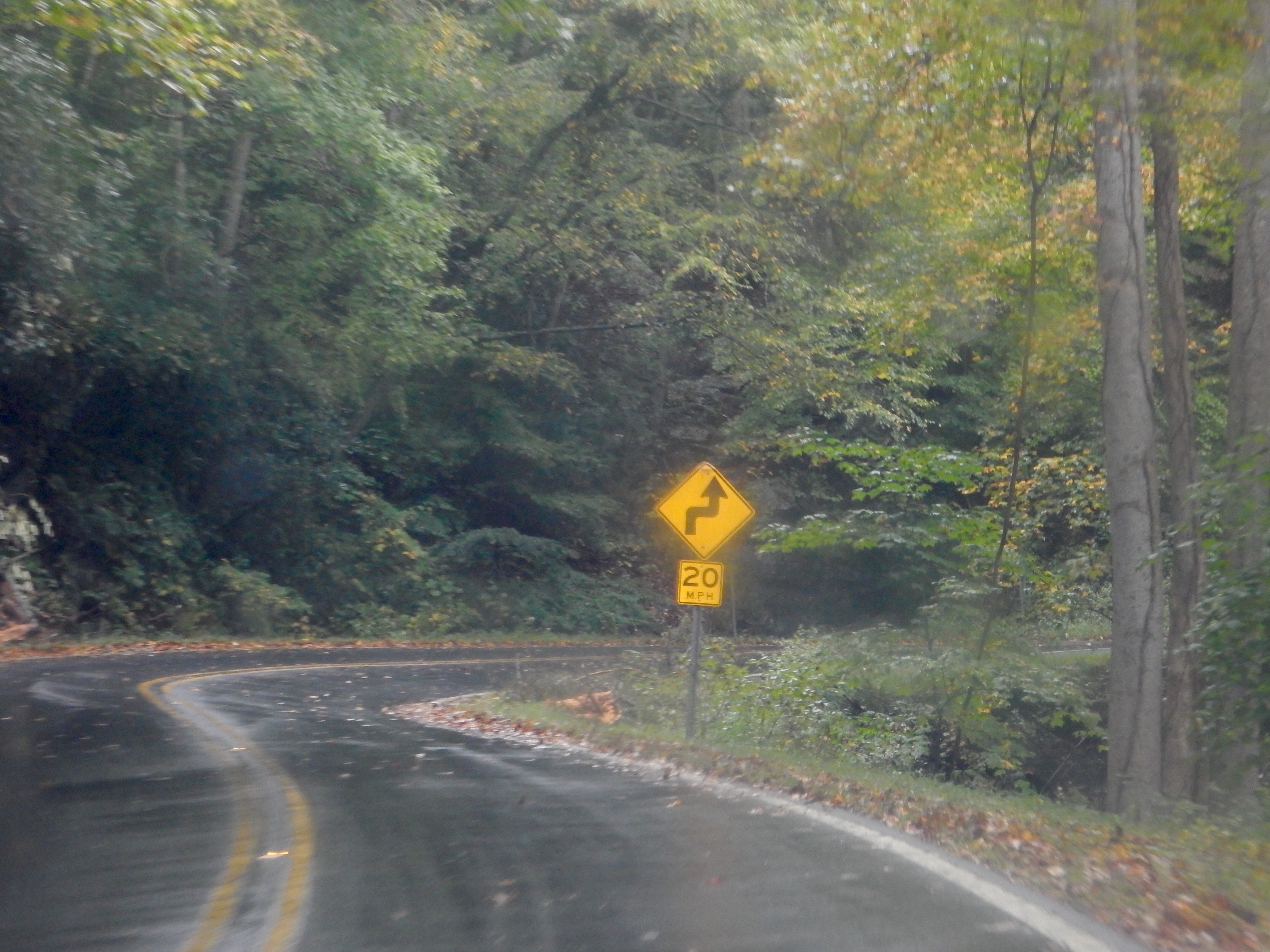
“Whenever you travel in the Great Smoky Mountains, plan twice as much travel time as usual.” Amen! This is a very popular park. This is a popular time to visit. It was the weekend. The road network is limited so everyone has to drive the same roads. Of course, the roads are two lane and curvy. Then you have the vehicles we experienced today: A. bumper sticker on one-I brake for photo ops–it did. B. Bubba and the gang-a pick up with folding chairs in the bed of the truck so people can sit and view the countryside. C. On the one lane, one way road next to and after the sign that says “Do Not Stop. Use Pullovers. Be Courteous” is the vehicle that is constantly stopping-not even a view or wildlife in sight.

Blue heron in woods by Cades Cove

Blue heron in woods by Cades Cove in Great Smoky Mountain National Park

Foolish us. Our own notes said to avoid Cades Cove on weekends. But we thought by getting up early and out at sunrise we would avoid traffic problems. Well, we limited some problems but when you are out all day, you are bound to experience traffic. We spent two hours driving the loop road, wandering around Cades Cove, and hiking through the woods, finishing up before it really started to get popular. (P.S. A cove is a small valley surrounded by mountains)
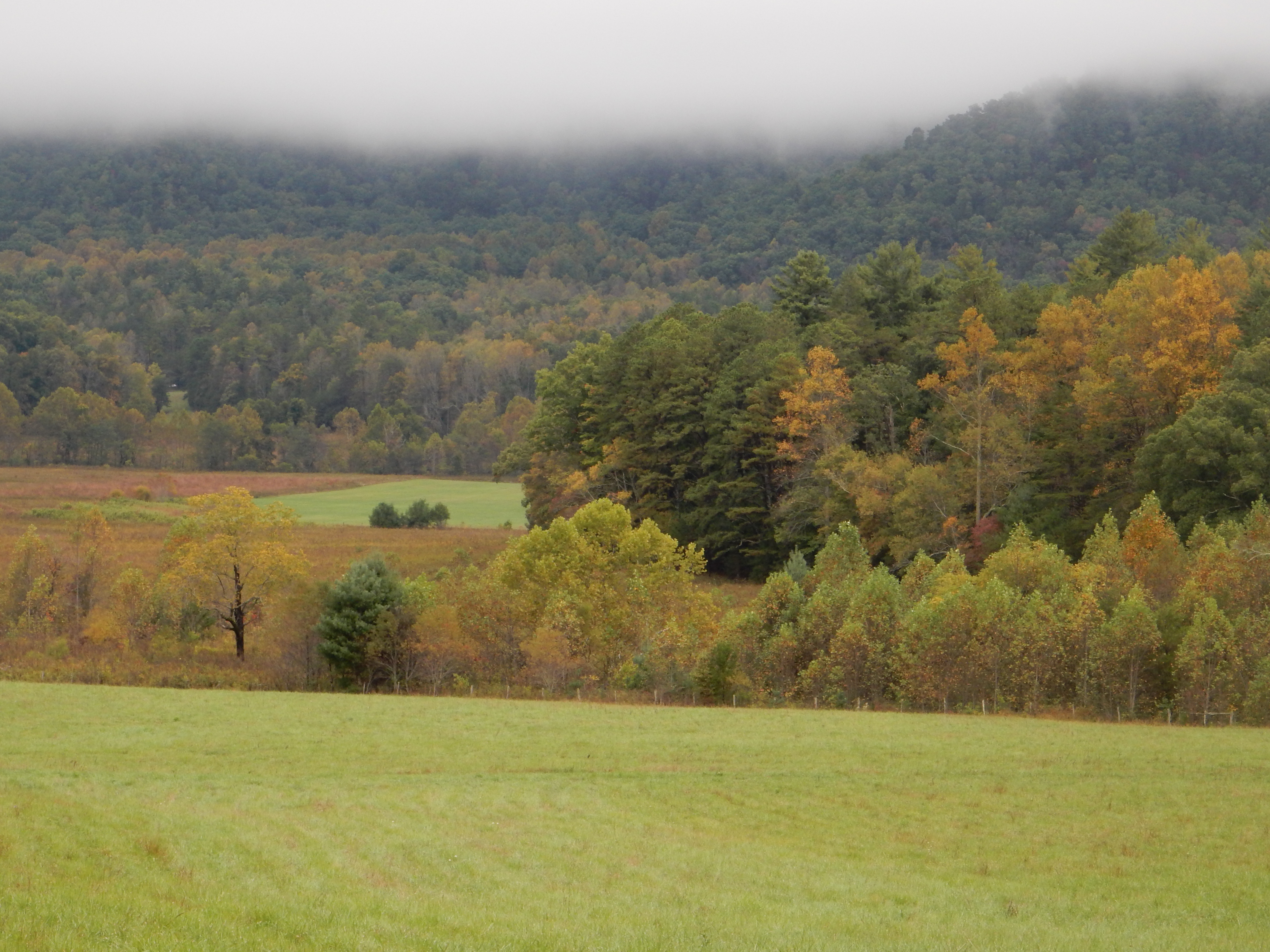
Part of Cades Cove area

Part of Cades Cove area

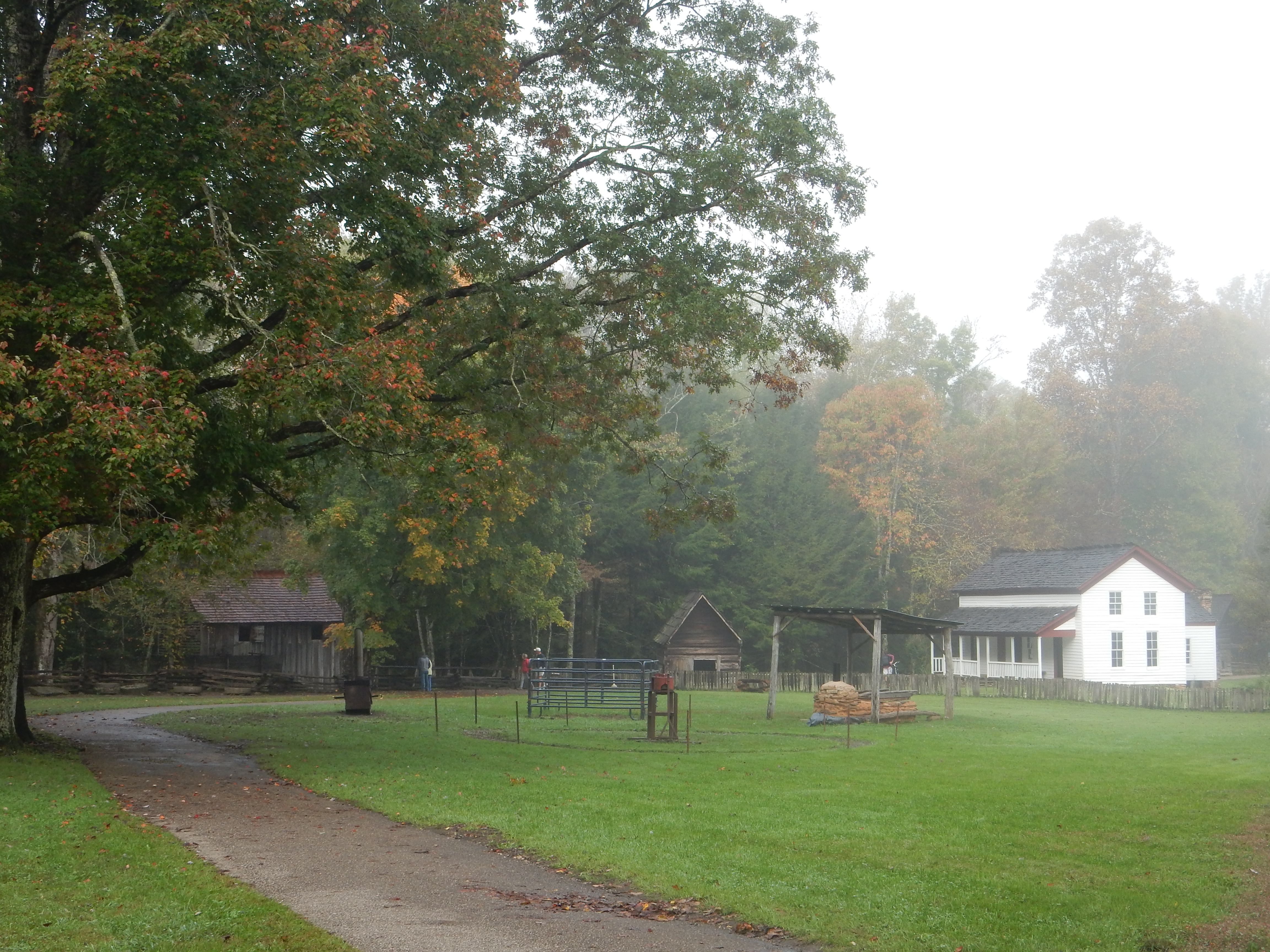
Cades Cove is one of the areas in the Great Smoky Mountain National Park that showcases the life of the European Settlers that lived here pre-national park. Native Americans hunted in this area, but their primary settlements were lower down along the rivers and valleys. In the 1820s European settlement began as Scots-Irish people from surrounding areas started to move in. The mountains are steep with few natural gaps and trails so settlement came later than surrounding areas. Subsistence farming was the main occupation.
Cades Cove

Cades Cove

The current Cades Cove area highlights how the people lived. The population seesawed, increasing to 865 by 1850 and plummeting down to 275 in 1860 and back up to 700 in 1900. Cades Cover offered better soil for growing crops and grassy areas to fatten cattle. But the soil became worn out, and with larger families, each succeeding generation had less land to farm. More people moved out but the area still remained viable. When the national park was formed (we will discuss that further in later posts) people were still living here and were bought out or forced to move.
Gristmill at Cades Cove

Gristmill at Cades Cove

Cades Cove

Cades Cove

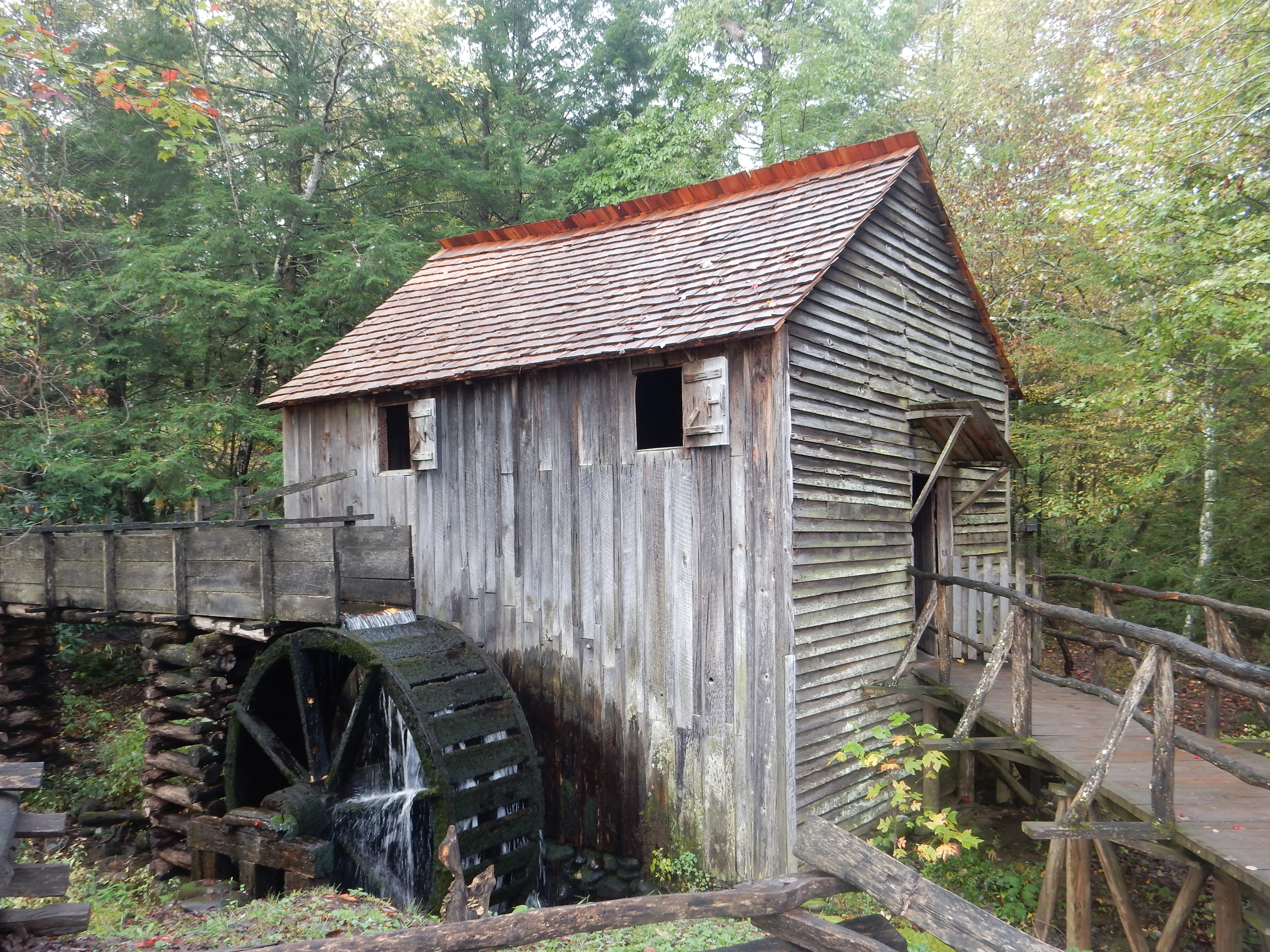
The buildings in Cades Cove include homes, a grist mill, blacksmith shop, barns, smokehouse, etc. There are three churches; the Methodist, Missionary Baptist, and Primitive Baptist. The Baptist churches split around 1840 due to a major disagreement over the literalness of the Bible and new “innovations of the day”. In the same vein, the Civil War caused deep divisions. The mountainous areas of Tennessee, North and South Carolina had Union sympathizers and deep family and neighbor conflicts occurred.

Laurel Falls

Laurel Falls in Great Smoky Mountains National Park

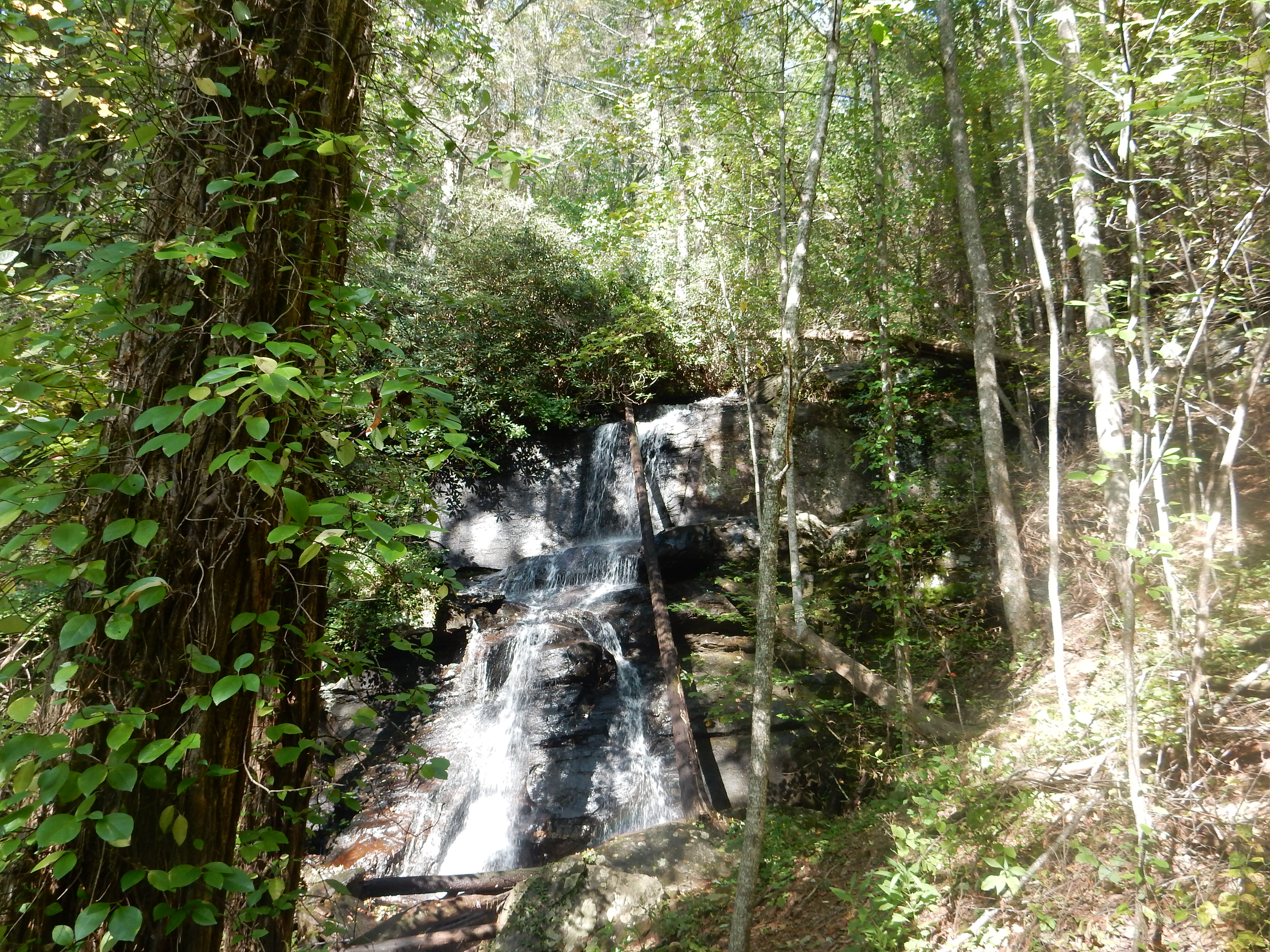
Today (Sunday) started out cloudy, with the rain that began Friday night continuing through all day Saturday. We only went on a few hikes Saturday. One was to Laurel Falls, an 80 foot waterfall that had high water volume due to the rain. The trail is one of the few paved trails but is steep and it took us over an hour to hike out and back the 2.6 mile trip. The Great Smoky Mountains usually receive 55 inches of rain per year. This makes for slick rocks and vegetation on the trails, but also translates into abundant vegetation. Mountain Laurel and Rhododendron are seen on most trails.

The Park Service also promotes trails called “Quiet Walkways”. These are trails that don’t go to any particular destination and you can hike along them and then return back whenever you like. These trails are designed just to let you get out and experience the woods. This park is actually an International Biosphere Reserve. The park literature states: “No place this size in a temperate climate can match Great Smoky Mountains National Park’s variety of plant and animal species.” Whew! You can be sure that when we are out hiking, we are not able to identify more than a few of the 1,500 flowering plants here.
After climbing up this hill, ...

After climbing up this hill, …

..we found this old cemetery

..we found this old cemetery

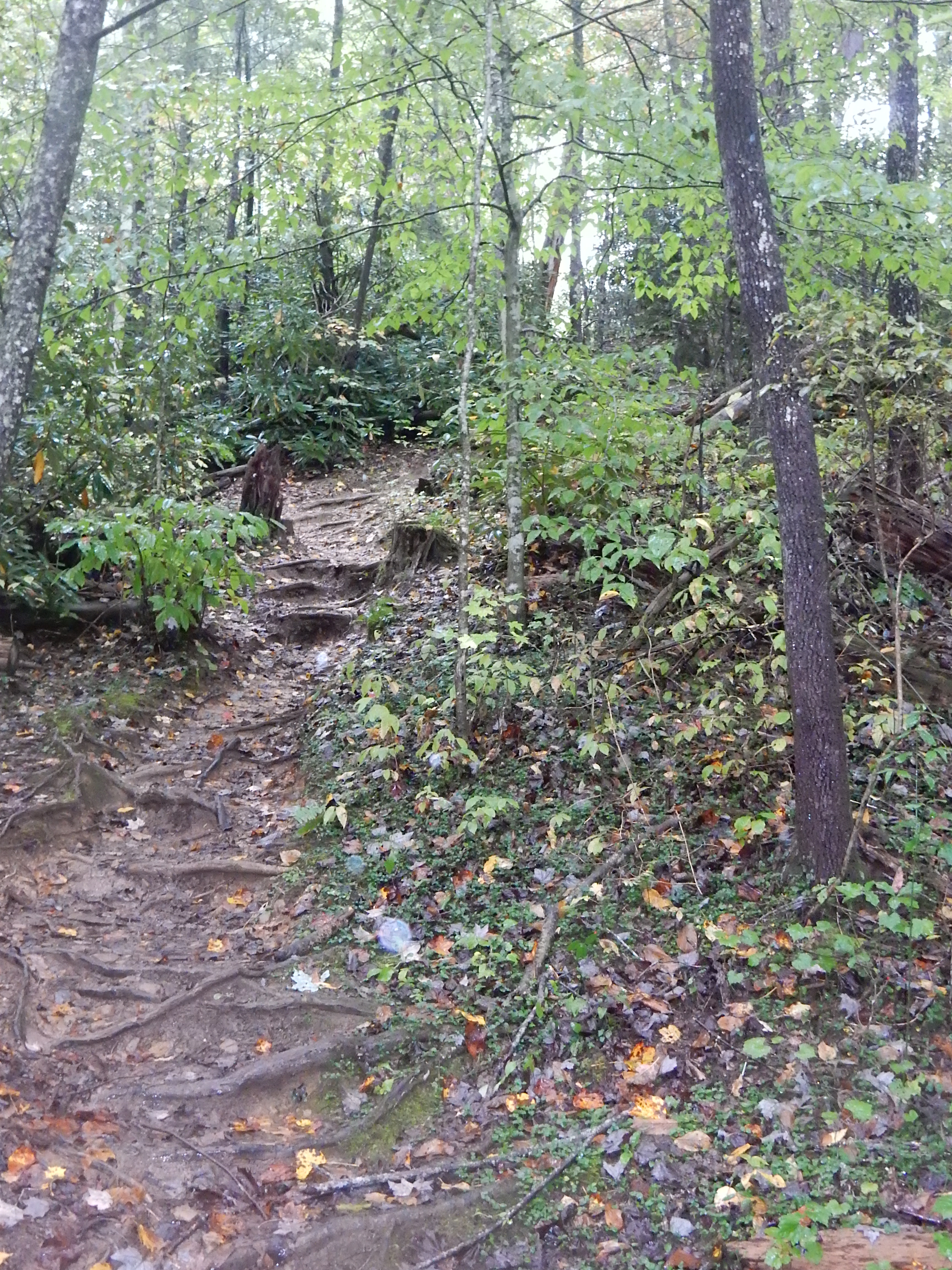
On one of the quiet walkways Saturday we scampered (well, sort of, for two people in their 60s) up a steep hillside path and were surprised to find an old cemetery hidden in the woods. In most cases, the grave markers were simply slabs of a shale like stone stuck in the ground. Only two or three had lettering that was still visible. None of the literature we read had mentioned this place.

Along the West Prong of the Little Pigeon River

Along the West Prong of the Little Pigeon River

Another quiet walkway on Sunday led to a valley along side the West Prong of the Little Pigeon River. This area had also been the site of a small gathering of settlers until the park came along. A few stone fireplaces were still standing. Since the park was established in 1934, the vegetation has sprung up and one is hard pressed to visualize how the homesteads and farms would have looked in what now seems to be a floodplain forest.

On the Cove Hardwood trail today, we did see relatively fresh bear scat but pushed on anyway. Luckily there was a family of four and one dog in front of us on the trail. We pushed ourselves to keep them in sight as a bear prevention device. This was a challenge, the hike was steep and slippery with rocks and roots just looking for a chance to trip us.

Just a small falls, Cataract Falls, near the visitor center at Great Smoky National Park

Just a small falls, Cataract Falls, near the visitor center at Great Smoky National Park

Meals the last two days have been in our unit. Frozen beef patties for dinner on both nights; cooking them created a smoke odor which managed to permeate the rooms with the smell of burnt meat.

Ed and Chris 9:30 PM

Categories: road trip, travel | Tags: , , , , , , | Leave a comment

2015 Trip Six, Great Smoky Mountains, Oct. 9

Gatlinburg, TN October 9

We spent half an hour today following “The Virgins”. That is our term for a couple on a motorcycle and trailer combination driving along the two lane roads in NC. They were from Alabama and in a 45 mph zone, were doing 35 mph. At every turn, they braked some more. We assumed it was an elderly couple on their first motorcycle trip. On our two lane, curvy roads, there was no opportunity to pass them. They did not pull over until it started to rain and they probbly had to put on rain gear. AND, two hours later, they pulled in to the cafe in Townsend TN that we had chosen for a mid day meal! They were old! Probably about our age.

Speaking of two lane roads, a direct path from our Thursday lodging to our Friday lodging would be 150 miles. We drove 300 miles, only 15 of those were on four lane roads. Most of these were on scenic byways. We hit the road early, stopping for breakfast in Ellijay again, this time at the Cornerstone Cafe. Food was fine but this is definitely not a dairy zone. No real butter, just “butter” spread. Milk was in a small juice glass for $3.

As we passed into Tennessee, we went through Copperhill and Ducktown, towns that were the site of a copper mine, now closed. Old mining buildings still line the road. In the nearby forest was the site of the Olympic kayak course from the Atlanta Olympics.

View along Cherohala Skyway

View along Cherohala Skyway

Our first major scenic byway was the Cherohala Skyway, a 40 mile national scenic byway. The name comes from a combination of Chero for the Cherokee National Forest and hala from Natahala National Forest. The road goes through both of those forests. The Cherohala Skyway took 30 years to build and cost $100 million. The road goes from an elevation of 1000 feet above sea level to 5,390 feet above sea level. $100 million did not buy shoulders, though.

Some red among the fog along the Cherohala Skyway

Some red among the fog along the Cherohala Skyway

The scenery was good but pictures from this section are few. The drive covers forests and several rivers and river valleys. The pull-offs (about one in every two miles) either were in areas with poor visibility or poor scenery. Fall colors here were much brighter-in areas with no pull-offs. Plus, the day was cloudy and drizzly early, with complete fog (or in the clouds) from about 4,800 feet to 5,390 feet and then back down to about 4,800 feet above sea level.

View from the Cherohala Skyway

View from the Cherohala Skyway

As expected, we observed numerous motorcycles, generally with good mufflers, and obeying the speed limits. Coming down from the high point on the Skyway, we pulled over at one overlook crowded with motorcylists enjoying the view and swapping tall tales. As we drove farther down, we encountered “The Virgins” and were thus able to even enjoy the scenery more as the speed was reduced below its already moderate level of 35, 45, or infrequently, 55 mph. Halfway between the end of the Skyway and the beginning of the next scenic route, “The Virgins” pulled over.

Along the "tail of the dragon"

Along the “tail of the dragon”

Our next major “named” scenic route was the “Tail of the Dragon”. This road is really hyped as a major motorcycle route. It is only 11 miles long with the speed limit 35 mph for the majority of the route. There are 318 curves along the 11 miles. Some of the curves are named: Hog Pen Bend, Parsons Curve, Little Whip, Pearly Gates, Wheelie Hell, Brake or Bust Bend, etc. Many of the curves are sloping, so on left turns the road drops down to the left side. Once again, we got behind a slow motorcyclist. Before this, I never would have thought I would be driving behind two slow motorcyclists in one day. This guy, however, on left curves with no oncoming traffic, dipped into the oncoming lane to enjoy the ride.

One of the photo entrepeneurs

One of the photo entrepeneurs

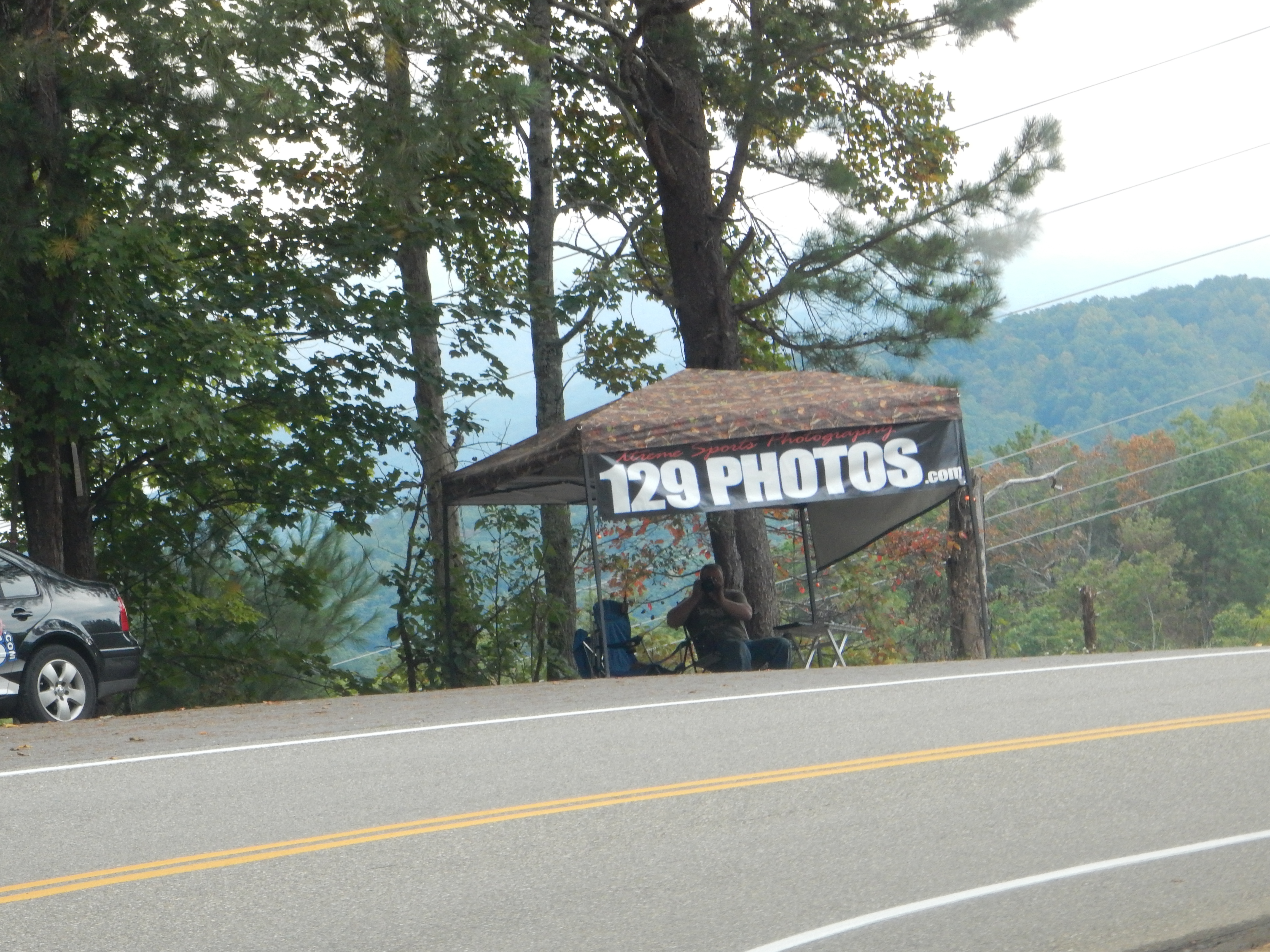
Near the beginning of the route is The Tail of the Dragon Store where there must have been over 100 bikers parked. Every kind of bike imaginable seemed to be taking the road and enjoying the curves. During the 11 miles, we passed at least five spots where entrepreneurs were set-up under a canopy and taking pictures of every vehicle that went by. They sell these pictures on the Internet. We went to one site and there were thousands of pictures. We were not positive of the time we drove by, doing a search for an hour period would have taken forever. Chris had fun waving to them as we passed, though.

A view from the overlook along the Tail of the Dragon

A view from the overlook along the Tail of the Dragon

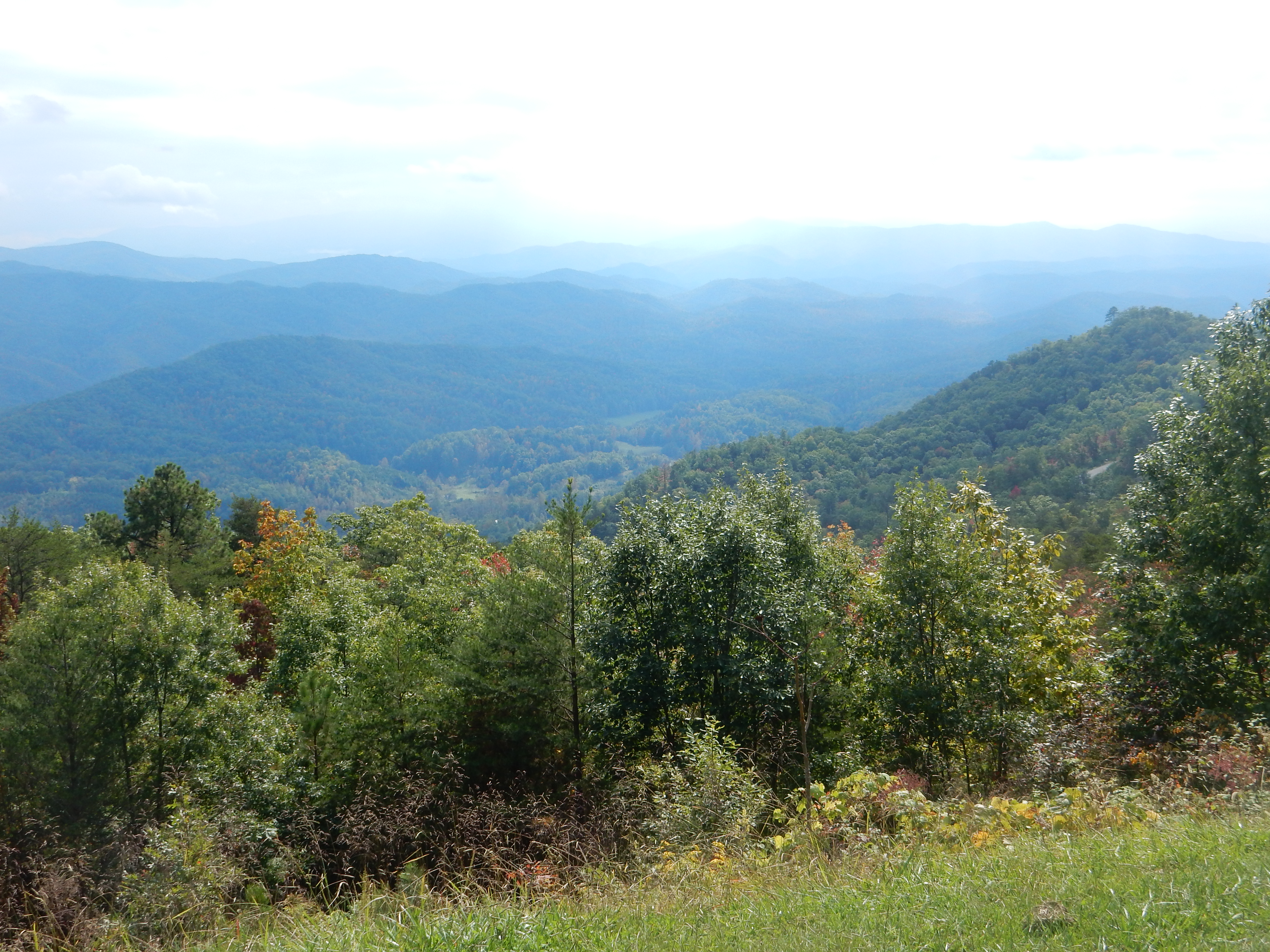
As we were close to the end, we pulled over at an overlook. The motorcyclists were having a great time chatting and comparing bike notes. Us car people were in a minority. A short drive from Tail of the Dragon began the Foothills Parkway.

Chris was pleased to have us reach the Foothills Parkway. After the Cherohala and Tail of the Dragon and the hundreds of curves, her stomach was starting to feel a little queasy. Foothills is much gentler, although there are plenty of curves, generally you can take them at the posted speed limit of 45 mph. For Cherohala and Tail of the Dragon, the car was braking for the curves and she would have to hold on, the car would start accelerating again, then braking for curves, and repeat over and over.

View from the Foothills Parkway east into the Great Smoky Mountains

View from the Foothills Parkway east into the Great Smoky Mountains

The Foothills Parkway looks over into the Great Smoky Mountains, traveling along the Tennessee River valley uplands. Here the trees were almost completely green, even though we were farther north. Later on, a park ranger at the Great Smoky Visitor Center indicated he believed soil conditions played a major role in determining fall color. I don’t know, over the years I have heard so many conflicting reasons as to why fall color changes, or why its vividness is different, when the changeover begins, etc. We will just enjoy what we see.

This 20 mile stretch of the Foothills is not new to us. We drove it 2 years ago but it continues our theme of making the day one of scenic viewing with very little hiking. It ends at Townsend, TN.

One day in June, when I was at Union Depot in St. Paul, waiting for the Amtrak train to arrive and begin one of my Trails to Rails stints, I met a woman from Townsend. As we were talking, she mentioned that when we visited the Great Smoky Mountains, we should eat at Miss Lily’s Cafe. I made a note of it and Chris and I had our major meal of the day there at 3 PM. The food was quite good, we shared a strawberry salad and a chicken salad croissant sandwich. Dessert was chocolate cake and a sugar cookie.

The final scenic drive was along the Little River within the national park. It was the most direct way to Gatlinburg without traversing miles of tourist trap stores. It provided just a glimpse of the steep mountains, tall trees, and rushing creeks we will be seeing over the next week.

We stopped at the Sugarlands Visitor Center for the Great Smoky National Park and gathered up our literature for the next week. Driving through Gatlinburg was as unpleasant as driving through Pigeon Forge, Atlantic Beach, or other tourist places. Mini-golf, fudge shops, pedestrians, restaurants, hotels, T-shirt shacks, curio shops, etc. Our lodging is at the Westgate Resort, between Gatlinburg and Pigeon Forge. While it is off the main road, it is a large complex and has its own crowds. Oh well, the unit has two bedrooms, a jacuzzi tub, kitchen, two bathrooms, a deck and it came for a great price.

Ed and Chris Sat. 10/10 11:15 AM and it has been raining constantly for the last 12 hours

Categories: road trip, travel | Tags: , , , , , , , , | 2 Comments

22015 Trip Six, Great Smoky Mountains, Oct. 8

Dahlonega, GA October 8, Thursday

DeSoto Falls in the Chattahoochee National Forest

DeSoto Falls in the Chattahoochee National Forest

Sitting on the veranda at Amicalola Lodge this evening, watching the sunset, and listening to others talk, we are struck once again that our style of travel differs from that of many others. Many of the veranda sitters were discussing their hikes, either today or in the past. Two of them mentioned that today they had hiked 18 miles from here to Springer Mountain, the southern end/beginning of the Appalachian Trail. Both were maybe about our age. One mentioned that she had broken her wrist. Another mentioned that he had pulled a groin muscle.

Chris and I probably walked five miles today on four hikes at three different locations. We generally prefer to go to varying places to try to see more of the terrain and beauty of the areas of the country which we visit. That length, particularly with elevation gain and rough terrain, is plenty of exercise for us. Maybe that is our way of justifying shorter walks, rather than one all day hike that might be too difficult for us. In any event, it works for us and we plan to stick with it.

Dunkin Donuts was our breakfast stop this morning. Sausage/egg sandwich with a donut and milk and coffee. Then it was driving time in the Georgia Blue Ridge Mountains. First stop was in the Chattahoochee National Forest. This forest began with purchases in 1911 under the Weeks Law that allowed the government to purchase land from willing sellers to preserve the headwaters of navigable waters and preserve timber resources. Much of the land here had been abandoned by miners after it had been played out or destroyed by hydraulic mining that washed away the soil by high pressure water lines. Other land had been abandoned by lumber companies who cut the timber and then left the area when the trees were harvested. Other land was never truly good farmland and had been abandoned.

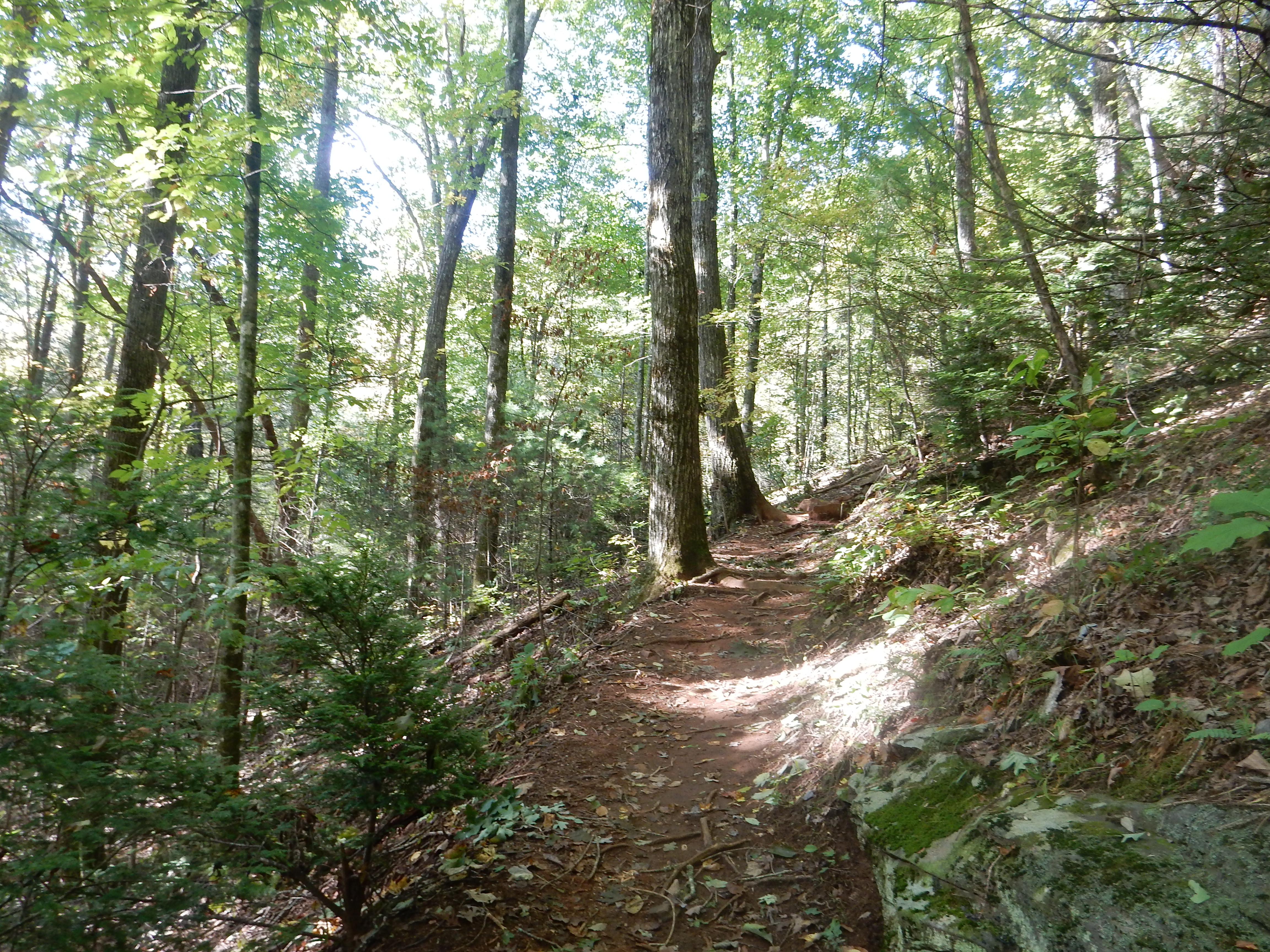
The trail to DeSoto Falls

The trail to DeSoto Falls

DeSoto Falls is a pleasant little falls reached after hiking a mile along a stream and up a hillside. It was a pleasant time for a hike, the day was clear with just a gentle breeze. We have not seen deer surprisingly and no bear thankfully for Chris; a few woodchuck and wild turkeys scattered about. The forest service also has a campground here that was still well populated.

The drive continued north from Dahlonega to Vogel State Park. The park has 1 bedroom cabins, among other lodging, that we had considered in 2013 for the Deep South trip that was postponed for a year. Staying here would have been a nice option for the springtime also. Mountain laurel and rhododendron were frequent along the trails, although not blooming. Fall color was not predominant, mainly green and fallen brown leaves.

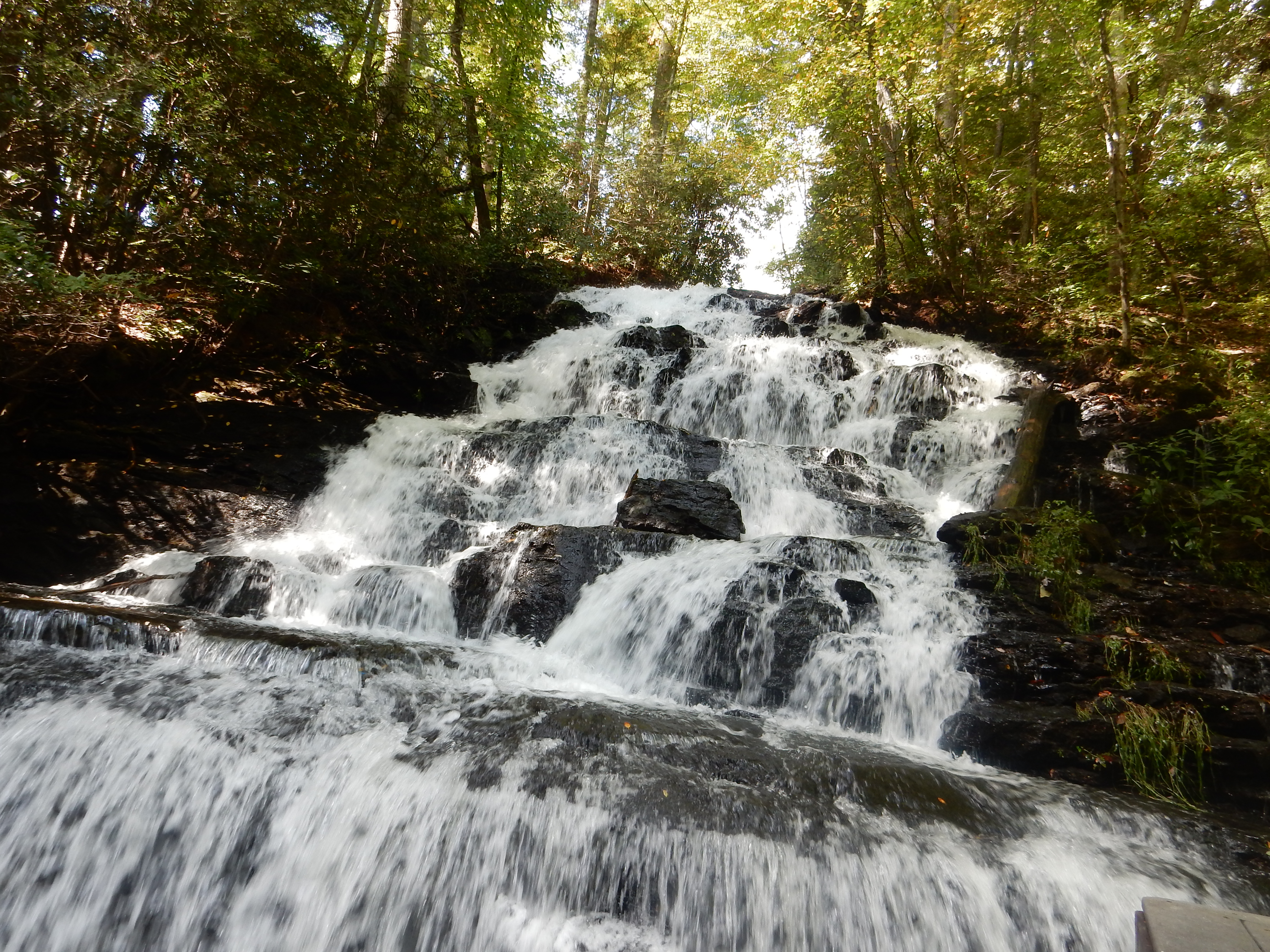
Spillway falls at Vogel State Park

Spillway falls at Vogel State Park


Vogel State Park

Vogel State Park

Vogel has a lake (Trahlyta) that feeds a trout stream and a mile long hike along the lake brings you to a spillway at the end of the lake with a rock outcropping falls. The dam was constructed by the Civilian Conservation Corps during the 1930s. Shadow Mountain (4338 feet) and Blood Mountain (4458 feet) guard the lake and park. The second hike here took us along the slopes of a mountain. Not too many people were here; according to park literature Vogel is one of Georgia’s most popular parks.

Our third stop took us a while to reach. Springer Mountain is the designated southern end/beginning of the Appalachian Trail. Why they located it on a mountain top that is a challenge to reach is beyond me. Why not make the terminal point one with parking, a place to say goodbye, etc?

But we returned to back roads searching for it. No major road signs. We obtained directions when we were at Amicalola Falls State Park, but those directions were based on starting at Amicalola, probably 50 miles and an hour and a half away. So we improvised, sharing back roads with the largest daily contingent of motorcycles we have yet encountered (but we expect them to increase). The scenery has been great and the roads generally smooth-although without any shoulders; it is just the constant up and down and curves that increase the driving challenge (pleasure).

The final stretch of road is 6.5 miles and is an US Forest Service road, gravel, bumpy, and narrow. That stretch took us 25 minutes to traverse; we were glad we had a rental car. Our 2001 Saturn would not have survived the bumps, its suspension is already in need of some repair work. There is a small parking lot on this forest service road; you park here and then hike one mile and up about 400 feet on a very rocky path to reach the official terminal point at the top of Springer Mountain.

the trail to Springer Mountain

the trail to Springer Mountain

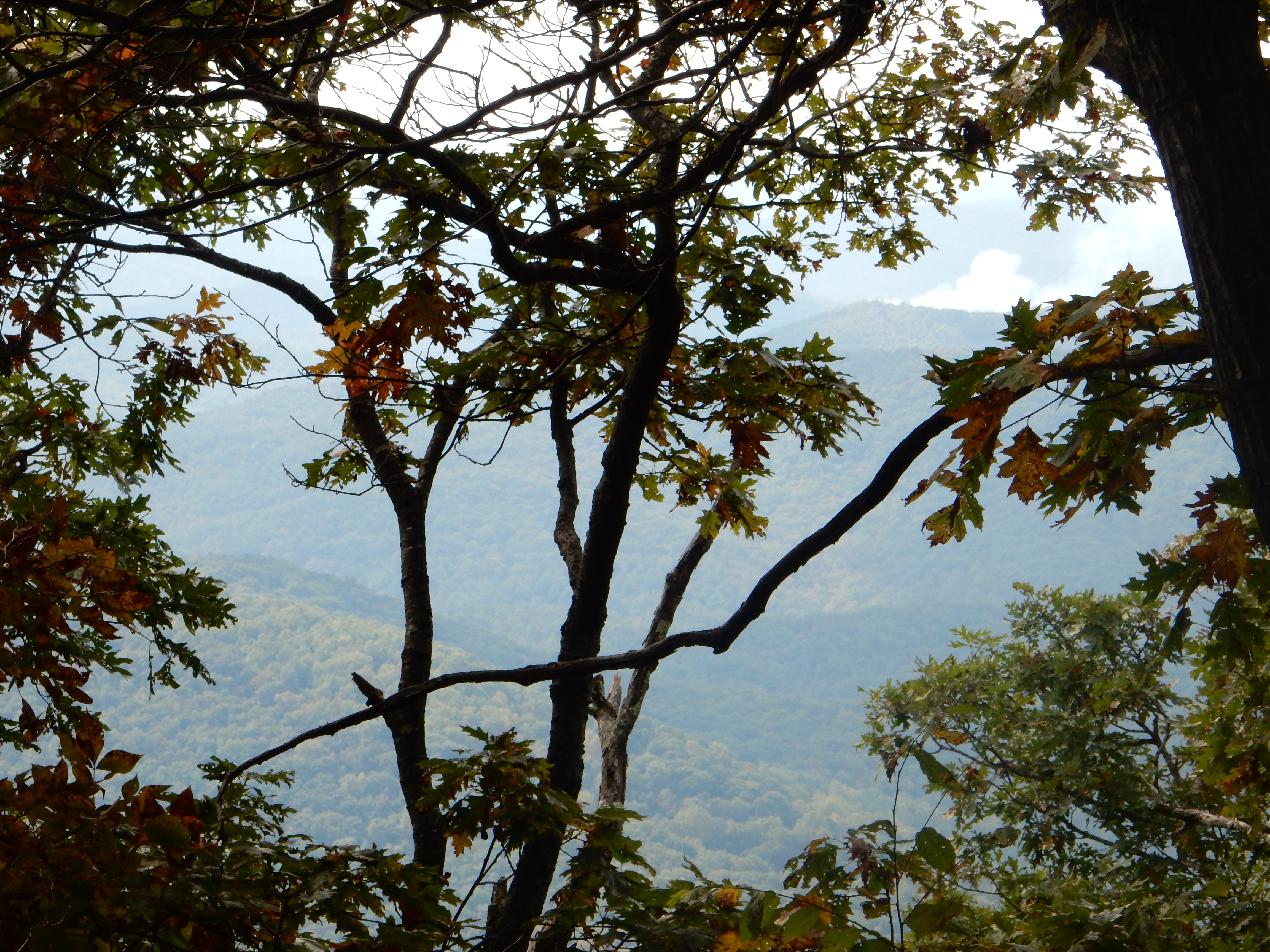
The view  through the trees on the trail to Springer Mountain

The view through the trees on the trail to Springer Mountain

We decided early on that making it to the official point was not critical for us. You might say, well, why hike the path if you are not going to go to the end? Because there is satisfaction and enjoyment in hiking. Going too long starts to tax our strength and makes mistakes more likely, particularly on this very rough, rocky path. (Remember my comment about the two people on the veranda this evening?) So we went out for 30 minutes and then headed back. Back to the car and another 25 minutes to return to a paved road.

Scarecrows in Ellijay GA

Scarecrows in Ellijay GA

We had forgone lunch and only had a granola bar between us so we drove 45 minutes to Ellijay GA for dinner. Ellijay is the center of the apple growing section of GA; the next two weekends mark the Fall GA Apple Festival in the town. Scarecrows and mums decorated the streets. The 1907 Pub had a tasty meatloaf (Ed) and chicken (Chris) dinner with some original and tasty flavors. It did not take us long to clean our plates.

Tomorrow we head out to Gatlinburg TN. We plan to drive more scenic byways, taking a meandering path to reach Gatlingburg. Amicalola Falls Lodge has been great, the views fantastic, the meals reasonable. There were one or two forgotten items by housekeeping that were promptly and pleasantly resolved. We would have no problem returning here in the future.

Ed and Chris 10/8/15 9:45 pm

Categories: road trip, travel | Tags: , , , , , , | Leave a comment

2015 Trip Six, The Great Smoky Mountains, Oct. 7

Dahlonega, GA Tuesday Oct. 7

A long day of driving over primarily two lane roads; up and down, left curves, right curves, and switchbacks all for the goal of more scenery. But success was achieved.

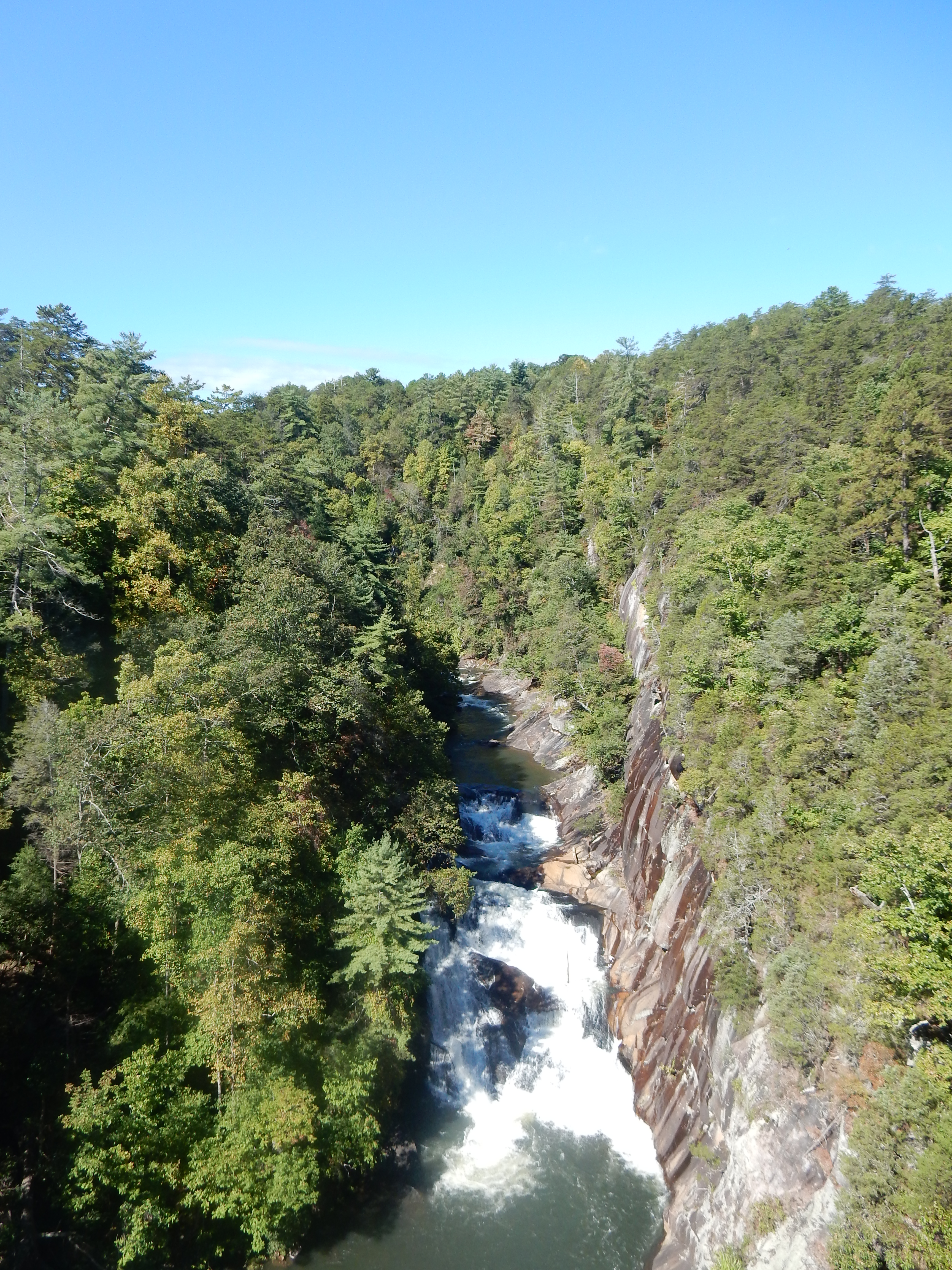
Tallulah Gorge

Tallulah Gorge

It took 90 minutes to reach the first destination, Tallulah Gorge State Park. The gorge is two miles long and nearly 1,000 feet deep. We timed the visit for this day in particular. Tallulah Gorge is part of the Tallulah River, heavily dammed in the early 20th century for hydropower. The vast majority of the water is used for this purpose and normal stream flow is low. However, on about 30 days per year, the power company releases higher volumes, either at an aesthetic level or at a whitewater rapids level. Today was one of the days for an aesthetic release of water, five to seven times greater than normal flow.

Tallulah Gorge

Tallulah Gorge

It made me recall our trip in the fall of 2014 when in Wawa, Ontario one waterfall was not flowing until later in the day when the power company “turned the water on” and we were lucky enough to be at the waterfall at the right time.

Tallulah Gorge is the creation of water, active over millions of years; water moving mountains and carving river gorges from stone. The falls are a series of five falls, each with its own characteristics. The area was a major tourist site as people came from great distances to see the gorge and the waterfalls. The creation of the dams on the river slowed the visits but today the state park on both sides of the gorge provide fantastic views.

Tallulah Gorge

Tallulah Gorge

In the 1970s, Karl Wallenda (of the famous wire walking Wallendas) walked over the 1000 foot wide gorge, doing two hand stands in the middle. The steel towers used to hold the two-inch steel cable wires are still there, although laying on the ground to deter anyone stupid enough to try it again.

North rim trail at Tallulah Gorge

North rim trail at Tallulah Gorge

We spent two hours here, hiking the rim trail, climbing up and down the trail to obtain varying views. There is not one spot (other than in the air) that allows for a full view. It is possible to walk along the river on days when there is no increased flow. On those low flow days, it takes 1062 steps to reach the bottom. We limited ourselves to several hundred feet of elevation gain along the trails. We could have gone down 600 some steps to a suspension bridge over the river but declined the opportunity.

Brasstown Bald tower

Brasstown Bald tower

Our second destination was Brasstown Bald, at 4,784 feet above sea level it is the highest point in Georgia. It is in the Chattahoochee National Forest and reached again via two lane twisty roads with constant inclines and declines in the road. The early part of the journey went around Lake Rabun, formed by the damming of the Tallulah River, with narrow roads by homes and cabins of some distinction. No “good ol’ boys” in this neighborhood.

Brasstown Bald is managed by the US Forest Service and is reached via the Russell-Brasstown Scenic Byway which drives through the highest mountains of the Georgia mountain country. Mountain laurel and rhododendron are everywhere, a visit in May or June would also be stupendous. You are able to drive to a staging area, 6/10 of mile in length and 400 feet in elevation gain, from the summit. We chose to take the shuttle up and walk down.

Views  from Brasstown Bald

Views from Brasstown Bald

image

image

At the summit is a visitor center affording great views in all directions. You can view portions of Tennessee, South Carolina, and North Carolina, as well as Georgia obviously. At this higher elevation, the weather is different from the lower, surrounding areas. The highest temperature recorded at Brasstown Bald is 84 degrees F, 27 degrees F below zero is the lowest temp recorded.

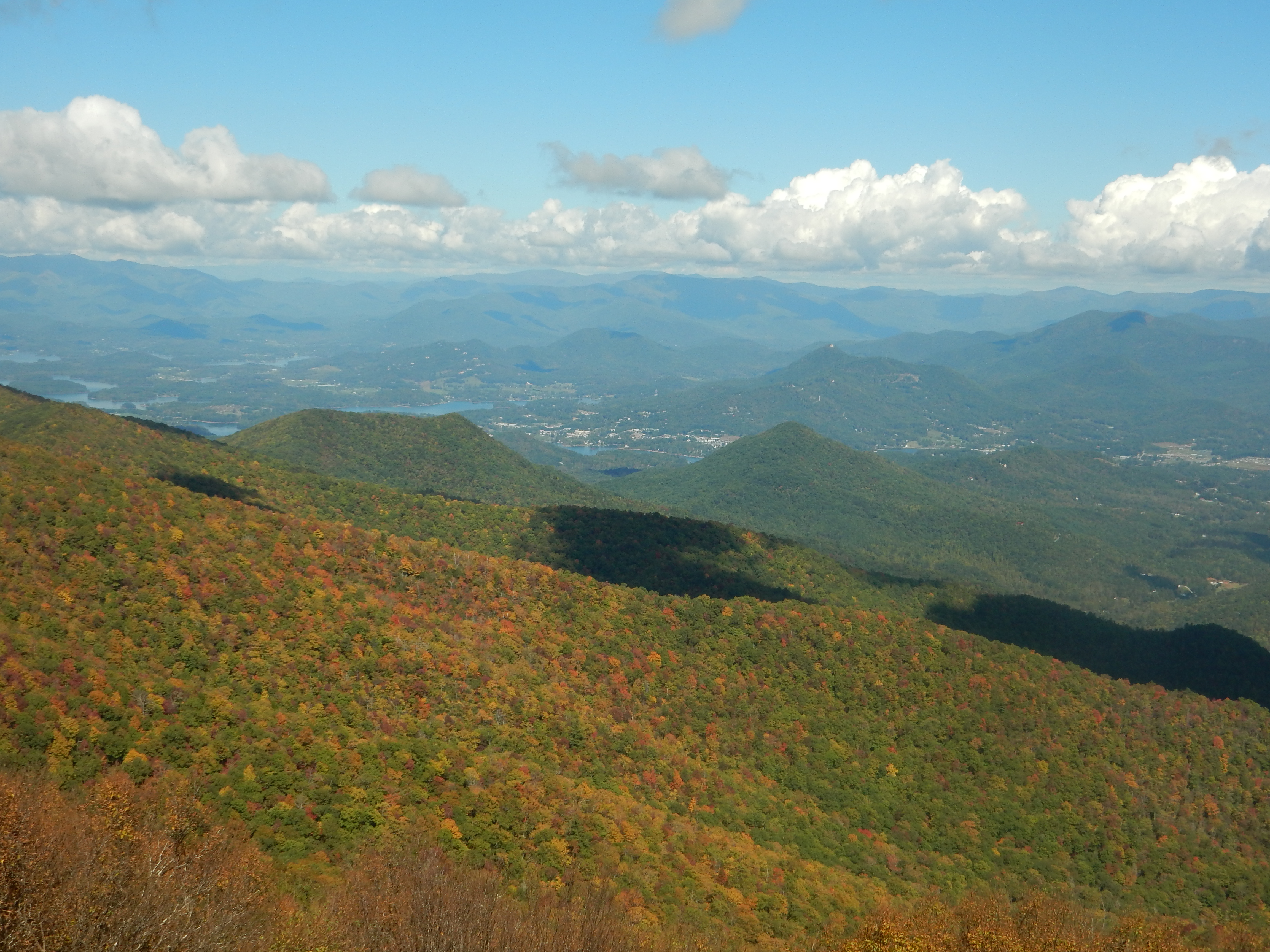
Due to the higher elevation, we were able to view our first significant areas of fall leaf color change. Several mountainsides were almost completely in yellow, orange and red. The day was primarily sunny with temps in the low 70s, clouds were high in the sky so views were not impeded.

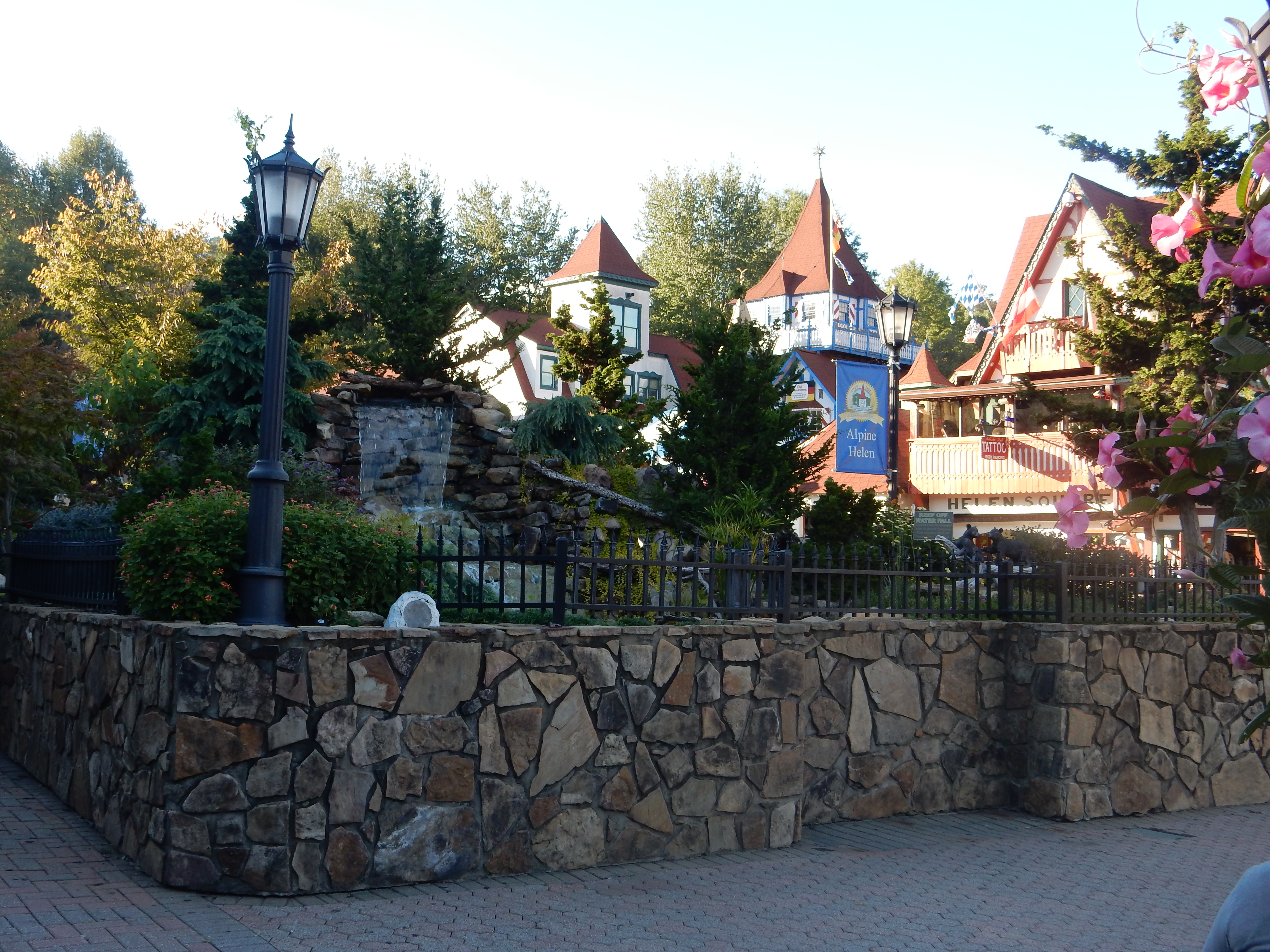
The Scenic Byway forms a rectangle. Brasstown Bald is at the top, center of the rectangle. Helen GA is at the bottom right corner. We started and ended the byway at Helen, a town that now advertises itself as a re-created Alpine village. Like Leavenworth WA which we visited in 2013, Helen was facing hard economic times. In 1968, the concept of an Alpine village was agreed to and the community re-built itself with new facades, murals and special events.

Helen GA

Helen GA

Helen, then, was our third destination and the one the park ranger at Chattahoochee River Recreation Area feared would be overrun with tourists. But, as we thought, Wednesday was not a peak visitation day. The town is 90 miles from Atlanta and while this section of northern Georgia is full of cabins and RV parks, even in the fall, weekdays are not the busiest time.

We had an early dinner here at an authentic German restaurant,loading up on schnitzel, rouladen, red cabbage, spaetzle, German potato salad, apple strudel, etc. The stores did not hold a lot of interest for us so we continued our day’s pattern of driving on those two lane twisty, hilly roads arriving back at Amicalola Falls Lodge just after sunset.

Ed and Chris 10 pm

Categories: road trip, travel | Tags: , , , | 1 Comment

2015 Trip Six, The Great Smoky Mountains, Oct. 6

Dahlonega, GA Tuesday Oct. 6

View from the top of Amicalola Falls

View from the top of Amicalola Falls

Well we are back on the road, looking for fall in GA, TN, NC, and SC. Yes, this means we will miss fall colors in Minnesota and who knows when fall colors will show here and how brilliant they will be, but we are here. And fall colors are only one piece of the journey’s pleasures. Mountain scenery and hiking are other expected pleasures along with several national parks.

Chattahoochee River

Chattahoochee River

We flew into Atlanta last night and spent the night in a hotel in the NE suburban area, closer to our destinations than the airport itself. Our first stop this morning was at the Chattahoochee River National Recreation Area. Like the Mississippi National River and Recreation Area in St. Paul and Minneapolis, this is an urban, linear park focusing on the beauty and activities associated with 48 miles of a major river. Unlike the Mississippi National River and Recreation Area, the Chattahoochee park owns a lot of parkland along the river. There are numerous park units scattered along the river but only the visitor center is staffed with park rangers.

Some of the kids getting ready to canoe on the Chattahoochee River

Some of the kids getting ready to canoe on the Chattahoochee River

School kids canoeing on the river

School kids canoeing on the river

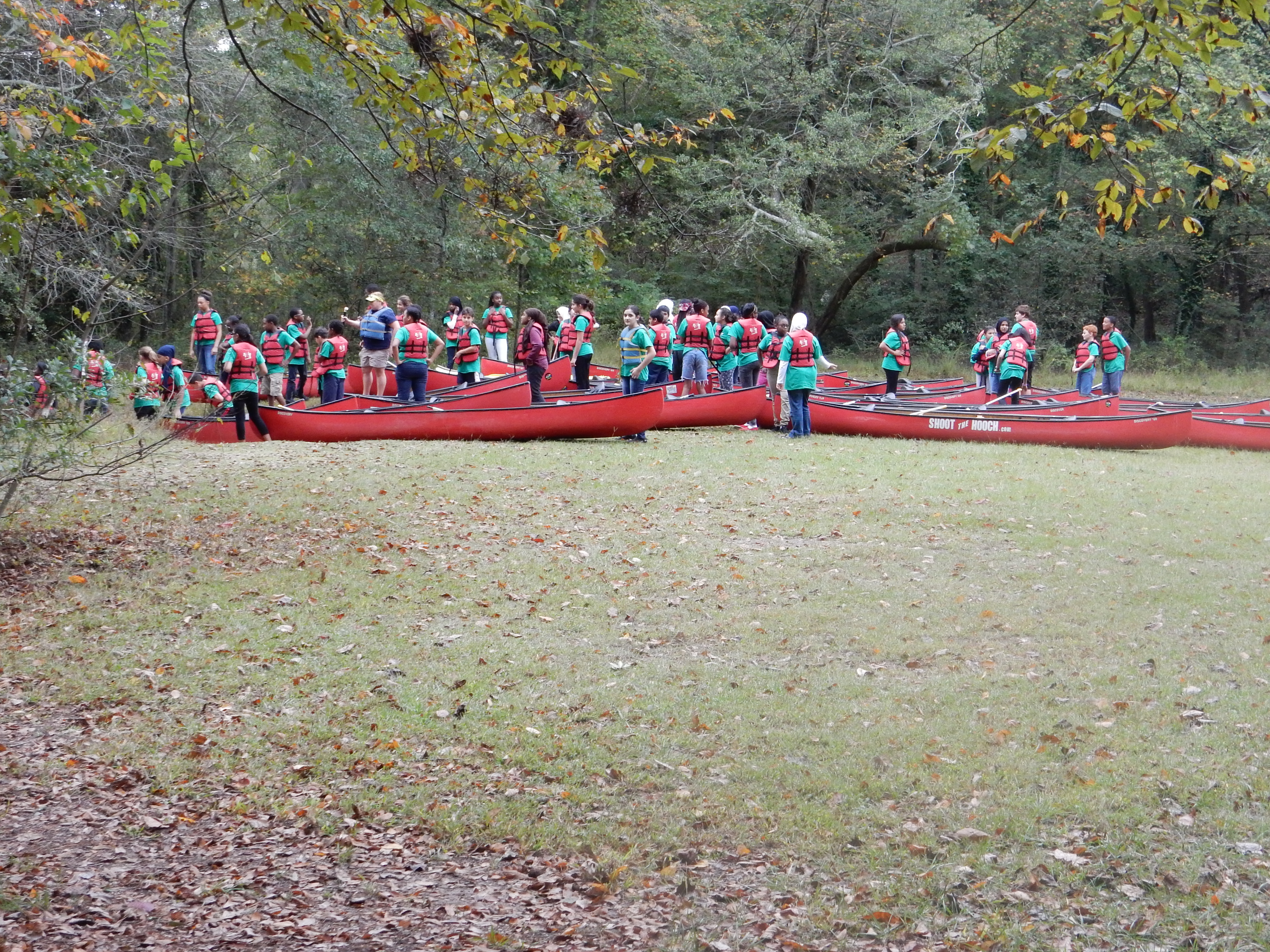
One of the sights was a group of maybe 50 school kids getting into canoes and paddling two miles downriver to a city park where they will land. Oh, we felt sorry for the adults, even though they seemed to have control of the situation. The kids seemed to be enthused and we only observed a few canoes going backwards.

The Chattahoochee River Recreation Area has a visitors center housed in a log home built of logs from the Okefenokee Swamp back in the 1930s. Their introductory film does a nice job of discussing the Chattahoochee and water use; it was a little light on dramatic scenery. The ranger on duty had made a career switch from business and he seemed to be pleased with the change. We told him our Georgia destinations and he approved, although warning us of potentially heavy traffic at one town with an upcoming Octoberfest festival. We plan to be there tomorrow and believe we will miss the crowds.

Finding the park visitor center was a challenge, even with maps and a smart phone. Some roads on the map/phone were blocked off, and there was only one sign giving directions. That sign was right off the Interstate and of course at further intersections, some where you went straight, and some where you had to turn, there were no further signs.

We walked for a while in the park by the visitor center and had forgotten that the Chattahoochee joins with the Flint River south of Atlanta to form the Apalachicola River which flows from southern Georgia through northern Florida into the Gulf of Mexico. This spring we had spent time in the town of the same name at the mouth of the Apalachicola, even buying a T-shirt emblazoned with the name Apalachicola.

Dahlonega Georgia was our second stop of the day. Lunch was our first priority, at the Smith House, with a traditional Southern meal of fried chicken, fried okra, mashed potatoes with white gravy, creamed corn, green beans, ham and collard greens finished off with strawberry shortcake. Smith House has been in operation since 1946, and had previous owners with inn and food service going back to the 1800s.

Why Dahlonega?? Well, this portion of Georgia was the area of the first gold rush in the United States. Beginning in 1828, gold was found here along a ridge of mountains stretching from the North Carolina border to the Alabama border. Dahlonega was the focal point, over 200 mines were located in this area. The U.S. mint actually had a branch mint here until the start of the Civil War. Men came from all over the existing U.S.; many left here for California when gold was found at Sutters Mill in 1848.

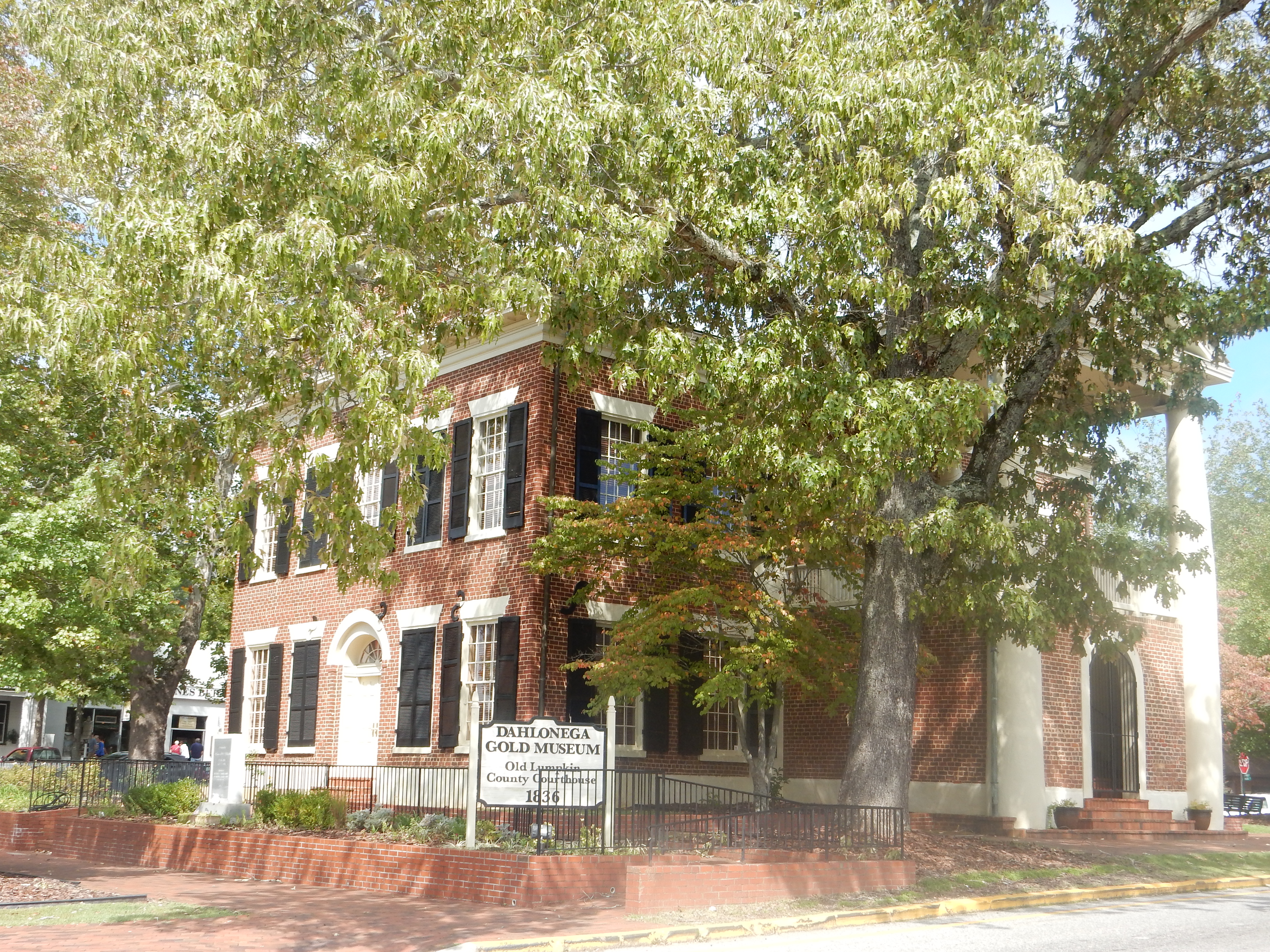
Dahlonega Gold Museum

Dahlonega Gold Museum

The gold in the Dahlonega area was especially pure, over 99% gold. Some mines continued until the Second World War but most were played out by the early 20th century. The area is still home to at least two gold mines which allow people to pan for gold or to tour an abandoned gold mine. The Smith House is actually located over a gold mine, the hole is visible from the lower level of the restaurant-although safely sealed off by glass from modern-day explorers. We took a tour through the Dahlonega Gold Museum in downtown, located in the old county courthouse. A pleasant experience, learning a new nuance of U.S. history we were clueless about before this visit. Of course, the land here was taken from the Cherokee Indians and when land plots were given away by lottery, Native Americans were not eligible.

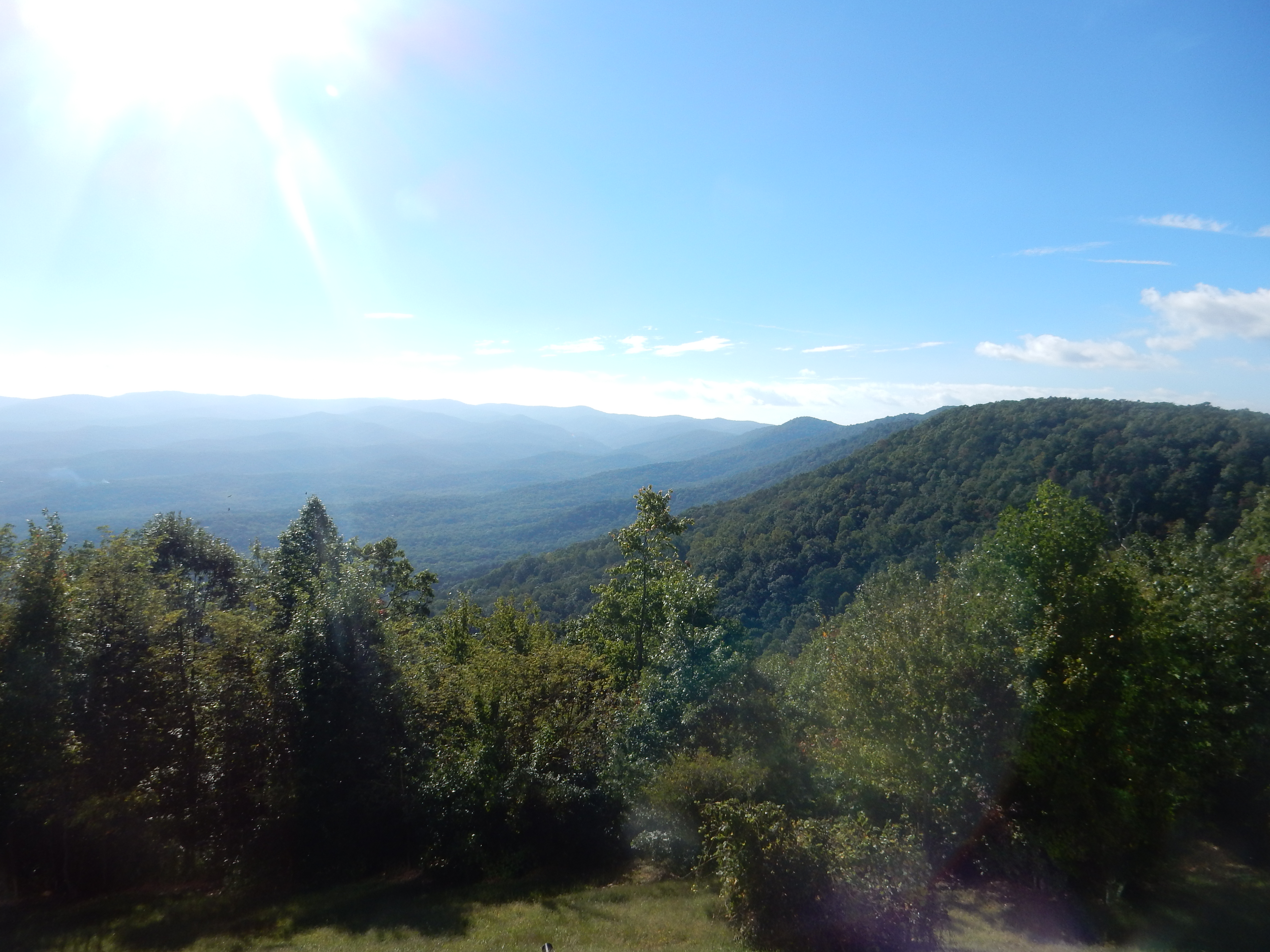
View from our room at Amicalola Falls State Park Lodge

View from our room at Amicalola Falls State Park Lodge

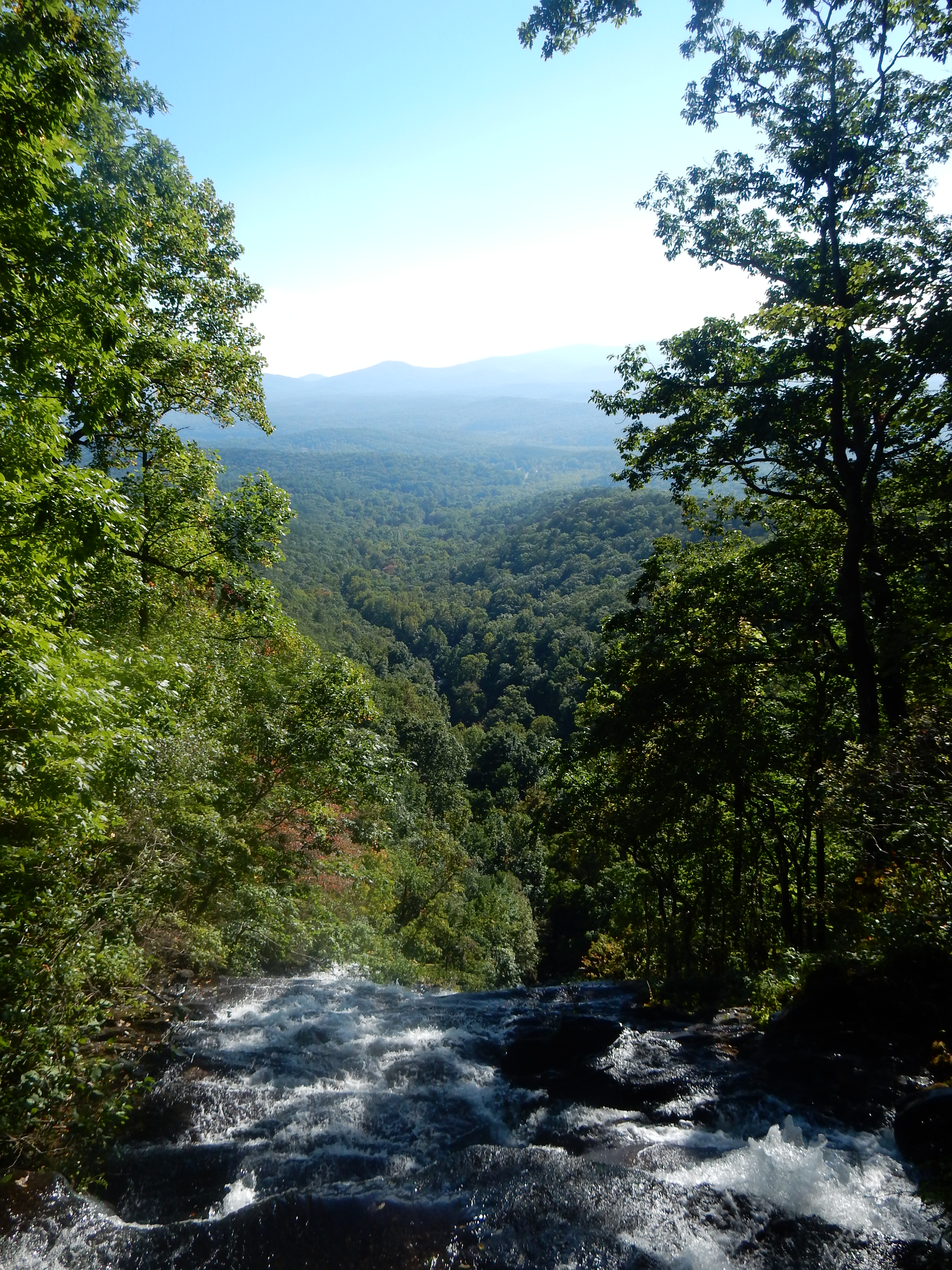
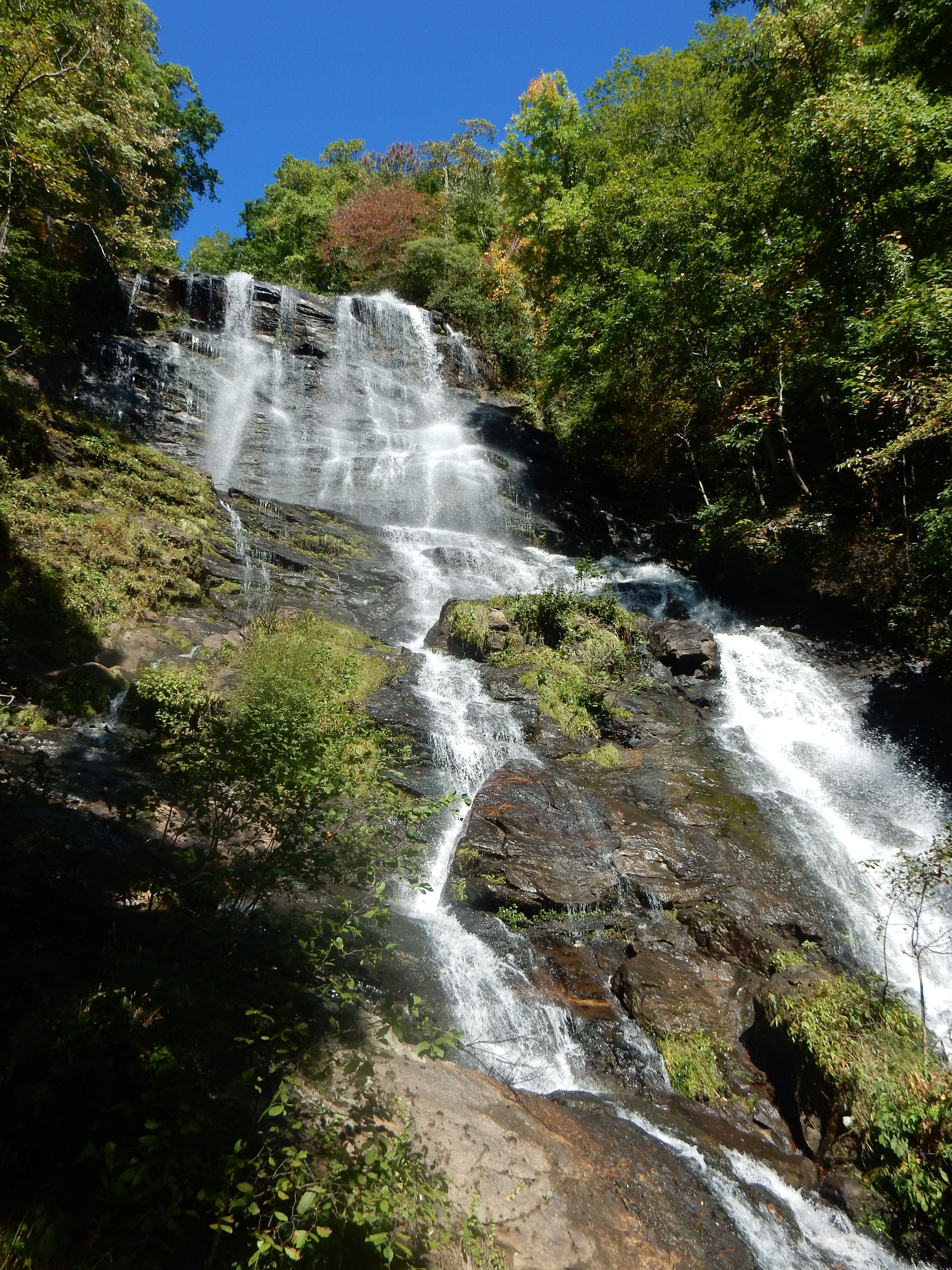
Our third stop was at Amicalola Falls State Park. We are staying three nights here at the lodge; it has a great view of the mountains from our bedroom window. (Actually 90% of the rooms here have a great view.) As you might guess from the park’s name, there is a waterfall here. Amicalola Falls drops
729 feet, supposedly the tallest falls east of the Mississippi River.

View of upper section of Amicalola Falls

View of upper section of Amicalola Falls

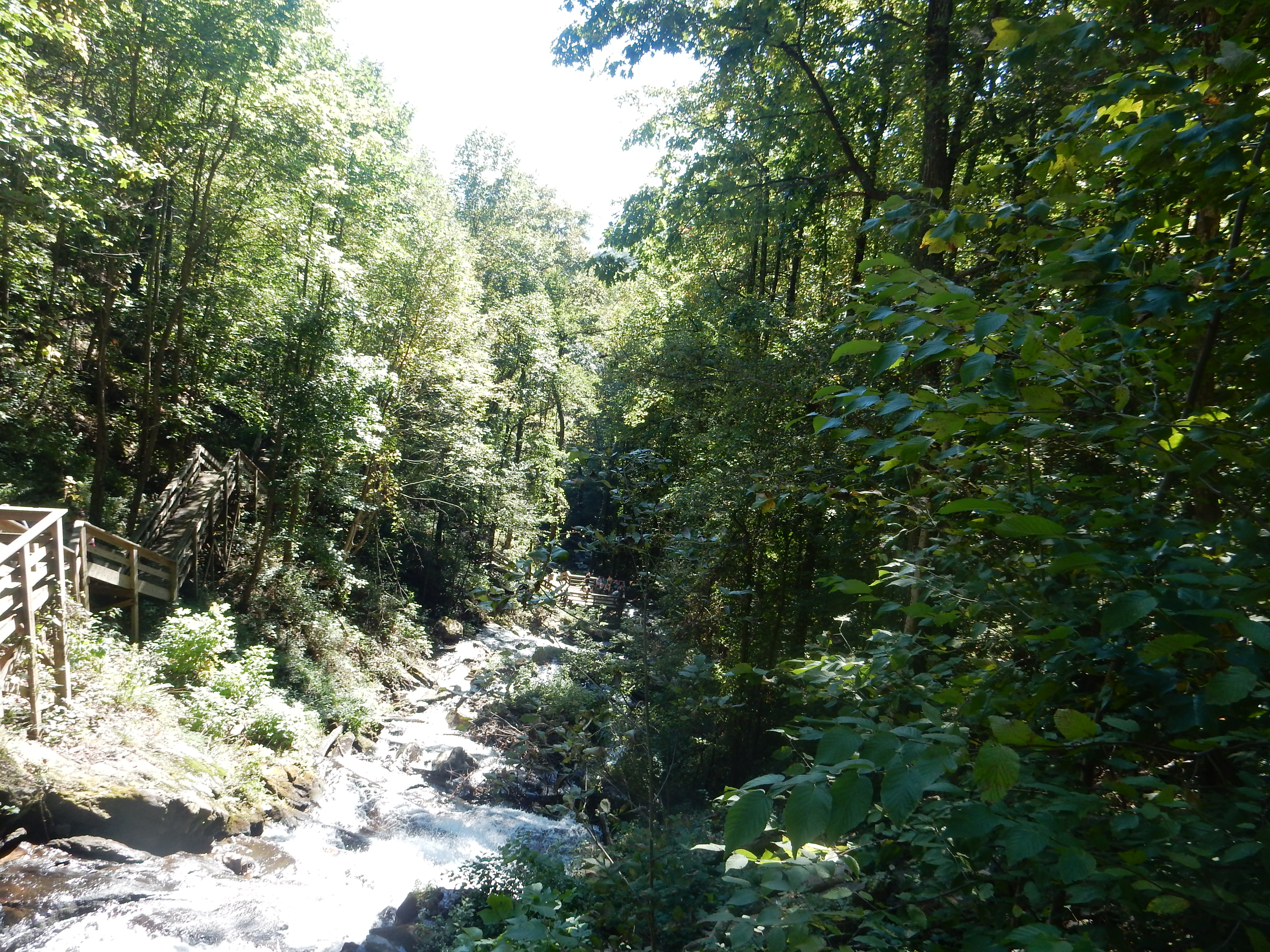
View of lower section of falls, 175 stairs up and down plus walking

View of lower section of falls, 175 stairs up and down plus walking

Attempt to show all of Amicalola Falls

Attempt to show all of Amicalola Falls

We hiked a good portion of the falls, going down 175 steps and back up 175 steps plus walking on trails before and after the steps with a steep grade. BUT, we did not hike the second portion of the falls. That was another 425 steps up and 425 down and we felt no need to prove ourselves. The falls come from a small creek so while the drop is great to look at and to listen to, it is not overwhelming in the total amount of water flowing. There are numerous falls throughout Georgia and North Carolina, etc so we will have to pick and choose which ones we deem worthy of our time and energy.

Sunset is coming

Sunset is coming

A sunset view from the veranda

A sunset view from the veranda

Dinner was in the restaurant at the lodge; this time of year it is all buffet. The restaurant also has a great view of the mountains and we sat out on the veranda after dinner watching the sunset. A pleasant beginning to our 22 day journey.

Ed and Chris 9:30 pm

Categories: road trip, travel | Tags: , , , , , , , , | Leave a comment

Blog at WordPress.com.