Monthly Archives: February 2015

2015 Trip 1, Feb. 13, Florida in Winter

Port St. Joe, Friday Feb. 13

Friday the 13th finds us in a small town of 3,500 people on the “Forgotten Coast” of Florida. This can be visualized as the peninsula portion of Florida, east of the panhandle and north and west of everything else. It is the home of small towns, fishing fleets, and numerous protected islands and beaches. We will be here for two nights before moving to St. Marks, at the eastern end of the Forgotten Coast.

Before we discuss today, one further comment about Topsail. When we checked out, we talked with a ranger who was more knowledgeable about the history of Topsail. Evidently, the area was primarily owned by the St. Joe Paper Company and there was a separate, smaller piece of land that was the RV park, privately owned. The paper company sold off its chunk of land to a developer who planned to develop the usual beach shore area. The developer had started moving earth and had roads planned but went belly up. The state moved in to purchase and protect the land. Part of the land that St. Joe Paper sold to the developer included the beach access used by the RV park. With the sale of the developer’s land to the state, the RV park people lost their beach access and sold the RV park land to the state also.

Anyway, we headed out but made a brief stop at the Donut Hole Bakery Cafe. This is a local landmark frequently mentioned by the people we ran across during our stay at Topsail. The donuts were excellent. The drive to Port St. Joe was uneventful, mainly American strip development with some ocean front development around Panama City. There is another military base and several small rivers to cross.

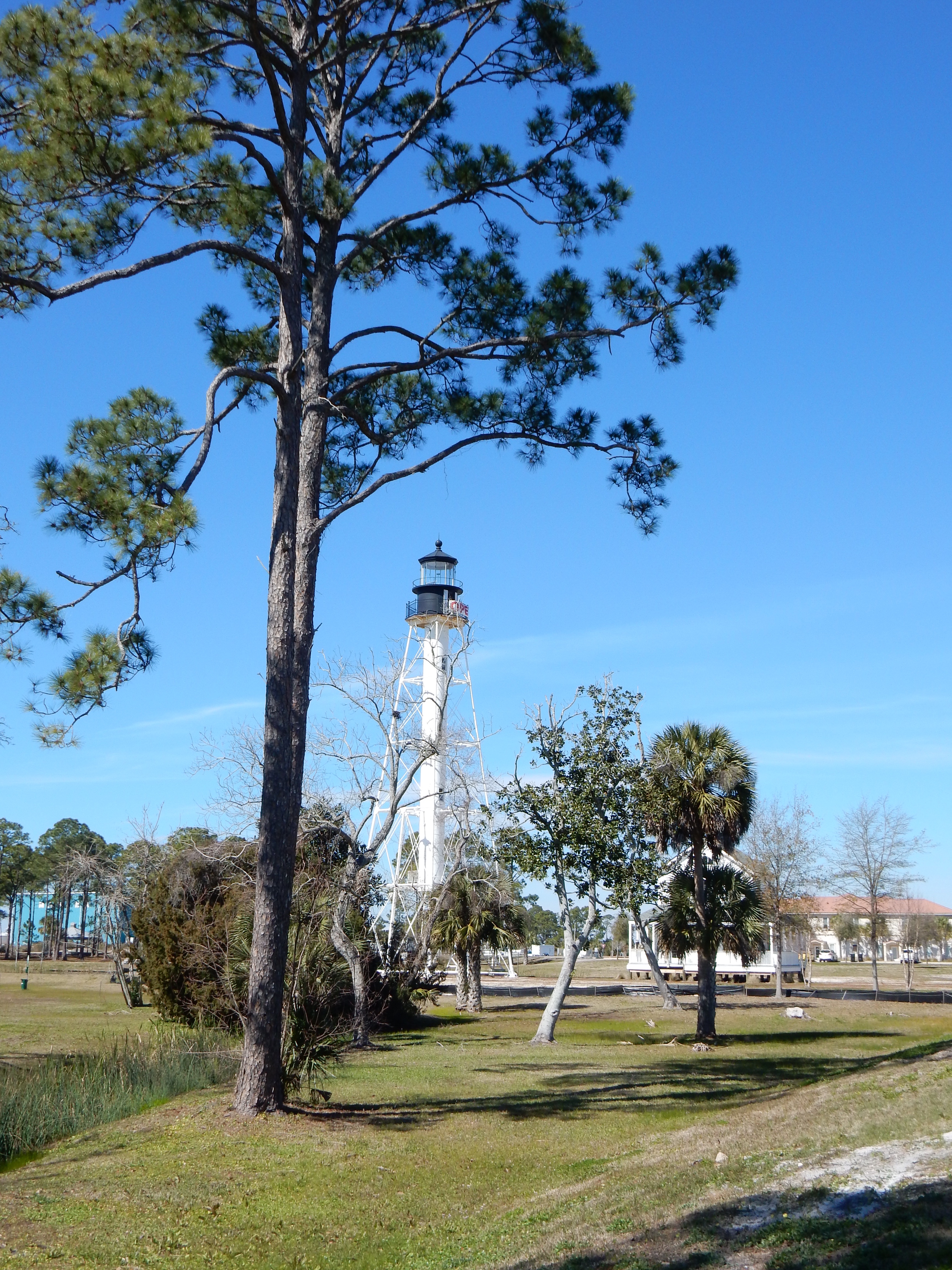
Cape San Blas Lighthouse

Cape San Blas Lighthouse

We are now in Port St. Joe and have moved into the eastern time zone. The time zone line is weirdly drawn; in fact, Gulf County in which St. Joe is located, is but one of four counties in the U.S. which has two time zones in it. We stopped to look at the Cape San Blas lighthouse. This third lighthouse at this location (two previous ones were destroyed by shoreline erosion.) was built in 1885. It was deactivated in 1996 and moved over onto the land side for preservation purposes. We chose not to pay the $5 each to see another lighthouse.

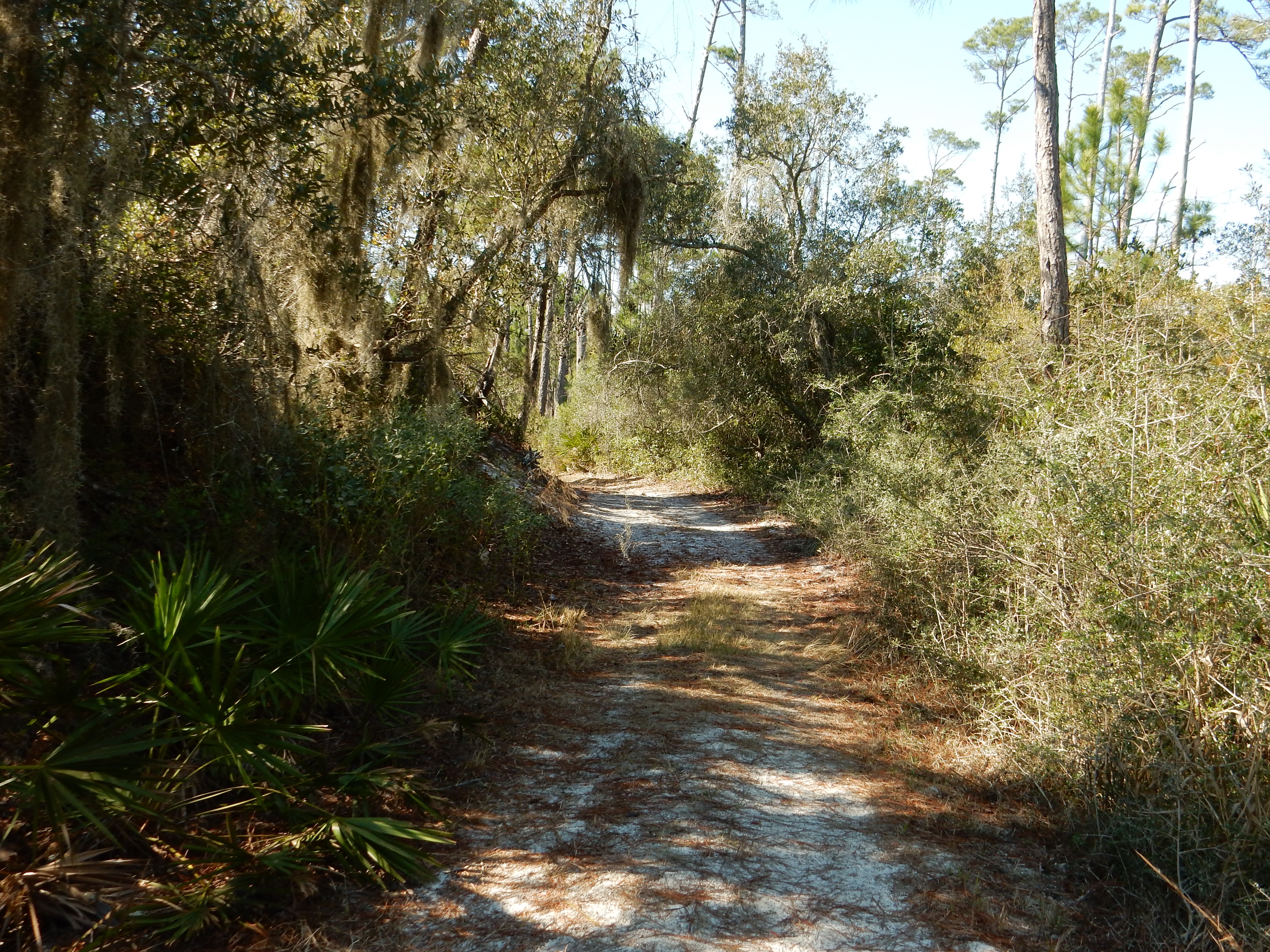
Waling in St. Joseph Peninsula State Park

Walking in St. Joseph Peninsula State Park

Walking in St Joseph Peninsula State Park

Walking in St Joseph Peninsula State Park

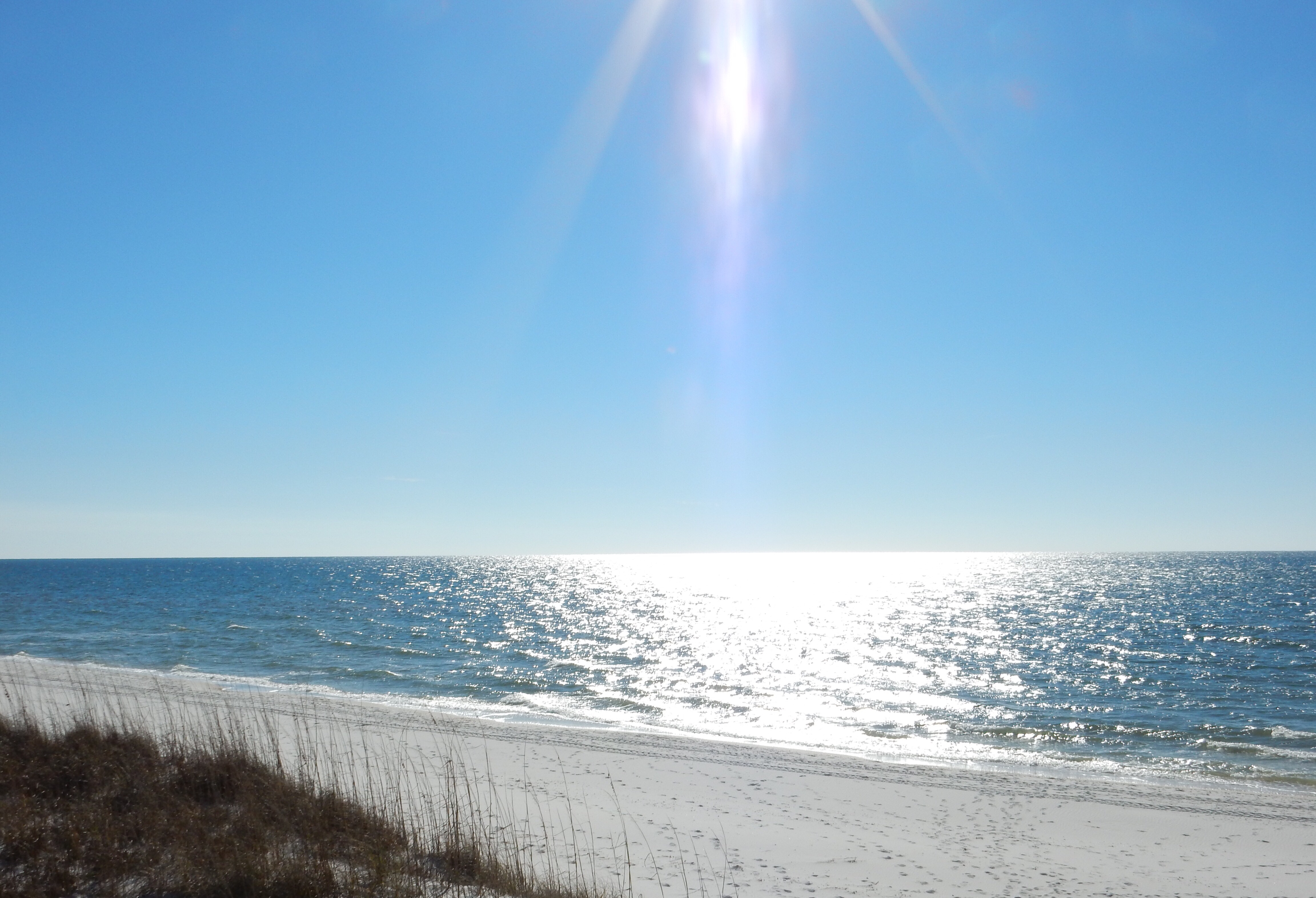
Looking west into the Gulf of Mexico

Looking west into the Gulf of Mexico

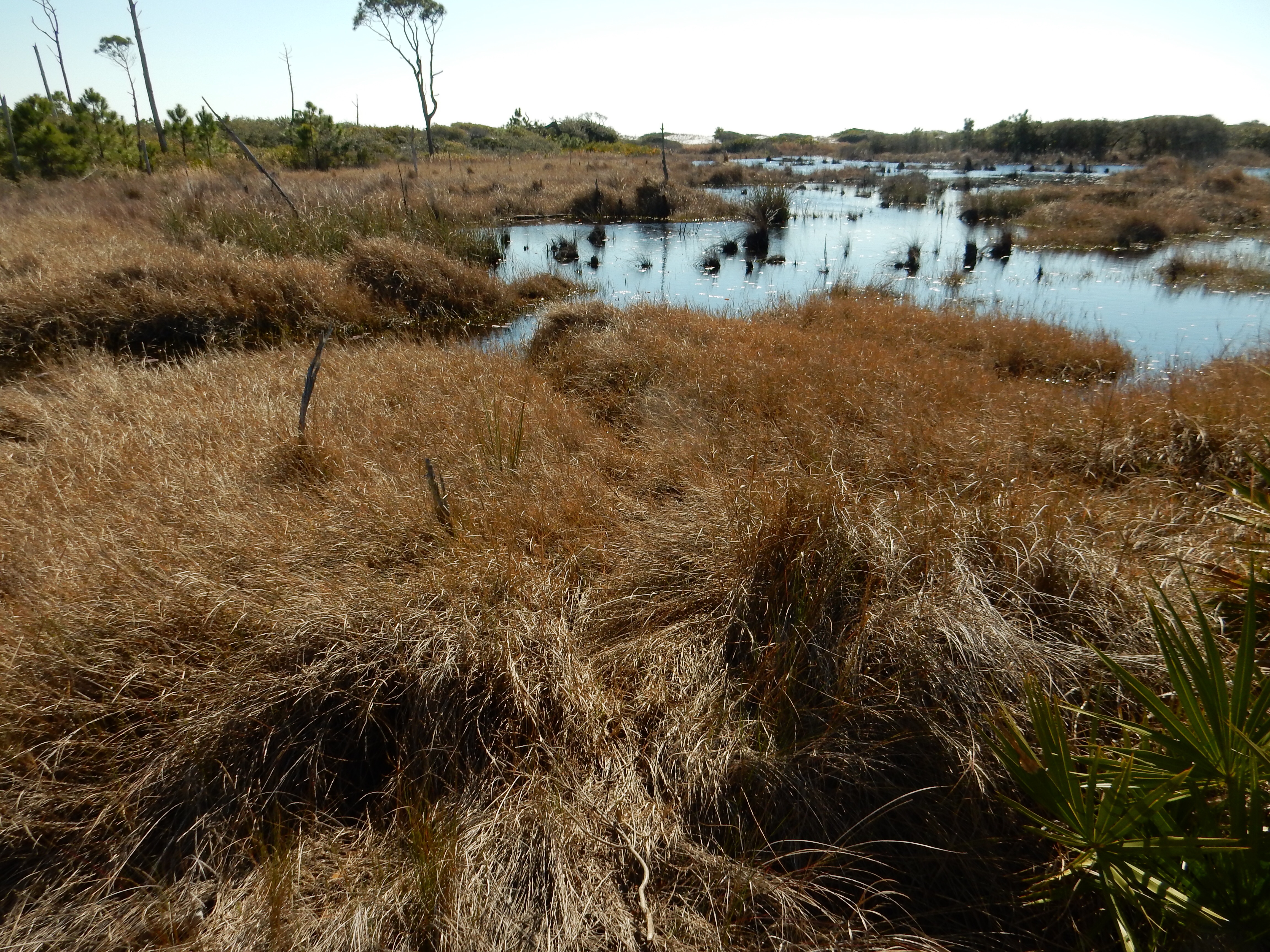
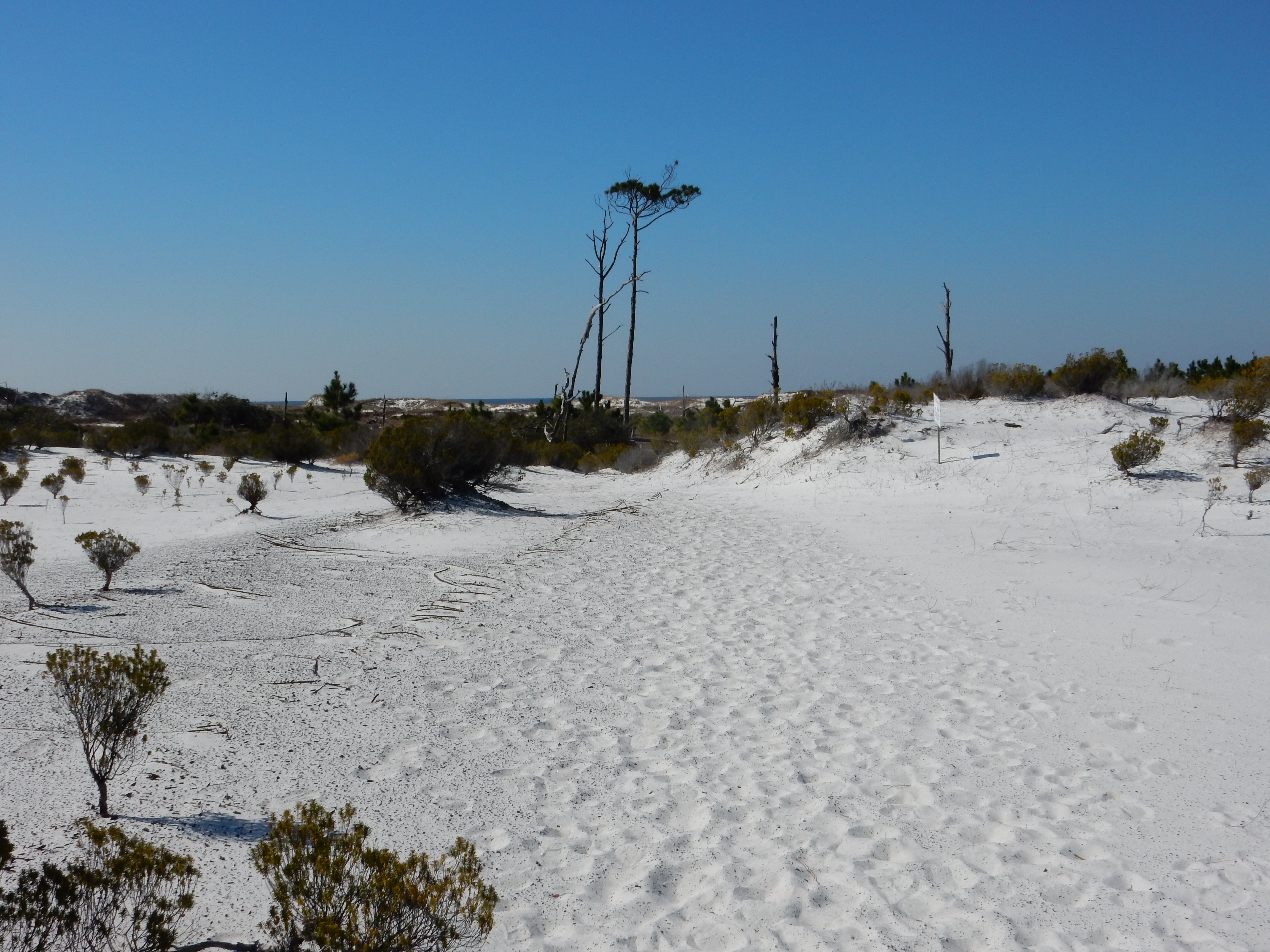
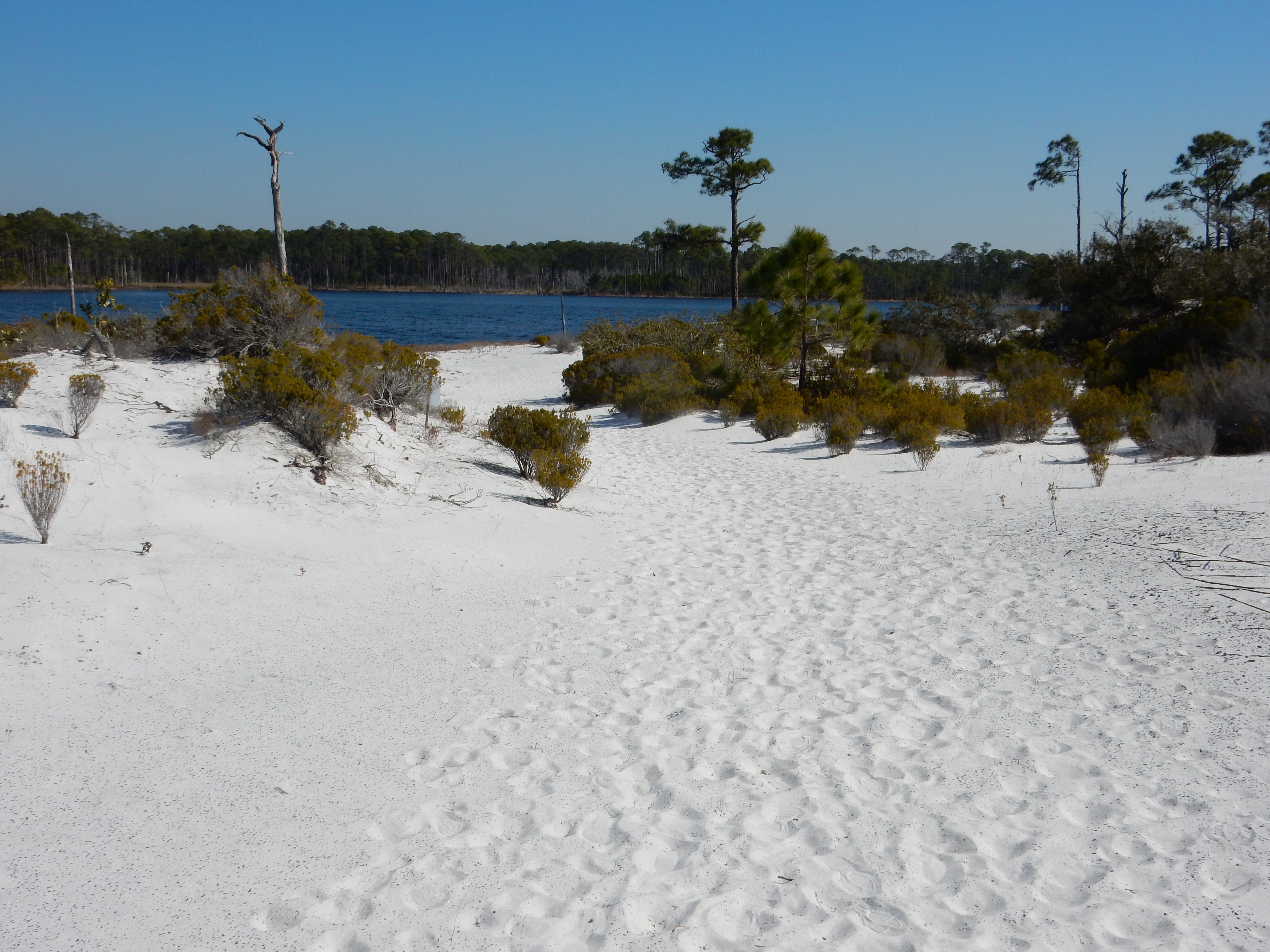
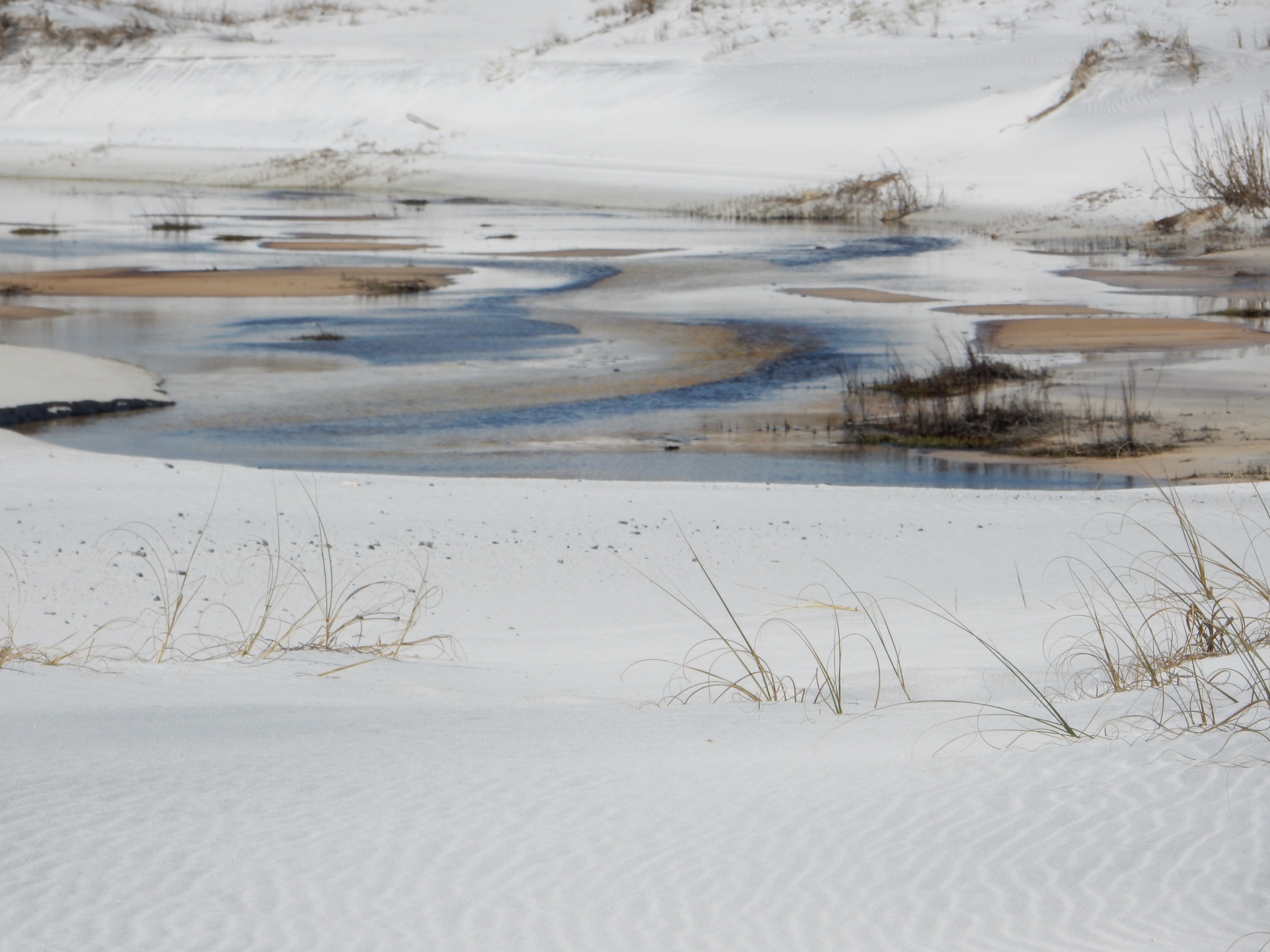
The original location of the lighthouse was on Cape San Blas on St. Joseph’s Peninsula. The Peninsula and Cape jut out into the Gulf and form a 10 mile barrier that protects Port St. Joe from coastal storms and creates a sheltered harbor. We drove out to the St. Joseph Peninsula State Park which was created after WWII when the military facility there closed. The end of the park is a wilderness preserve; we walked along a nature trail at the southern end of the park/peninsula.

Walking along Cape San Blas

Walking along Cape San Blas

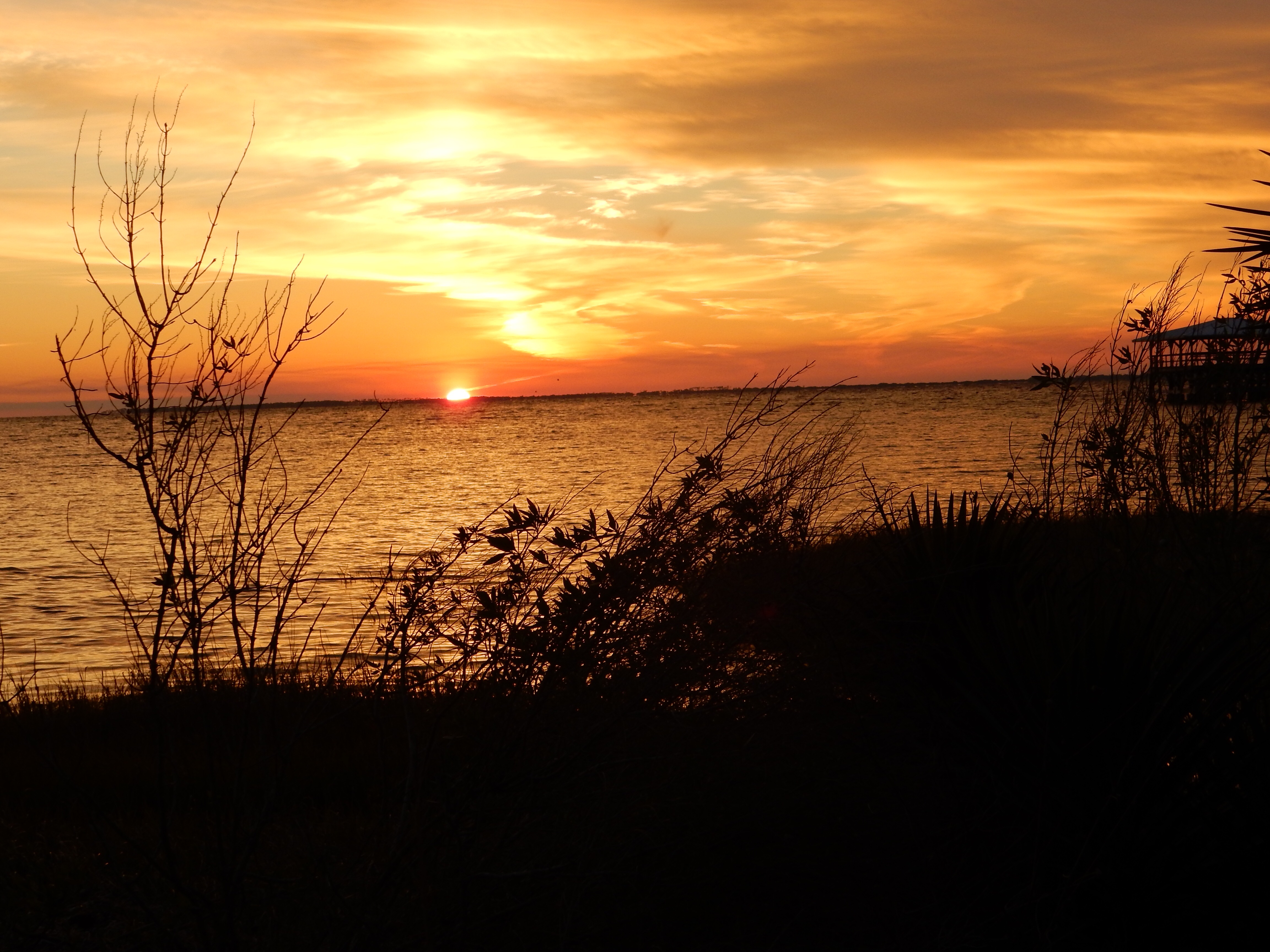
Sunset view  from Sunset Coastal Grill

Sunset view from Sunset Coastal Grill

Dinner was at Sunset Coastal Grill in Port St. Joe. Excellent food and a location right on the bay with great sunsets (hence the name).

Ed and Chris 2/13 9:30 pm

Categories: road trip, travel | Tags: , , , | Leave a comment

2015 Trip 1, Feb. 12, Florida in Winter

Santa Rosa Beach, Thursday Feb. 12

Along the Deer Track Trail in Topsail

Along the Deer Track Trail in Topsail

Another beautiful hiking day. Four and a quarter hours but probably only 8-9 miles. The third straight day of extensive hiking left us a little tired plus walking on the softer sand of interior sand dunes made for slower going. The weather again was great for hiking; a light breeze, temperatures started in the 50s but ended in the mid-60s F.

Part of the Morris Lake Trail at Topsail

Part of the Morris Lake Trail at Topsail

Morris Lake Trail

Morris Lake Trail

Morris Lake Trail

Morris Lake Trail

image

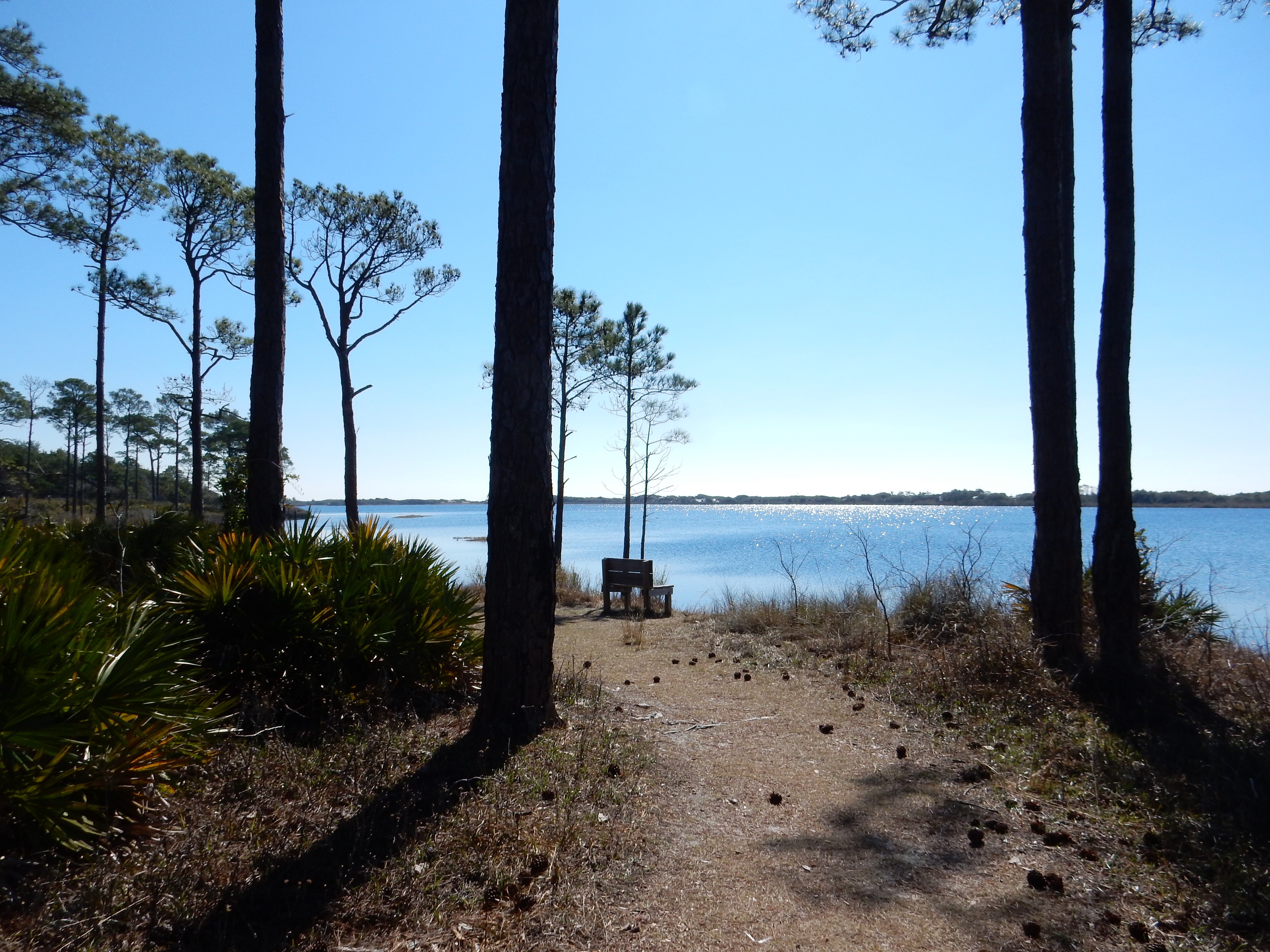
Today’s destination was the Morris Lake Trail, another of the freshwater dune lakes. To reach it, we had to once again hike parts of the Campbell Lake Path and the Deer Track Trail. The last two are primarily forest; Morris Lake Trail climbs up and down older sand dunes-along an approved trail. The area appears to have suffered from at least one of the hurricanes in the area as one observes downed old trees with new pine growth occurring also. Morris Lake appears slightly smaller than Campbell Lake; the trail goes past the lake to the end of the park. High rise development is just past the park boundary.

Along the Morris Lake Trail

Along the Morris Lake Trail

A little pool along the ocean

A little pool along the ocean

Our hike back ended with a mile or so hike along the ocean. Today was warm enough to walk barefoot in the sand. There were a few people out walking this stretch but I believe most people currently staying at Topsail either stay around their RV or maybe bike along the interior roads.

Spending time watching the birds along the ocean

Spending time watching the birds along the ocean

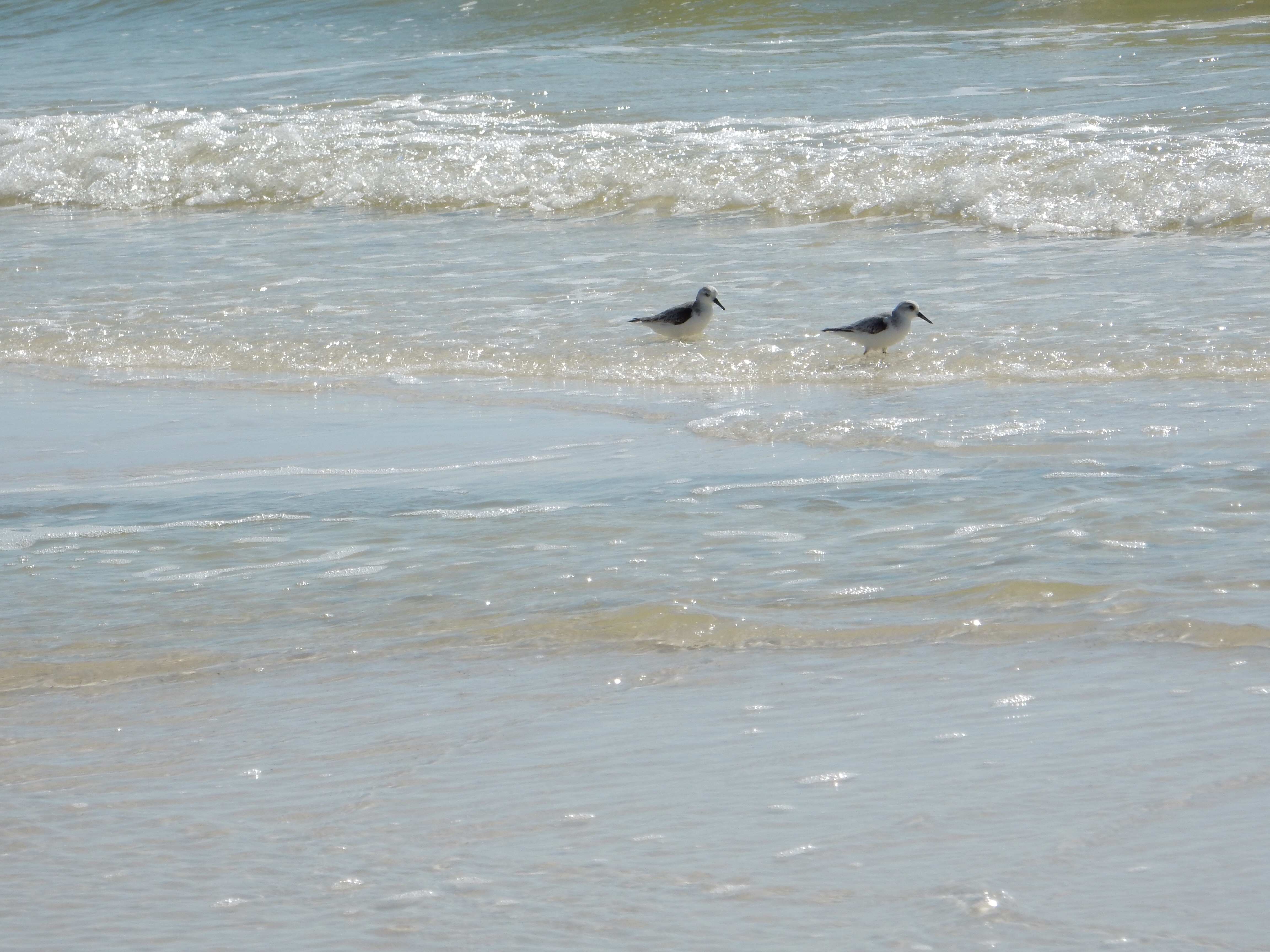
Birds were much more abundant today, both in sight and by sound. Nothing particularly picturesque; we did throw in one sandpiper photo for you. Their antics along the beach are fun to watch.

Walking along the shore

Walking along the shore

We treated ourselves to a late lunch at Goatfeathers. Their mahi-mahi daily special was excellent. They re-affirmed that we were in the South since I received a to-go cup of Coke without even asking me if I wanted it. Instead of a nap, Chris did laundry before we attended the evening entertainment.

“Lucky Mud” is a couple about our age singing honky-tonk, folk and R & B. They play around Florida with traveling stints around the U.S. and Ireland. The performance was held in the clubhouse instead of under the stars in the amphitheater since the temperature is currently 52 degrees F. I even got to use my headband flashlight for the first time since the park lighting is hit or miss.

Lucky Mud seems to play only songs they have written over the last decades. Two particularly striking ones to me were about female song writers and the power of water in life. The crowd was appreciative and we had a fun time. The cover charge seems to be split between the musicians and the Friends of Topsail Hill Preserve State Park.

Ed and Chris Feb. 12 8:30 pm

Categories: road trip, travel | Tags: , , , , , | Leave a comment

2015 Trip 1, Feb. 11, Florida in Winter

Santa Rosa Beach, FL Wed. Feb. 11

Glamping is a term that has been popularized recently. It refers to glamorous camping, usually expensive digs in exotic locations. Chris likes to call our state park lodgings glamping when I might call it low frills lodging. We had moved the ten miles from the Courtyard by Marriott in Sandestin (which was cheaper and much nicer) to Topsail Hill Preserve State Park to be lodging inside the park itself. We do not camp and we do not own an RV. Topsail, and numerous other state parks nowadays, offer furnished cabins with linens, equipped kitchens etc.

Our bungalow at Topsail.

Our bungalow at Topsail.

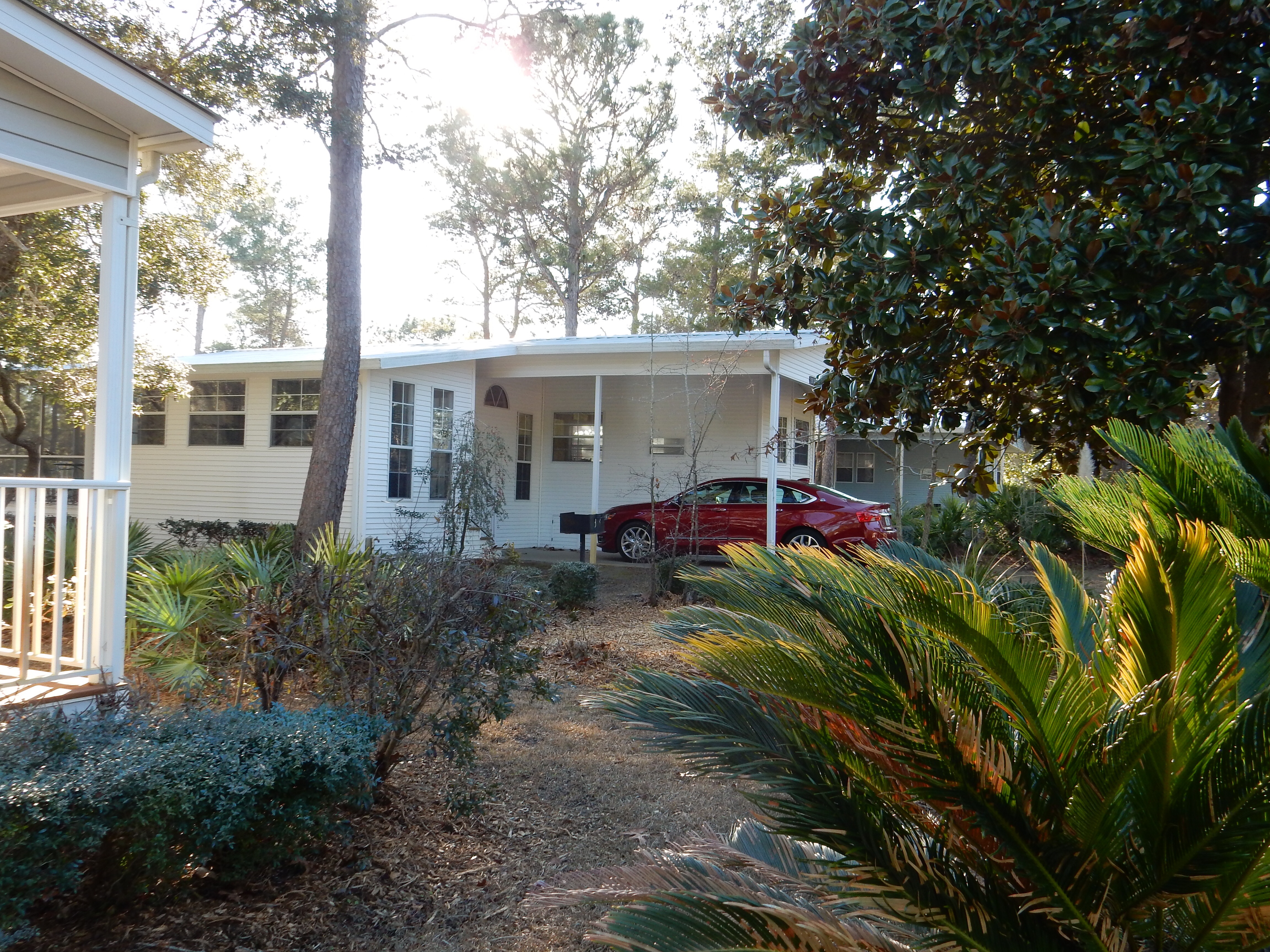
We are staying in one of the bungalows, one bedroom units. Our neighbor across the street informed us that this place used to be a private RV/bungalow park until the state bought it. The neighbor has been here since the early days of the privately owned park and actually owns his bungalow but leases the land from the state-he was grandfathered in. When the lease expires, he is out. I found no data on how or why the owners were bought out, the neighbor indicated the state initiated the transaction.

Most likely the press of development spurred action to preserve a rare spot of open land. You see the high-rise and expensive new developments on either side of Topsail. A realtor in one of the cutesy towns along Scenic Highway 30A we drove through on Tuesday said that the average selling price of homes in 2013 in her town was $1,500,000. Seaside, one of the towns we drove through, was started in 1984 on 80+ acres of land as a planned community. Now it gets rave reviews of how town living should be. Of course, at high home price residents can afford lots of amenities. Town names don’t hurt the image: Rosemary Beach, Blue Mountain, Seascape, Seagrove, Watersound, Watercolor, Seacrest, Gulf Place, etc.

lunch on te screened in porch

lunch on the screened in porch

The bungalows here at Topsail were double-wide mobile homes/manufactured housing. Ours is spacious with lots of storage space, but furnished on the thrifty side. There is a TV and heating/cooling, screened-in porch, shower with lots of hot water. Towels are skimpy, no soap (we always carry some extra), 4 place settings of Correlle dishes, etc. The definite advantage is the ability to walk out your door to go hiking. The beach is a mile hike away although they do run a tram on the hour. The tram starts at the day use area for people who just come for the day. Not too many of those at the moment. I can see families packing up for a great summer vacation here.

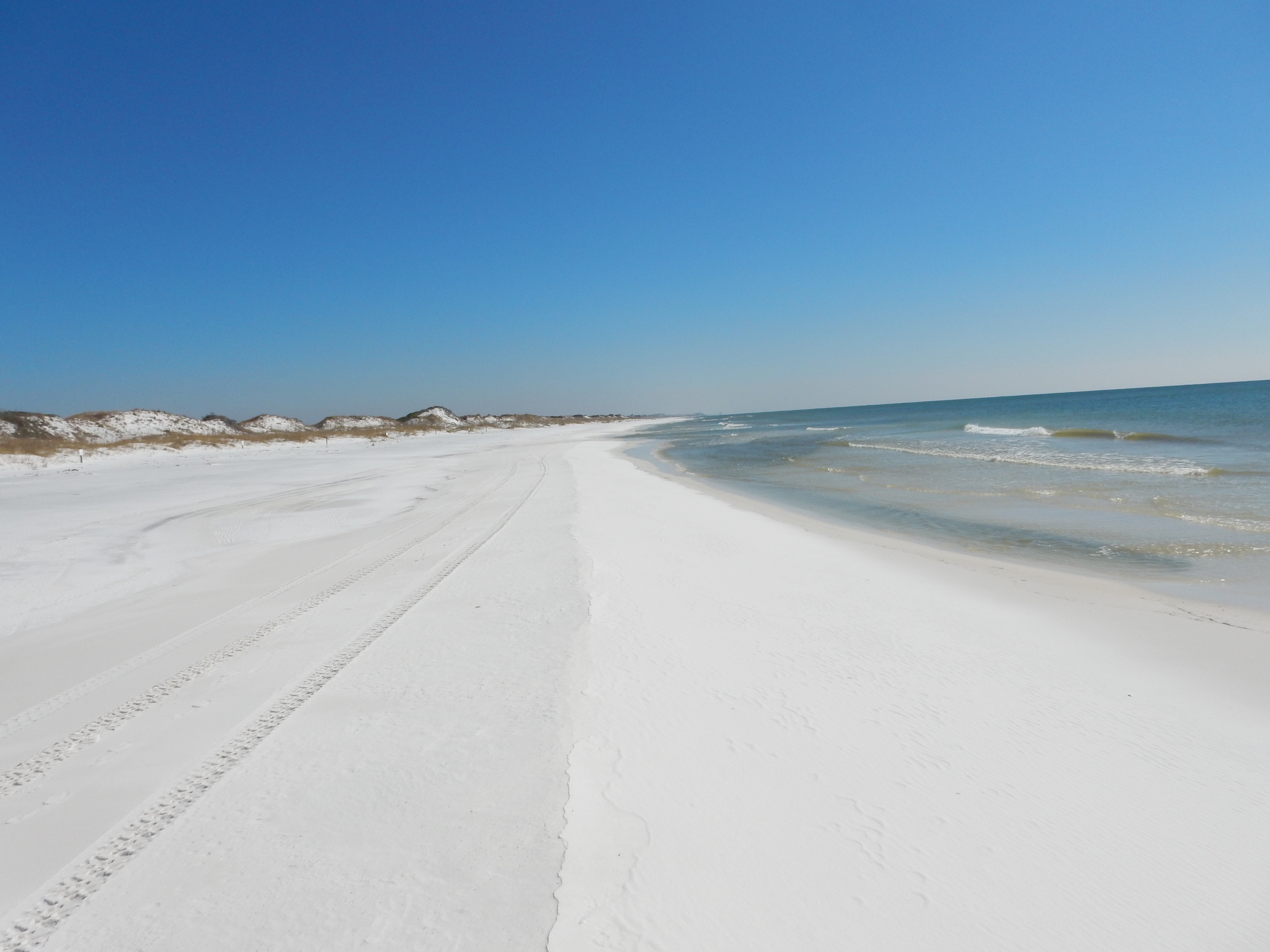
Florida has “branding” names for various sections of its ocean coast. This one is called Emerald Coast; the waters in the Gulf of Mexico are more green-blue. Certainly the sand deserves all of the rave reviews. It is white, very soft and should be great for walking in during the summer. I have been told that the sand here does not heat up during the summer months. We have not had warm enough weather to test that out. Our hike along a mile or more of the beach on Tuesday was easy, the sand compacts nicely where the wave action is. The interior dunes have looser sand than takes more slogging.

Sonic booms continue from the military jets flying overhead. It is frequent but once you get used to it, it becomes background noise. There is another military base to our east by Panama City.

Campbell Lake

Campbell Lake

Wednesday was spent entirely hiking inside the park. We spent almost five hours hiking in three trips through the wooded areas, usually said to resemble Old Florida, the panhandle of lumbering and small towns. According to the trail guide and our usual pace, that should be about 15 miles. Our legs are definitely getting a workout. We had considered renting a bike. The Timpoochee Trail runs for 20 miles along Scenic Highway 30A but we figured we had seen those sights and most of the ride was along the highway.

Wildlife and birds continue to be sparse. Some people have seen deer; we saw one but deer are so common in Minnesota that it is like saying you saw a squirrel. We saw one flock of birds on Campbell Lake, a few on our walks and some sandpipers along the ocean beach. At sunset Tuesday night we observed a dolphin just off-shore.

Meals are not all fancy restaurants. Tuesday we shopped at the Publix grocery store and for $11 picked up 8 pieces of chicken, cole slaw, baked beans and rolls that provided us with three meals. We did add some fruit.

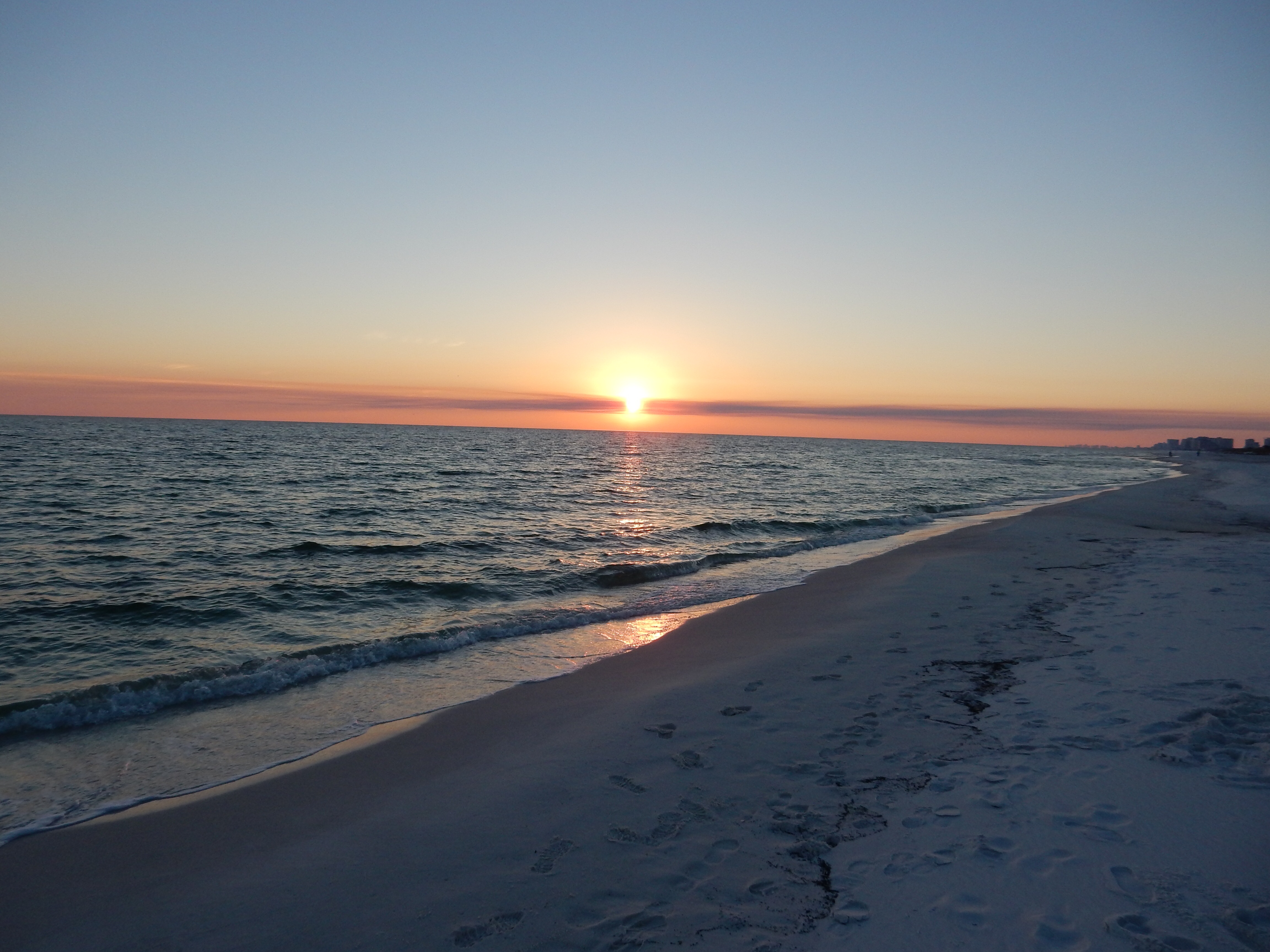
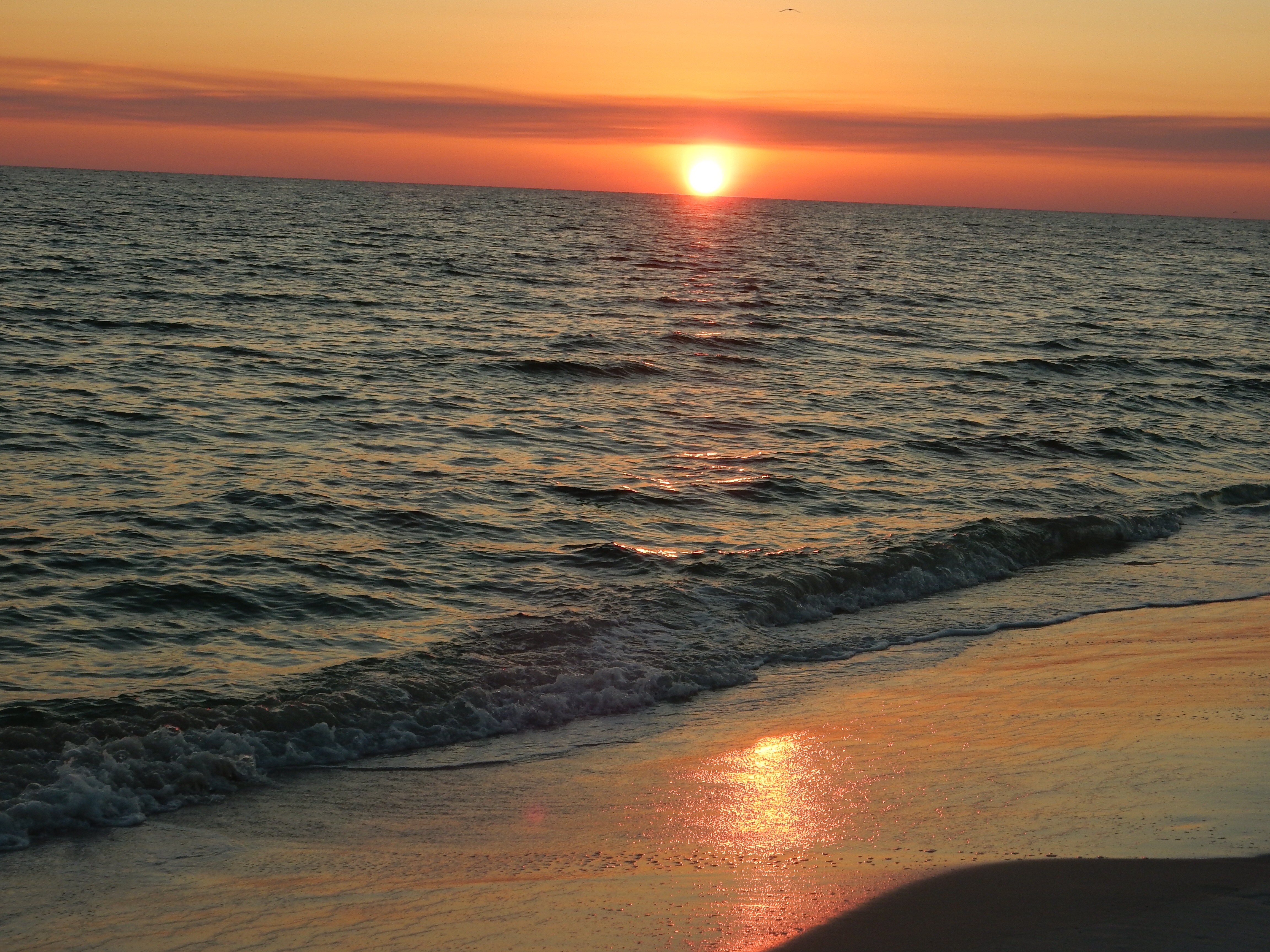
I will sign off with a few more sunset shots.

sunset

sunset

sunset

sunset

sunset

sunset

Ed and Chris Thursday Feb. 12 9 AM

Categories: road trip, travel | Tags: , , | 1 Comment

2015 Trip 1, Feb. 10, Florida in Winter

Santa Rosa Beach, FL Tuesday Feb. 10

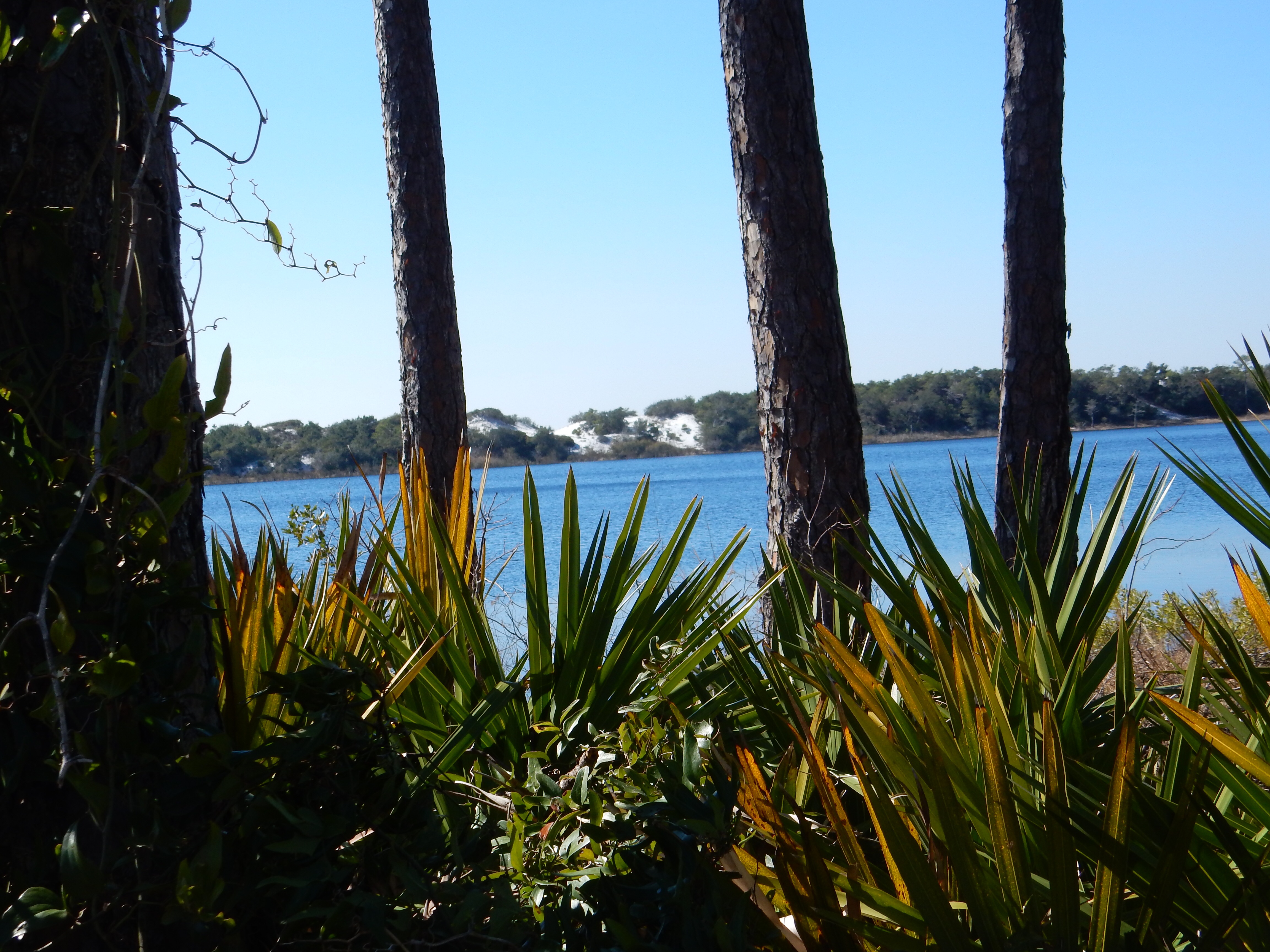
Clearwater Lake one of the freshwater dune lakes at Topsail Hill Preserve State Park

Clearwater Lake one of the freshwater dune lakes at Topsail Hill Preserve State Park with tall sand dunes in background

Walking through and over the dunes at Topsail

Walking through and over the dunes at Topsail

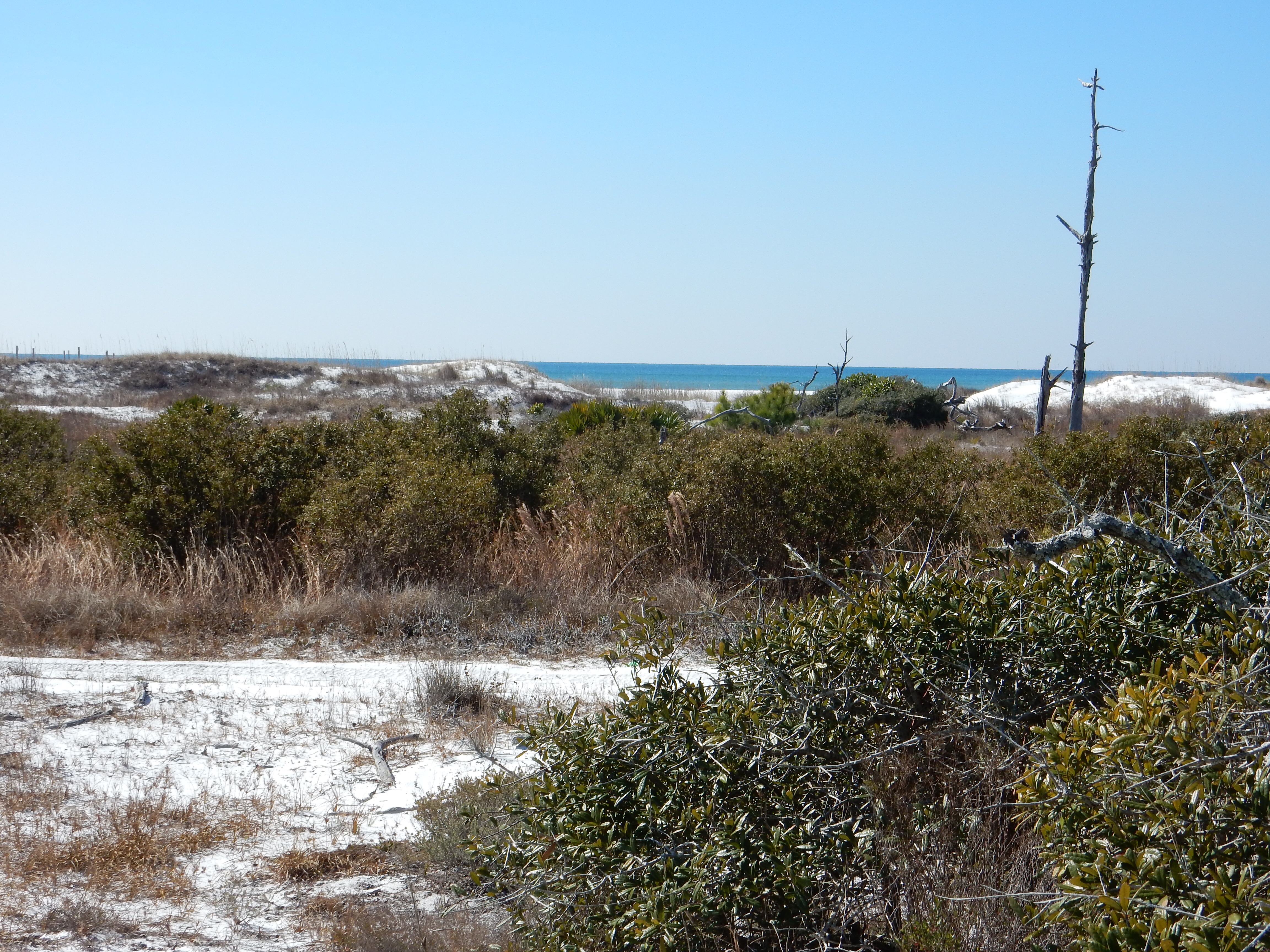
Today was a nature day. We checked out of the Courtyard in Sandestin and drove maybe 10 miles to our next lodging, Topsail Hill Preserve State Park. Topsail has 1600 acres of land and 3 miles of pristine white sand beach. It is one of the few remaining undisturbed sand beaches in Florida. Topsail is home to three rare, freshwater dune lakes. In the South Walton area of the Florida panhandle, there are 15 of these lakes and they can only be found here, Madagascar, Australia, New Zealand, and the Pacific Northwest. Dunes here top 25 feet, and the park is home to wetlands, pine forests, etc. The park land is close to the original beach ecosystem.

The beach at Topsail

The beach at Topsail

Dunes at Topsail

Dunes at Topsail

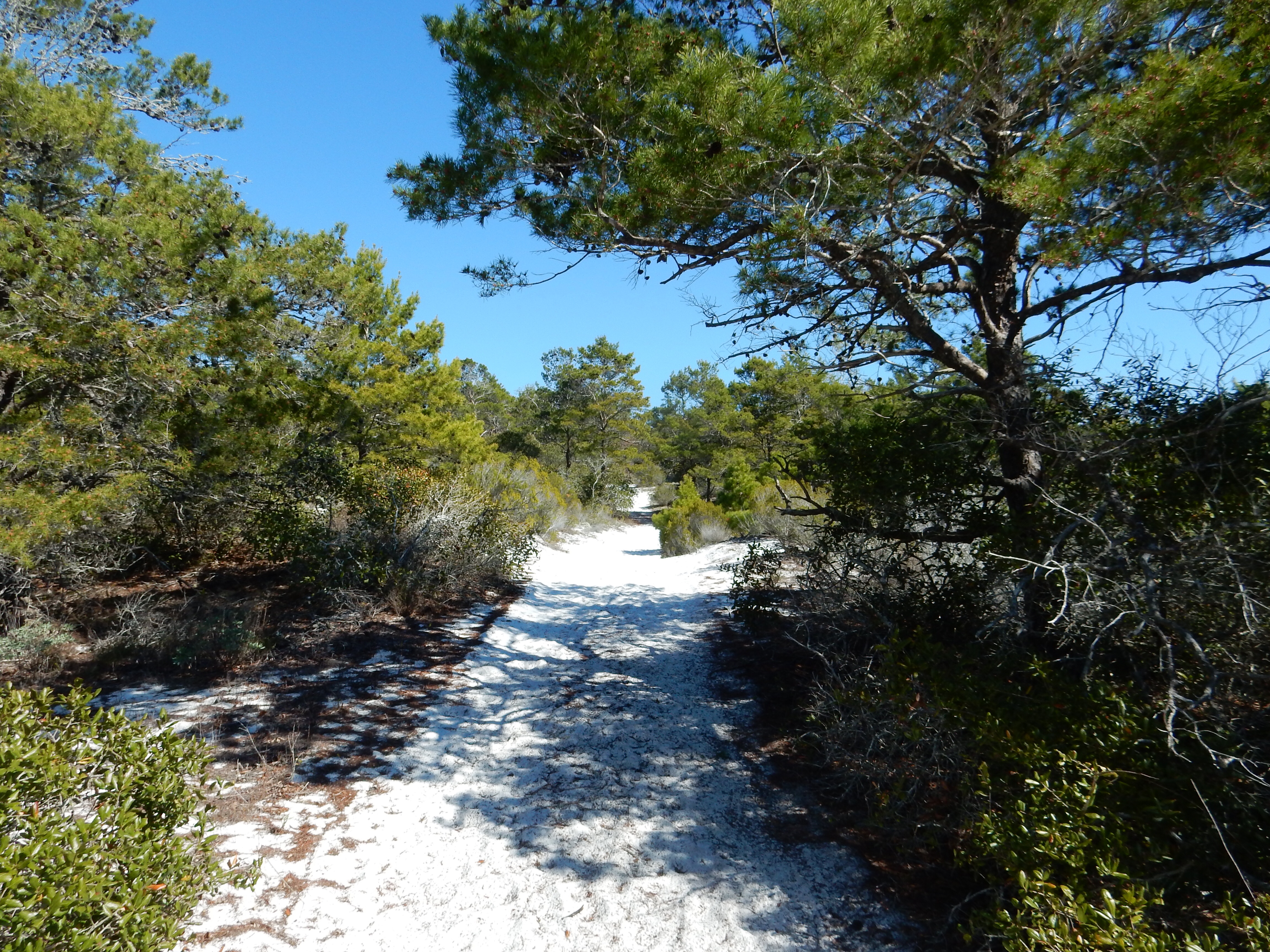
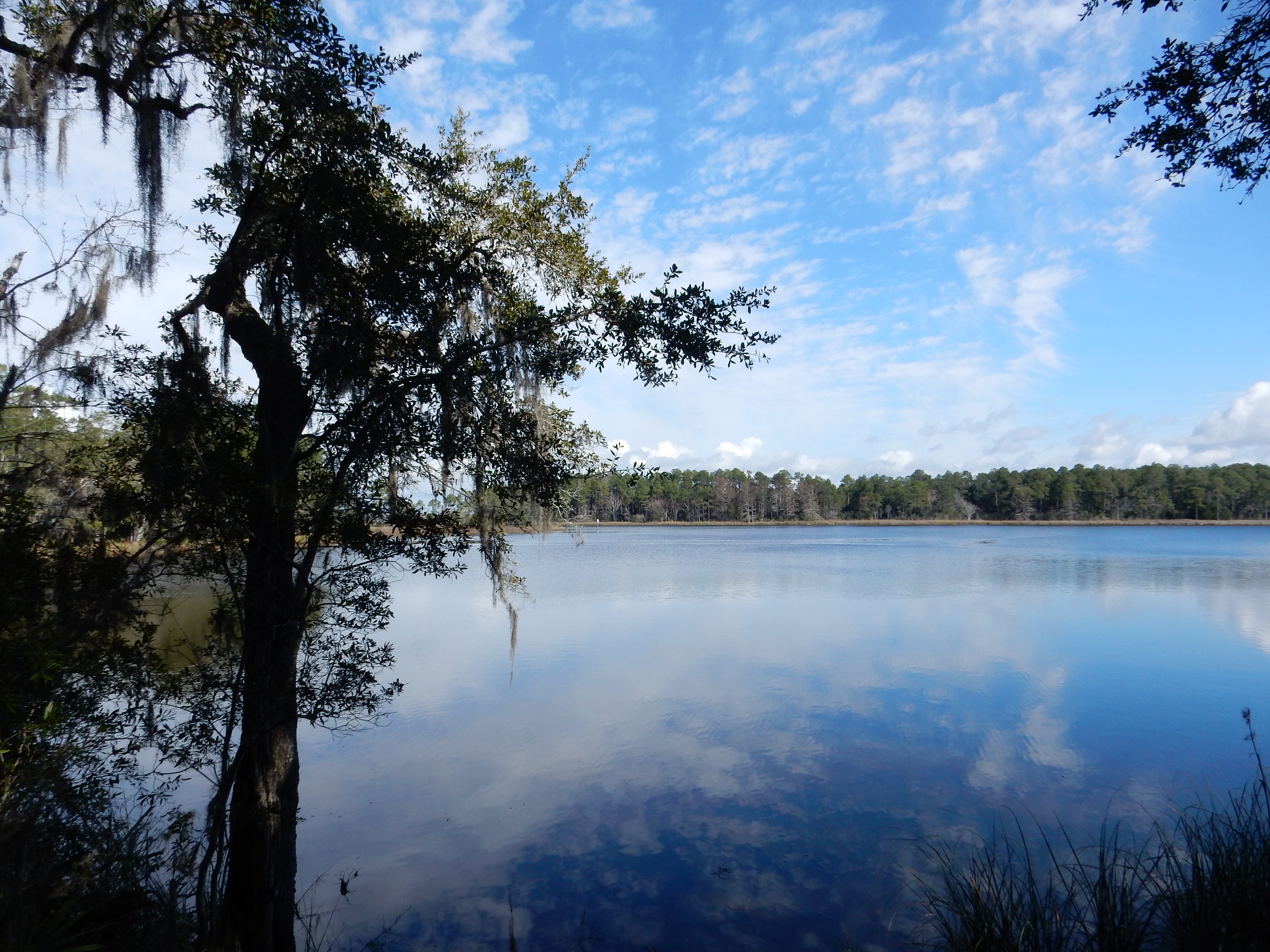
We went for a 2.5 hour walk through the forests, over the dunes (on approved paths), around dune lakes, and along the ocean. When we started out, it was sunny but 47 degrees with a 15 mph wind, so it was quite cool. By the time we ended the walk, it was closer to 60 degrees F. We continue to hear the roar of jets and helicopters but this time the birds were chirping away also. One deer was sighted, no alligators yet. There was only one close call when the path seemed to disappear but we soon re-connected with the official trail.

No name lake, one of the freshwater lakes

No name lake, one of the freshwater lakes

The park is mildly busy. We have met people from Georgia, Ohio, and Toronto. Most are retired like us but are traveling by RV. Many of the 35 cabins and bundalows are unoccupied; only a few of the 22 campsites seemed occupied but most of the almost 170 RV sites are taken.

One of many US military planes in the area

One of many US military planes in the area

Another view of Campbell Lake at Topsail

Another view of Campbell Lake at Topsail

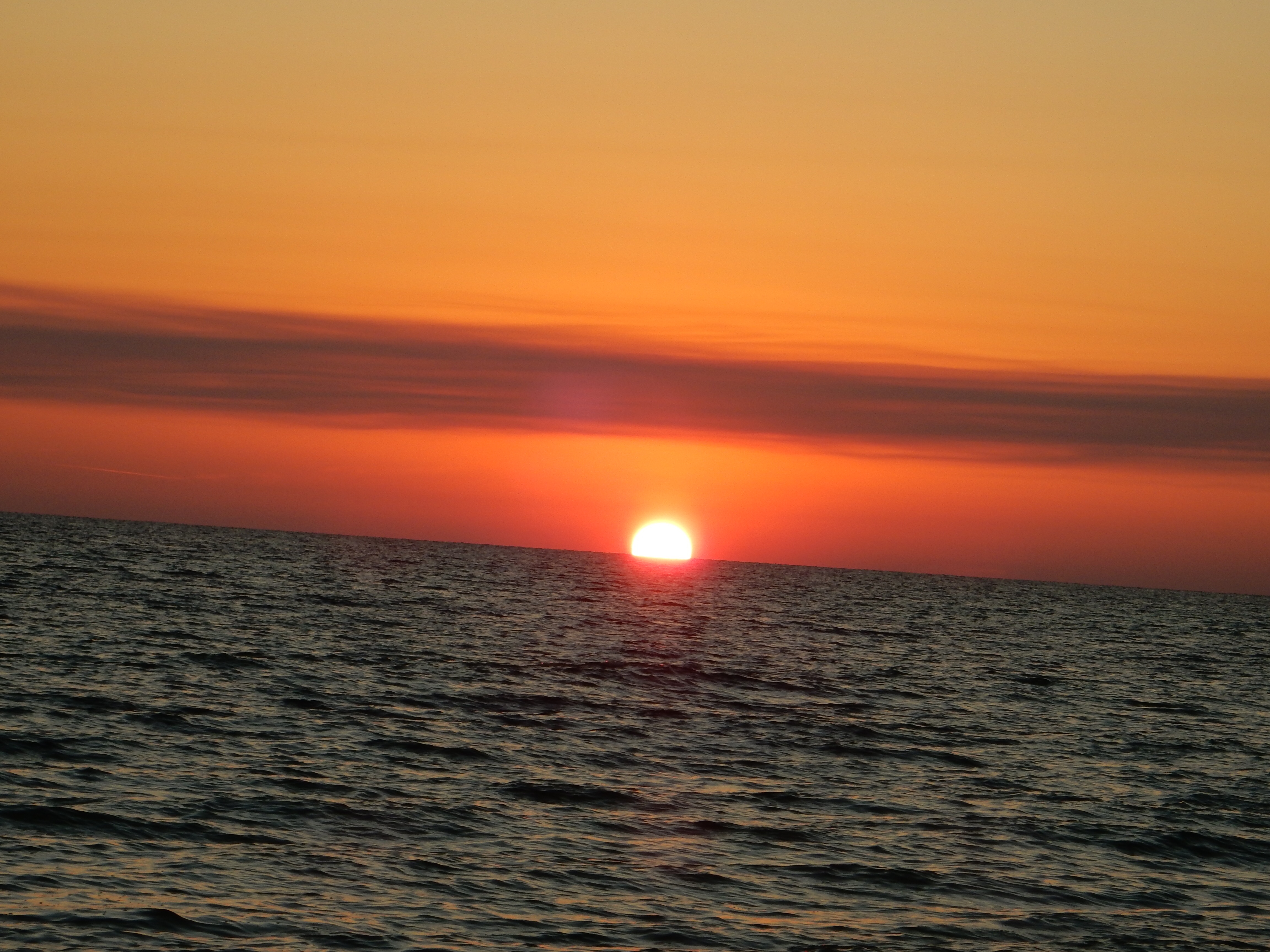
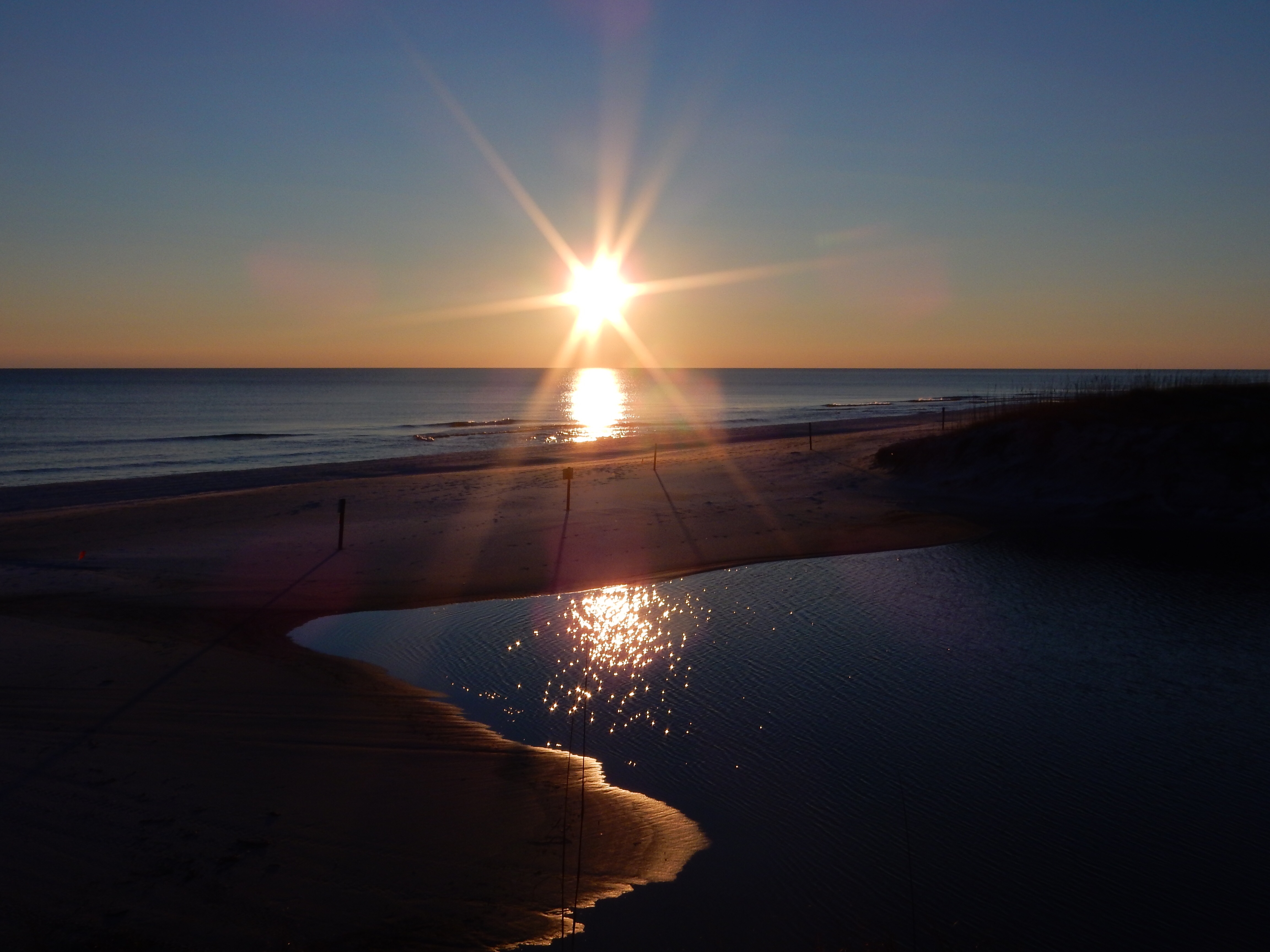
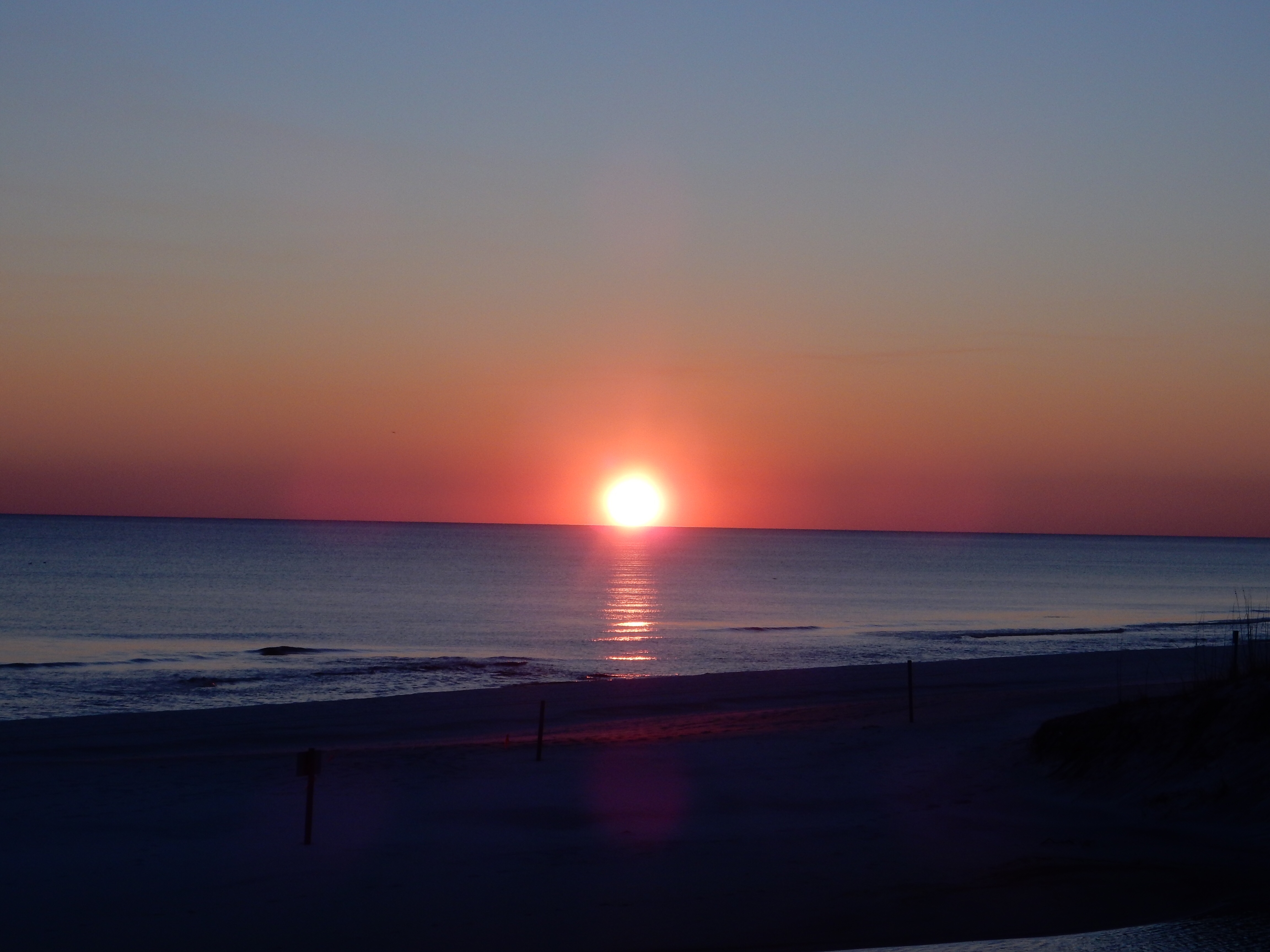
We went down the road to Stinky’s Fish Camp for lunch; the fresh grouper was very tasty. We picked up groceries and had a short nap before it was time to watch our first official Emerald Coast sunset. We walked down to the ocean, there were not a lot of clouds to enhance the sunset but the colors were worth another hike.

Dunes at sunset

Dunes at sunset

Sunset

Sunset

Sunset

Sunset

So this post is more pictures and less words, undoubtedly a winning combination.

Ed and Chris Feb. 10 8:30 PM

Categories: road trip, travel | Tags: , , , | 1 Comment

2015 Trip 1, Feb. 8-9, Florida in Winter

Destin, FL Feb. 8 & 9

This is a two-day blog, we took yesterday off from blogging. The panhandle of Florida continues as our focus and history began our day Sunday as we visited Fort Pickens, part of the Gulf Islands National Seashore, just across the bay from Pensacola.

Pensacola Bay is large, deep, and offers protection for ships from coastal winds. The Spanish explored this area in the early 1500s and tried to found a settlement here in 1559; six years prior to St. Augustine. 11 ships and 1400 people landed here. Unfortunately for them, about five weeks later a hurricane came through the area destroying the ships and the supplies. Good protection only goes so far when a hurricane is roaring through. The Spanish did not resettle the area until 1689. Over time, Spain, France, and Great Britain would control the area until the U.S. bought Florida from Spain in 1821. The U.S. built a series of forts in the area to protect Pensacola Bay.
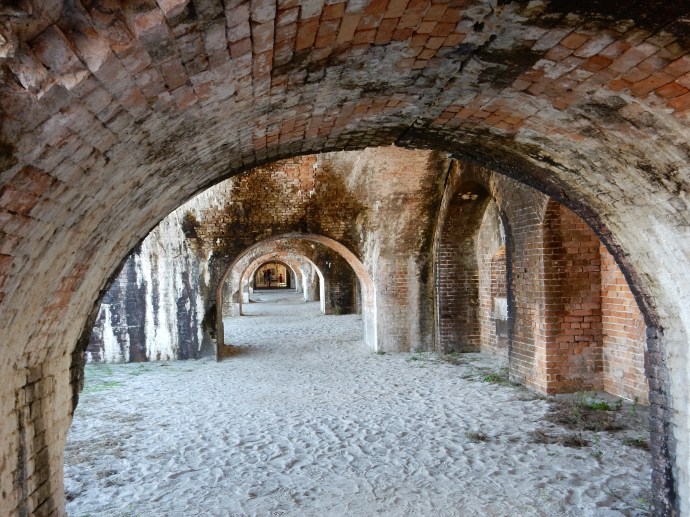
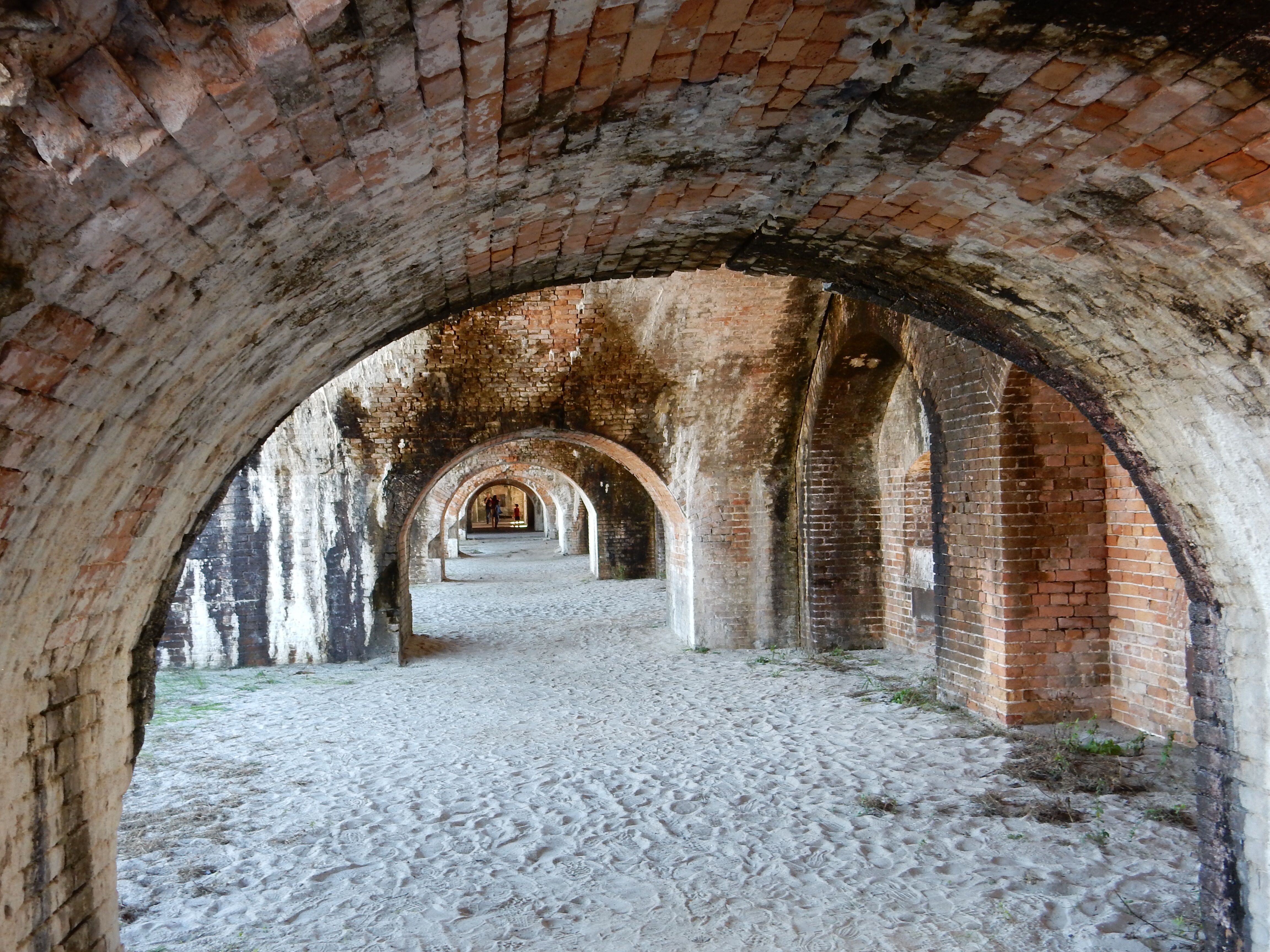
Interior arches of Fort Pickens

Interior arches of Fort Pickens

Fort Pickens was the largest of the four forts, being completed in 1834. It took 21,500,000 bricks (give or take a few) to build the fort. Slaves did most of the construction over a five-year period. Since the fort is built on sand, arches are used to provide strength and stability to the fort. This included building an arch down into the ground to support the arch you can observe holding up ceilings.

Bricks at the fort had limestone in them, dripping water has created stalactites over the years.

Bricks at the fort had limestone in them, dripping water has created stalactites over the years.


Behind the sail boat is Fort Barrancas,  held by the Cconfederates during the Civil War

Behind the sail boat is Fort Barrancas, held by the Cconfederates during the Civil War

During the Civil War, Fort Pickens was one of only four seacoast forts in the South to remain in Union hands. The fort was built so well, with multiple lines of defense, that overwhelming Confederate forces did not make any serious effort to take the fort. For instance, the moat surrounding the fort was dug down to the water table so efforts to build a tunnel to gain access or blow up the walls would be useless. One reason they may not have tried very hard to take the fort was that the builder of the fort, William Chase, sided with the Confederates and was the commander of the southern forces in Pensacola and knew the strength of the fort.
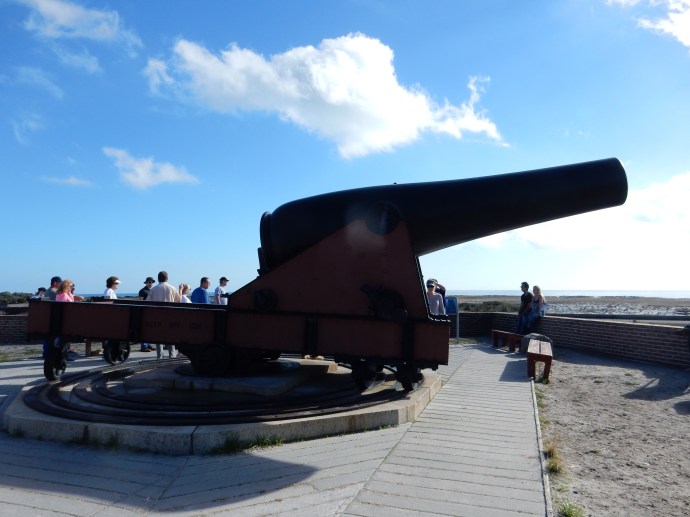
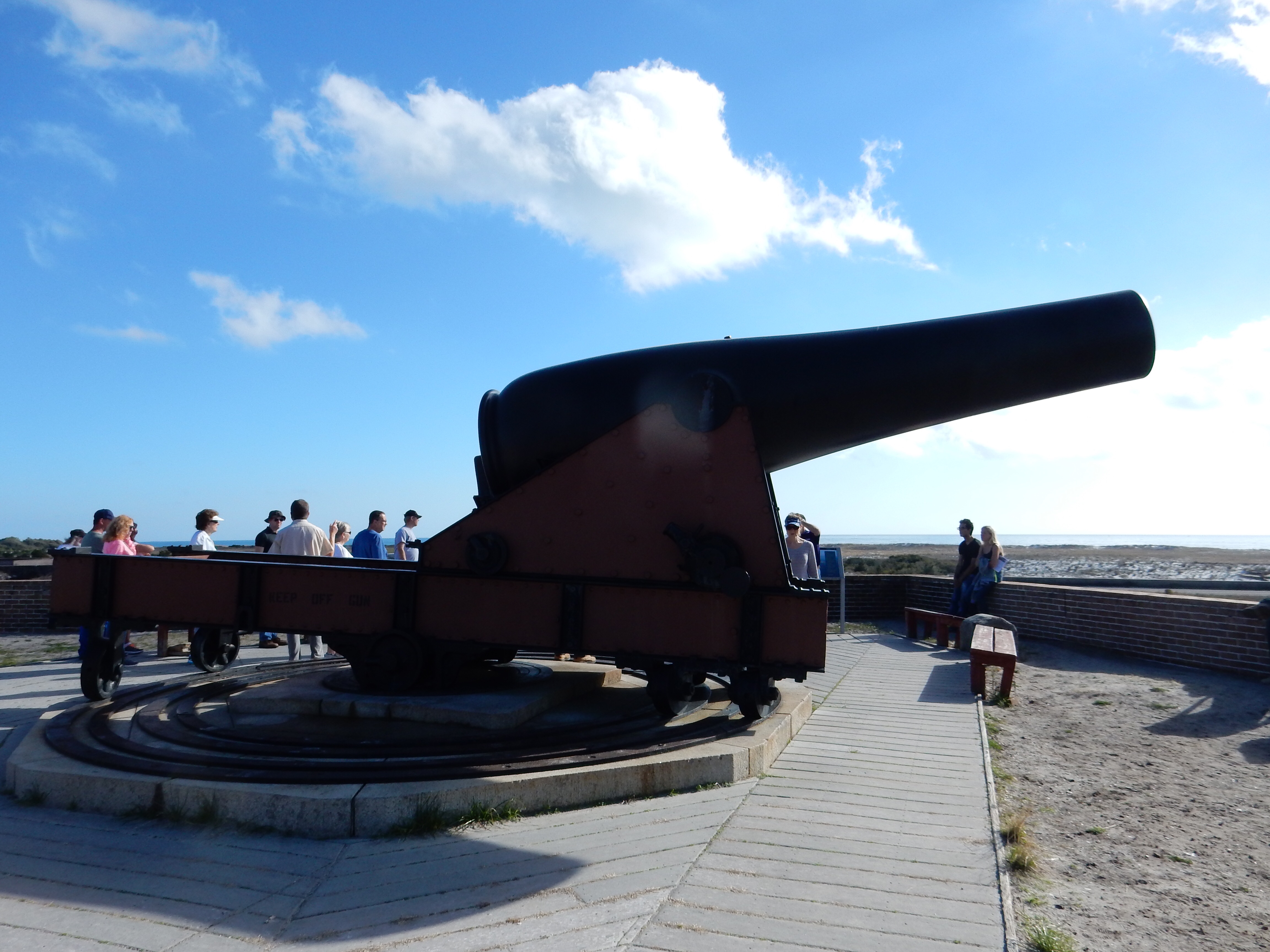
The largest cannon at Fort Perkins

The largest cannon at Fort Perkins

Over the years, the fort was modified to counter new technologies and served through WWI and eventually disarmed in 1934. In 1899, during the Spanish-American War, a fire started in a warehouse area and reached a black powder magazine. 8,000 pounds of powder blew a huge hole in the wall that can still be viewed today. Debris from the explosion landed in Pensacola, 1.5 miles away.

Fort Pickens also served as the prison for Geronimo and other Apache men. When the Apache resisted their placement on reservations and the continued shrinking of those reservations, some continued fighting. Geronimo and others eventually surrendered and in 1892 were to be sent to Fort Marion in eastern Florida. When Geronimo reached Pensacola, local leaders petitioned the federal government to keep Geronimo here, basically as a tourist attraction. Geronimo and his men were separated from their families for two years and the women and children were sent on to Fort Marion. (Fort Marion is Castillo de San Marcos in St. Augustine.) In 1894 the Apaches were re-settled once again to Oklahoma but it was not until 1913 that the Apaches were freed.
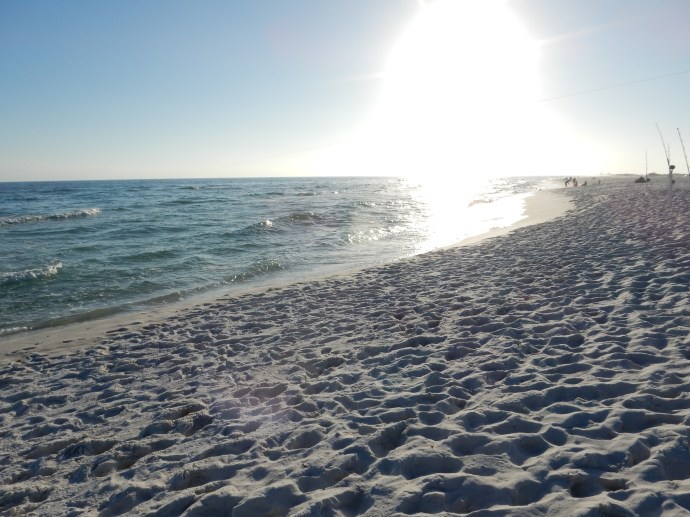
Late afternoon at the beach at Gulf Islands National Seashore

Late afternoon at the beach at Gulf Islands National Seashore

Fort Pickens is part of the Gulf Islands National Seashore, a series of barrier islands stretching from about Gulfport Mississippi to Fort Walton Beach Florida. These islands help to protect the mainland from coastal storms. The beaches are white sand; sand created by years of erosion from granite rock in the Appalachian Mountains. The white quartz sand is the end result, being transported by rivers to the sea. After we left Fort Pickens, we spent a while on one of the beaches that are part of the National Seashore. It was still too cool for major lazing on the beach but a half hour break was refreshing.

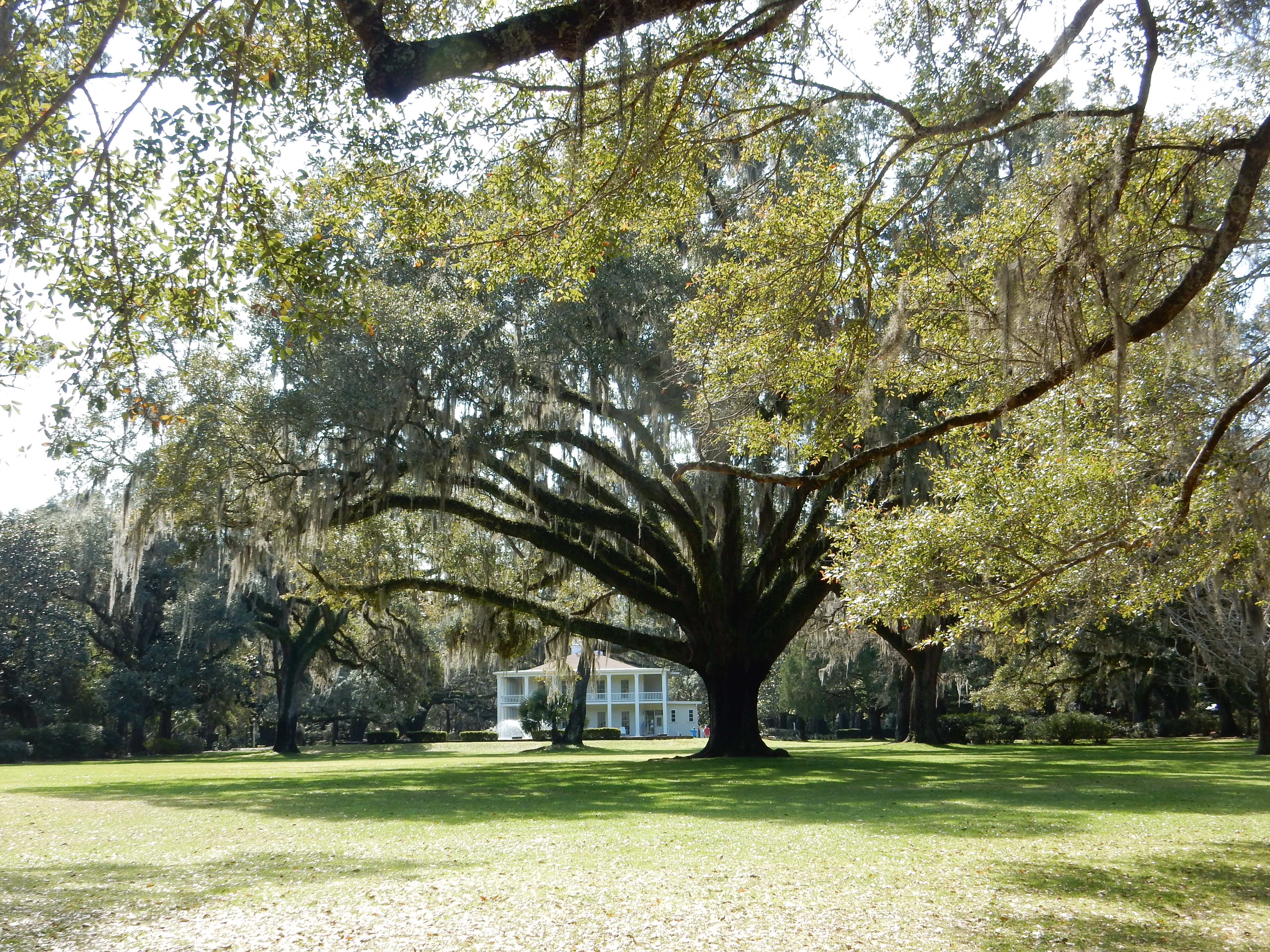
The Mansion at Eden Gardens State Park with 600 year old Live Oak in foreground

The Mansion at Eden Gardens State Park with 600 year old Live Oak in foreground

Today we headed over to Eden Gardens State Park. This is a small park, only 163 acres. The grounds have several gardens, a nature trail, and lovely trees. There is a home built by a local lumbering family, then remodeled and eventually given to the state in 1968. The house was built in 1897 by the Wesley’s who used the property as the hub for their lumber company with three mills and a dock to ship lumber. At that time, the lumber in the area was just being cut; however, it did not take too many decades before the virgin forests were exhausted. The Wesleys did not cut down the large Virginia live oaks on the property. One of them is reputed to be over 600 years old.

Water view at Eden Gardens leading to Choctawatchee Bay

Water view at Eden Gardens leading to Choctawatchee Bay

Mrs. Wesley died in 1953 and her nine children sold the land and property. The purchaser moved 20 buildings on the property to Grayton Beach for cabins and the house remained vacant for ten years. The home was purchased in 1963 by a New York woman whose family ties were to successful businesses in Pennsylvania and Ohio. It is her furnishings and re-decorating that is observed during the house tour. She only lived here for five years before falling ill. With no children, she gave the house to the state. It is a peaceful setting inland from the beach and its hubbub.

The property and Victorian mansion are in contrast to the pastel seashore homes we visited next. Scenic Highway 30A is 20 miles of a slow route among small beach towns. Small bungalows are interspersed with large homes, apartments, and new townhouse developments. Cutesy retail establishments are located at central locations. One town, Seaside, was the locale for the 1998 movie “The Truman Show”. Several state parks are in the area; we plan to visit two of them during the next several days as we move our lodging to Topsail Preserve State Park where we have a cabin reserved.

Lunch was at a burger place in Seaside. It was actually our second choice but the first one was not as appealing as its write-up. Pickles, the burger place, has been in business since 1993 and is USDA organic, animal welfare approved, certified humane, global animal partnership, and American grass-fed beef. One of their signs said their beef all came from Georgia. I guess in Florida that is a compliment. To a Midwesterner, it was a “So What?”

The burgers and fries were very good but pricey. There was no mention if their salt was sea salt; the fries were loaded, maybe that is why they tasted so good. The shakes and malts-with ice cream specially made for them-were just so-so. But we sat out on the deck and had a relaxing late lunch.

Then it was back to the motel where we relaxed by the pool and enjoyed the sun while catching up on our reading.

Ed and Chris 9 PM Feb. 9

Categories: road trip, travel | Tags: , , , , | 1 Comment

2015 Trip 1, Feb. 7, Florida in Winter

Destin, FL Feb. 7, 2015

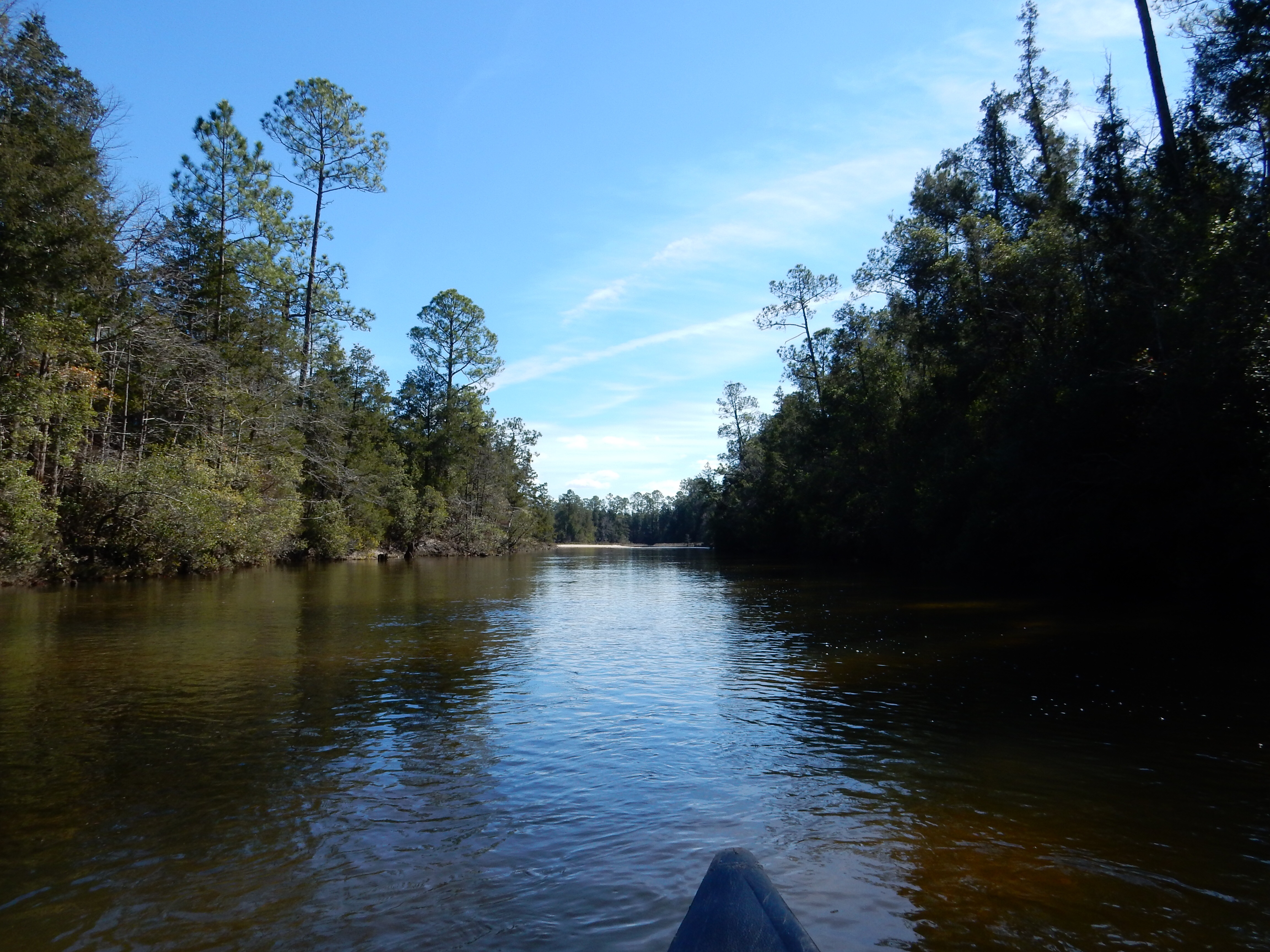
Coldwater Creek-straight stretch

Coldwater Creek-straight stretch

Waiting to do our canoe trip turned out to be an excellent decision. It did mean more driving but that was offset by: great weather (sunny and temps 60-65); and river water level just right so Chris did not worry about the speed or depth. The latter item had caused some (okay, quite a few) moments of concern on her part.

At the start of our Coldwater Creek canoe trip

At the start of our Coldwater Creek canoe trip

The drive from Destin was an hour and a half instead of a ten minute walk out our door. But being at the Courtyard meant we had a protein rich breakfast and thus no excuses about being tired when we were paddling.

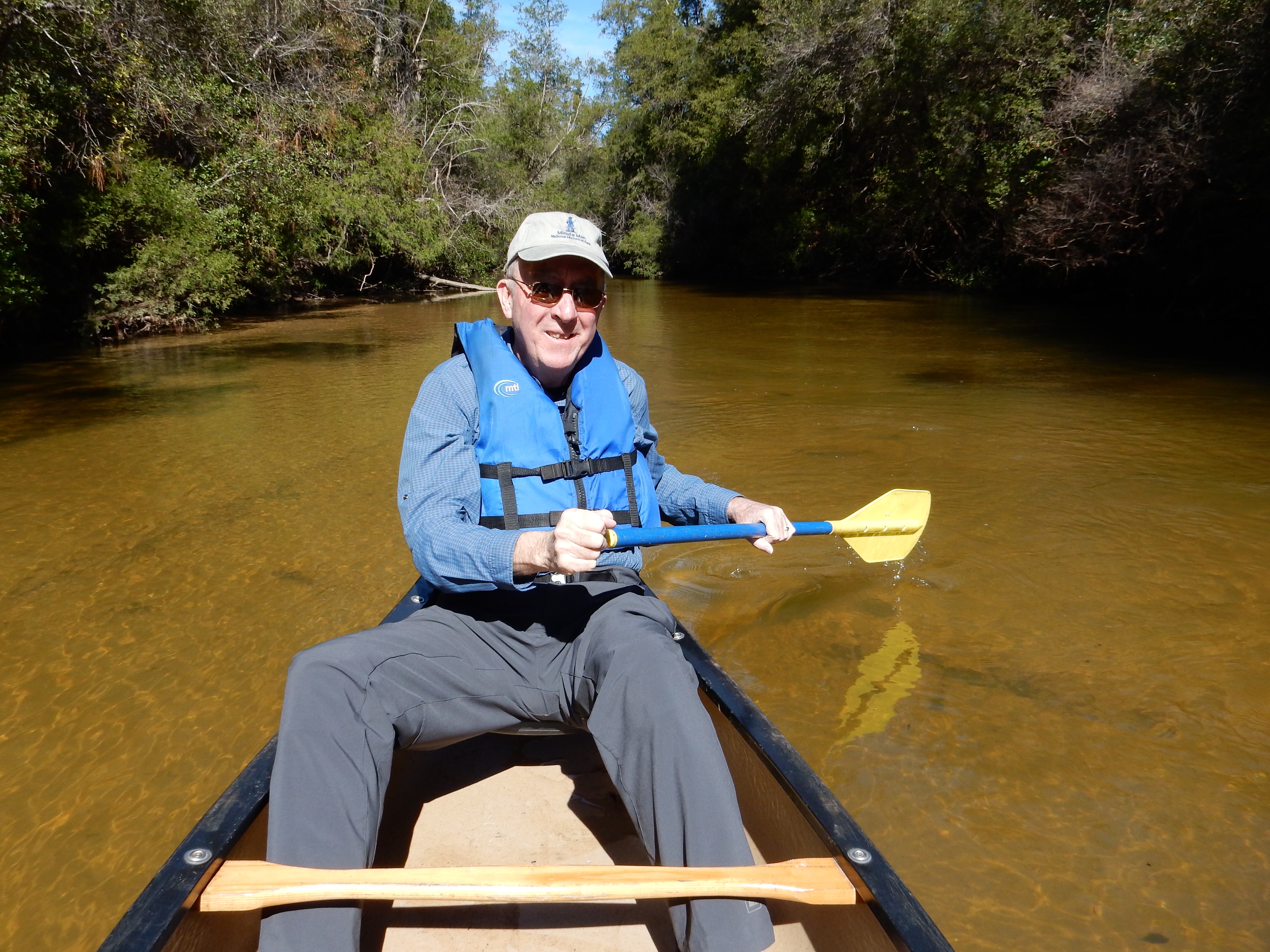
On the creek

On the creek

The staff at Adventures Unlimited were helpful and answered Chris’ questions. They hauled us and the canoe up to the drop off point. This would be a four mile trip; not very long but a nice length to refresh our paddling skills. We used an easy coordination system. Chris could paddle on either side and switch whenever it made her comfortable. I adjusted at the rear. I am knowledgeable enough about paddling that we did not have any problems but not so knowledgeable that I could figure out what to do and at the same time advise Chris how she should be paddling. It worked out fine.

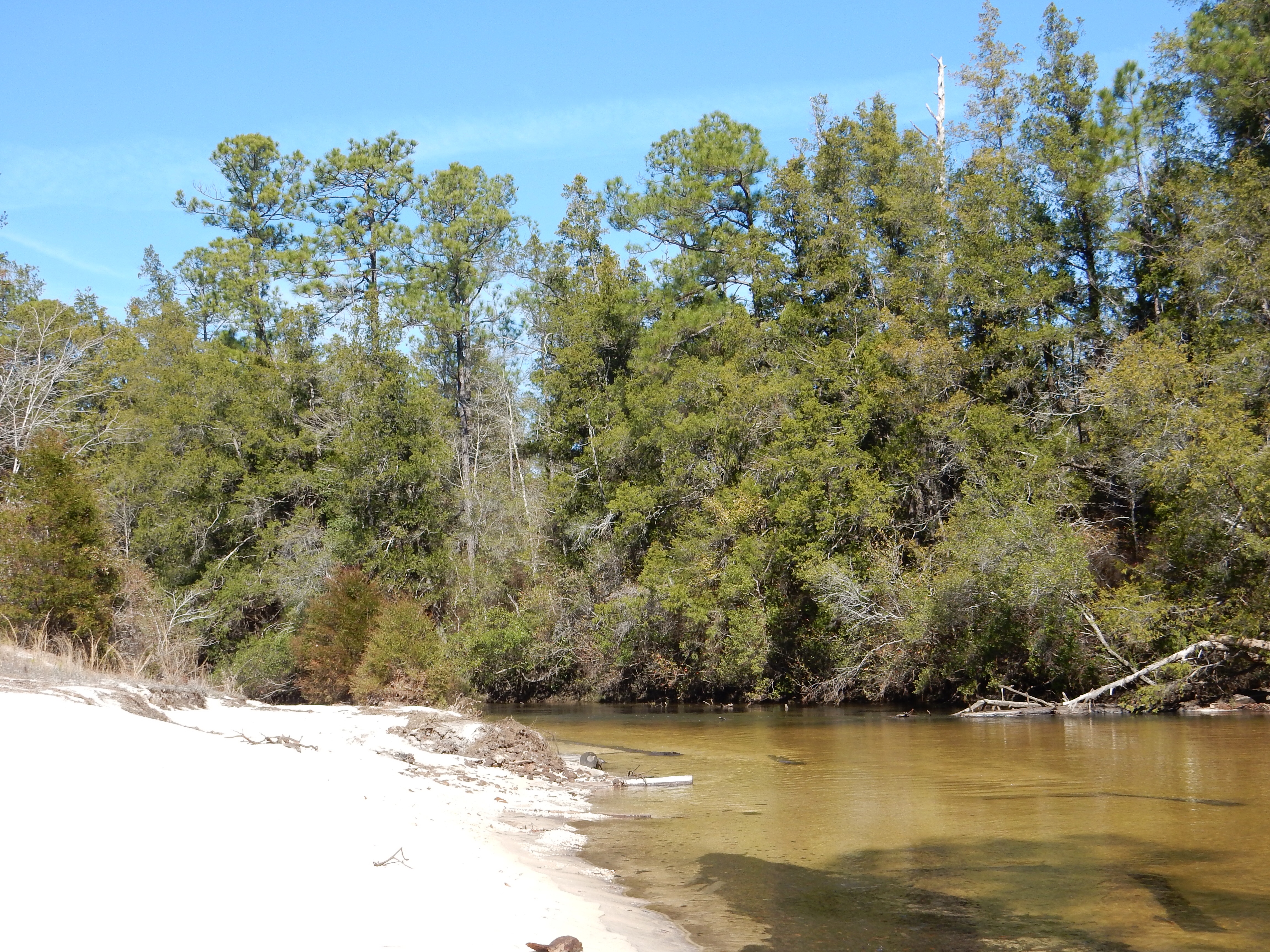
Coldwater Creek-sandy beach, turn, and overhanging branch

Coldwater Creek-sandy beach, turn, and overhanging branch

The average depth of Coldwater Creek was about 3.5 feet. Not too deep for Chris to worry (I can’t swim) and yet deep and swift enough to provide a helpful current. The creek is primarily spring fed, the water was cool but certainly not Minnesota frigid. The creek twists and turns constantly and with submerged logs and overhanging branches, our paddling got a good workout. (Our pictures are of straighter stretches when we could just float for a bit while Chris took a picture.) Chris also served as lookout for underwater and overhanging hazards. The water is clear so you can see the bottom easily. In numerous locations there are sandy beaches, we stopped at one of them for a break. On this trip we did not see any meaningful wildlife.

Chris on a sandy beach at our break

Chris on a sandy beach at our break

The 1980 Florida Legislature declared Milton the “Canoe Capital of Florida”. I am not sure if the title is completely justified or just the result of people buttonholing their legislator before someone else. However, we found Coldwater Creek excellent. If we were more experienced, we might have tried Blackwater River, which also has white, sandy beaches and clear water-just faster water.

We made the turn into the landing area quite easily; another pre-trip concern that was not a problem. When we checked out, Chris was talking to the owner who explained that a customer had complained to a TV station that the landing area was not visible or marked for canoers. The TV station did an investigation and showed on-air how well marked it was. It was lucky for Adventures Unlimited the TV station came out to view it and not just repeat the claim. It turned a potential problem into good publicity. The owner also told us of other canoe outfitters around the state in areas we will be visiting. We will have to make sure to try them out.

After lunch, we stopped at Arcadia Mill Archaeological Site in Milton. This is a site in Milton, long grown over but now recovered by the Santa Rosa County Historical Society and the University of West Florida located in Pensacola. Arcadia Mill’s story has numerous threads that tie back to America’s development.

Early developers of the site came from Martinique, Connecticut, New Hampshire and the Florida territory-after we purchased it from Spain in 1822. The entrepeneurial drive took an area rich in quarry ironstone and timber. The developers (and slave labor) re-worked the water supply to provide power and transportation. Creativity expanded the site beyond lumbering to manufacturing of textiles, shingles, pails, bricks, and flour. Changing economics, fire, theft by one of the owners, etc contributed to its eventual demise. Not until the 1960s when residential construction was on an upswing was the use of the land in the 1800s recognized and preservation begun.

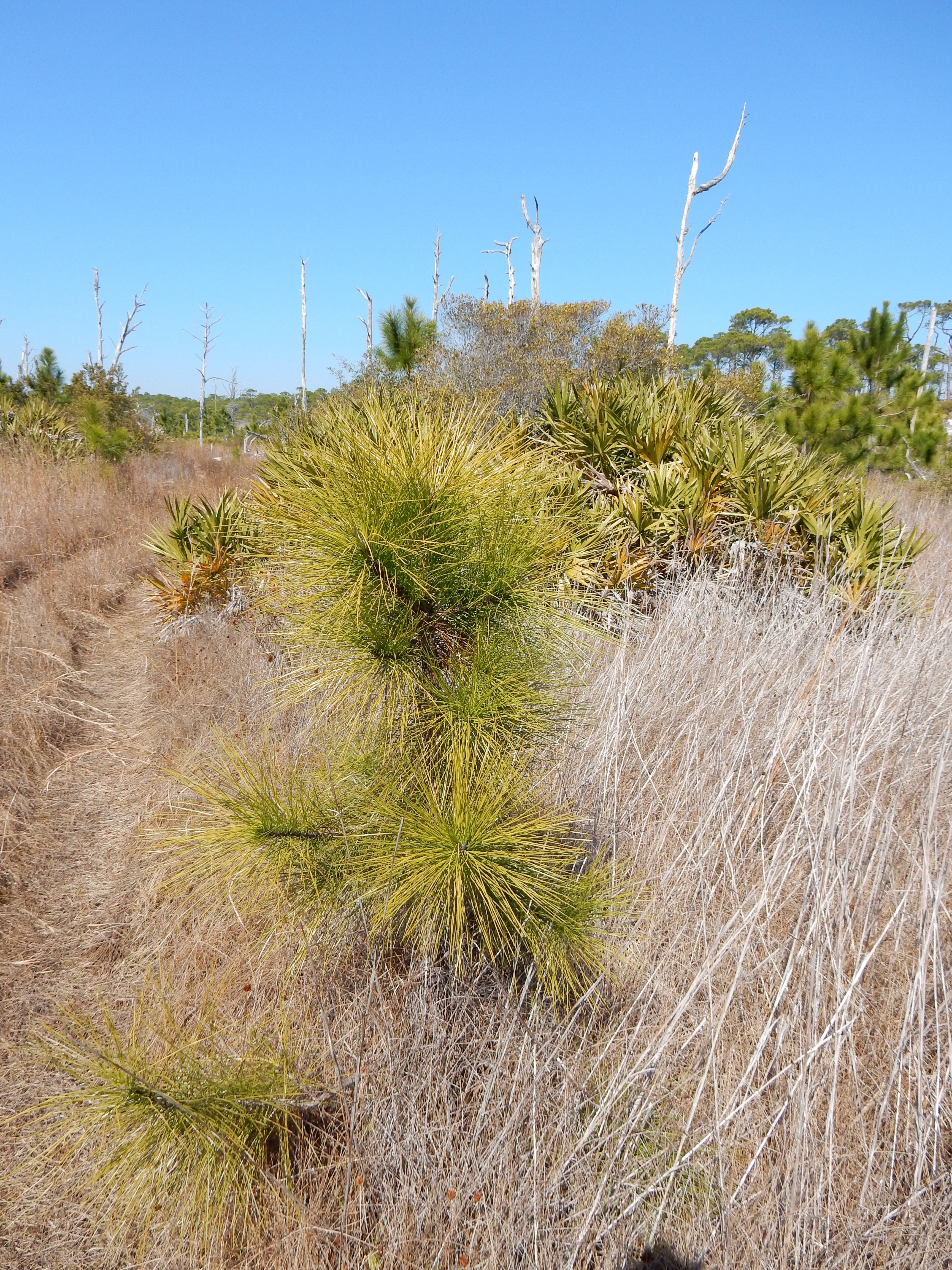
The mill display area did a nice job of also informing a visitor about the longleaf pine. It is one of several southern pine species used in lumbering. It has had a bad press indicating it takes longer to grow and produce a return on investment for the timber grower. However, the longleaf is resistant to most disease and to fire and is less likely to be destroyed during hurricanes. It produces better wood and overall should be a good crop for timber growers.

Our drive back to Destin headed west first to the Pennsacola Scenic Bluffs Highway. What can I say? Well, it was pleasant and we are glad they preserved parts of the bluffs. However, it was lucky that we printed out the description of the drive before we left home. It is not well marked. There are few places to pull over and enjoy the view or learn about the historical significance of the area along the highway. Like many other scenic views, there is an aversion to trim the trees and shrubs so a person can actually see and enjoy the view.

The final drive from Pensacola east to Destin took a while as we drove through congested areas with people out and about on a Saturday night. Tomorrow is probably Fort Pickins and Gulf Islands National Seashore.

Ed and Chris 9:10 pm

Categories: road trip, travel | Tags: , , , , | 2 Comments

2015 Trip 1, Feb. 6, Florida in Winter

Destin, FL Friday Feb. 6

Sometimes the differing types of activities we do in one day amazes me. First off, if you read yesterday’s blog, you thought we were canoeing today. Nope, postponed one more day. We started out with a nature trail hike around the Adventures Unlimited property and then checked out.

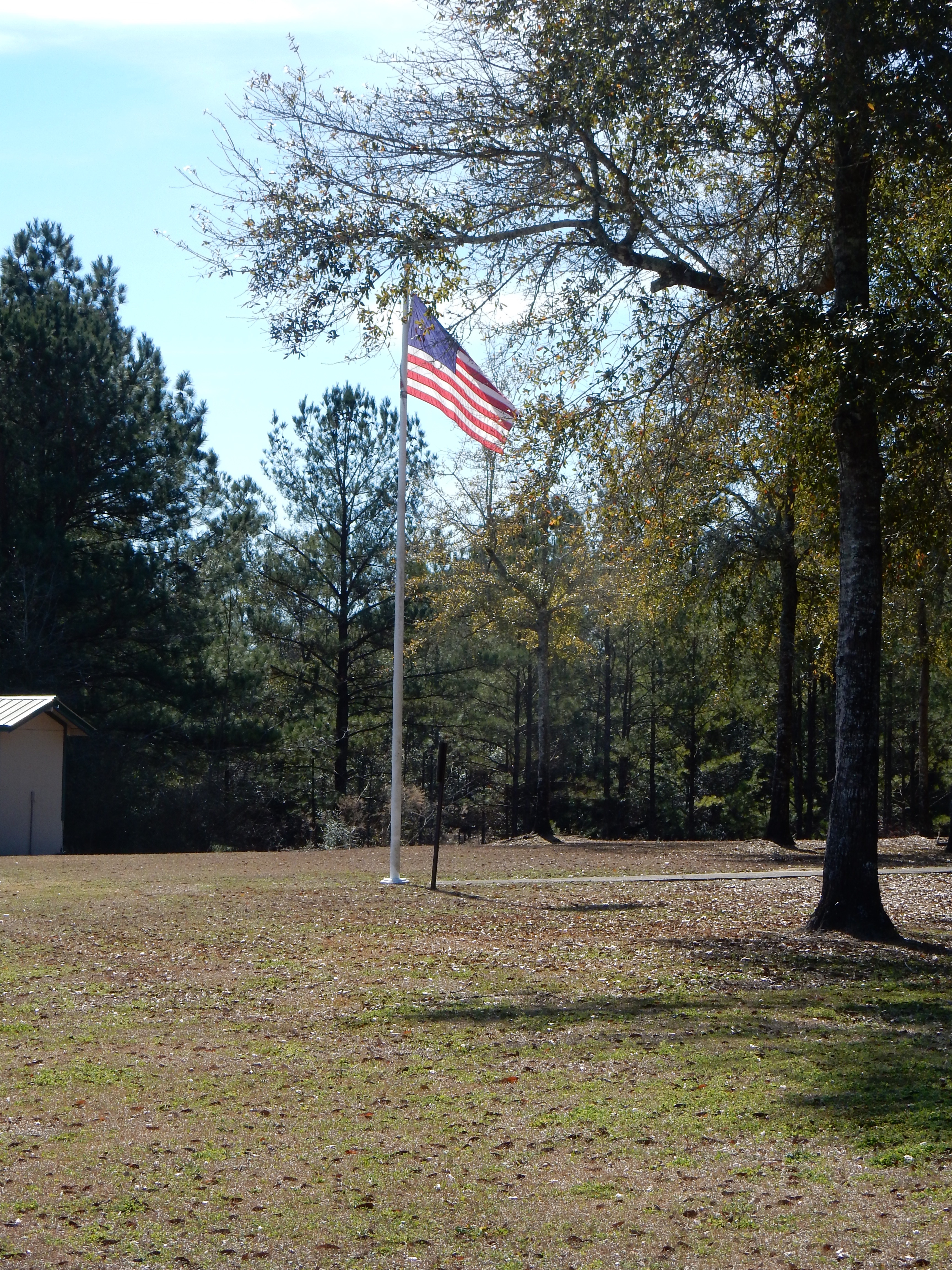
Britton Hill; Florida's highest point. Note the flag waving in the breeze generated by such a great elevation.

Britton Hill; Florida’s highest point. Note the flag waving in the breeze generated by such a great elevation.

We headed out for, hold on to your hats, the highest natural point in Florida (i.e.,not counting Disney World creations, skyscrapers, etc.) The highest point in Florida, Britton Hill, is 345 feet. (Sixteen states have their lowest point in the state higher than Florida’s highest point.) Britton Hill is just two miles south of the Georgia-Florida state line and 60 miles NE of Milton in the unincorporated community of Lakewood.

Why go? Well, why not? We have been to some other state highest points (or at least very close to it) and while it is not an obsession with us, it seemed a somewhat unique goal for the day, given its lack of real elevation. There is a club and a point of pride for people to make all 50 highest points. Obviously, all of them are more of a challenge than is Florida’s. Lakewood Park,home to Britton Hill, has a notebook for people to sign in that they have “conquered” Florida’s highest point. Not too many other people seem to care, the park was deserted when we were there. This part of the state is primarily lumbering and farming; a sawmill in Lakewood closed decades ago.

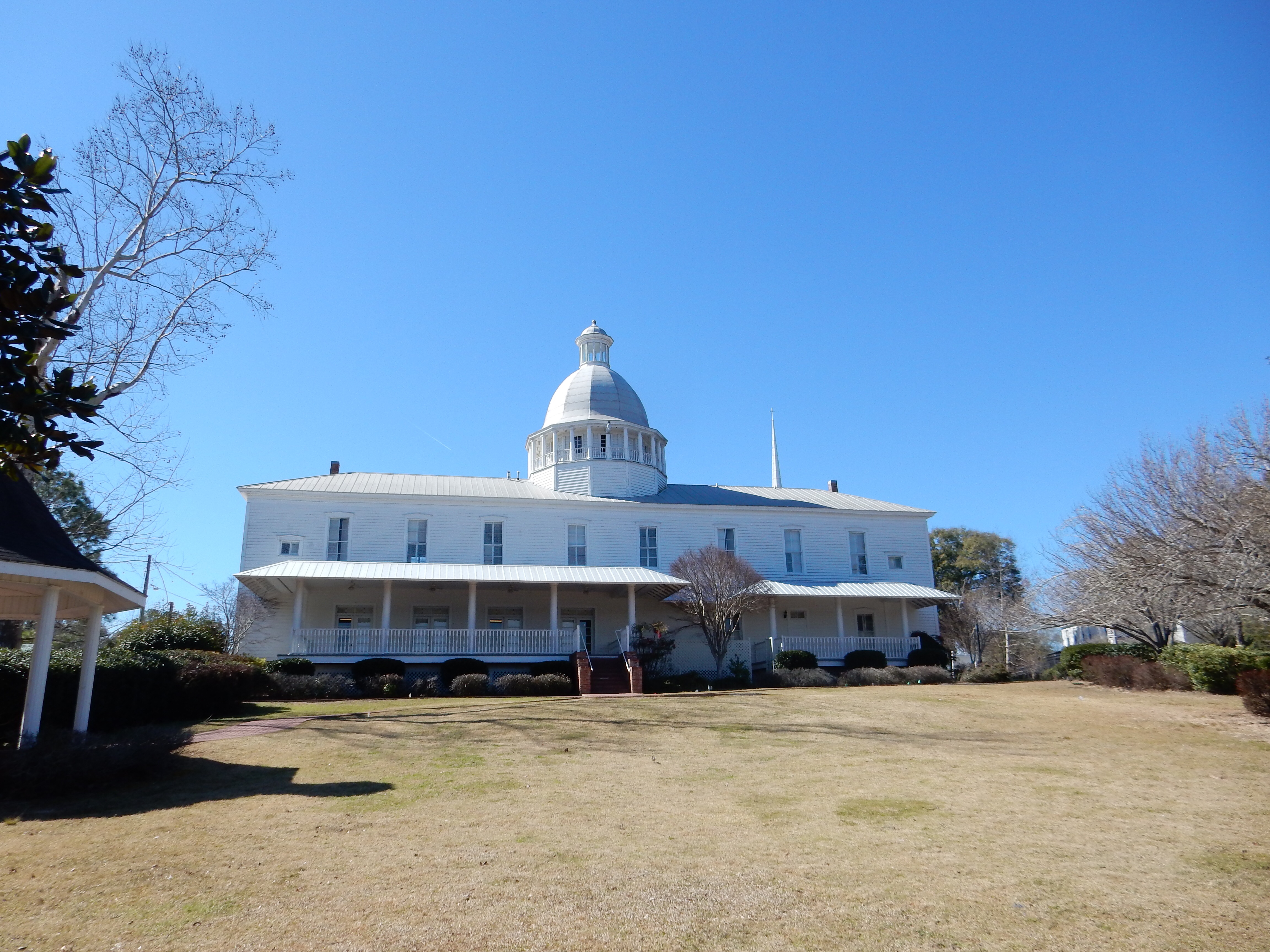
So after this exciting stop, we moved on to another small Florida town that is not on an ocean beach, DeFuniak Springs. The Muscogee/Creek/Euchee Indians lived in the area and around the springs that feed the lake. The town was established, like many other towns, due to a railroad, the Louisville and Nashville. This town of 5,600 people has several claims to fame.

Postcard showing the round lake at DeFuniak Springs

Postcard showing the round lake at DeFuniak Springs

Lake side view of the site for Chautauqua in DeFuniak Springs

Lake side view of the site for Chautauqua in DeFuniak Springs

First, it is home to the only naturally round lake in North America. The lake is about one mile in circumference; we met a woman older than us who has lived here her entire life and walks around the lake three times every day. Second, the town is home to the Florida Chautauqua Association. From 1885 to 1922, the Florida winter Chautauqua was immensely popular and brought fame to the small town. It was revived in 1976 in a shorter format and continues to this day. Third, the local library which is the oldest in the state that was built as a library and still continues to be used as a library.

One of the homes on Lake Drive in DeFuniak Springs

One of the homes on Circle Drive in DeFuniak Springs

Street view of Lake Drive in DeFuniak Springs

Street view of Circle Drive in DeFuniak Springs

We did an urban hike, walking around the lake and reading about the historic homes. All of the homes are across the street from the lake. Between Circle Drive and the lake itself, only three buildings were allowed. A Presbyterian church founded by the early Scottish settlers, the library, and the Chautauqua main building. The local history museum was open so we made a quick visit. I noted that there was no high school for black Americans until the 1930s. It closed in 1969, 15 years after Brown v. Board of Education.

Rocky Bayou state park

Rocky Bayou state park

And the day of excitement was not over yet! (You do recognize the tongue in cheek language, right?) On our way to Destin, we stopped at Fred Gannon Rocky Bayou State Park and went on two nature walks. The bayou leads to Choctawatchee Bay, a major bay off the Gulf of Mexico separating the island towns like Destin from the mainland.

Deer Moss

Deer Moss

Besides the exercise and fresh air, Chris and I saw a new, distinctive looking plant, the deer moss. These look like round puffs of a greenish white sponge growing on the forest floor. They were everywhere and it seems the lichen is a combination of alga and fungus working symbiotically. The ones we saw were 75-100 years old and are a major factor in stabilizing sand. Since lichen are sensitive to air pollution, the fact that they are growing here is one indicator of decent air quality. And finally, there was one surprise-see picture below.

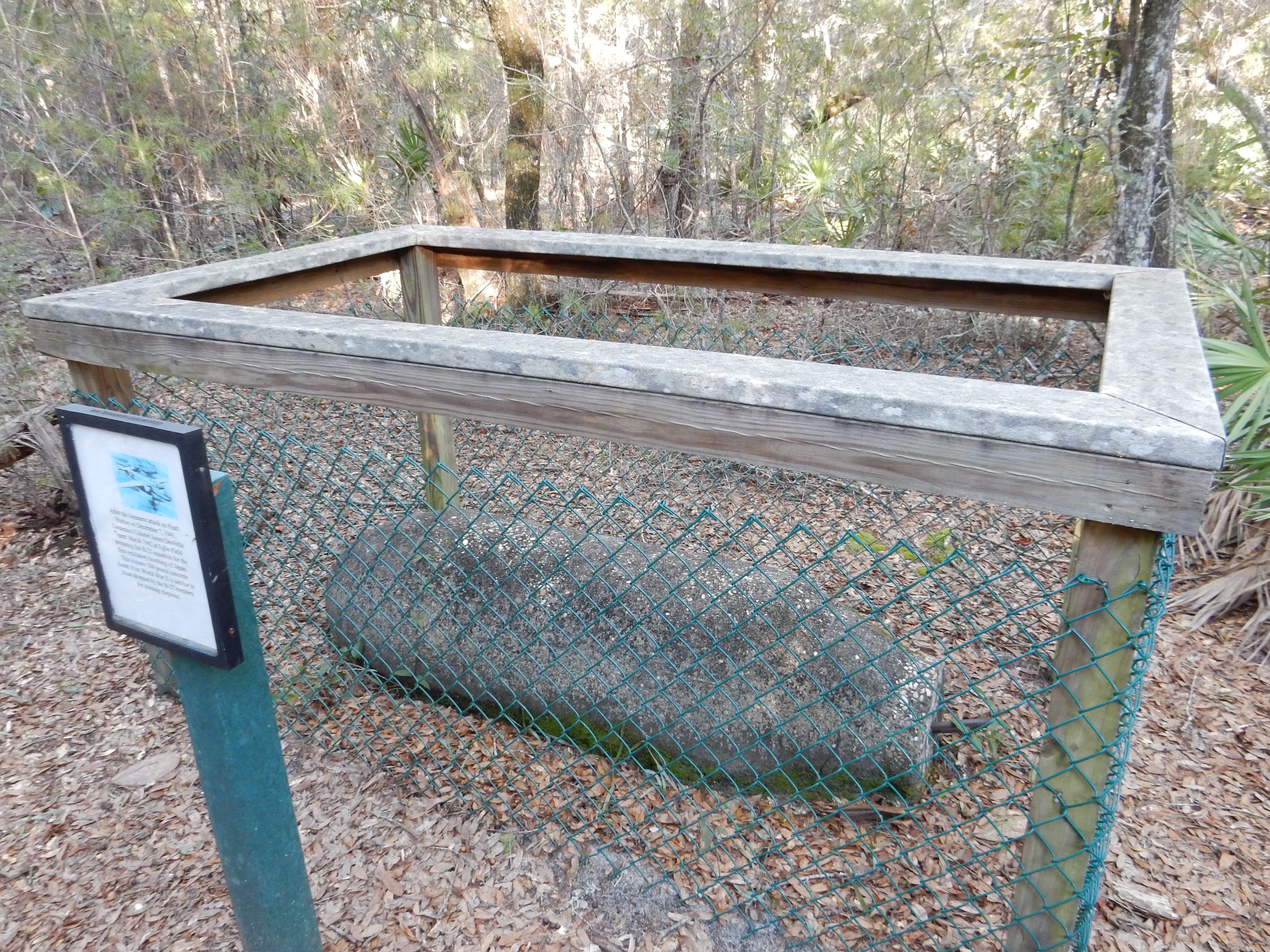
Rocky Bayou park used to be part of a military gun range. This concrete practice bomb was found in the park and left there for us to view.

Rocky Bayou park used to be part of a military gun range. This concrete practice bomb was found in the park and left there for us to view.

We left the park after our walks and made it to our lodging for the next four nights, a Courtyard in Destin. More adventures await.

Ed and Chris 9 pm
Categories: road trip, travel | Tags: , , , | 4 Comments

2015 Trip 1, Feb. 5, Florida in Winter

Milton, FL Feb. 5, 2015

We were back to seeing the sun in the Sunshine State (although it seems Florida only ranks 6th in U.S. states in amount of sunshine days according to the U.S. Weather Service). Variations within the state are great, but we were just happy to have Wednesday’s rain finished.

The day started by postponing our 10 AM canoe trip until Friday. Instead we headed out to Blackwater River State Park. These days are being spent exploring away from the well-known ocean beaches. Florida has 7700 lakes and 11,000 miles or rivers, streams and waterways. In this portion of Florida, waterways were the earliest transportation mode. While Florida is now the 4th most populous state, its growth really came after WWII. The early residents relied heavily on water transportation.

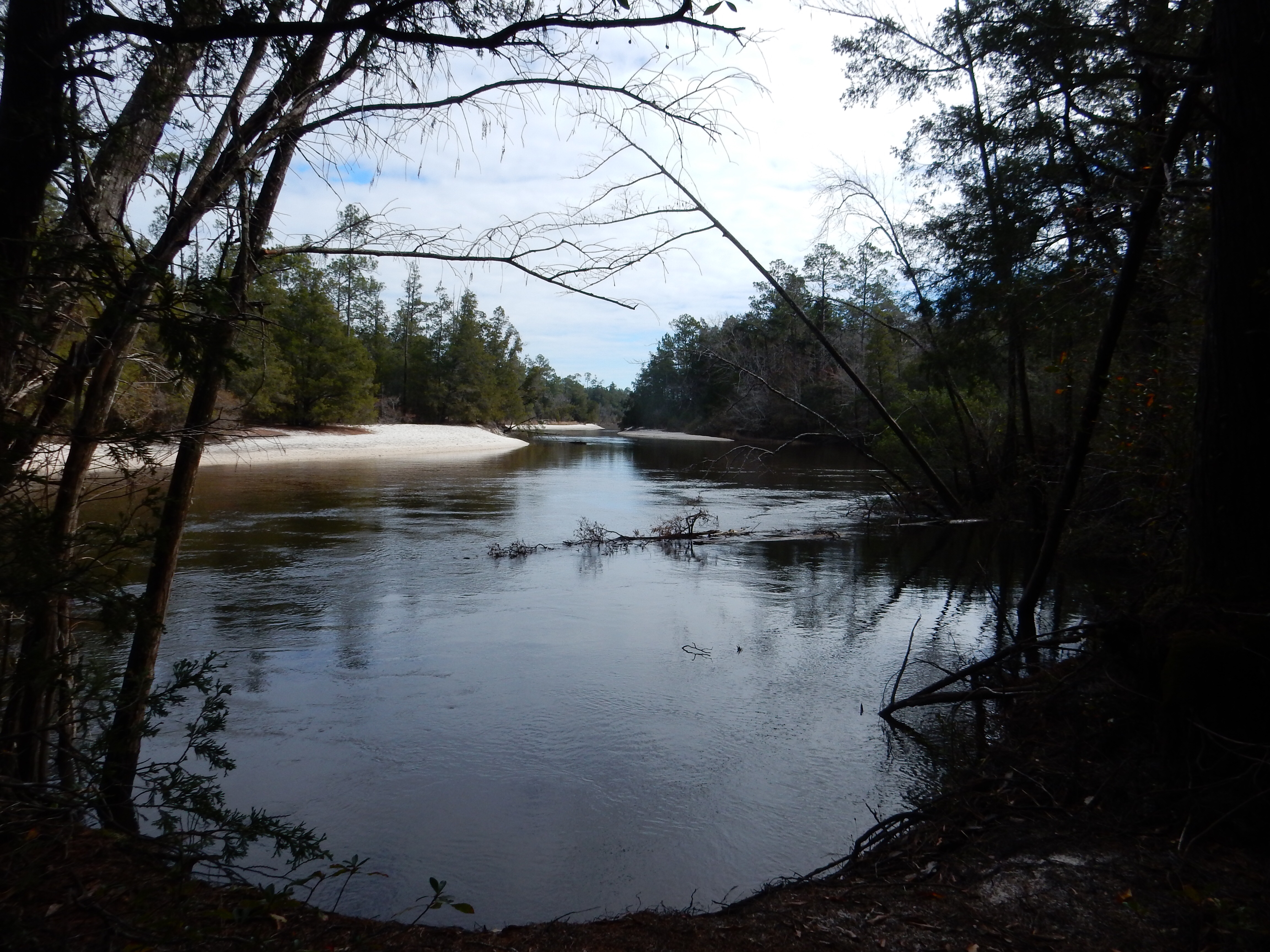
Blackwater River

Blackwater River

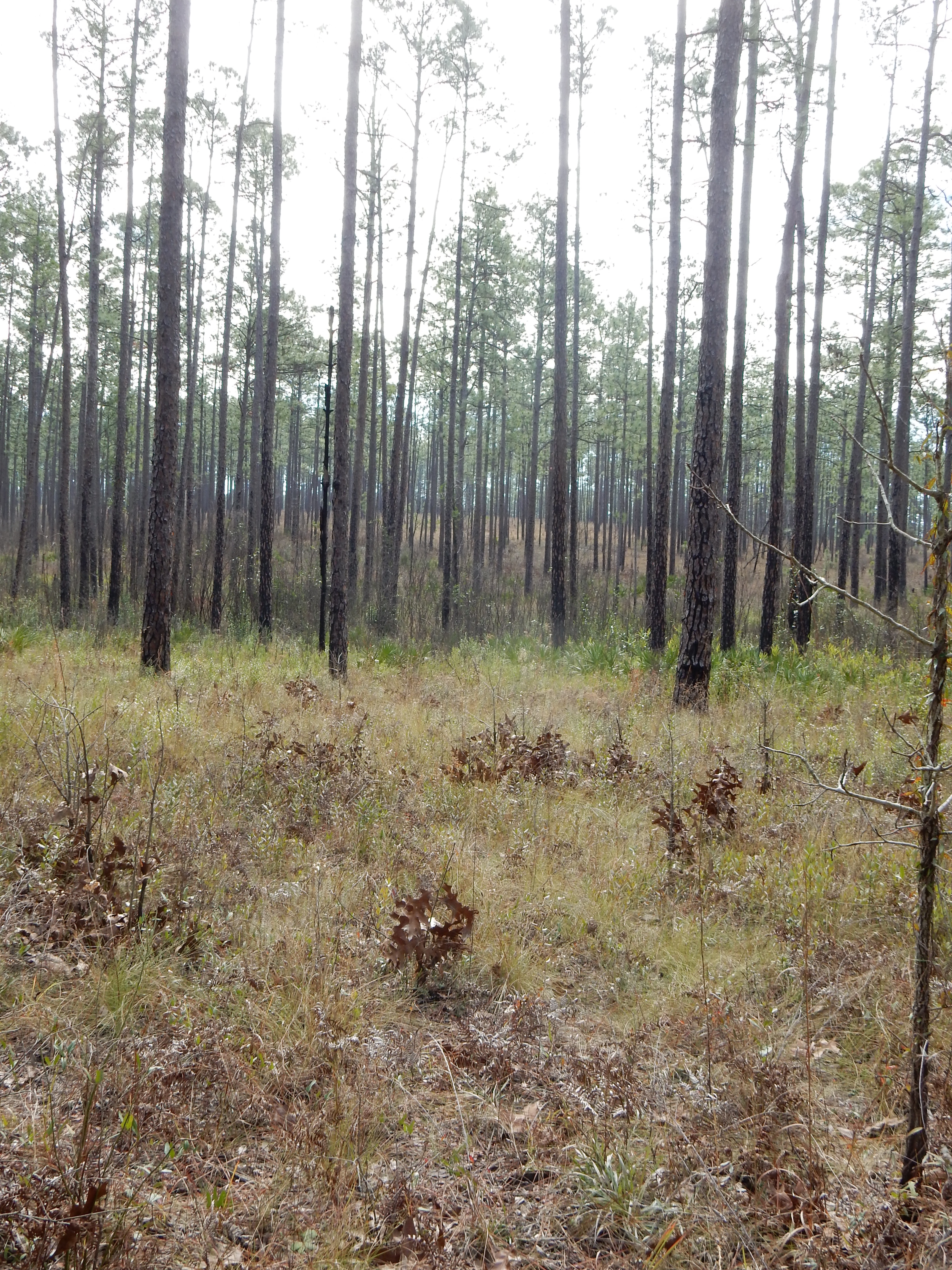
Longleaf Pine forest at Blackwater River State Park

Longleaf Pine forest at Blackwater River State Park

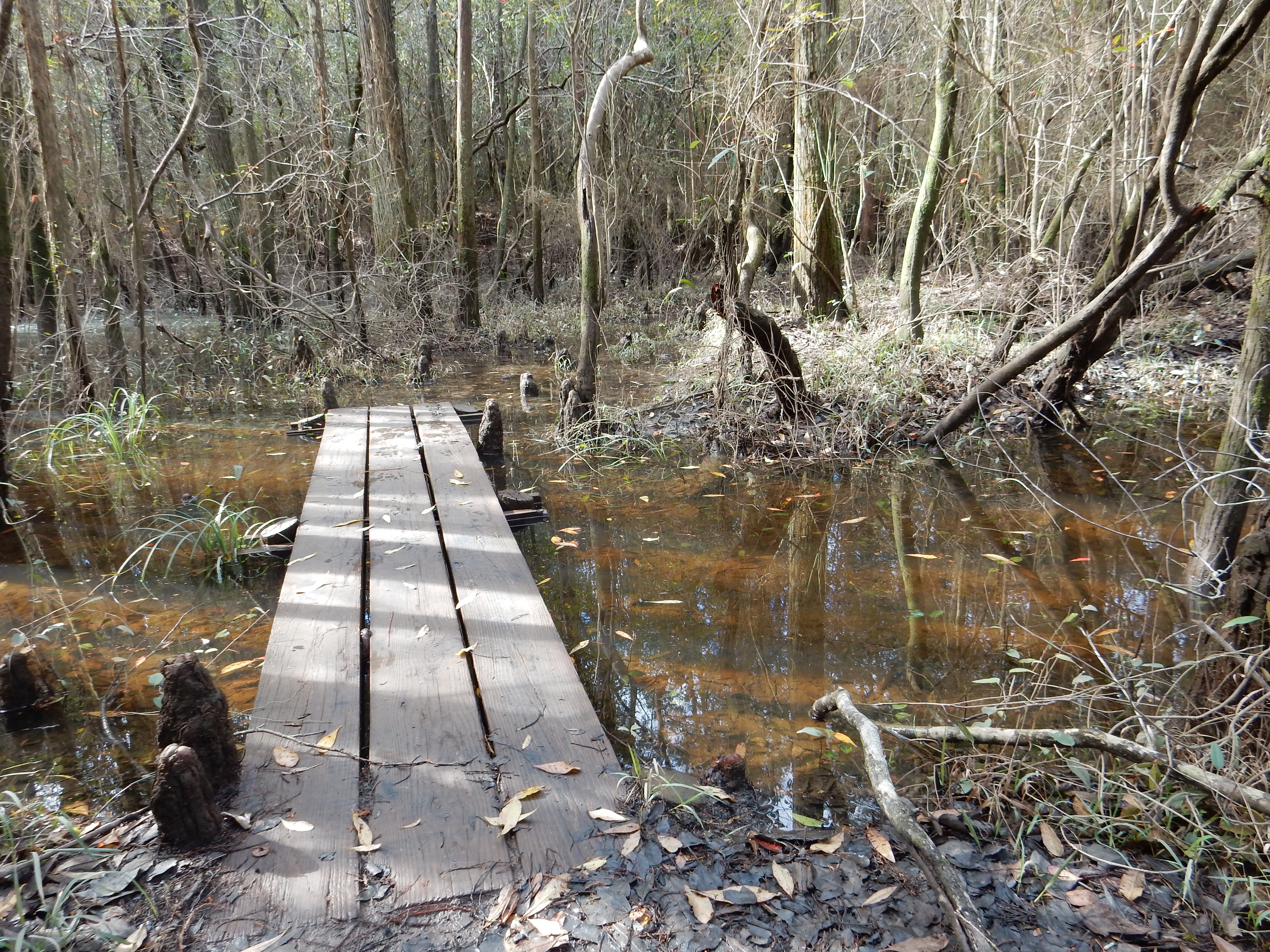
The Blackwater River is in a part of the state with a rich lumbering history. The timber in the area was important for ship-building, and the short but fast flowing rivers ended in navigable bays where ships could lay in port safely. The Blackwater has white sandy beaches, a sandy bottom and numerous sandbars. The river is too fast for novice canoeists like us but we hiked some trails.

Blackwater River State Park trail

Blackwater River State Park trail

Despite yesterday’s rain, the ground absorbs rain quickly and we only had one spot on a park trail that required careful footing to avoid getting wet. We did not hear, or see, many birds. However, the sky was rarely without a plane or helicopter flying overhead, most likely from one of the air bases in the area. We did meet a married couple that have retired and are now doing volunteer vacations in various parks. They are here until the end of February and then head out west to the Sierra Nevada Mountain area, close to Yosemite. They live out of their RV.

Blackwater Heritage State Trail

Blackwater Heritage State Trail

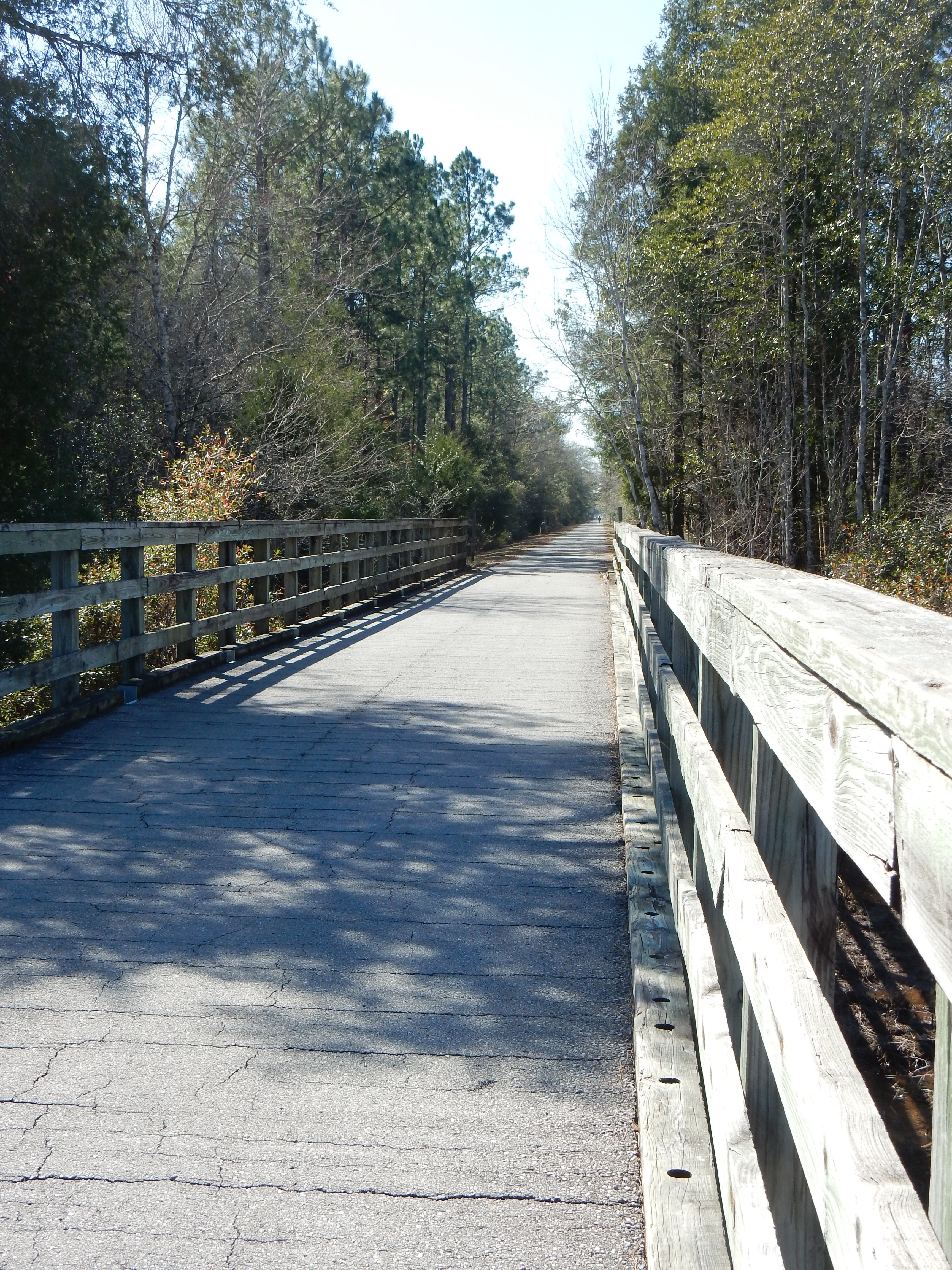
After the morning hike and lunch, we headed back to Milton and biked the Blackwater Heritage Trail from downtown Milton almost to the gate of the Whiting Field Naval Air Station. It was a 16 mile round trip. Our exercise was enhanced by a strong wind which seemed to somehow be blowing into our faces no matter which way we were going. The bikes were rented from Truly Spokin just off the trail. They have been in town for years and were highly recommended. Chris loved the heavy “cruiser” style bikes with just 7 gears.

I can’t say that either locale was fantastically beautiful. The area is pleasant, with a variety of ecosystems. While we saw many longleaf pine, we never learned much about wiregrass. We will also did not see any Florida panthers or alligators; maybe later adventures will provide sightings.

We returned to Adventures Unlimited to walk more of the property before dinner. They have about 100 acres and over hundreds of canoes and kayaks for rent, along with tubing and zip-lining. Chris and I walked along a portion of the property close to Coldwater Creek, to scope out the creek we will be canoeing Friday. The current was still fast but we could observe that the water level had subsided after peaking from Wednesday’s rain. We are still the only overnight guests. But our room is large, clean and warm. A pleasant place to spend the evening.

Ed and Chris 8 pm

Categories: road trip, travel | Tags: , , , , | Leave a comment

2015 Trip 1, Feb. 4, Florida in Winter

Milton, FL Feb. 4

We spent the entire day at one museum, the National Naval Aviation Museum located on the base of the Naval Air Station, Pensacola FL. This air base is the home for the Blue Angels, the Navy’s precision demonstration air squadron. As expected, it rained all day so being inside was a good choice logistically. Tomorrow we will learn if the rain has increased the creek level too high for safe canoeing.

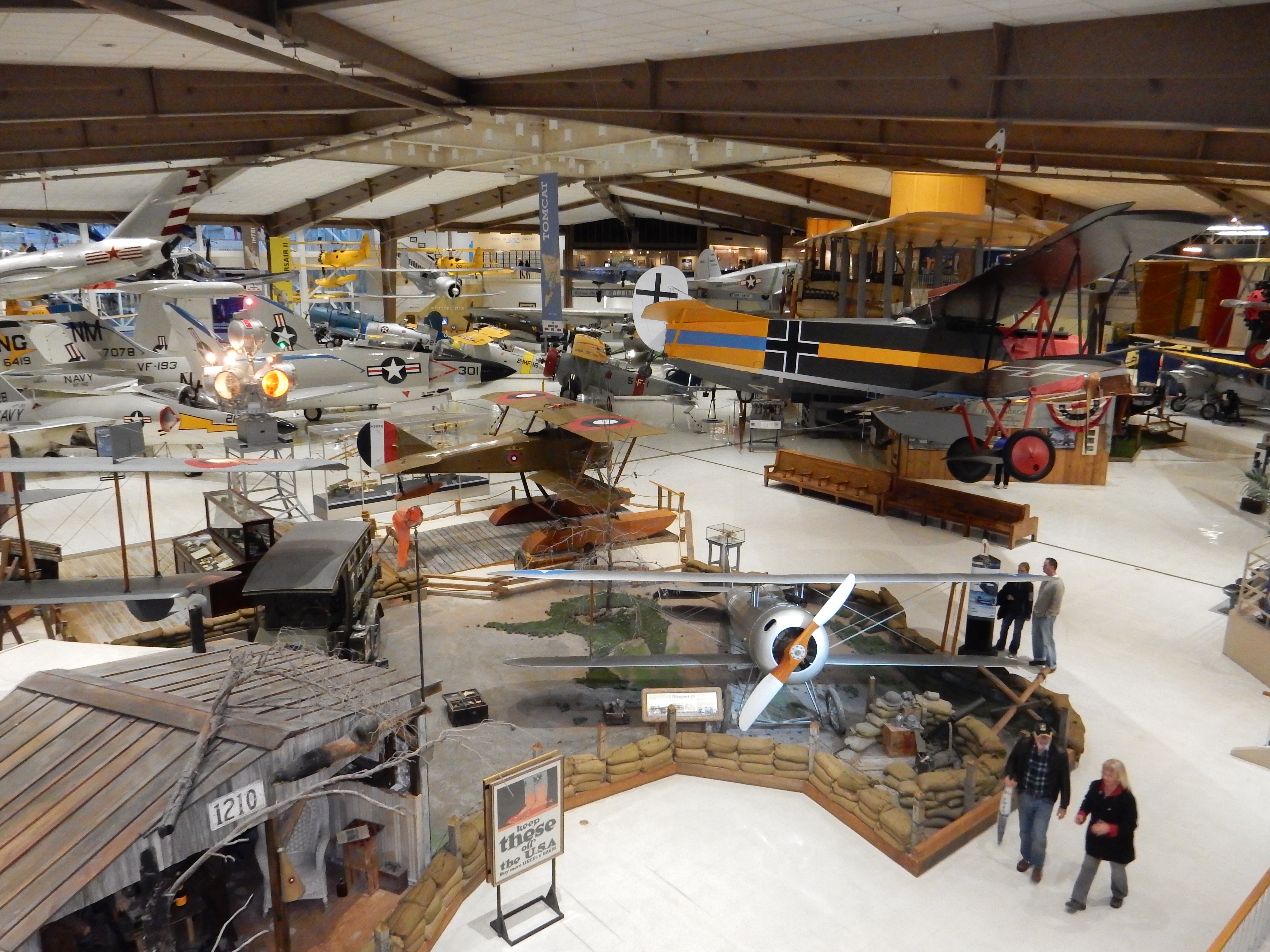
One view of a portion of the naval aviation museum

One view of a portion of the naval aviation museum

The museum has 55,000 square feet of exhibits in two buildings. It shows IMAX movies, docent tours of the inside displays, a bus tour of aircraft outdoors, simulator rides, over 150 planes, videos and static exhibit displays. We managed one inside tour, an IMAX film, and a guided walk-through of an educational exhibit about flight that is devoted to educating school children. From 9 a.m. until 2 pm the walk-through is exclusively for school kids. We caught this one towards the end of the day and all of the adults on the walk-through wished we had this kind of experience when we were in school. The museum offers intensive summer learning classes for teachers who can then take prepared science lesson plans back to use in their classrooms. During the school year, the students come to the museum and see first hand how the class lessons work in real life. The exhibit would make any science museum proud.
This is a naval aviation museum, you won’t see B-52 bombers, etc. The focus is on planes that support naval operations, so aircraft carriers are also an important part of the exhibit. One display discussed how the USS Forrestal had a tragic fire and series of explosions in 1967 during the Vietnam War that killed 134 personnel. Even though an aircraft carrier covers over four acres of ground, a fire on one leaves no place to hide.

Another view of the aircraft display

Another view of the aircraft display

A few of the unusual or interesting exhibits were:

1. A plane that was basically a boat hung from a huge plane dating back to the end of WWI. The “plane” was built too late to participate in the war but was (depending on your criteria) one of the first planes to cross the Atlantic Ocean. It was then used by the Navy as a recruiting tool.

2. The Sopwith Camel, a British built plane made famous in the U.S. through the Peanuts cartoon series created by Charles Schultz. Snoopy dreams of flying the Camel and shooting down the Red Baron. (Although a Google search now has more references to a PS2 video game and a song by a group from Florida than to Charles Schultz.)

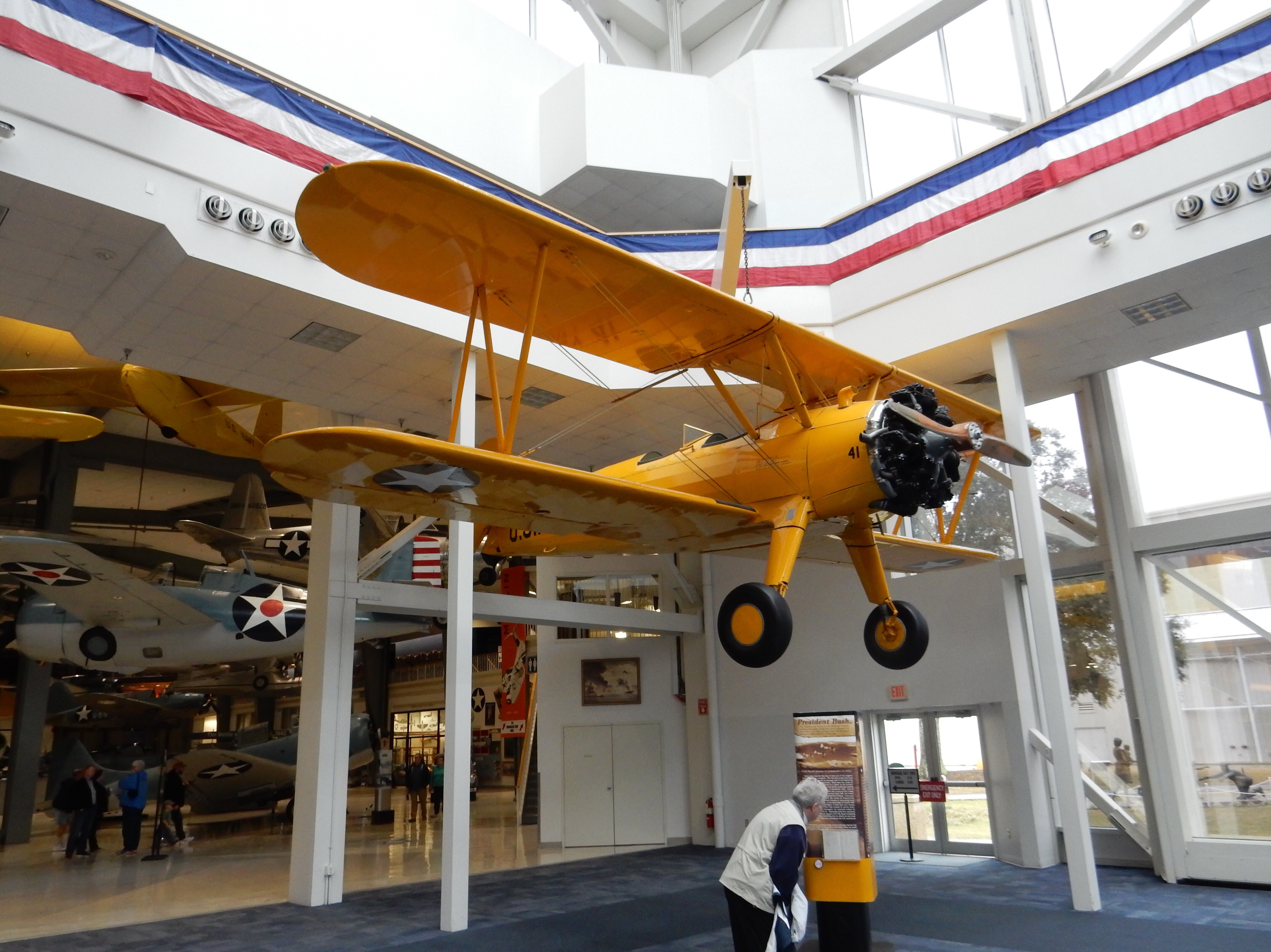
The Stearman Kaydet biplane George H.W. Bush practiced flying

The Stearman Kaydet biplane George H.W. Bush practiced flying

3. The training plane ( a Stearman Kaydet) used by President George H.W. Bush as a pilot trainee during WWII flown out of the practice field at Fort Snelling in Minneapolis, MN. This was an open cockpit biplane that he flew in winter which gave him strong memories of Minnesota.

The Blue Angels display

The Blue Angels display

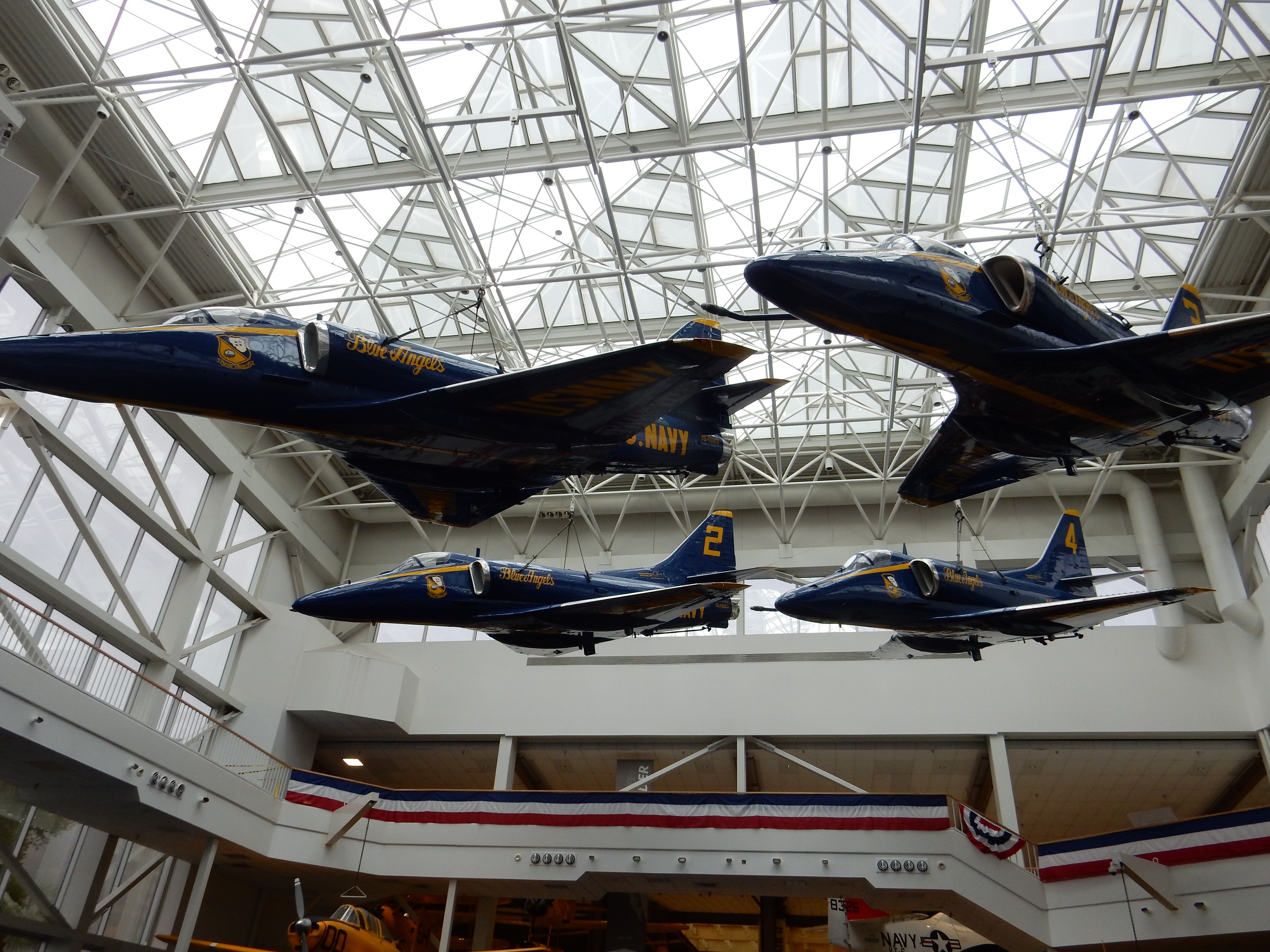
4. Four Blue Angels jets hanging from the ceiling, 60 inches separating one plane’s wings from another’s wings. This display has caused complaints about inaccuracy; usually the Blue Angels aim for no more than 18″ separating the wings of one plane from another plane.

Obviously with 150 planes and numerous videos and exhibits, we could not see everything. The web site does offer a virtual tour; I have not experimented with it yet but the website is listed below. Enjoy!

http://www.navalaviationmuseum.org/education/virtual-tour/

Ed and Chris Milton FL 9:45 PM

Categories: road trip, travel | Tags: | 1 Comment

2015 Trip One, Feb. 3, Florida in Winter

Feb. 3 Milton FL

I spent a pleasant time Tuesday evening reading portions of a book about two people who took canoe trips in various parts of the U.S.35 years ago. It was enjoyable to hear him describe places we have been to, Northern Minnesota, Buffalo River of Arkansas, Okefenokee Swamp and Suwanee River of Georgia and Florida.

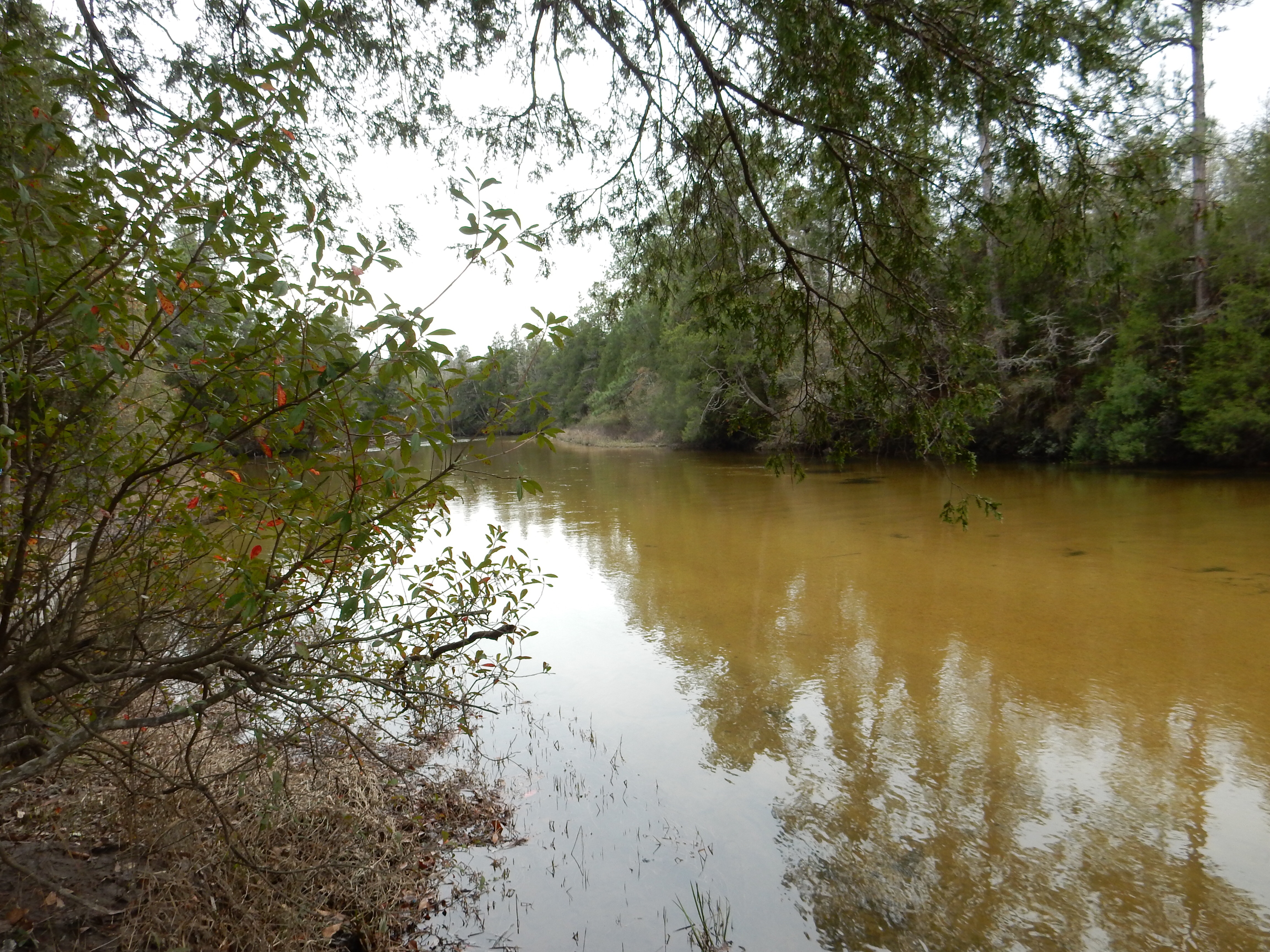
Coldwater Creek

Coldwater Creek

It was pleasant but it was also done since we are staying at Adventures Unlimited, a combination zip line/canoeing destination along with camping and lodging. My cell and WiFi hot spot did not work and more importantly, I overlooked the Adventures Unlimited WiFi access code in big print on the front of the three-ring binder that AU provides to all guests detailing its history, exciting adventures, housekeeping rules, etc. And here you thought we must be these highly knowledgeable travelers.

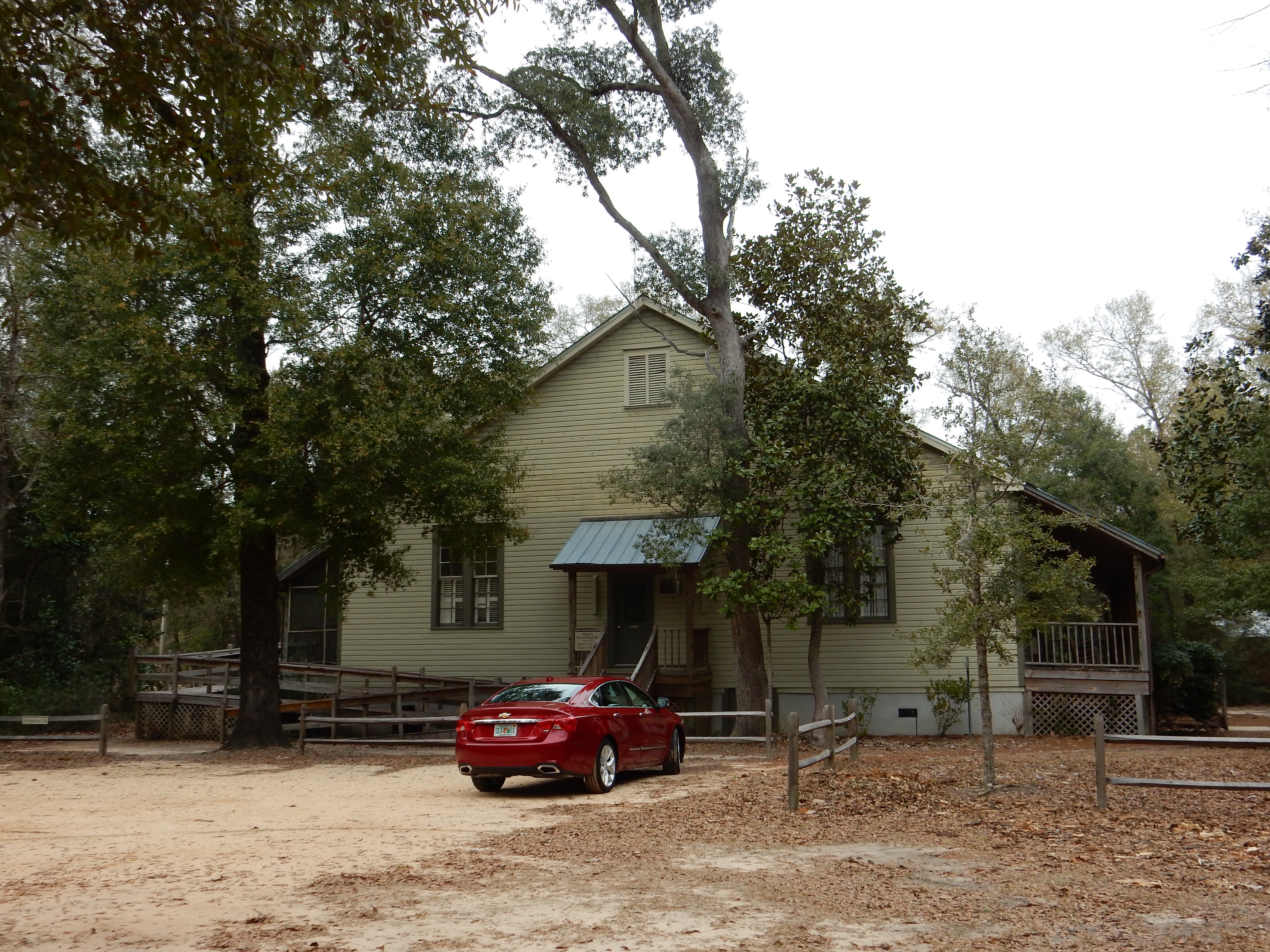
Schoolhouse Inn at Adventures Unllimited

Schoolhouse Inn at Adventures Unllimited

Adventures Unlimited is in its slow season, they say it gets busier after Valentines Day/Presidents Weekend. Right now we are the only overnight lodgers, more should be coming Thursday night. We are here for three nights. Today, Wednesday, is supposed to be rainy all day so we are going in to Pensacola, 30 miles away, to see the Naval Aviation Museum. Right now though, we are listening to throngs of birds chattering in the trees around our room in the Schoolhouse Inn, one of numerous lodging options here. Appropriately, our room has a theme of James Audubon, the great American naturalist.

So far, the trip has not been the typical Florida most people think of. On Tuesday as we drove to the upper panhandle area of Florida, the highways were busy with numerous semis and RVs. We saw longhorn cattle and dairy cows along the sides of the road, not citrus groves or beaches. It seemed like every state trooper in FL was out patrolling; it kept the Daytona wannabes to a minimum.

At the MSP airport we chatted with a minister on his way to a birthday celebration for a woman in her 90s. He had been to Pennsylvania once and was stopped by a state trooper there. Turns out the trooper’s nephew had been accepted to the University of Minnesota and seeing the minister’s MN license plates, he wanted to know what he thought of the U. They had a pleasant conversation at a restaurant at the next highway interchange. That is a good way to meet a state trooper.

Our waitress last night was originally from Washington State but her parents moved to FL years ago. She is engaged and the couple is building a new home which should be ready by the time they are married later this summer. She loves the area. Milton is what I might call an exurb. There are almost 500,000 people in the metro area but only 50,000 or so souls in Pensacola. The panhandle beach area has scads of small towns with congested beach front development but Milton (population 9000) is 30 miles north and in a basically rural area. There is a military base about 10 mille south of Adventures Unlimited as well as several more large bases in the panhandle area of Florida.

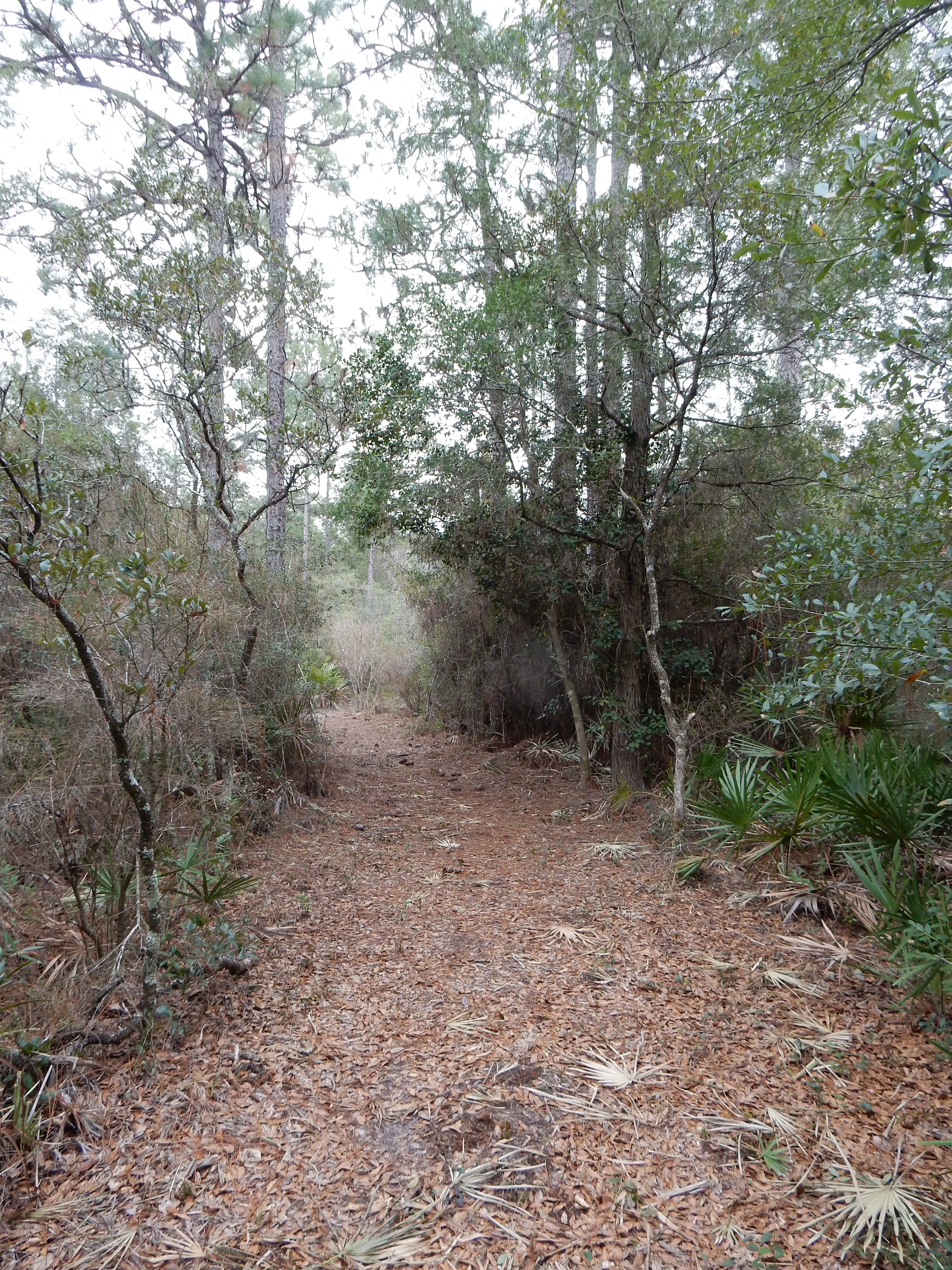
Nature trail at Adventures Unlimited

Nature trail at Adventures Unlimited

The Milton area is the world’s largest continguous longleaf pine/wiregrass eco system. Hopefully when we leave here we can better describe what that looks like.

Ed and Chris Milton FL Wed. AM 2/4/15

Categories: road trip, travel | Tags: , | Leave a comment

Blog at WordPress.com.