Monthly Archives: September 2014

2014 Trip Six, Sept 10, Fall in Canada and Deb and Rebecca’s Wedding

Wawa Ontario Canada Wednesday Sept 10

It was a day of water, most of it dumped by Mother Nature on our heads, the car roof, or the roof of the motel. Which in a way is slightly scary. We picked this motel, the Northern Lights Motel and Breakfast, for several reasons. We stayed in Wawa 42 years ago on our way back from Canada. That motel, the Agate Isle or some name similar to that, did not appear to be in business.

Northern Lights Motel in Wawa Ontario
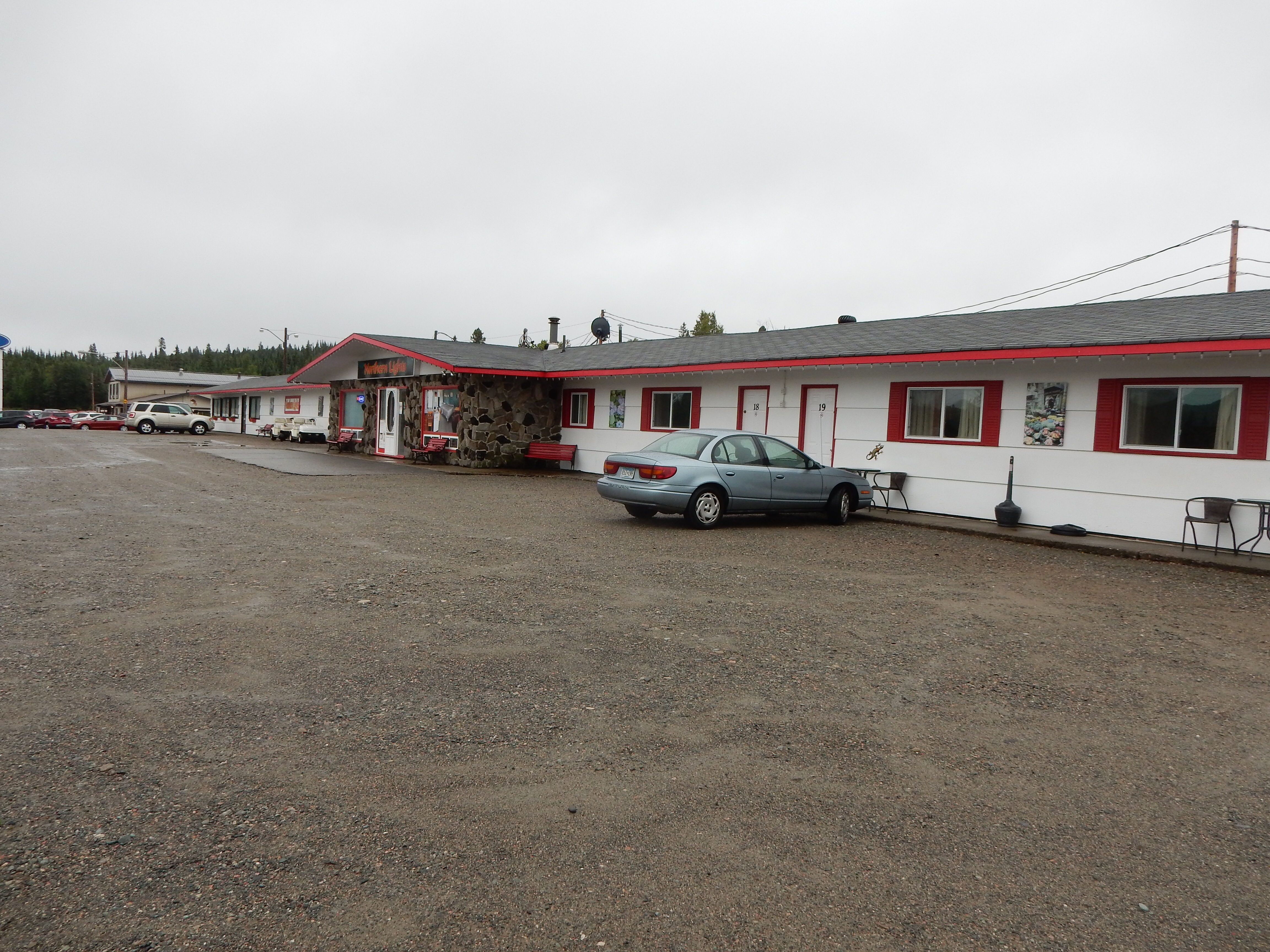
Northern Lights Motel in Wawa Ontario

image

This motel, owned by a husband and wife, had been cut in two in October 2012 after days of rain caused dramatic flooding that had ripped a hole in the Trans Canada highway that runs in front of the motel that took a week to fix. The couple lost over half of their units to the flooding. It seemed appropriate to support their efforts to persevere. After the flooding, it took them almost 10 months to be operation. So today’s rains generate thoughts of that prior tragedy. Web site is
http://www.nlmotel.com.

back of bathroom door

back of bathroom door

The hotel is a typical road side, old style motel. There are no national chain motels in Wawa. This motel is the only one that offers free breakfast. We have passed a number of former motels on the drive here, and in Wawa, that are boarded up. Tourism does not appear to be fully recovered. Our room has a number of kitschy touches; little sayings and graphics, most of them humorous or tongue-in-cheek, a rubber ducky in the tub, a cribbage board, etc.

Our plans were to stay a full day here, see some waterfalls and go hiking in a near-by Provincial Park. We put aside the long term hiking but tackled the other activities.

the Wawa Goose

the Wawa Goose

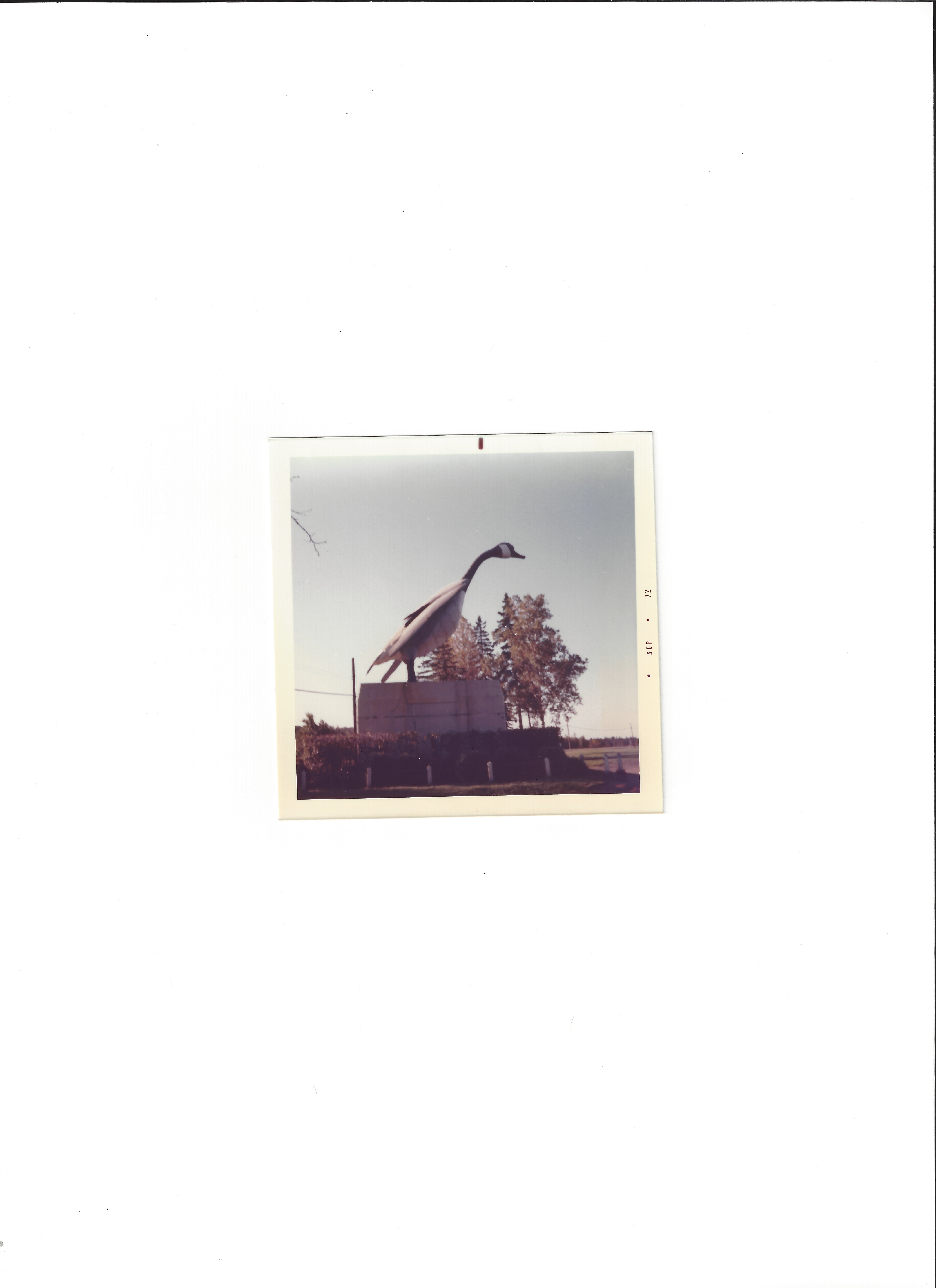
Our first stop was at the Visitor Center where the Wawa Goose is located. Wawa means wild goose in Ojibwe. We found out the current statue is rusted and a fund-raising drive to replace it did not raise enough money so it will come down in 2016. The economy is not great, most of the mines in the area have closed down. A forestry products plant closed within the last ten years. The population of 3,000 souls is about one half of its peak.

Wawa has been the site of First Nations people for some time and was also the site of a Hudson’s Bay and of a North West Company fort beginning around 1725 and lasting until 1863. The beginning of the 20th century brought gold and iron ore mining and later lumbering. The railroads across Canada went north of here by 100 miles and the town did not get a road connecting it to Sault Ste Marie until 1960. Until then, all transportation was via Lake Superior.

The guide at the Visitor Center informed us that the Agate Isle motel had changed hands but was still in existence as the Mystic Isle Motel. She also informed us that one of the two main falls was supposedly waterless; not due to drought but to the hydro power company evidently diverting the water. She was trying to discover when “the water would be turned back on”.

Before hitting the falls, we drove into downtown Wawa and stopped at Young’s General Store, a touristy type place where we managed to help the local economy a bit. Then we drove to the falls that always works since its water was not used by any hydroelectric plant.
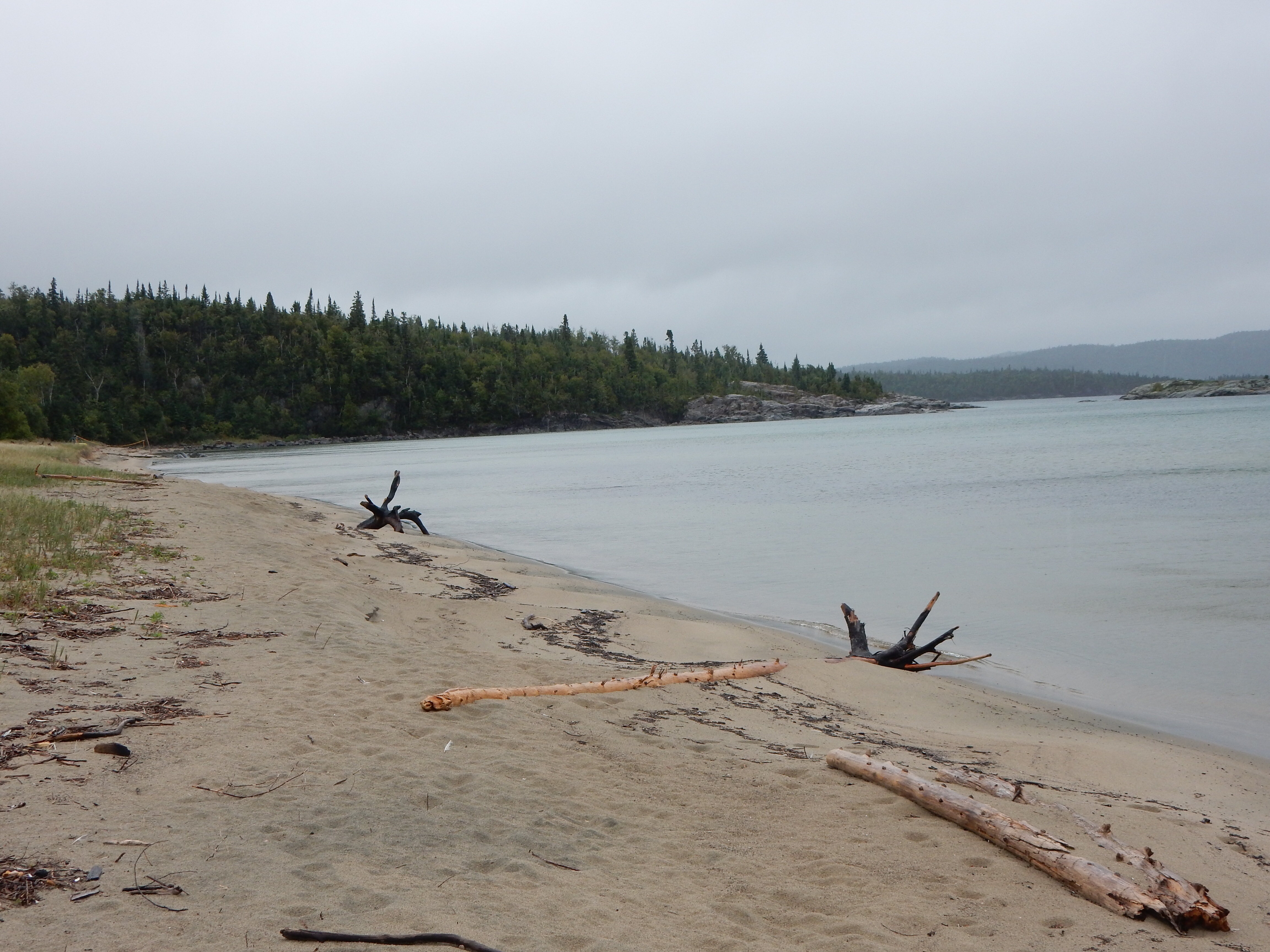
Sandy Beach

Sandy Beach

Silver Falls is down a dirt (Interpret that as muddy) road that leads also to Sandy Beach. We decided to visit the beach first. It was a short visit but the advertising was true. The beach was composed of soft sand and a beach grass restoration project was underway to preserve it. If it were warm, dry, and less breezy (it is raining, in the 40s and wind of 30 mph), it would make a great beach. I imagine though that the Lake Superior water is cooler than the water at Miami Beach although probably cleaner.
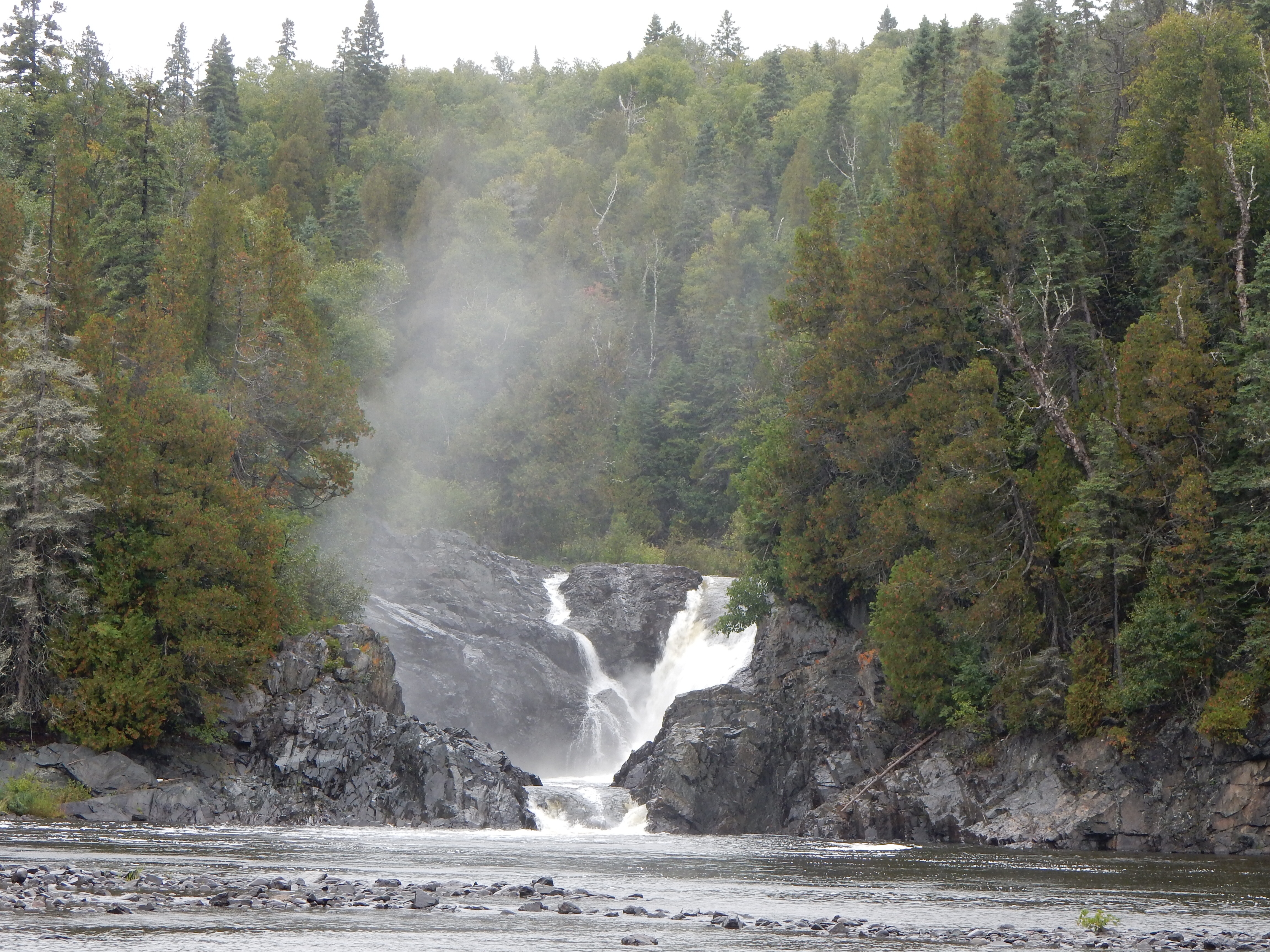
Silver Falls Wawa

Silver Falls Wawa

Silver Falls was pleasant, not huge and primarily seen from a distance. We had thought of walking the trail between Silver Falls and High Falls but the rain made what we could see of the trail as slick and muddy. We passed it by in favor of driving to the waterless falls (the Scenic High Falls of the Magpie River).

The High Falls are also reached via a gravel road, this time past a blueberry farm that frequently reminded us that this was their land, keep off of it, and stay away from the blueberries. It reminded me of the farmer in Lord of the Rings where Frodo and others would try to steal mushrooms.

The High Falls are quite nice-the water had been turned back on. They rush over rock outcroppings that produce fine spray, or was that the rain?, and provide great sound effects. We managed to record a short clip of the falls.

By now it was time for a late lunch in downtown Wawa. There were several options to choose from but our choice was okay. After lunch we stopped at an art gallery whose work we had observed at the visitor center. Tourist season is coming to an end, their shop closes down at the end of next week.

We tried driving around the area but the rain was more vigorous and the wind more energetic with the temperature in the low 40s so we returned to the motel and a nap and some cribbage which Chris won with the help of a 24 hand before heading out for dinner. We consoled ourselves with the fact that we still have lots of sightseeing days ahead of us and luckily we were not in Calgary which was getting more snow today.

Dinner was in downtown Wawa at a restaurant owned by a woman who just took it over this year after working with the previous owners for 11 years. Food was pretty good with a tasty double chocolate cake for dessert. The owner hopes business stays strong long enough to keep it open through October but traffic has been dropping sharply lately. Last year was the time for bridges in this area to be replaced but that construction business is not happening this year. Driving back to the hotel through the wind and rain did not do a lot to encourage a visitor to come back even later in the year either.

Ed and Chris 9/10 9:30 PM

NOTE We have added pictures and video to the two previous postings in case you viewed them as text only.
Categories: road trip, travel | Tags: , , , , , | Leave a comment

2014 Trip Six, Sept. 9, Fall in Canada and Deb and Rebecca’s Wedding

Wawa Ontario Tuesday Sept 9

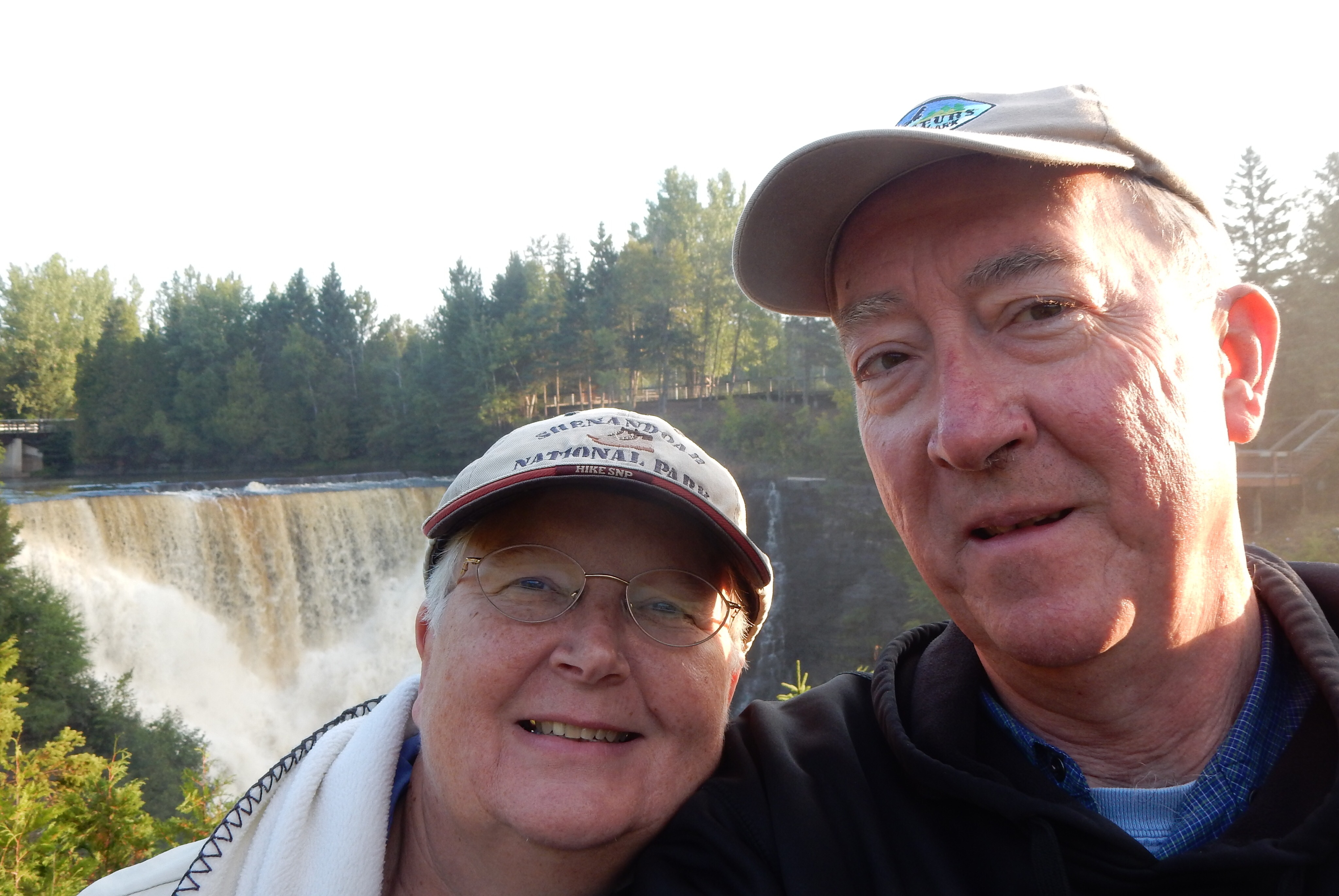
Chris and Ed at Kakebeka Falls

Chris and Ed at Kakebeka Falls

Prior travel habits are returning. Kakabeka Falls Provincial Park opens at 8 AM. We parked the car in the lot and our time stamped parking receipt said 8:07 AM. We were the first ones at the falls. Lucky move since the sky was mainly sunny until about 10:30 AM.

There is a hydro power plant on the river here. It began in 1906. Under an agreement, the power company maintains a minimum flow over the falls from late May to mid-October. The weekend flow is twice the flow on weekdays like today.

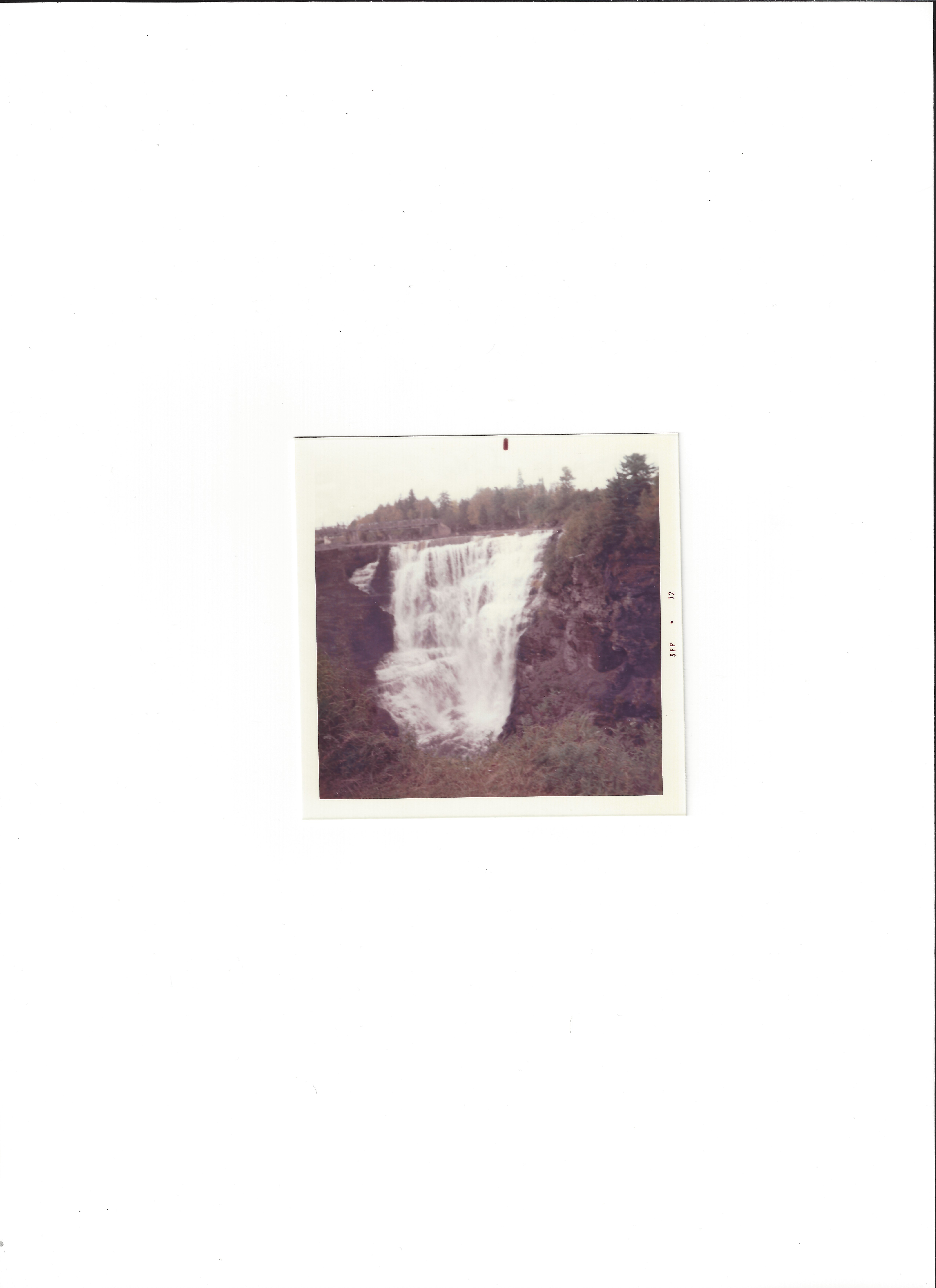
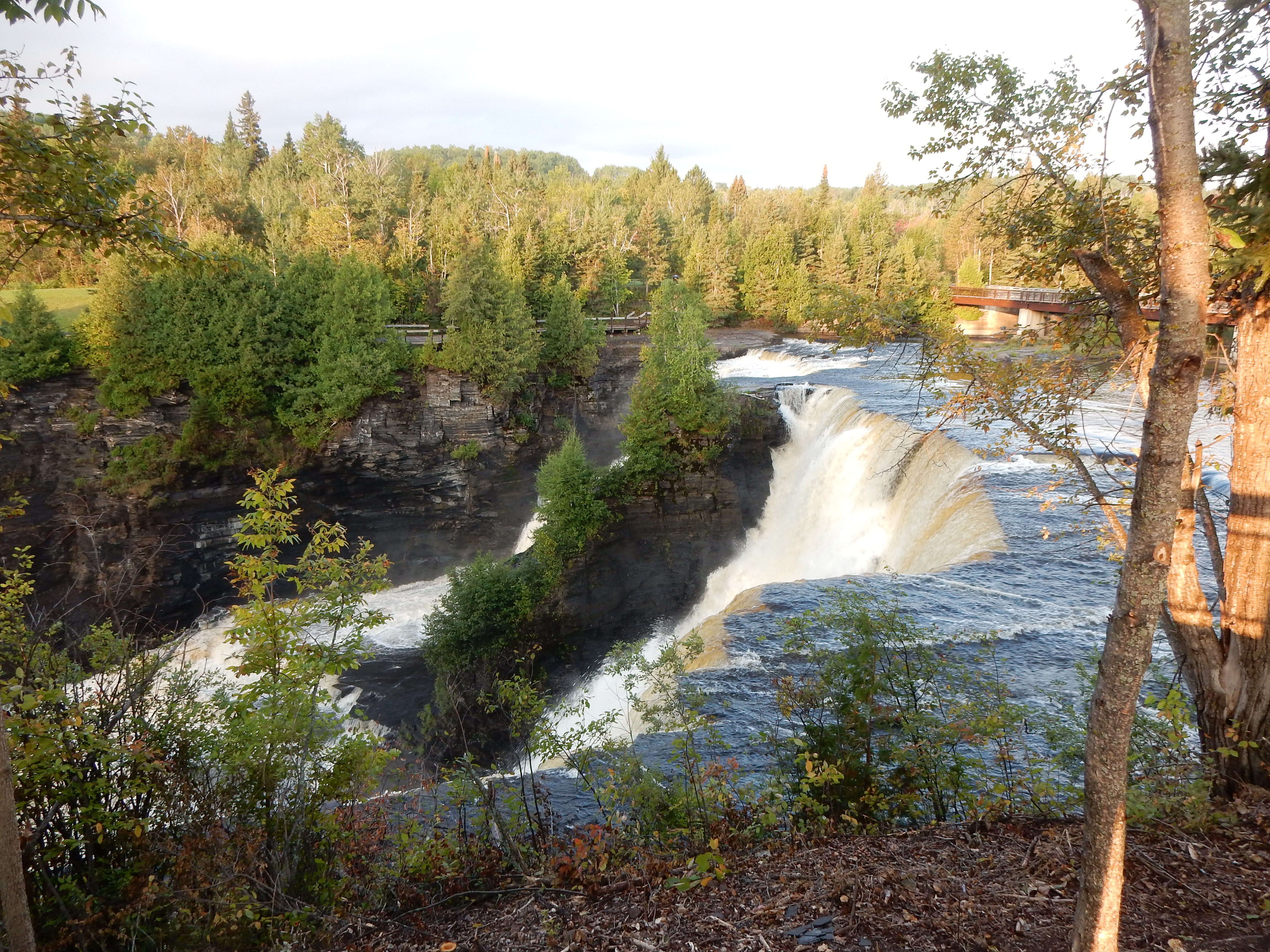
Even though we were here 42 years ago, the only thing I truly remembered was the name. The falls are loud and powerful. The Kaministiquia River feeds the falls which are the second highest in Ontario; Niagara Falls are 13 meters higher.

Kakabeka Falls

Kakabeka Falls

We were able to spend 90 minutes here observing the falls from various vantage points and hiking along the path the voyageurs used to reach western Canada. This portage trail was in operation before the shorter Grand Portage trail was used and then again after 1803 when Grand Portage was shut down due to the U.S. – Canadian boundary being placed north of Grand Portage (see yesterdays blog). Obviously Kakabeka Falls could not be canoed so a short but steep portage was required. The voyageur carried 180 pounds of goods when portaging. From here the voyageur ventured up to Hudson’s Bay, to U.S. Rocky Mountains, and to western Canada.

Kakabeka Falls from the downstream river view

Kakabeka Falls from the downstream river view

From Kakabeka we ventured to Fort William, a historical re-creation of the original North West Company fort. Fort William is modeled after the real fort as it existed in 1816; a peak period when 200,000 pounds of furs were shipped through here to Montreal for sale to Europe. We took a 90 minute guided tour of the site.

There were two rival fur trading companies in Canada. The North West Company and the more established Hudson’s Bay Company. Hudson Bay using the northern Hudson’s Bay route to the trade in western Canada; the North West Company using the St. Lawrence River, Ottawa River and Lake Superior.

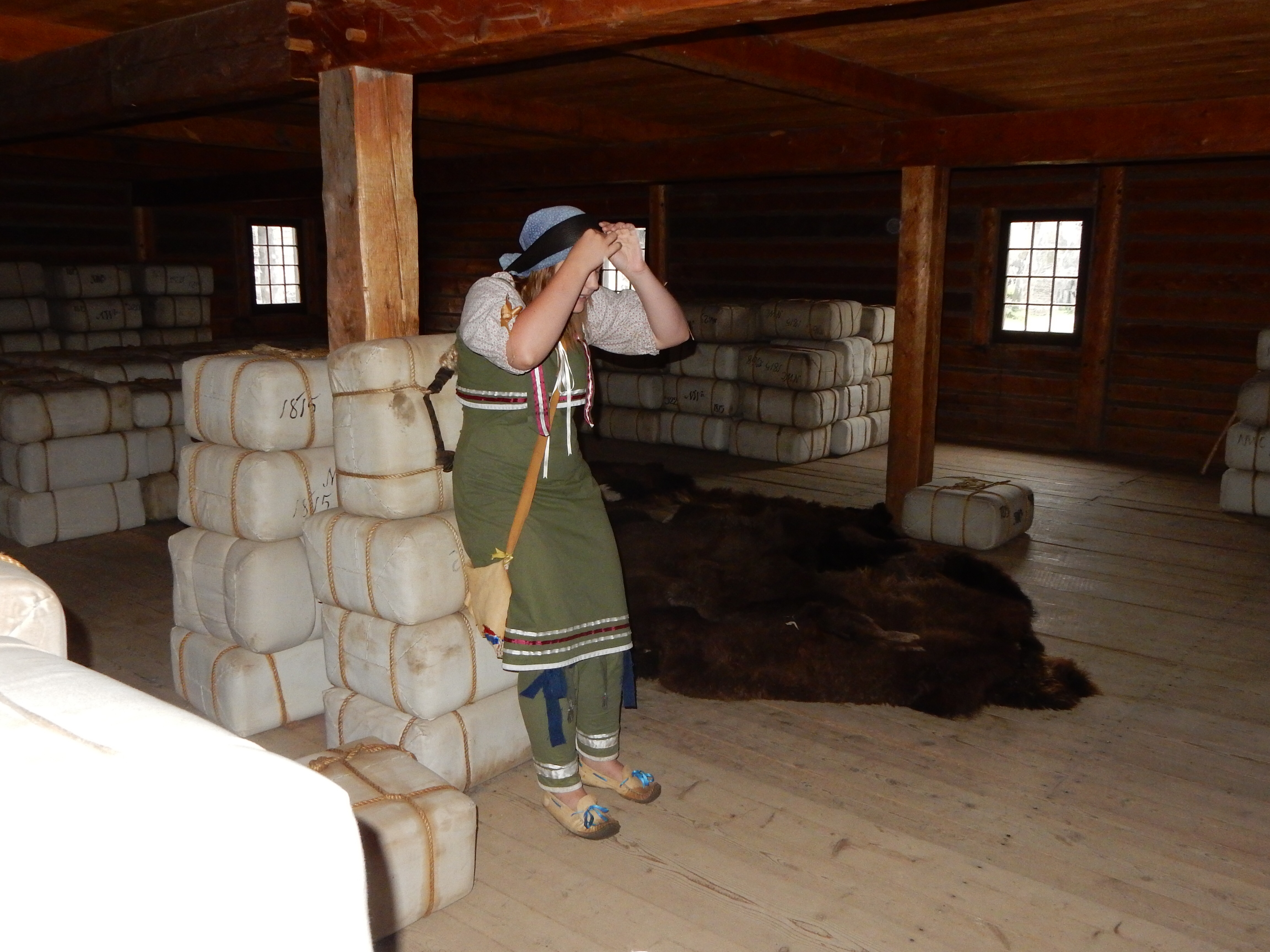
Tour guide demonstrating how one of two 90 lb packs were carried

Tour guide demonstrating how one of two 90 lb packs were carried

Two sets of voyageurs were involved. One type collected the furs from out west, using birch bark canoes, trading European goods like iron kettles and blankets for beaver, wolf, muskrat, weasel, squirrel etc pelts. A second type of voyageur in larger canoes transported the dried, dressed and packed pelts to Montreal via Lake Superior. I think it was a 6-8 week journey from here to Montreal. During the summer, the two groups summered here as goods were bartered and pelts dried,etc. A final party, the Rendezvous, was held in August before each group ventured back to its destination.

Ojibwe wigwam

Ojibwe wigwam

The Ojibwe, as at Grand Portage, were an integral part of this process and spent part of each summer year as the trading occurred. During the winter months, a small remainder of people kept the fort maintained. At Fort William, the commander was a physician (not quite a medical doctor) who ran the fort and dispensed medical care. Part of the voyageurs contract included free “medical” care for teeth, foot infections, and other ailments.

The fort was responsible for making canoes, keeping records, preparing pelts, feeding and keeping the peace among the voyageurs, etc. In 1821 it was closed as the Hudson’s Bay Company took over the North West Company. The two companies had been bitter rivals, part of that rivalry was most intense along the Red River of the North. Skirmishes from that area led to battles and court challenges that weakened both companies, leading to the merger.

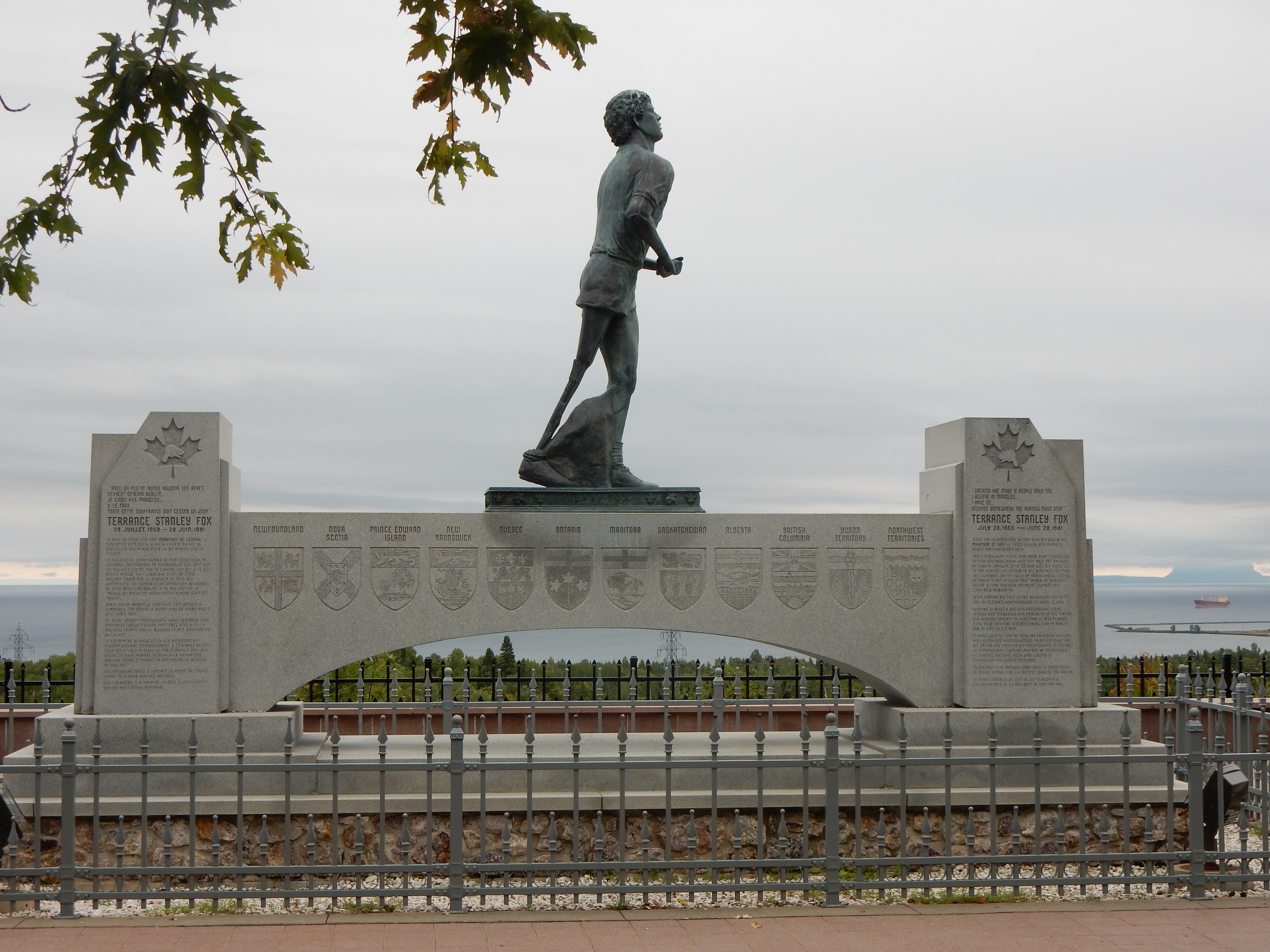
Terry Fox statue in Thunder Bay

Terry Fox statue in Thunder Bay

We left Fort William as the skies became grayer. We made one quick stop on the northeast side of Thunder Bay to the Terry Fox memorial. Terry Fox was a young Canadian man from British Columbia diagnosed with cancer. At age 18 in 1980 with one leg amputated, he began a quest to run across Canada to raise funds for cancer research. He ran the equivalent of a 26 mile marathons each day from April until June (143 days) when recurring cancer forced him to quit just outside Thunder Bay. He died in 1982 after his remarkable effort gained nationwide attention and large sums for research. There is a memorial to him here along a stretch of the Trans Canada Highway named the Terry Fox Courage Highway.

The drive to Wawa is along the Trans Canada Highway. The scenery is Lake Superior, rivers, lakes, forests, and rock. It seemed to us that every bridge between Thunder Bay and Marathon, a distance of 184 miles, was under construction. Since most of the road is a two lane highway, this results in multiple stops as only one direction can use the lane of the bridge in operation while the other side is being constructed.

We made two brief stops before arrival in Wawa around 8 pm. The first was at Aguasabon River Gorge to observe the river’s waterfall on its way to Lake Superior. The second was in White River Ontario to take a picture of the statue commemorating Winnie the Pooh. In 1914 a Winnipeg soldier on his way to WWI stopped in White River where he purchased a small black bear cub. He ended up donating it, naming the bear Winnie after his hometown, to the London Zoo where it was watched by author A.A. Milne and his son Christopher. The book Winnie the Pooh stems from this bear.

Ed and Chris Sept. 9 late (Boy you really appreciate high speed internet when you don’t have it. Internet tonight is not as slow as last night but still 4-5 minutes for one picture to upload. The video of the falls just may have to wait until another day–Added WEd. morning.)

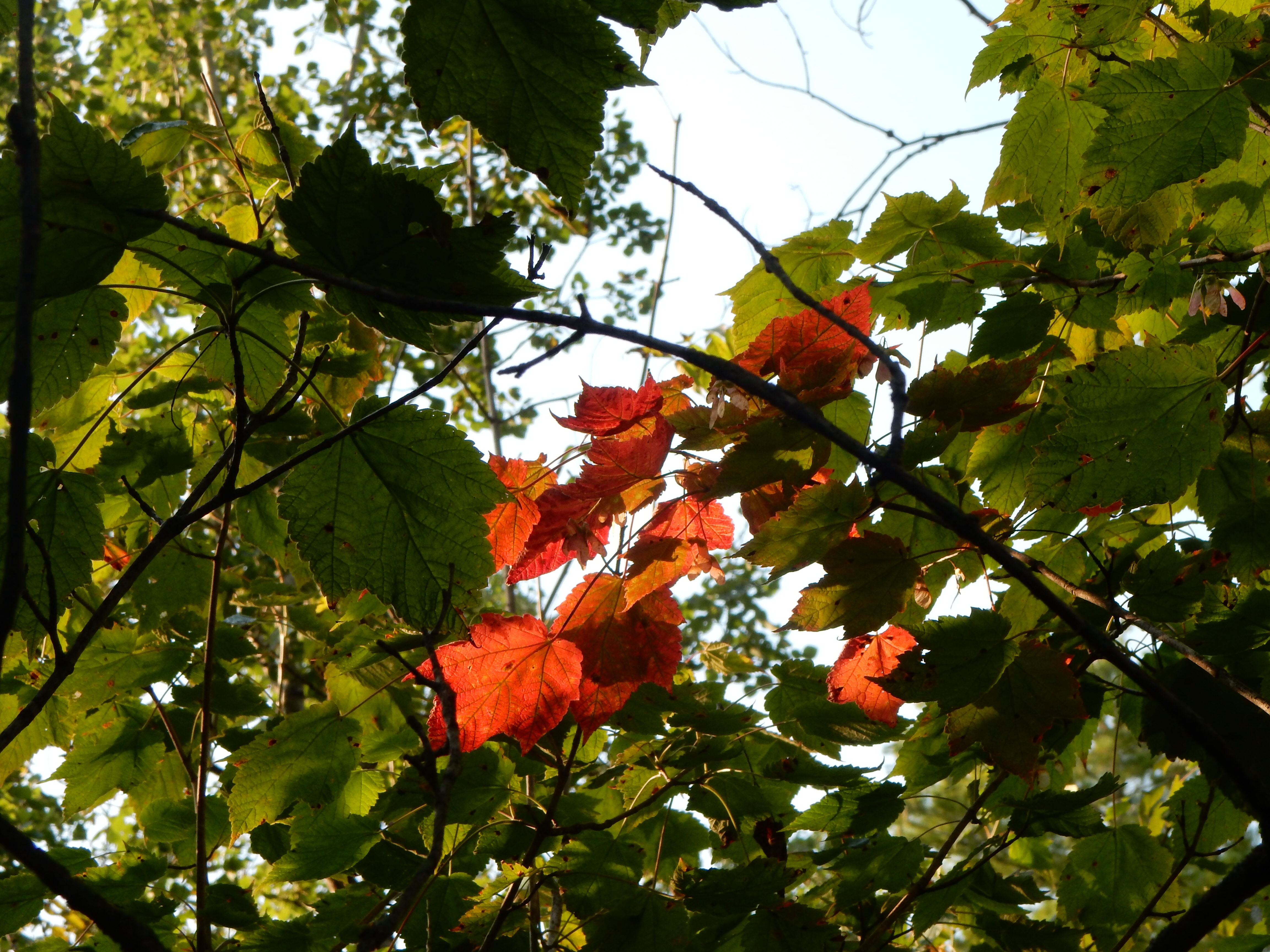
Fall color update: An isolated group of leaves

image

Categories: road trip, travel | Tags: , , , , | 1 Comment

2014 Trip Six, Sept.8, Fall in Canada and Deb and Rebecca’s Wedding

Thunder Bay, Ontario Monday September 8, 2014

Trip Six is underway, thankfully since we must have spent too much time at home between trips. We were not completely into our travel mode today. We got out of town an hour later than planned. The Finnish restaurant we were going to have dinner at in Thunder Bay closed an hour before we arrived. The planned hike to a falls just over the border took longer than expected and we decided to not complete it.

Not all was discombobulated though. We purchased Canadian money before leaving home. We had our hotel reservation for tonight as several people called or stopped at the hotel while we were checking in and they were told the hotel was full. We left our bear spray behind and did not have to declare it at Canadian customs/border. We knew we would be in the Eastern time zone once we crossed the border and thus lost an hour of travel time.

Sunday we had the car washed to start the trip on a nice note. But Highway 61 starting south of Grand Marais and for 10 miles into Canada was under construction, much of it a gravel surface that has eliminated any vestiges of cleanliness for the car.

Just a hint of the changing fall colors to come

Just a hint of the changing fall colors to come

As we begin this fall trip, the leaves are still green. We have observed a few shrubs starting to change colors. As time goes on, we expect to observe fall color changes in differing stages across the two countries.

First stop at Two Harbors MN

First stop at Two Harbors MN

Taconite plant in Two Harbors

Taconite plant in Two Harbors

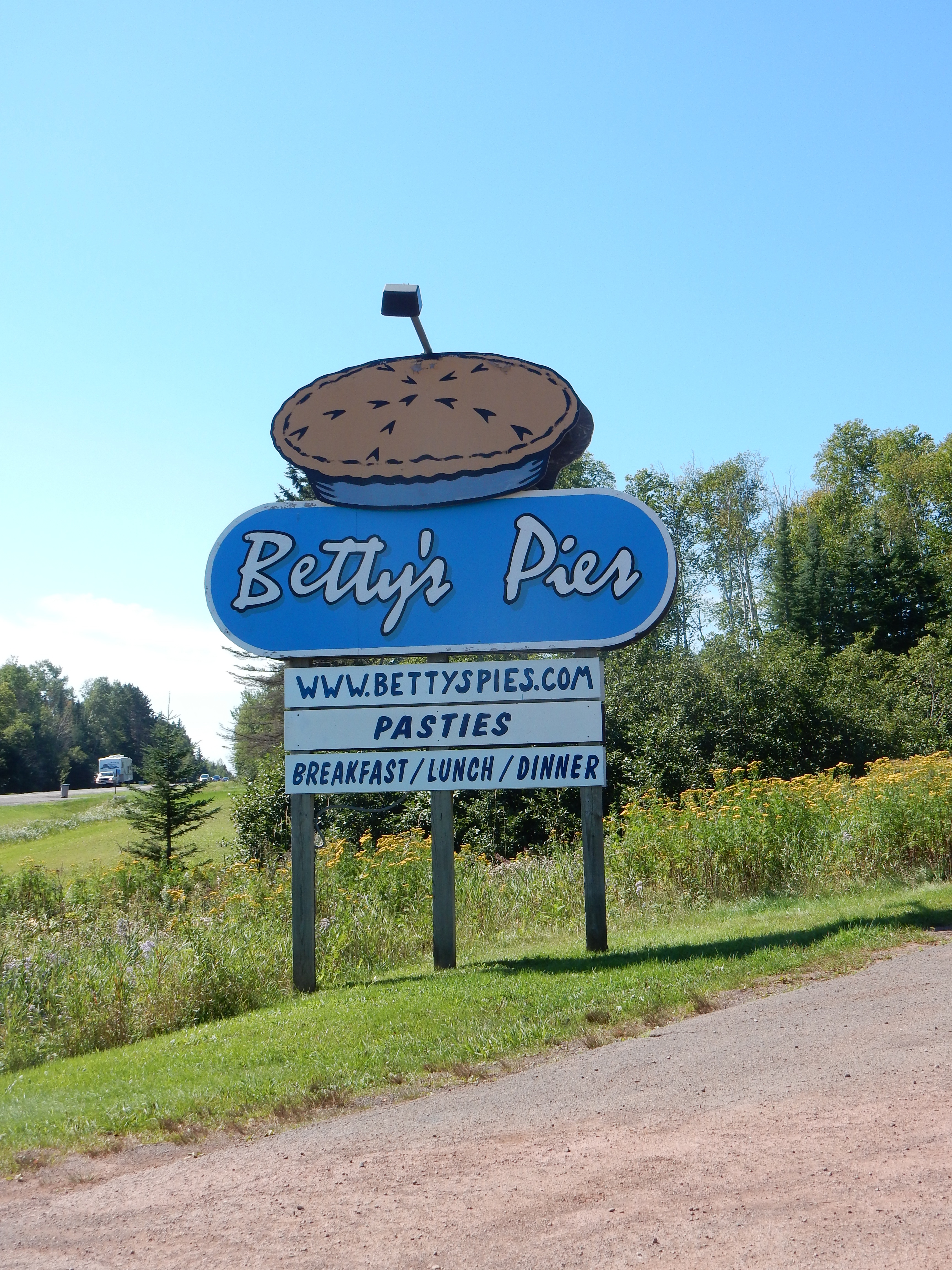
We made sure our first stop was valuable; we had lunch at Betty’s Pies in Two Harbors, a landmark on the North Shore of Lake Superior. Two Harbors has a nice overlook of the lake and a taconite processing plant courtesy of Cliffs Mining. I write that somewhat tongue in cheek. Those of you who are older might recall that Two Harbors was the site of the first taconite plant on the Iron Range, owned by Reserve Mining. A lawsuit in the early 1970s gained nationwide attention to the effect of the taconite tailings being dumped (legally at the time) into Lake Superior. After months of testimony, the federal judge gave the EPA permission to regulate and stop the lake dumping of tailings. There were long term economic and environmental ramifications, the case remaining notable to this day.

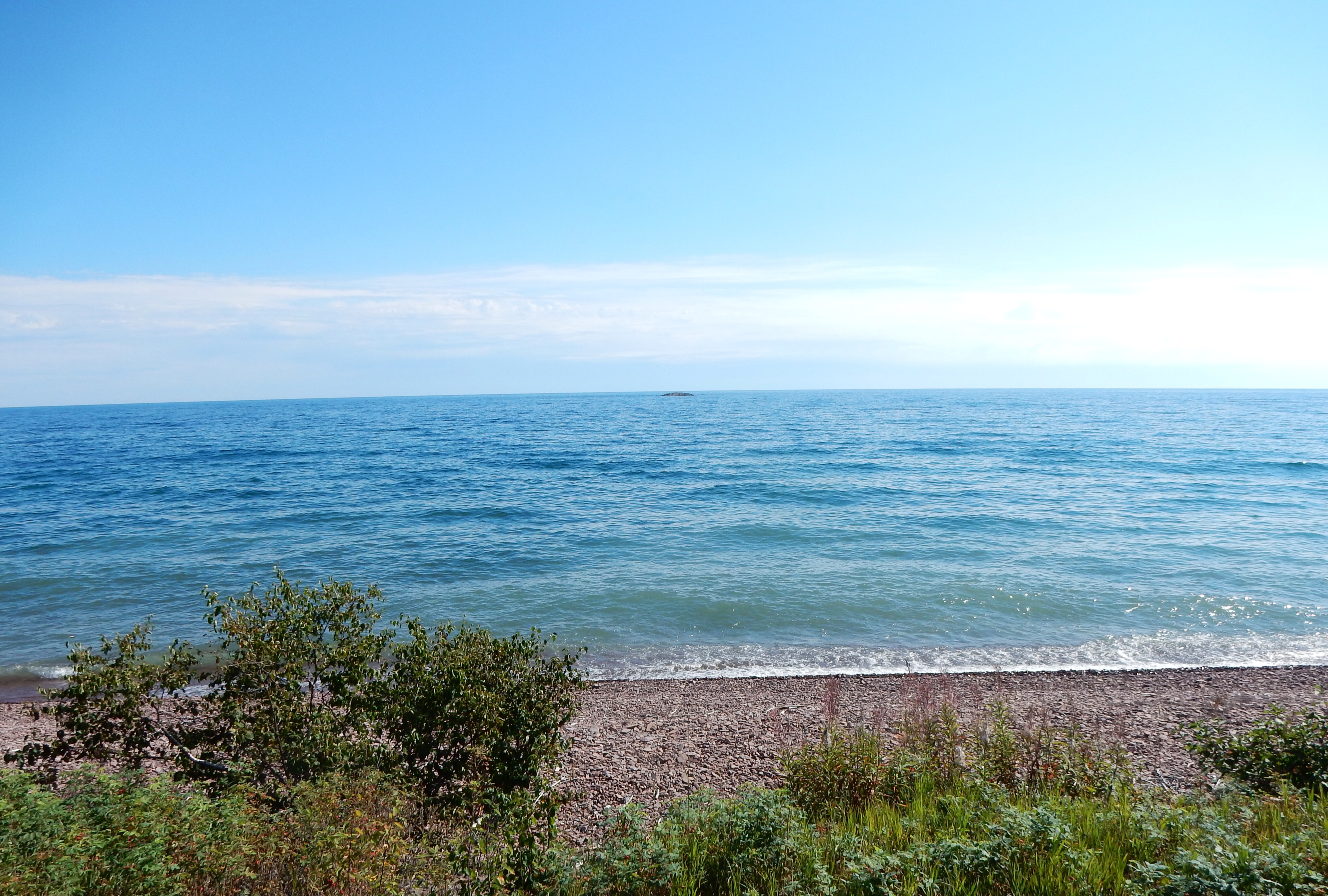
Lake Superior

Lake Superior

Lake Superior

Lake Superior

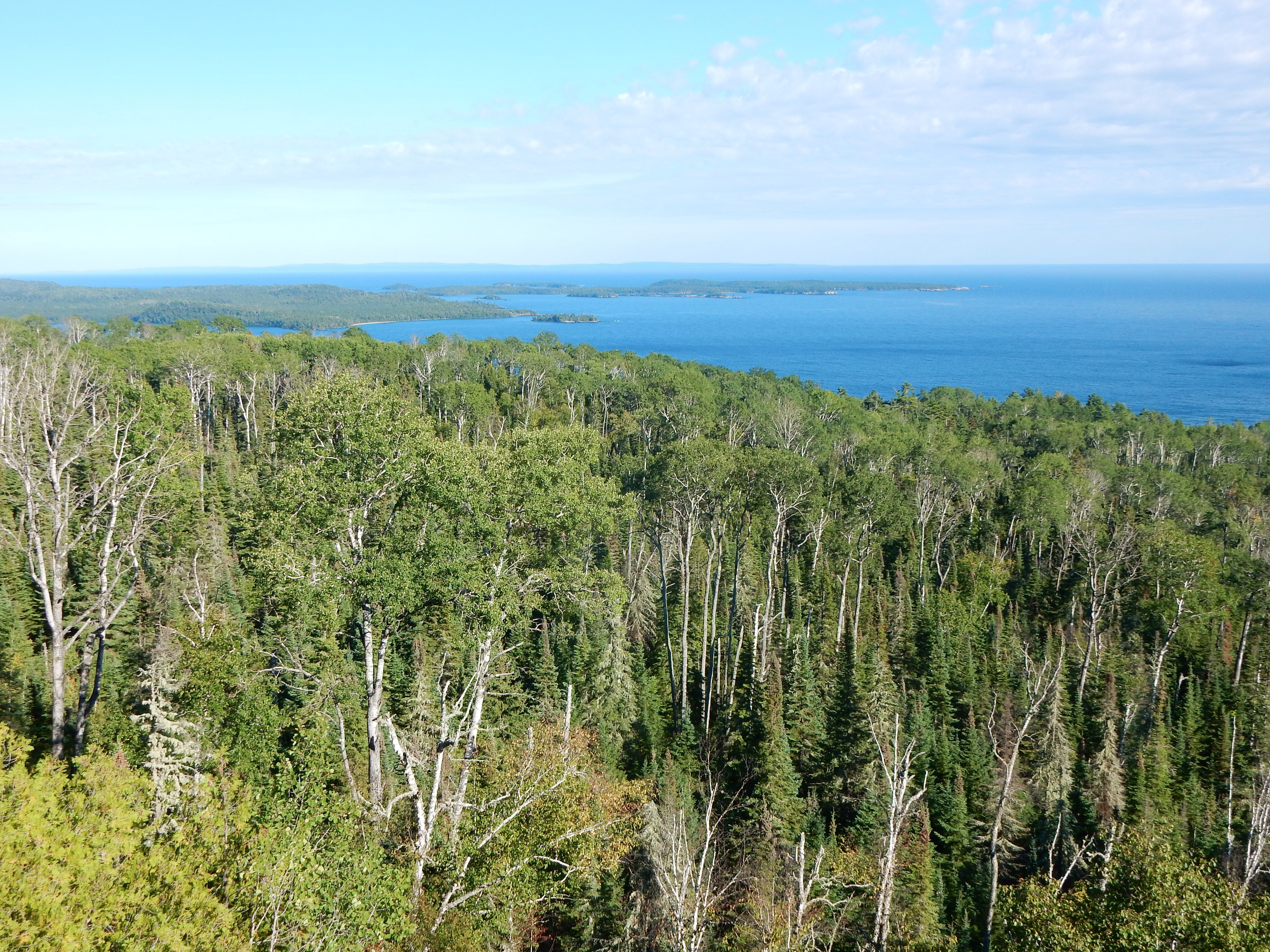
The North Shore of Lake Superior is not unfamiliar to us. The lake was beautiful today with blue water and skies. Tomorrow is likely to be stormy and the vast expanse of the lake creates dangerous weather for shippers.

The history of the area includes fortunes made and lost in logging and mining. The environmental movement preserved lakes and woods at the cost of high-paying mining jobs, a tension that still exists in the area today. Tourism has gained a strong foothold as those same forests and lakes attract tourists, fishers, boaters, hikers, etc. The North Shore Drive was one of the early scenic drives in American, drawing over 1,000,000 visitors a year before WWII. Split Rock Lighthouse is a well known landmark and numerous rivers fall over cliffs rushing to the lake creating myriad waterfalls.

Given the time change at the border, we only made one tourist type stop. We visited Grand Portage National Monument six miles south of the Canadian border. The name goes all the way back to the 1700s when fur trading was an important trade between North America and Europe. Trappers shipped beaver and other furs from western Canada, and the US, to Montreal for trans shipment to Europe. However, the Pigeon River which leads into the interior of Ontario has miles of rapids and falls before it reaches Lake Superior. An 8.5 mile trail portaged around the rapids and led to a sheltered bay at what is now Grand Portage.

Looking down at part of the bay at Grand Portage

Looking down at part of the bay at Grand Portage

The North West Company established a headquarters at Grand Portage to barter and ship the pelts east. However, after the U.S. won the American Revolution, the border with Canada was set at the Pigeon River. Grand Portage was in the U.S. and the headquarters had to be re-located into British-controlled Canada. The friendly and mutually economic transactions ended for the Ojibwe. U.S. control ended up with the Native Americans losing most of their land and left them with the usual unfulfilled treaties.

Tonight we are in Thunder Bay, about 40 miles north of the border. Thunder Bay has a population of about 110,000 people and was formed in 1970 combing the cities of Port Arthur, Fort William and two townships. After years of competition, local communities got together and requested the provincial government to create a larger, merged community. This far thinking act has been successful in attracting more educational institutions and businesses. We passed the large paper plant run by Resolute which provides the newsprint we observed at our tour of the Minneapolis Star.

Ed and Chris Sept. 8;

Categories: road trip, travel | Tags: , , | 2 Comments

2014 Trip Five, Summer in the Cities, September 4

St. Paul, MN Thursday September 4, 2014

(NOTE: The post for Sept. 7 may show up below this entry instead of on top of it. Ed)

This is probably the last post for Summer in the Cities. The first post of the next trip (2014 Trip Six) is already drafted. We are spending our last few days here getting ready for departure on Monday and beginning plans for Trip Seven to start sometime in early November.

Yesterday, Wednesday Sept.3, we visited two local museums. The first was the MN History Center of which we are members but wanted to tour the special exhibits currently on display. One was a display of photographs taken by Chris Chambliss, documenting the social scene of African-Americans in the Twin Cities during the 1960s to 1990s. Much of that time we were in PA and there were many photos of places we were not aware of.

Lincoln Logs from exhibit "Toys of the 50s, 60s, and 70s"

Lincoln Logs from exhibit “Toys of the 50s, 60s, and 70s”

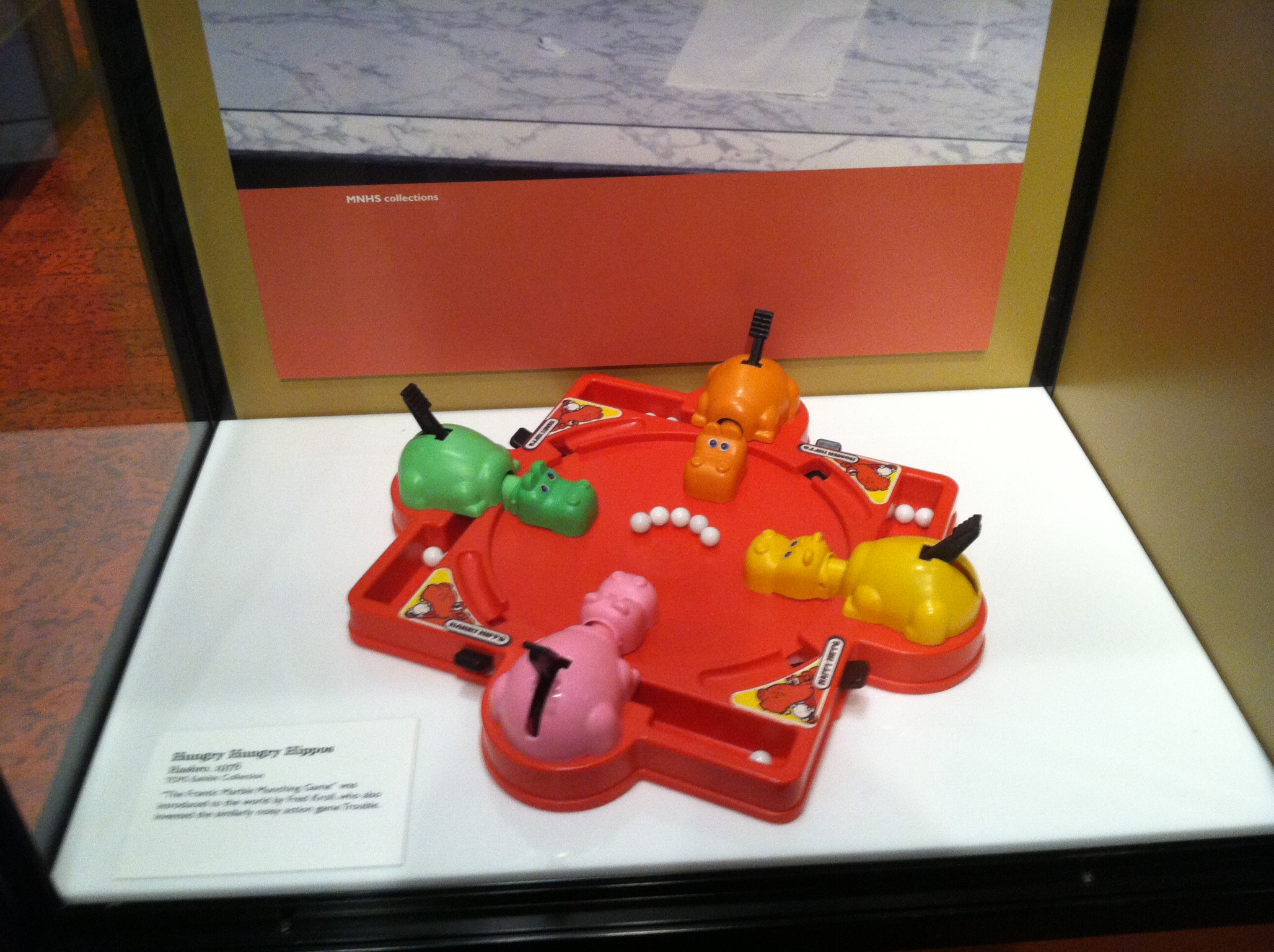
Hungry, Hungry Hippos

Hungry, Hungry Hippos

The next exhibit was titled “Toys of the 50s, 60s, and 70s”. The museum did a nice job of displaying toys and presenting hands-on displays for young children now to sample some of the toys. There were toys Chris and I played with such as Lincoln Logs, Matchbox cars, play ovens, etc.; and toys we had purchased for our daughters like Hungry, Hungry Hippos.

The third exhibit was a brief perspective on the War of 1812 but displayed in a thought-provoking manner by presenting it from the perspectives of Americans, Canadians (we invaded them, remember?), Native Americans and the British. How timely for us as we will be touring Montreal and Quebec, sites of battles from the War of 1812.

The final exhibit we explored was “Open House”, another unique display. The Historical Society had researched one home on the east side of St. Paul in what used to be called Railroad Island. As they described it: “This interactive exhibit brings to life the adage “if these walls could talk” by using a single, existing house-in the Railroad Island neighborhood on St. Paul’s East Side-as a window into the daily lives of people of the past. Stories of families, from the first German immigrants through the Italians, African-Americans, and Hmong who succeeded them, are told through rooms representing different eras of the house. Visitors become detectives, piecing together lives of the families who lived at 470 Hopkins Street.” The exhibit was well done; reminding one even as times change, there are patterns that repeat themselves in family lives.

After lunch we went to a small museum we had read about but never visited, one that does not receive much publicity; the NWA History Centre. This is a museum funded and run by volunteers who are primarily retirees and former employees of Northwest Airlines. It began before the lousy (my term) merger with Delta Airlines that robbed the Twin Cities of thousand of jobs as Atlanta took the HQ jobs. There are three rooms of displays and about 10 former employees were present when we made our visit. Vince from Purchasing and Anne, a former stewardess, were particularly enlightening as we chatted about the history and their memories. I remembered that there were planes called Stratocruisers, but never rode in one and did not know the second deck had cocktail lounges, sleeping berths and live organ music.

Various NWA aircraft with cutaway of Stratocruiser at left center

Various NWA aircraft with cutaway of Stratocruiser at left center

I thought maybe I had latched onto a hot topic for my Star Tribune reporter nephew to write about as they told us of a (former) employee who until last Saturday was still flying as a steward at age 90! Evidently the legal types had finally gotten nervous and figured they would pay to get him to retire, balancing age discrimination versus potential liabilities if anything should go wrong while he was working (this is all my conjecture). But alas for my nephew, one other Strib columnist was on the story and evidently the “retirement” package included a confidentiality clause. Down a little ways is the article from the Star Tribune on Sept. 2nd.

The other exhibits maybe were not as “hot” a topic as the retirement of an employee with 63 years of service but still were enjoyable. Northwest always did have uniforms that were stylish as one exhibit area demonstrated. A film goes back to the early days of Northwest which was founded as a mail carrier in 1926. I learned that the U.S. government unilaterally canceled air mail contracts in the 1930s, giving the job to the U.S. Army AIr Corps and threatening the economic viability of the airline. But, the military flopped at the job of delivering the mail by air and the federal government reversed its course, although Northwest had to re-establish itself as a new entity to meet guidelines for the new mail carrier contract. The early days of delivering mail by air between major cities were quite dangerous as the exhibits here told and reinforced the information we received at the Charles Lindbergh home in Little Falls a few weeks ago. We purchased some reading material and took home some free written material also.

From C.J.’s column in the Star Tribune on Sept 2, 2014 about Bob Reardon
Delta Air Lines’ oldest flight attendant Bob Reardon was retired Saturday.

“Was retired” seems appropriate because I’m hearing the 90-year-old didn’t want to go.

“I can’t talk,” Reardon told me when I went to his St. Paul residence Monday to find out what’s going on here. Reardon started flying Oct. 1, 1951, when what is now Delta was Northwest Orient.

On Bruce Retrum’s Facebook page, featuring a profile photo of him with Reardon, some are expressing dismay. Retrum, who identified himself as a flight attendant, posted a letter Aug. 25 saying, “The company announced the retirement of Robert Reardon effective August 30, 2014. Rather than a date to celebrate, it marks the end of a 62-year, 8-month career marred by a seven-month stressful and unfortunate ordeal. Robert’s pending retirement was not of his choosing. Robert has made it very clear that he does NOT want any ‘celebrations,’ ‘parties’ or ‘events,’ planned or hosted by the company. They would be inappropriate and insincere. Instead, a gathering of friends, family and supporters will be held to honor and reminisce with Robert when he is ready to do so. The world will most likely never have another ‘Robert-like’ icon.”

Ladyskywriter.com noted in 2013 that Reardon set a Guinness World Record. “Go to page 69, the Oldest category, where you will find Mr. Reardon at the very top of the page with the heading Oldest active flight attendant. Congratulations, Bob! This is a huge honor,” wrote Anne Billingsley Kerr, also known as Lady Skywriter.

Kerr flew with Reardon from 1956 to 1960, when she was forced to quit because she got married — something not required of men.

“I loved flying with Bob,” Kerr told me Monday. “I have a small chapter about him in my book, ‘Fujiyama Trays and Oshibori Towels.’ He is such a unique person. I don’t know what happened at Delta, but he did turn 90 in May and evidently he retired not voluntarily. We all hold him in such high regard it would be just awful if anything blew up on him.”

Although a couple of Reardon’s colleagues concede that he should have retired before now, they object to the way Delta Air Lines handled this departure. Airlines usually make big deals of these kinds of employee milestones. Reardon’s colleagues wanted him feted on a final flight, accompanied by a family member; then, as the plane pulled into the gate, the fuselage would have been drenched by fire trucks, which is a way the end of in-flight crew members’ careers have been honored.

Reardon’s colleagues are also appalled that the big bad airline is allegedly gagging a nonagenarian.

While his co-workers threw a big “All About Bob” party for him for his 60th year of service in 2011, some thought airline management was low-keying it with just cake and hors d’oeuvres. At the time he was purser on the three-day Tokyo flights.

“I’m not surprised,” Reardon told me then. “I don’t know of anyone else who is senior to me at Delta.”

Ed and Chris Sept 3 Noonish

Categories: road trip, travel | Tags: , , | Leave a comment

2014 Trip Six, September 7, Fall in Canada and Deb and Rebecca’s Wedding

Sunday September 7, St. Paul, MN

(NOTE: Some of you may have seen this post already. It was inadvertently sent out late last week and I removed it from the web site unitl now (Sunday night) but those with email notification may have seen it.Sorry for the confusion.) ED

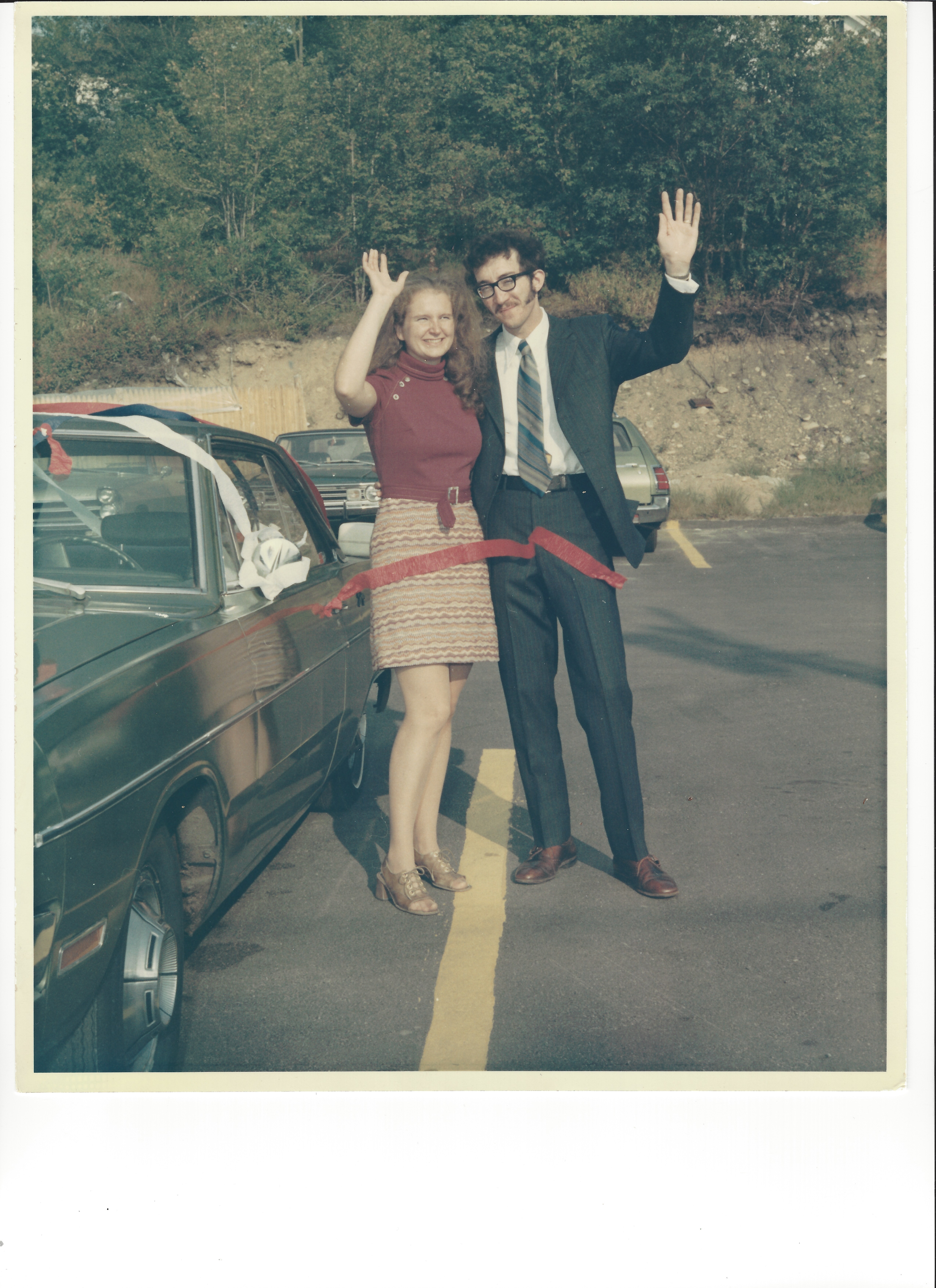
2014 Trip Six begins tomorrow, Monday September 8th. In some ways it is the reversal of a trip Chris and I took together 42 years ago. On September 9, 1972 we were married in Southington CT and spent our six day honeymoon driving home to Minnesota via Canada. We stopped in Montreal and drove through towns like Sudbury, Huntsville, North Bay, Wawa and Thunder Bay before coming home along the North Shore of Lake Superior in Minnesota. The North Shore is home to numerous waterfalls and we stopped at most of them. Chris asked how I would remember which picture related to which waterfall and I blithely answered, “Oh, they are obvious.” But once the pictures came back from being developed, there were quite a few I could not identify. Just the first of many times I have had to admit the error of my ways in 42 years of marriage. Oh, well, good for the soul.

Ed, Chris and our Dodge Dart as we begin our honeymoon, Sept 9, 1972

Ed, Chris and our Dodge Dart as we begin our honeymoon, Sept 9, 1972

Canadian goose statue in Wawa ON in 1972

Canadian goose statue in Wawa ON in 1972

Kakabeka Falls west of Thunder Bay ON in 1972

Kakabeka Falls west of Thunder Bay ON in 1972

Actually the primary purpose of this trip will tie in to a wedding as daughter Deborah and her partner Rebecca will be married in October, also in Connecticut. Our drive to the wedding will include overnight stops in Thunder Bay, Wawa, North Bay and Montreal. This time though, we will spend five nights in Montreal plus six nights in Quebec, three nights in Ottawa, and nine nights in the Adirondacks. We have not been to the Adirondacks previously as a couple. Chris’ parents honeymooned at Lake George in the Adirondacks and took Chris and Kathy (Pre-Lucien) there on one vacation. We will have to see if Santaland has changed since Chris was there decades ago. All in all, 2014 Trip Six is scheduled to be 47 days. It will be a great combination of renewing old memories and discovering new ones.

Map of Sept-Oct 2014 Trip to Eastern Canada and US.

Map of Sept-Oct 2014 Trip to Eastern Canada and US.

Ed and Chris Sunday September 7 8:45 pm

Categories: road trip, travel | Tags: , | 2 Comments

Blog at WordPress.com.