Monthly Archives: September 2014

2014, Trip Six, Sept. 20, Fall in Canada and Deb and Rebecca’s Wedding

Saturday, Sept. 20; Quebec City

Our last full day in Quebec brought a return of overcast skies with drizzle and cool temperatures. We countered by not walking around a great deal.

The Museum of Civilization was our first stop, arriving there shortly after it opened at 10 AM. The museum does not allow pictures so we can not brighten your day with images from there. As mentioned yesterday, the museum had a fire here on Monday and one wing on both floors was closed. In compensation, the entrance fee was reduced.

We spent three hours touring three exhibits; a history of Quebec, an exhibit on Olympic gods, and a show about the creative world of animated film makers of the Canadian National Film Board. The Olympus exhibit was pretty lame and boring. The history of Quebec display was much better, but suffered (for me) with the fact that most display plaques detailing specific objects were placed about two feet from the ground. Large plaques summarizing the history of a time period were at a readable height, though.

The animation show had numerous screens showing clips created by artists of the Canadian National Film Board (see more at http://www.nfb.ca). The Film Board’s purpose is to educate and stir discussion about items of interest to Canadians and to educate non-Canadians about Canada. The NFB has received over 70 Academy Award nominations, the most for any organization outside of Hollywood. There were sections on humorous films. Then there were clips from films that were dark or simply confusing. We had never heard of the National Film Board previously so this show was definitely illuminating even if it did not create a desire to run out and buy videos of their work.

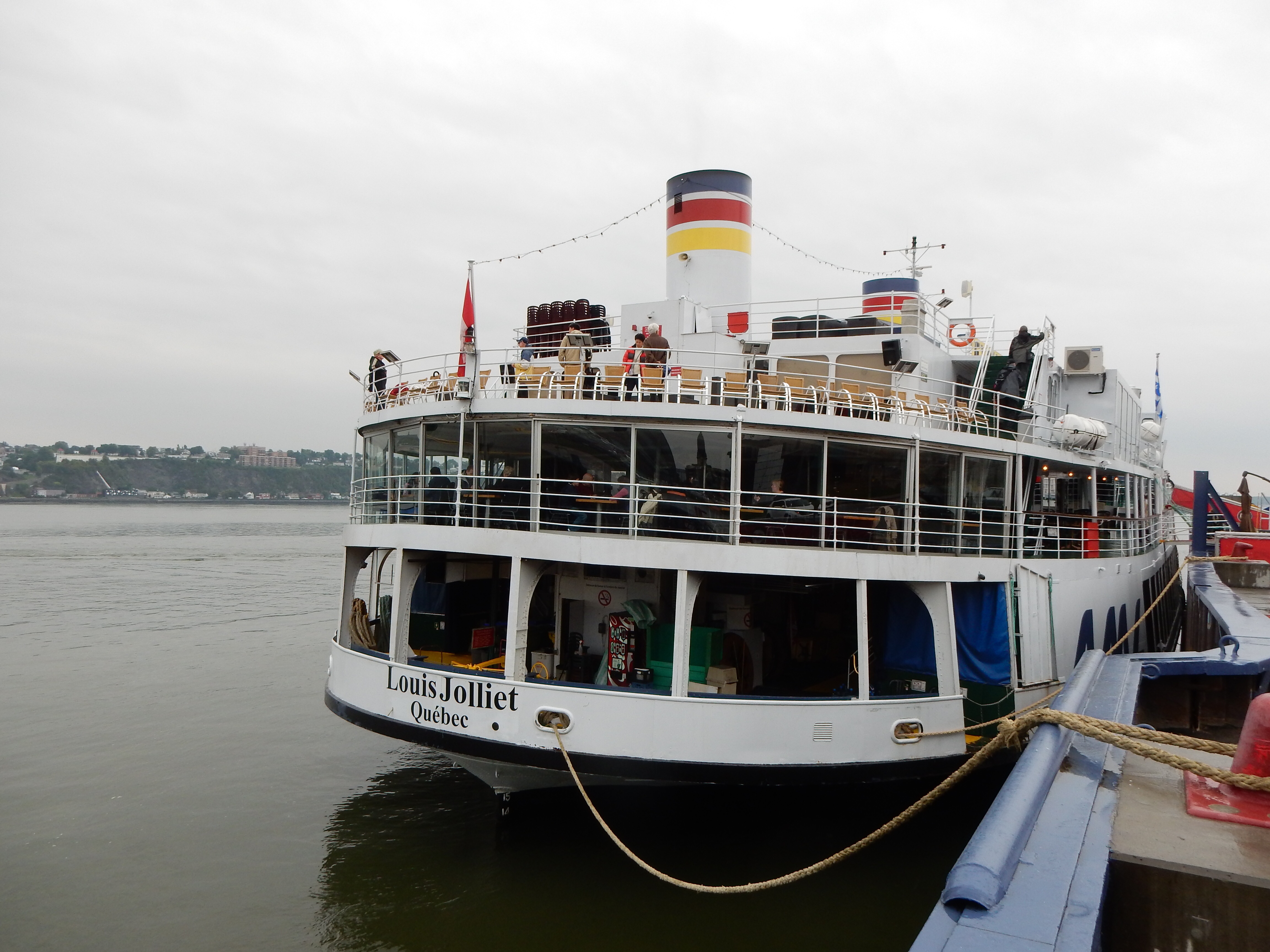
Our cruise ship

Our cruise ship

Montmorency Falls as seen from the St. Lawrence River

Montmorency Falls as seen from the St. Lawrence River

We had a quick lunch at the museum cafe and then walked down to the quay for a cruise of the St. Lawrence River on the Louis Jolliet. The rain and gray skies did not lead to dramatic pictures but we had an enjoyable time-sitting inside the boat. The tour guide gave his spiel in French and English. The tour goes down river as far as the Montmorency Falls and provides a better view of the Ile d’ Orleans. The island splits the St. Lawrence into two channels, the north one (by Montmorency) is shallower.

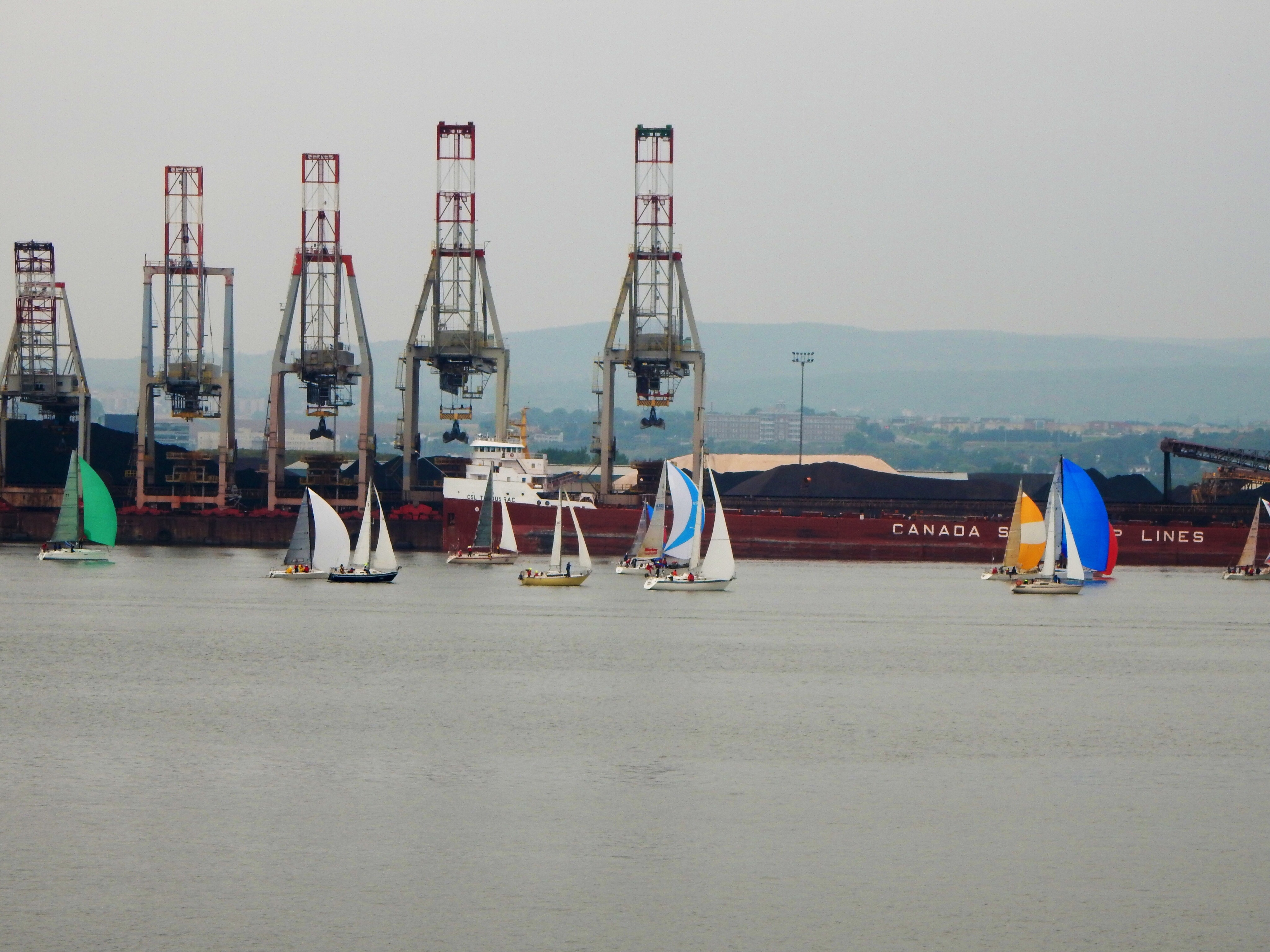
Sailboats along the industrial portion of the river

Sailboats along the industrial portion of the river

Cruise ships in Quebec Harbor, Chateau Frontenac in  background

Cruise ships in Quebec Harbor, Chateau Frontenac in background

This section of the river is about 10 miles from the intrusion of salt water and tidal effects. Besides providing river level views of the ramparts and Chateau Frontenac, we pass by ship building and shipping terminals. Quebec has Canada’s second largest number of grain elevators, after Thunder Bay. Sailboats dotted the river, frequently passing very close by our boat. We sat next to two women from CA who were touring Montreal and Quebec as part of a Road Scholars trip.

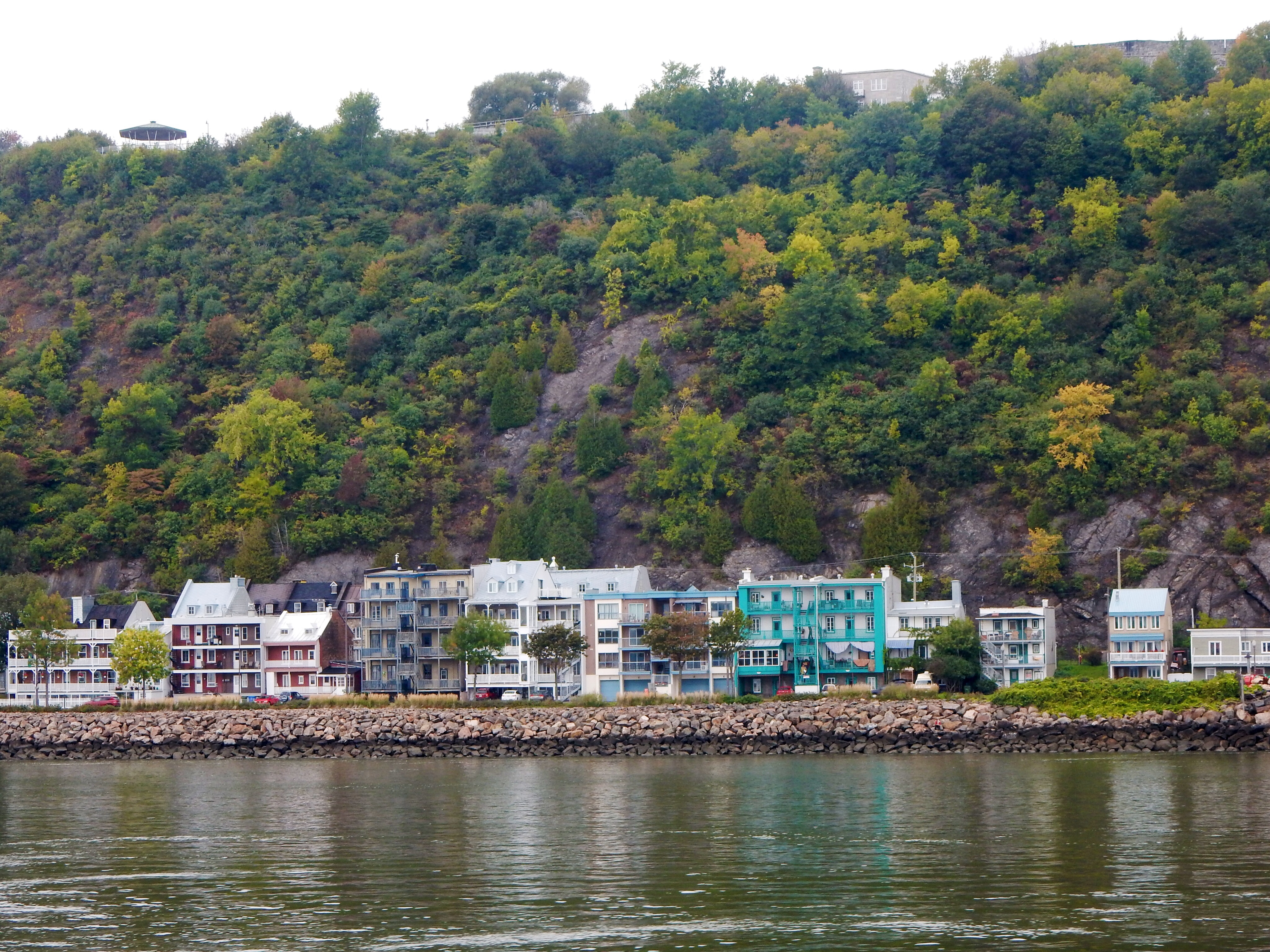
Lower port area below the ramparts

Lower port area below the ramparts

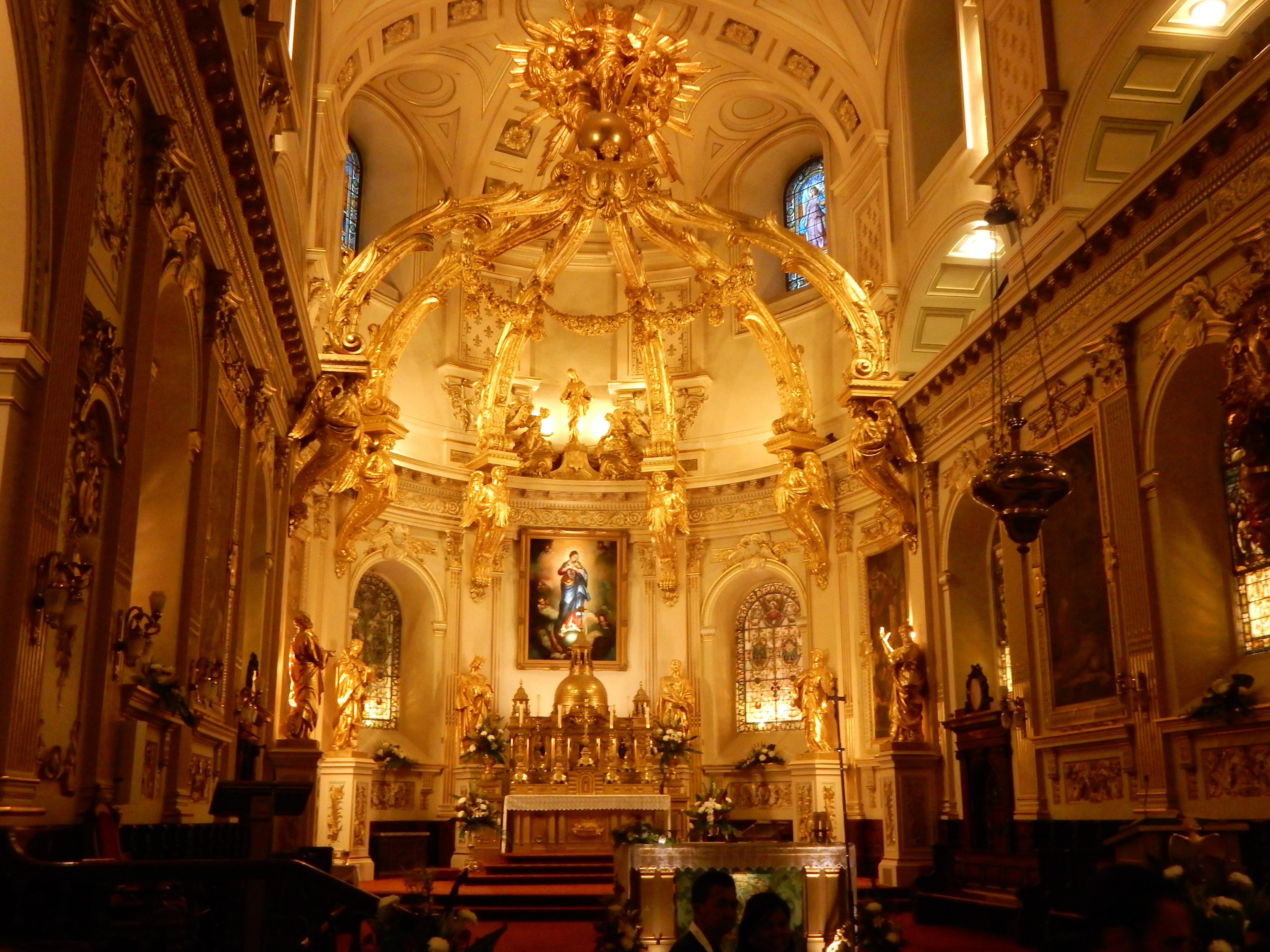
After a pastry and tea stop, we headed to Notre Dame Cathedral for 5 PM Mass. Our journey was interrupted by a two person busker team performing in front of the Cathedral. Or at least trying to perform. After drumming up business from passerby’s, the start of the show was delayed by 10 minutes of bell ringing from the Cathedral, announcing that services would start soon. Then after five minutes of performance, the rains began. We decided that was a message to drop the show and get into church. We were only a few minutes late. Not a major loss since the Mass was entirely in French.

Notre Dame Cathedral

Notre Dame Cathedral

Rains increased this evening and we decided to pass on the outdoor art show around Place Royale. Tomorrow we head out for Mont Tremblant in the Laurentian Mountains for three nights.

Ed and Chris 9/20/14 8:30 pm

Categories: road trip, travel | Tags: , , , | Leave a comment

2014 Trip Six, Sept. 19, Fall in Canada and Deb and Rebecca’s Wedding

Quebec City, Friday Sept. 19

Sunrise comes to Quebec City

Sunrise comes to Quebec City

Today’s challenge? Walking.

We spent the day just wandering around Quebec. We chose a day also chosen by two cruise ships and lots of school children. Most of our time was spent in Lowertown, a section of the city by the river where the first landings by Europeans occurred. This is an area between the ramparts of Old (walled) Quebec and the river. It is accessed from our section of the city by either a funicular or one of several long staircases. We chose the staircases.

One of our sites to see was the Quebec Museum of Civilization, only to discover that it experienced a fire Monday before we arrived in the city. If we knew French, we would probably have read about it in the local paper. Mainly smoke and water damage and it should re-open tomorrow.

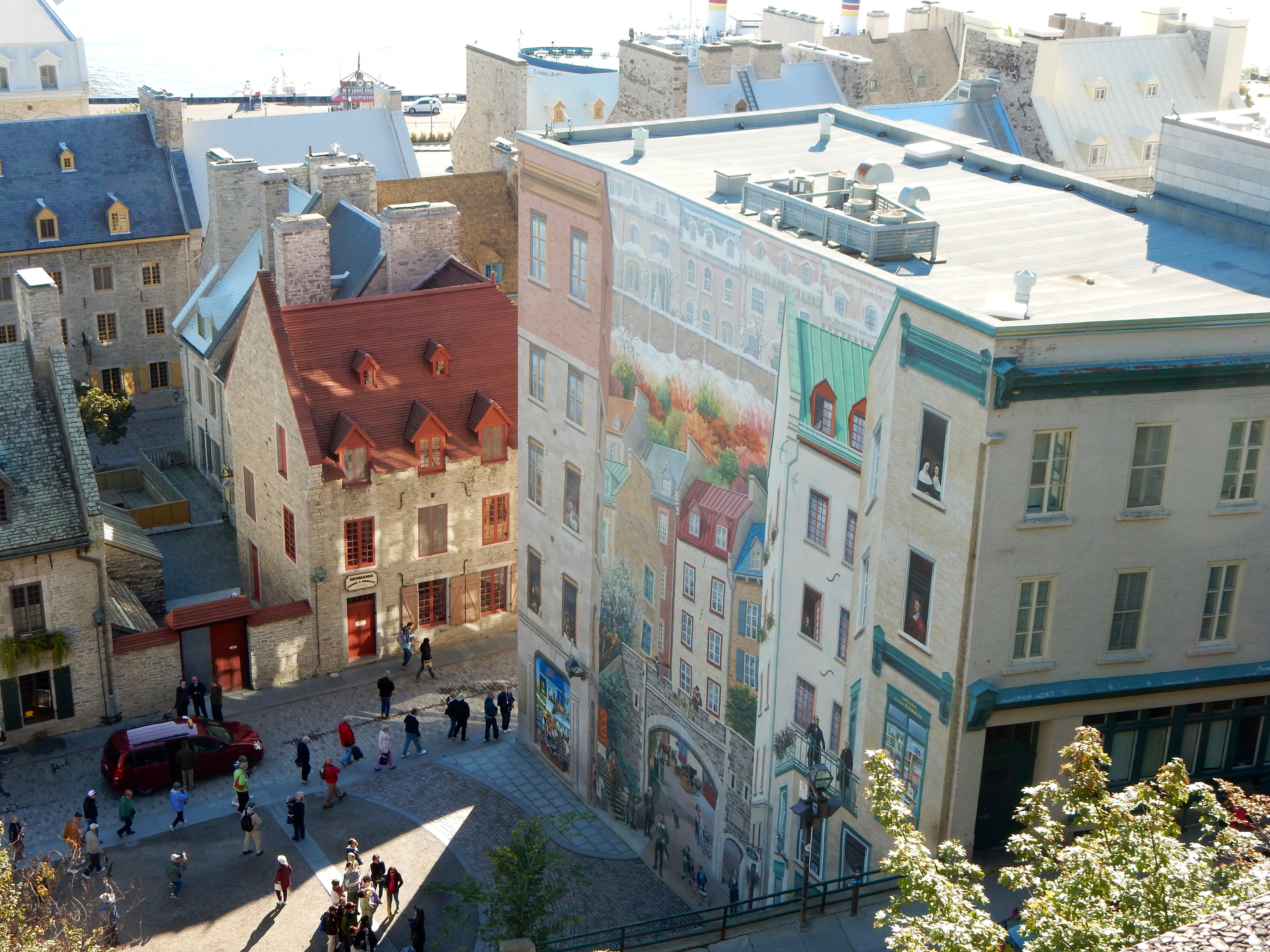
Looking down at Lowertown and mural of 400 years of history

Looking down at Lowertown and mural of 400 years of history

Quebec is a city of statues and commemorative markers. The UN Food and Agriculture Organization was founded in Quebec City in 1945 and it has a statue of a woman holding food from around the world. There is a children’s park with a historical and nautical theme. Two major wall murals are in Lowertown. One depicts 400 years of history and one is dedicated to the shipping experience and its people.

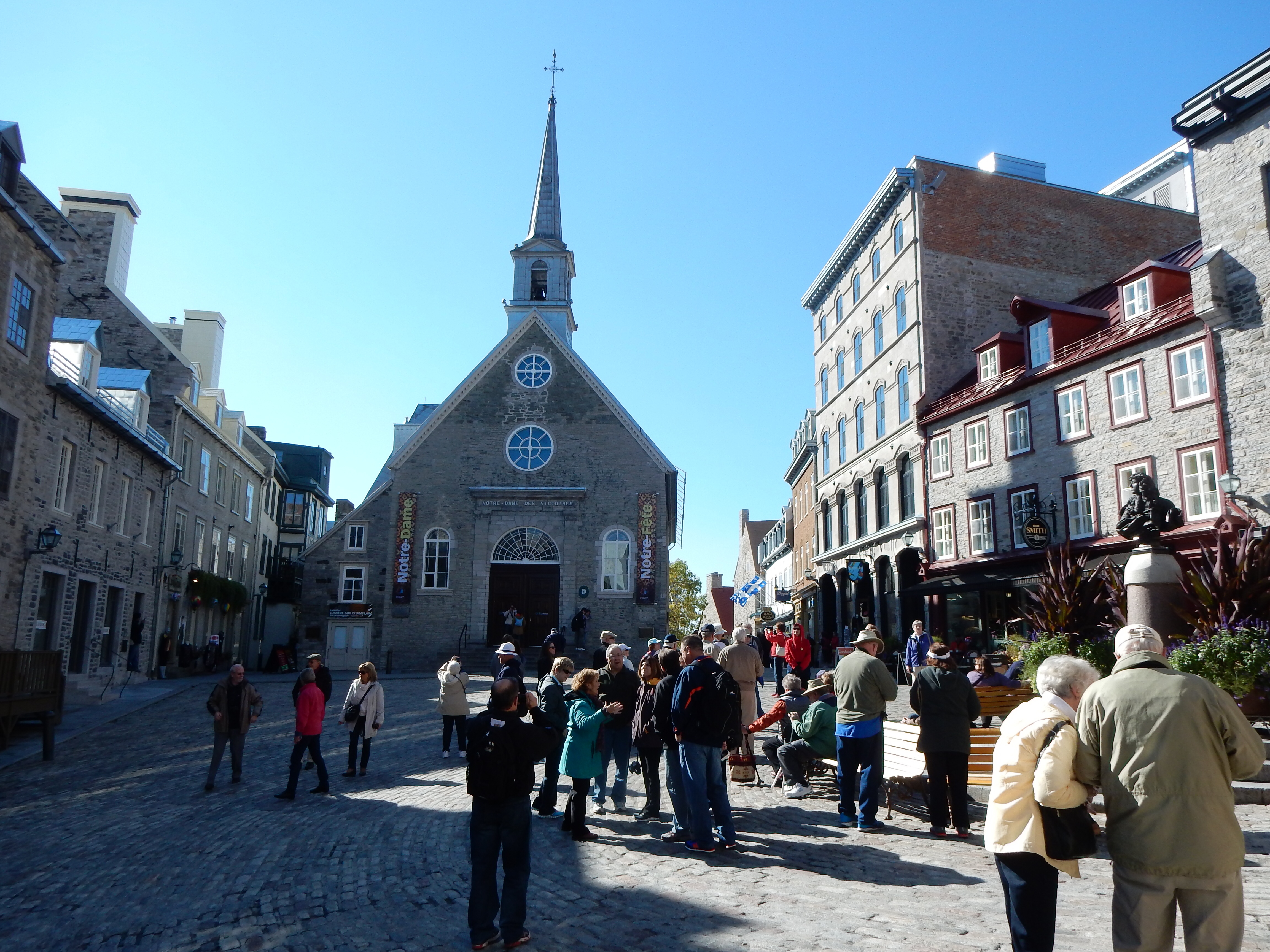
Another Notre Dame church, this one the Eglise Notre-Dame-des-Victoires, was open and we went in. This church is smaller than many of the others we visited. The name comes from the two times the women of the city prayed to Mary to save the city from English invaders. The English were defeated and the previous church title changed. No mention was made of the final British attack which was successful. The church is built on the site of Champlain’s first outpost here in Quebec, Place Royale as it is called now.

Place Royale-cradle of French civilization in North America

Place Royale-cradle of French civilization in North America

Place Royale leads to numerous other streets, cobblestone usually, with buildings dating back hundreds of years. Some sections are pure tourist with restaurants and souvenir shops alternating store fronts. In other parts, “normal” businesses predominate. The tourist area has more foot traffic but all parts of Lowertown were busy.

Lunch was at Panache, a Quebecoise restaurant that allowed us to eat even though we did not have reservations. It is located in a former 19th century warehouse with beamed ceilings. Like many other restaurants, the meal is 3 course, including appetizer, main course, and dessert. All is done in style with excellent presentation and taste. On the street outside are markers showing the river’s shoreline in past centuries; higher than it is now. I did not note a reason for the change, I presume urban build-up of the area.

Rue du-Petit-Champlain

Rue du-Petit-Champlain

The Quartier Petit Champlain is a section of Lowertown where the artists and merchants of the area formed a co-op in 1985 to maintain its heritage. Louis Joliet, born in Quebec to European parents, was a well-known explorer and navigator (including portions of the Mississippi River) in the late 1600s whose home is located here. Rue Du-Petit-Champlain is supposedly the oldest street in North America (not sure what happened to Santa Fe or Saint Augustine).

One negative comment. It struck me that the city has a abnormally high amount of graffiti on buildings and almost any facade of any size. It is noticeable and there do not appear to be any major efforts to remove it on a structured basis.

In the evening, we took another walk to observe the city at night. Several of the taller buildings are lit, some in color. It makes the view more romantic and European-like to us.

Tourny Fountain and Parliament at night

Tourny Fountain and Parliament at night

Ed and Chris 9/19 10 pm

Categories: road trip, travel | Tags: , , , , | 2 Comments

2014 Trip Six, Sept. 18, Fall in Canada and Deb and Rebecca’s Wedding

Quebec City, Thursday Sept. 18, 2014

The people of Scotland have gone to the polls and much of the world awaits their decision. There are a lot of Scots in Canada and the topic is of much interest and speculation. The last two days we have been able to find an English language newspaper and the quality of the articles and opinion pieces has been excellent.

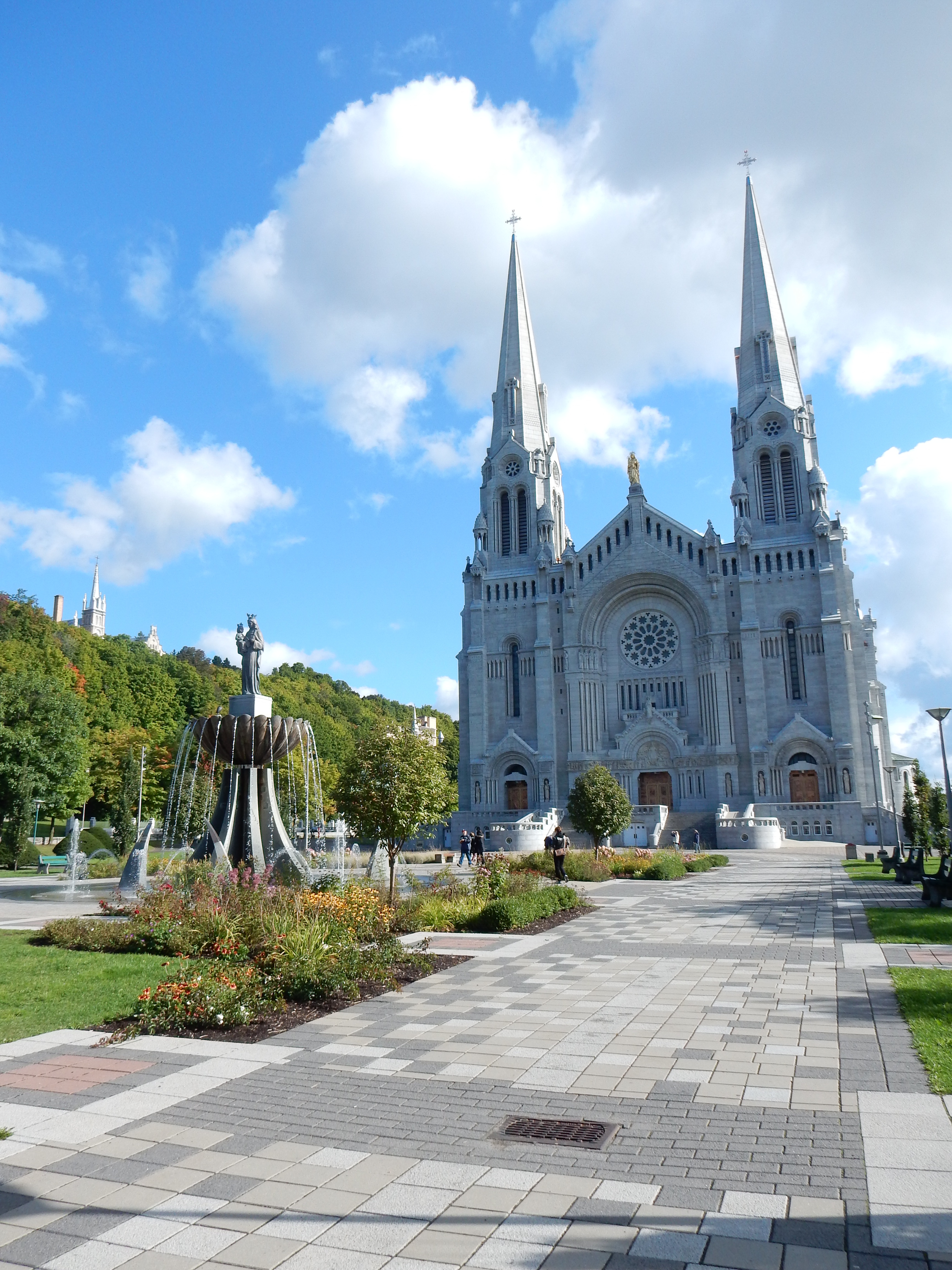
Shrine of Sainte-Anne-de-Beaupre

Shrine of Sainte-Anne-de-Beaupre

After breakfast and the newspaper, we headed out for an active day of touring outside of the city center. Our first stop was the Shrine of Sainte-Anne-de-Beaupre. It is located about 30 miles east of Quebec and we decided being inside early would be smart; let the day warm up before tackling our outside adventures.

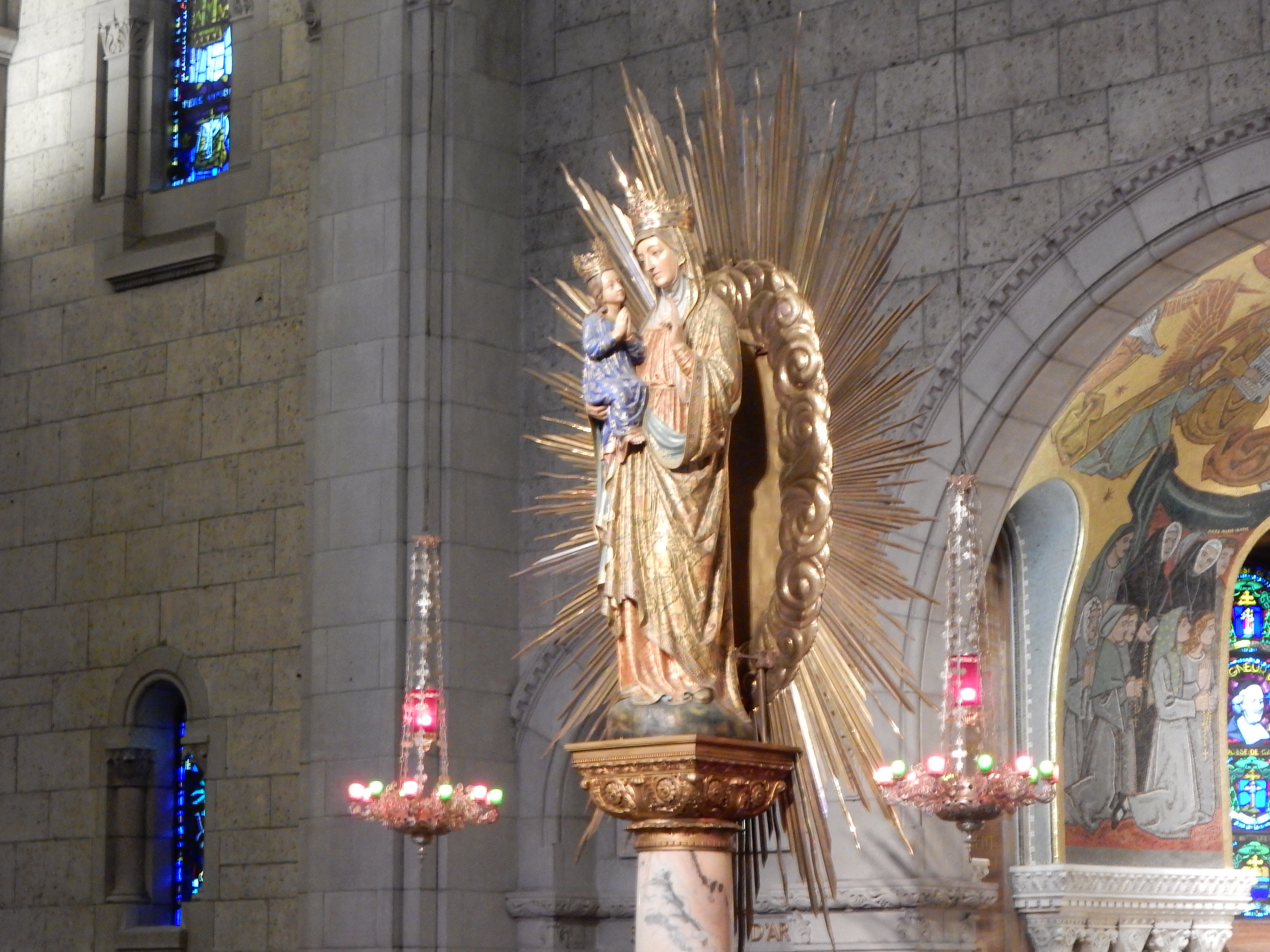
Statue of Sainte Anne

Statue of Sainte Anne

The shrine is now very large but it started as a small chapel built in 1658 by a group of sailors from the Brittany area of France as a visible sign of their thanks for a safe passage during a storm on the St. Lawrence River. It is dedicated to Saint Anne, the mother of Mary, the grandmother of Jesus. The shrine is visited by over a million people each year. The current shrine is the fifth edifice and construction began on it in 1923 when the previous basilica was destroyed by fire.

Interior of Shrine of Sainte-Anne-de-Beaupre

Interior of Shrine of Sainte-Anne-de-Beaupre

The Basilica is very inviting on the inside, colors are vibrant with side altars behind the sanctuary and statues and stained glass windows everywhere. In the back of the church are two pillars with crutches hanging from them, given by those whose disabilities were cured. The church is a major pilgrimage site in North America.

I think of my father when I enter a new church. He would always tell us to say an Our Father, a Hail Mary, and a Glory Be prayer in a new church, but I have forgotten the reason for it. We finish touring the shrine, both upper and lower churches. We visit the museum with an amazing collection of art and of artifacts from the third church which stood from 1676-1876.

Canyon Ste-Anne

Canyon Ste-Anne

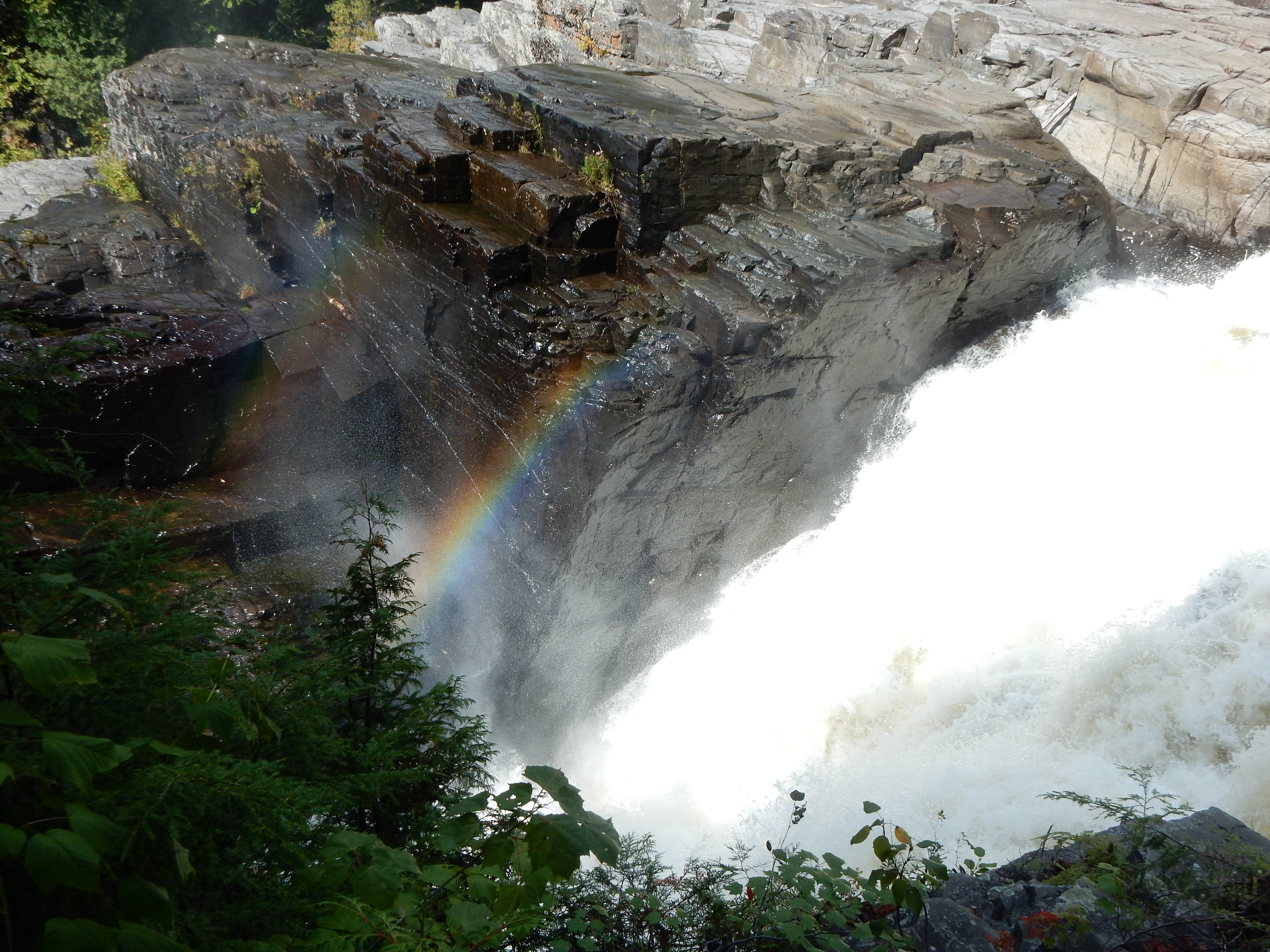
The Canyon Ste. Anne is our second stop of the day, just a few miles from the shrine. The canyon holds a 240 foot waterfall. The trail here goes from the top to the bottom and back again over three suspension bridges. Although visited by early explorers, and even Henry David Thoreau, it was not visited often and was “re-discovered” in the 1970s. It is now privately owned and open to the public for a fee.

One of the suspension bridges

One of the suspension bridges

Rainbow at Canyon Ste-Anne

Rainbow at Canyon Ste-Anne

The fall colors are just starting here so the walk, even with the hiking up and down, is great exercise. The sound of the falls is always in the background with many observation points of the falls and river. I end up taking way more pictures than necessary.

Before our third stop, we have lunch in the town of Ste. Anne de Beaupre. The food is home made (chicken pot pie and hearty vegetable with chicken soup) with great desserts. The staff knows enough English that we get the food we wanted without embarrassing ourselves.

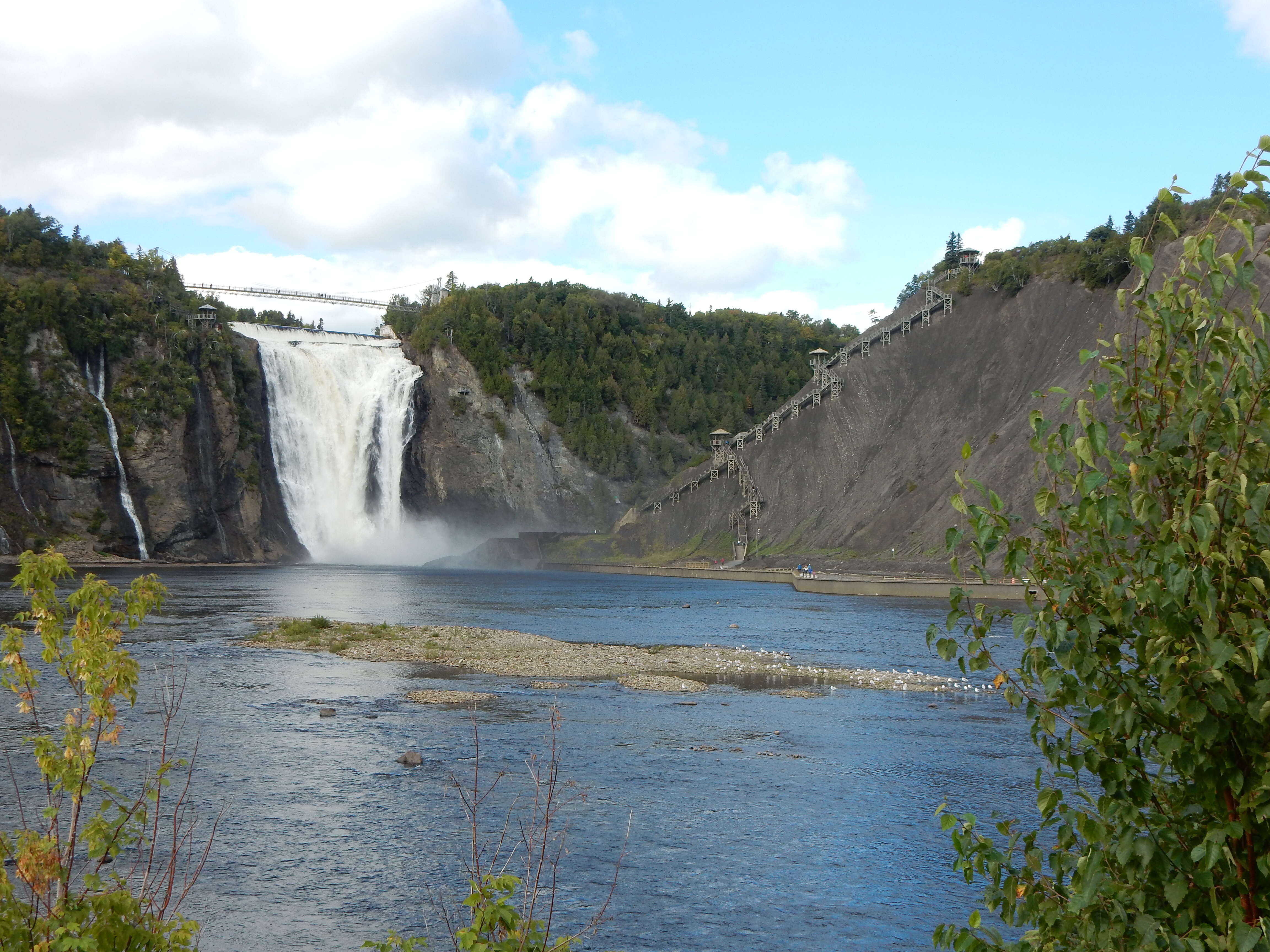
Montmorency Falls

Montmorency Falls

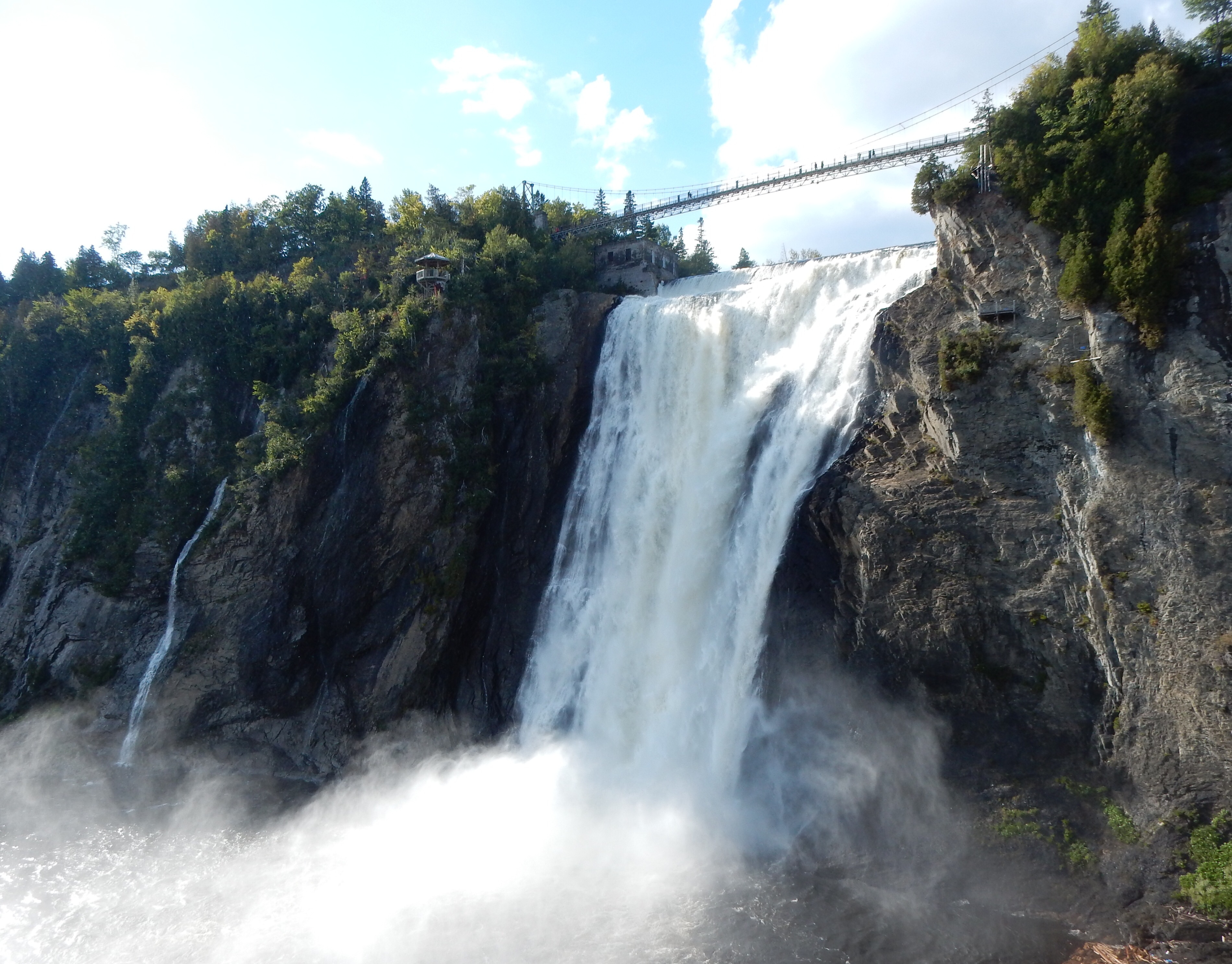
The final stop is the Montmorency Falls. At 275 feet, it is higher than Niagara Falls (167 feet) but has less flow over the cliff. The Montmorency River is only 63 miles long but the cliffs of the Canadian Shield rock formation create stupendous waterfalls.

Montmorency Falls

Montmorency Falls

Here we rode a cable car to the top. The trail goes over another suspension bridge right at the edge where the water drops over the cliff. We walked down the 487 steps that brings one back to the starting point.

Dinner was a stop at a market where we purchased croissants and locally made cheese and crackers. Lunch was substantial and dinner was more of a snack.

Ed and Chris 10 pm 9/18

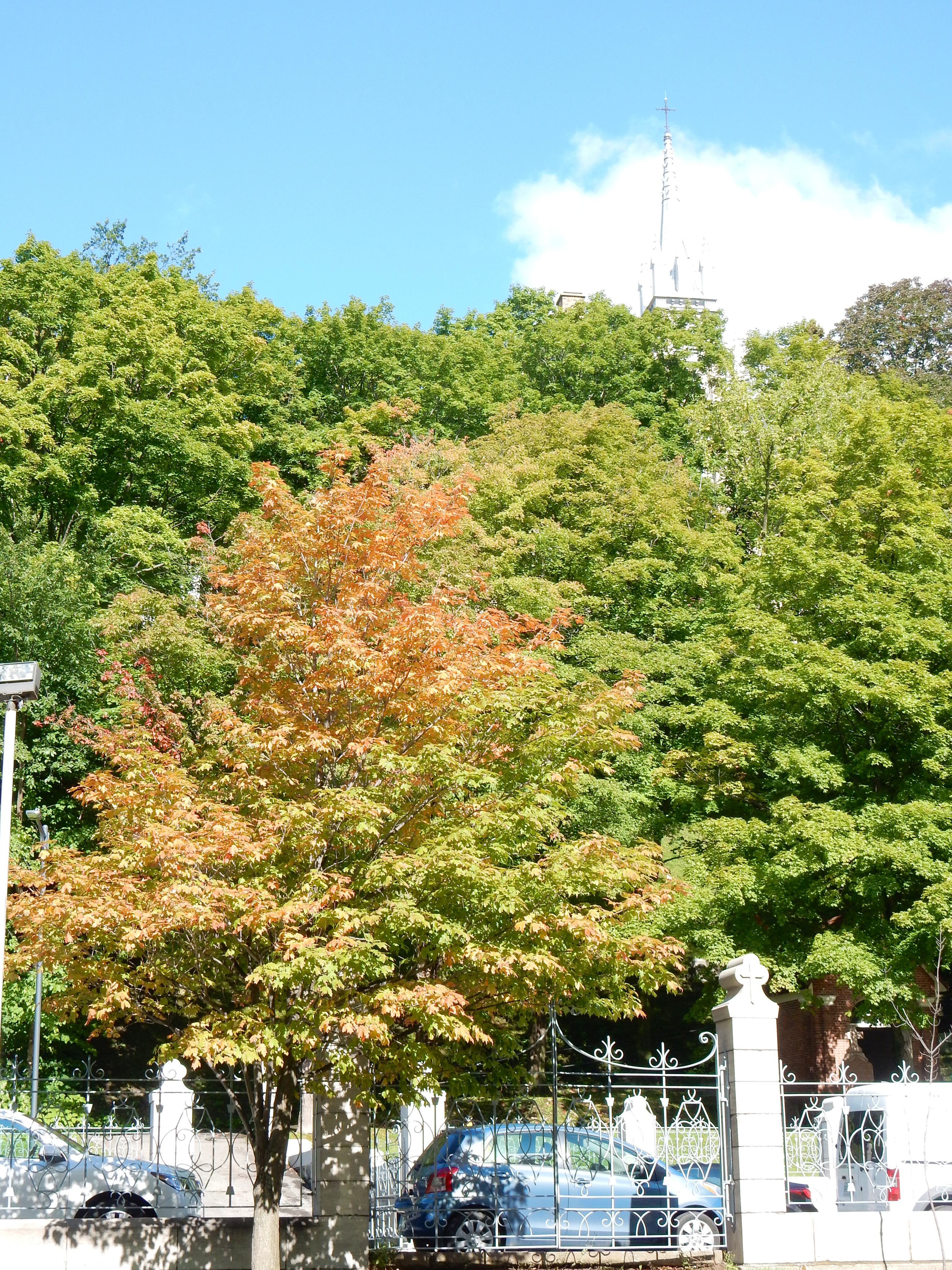
Fall color update: Primarily green. A few trees starting to change.

Fall color update

Fall color update

Categories: road trip, travel | Tags: , , , | 1 Comment

2014 Trip Six, Sept. 17, Fall in Canada and Deb and Rebecca’s Wedding

Quebec City, Wednesday Sept. 17

Canadian weather forecasters are no more accurate than their American counterparts. Today has turned out to be another cool and rainy day. Luckily, a good portion of the day was spent inside.

Breakfast was at another small restaurant near the hotel. The restaurant options are numerous, we are trying, but not succeeding, in eating at all of the options. While out walking, we were even able to direct a family seeking shelter from the rain to a nearby restaurant of reasonable prices.

Quebec Parliament Building

Quebec Parliament Building

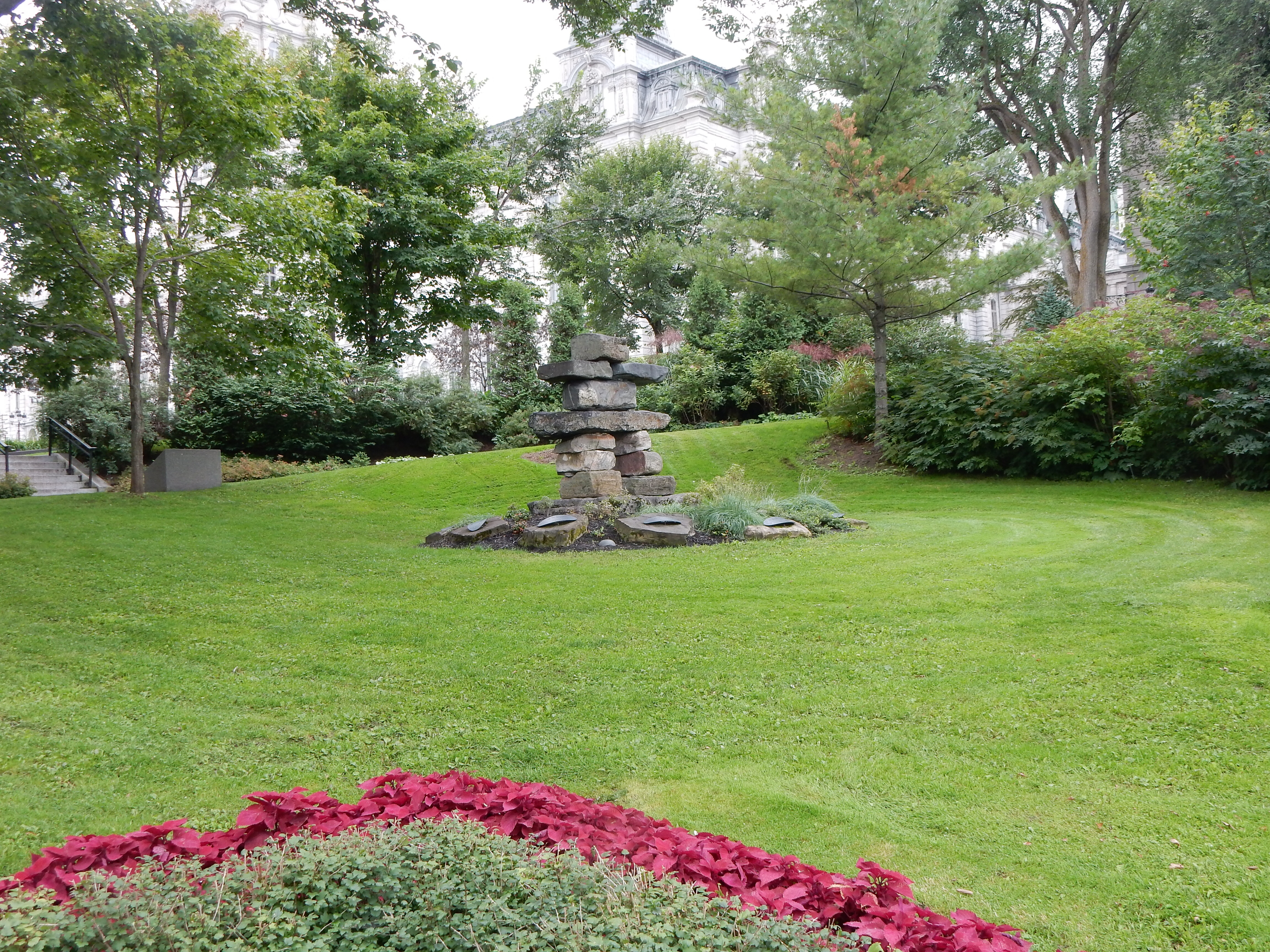
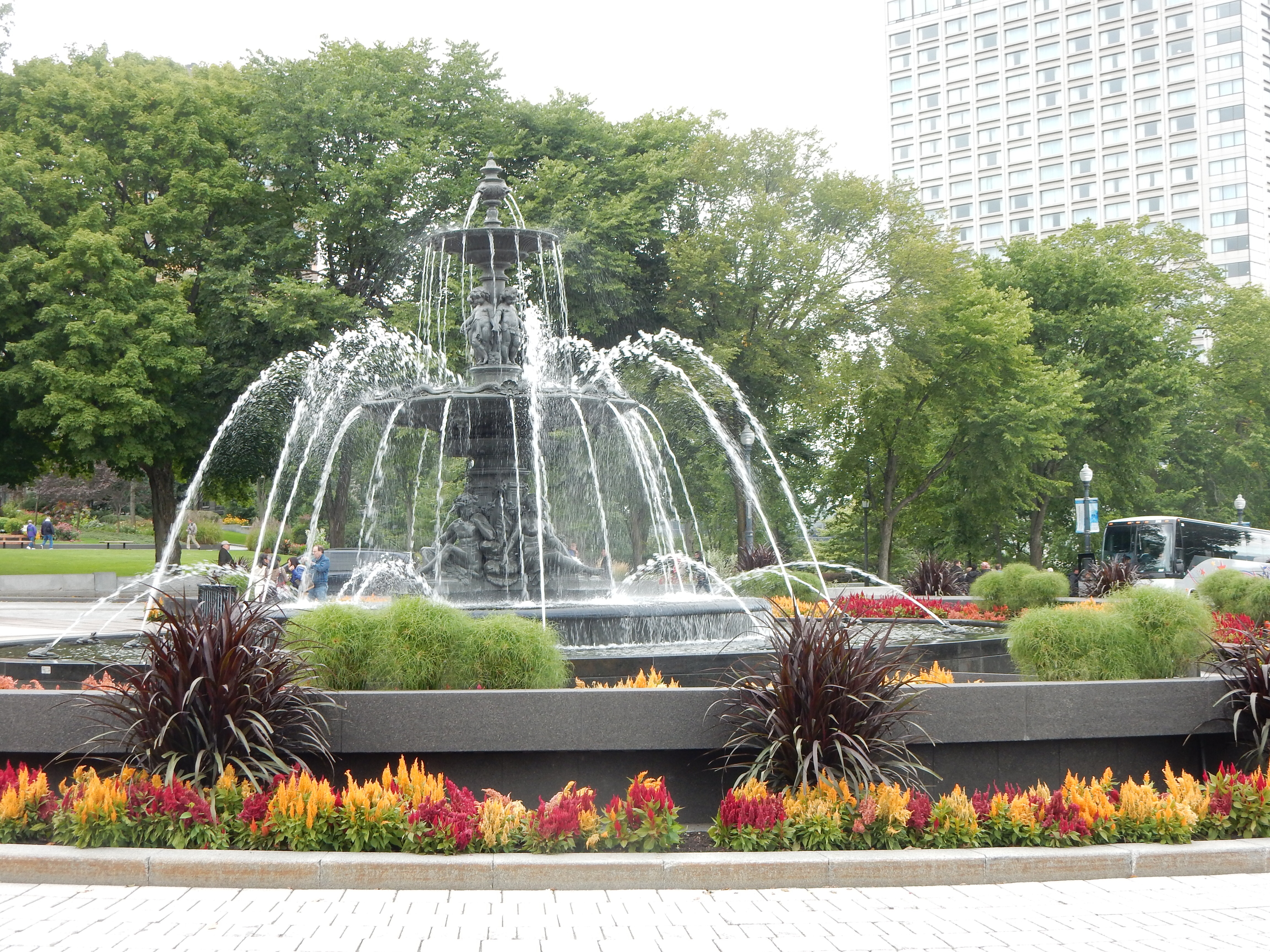
Our first stop was Parliament. This was the provincial, not national, parliament; similar to our visit to the British Columbia Parliament we toured in Victoria last summer. We were early for the English tour so we took pictures outside. The fall flowers were colorful and there is a large fountain in the street in front of the building. Some of the gardens in front of the Parliament Building are used to grow edible plants. The harvest is used both in the Le Parlementaire restaurant in the building and to a local community food group.

Inukshuk (stone landmark or cairn built by Inuits, etc)  on Parliament grounds

Inukshuk (stone landmark or cairn built by Inuits, etc) on Parliament grounds

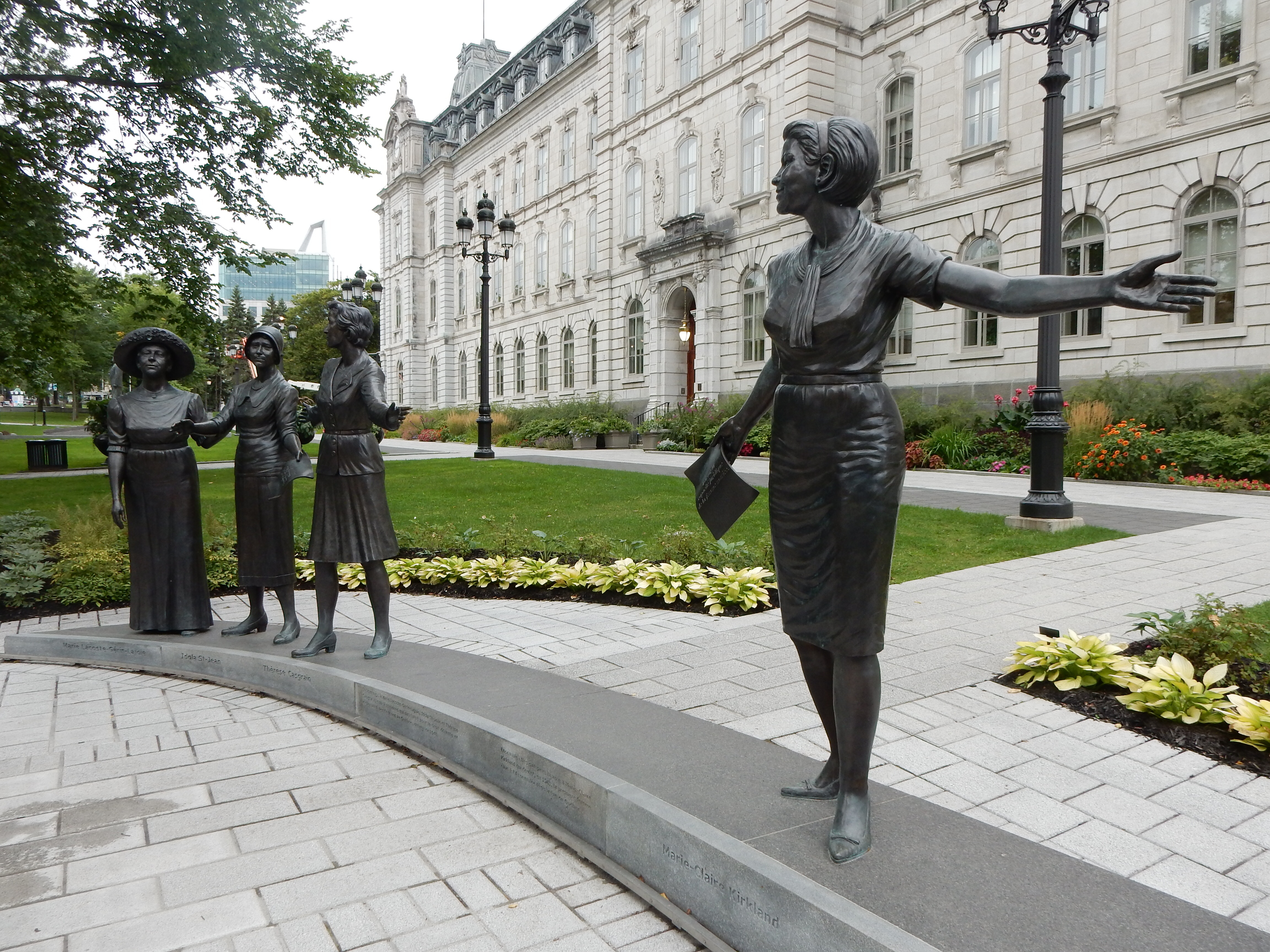
statue honoring women in politics

statue honoring women in politics

Around the building are numerous statues depicting historical figures in Quebec history. The facade of the building has more sculptures in various nooks and crannies. The clock tower has a series of four lights that are turned on when the Legislature is in session.

Tourny Fountain

Tourny Fountain

The Parliament Building is home to the National Assembly of Quebec, a one-house legislature. The Senate was abolished in 1968. Legislature was in session so we were unable to enter that chamber but we did take in the former Senate chambers. I am not sure how much legislating was happening today; our tour guide indicated that many of the members of the opposition party were in Scotland to observe first-hand the separation vote occurring tomorrow.

Plains of Abraham

Plains of Abraham

Our next stop was the Plains of Abraham and the Discovery Center. The Plains of Abraham was the site of the 1759 battle between the French and the English. The English won the battle and New France disappeared as Canada became part of the British Empire. The Discovery Center is a multi-media presentation (with additional exhibits) of the 1759 battle, history, and significance of Quebec. The rains came down as we walked part of the plains (it is a big park) and so we headed back to the Parliament Building.

In the Parliament Building is a restaurant, Le Parlementaire, which was originally only for members of Parliament, but is now open to the public. We came here for a late lunch and to get out of the rain. You have to go through security again in order to enter the restaurant but it was worth it. Of course the interior was very nice and the food was even better. I think Chris is becoming a foodie, savoring the presentation and aroma of the meals we are having. I do not believe it will extend to the actual cooking process however.

The rains were still coming down hard as we left the restaurant so we returned to the hotel to discover we had an invitation from it to a free cocktail reception this afternoon. We took it easy, one glass of wine and one Coke plus some snacks.

Interior of Palais Montcalm

Interior of Palais Montcalm

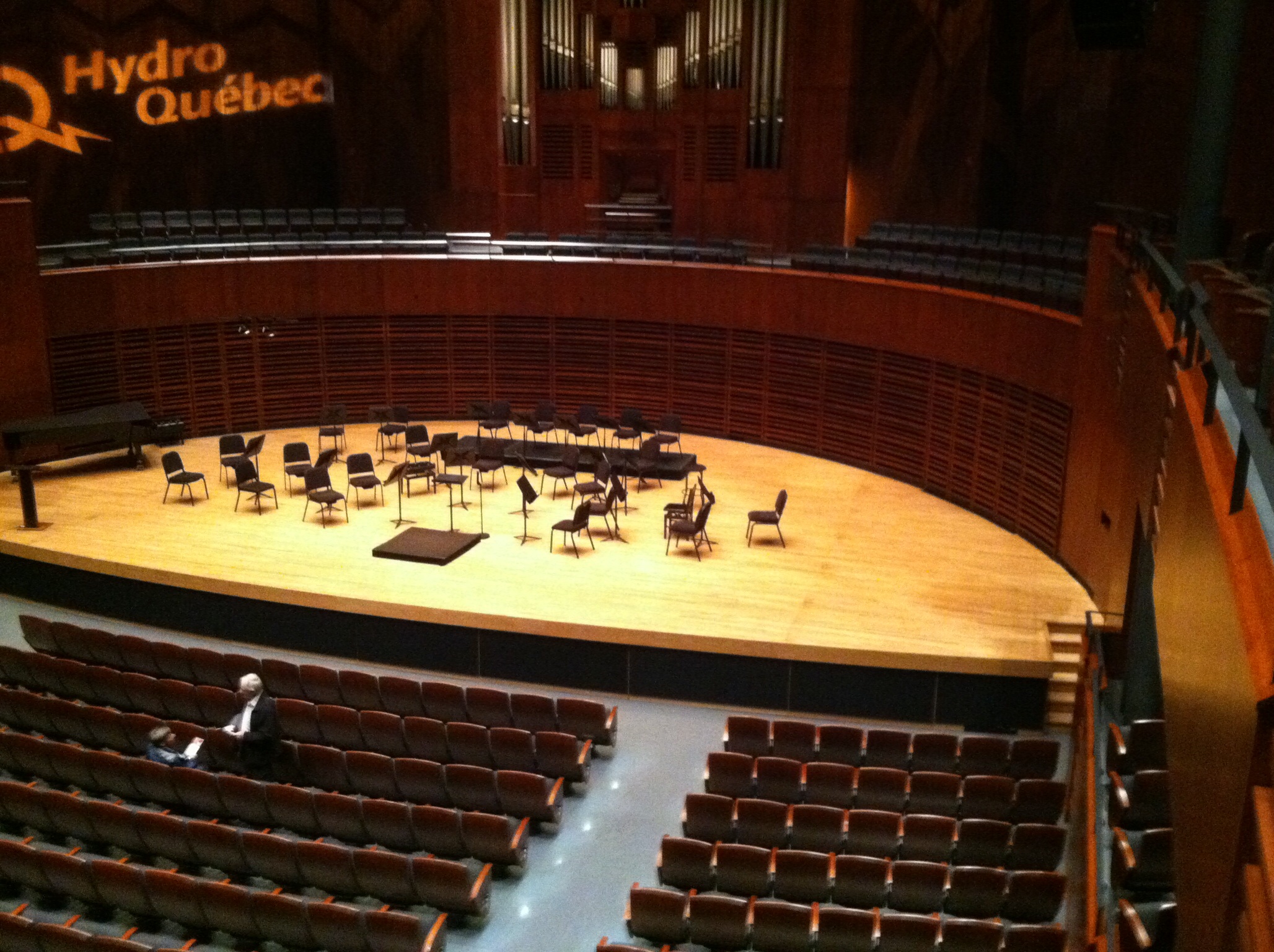
Our evening was spent at the Palais Montcalm listening to Les Violons du Roy, a Quebec chamber orchestra. The building has a nondescript exterior dating to 1932 while the interior was redone in 2007 in rich wood tones with excellent acoustics. We sat behind the orchestra, a location we first tried in Miami Beach and have grown to like it. You have a much better view of the musicians.

I can not tell you what the person said who made a several minute introduction, nor any chatter during intermission, or any information from the program since it was all in French. But the music was great; from Mozart, Beethoven, and Schubert. A French pianist, Alexandre Tharaud, was the soloist.

Ed and Chris 11:15 pm

Categories: road trip, travel | Tags: , , | Leave a comment

2014 Trip Six, Sept. 16, Fall in Canada and Deb and Rebecca’s Wedding

Quebec City, Tuesday, September 16

Our day long walking tour of Old Quebec, located within the walls of the city, was bookended by military history and stories of valor and defeat. In between were stops for architecture, religion and food.

Walking Old Quebec

Walking Old Quebec

It turned out to be a glorious day, sunny and pleasant. Fine day to work hard walking around Old Quebec. Breakfast was at a small restaurant a few blocks from the Hilton, we were the first ones there, it does not open until 8 AM. I tried the hot chocolate instead of milk. This does not seem like a milk city. The meals were tasty and hearty, a good start for the day.

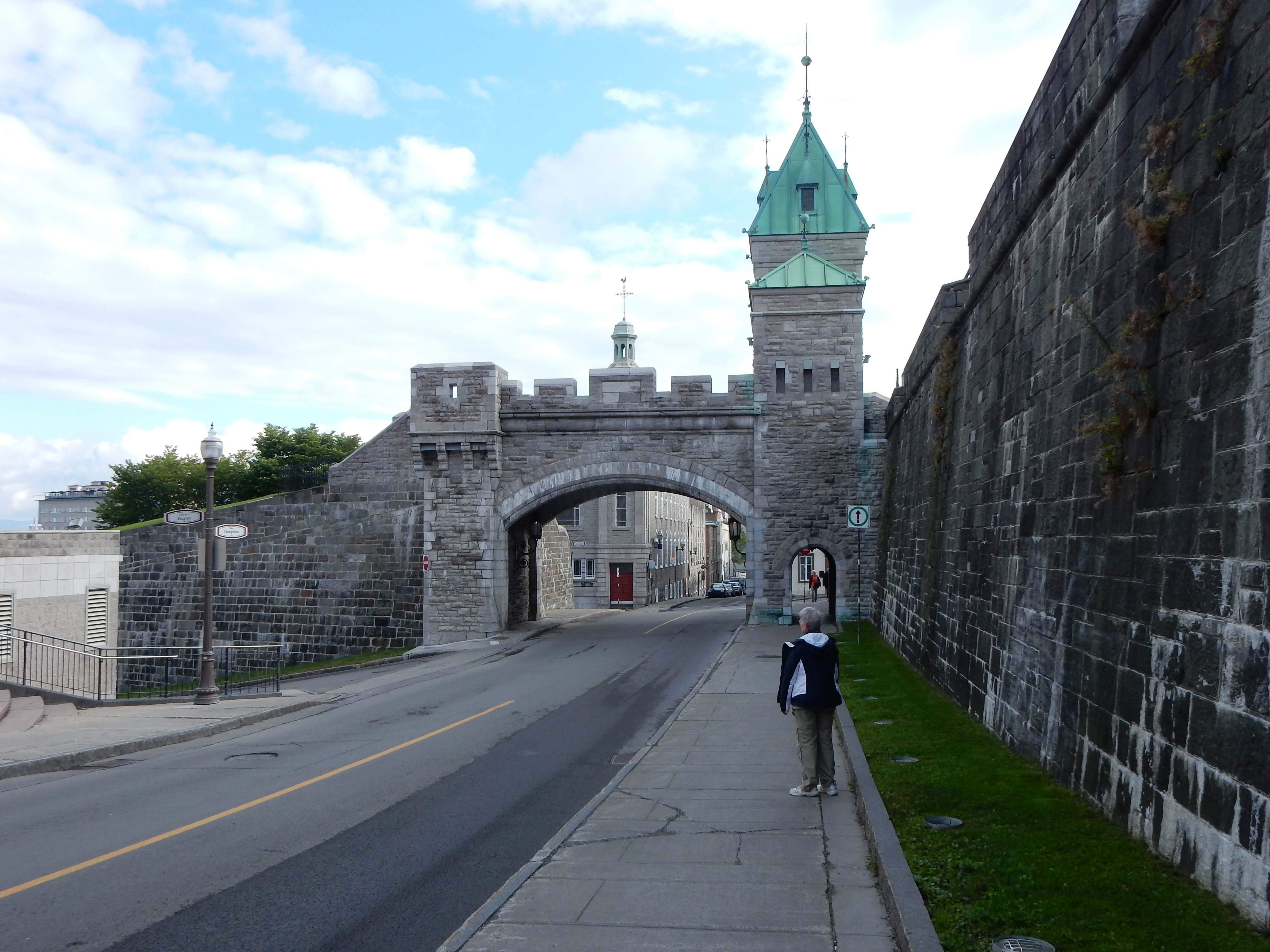
Kent Gate, one of three gates into Old Quebec

Kent Gate, one of three gates into Old Quebec

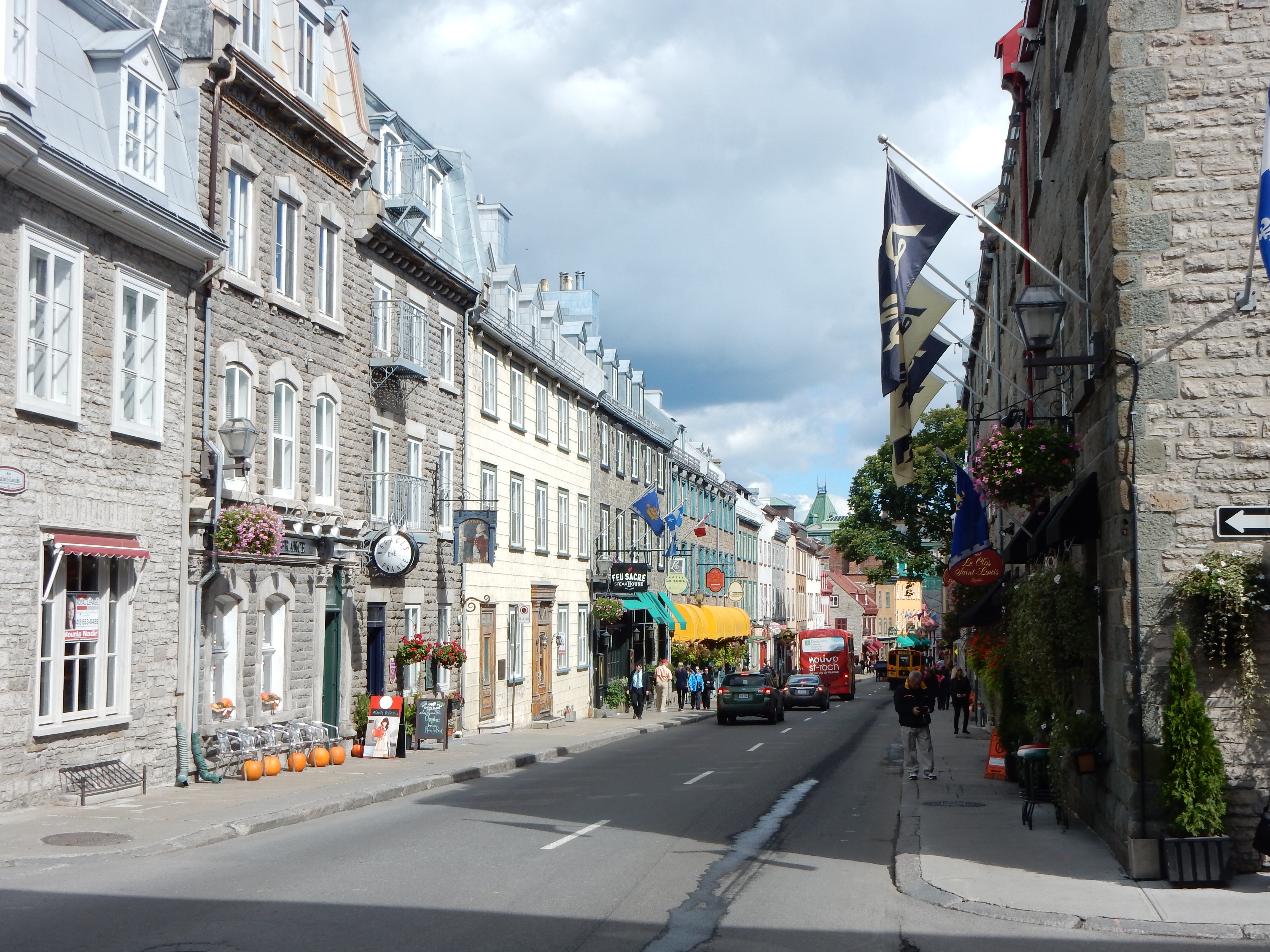
We entered Old Quebec through the Kent Gate and walked down streets reminiscent of France in the 1700s. Shops and restaurants alternated with churches, hotels and offices. Our first major stop was the Musee du Fort (I apologize for my inability to know how to insert the accents for French words.) This museum has a 30 minute panorama of the six sieges of Quebec highlighted by a light and sound show.

A side note on Quebec history, Readers Digest condensed version that I am sure will offend Quebec natives. Quebec was founded in 1603 by Samuel du Champlain of France. It remained a French city until 1759 when the British defeated the French in the battle of Quebec, although there were numerous battles and skirmishes between the two prior to 1759. The Brits were here until 1867 when the Articles of Confederation created a separate Canadian country although still a part of the British Commonwealth. You can see the mountains of Maine some 100 Kilometers away. The Americans invaded Canada in 1775 and during the war of 1812; small rebel groups invaded Canada in 1837, 1838 and during 1868-71. Thus, while Americans may be ignorant of these battles, they are near to Canadian memories.

St.Lawrence River

St.Lawrence River

Quebec’s position defending the St. Lawrence River and its nearness to the U.S. made it a prominent defensive position. The hills of Quebec, combined with fortifications, made it a strong guardian. Early fortifications were less elaborate than those completed by the British after the War of 1812. The Musee du Fort and the Citadel, which we visited later in the day, are central reminders of Canada’s efforts to form its own country.

Chateau Frontenac

Chateau Frontenac

After the Musee du Fort we wandered around Old Quebec, passing City Hall which is undergoing major renovations. We walked by the Samuel de Champlain monument on Dufferin Terrace which overlooks the St. Lawrence River. We saw the UNESCO World Heritage monument and Chateau Frontenac, a massive hotel built in 1893. Two Allied Conferences during WWII were held here. After all of this walking, it was time for fruit crepes and a rest.

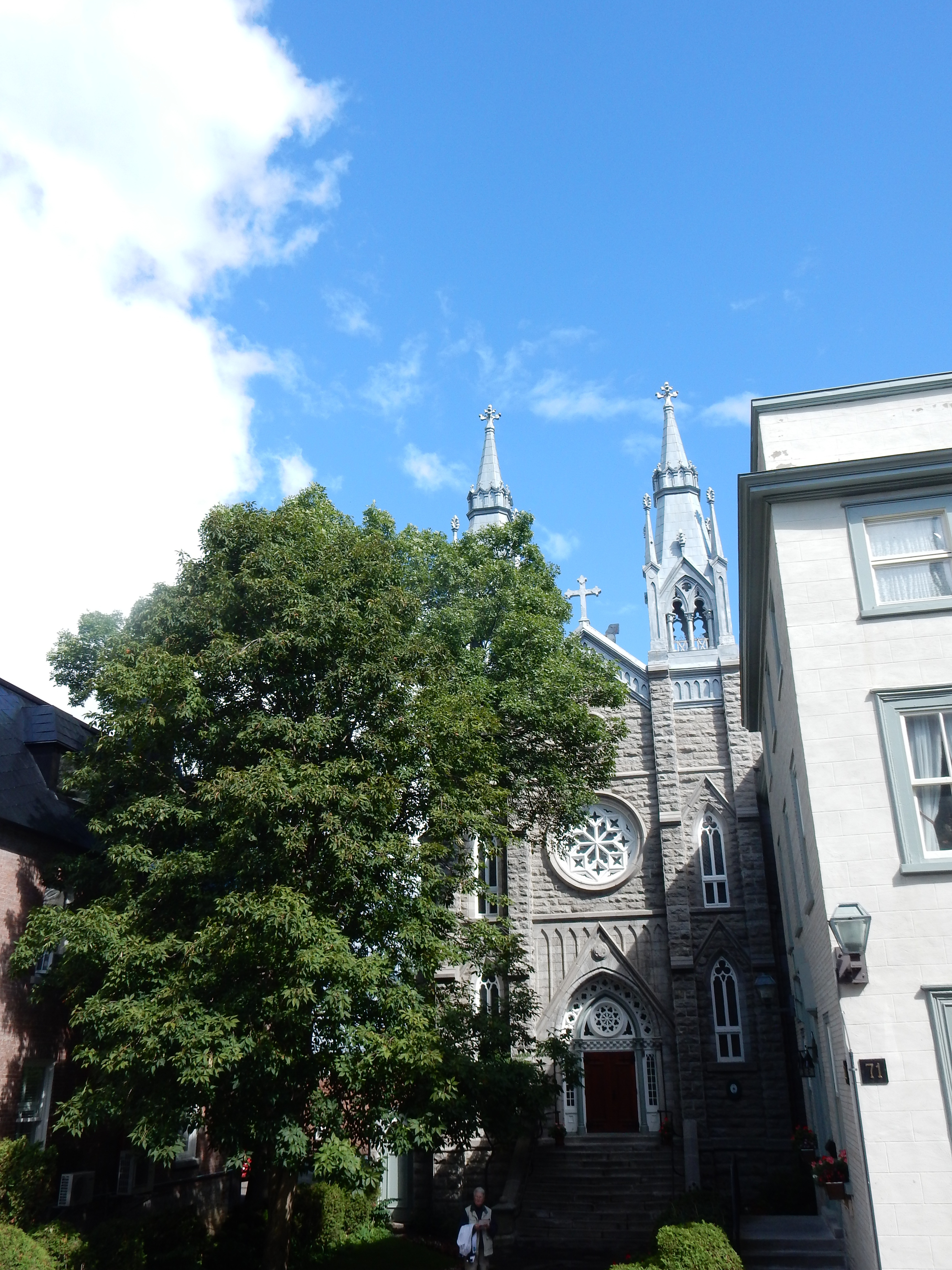
Notre Dame du Sacre Coeur

Notre Dame du Sacre Coeur

The Anglican Cathedral Holy Trinity was the first Anglican cathedral outside of Britain. Our tour guide here informed us that King George III donated ornate eucharistic chalices and candlesticks to this Cathedral which we were able to view-but not touch. To be ecumenical, we stopped in to see Notre Dame du Sacre Couer, a Catholic church.

The Monastery of the Ursulines is around the corner, an order founded here in 1639. The Ursulines are the oldest teaching order in Canada. Numerous streets, parks, and monuments later led us to La Citadel de Quebec and the Musee Royal 22e Regiment. Our time and tour here occupied us for the next two hours.

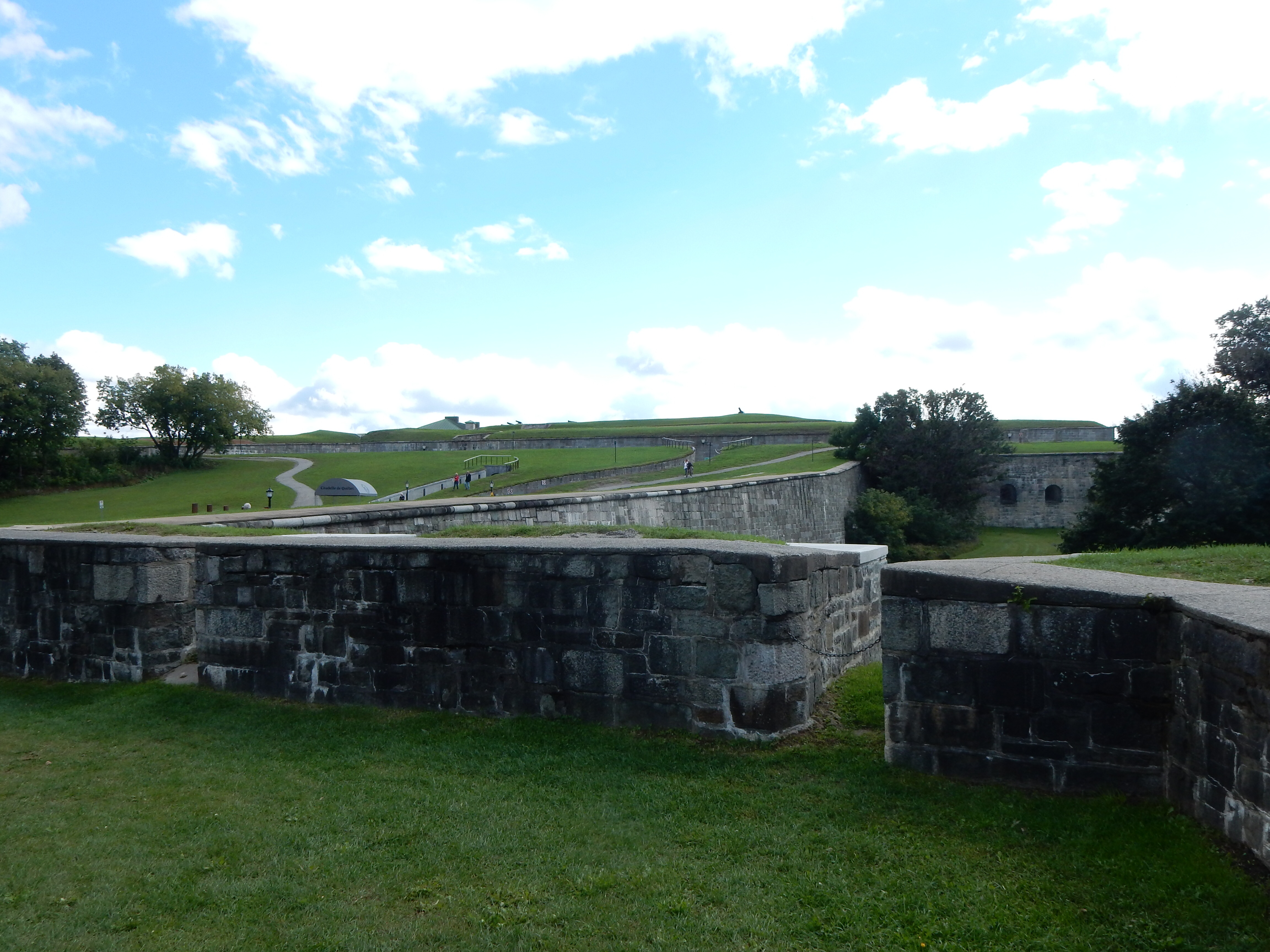
The Citadel

The Citadel

The Citadel is a 37 acre active military base, occupying the grounds of the fortifications than have defended Quebec for over 300 years. The fort has the notable star shape seen at many forts of this period, due to the ability to better defend against attackers from all angles. The museum details the history of the fortifications and the role of Quebec in defending Canada.

The Citadel

The Citadel

The Citadel is also the home of the Royal 22e Regiment; the only French-speaking regiment in the Canadian army. Our tour guide, a civilian from Belgium, gave an excellent tour. The regiment is noted for its bravery and courage. The regiment began in WWI when French-Canadians did not enlist very heavily. Since the Canadian army was led by English-speaking officers, the francophone residents of Quebec did not view this as “their” war. However, once a French-speaking battalion was organized, the enlistment rate shot up.

Today, the regiment still speaks only French in its internal workings although they use English for national army activities. The regiment was at one of the Queen’s major ceremonies at which time they took a turn at the changing of the guard at Buckingham Palace which was the only time French has been used in that ceremony, and the queen greeted them at a three-hour reception in which she spoke to them in French with a Quebec accent.

At the Citadel is an extremely large cannon (okay I forget the exact nomenclature) which was fired in the late 1800s to break up ice on the St. Lawrence River. The river freezes over and ships normally have to wait for 2-3 months in the hardest part of winter before the ships can traverse back and forth to Montreal from the Atlantic. Before ice-breaker ships, if the river stayed frozen too long, the cannon was used to place a few well-aimed shots to break up the ice.

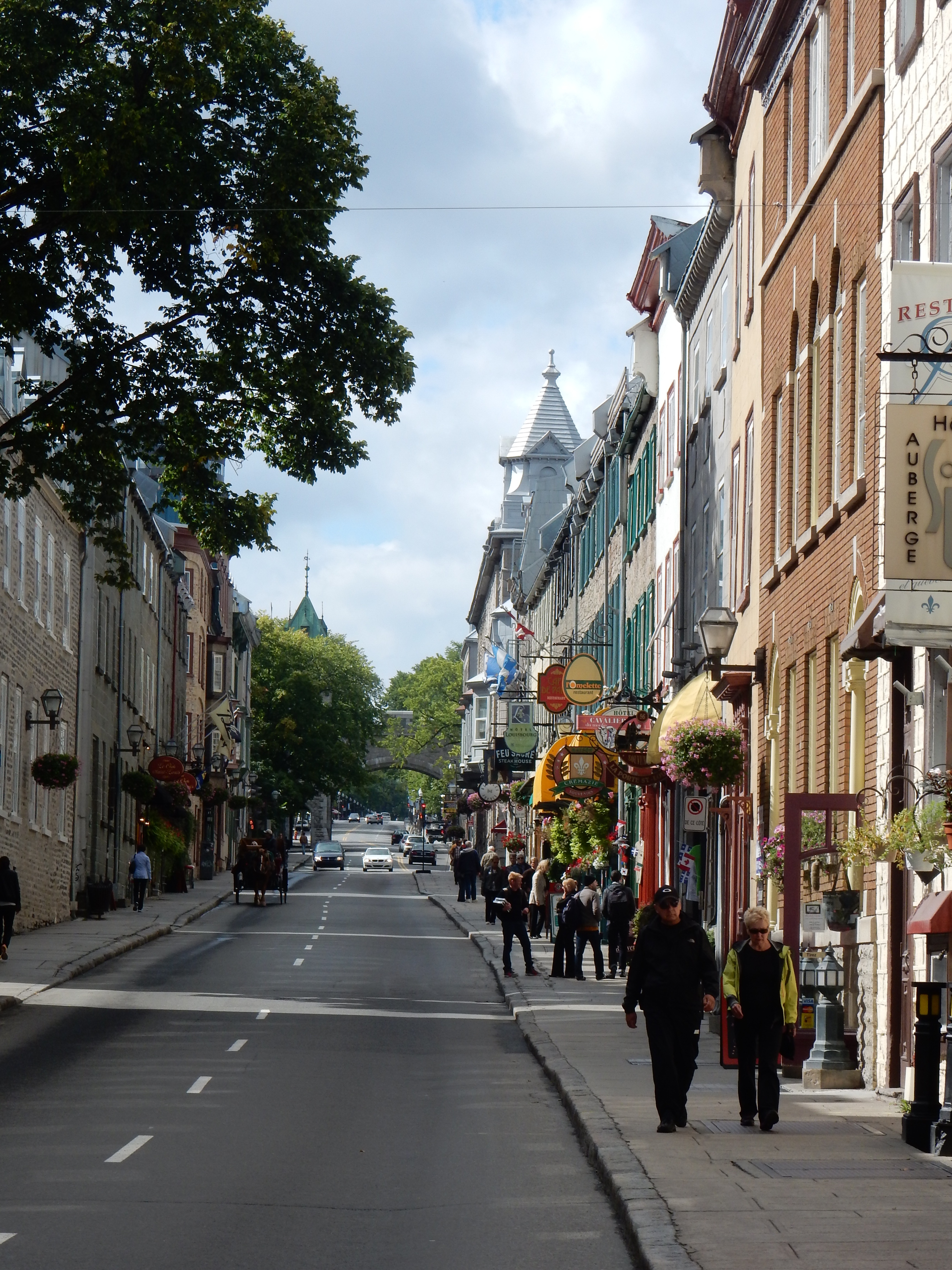
An Old Quebec city street

An Old Quebec city street

After all that standing and walking, it was time for a break. Tea, cookies and chocolate mousse did the trick in reviving our energies. We each had some Kusmi tea which originated in Russia and now is based in Paris. But, the break meant we missed closing time at Notre-Dame de Quebec Basilica-Cathedral. Another day perhaps although there is still much to see.

Dinner was another small restaurant not far from the hotel. A pleasant evening walk as the sun was setting on a busy day.

Ed and Chris 9/16/14 11:15 pm

Categories: road trip, travel | Tags: , , , | 2 Comments

2014, Trip Six, Sept. 15, Fall in Canada and Deb and Rebecca’s Wedding

Quebec, Monday September 15, 2014

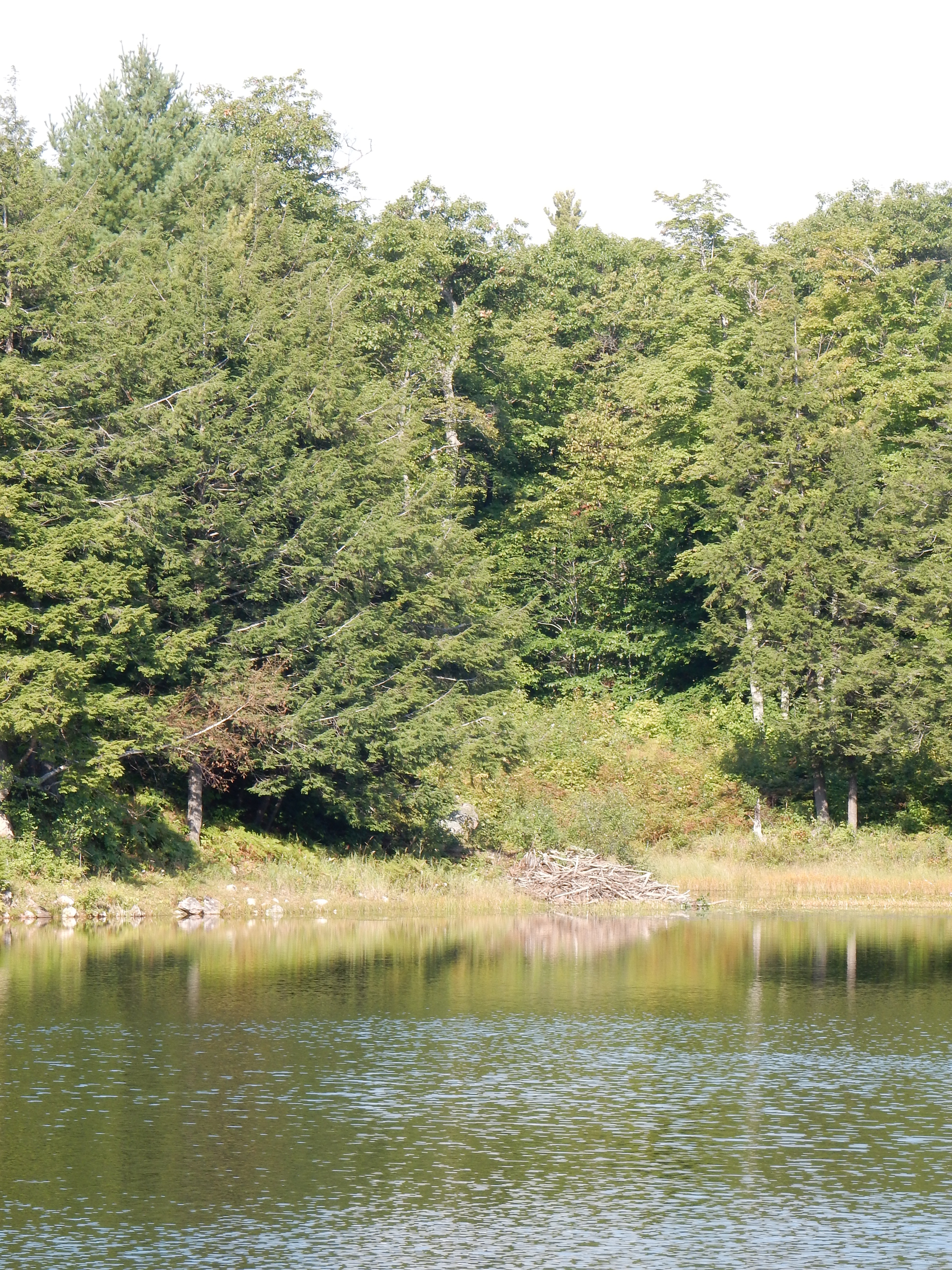
Lake with beaver lodge on King Mountain Trail

Lake with beaver lodge on King Mountain Trail

This is our 300th post of this blog. According to internet sources, our output over the last 20 months would be the equivalent of two novels. Just think, you have been e-reading two novels free of charge! I hope they were worthwhile for you.

Today was a travel day, Ottawa to Quebec. Yes, I know we bypassed Montreal. No, we did not make a mistake, we planned the route this way. Well, actually we made several mistakes traveling today. The first half hour driving to our hiking destination in Gatineau Park (a place we had been at just yesterday) resulted in two wrong turns and a slight delay in reaching our destination. Without wi-fi on our smart phone, we had to navigate by map and sense of direction. No wise cracks please, we did make it successfully.

Our second mistake was in trying to drive into downtown Quebec. Route 440 was to begin right at the Route 40 we were driving from the Montreal area (the west) but we both swear there was no signage whatsoever. We ended up going to the east side of Quebec and coming in from the east. But again, it worked out fine, we just had an opportunity to drive in Quebec rush hour traffic.

This drive was entirely (except for 6 blocks in Ottawa) in Quebec province. It was an interesting comparison. In Ontario, even in the western portion by Thunder Bay, the traffic signs are uniformly in English and French. In Quebec, the traffic signs are entirely in French. My American chip-enabled credit is more accurately described as a chip and signature card. Most of Canada uses a chip and PIN card. My card which worked fine at gas stations pumps in Ontario did not work at the first gas stop in Quebec; I had to go inside to use the card to pay for the gas.

Other notes while I am rambling. A. While our recollection from the Thunder Bay area is weak, we have noted that there are few pick up trucks or large SUVs in Ottawa city and Quebec province. B. In driving through small towns in Canada, we rarely saw a post office. In the U.S., every small town has one prominently located. (That’s why our postal service is running in the red and theirs is in the black.) C. Canada still has pay phones in visible, public locations. My guess is that there must be a governmental mandate to do so.

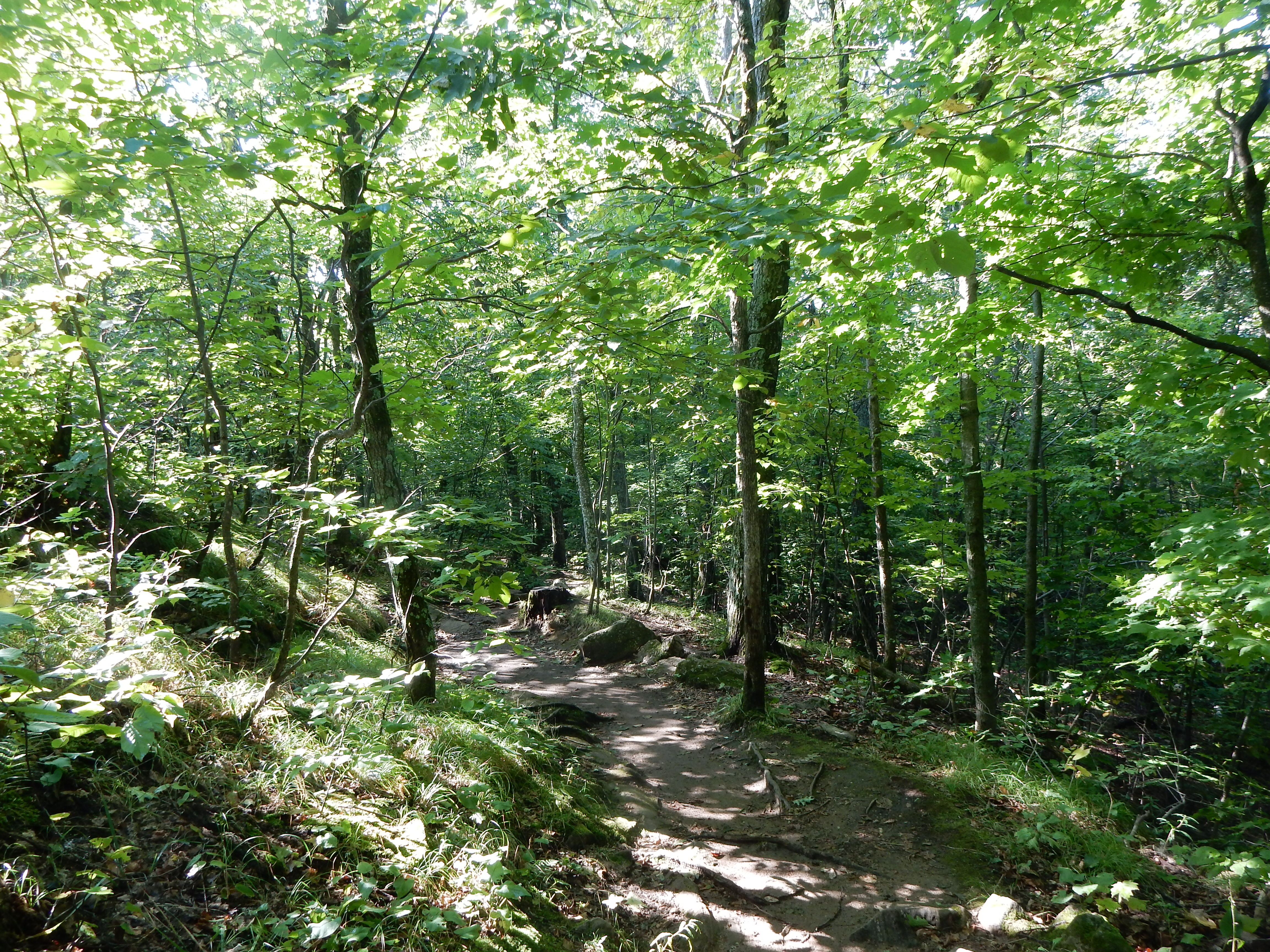
Our King Mountain hike

Our King Mountain hike

But back to our day. We drove to Gatineau Park, planning to hike around Pink Lake. The trail was closed, even though it was open yesterday. Instead we went on the one hour hike of King Mountain trail which leads up to the first geodetic survey station site in Canada. The views from King Mountain are similar to those from Champlain Outlook which we were at Sunday.

first geodetic survey site national historic site

first geodetic survey site national historic site

The drive to Quebec is listed at about 4.5 hours-not counting navigational mistakes. We stopped at Montebello, a small town with a store selling chocolates made on the site. Very smooth chocolate.

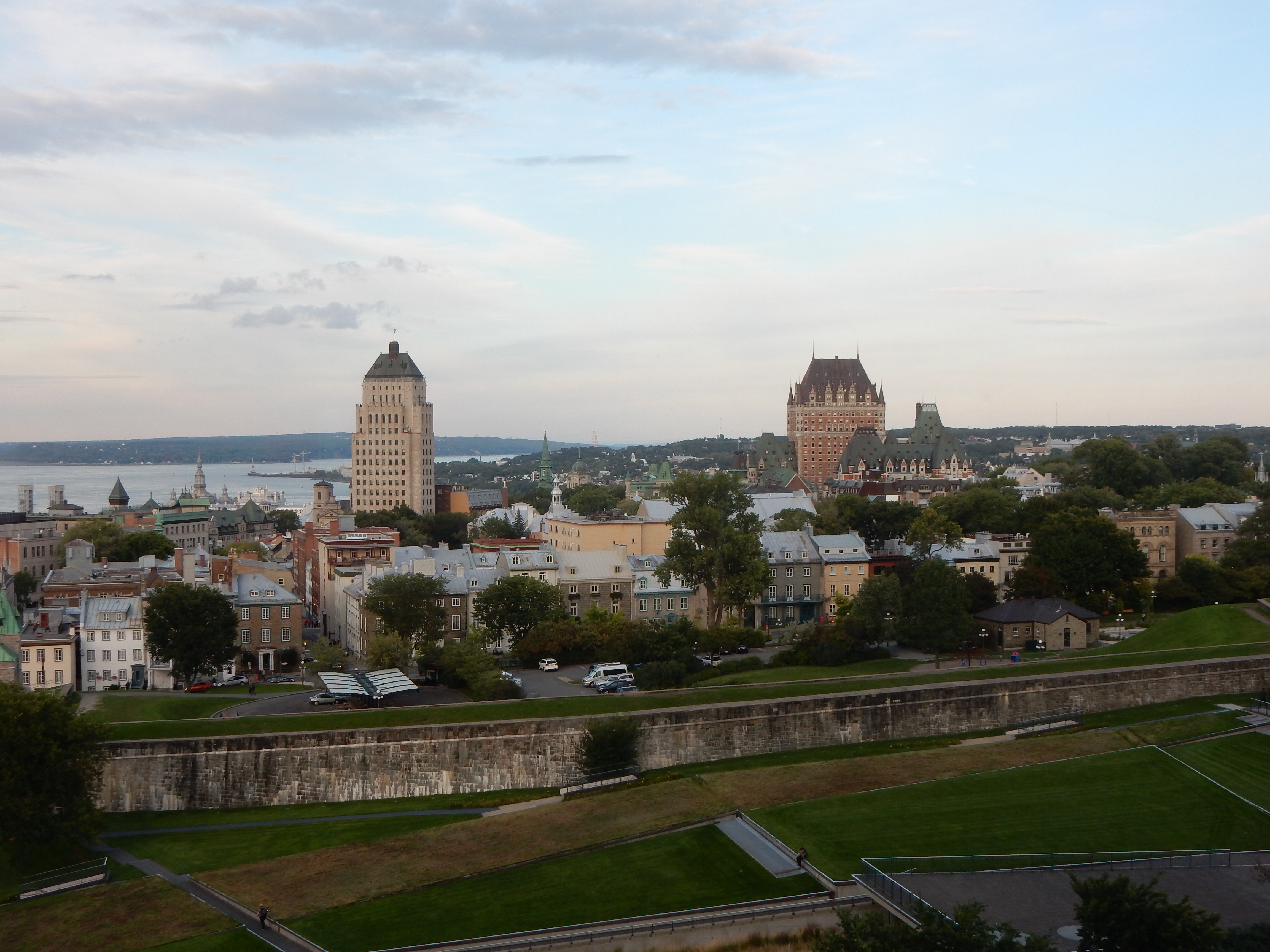
View of Quebec from our hotel, walled city at bottom

View of Quebec from our hotel, walled city at bottom

Our Hilton hotel in Quebec is right across the street from one of the main entrances to Old Quebec, a UNESCO World Heritage site. We are here for six nights so you will read more about this as the days progress.

Ed and Chris 9/15 10:30 pm

P.S. If you are planning to drive your car in Canada, remember to get a copy of the Non-Resident Inter Province Motor Vehicle Liability insurance card.

Categories: road trip, travel | Tags: , | Leave a comment

2014, Trip Six, Sept. 14, Fall in Canada and Deb and Rebecca’s Wedding

Ottawa, Ontario Sunday Sept. 14, 2014

The poor weather forecaster. Never praised, always criticized. Today was supposed to become mainly sunny and warmer starting at 10 A.M. Did not happen until 3 pm. A five hour difference is a big deal when you are trying to figure out your plans for the day.

Sunday is a day to take life a little easier so we were not out touring until after 10 AM. The Canada Museum of History is a large complex across the Ottawa River in Gatineau Quebec but it turns out over one half of what we viewed from the outside was administrative offices. Then the Hall of Canada was closed for renovations; a new hall will not open until 2017. Despite that, we spent three hours touring various exhibits.

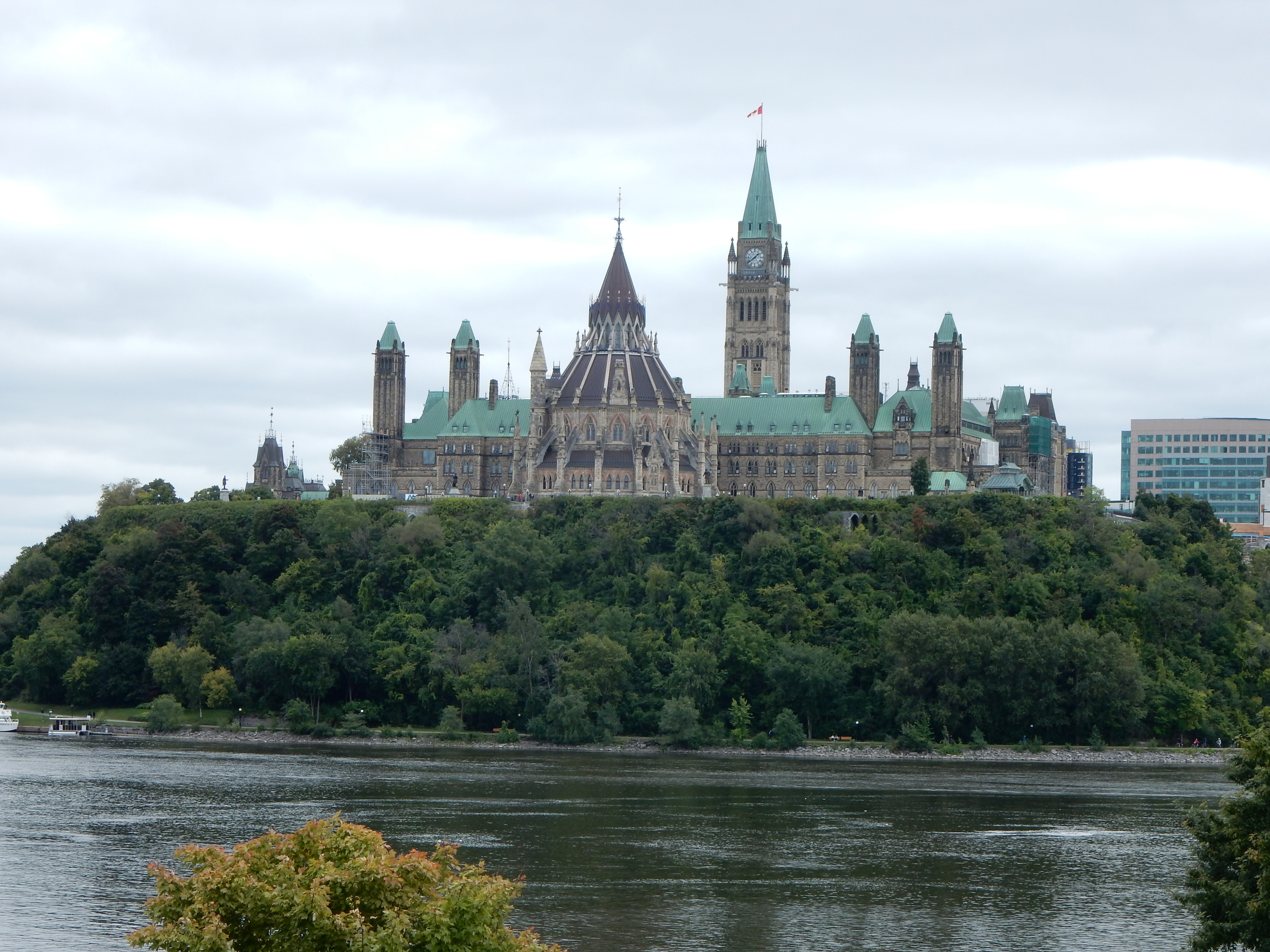
Parliament Hill viewed from Gatineau, Quebec

Parliament Hill viewed from Gatineau, Quebec

Our original thoughts were to walk over and back and then drive to Gatineau Park. We chose to drive to the museum. Given that today was colder than Saturday, we were pleased with our choice. The museum is directly across the Ottawa River from Parliament Hill; a sunny day would have made for dramatic photos.

Empress of Ireland China; first class at top, third class at bottom

Empress of Ireland China; first class at top, third class at bottom

The Empress of Ireland was the first exhibit we visited. Due to the influence of Hollywood, most of us are familiar with the 1912 sinking of the Titanic and its loss of 1512 lives. Lesser known is the Empress of Ireland sinking. The Empress was a ship of the Canadian Pacific Railway sailing between Quebec and Liverpool England. On May 29, 1914, she collided with a Norwegian coal carrying ship, the Storstad and sank in 15 minutes while still in the St. Lawrence Seaway. 1012 people died in this tragedy.

The display covered the details of the sinking, stories of survivors and victims, and artifacts from the wreckage. The ship still lies on the bottom of the river. Similar to the Titanic, first,second and third class ticket holders had much different experiences on board. The sinking was big news around the world; the emergence of World War I which started just mere weeks later pushed it into the background.

one family's home made transport device to take kids to school, including snow shoes for the horse

one family’s home made transport device to take kids to school, including snow shoes for the horse

The second exhibit highlighted snow. What might seem like a simple concept gets detailed treatment. As the literature states, snow is such a major factor in the lives of all Canadians that it impacts on culture, art, clothing, recreation, employment, etc.

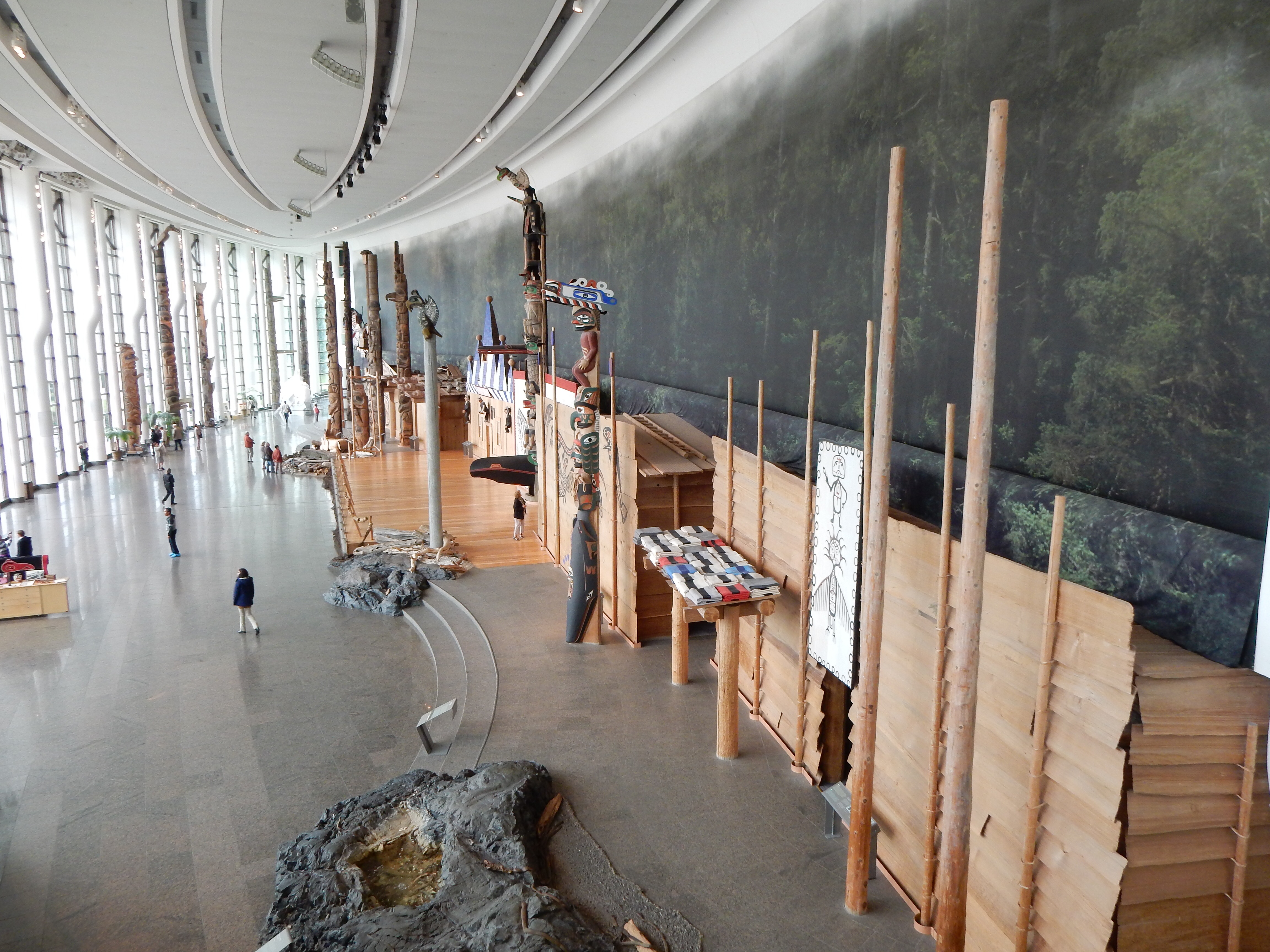
Entrance to First Peoples exhibit

Entrance to First Peoples exhibit

The museum has closed its entire third floor to create a massive history of Canada exhibit which will not open for another three years. Instead we visited the large First Peoples display on the first floor. This was one of the most comprehensive displays I have encountered of this topic during our Canadian journeys. But, I will admit, I do not find it interesting enough to spend much time here. I have heard the creation stories many times. The loss of lands is not dissimilar to that of Native Americans. I have seen the crafts previously. I will forget details here as I have of other locations. Maybe our journeys are becoming too similar.

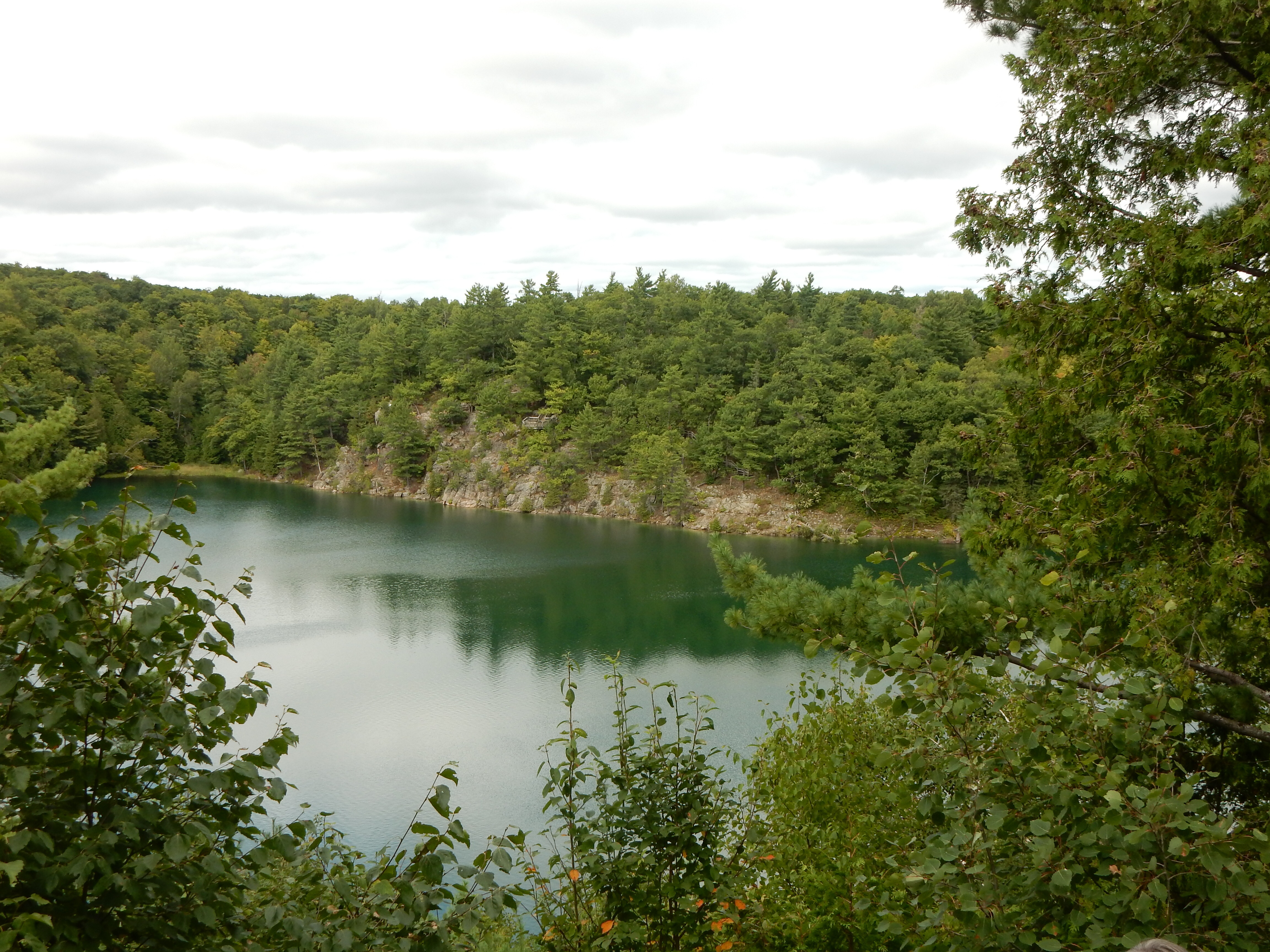
Pink Lake in Gatineau Park

Pink Lake in Gatineau Park

We traveled to Gatineau Park, an area combining park features and wilderness lands across the river in Gatineau, Quebec. Gatineau Park is a odd creation, sort of a national park but under separate control of a local government commission. It is large with the southern half being the more park-like portion. Today we only drove through parts of it, stopping at a few overlooks. Hopefully tomorrow’s weather will allow us to hike before we head to Quebec.

Eardley Escarpment viewed from Gatineau Park Champlain overlook-Canadian Shield rock formations leading to St. Lawrence lowlands

Eardley Escarpment viewed from Gatineau Park Champlain overlook-Canadian Shield rock formations leading to St. Lawrence lowlands

Ed and Chris 9/14 8:30 pm

Categories: road trip, travel | Tags: , | Leave a comment

2014 Trip Six, Sept. 13, Fall in Canada and Deb and Rebecca’s Wedding

Ottawa Ontario Saturday Sept. 13

I had $550,000 in my hands today. But I gave it back. Actually I had no choice as it was a 28 pound gold bar, watched over by a police officer and attached to a really heavy chain. Just one of our activities on a rainy, cool day in Ottawa.

Parliament Hill was our first destination. We arrived early, behind a tour group from Alberta. The guy right in front of us had a name badge indicating he was from Swift Current so we told him about our stay at Grandma Bep’s B & B in June 2013. He said she was still going strong.

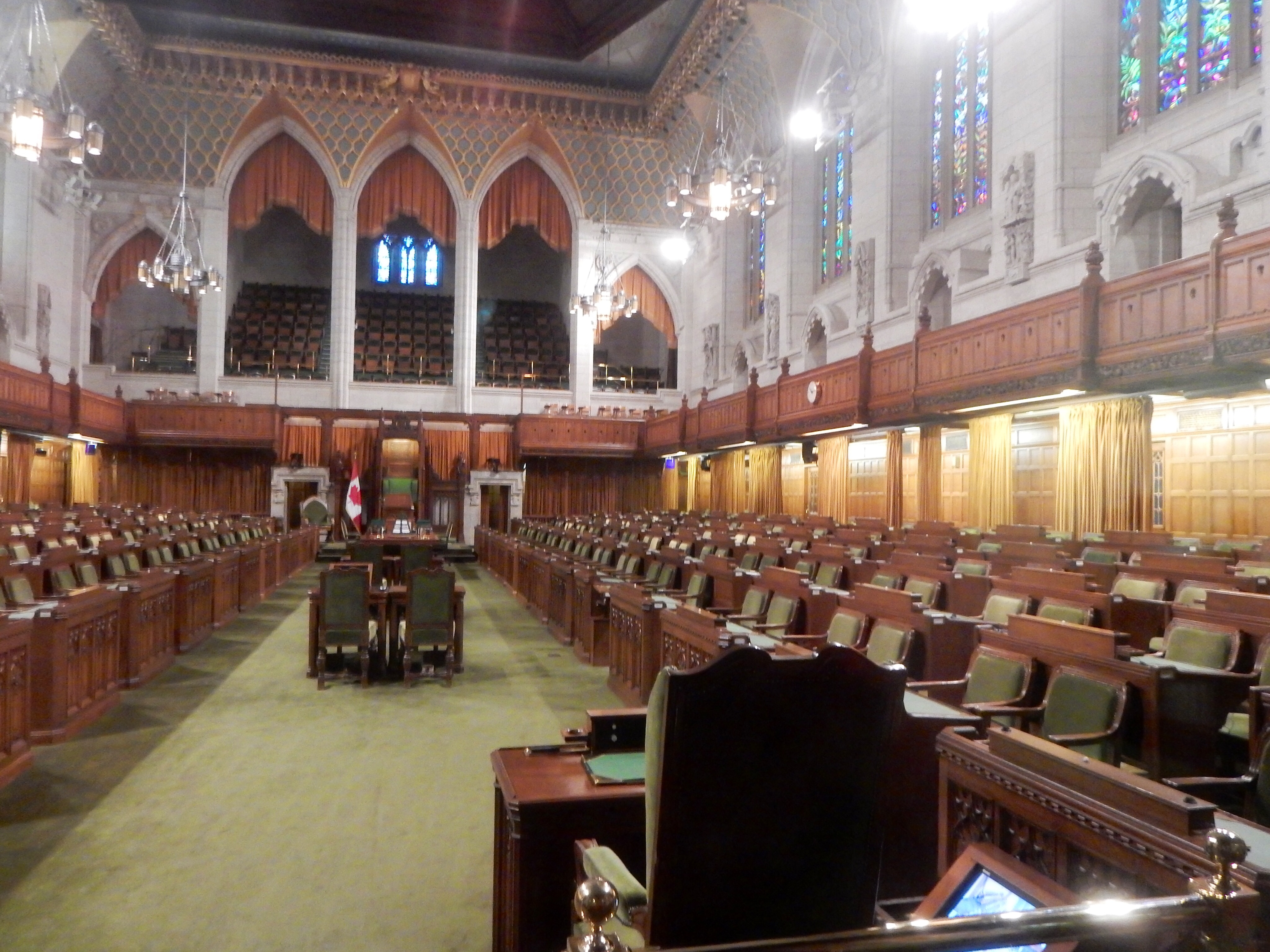
Canadian House chambers

Canadian House chambers

Our tour was of the Centre Block of Parliament which is where the chambers for the House, the Senate, and the Library of Parliament are housed. Since Canada is a bilingual country, tours are offered both in English and in French. We had to wait about 25 minutes for the next English tour. Bilingual may help keep the country united but it also imposes a cost for dual signage, tours, and even church services. In any event, our wait was much shorter than the line which was present when we finished our tour and left the Parliament building

Canadian Senate chambers

Canadian Senate chambers

The tour lasted about one hour. Since this was Saturday, neither legislative chamber was in session. We were able to enter the Senate chambers but could only view the House chambers through windows along one wall. The construction we viewed Friday was of a new House chambers being built in a portion of the West Block.

Library of Parliament

Library of Parliament

The Centre Block of Parliament that we viewed today had been extensively destroyed in a fire in 1916. The cause was never determined. As the nation’s capital, the complex and building is quite impressive. The library was the round building pictured in yesterday’s blog. It is the most original building as a librarian closed metal doors between the library and the fire, blocking the passage of the flames.
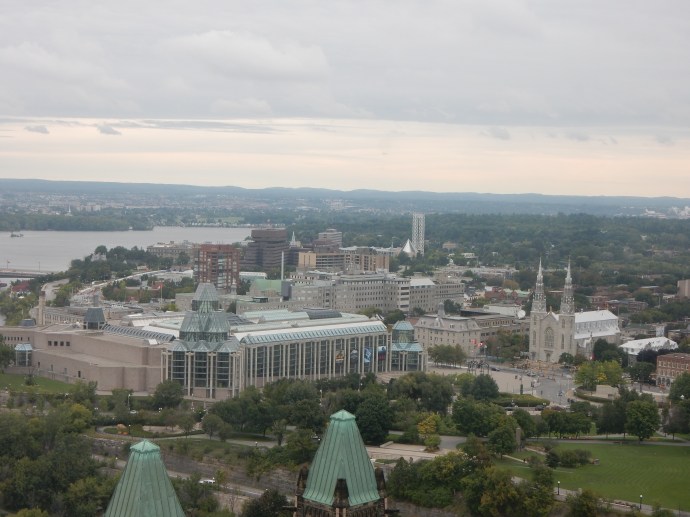
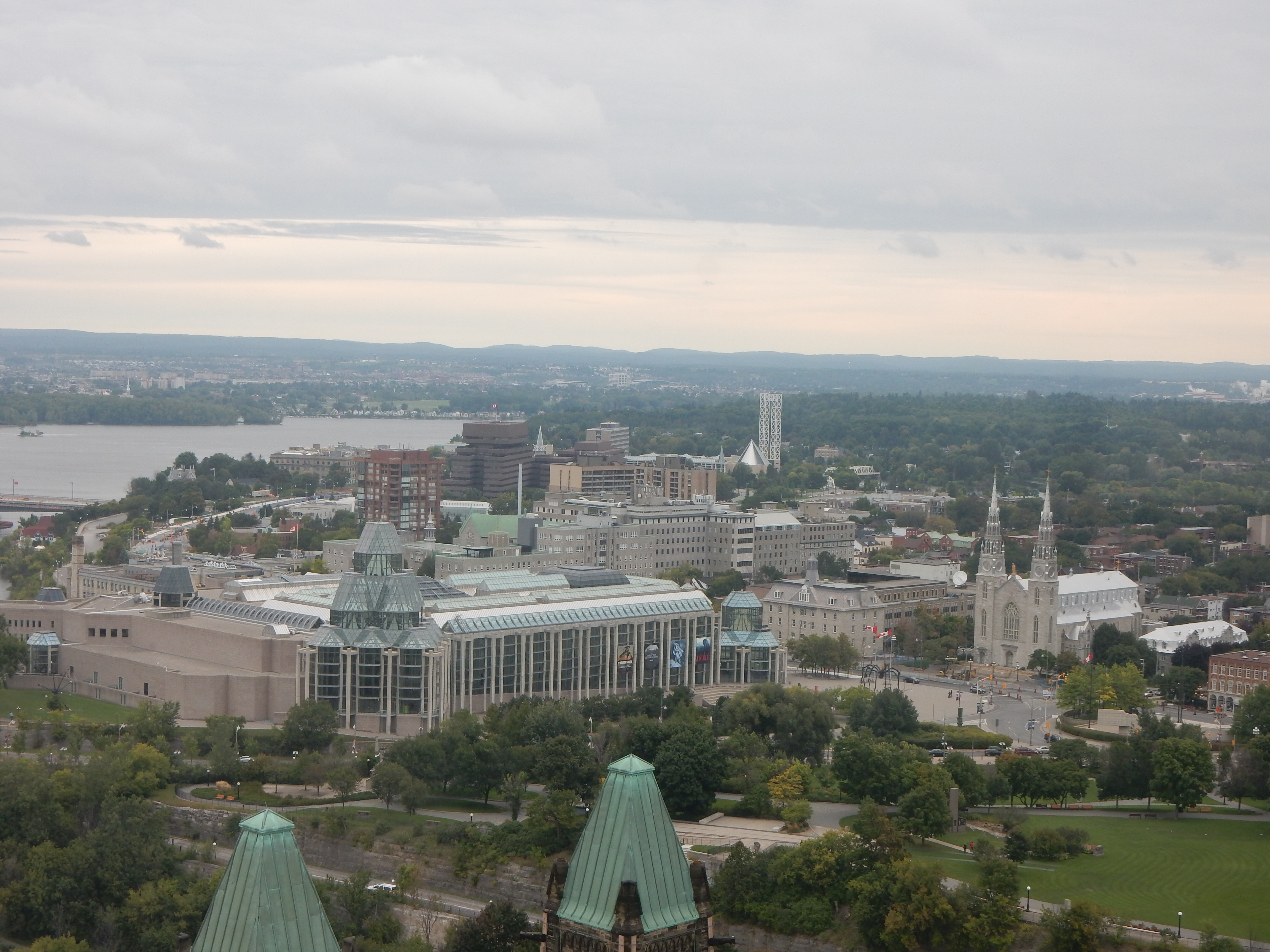
View from Peace Tower, Notre Dame Cathedral is twin spires at right center

View from Peace Tower, Notre Dame Cathedral is twin spires at right center

Technically, Canada is part of the English Commonwealth and Queen Elisabeth II is the Monarch of Canada and head of state. Her duties are strictly limited in the Canadian Constitution. Our tour also included an observation deck in the Peace Tower 200 feet above the ground. The tour concluded with a visit to the Memorial Chamber.

The Memorial Chamber is dedicated to the memory of Canadians who have died in military service. It was designed after World War I, the war which was thought to never have to be repeated. The central point is an altar of Belgian stone with the names of the dead from World War I. As time has progressed, side tables hold books of remembrance for other wars since World War I. Pages of the Books of Remembrance are turned every morning at 11 o’clock, according to a perpetual calendar. These calendars allow for each page in each book to appear at least once in the course of the year. We were present at 11 AM when a uniformed officer of the military performed the ritual.

The history of Canada is still not a complete picture in our minds. During today’s tour, it was mentioned that only several of the provinces united to form Canada in 1867. Newfoundland, for instance, did not join until 1949. Thus the building does not always have flags or seals from all of the current provinces since it was built a century ago.

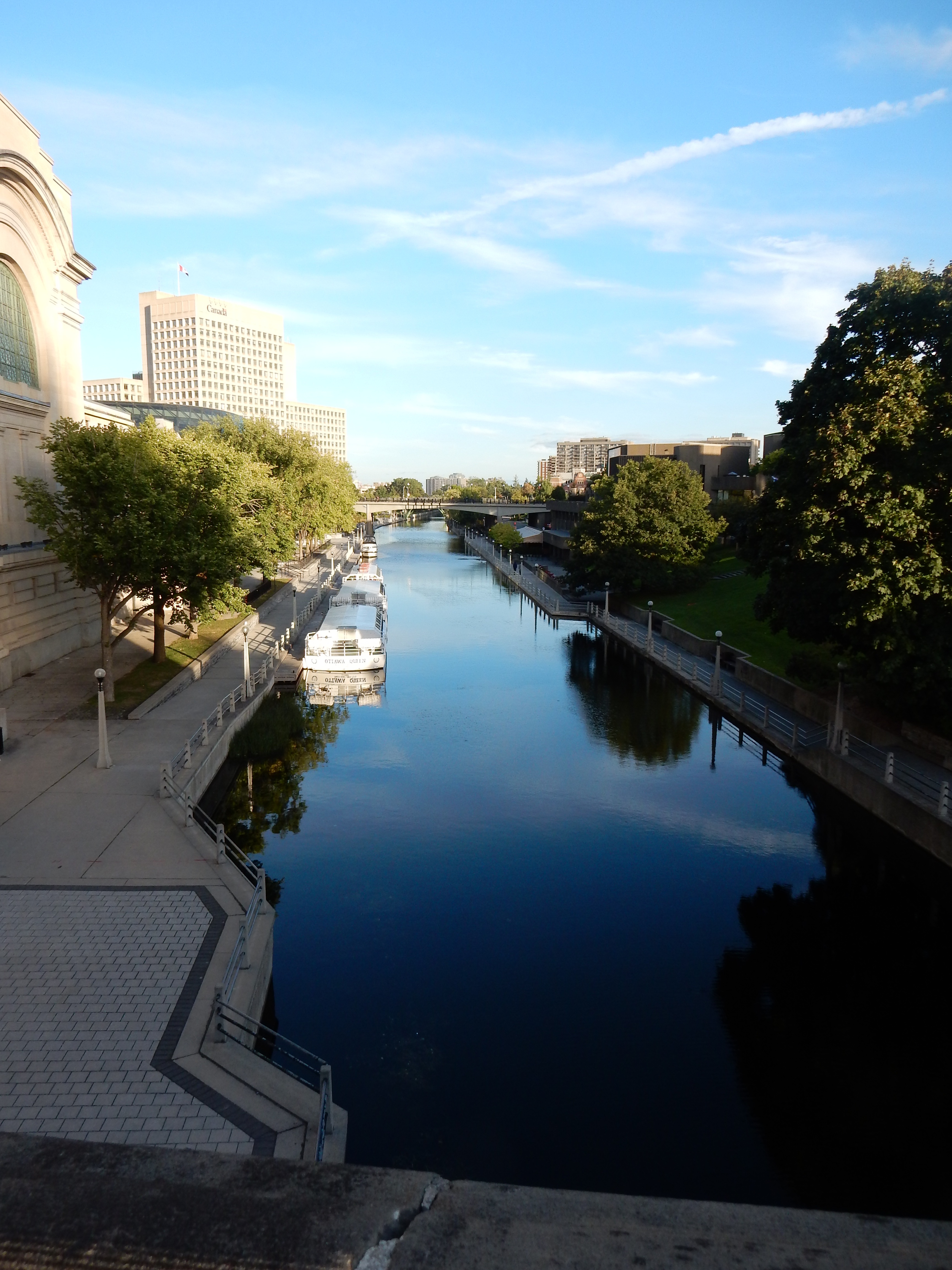
After walking in the pouring rain, we came to our second stop. The Bytown Museum, housed in Ottawa’s oldest stone building, does a nice job of describing the history of Ottawa. A major force in the establishment of the town is the Rideau Canal. (You may have heard of this. In winter there are frequent pictures of Ottawans skating down the canal to work.)
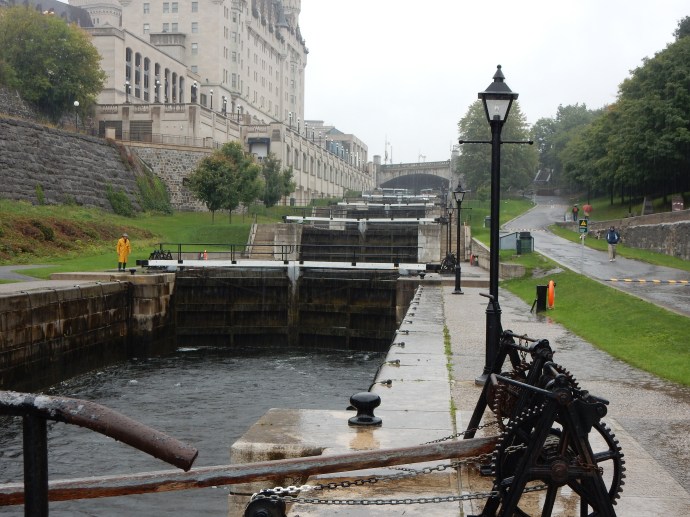
Ottawa locks on Rideau Canal with lock  worker in yellow slicker

Ottawa locks on Rideau Canal with lock worker in yellow slicker

The Rideau Canal is a UNESCO World Heritage site. It was built in the 1820s, the first canal build for steamships, not horse drawn boats. The impetus for its construction was to create a clear shipping channel around the rapids in the rivers to allow for a secondary passage for Canadian and British forces in case the St. Lawrence River was blocked by the U.S. Our friendly relations now were not always that way-more details in future weeks. The canal was a success although newer technologies negated its need. The canal is about 120 miles long,connecting Ottawa to Kingston. It is now used primarily by pleasure craft. The locks in Ottawa lift boats a total of 80 feet. The locks are still turned by manual labor as they were when it was built. We observed the crew opening the locks in the rain.

Ottawa became the capital of Canada by chance. Ottawa had started due to the Rideau Canal and lumbering. In 1867, there was competition among several cities to be the new nation’s capital. Queen Victoria made the decision, never specifying the exact reason but it was more defensible, farther from the U.S. border, and more midway geographically for the young country. It has grown immensely, governmental functions are still its main reason for existence.
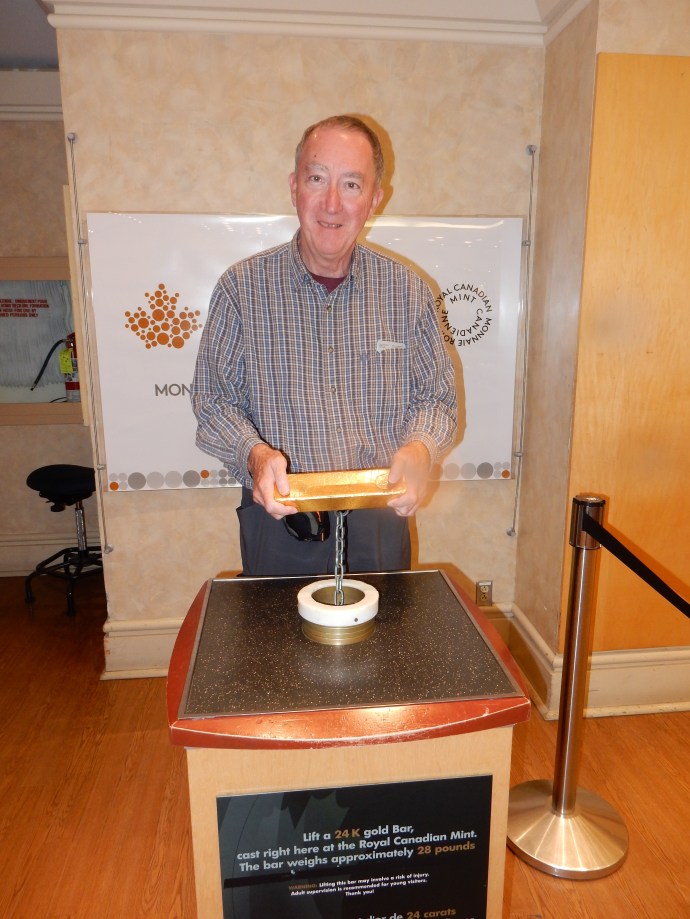
$550,000

$550,000

After lunch, a nice respite from the rain, we went to the Royal Canadian Mint. At the Ottawa location, the Mint makes primarily investment and collectible coins; mass production of circulation coins occurs at the Winnipeg facility-which also makes coins for 75 other countries. It was while waiting for the next English tour that I lifted the gold bar worth $550,000.

The tour, cheaper on weekends when production is not occurring, shows you the design and production areas. We saw rolls of gold metal worth $20,000,000 each (from a distance, behind glass walls), plus rolls of silver worth hundreds of thousands of dollars. The Canadian mint is a leader in new technologies; producing the purest gold coin (99.999% pure), the first locking mechanism for bi-metallic coinage, the first colored circulation coin, and others. They made four large gold coins. (I forget the exact size.) One of these sold for $2.6 million. The owner in Dubai has made a coffee table out of his. It is currently valued at over $6,000,000.

The tour had 15 people on it. There were people from Alberta, Montreal, Minnesota, Trinidad, London England, and Russia. Quite a mix.

The tour finished in time for us to make the short walk for the 5 PM Mass at the Notre Dame Cathedral Basilica. The Cathedral is colorful and ornate, although it appeared less than 100 people were in attendance. The service was bi-lingual. I thought saying many of the prayers and readings in two languages would mean it would take longer than the usual 60 minutes. The service was completed in 45 minutes.
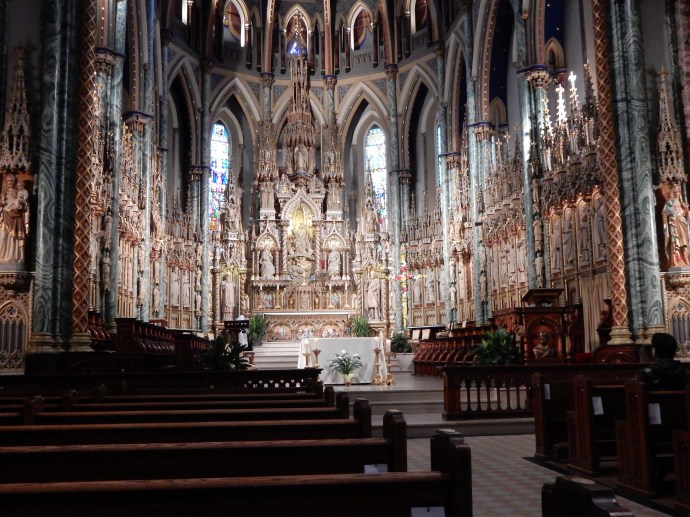
Notre Dame Cathedral

Notre Dame Cathedral

This mass came a week after we had toured the St. Paul Cathedral. While we have been to church there often, we had never taken the tour. Come to find out, the St.Paul Cathedral is the 4th largest in North America and listed by Fox News in 2013 as one of the 12 most beautiful churches in the U.S! The Notre Dame Cathedral struck me as much brighter and colorful; St. Paul seems dark in comparison.
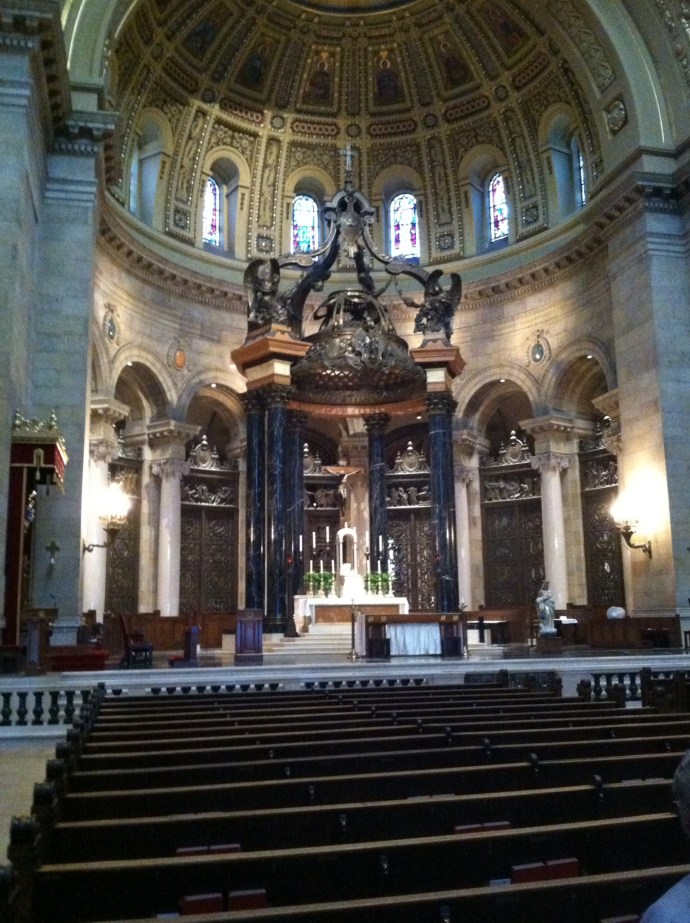
St. Paul Cathedral

St. Paul Cathedral

The St. Paul Cathedral has a series of six shrines constructed and funded by various European immigrant communities that settled in St. Paul. (Italian, Irish, German, Slavic, French Canadian, and St. Therese patron of all missions.) While the first Mass was held in the Cathedral in 1915, it took until 1941 before it was essentially complete.

One story from the St. Paul tour. There are two organ consoles. One (the original) is in the sanctuary and one (from the early 1960s) is in the choir loft. In the early ’60s, the long time organist announced his retirement. He proposed that his assistant, a woman, succeed him. This was approved but since at this time, a few years before Vatican II, women were not allowed in the sanctuary during Mass they had to construct a second organ console up in the choir loft.

Ed and Chris 9/13 11:15 pm

Categories: road trip, travel | Tags: , , , , , | Leave a comment

2014 Trip Six, Sept.12, Fall in Canada and Deb and Rebecca’s Wedding

Ottawa, Ontario Friday Sept. 12 2014

Are we in Canada?? We drove over the Mississippi River today. On our drive from North Bay to Ottawa we did a double take when the sign said Mississippi River as we went on a bridge over a river. Maybe we did not read it correctly we thought. But, no, our eyes were good. There is a short Mississippi River in Ontario that feeds into the Ottawa River.

Ottawa River between Matawa and Pembroke

Ottawa River between Matawa and Pembroke

The Ottawa River is the biggie around here, with its water quantity equalling all of the water in Western Europe. It flows for about 780 miles and forms part of the border between Ontario and Quebec. It has 50 dams and 13 reservoirs on it. The U.S. Mississippi River comes from Native American term for Great River. The origin of the name for the Canadian Mississippi River is uncertain, but the river does exist.

Ottawa River in Ottawa

Ottawa River in Ottawa

We drove along the Ottawa River for about 300 of its 780 miles. In the upper portion, the lakes so common to this section of Ontario continued as did the forests. Finally though, we reached rolling hills with agriculture as we got closer to Ottawa.

We chose one museum to visit, the Champlain Trail Museum in Pembroke, ON. We thought it might aid us in understanding the history of Canada. Champlain was a French explorer who was one of the first to map the Canadian coast and is credited with founding Quebec City. Unfortunately, the museum was not that helpful.

Astrolabe display in Champlain Trail Museum

Astrolabe display in Champlain Trail Museum

There is an interesting display area about an astrolabe possibly belonging to Champlain which he supposedly lost in the area just south of Pembroke. The astrolabe found in 1867 ended up in an American’s hands and despite Canadian requests, did not end up back in Canada until 1989. There is some dispute if it was Champlain’s, in any event, it dates from that time period. (An astrolabe was used by navigators to help determine latitude and was invaluable for correctly mapping new areas to the Europeans.

Part of Parliament buildings

Part of Parliament buildings

We arrived in Ottawa around 4 pm at a Courtyard in downtown Ottawa. We can hear the music from the bars here in the ByWard Market area. The day had finally turned sunny and since Saturday’s forecast is for rain, we headed out to Parliament Hill to take some pictures. It appears that at least one of the three major buildings is undergoing major renovations and minor work at two others. We spent a pleasant two hours touring parts of the downtown area around Parliament. Tours will have to wait until tomorrow.

Part of Parliament

Part of Parliament

Ottawa has a population of just under 900,000 and has the look and feel of a big city; traffic, diversity, density, etc. It might be good to remind you that Canada has a population under 40,000,000; less than the population of California. However, Canada’s land size is slightly larger than the U.S. Its population density is about 1/10 that of the U.S. although neither one ranks high in that regard. No wonder we saw a lot of open space on this journey so far.

Rideau Canal in Ottawa

Rideau Canal in Ottawa

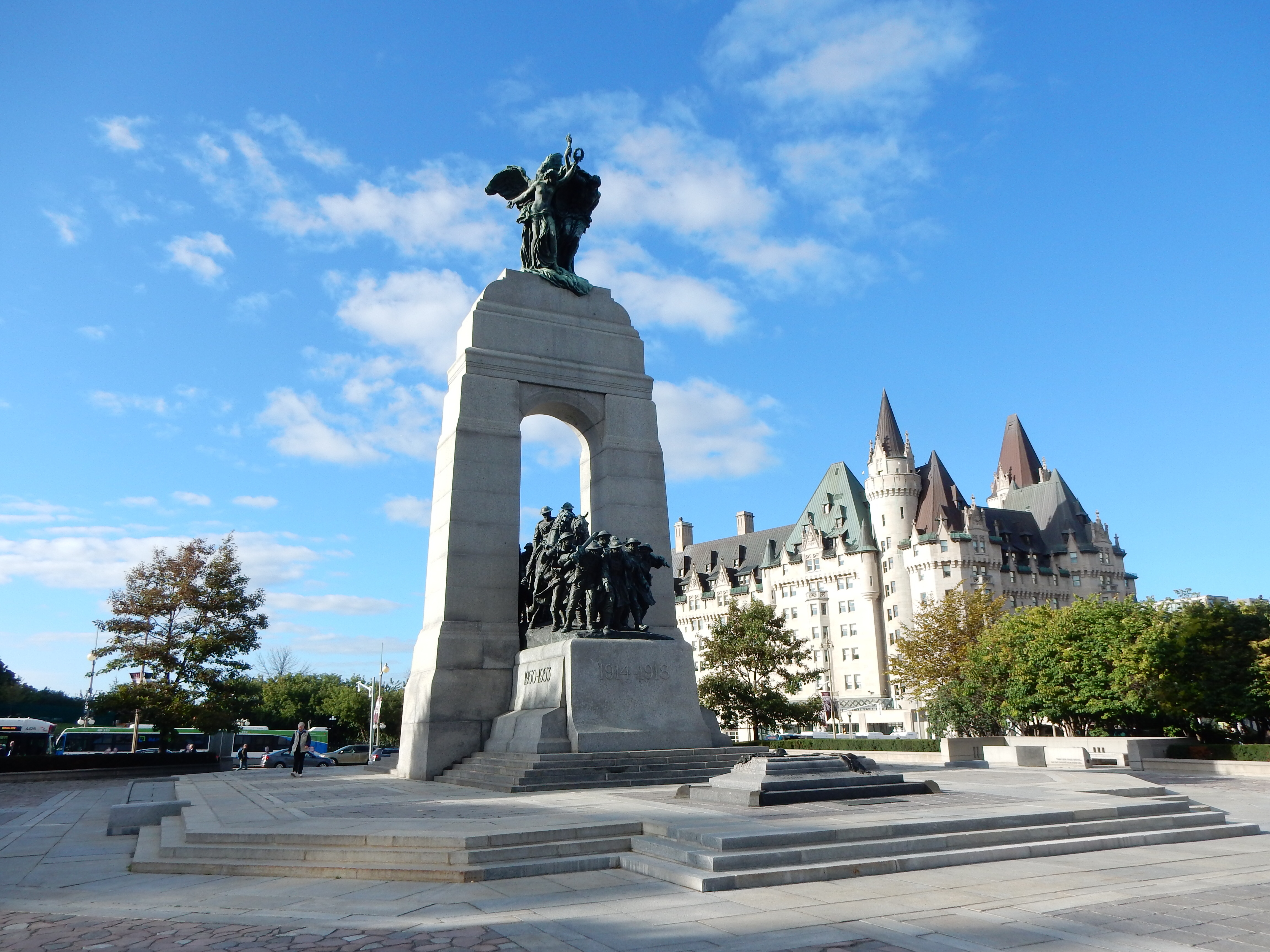
National War Memorial of Canada

National War Memorial of Canada

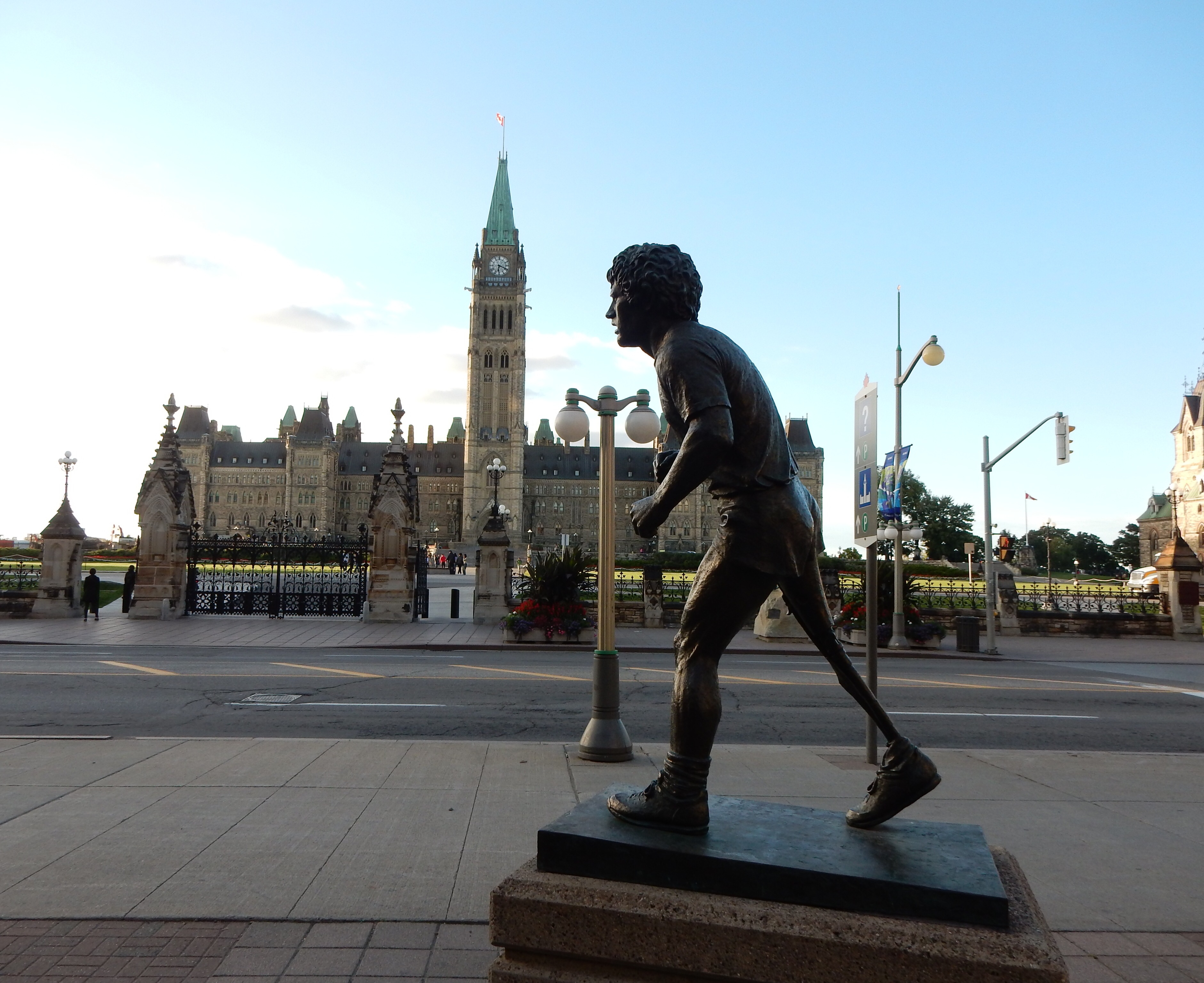
Terry Fox memorial in Ottawa and annual race is Sunday Sept 14

Terry Fox memorial in Ottawa and annual race is Sunday Sept 14

We tried to bring back our 2013 Canadian memories to help us on this trip. Besides Canadian money, it was critical to have a chip enabled credit card for purchases at gas stations and other locations. We are slowly remembering that restrooms are called washrooms. In cash transactions, the penny is ignored and the value rounded to avoid issuing penny coins. Our conversion of kilometers to miles goes well; not so great for transferring Celsius into Fahrenheit.

Our overnight stay at Nipissing University went well. When we left, a few professors were in early so the building was not completely deserted. No bear was sighted by us. We had breakfast at Tim Horton’s; a Canadian mainstay. Last year we tried one in Calgary, were not impressed, and stayed away from them for the rest of the trip. We decided to try them once more and we visited ones in North Bay for breakfast and Pembroke for a mid-day snack. Both times the food was fresh, tasty, and the stores clean.

Ed and Chris 10:15 pm 9/12/14

Categories: road trip, travel | Tags: , , , | Leave a comment

2014 Trip Six, Sept. 11, Fall in Canada and Deb and Rebecca’s Wedding

North Bay, Ontario Thursday Sept. 11, 2014

Lodging in North Bay is unique for us. We are staying at Nipissing University, in a guest suite maybe attached to their conference center. I say maybe because there are few people around and the non-lodging rooms seem more like offices and seminar rooms. There do not appear to be many lodging suites. We may be the only ones staying overnight in this three story building. The room is not dissimilar to a hotel room with its own bathroom. There is a TV and work table, walls are concrete block. Oh yes, there is a sign posted on the door to the building that a black bear had been sighted in the area so be cautious. (But Super Fast Internet)

North Bay is a town of 54,000 located on a large lake (Nipissing) and was first seen by a European in 1615, Samuel de Champlain. It hosts the largest annual combined fur auction in North America. Railroads and lumbering were the main engines of its growth.

Today’s drive was 410 miles. We actually drove about 20 miles on a highway with a speed limit of 62 mph (100 kph)!!! This is the first time since we left Duluth on Monday that we had a speed limit over 56 mph (90 kph). Many times the speed was less as we drove through towns. I can say that Canadian drivers observe the speed limit as much as American drivers.

We left Wawa pretty early. Wawa went through a name change in the 1940s and 1950s when the big wigs decided to change the name to Jamestown to honor Sir James Dunn, the head of Algoma Steel which used iron ore from Wawa. It took the residents 12 years to get the name changed from Jamestown back to Wawa.

Another view along Lake Superior

Another view along Lake Superior

Of course, on this route, the towns were few and far between until we hit Sault Ste Marie. Most of the drive today was again water, forests and rocks. Lake Superior, Lake Huron, numerous rivers and small lakes, evergreen and deciduous trees and a variety of rock formations. The combination makes for great viewing; it might have been nicer if the sun had been out but at least the winds were less and the rain was gone.

We stopped at a park visitor center along Lake Superior. The two rangers were outside talking to two campers about which hikes would be passable after the rain. They could not get inside the building due to the power being out after yesterday’s storm. (Must have had an electronic door security system.) As we walked away, three other campers came up saying: “We survived the storm”.

Katherine's Cove on  Lake Superior

Katherine’s Cove on Lake Superior

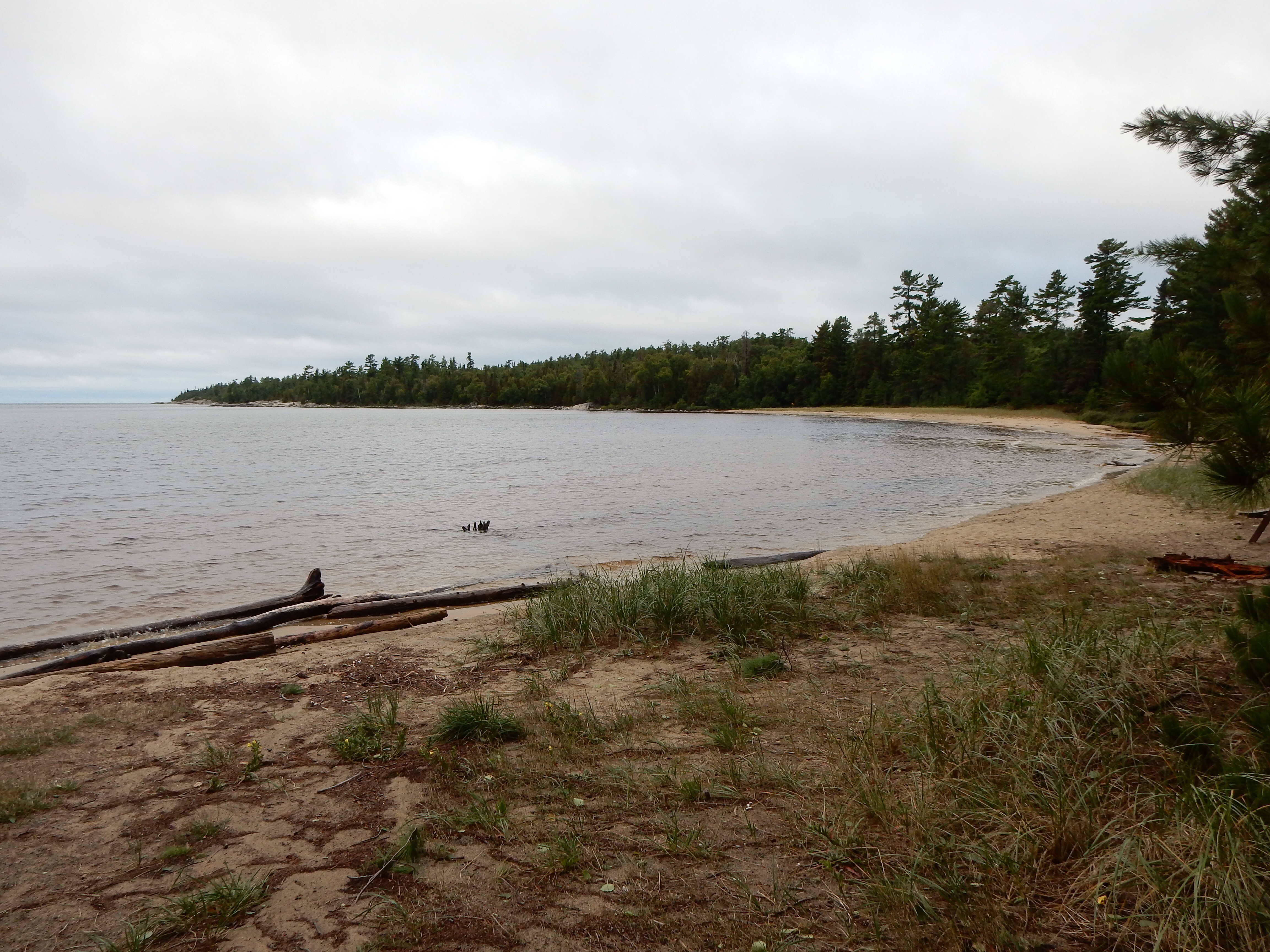
Another stop was at Katherine’s Cove, named as the best secluded beach by one of the Ontario tourism brochures. It was secluded today; just us and the tree branches that came down in the storm. We did not spend a lot of time there.

Our drive has taken us alongside many railroad tracks but we have not observed one moving train. Given the need to move grain and oil, I found this surprising unless the main lines are located elsewhere.

We gassed up at a First Nations gas station and tourist store. Gas prices are as high as last year; generally we are paying $5.25 per gallon. The store closes down November 1 and takes two to three weeks more for inventory. They had a ton of material. I did manage to find a Christmas ornament that was both native designed and made in Canada. Earlier ornaments have been designed by Canadians but made in China.

Along Lake Huron, leaves turning a little

Along Lake Huron, leaves turning a little

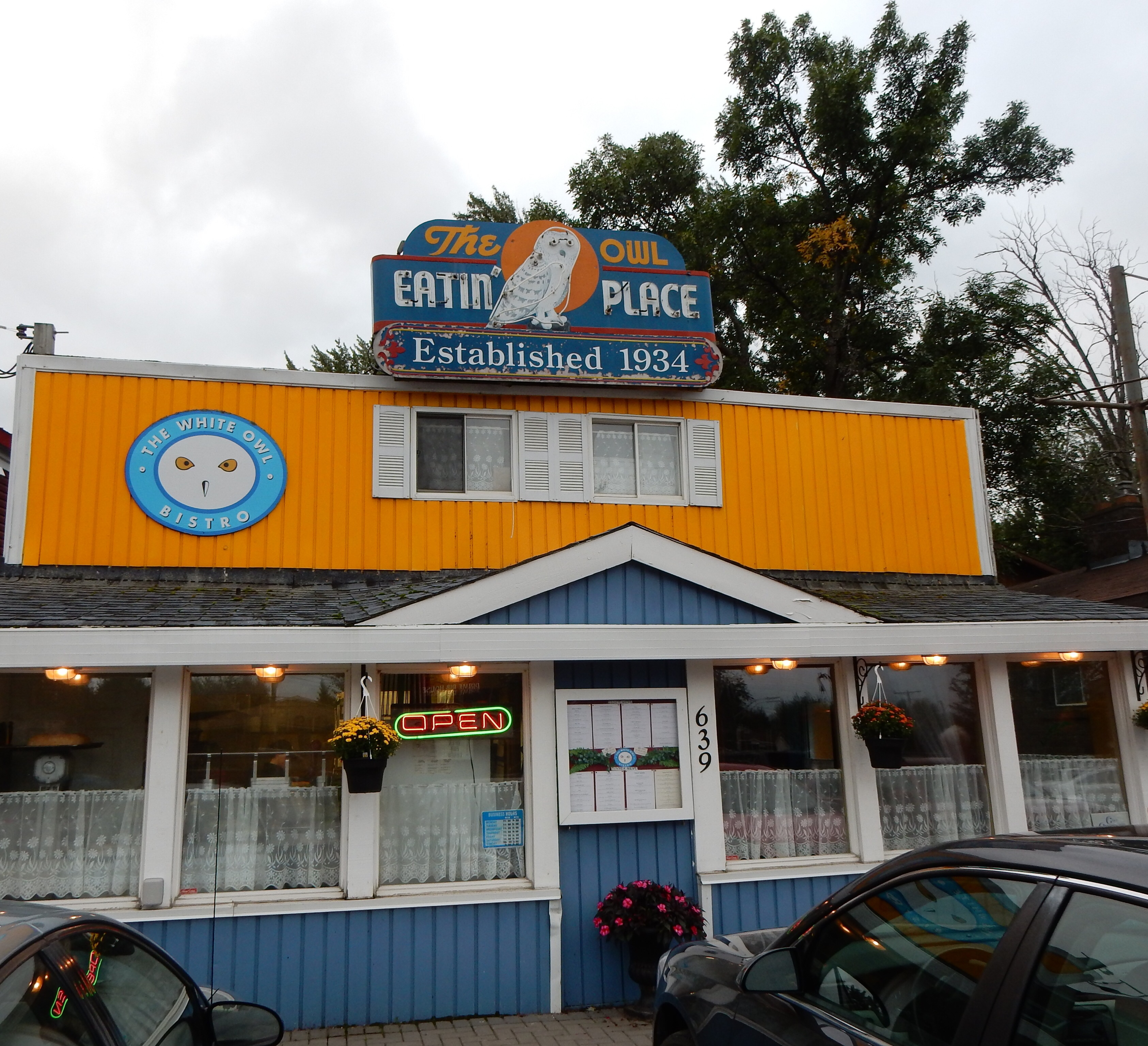
Lunch was at a local restaurant in Thessalon, on a beach next to Lake Huron. Dinner was at a small French restaurant that initially looked like a dump next to the beach on Lake Nipissing. Yes, lots of water today.

Dinner in North Bay

Dinner in North Bay

Ed and Chris 9/11 10:15 pm
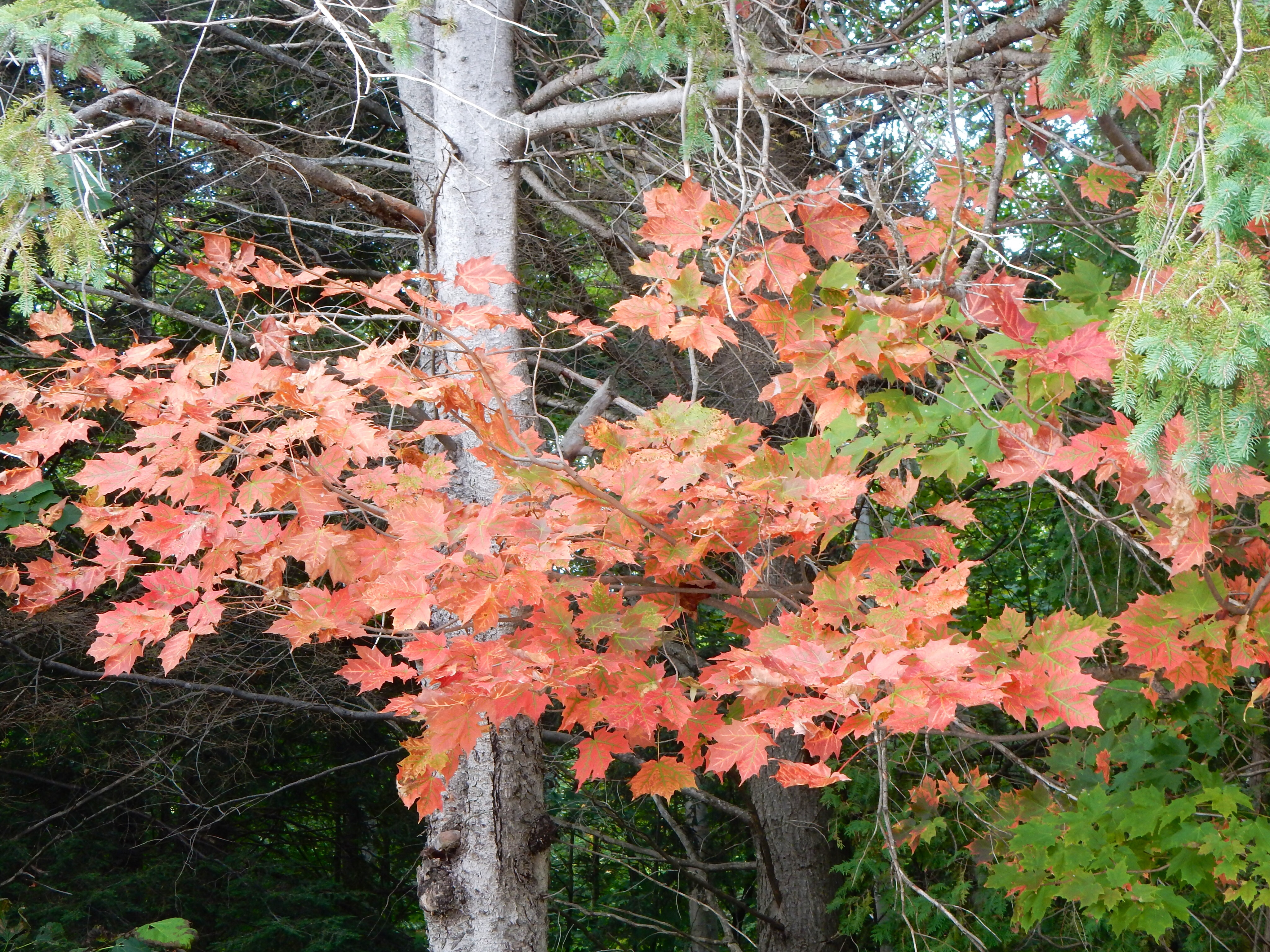
Fall leaf update. Once we were up north, higher than the Minnesota border. Now we are more on a level with Duluth and the leaves have turned a little here, more so than farther north.

image

Categories: road trip, travel | Tags: , , , , | Leave a comment

Blog at WordPress.com.