Monthly Archives: July 2013

2013 Trip Six, The Northwest, July 20

Sequim, WA July 20

Hiking to Sol Duc

Hiking to Sol Duc

Today’s theme in Olympic National Park was water, particularly waterfalls. Breakfast was a quick muffin as we headed out for the day. We hiked to three waterfalls and had lunch next to a lake.

Sol duc falls

Sol duc falls

Waterfall number one was Sol Duc. This one was my favorite; the entire walk had a great fragrance of pine or cedar. Scoff if you will, I could not tell the difference. But the scent was fresh airsy and wonderful.

We started to see more international visitors again as we hiked to the falls. We had more opportunities to take pictures for people again. This did not happen much at the beaches or rain forest.
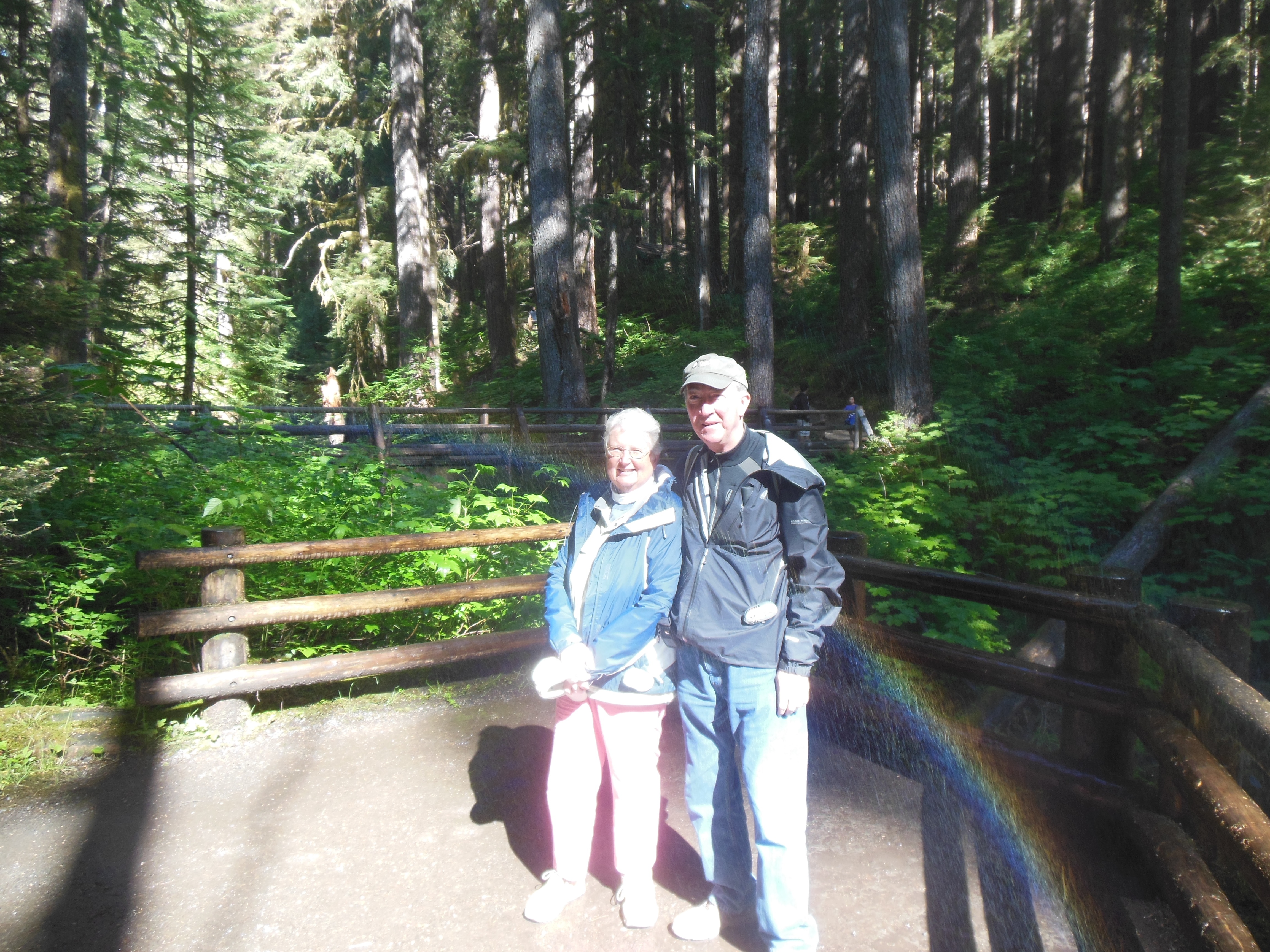
Chris, Ed and a little rainbow

Chris, Ed and a little rainbow

The trail was rocky but not steep. The falls are picturesque but not high. The forest still had thick undergrowth but less moss and ferns. They turn after a small drop and continue to fall in a narrow gorge. The falls created a mist that produced a small rainbow in one spot.
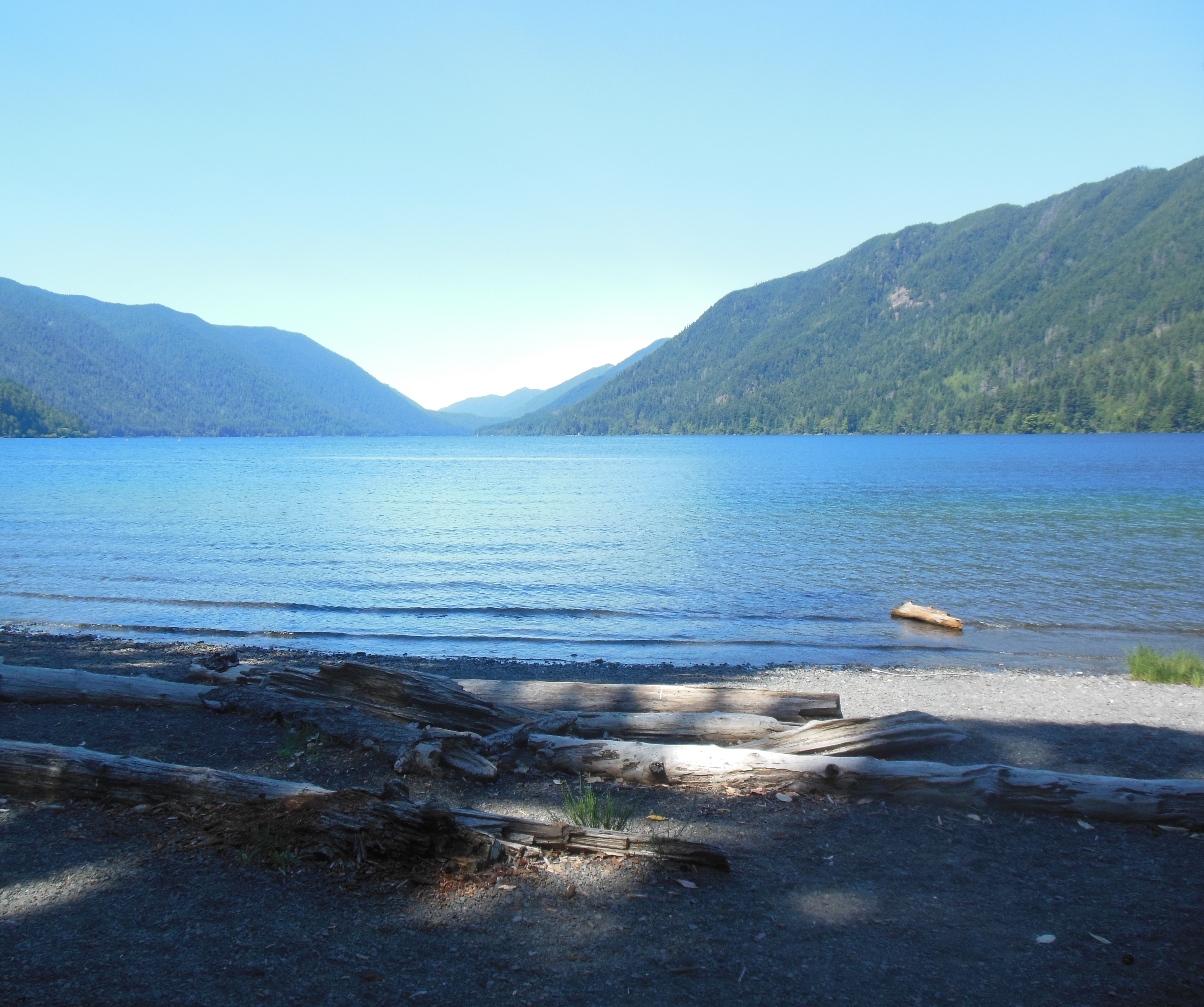
Lake Crescent

Lake Crescent

Lunch was at Lake Crescent Lodge. Lake Crescent has brilliant blue color and is very deep. The official depth has not been recorded, but is in excess of 600 feet. Some estimates are over 1000 feet. In any event, we only looked at it and used the trailhead located here to access Marymere Falls.

Marymere Falls

Marymere Falls

I was glad Chris had chosen this hike since the very last section of the trail leading to the falls are steep. If I had chosen the hike, we might not have completed it. The falls begin with a narrow band and then go into a classic bridal veil formation. After the climb, the falls were almost anti-climatic.
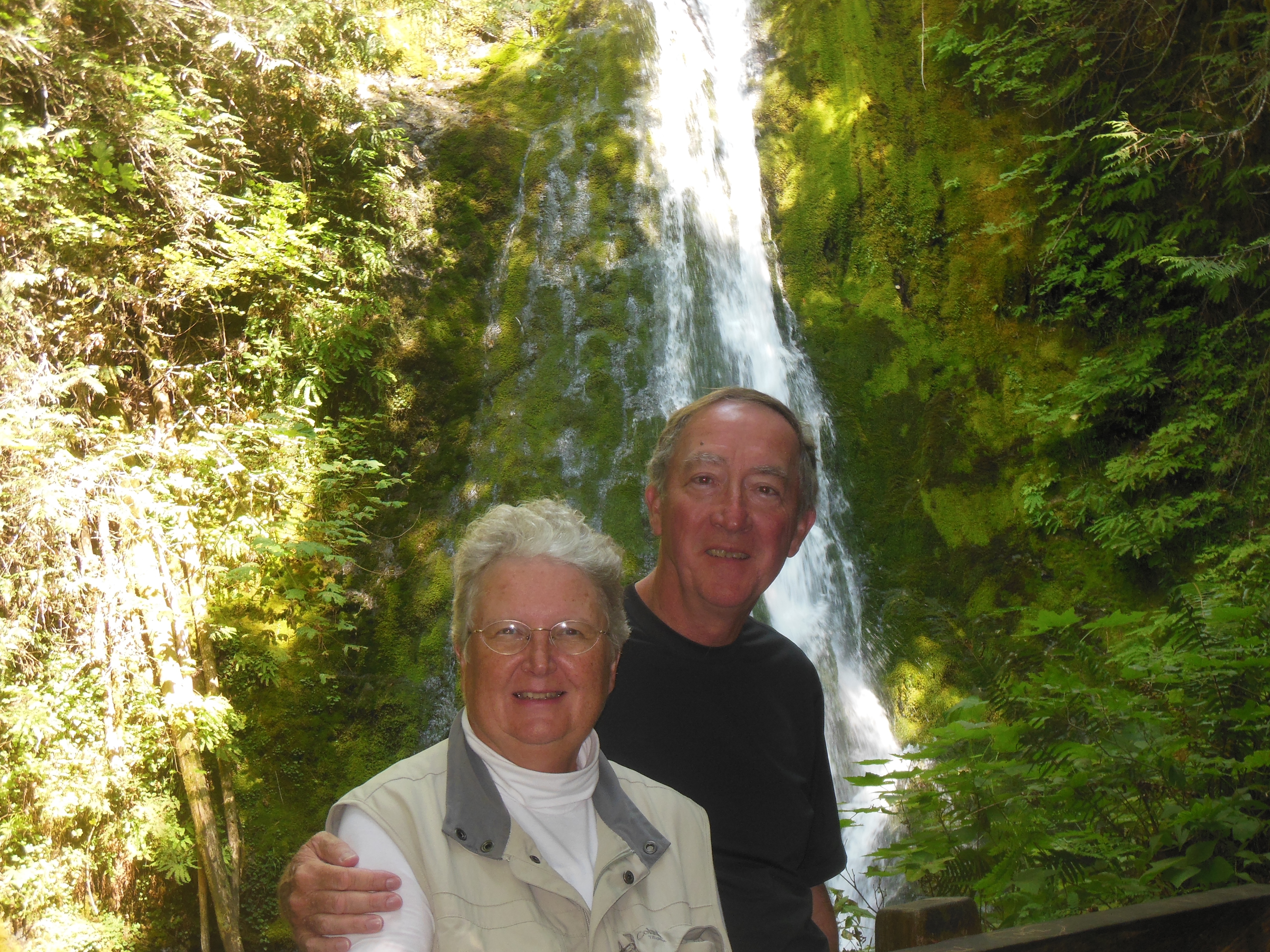
Madison Falls

Madison Falls

Elwha RIver

Elwha RIver

Our next stop was Madison Falls. This was only a short hike with the falls bursting upon you as you make a turn in the trail.

Madison Falls is in the area of the Elwha River and the largest dam removal project in U.S. history. After removal, salmon populations are expected to swell from 3,000 to 300,000. The natural flow of the river and the estuary at the bay are expected to improve.

The dam removal impacts are being studied by numerous academic and park groups. Restoration of the previous habitat is underway. The project began in 2010, dam removal in 2011 and will not be completed until next year.

Lavender field

Lavender field

As the afternoon moved on, we headed for Sequim. Our Evergreen hosts had indicated this weekend was the annual lavender festival. The Sequim area grows 80% of the U.S. lavender crop. We managed to visit one of the farms open for touring and pick-your-own lavender.

Lavender farm

Lavender farm

We had never been to a lavender farm before. The color is brilliant. The farm acreage under cultivation was not large and a portion of the rows had already been pretty well picked over. As you can see from the photos, the effect is mesmerizing though. A side factor we had not thought about was the presence of large quantities of bees. Given the number of flowers, the bees were not interested in humans.

After Mass and dinner we arrived at our Evergreen hosts where we will be staying for the next two nights. Once again, a pleasant evening of travel conversation was had.

Our education continues in other ways. Deb probably knows this but it was new to us. On 20 oz bottles of Coca Cola, the inside of the label has printing that is visible when you look through the bottle. The sayings are tied to Coke providing “Ahh” moments. There even is a web site. http://www.ahh.com

We are becoming so knowledgeable on so many different topics.

Ed and Chris July 21 7 AM

Categories: road trip, travel | Tags: , , , , , , | 1 Comment

2013, Trip Six, The Northwest, July 19

Forks, WA, Friday July 19

Hoh rain forest

Hoh rain forest

Hoh rain forest

Hoh rain forest

Today was our day to hike in the rain forest of Olympic National Park. First we had to have breakfast. We stopped at a small, small café just outside of the park boundaries. There was one table. There was the owner and a young woman cooking who had worked just two days besides today. The owner was called away on a 20 minutes errand. The young cook was nervous but the food tasted reasonable and we have not gotten sick yet.

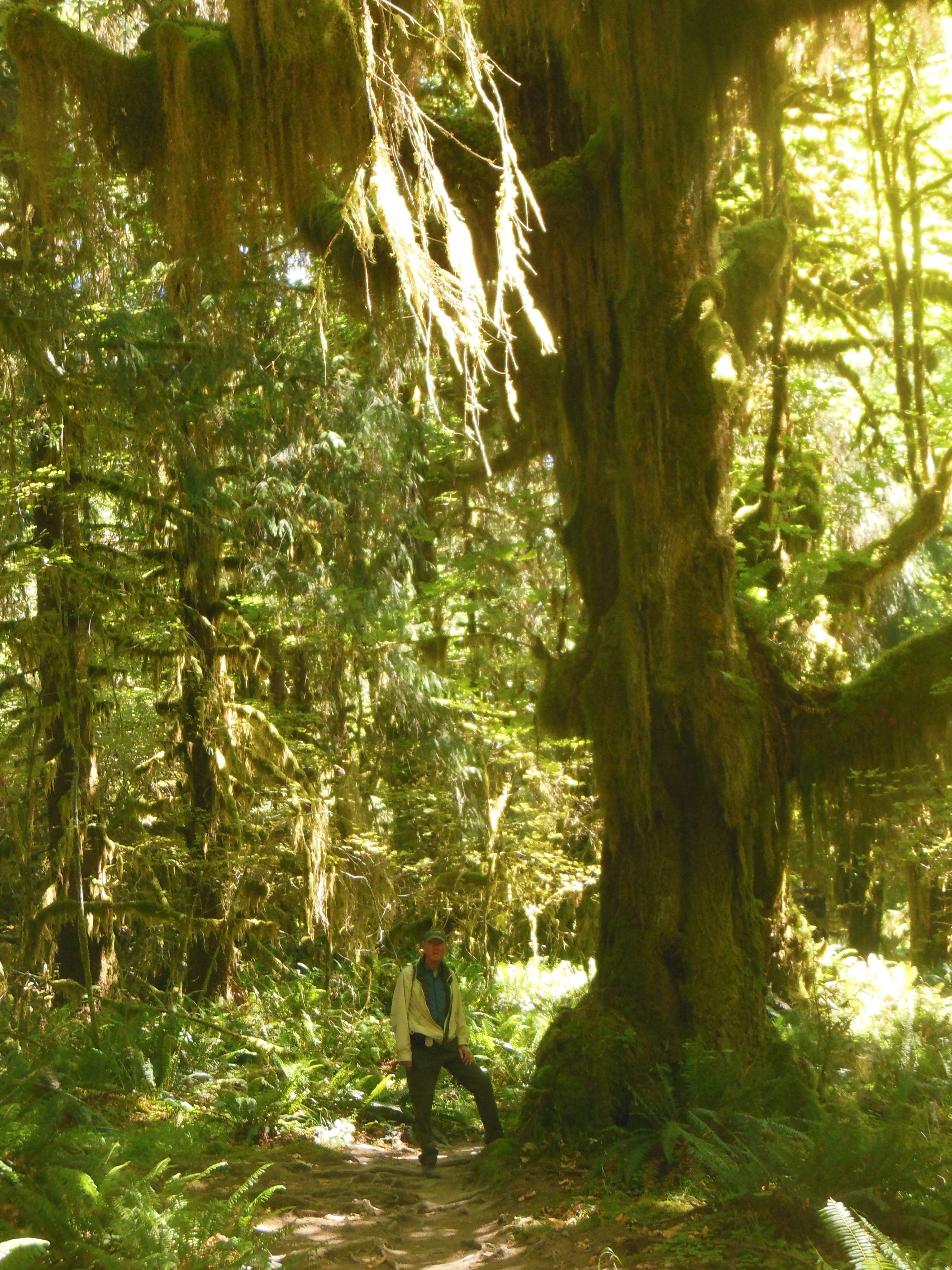
The Hoh rain forest is in the Hoh glacier and river valley. This part of the park receives 140 inches of rain per year on average. We went on a total of three hikes during the course of the morning and afternoon. This is old growth forest, so the trees are quite tall and old. The major difference in this area is the profusion of plants in the undergrowth.

Hoh rain forest

Hoh rain forest

Hoh rain forest

Hoh rain forest

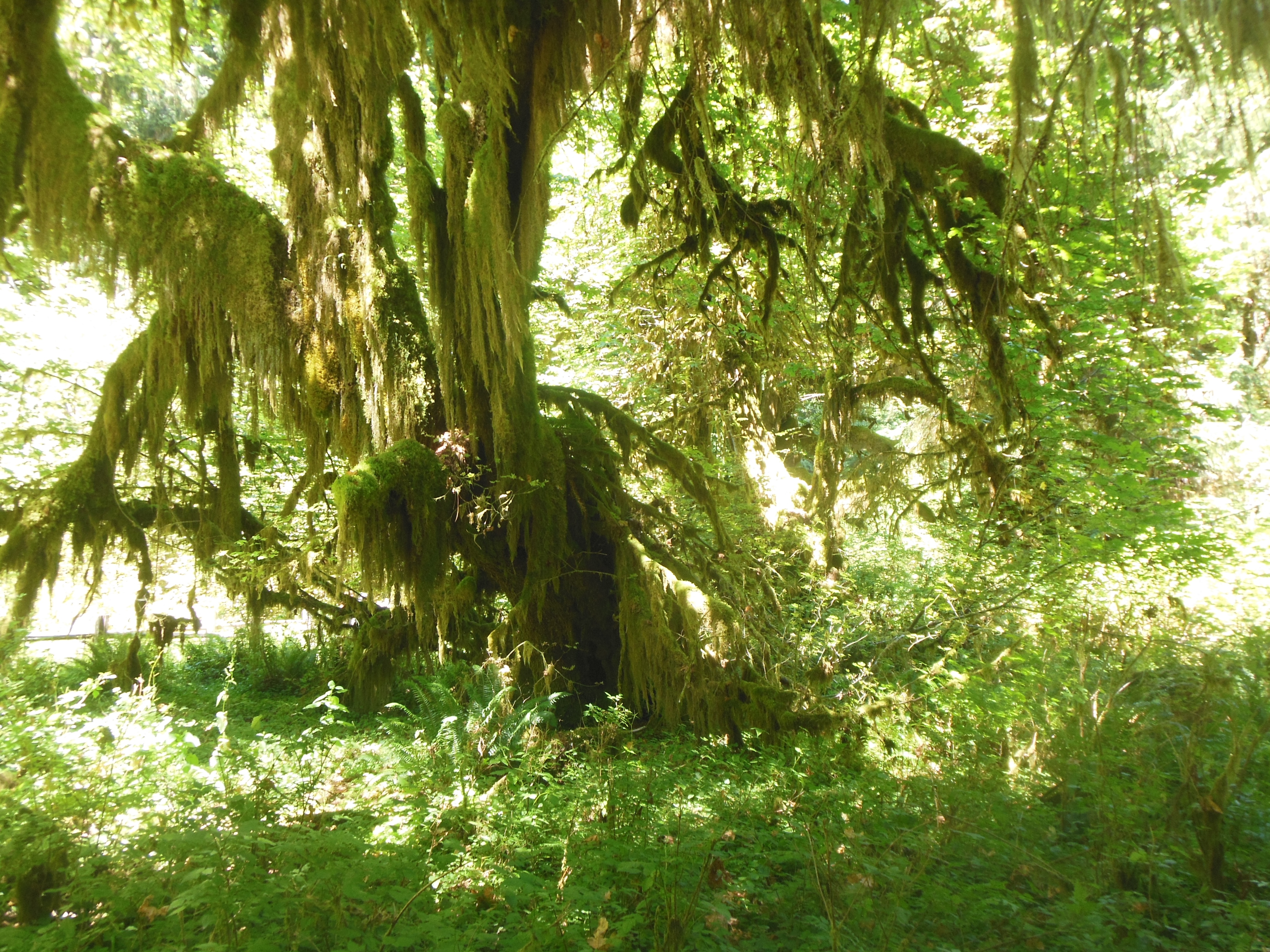
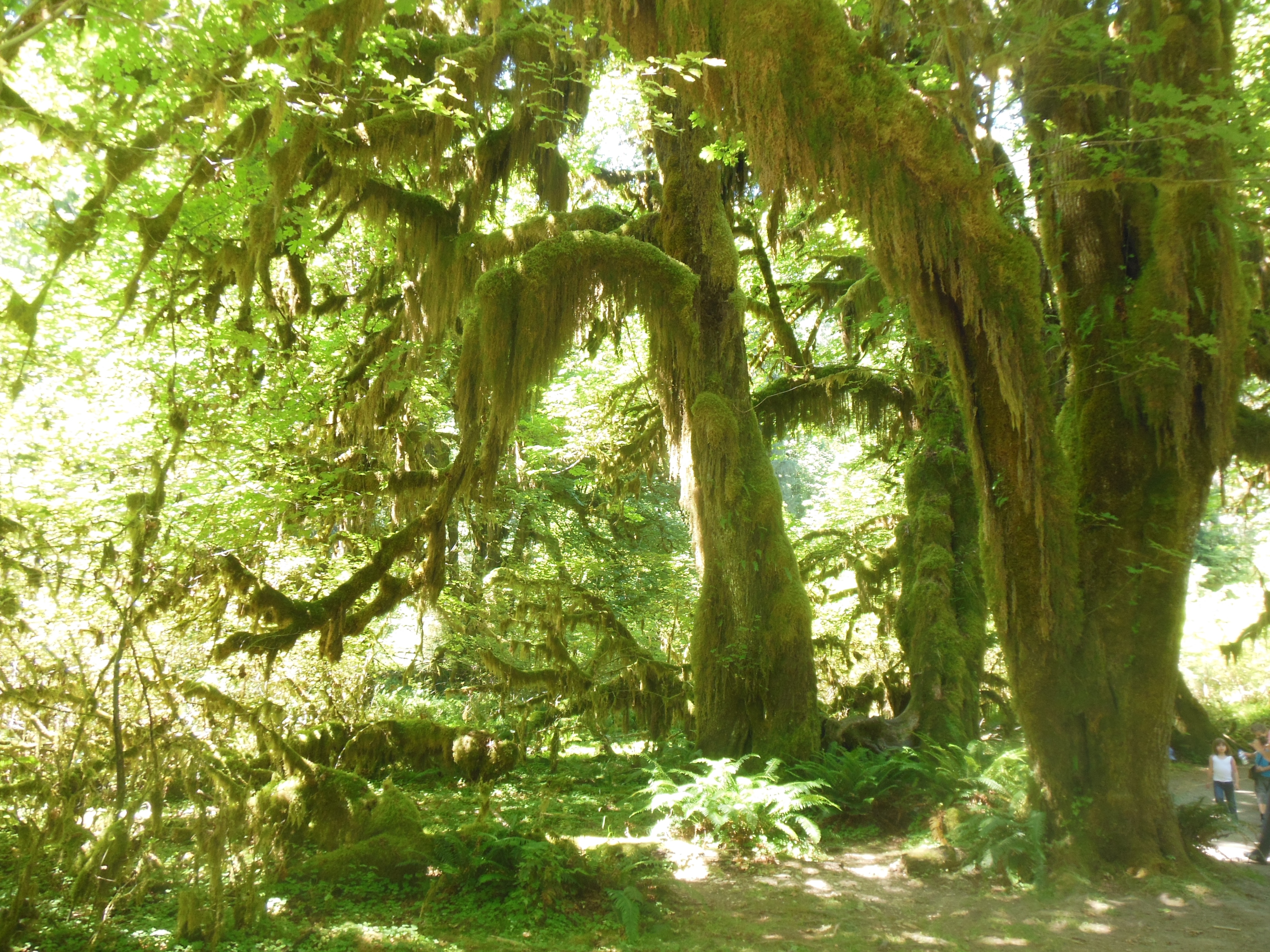
Epiphytes such as moss and lichens are everywhere. Ferns grow abundantly. Sitka spruce trees grow extremely tall and thick due to the rain. Trees that fall over are allowed to decay naturally. When they fall, they provide additional sunlight to the forest floor and a different species of plant will sprout as compared to the shade loving previous plants.

Nurse tree with early growth of new trees

Nurse tree with early growth of new trees

several trees growing around nurse tree

several trees growing around nurse tree


Nurse tree has rotten away

Nurse tree has rotten away

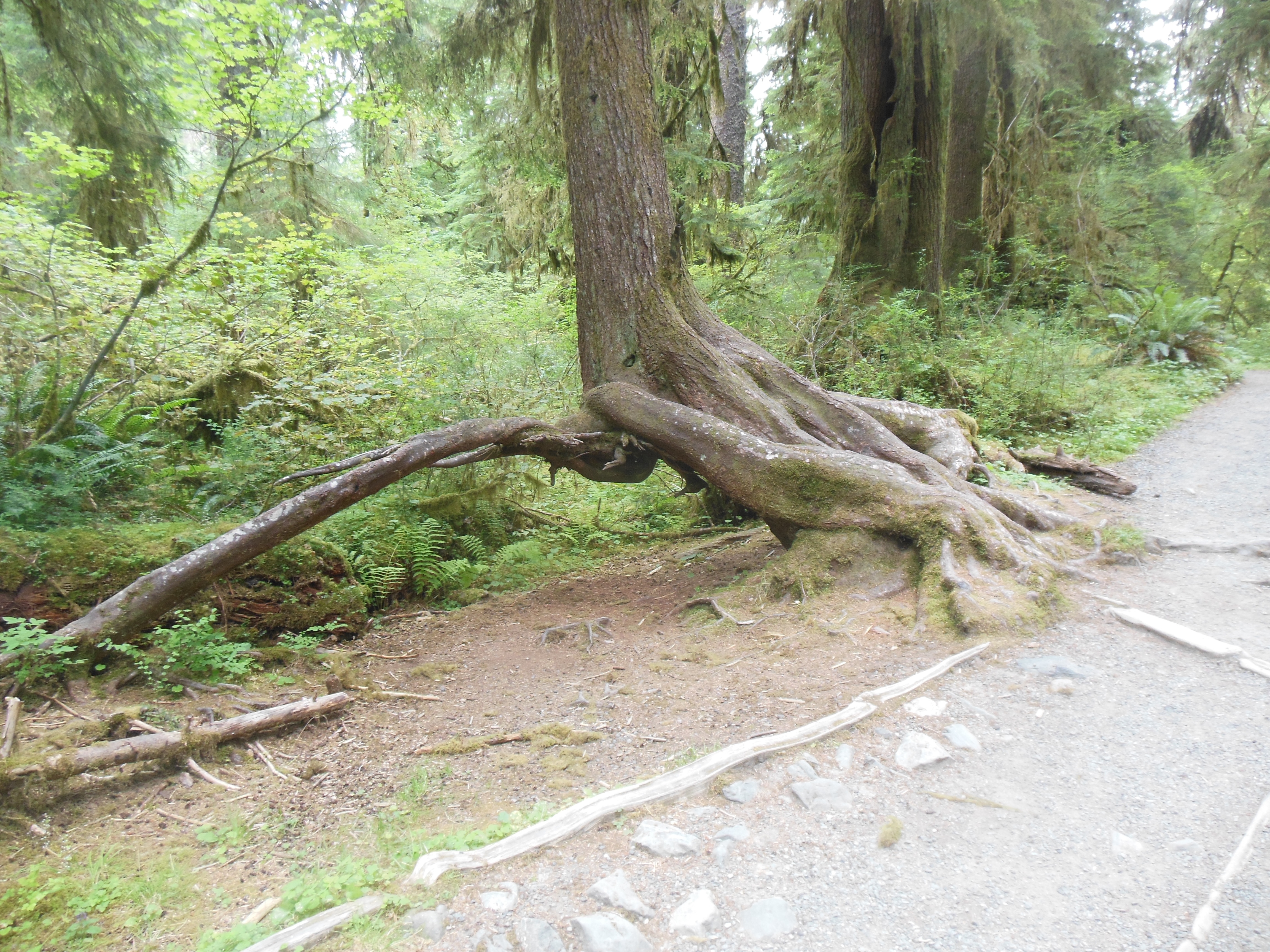
We observed numerous examples of nurse trees. This is a dead tree lying on the ground. Seeds from other trees and from plants land on the dead, nurse tree and begin to grow. This is extremely important for spruce and fir trees in this forest. They will begin growing on the dead, nurse trees. As they grow more, the roots reach the ground and then eventually the young trees grow over and around the dead tree. Eventually the dead tree rots away and the young tree becomes tall with a gap in its trunk and/or root system. (Hopefully the pictures will demonstrate this.)

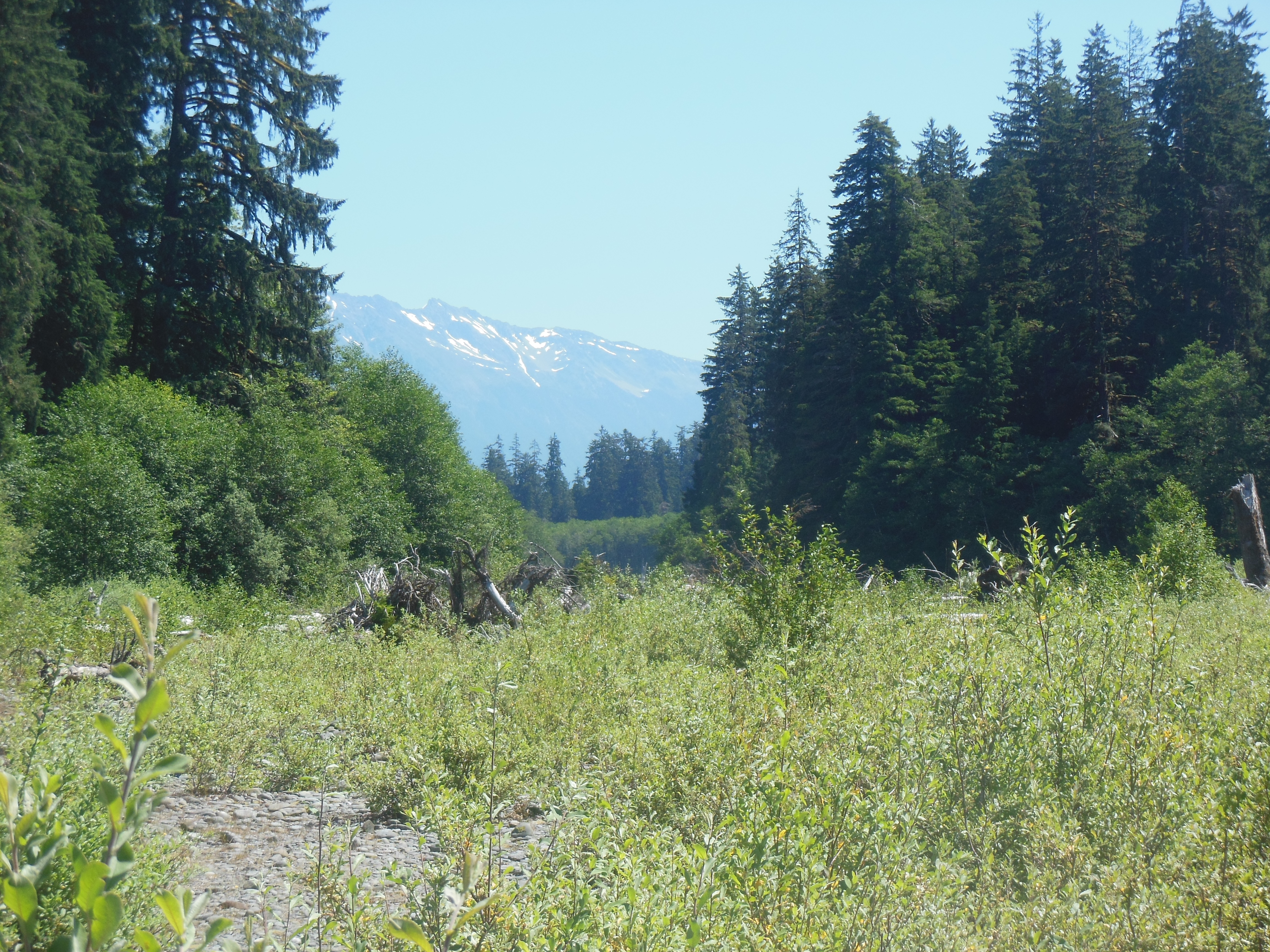
We only saw mountains a few times when we hiked directly next to the river and the gap in trees allowed an unobstructed view. Generally we were looking at: the ground so we did not trip on rocks and roots; straight out to observe ferns, moss, plants, etc.; and up to look at the tall trees.

View of Olympic mountains from Hoh river valley

View of Olympic mountains from Hoh river valley

After the hikes, we made two stops. One was at a huge Sitka spruce tree. The Sitka is the largest of the spruce trees and the ones growing in the narrow temperate rain forest band along the Pacific coast are the largest. The second stop was to view a large cedar tree. Neither stop tried to claim these were “THE” largest such specimen but they were big. Smaller than the sequoias in CA though.

We had a late lunch early dinner at Kalaloch Lodge close to Ruby Beach. Good food and excellent view directly on the ocean and beach.

View from Kalaloch Lodge

View from Kalaloch Lodge

Saturday we head out to cover Sol duc falls, Lake Crescent and Storm King areas of the park.

Ed and Chris July 19 9:30 pm

Categories: road trip, travel | Tags: , , | Leave a comment

2013, Trip Six, The Northwest, July 18

Forks, WA July 18, Thursday

wildflowers along highway 101

wildflowers along highway 101

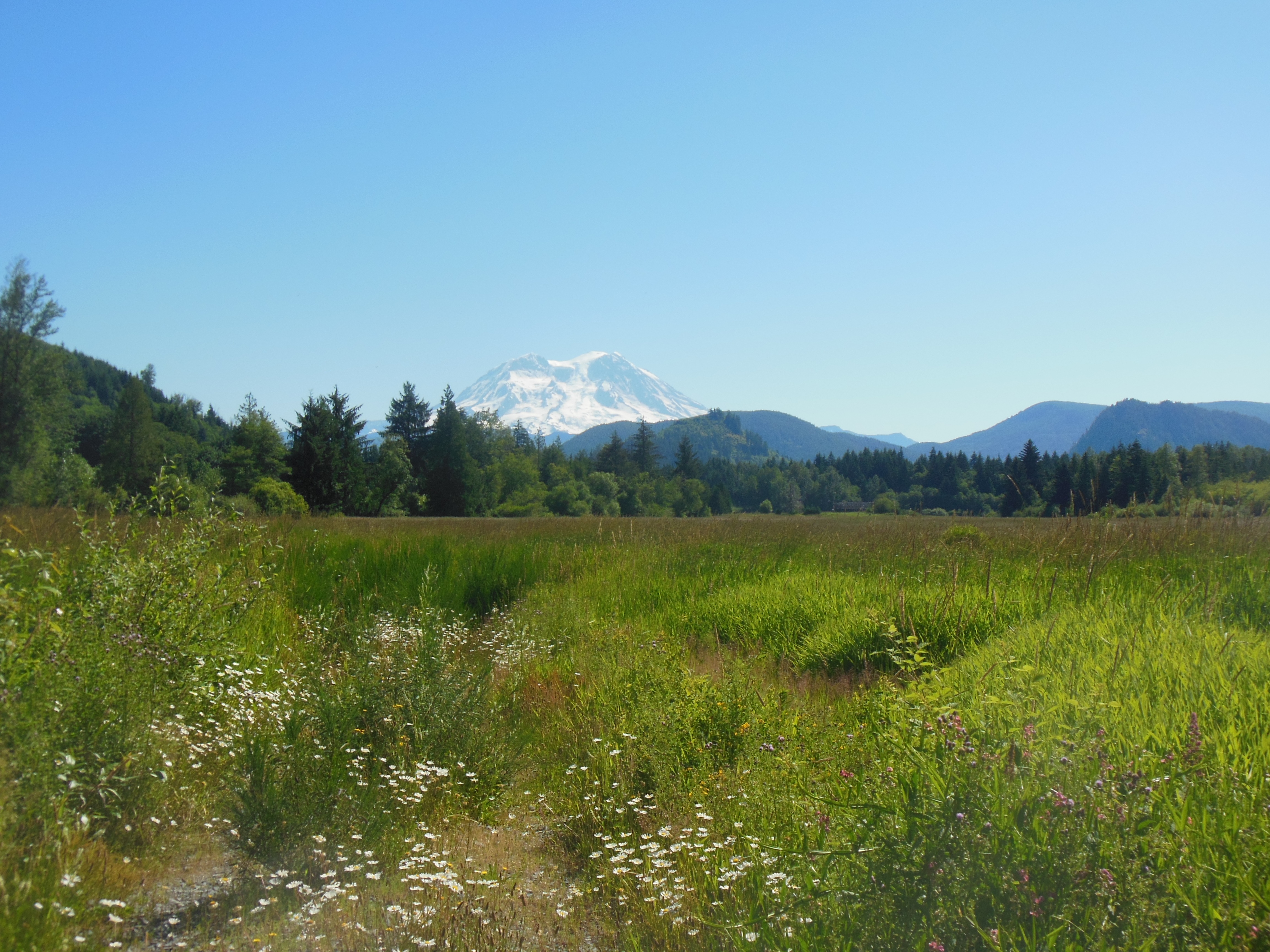
Today was our Beaches Day even though we did not see Bette Midler (Heimel humor). We left Tacoma early after giving our good-byes to Pat and Harold. We were unable to see Mt. Ranier as we left, the sky was too overcast. It was weird, for us, to be able to see (on a clear day) a mountain looming high on the horizon, even though it was 45 miles from Tacoma.

We drove through Olympia and then west and north to Olympic National Park. Our plan is to visit the park from southwest to northeast before crossing the border into Victoria, BC. Like many national parks, the land intersperses with national forests and Indian reservations.

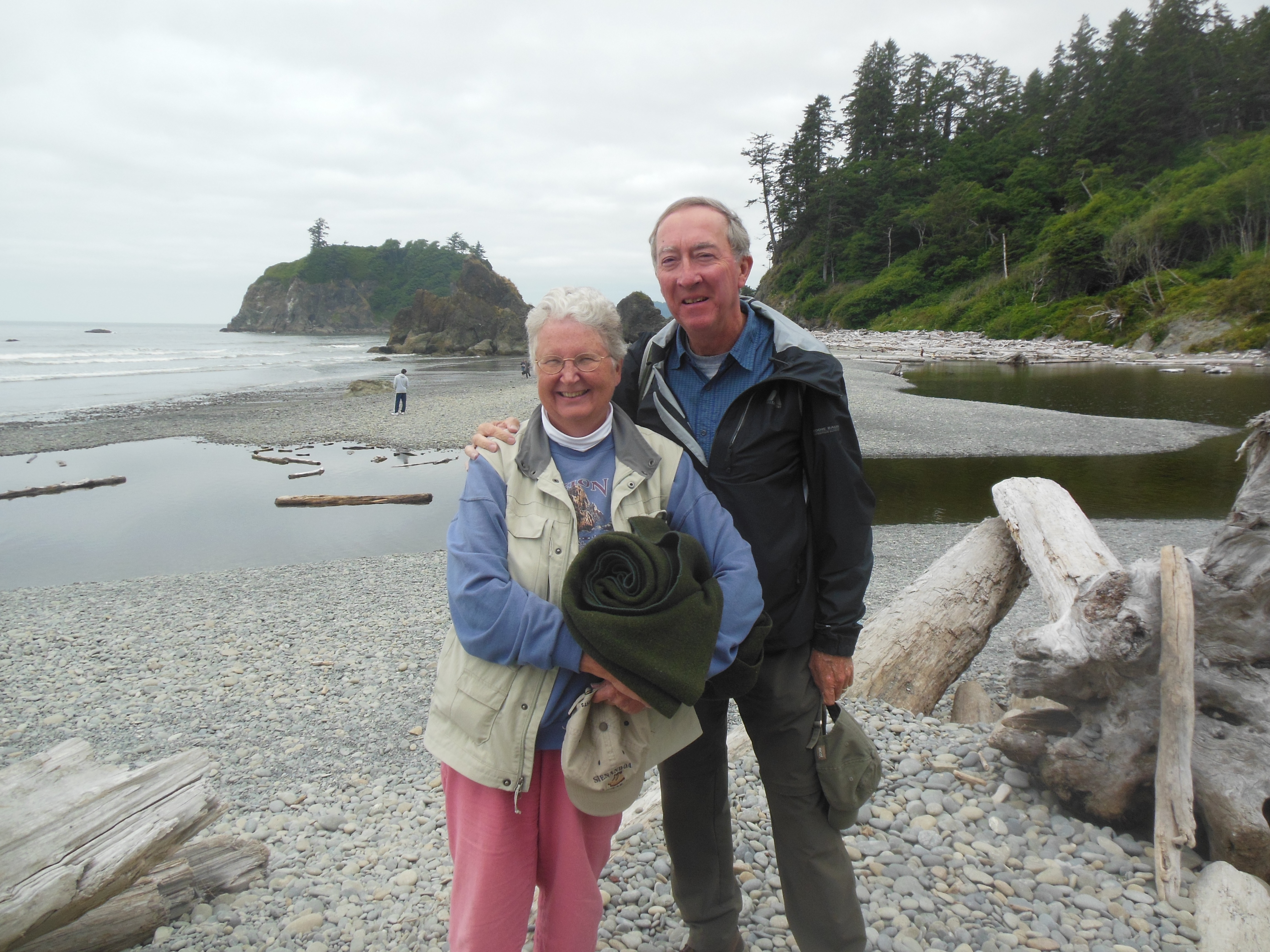
Ed and Chris at Ruby Beach

Ed and Chris at Ruby Beach

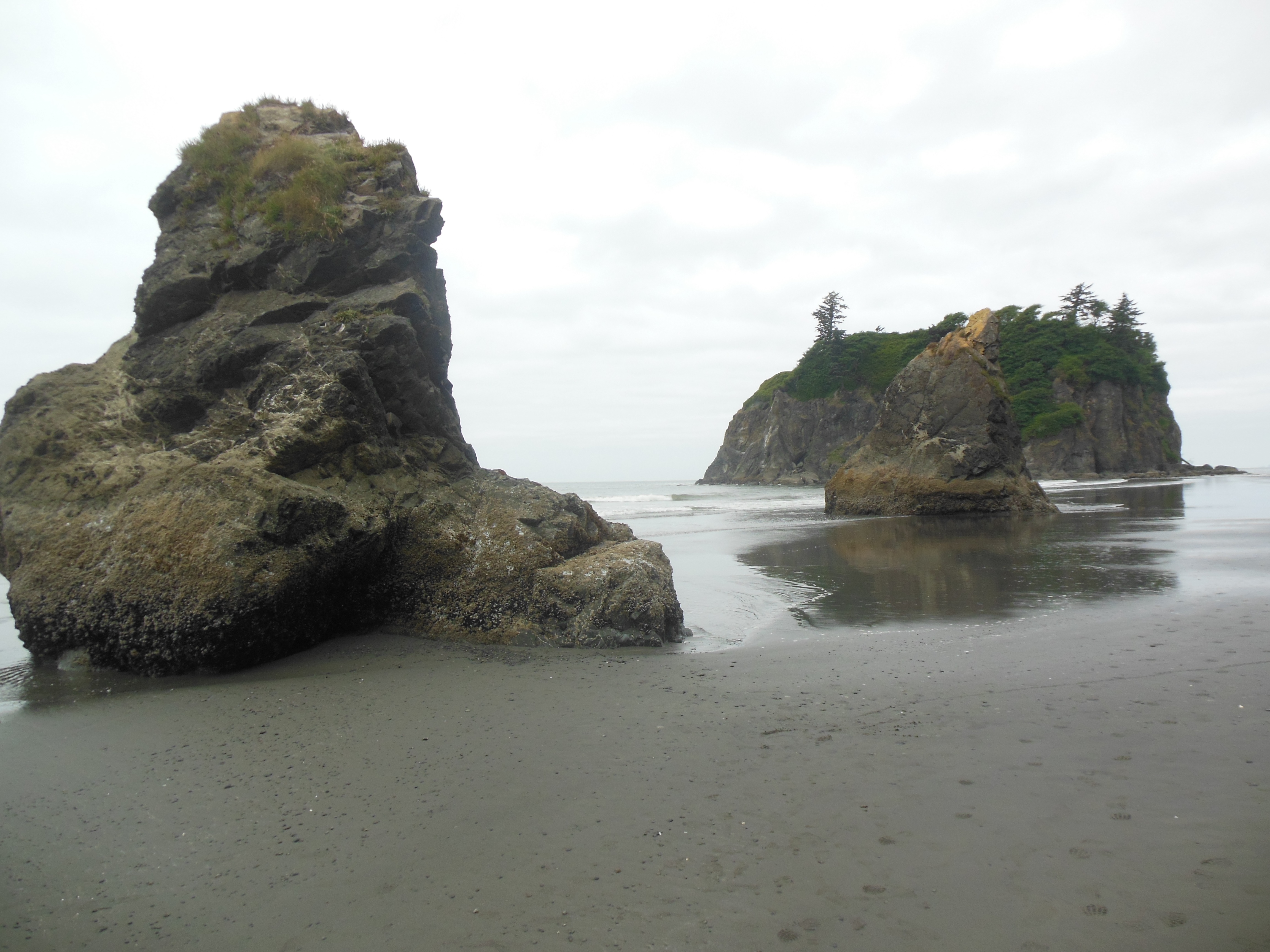
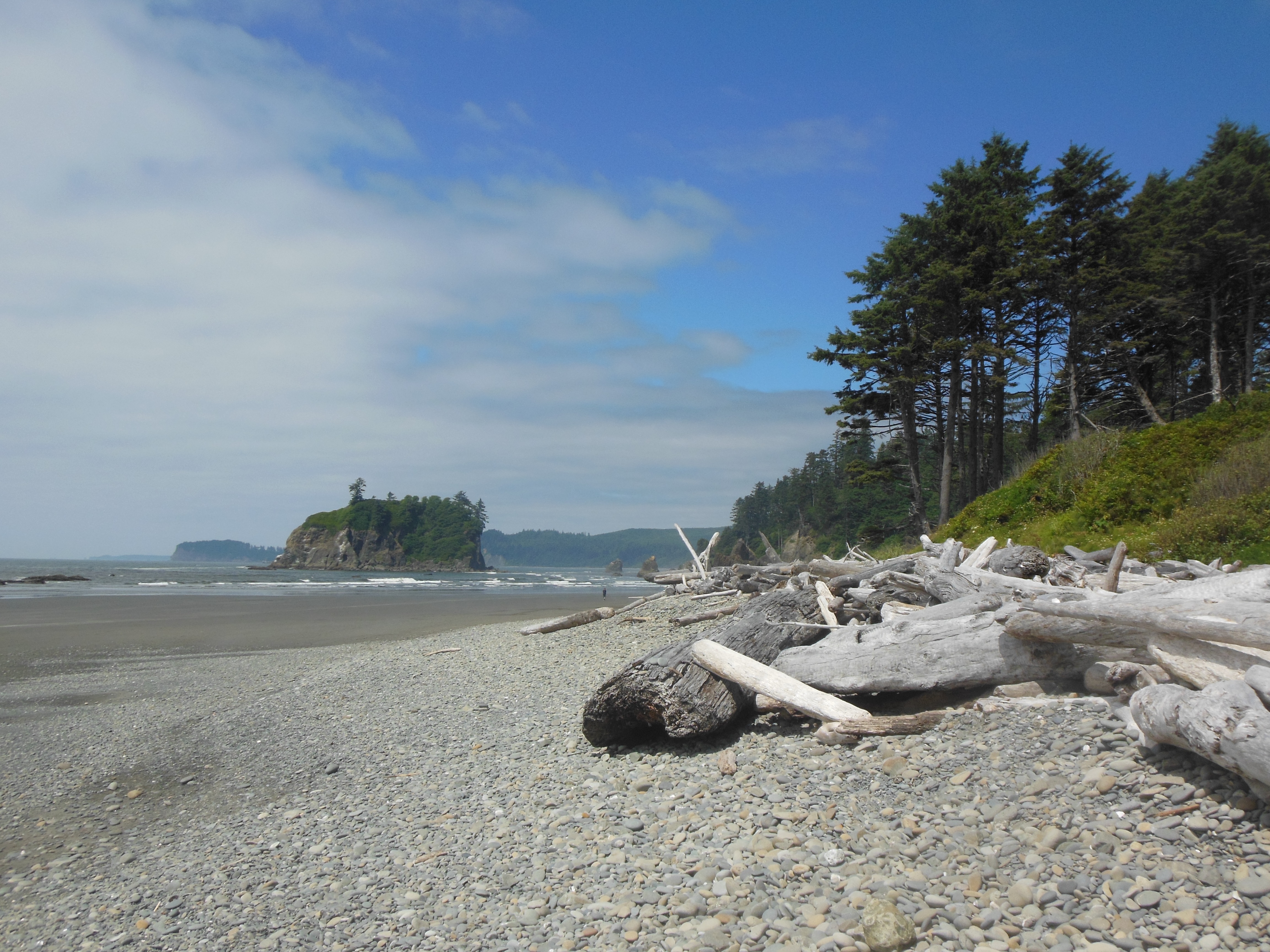
Ruby Beach

Ruby Beach

After Olympia, the road went through forests with four lane highway to Aberdeen, WA. After Aberdeen it was primarily two lane but now we picked up wonderful wildflowers along the side of the road. The Olympic mountains are not as high as the Cascades but supposedly Mt. Olympus does have snow year round. We will learn more about that later.

We did pass South Beach. It bore no resemblance to the one in Miami Beach. This one had cold water, chilly air, cold winds, no night life, and very little people watching. Instead we went to Ruby Beach and to Rialto Beach.

Ruby Beach

Ruby Beach

one of many rock cairns at Ruby Beach

one of many rock cairns at Ruby Beach

The day was overcast and cool. Around 3 pm the wind came from the east and pushed enough of the clouds just slightly out to sea. That gave us some pictures with sun in them to offset the numerous cloudy photos.

Olympic National Park has mountains, waterfalls, forests, tall trees, and ocean beaches. We picked two of the beaches to explore today. The first, Ruby Beach, is so named due to sand grains with a reddish tint to them. You have to look real close to see the tint.

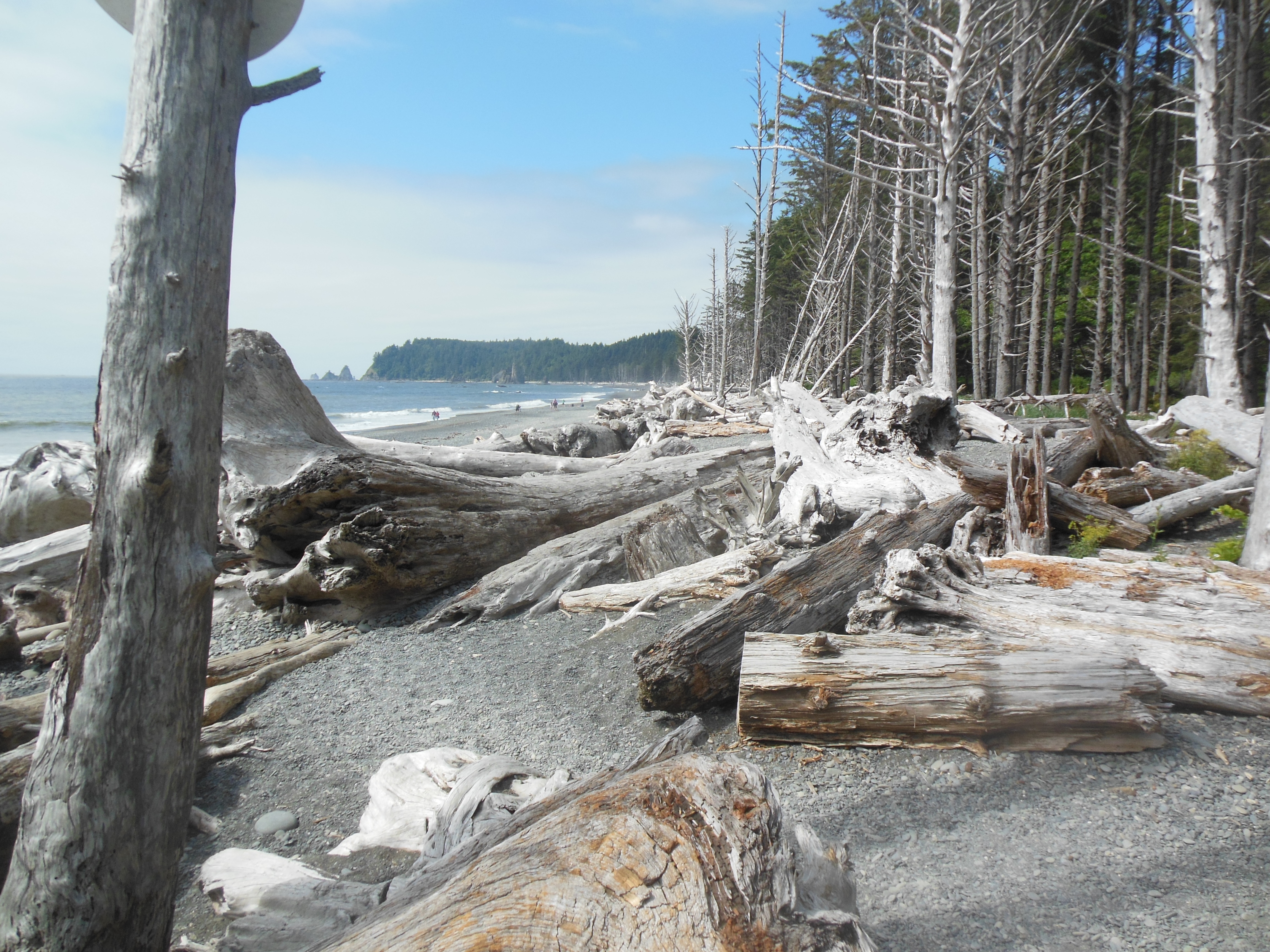
We walked along the beach for a good distance and had brought along our blanket so we sat for a while and watched the birds and ocean waves. For both beaches, the sand portion is relatively minor, rocks are more pre-dominant. In this regard, the beaches bear a resemblance to the beaches along the MN side of Lake Superior. Visitors enjoy creating rock cairns along the beach. These beach rocks are smooth due to erosion and relatively easy to stack.

We have not yet noticed as many international visitors as in the more well-known parks like Yosemite and Yellowstone. People from northwest United States are in the majority.

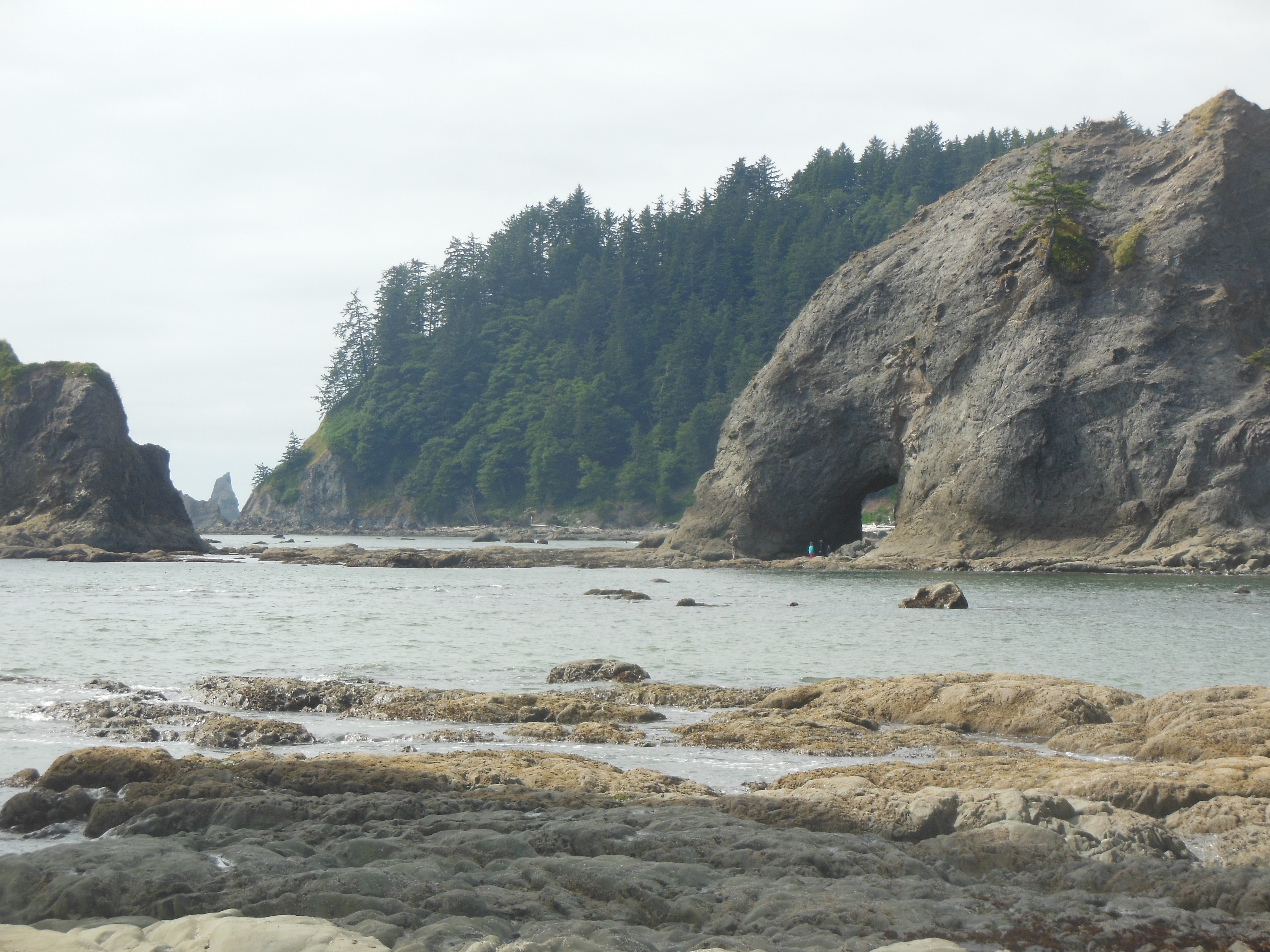
Our second beach was Rialto Beach. The tide was now starting to come in. We walked about 1.5 miles to a rock outcropping called Hole in the Wall and had to make sure we left enough time to get back to the trailhead before incoming tide cut off the path.

Rialto Beach

Rialto Beach

Rialto Beach

Rialto Beach

Besides the usual sea fowl like gulls and pelicans, we did observe two bald eagles. We have not seen seals or walruses; it is past the time when whales are migrating through the area.

Rialto Beach

Rialto Beach

Both beaches have rock outcroppings in the ocean close to shore called sea stacks. These are remnants of rock formations of harder basalt rocks and have eroded more slowly than the surrounding features. We had observed these before along the Oregon coast a few years ago. The sea stacks make for nice photo opportunities. At this beach, there were more people and more camping activities than at Ruby Beach.

Twilight sign at restaurant

Twilight sign at restaurant

Our lodging for the next two nights is in the town of Forks. Unbeknownst to us, this town is the home of Stephanie Meyer’s Twilight book series about teenage vampires-or so I believe.

The town is 14 miles from the ocean on a broad prairie. Several signs in town, including the burger joint we ate at for dinner, allude to the vampire theme of the books and movies. I believe tours of places mentioned in the books are offered but we intend to pass on this unusual treat.

Tomorrow we plan to visit a temperate rain forest section of the park.

Ed Heimel and Chris Klejbuk July 18 10 pm

Categories: road trip, travel | Tags: , , , | Leave a comment

2013, Trip Six, The Northwest, July 17

Tacoma, Wednesday, July 17

Chihuly sculpture at courthouse

Chihuly sculpture at courthouse


It rained during the night with overcast skies this morning so we modified our plans a bit. Rather than going back to Point Defiance for an early morning walk, we made a run to Target and then headed to the Washington History Museum in downtown Tacoma.

at Washington History Museum

at Washington History Museum

We stopped in at the federal courthouse to view some more Chihuly sculptures hanging there before proceeding to the History Museum. The courthouse had been Union Station in a previous life. Tacoma’s history is heavily tied to the railroads, initially the Northern Pacific which ran from Duluth, MN to Tacoma. As the western rail terminus and connection to ocean shipping, Tacoma became a boom town quickly.

At Washington History Museum

At Washington History Museum

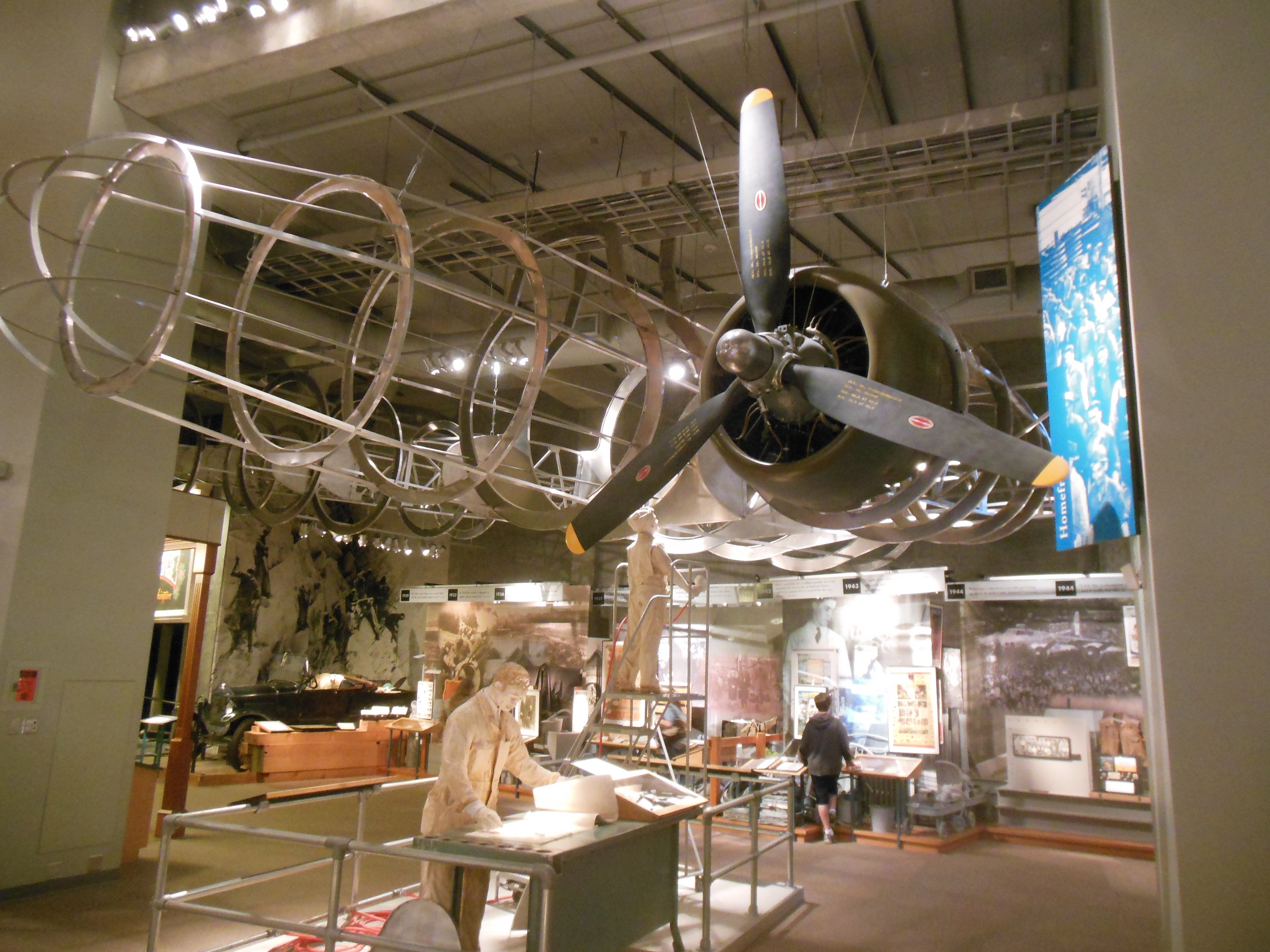
The History Museum does a nice job of covering state history. Displays covered such growth factors as lumbering, shipping, agriculture, and railroads. It made obvious mention of the role of Microsoft and Boeing.

The museum was blunt about discrimination and the labor strifes that occurred in the late 1800s and early 1900s. I paid less attention to the geological aspects, having seen this extensively in the last few months.

Caroline, Harold, Catherine, Pat and Chris. RIchard and Amelia were unable to be in the picture.

Caroline, Harold, Catherine, Pat and Chris. RIchard and Amelia were unable to be in the picture.

We returned to A Renaissance Cafe for lunch before heading back to our lodging. Dinner was with Pat and Harold at their daughter Catherine’s house in Seattle. It was great to recall memories of our times back in Carlisle and to be brought up-to-date on each other’s activities.

Thursday we leave for four nights in Olympic National Park.

Ed and Chris July 18 7 AM

Categories: road trip, travel | Tags: , | 1 Comment

2013 Trip Six, The Northwest, July 16

Tacoma, July 16 Tuesday

acorn and leaf

acorn and leaf


Glass museum item

Glass museum item


Tacoma is the birthplace of Dale Chihuly, a well-known glass sculptor. We went with Pat and Harold to the Tacoma Museum of Glass and the Glass Bridge. These two places were initial linchpins in the redevelopment of the Tacoma waterfront and are tied directly to Chihuly and his international reputation.

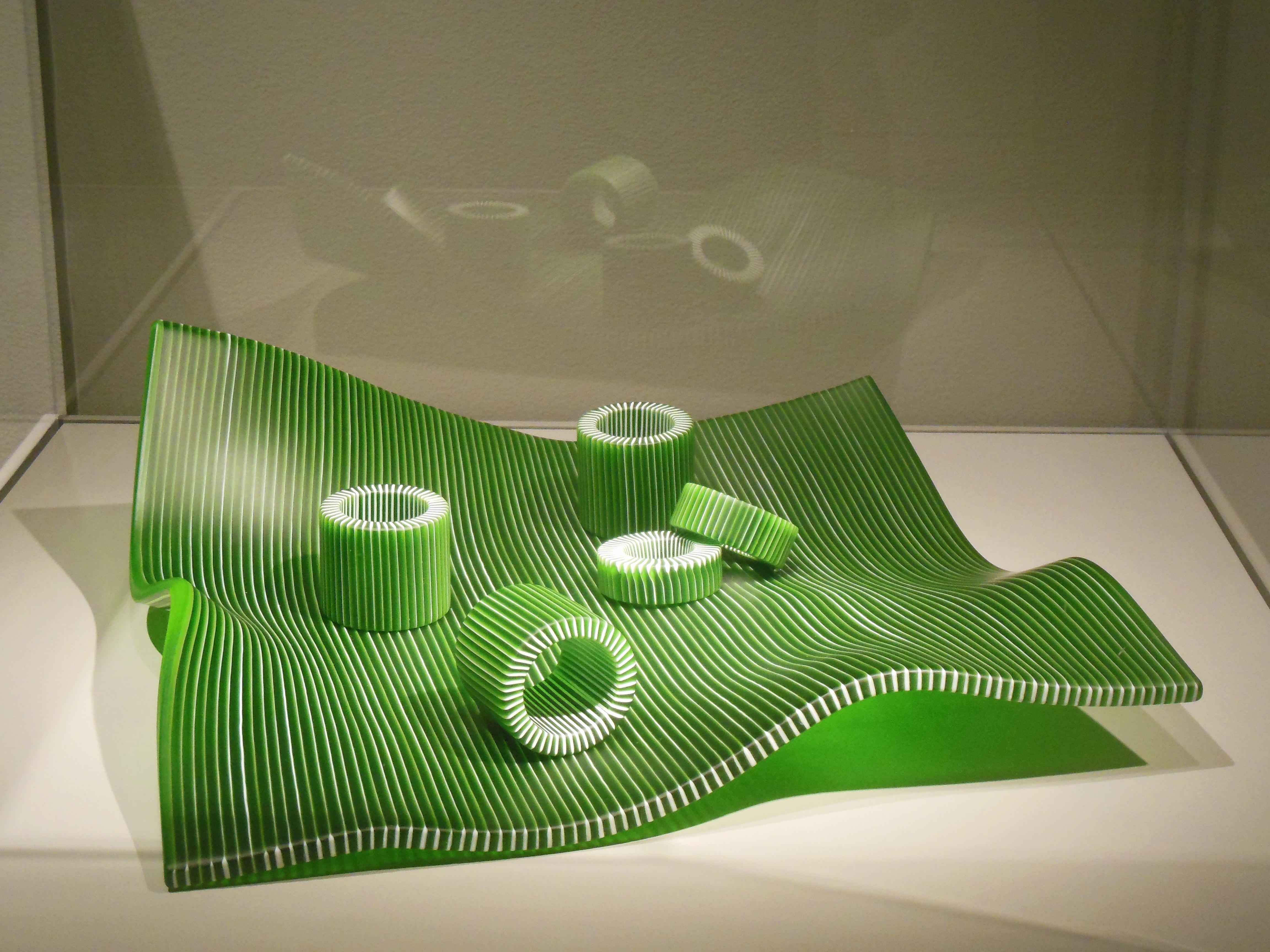
The Museum may have been initially focused around Chihuly but now exhibits major artists in glass sculpture from around the world. The current exhibit ties together the pacific northwest with Australian glass artists. It presents glass art with a vision I had not expected. As an example, the exhibit features pieces that resemble textiles or paintings.

Inside the museum is also a “hot shop” where artists work while visitors view. There is also a program whereby amateurs can develop their own piece with oversight by an artist. Their web site has a live streaming camera view during operating hours.

Walkway with glass sculpture

Walkway with glass sculpture

ceiling  view of sea life on walkway

ceiling view of sea life on walkway

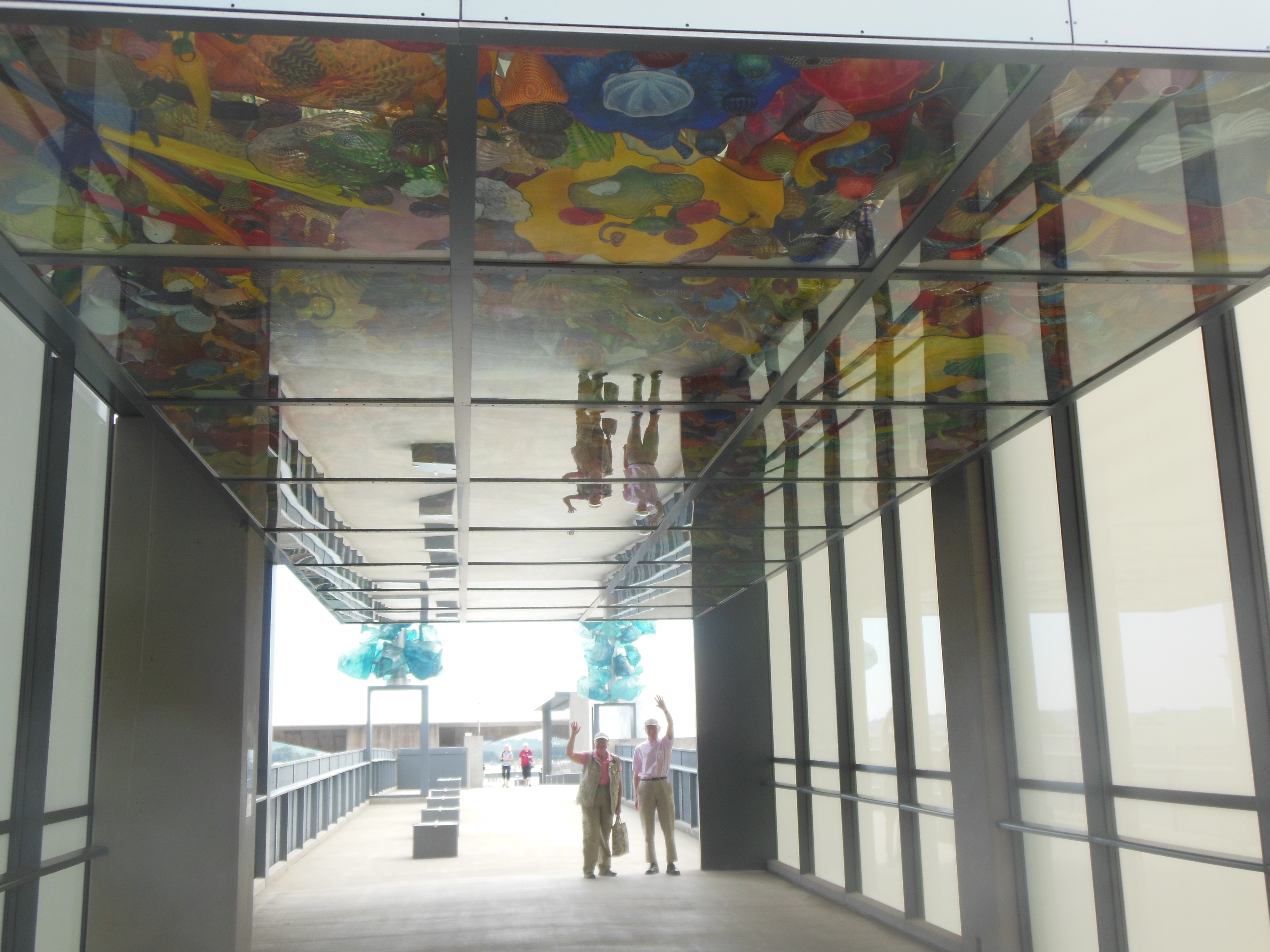
Part of the redevelopment of the waterfront included the Bridge of Glass. This bridge to the museum is set over the interstate below that leads into downtown Tacoma. The pedestrian bridge is comprised of three sections. First is a walkway with glass art sculptures encased in the ceiling. Looking like sea creatures, it gives the feeling of walking underwater.

Two glass columns on walkway of glass

Two glass columns on walkway of glass

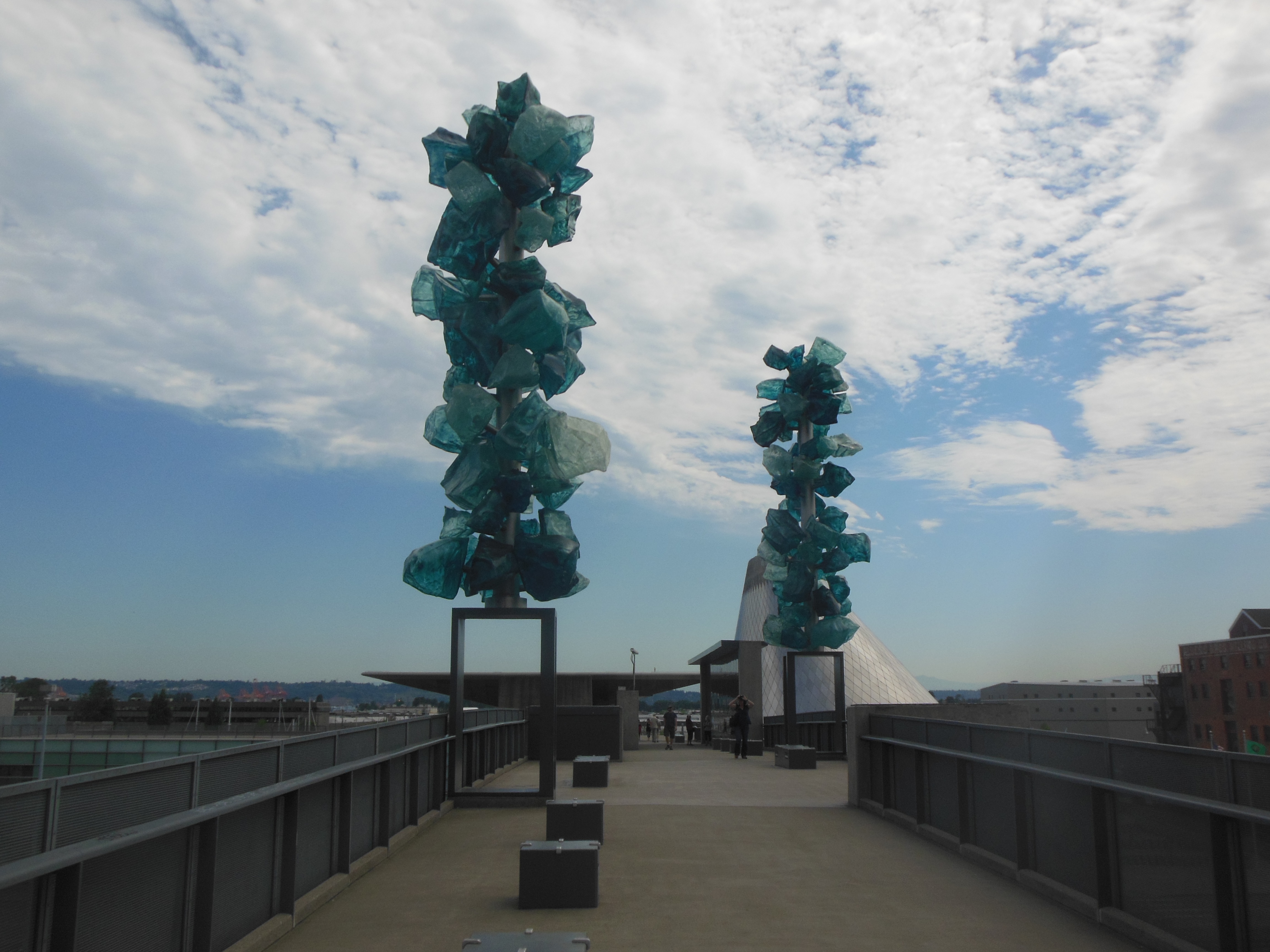
Second are two glass towers in seafoam green-almost the color of some of the lakes and rivers we saw in Canada which had rock dust in them. They rise some 40 feet above the walkway and although we did not experience it, are lit at night.

Columns on Glass walkway

Columns on Glass walkway

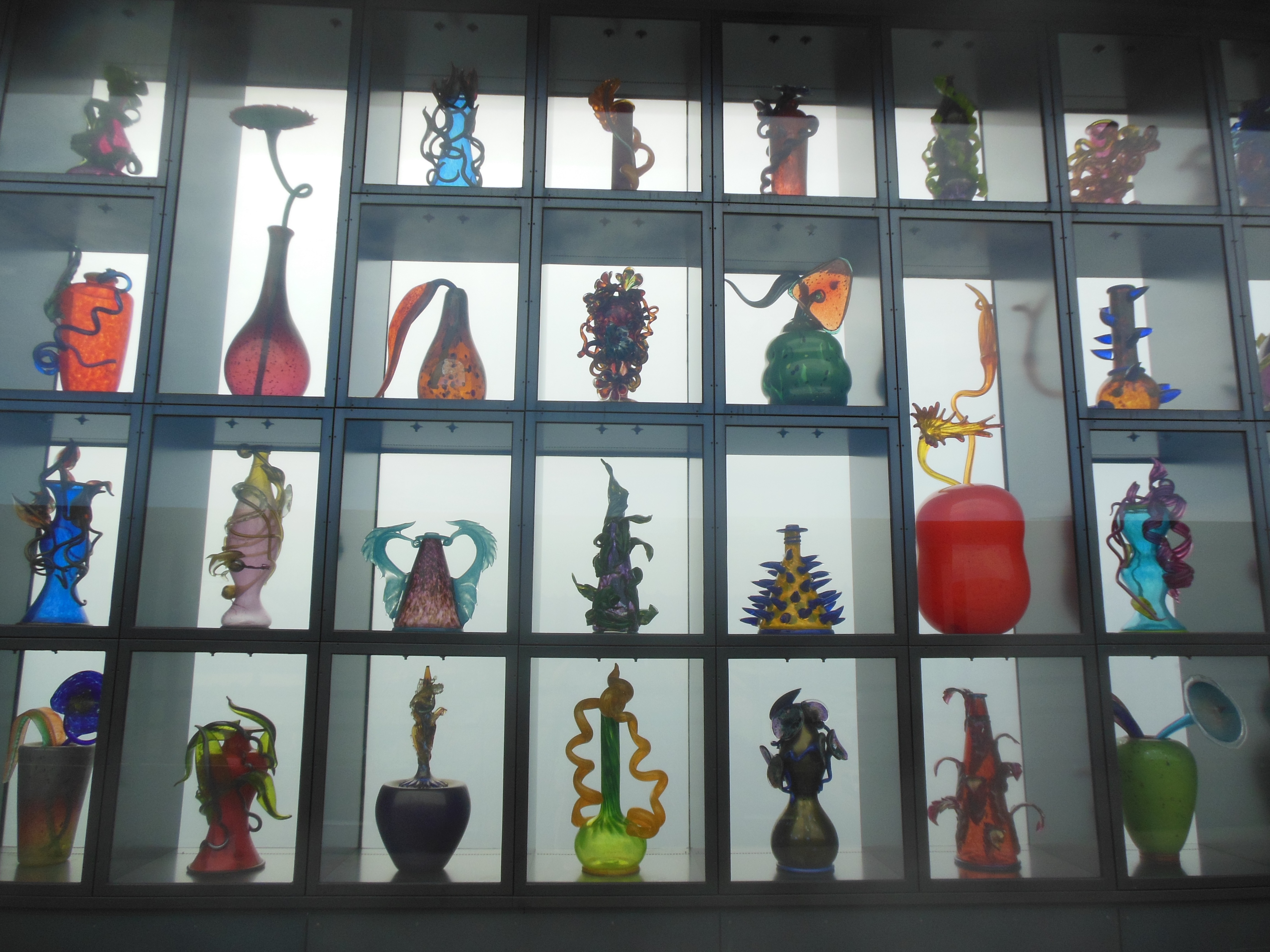
Third is a section with glass sculptures embedded in a clear wall. You walk by and view about 100 glass sculptures.

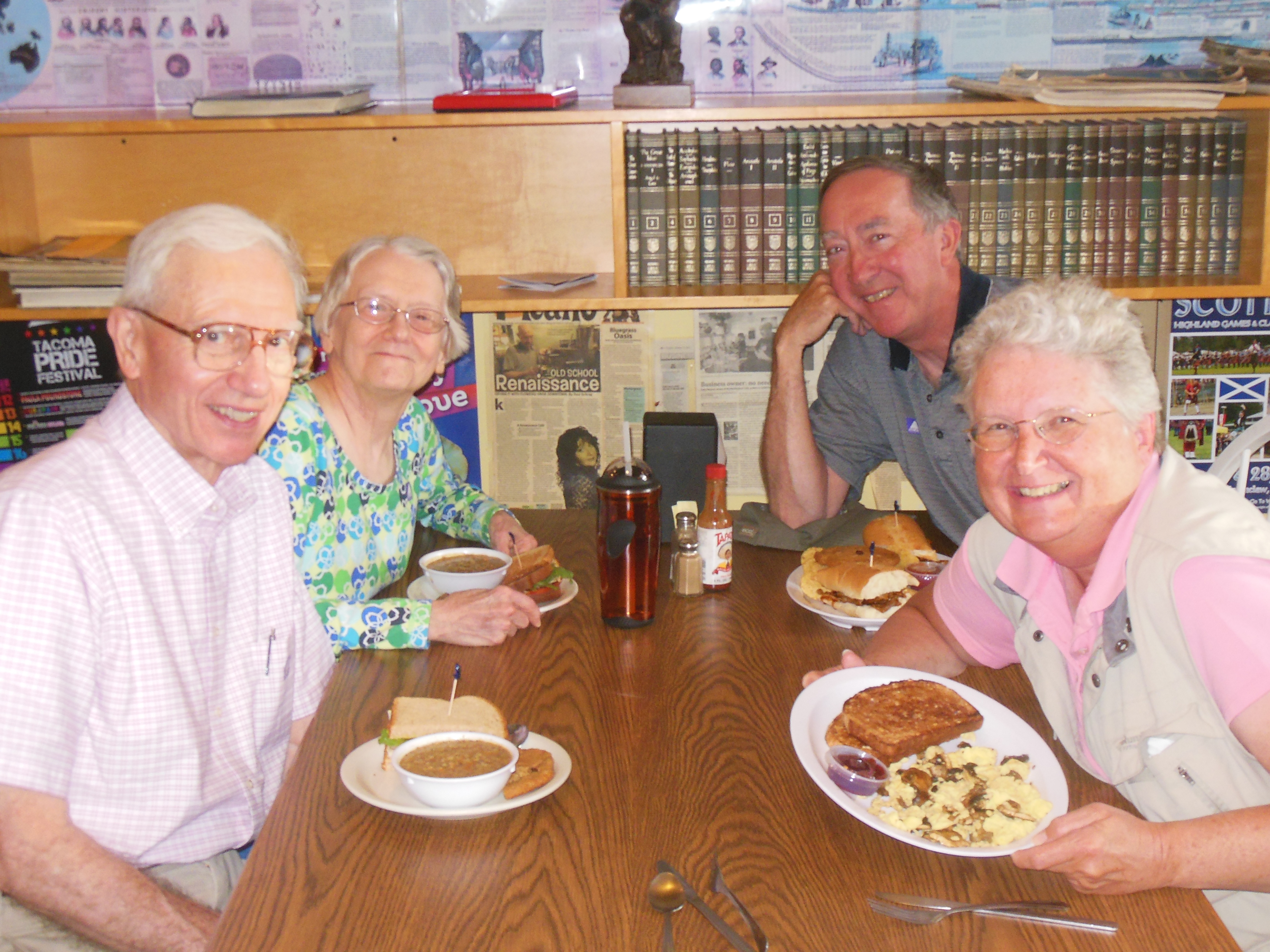
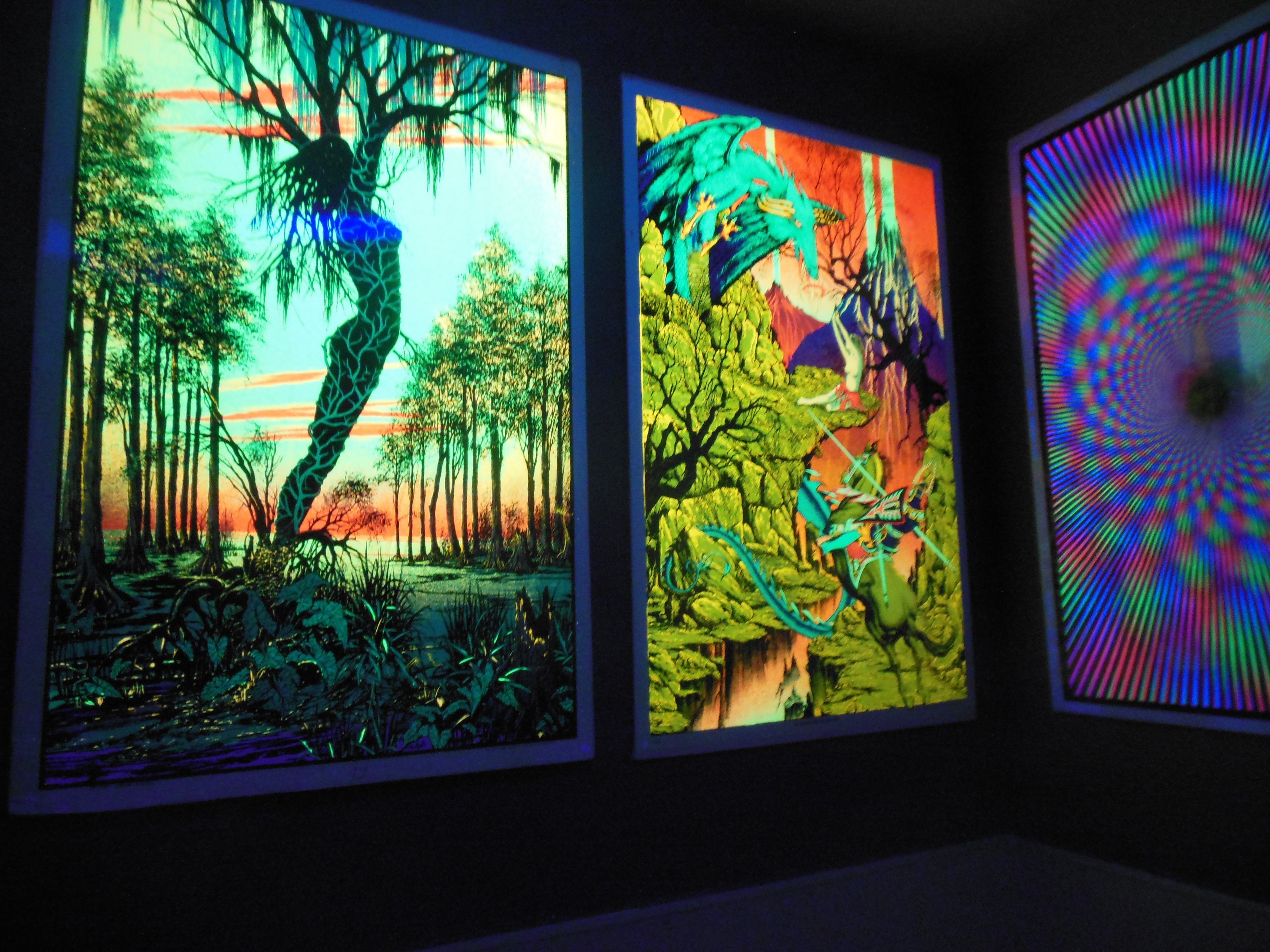
All of this viewing made us hungry so we had lunch at A Renaissance Cafe. Small, locally owned and food was great. Posters on the wall and psychedelic posters in the restroom. Keith the owner served us.

Lunch at A Renaissance Cafe

Lunch at A Renaissance Cafe

Psychedelic bathroom at A Renaissance Cafe

Psychedelic bathroom at A Renaissance Cafe

Dinner with Pat and Harold with leftovers from last night’s Italian dinner and dessert from Trader Joe’s.

Ed and Chris July 16 9:30 pm

Categories: road trip, travel | Tags: , , | 1 Comment

2013 Trip Six, The Northwest, July 15

Tacoma, WA July 15 Monday

Well, happy birthday to me and happy one year retirement anniversary. Thanks for all of the cards, emails and sorta email birthday card (you know who you are-it was cute).

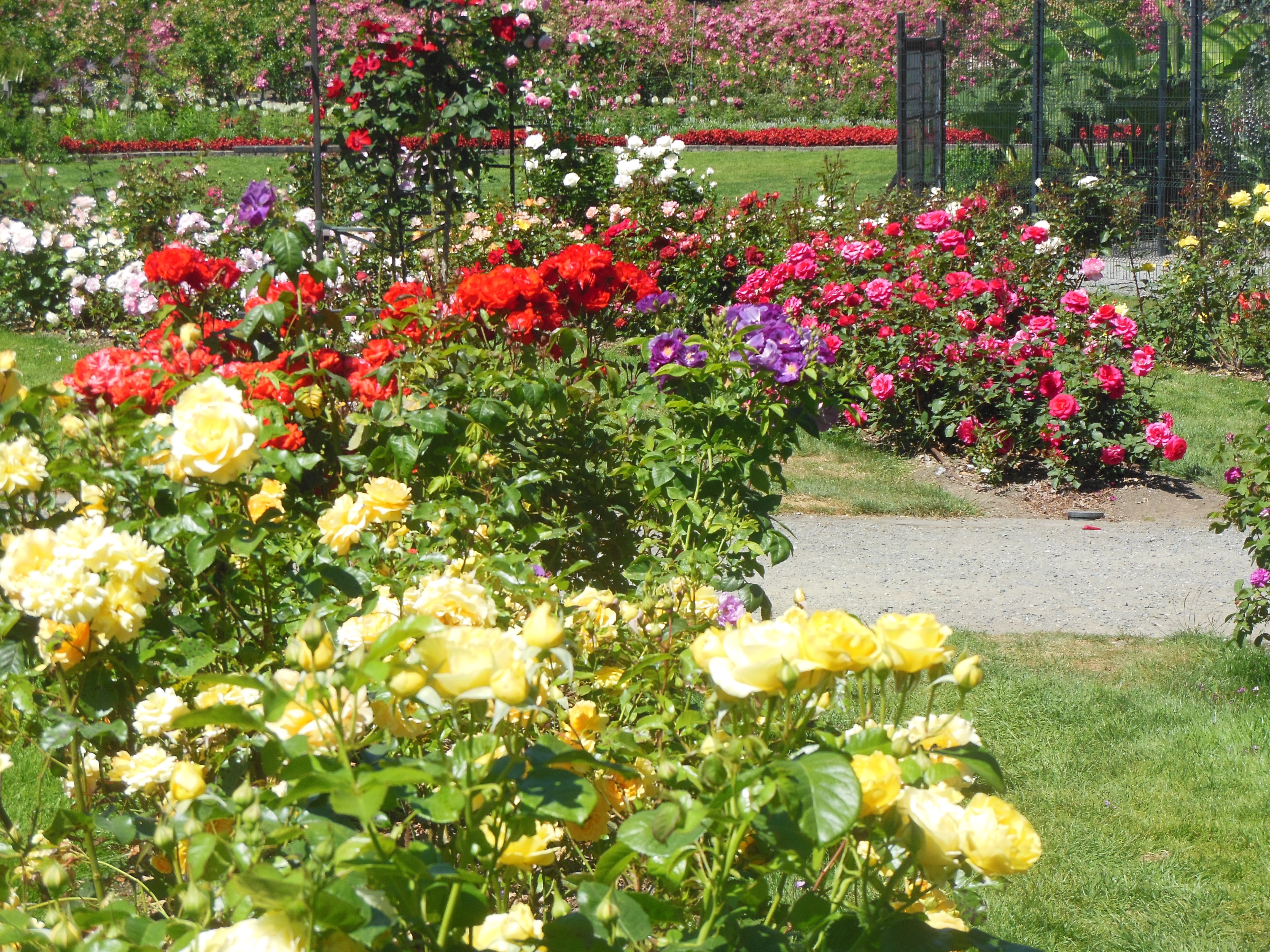
Chris, Ed and roses at Port Defiance Park, Tacoma

Chris, Ed and roses at Port Defiance Park, Tacoma

Today was a little slower. After no cell or Internet, we played catchup on the blog postings for Mt. Ranier and Mt. St. Helens and took care of some household type tasks.

Joseph's coat roses

Joseph’s coat roses

We drove up from Kelso WA to Tacoma, WA. Interstate 5 is quite the busy road, a real switch from the two lane country/mountain roads we have been on. Mt. Rainier looms off to the side, a hulking presence (when cloud cover is non-existent), Mt. Baker up ahead of us.

imageimage

We are staying in Tacoma. Friends from Carlisle PA, Pat and Harold Sweeney, are living here in a retirement community. We are lodging for three nights in the guest unit the community maintains.

After lunch with Pat and Harold, we visited Point Defiance Park. This is an excellent park, we toured the Gardens and the Five Mile Drive.

Puget Sound

Puget Sound

Pat, Chris, Harold, Ed

Pat, Chris, Harold, Ed

Birthday supper was at a local Italian restaurant. I had dessert instead of booze. Some things never change.

Ed and Chris July 15 10 pm

Categories: road trip, travel | Tags: | Leave a comment

2013 Trip Six, The Northwest, July 14

Kelso, WA July 14, Sunday

The long distance shot of Mt Ranier

The long distance shot of Mt Ranier

We left Paradise early. The road to Mt. St. Helens is all back roads, except for 10 minutes on an interstate, and, as usual, I added some extra time. Due to cloudy weather on Saturday, we did not have a good, long distance photo of Mt. Ranier.

Sunday was a clear, warm day so on one of back roads on our way to Mt. St. Helens was a great shot of Mt. Ranier. We realized how great it was as we zipped past it, and assuming there would be another opportunity, kept going. No other opportunity presented itself. Trees along the road and then high ridges consistently blocked the view. Eventually we turned around and went back to the one location and took photos.

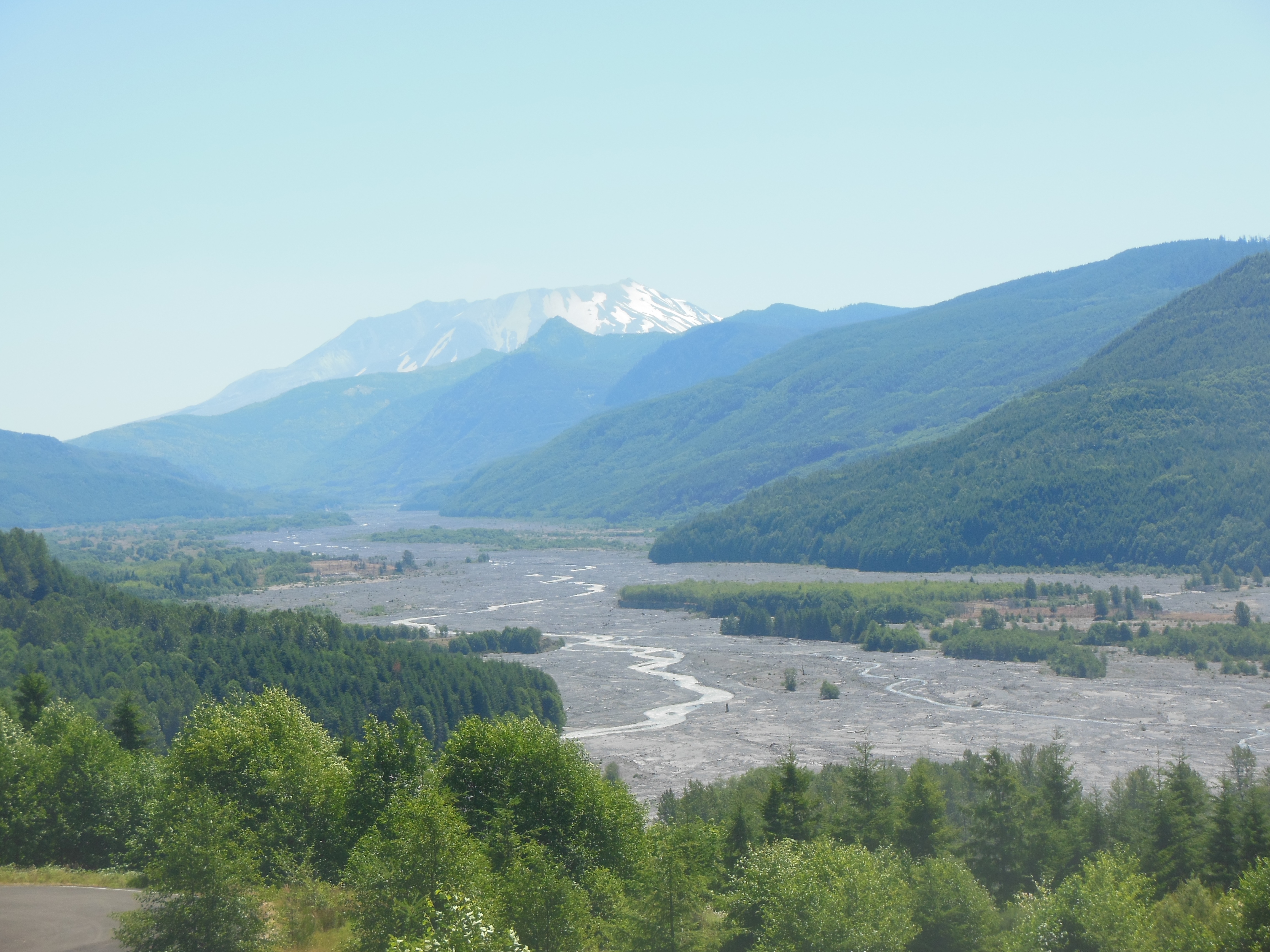
First shot of Mt. St. Helens, mudflow path still visible in front

First shot of Mt. St. Helens, mudflow path still visible in front

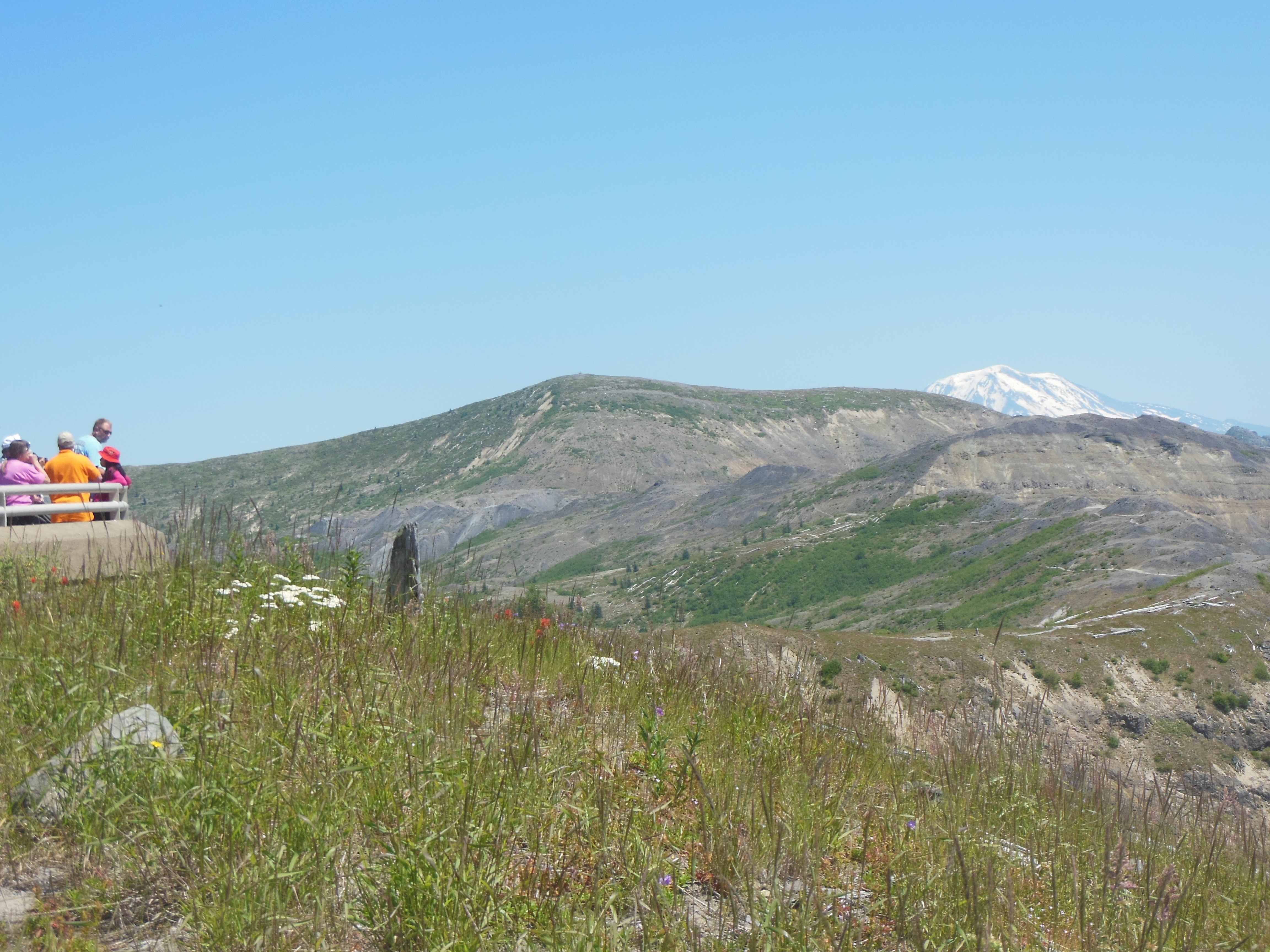
The major visitor center to Mt. St. Helens National Volcanic Monument is on Johnston Ridge in Gifford Pinchot National Forest. The U.S. Forest Service runs it. The observatory and ridge are named after a geologist working at the location the day it blew as the on-site scientist who died in the blast.

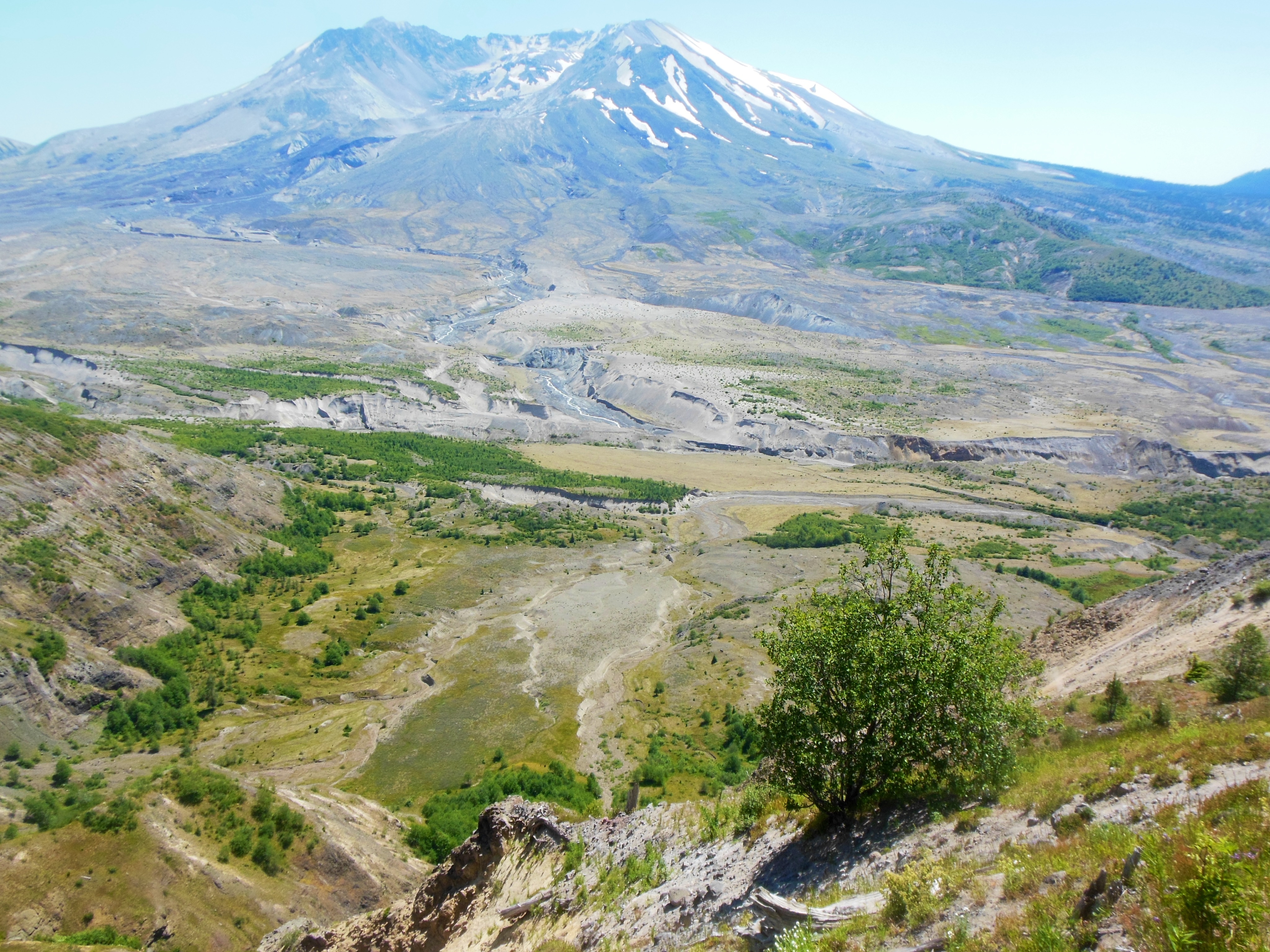
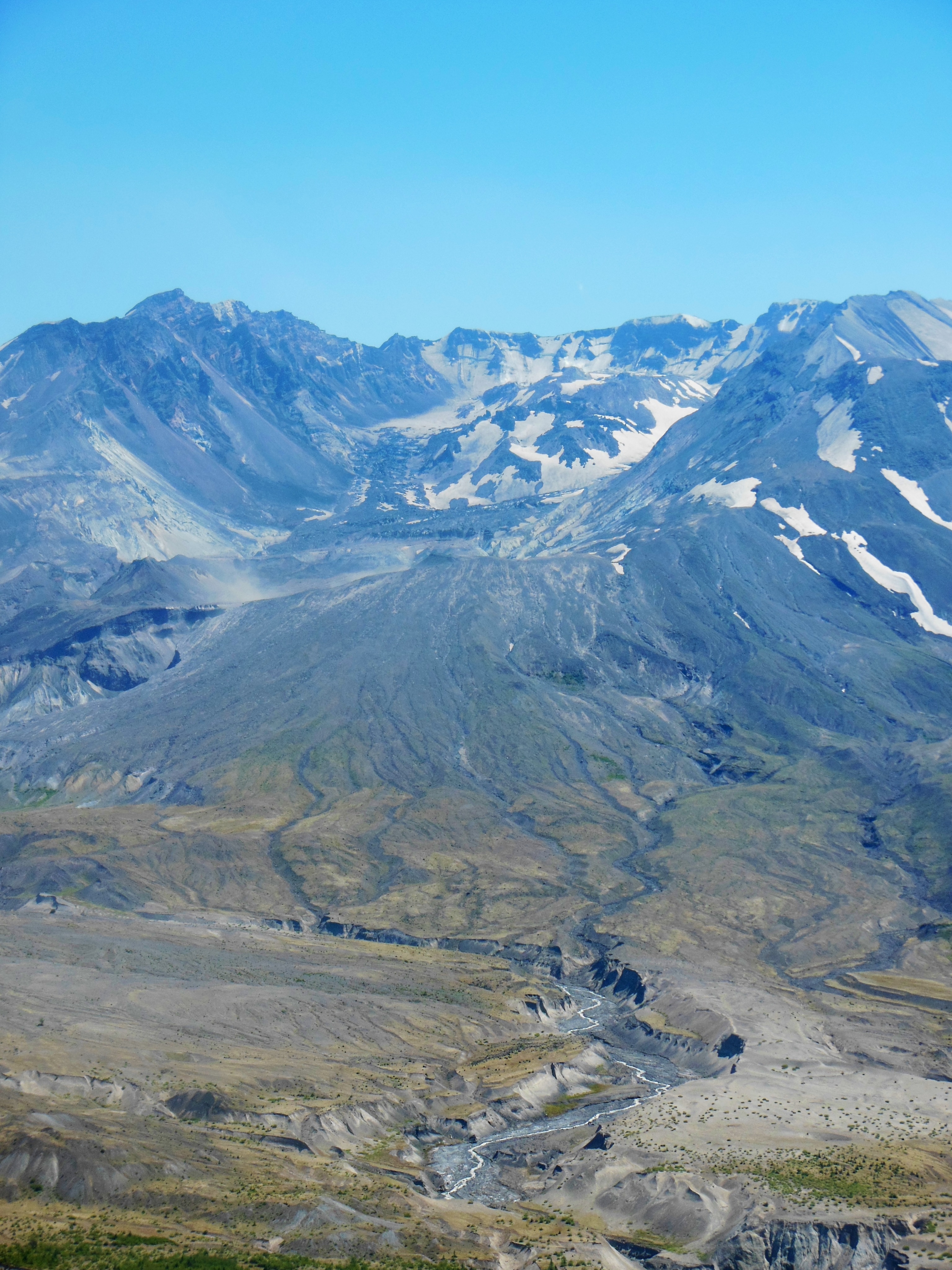
Showing crater area and impact area of blast

Showing crater area and impact area of blast


Debris flowed over the ridge to lower right into canyon to left

Debris flowed over Johnston ridge to lower right into canyon to left


Over 100 miles of road and over 20 bridges were destroyed in the eruption. When they rebuilt the area, they made sure the drive to the visitor center presented several good photo ops. We took a few and then spent several hours at the main center. (The county and Weyerhauser each have visitor centers also.)

The film here is excellent and drew the largest crowds I have ever seen at national park/forest visitor centers. As the film ends, the curtains open and you have a direct view of the mountain and the crater the eruption created on May 18, 1980.

We also listened to two ranger talks and hiked up to another observation point. Along the path, two volunteers also were available to answer questions.

impact area

impact area

The talks and film explained the difference between this eruption and the volcanoes in Hawaii. Very simply put, the amount of gas in the magma determines if the magma flows smoothly (Hawaii) or explodes (Mt. St. Helens). For two months before the eruption, the mountain was giving increasing signs of eruption and everyone was expecting it would blow its top.

Eruption area

Eruption area


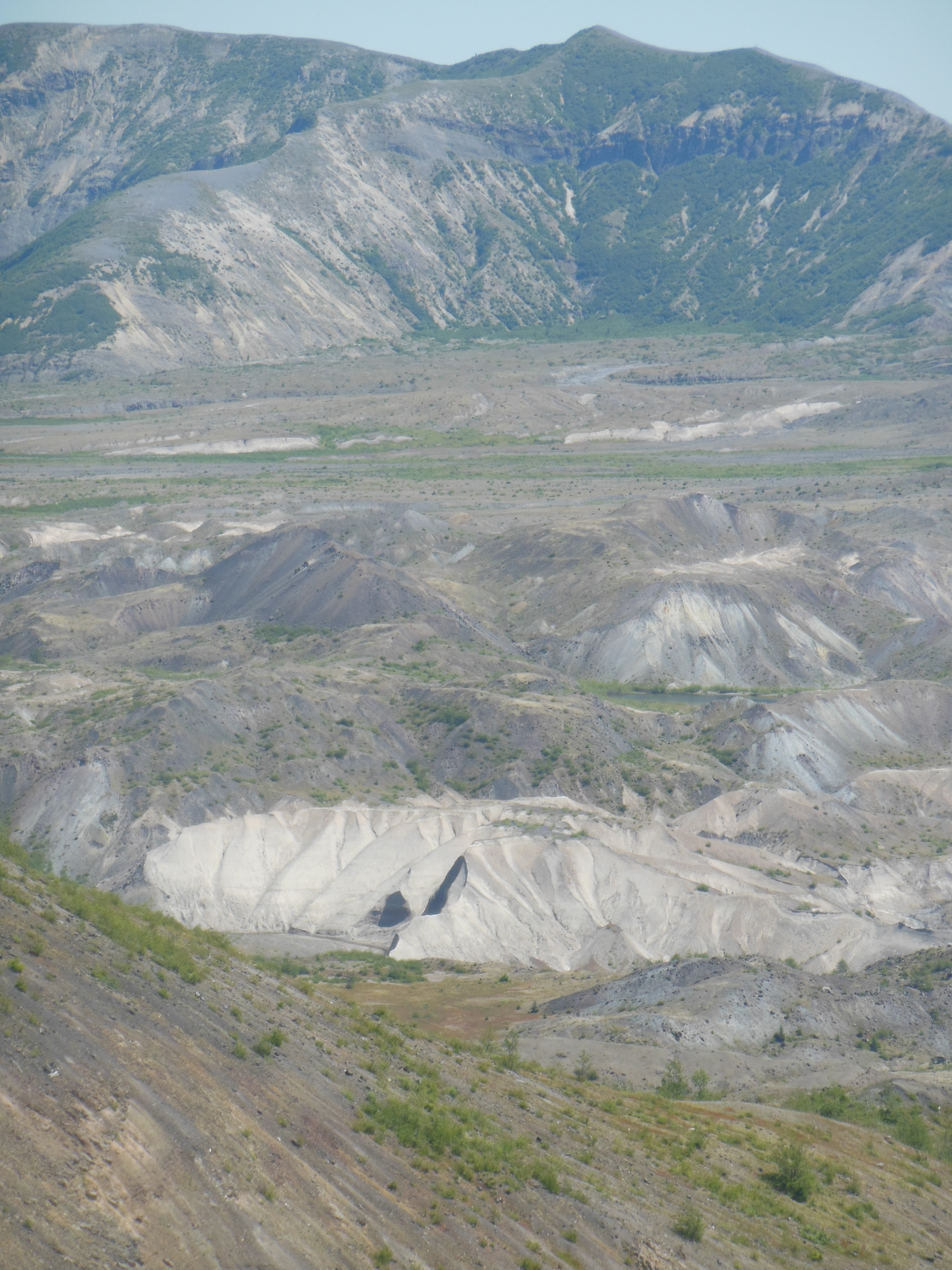
What it actually did was to explode laterally out the side of the mountain, sending gases,debris, shock waves, etc out the north side of the mountain. The resulting landslide, mudflow, shock waves, and ash destroyed an area the size of Chicago ,most of the damage done in the first three minutes. 57 people ended up dying. In just a few minutes, Mt. St. Helens went from the 7th tallest mountain in Washington state to the 87th.
http://www.fs.usda.gov/detail/mountsthelens/home/?cid=stelprdb5199437

You can follow the above link to the national volcanic monument site if you wish. Overall we found the display both compelling and informative. One other tidbit: Mt. Ranier is now labeled as the next most likely mountain to erupt. If that one goes, with its massive size and the huge amount of water contained in its glaciers, the damage will be cataclysmic. You did not know we were such adventurous folk, traveling to dangerous volcanic areas. Scientists believe they have better predictive capabilities now, partially due to Mt. St. Helens.

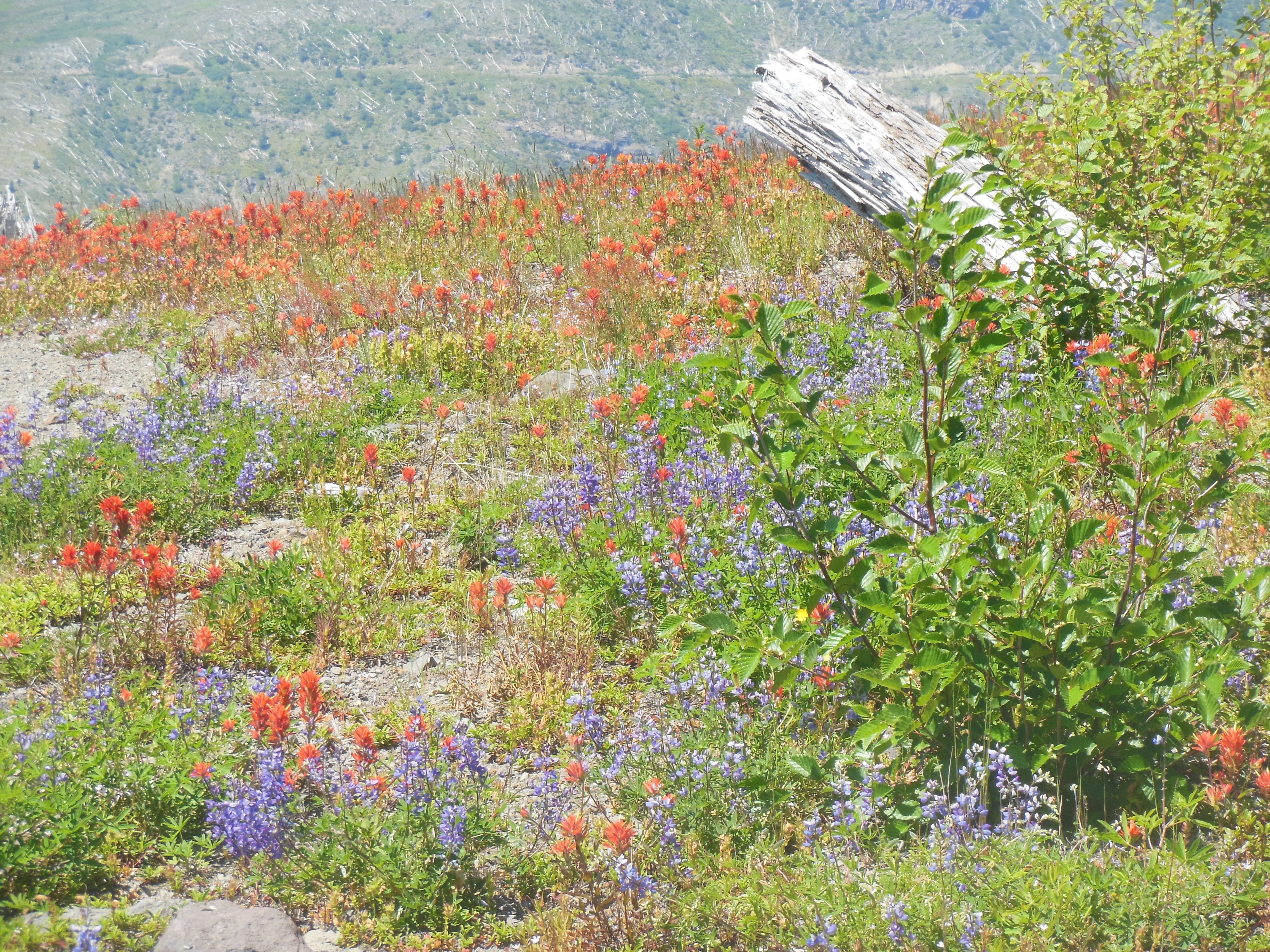
Wildflowers

Wildflowers


Wild flowers

Wild flowers


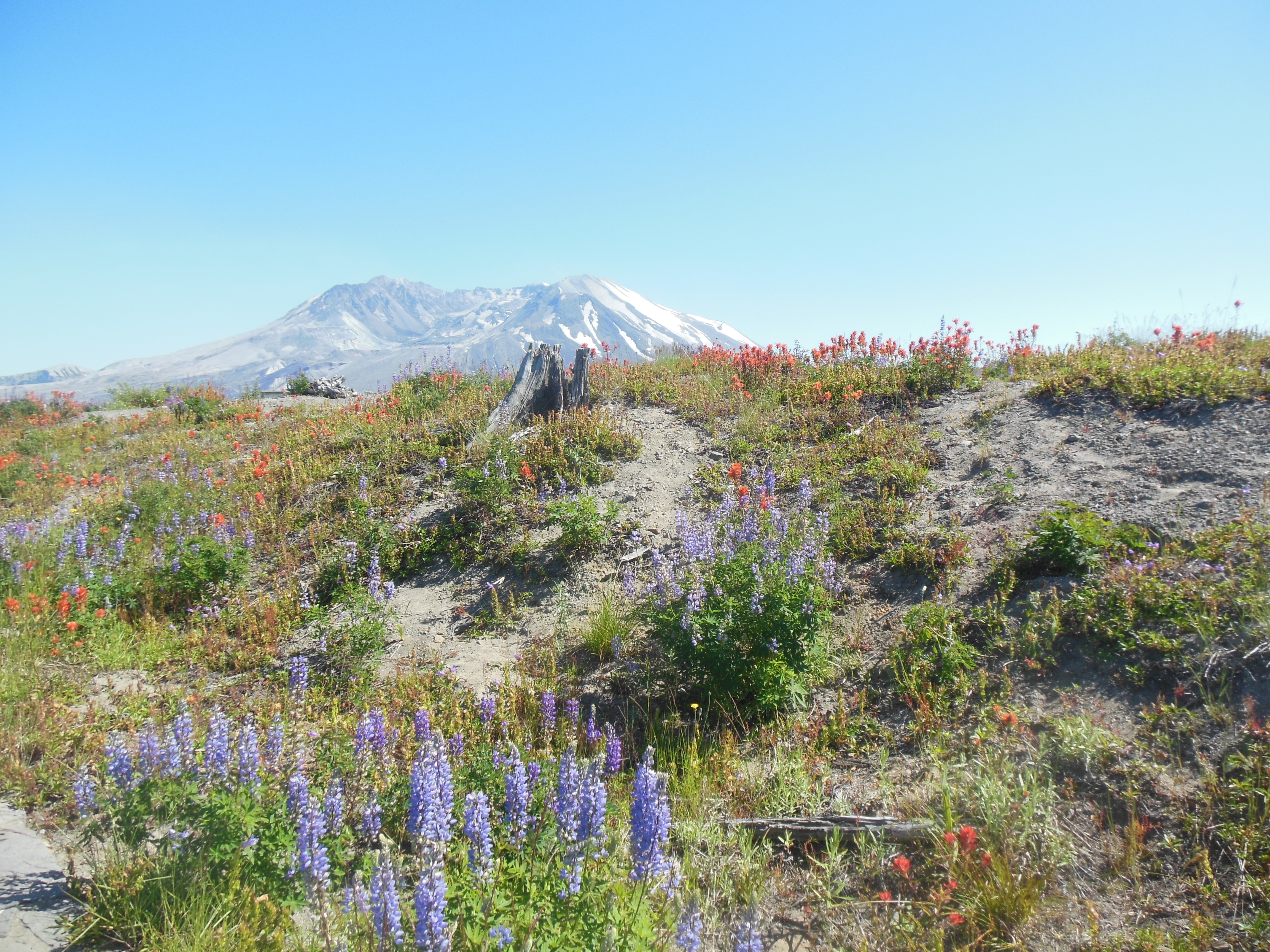
Wildflowers in MSH national volcanic monument area

Wildflowers in MSH national volcanic monument area


Johnston Ridge is at a little over 3000 feet in elevation. The lower height produced a more glorious explosion of wildflowers than was present at Mount Ranier. We discussed this with an elderly gentleman from British Columbia who said by the time we return to the Canadian Rockies, those wildflowers should be at their peak. We hope so.

The National Forest Service is doing nothing to re-forest the national volcanic monument area so scientists can learn about natural regrowth. Weyerhauser must own a lot of land in the area. They have signs showing areas they planted and the trees are doing amazingly well.

Trees knocked down by blast

Trees knocked down by blast


Weyerhauser regrowth area

Weyerhauser regrowth area


We finished the day at our lodging in Kelso, WA, a small town along Interstate 5. Monday we head to Tacoma to visit friends from Carlisle.

Ed and Chris July 15 9 am

Categories: road trip, travel | Tags: , | Leave a comment

2013 Trip Six, The Northwest, July 12 and 13

Paradise, July 12 and 13

As I mentioned in the previous blog, we were without cell phone and Internet service for July 12 and 13th. We stayed at the Paradise Inn at Mount Rainier in Washington state. This post will cover both Friday and Saturday, the 12th and 13th.

We left Yakima, Washington, Friday morning. The initial part of our drive was through the fruit bearing orchards west of Yakima. It seems each part of Washington says it grows some large percentage of a fruit; apples, raspberries, rhubarb, mint, cherries, etc.

First view of Ranier from White Pass

First view of Ranier from White Pass

We entered the mountains through the White Pass Scenic Highway, U.S. Highway 12. It made us think of Minnesota and Wisconsin where U.S. 12 is a major road. This road goes through heavily forested, mountain terrain.

The day had begun hot and sunny in Yakima. As we progressed through the mountains, it became cooler and cloudy. Our first stop was at the Clear Creek Falls overlook. Clear Creek Falls was a pleasant diversion. We would be seeing many more falls as the two days in Mt. Ranier progressed.

Fog at Mt. Ranier visitor center on Friday

Fog at Mt. Ranier visitor center on Friday

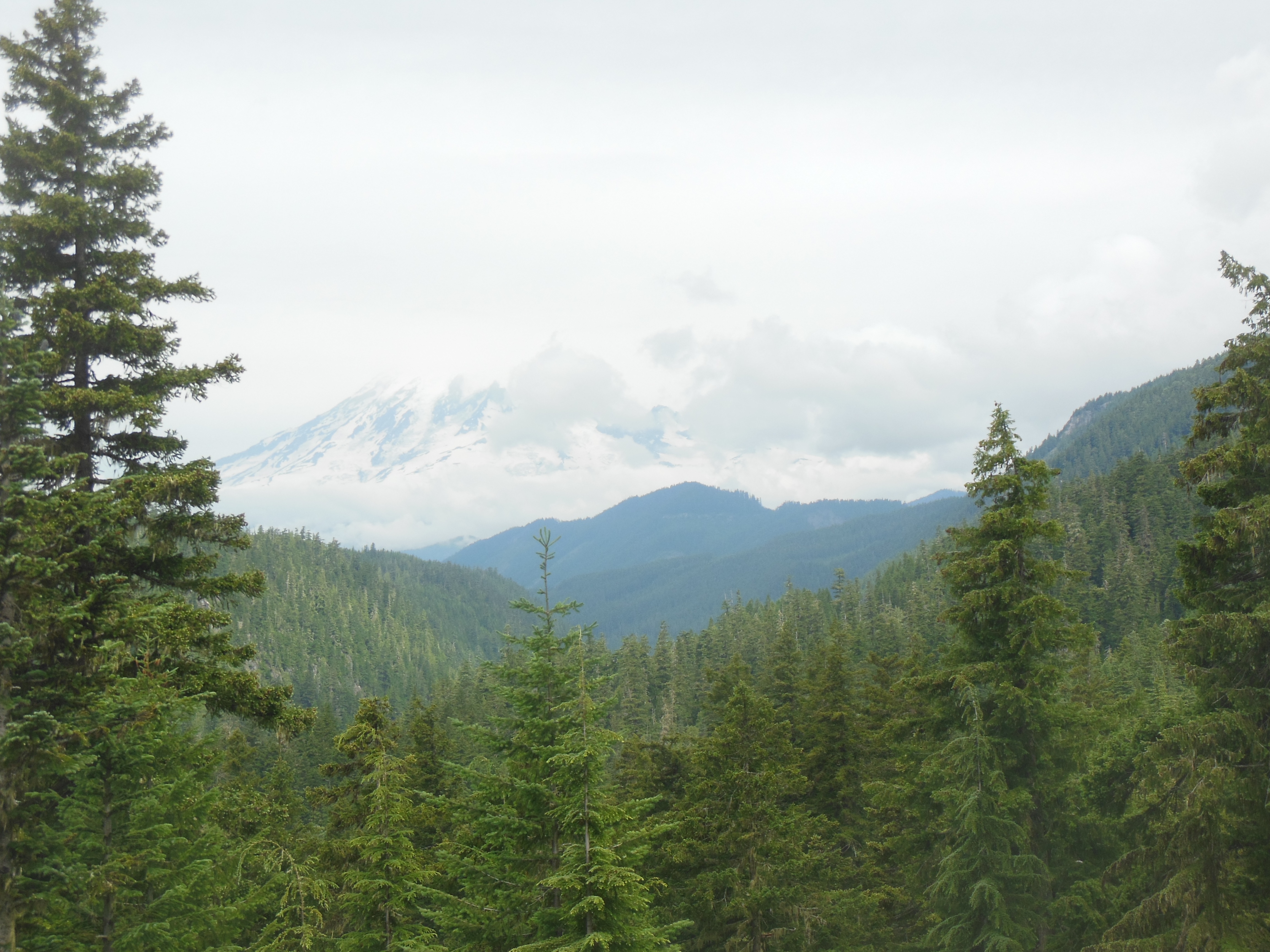
As we got closer to Ranier, the cloud cover was pretty thick. Ranier averages over 120 inches of rain each year AND over 600 inches of snow! That’s over 50 feet of snow for the mathematically challenged. The record snowfall is 93 feet back in the ’70s. So, a bit of cloudiness should be expected. The question was whether we would see any sun. We had difficulty Saturday afternoon even knowing which partially visible peak was Ranier.

On Ranger talk on geology and global warming

On Ranger talk on geology and global warming

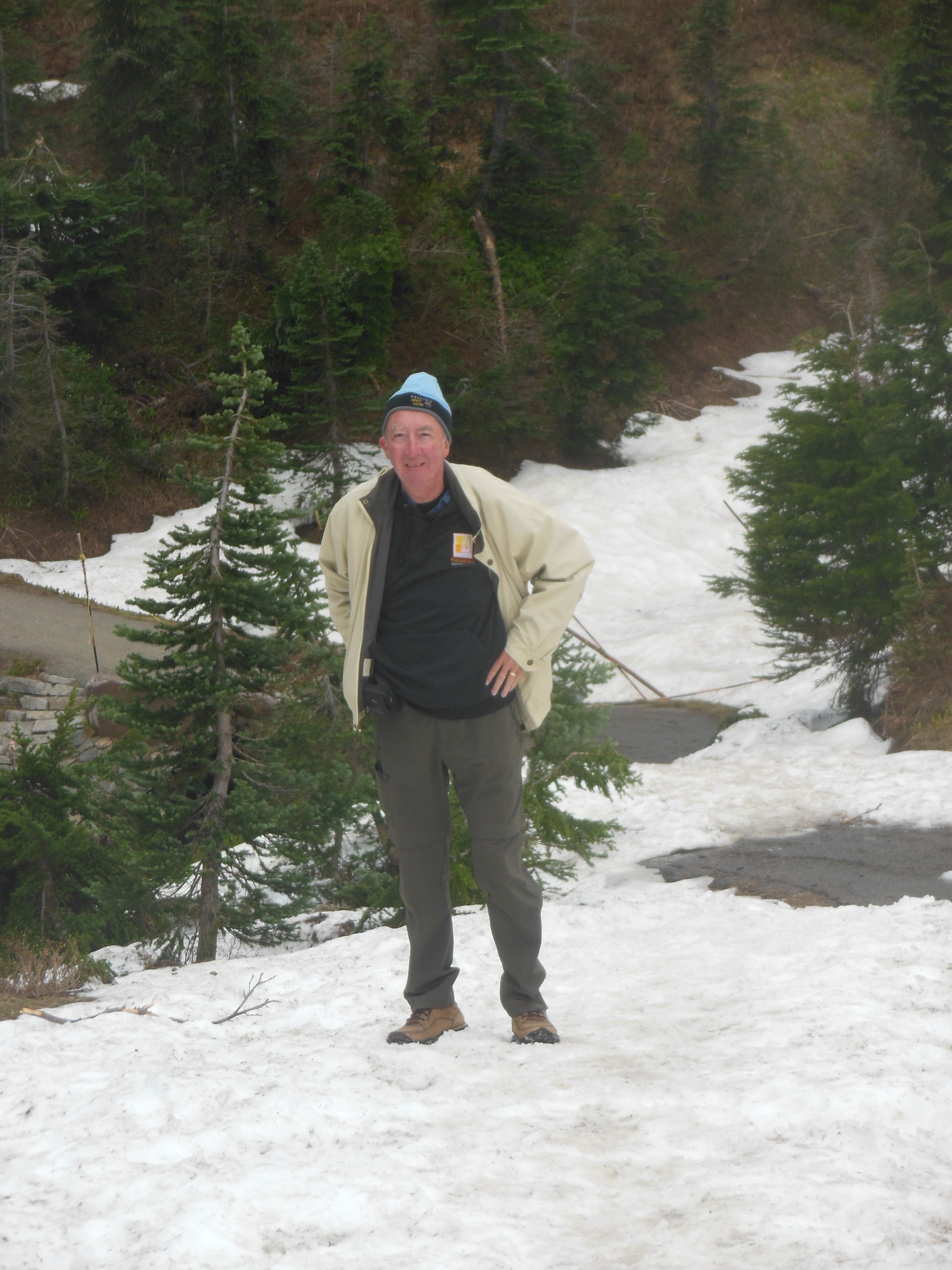
Trails partially covered by snow

Trails partially covered by snow


The park has road construction projects underway. At one of them, the delay was half an hour. We chatted with a man from Hawaii whose home on the Big Island had been destroyed by the lava flows from the volcano there. While waiting, he showed us some of the pictures.

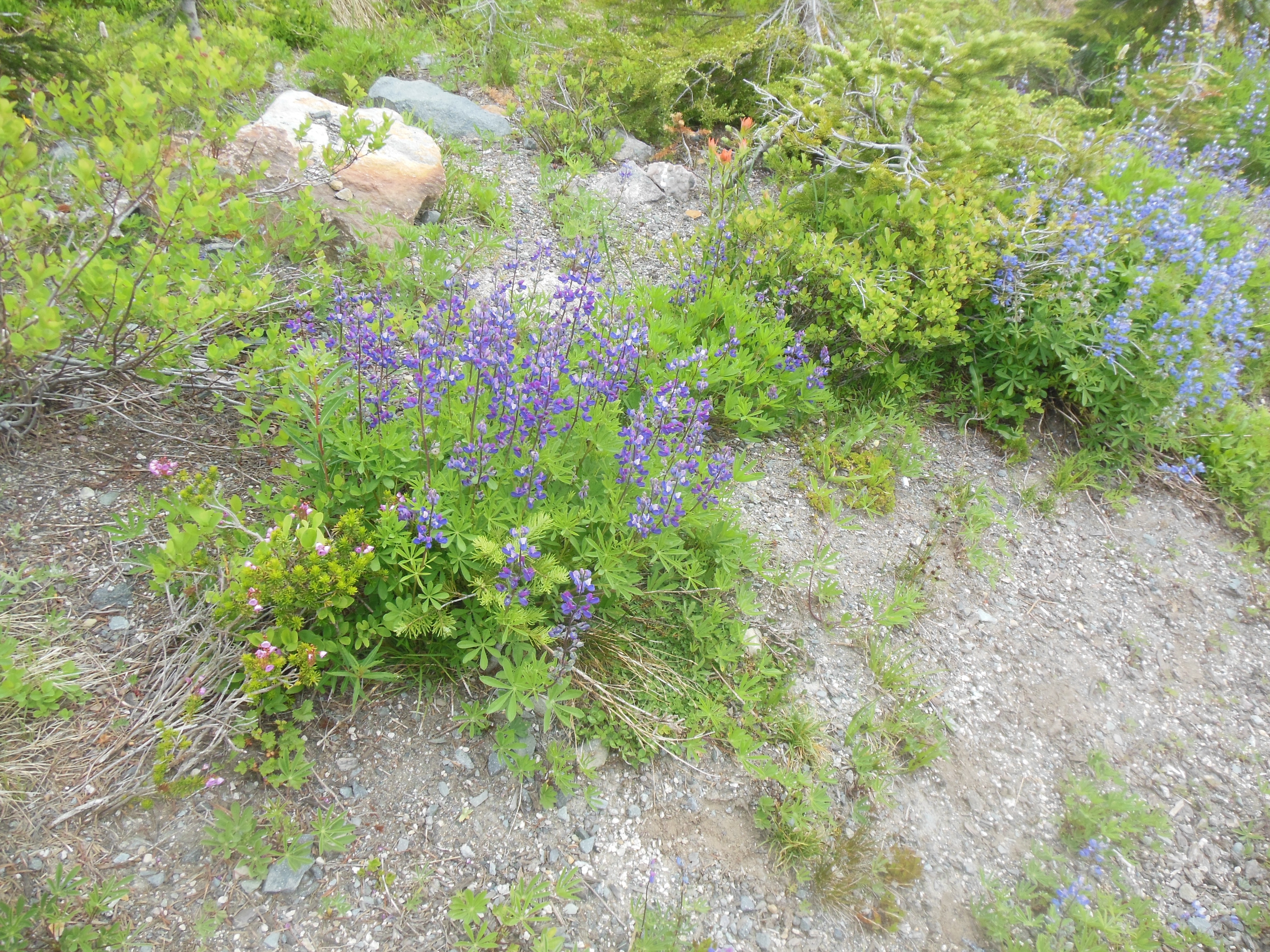
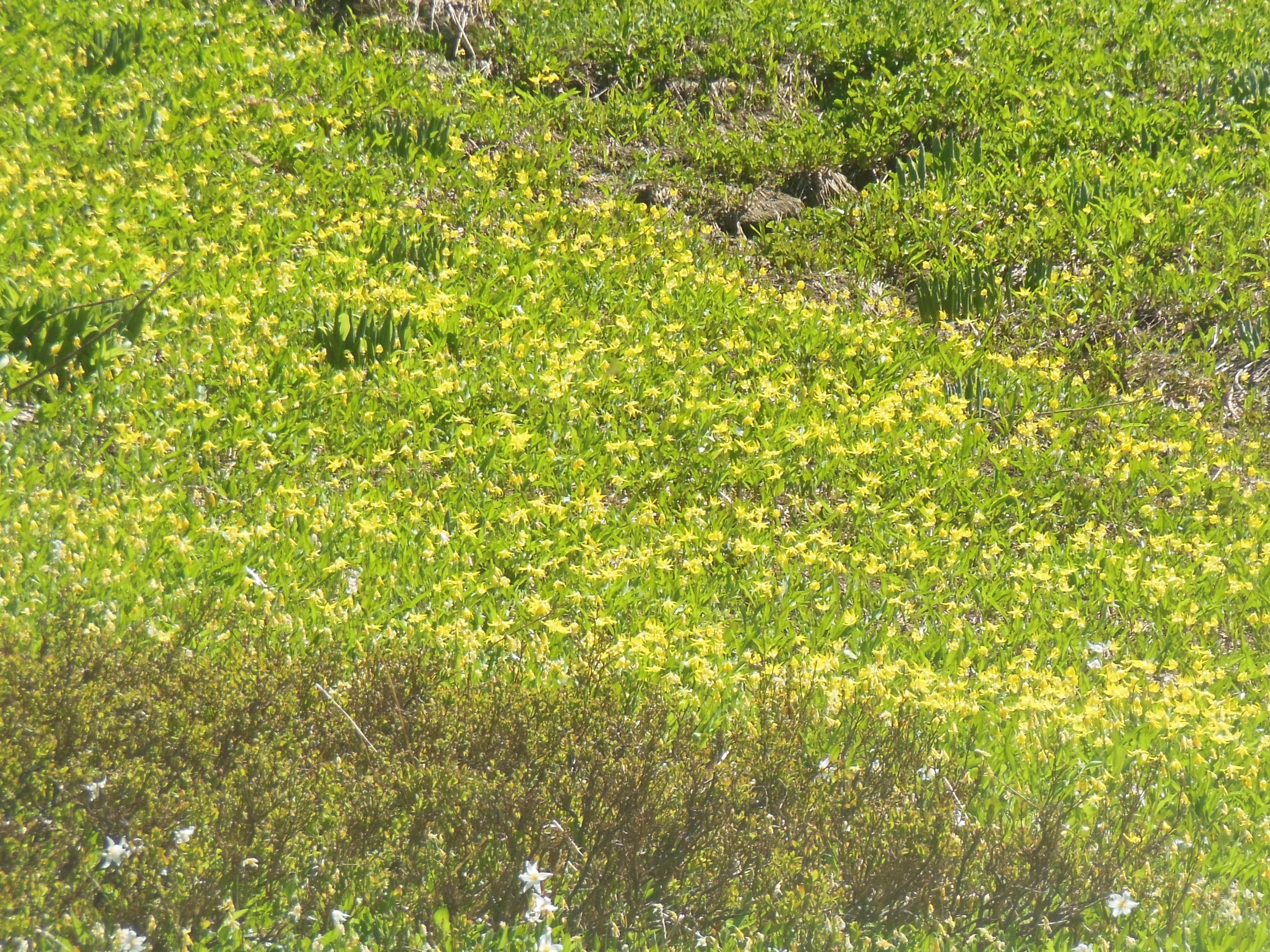
We explored the visitor’s center and took two park ranger led walks Saturday afternoon. The first focused on the wild flowers in the park. Peak wildflower season is late July to early August. The Paradise area of the park is at 5200 feet and is considered a sub-alpine growing area. The flowers are starting to bloom but were not yet at peak. We found the greatest concentration and diversity along roadways where the snow melts earlier and there is more direct sunlight. Along some of the trails you could observe avalanche lilies poking out through the snow.

There is still snow on many of the trails, usually in patches at lower elevations but completely snow covered at higher ones. Some of the serious hikers had skis and hiked up and skied down.
Other hikers make a two day hike to the top of Mount Ranier, going from the 5200 foot elevation at Paradise to the top at 14,200 feet.

Our second ranger led talk focused on the mountain’s geology and glaciers. The snow limited the area the group could walk to. The fully snow covered areas were not a good hike but other trails only had snow on 10-25 foot sections and we hiked those. A number of people dropped out as they were not prepared to walk on snow.

Avalanche lilies peaking thru snow

Avalanche lilies peaking thru snow


Wildflowers

Wildflowers

Mount Rainier has 26 glaciers on it, the largest number for any one single mountain in the lower 48 states of the U.S. One member of the group did get into a “discussion” of whether global warming was really valid since no real science backs it up. “Global warming was invented by liberals when communism was overthrown.”

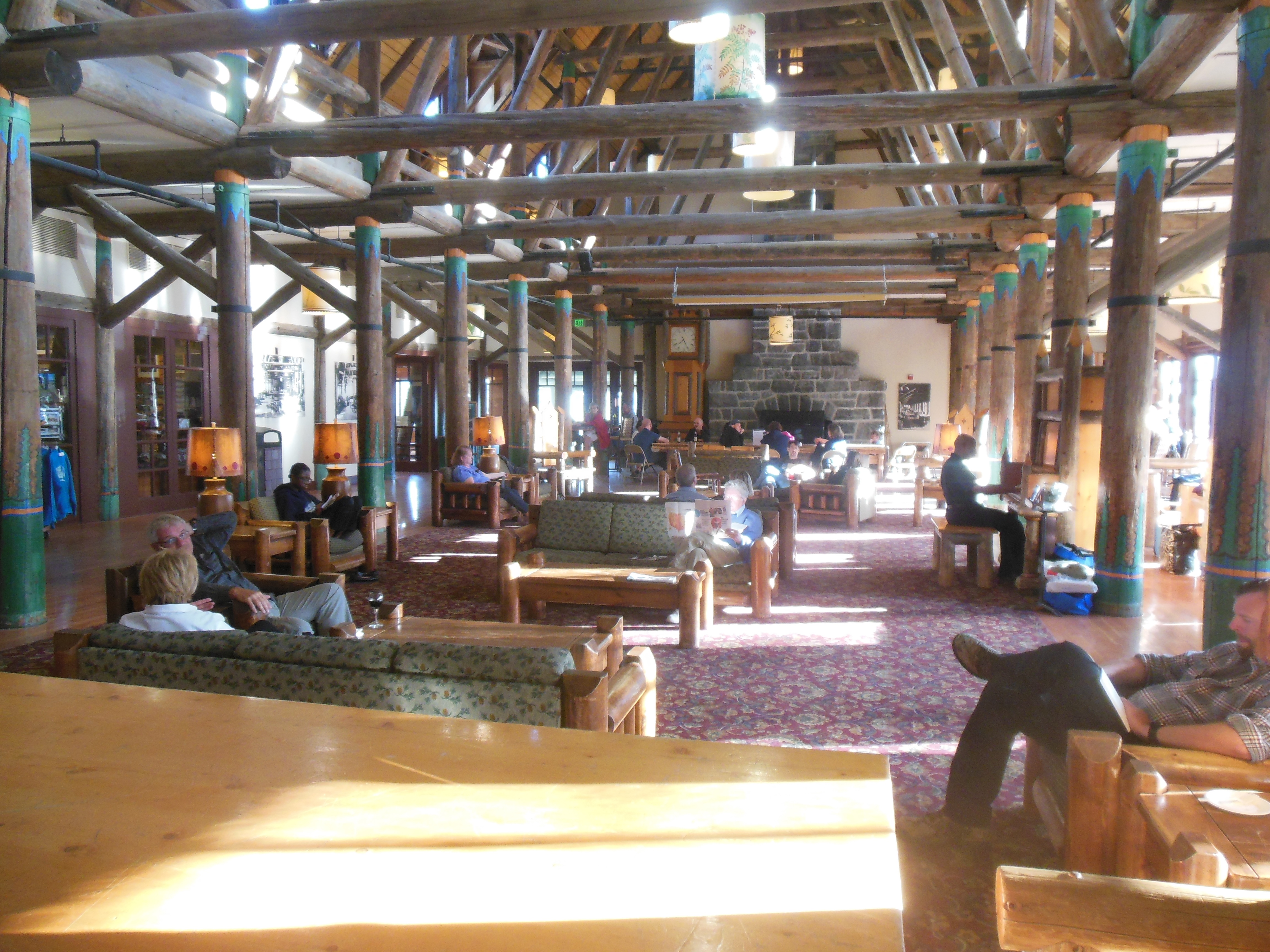
After the hikes, we checked into Paradise Inn. Paradise Inn was constructed similar to the other great park lodges of the West. Massive wood beams, handcrafted woodwork, large stone fireplaces, very small lodging rooms, no TV and Internet. It is only open mid May to early October.

Paradise Inn lobby

Paradise Inn lobby

The lobby has a great room with fireplaces at each end. Due to the lack of electronic entertainment, the lobby is occupied each evening with people reading, playing cards and board games, and just socializing. A piano player plays calm music from 5 to 9 each night–7 days a week and he does not take a break during his four hour stint.

Friday sunset as skies start to clearr

Friday sunset as skies start to clear

As dusk started to settle in around 9:30, we attended our final ranger session on astronomy. The skies had cleared enough that the sky was visible and Ranier was starting to not be blocked by clouds. The ranger had a telescope out and we saw the rings of Saturn and the moon close up. I did not remember Lou’s magnification but the sizes seemed similar. This one had an autofocusing feature that allowed him to enter the solar feature he wanted to observe and the telescope automatically found it.

July 13

Sunday morning walk by Ranier

Saturday morning walk by Ranier

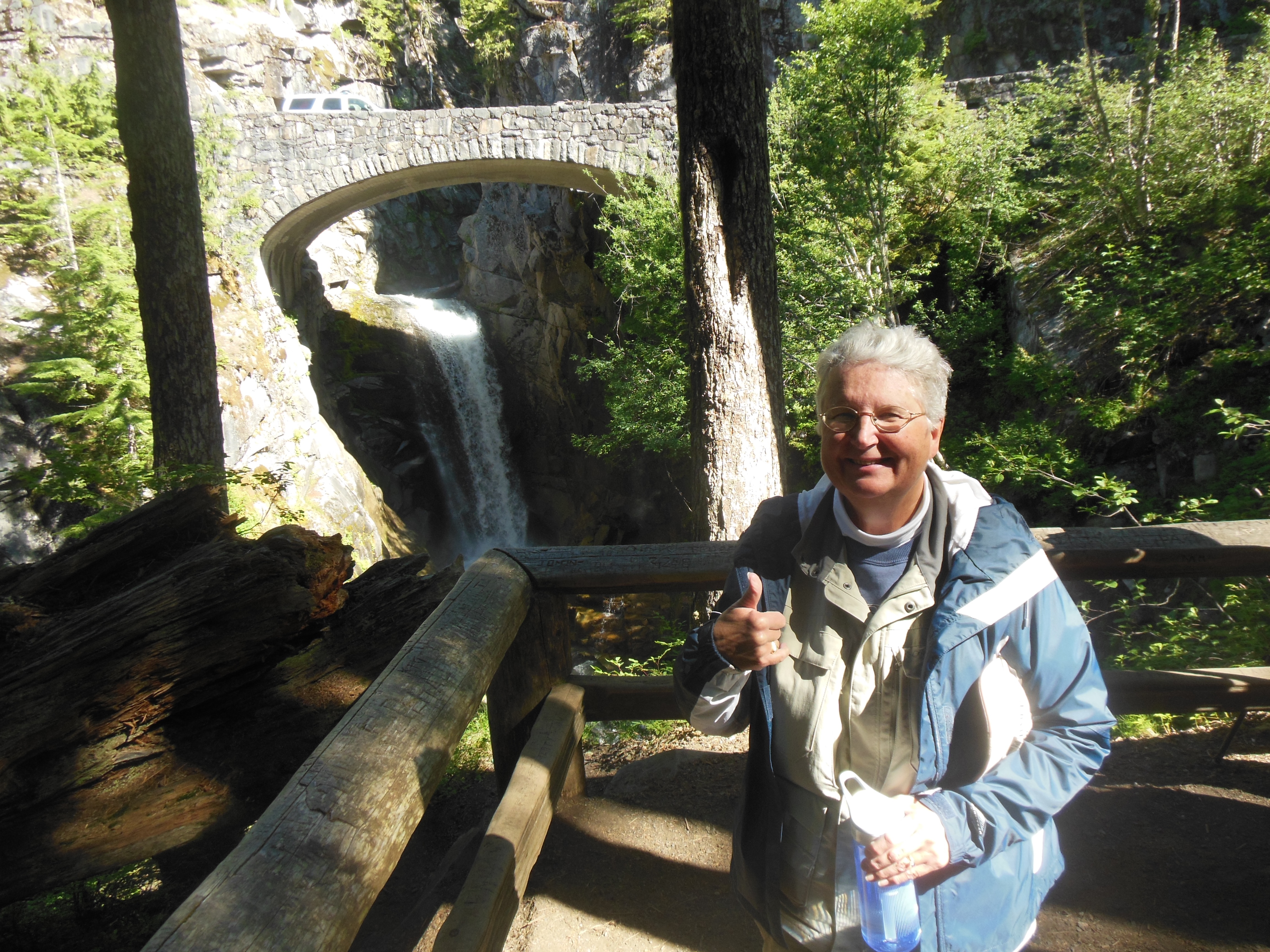
Saturday morning we were up early and walked to Myrtle Falls, close by the Inn. The flowers were starting to open up and the skies were clear. We drove to Narada Falls and took some pictures there before we headed out to Christine Falls.

Narada Falls

Narada Falls


Christine Falls

Christine Falls

As is usual, one can meet a number of people simply by asking if they want you to take their picture (so the photographer can be in the shot) or smiling and asking where people are from.
I think Chris has taken photos on 80% of all camera models made.

At Narada Falls we met a guy from the DC area who was riding his BMW motorcycle around the west. He too had observed the phenomenon of wild flowers blooming close to the road and was thinking or writing a book titled “20 feet from the Edge”.

Field of flowers on Sunday

Field of flowers on Sunday


Wild flowers

Wild flowers


We took a break back at the lodge area and the increase in people from Friday to Saturday was dramatic. Luckily people who stay at the Inn get preferential treatment or we would have had to walk blocks from the overflow parking that flows down the road exiting the lodge and visitor center.

We walked some more in the afternoon and Saturday evening Chris even played cards. She beat Ed at rummy.

View of Paradise Inn

View of Paradise Inn

Close up of some glaciers with hikers paths on them

Close up of some glaciers with hikers paths on them

Ed and Chris July 15 8 am

Categories: road trip, travel | Tags: , , , , , , , , | Leave a comment

2013 Trip Six, The Northwest, July 11

Spokane, WA July 11

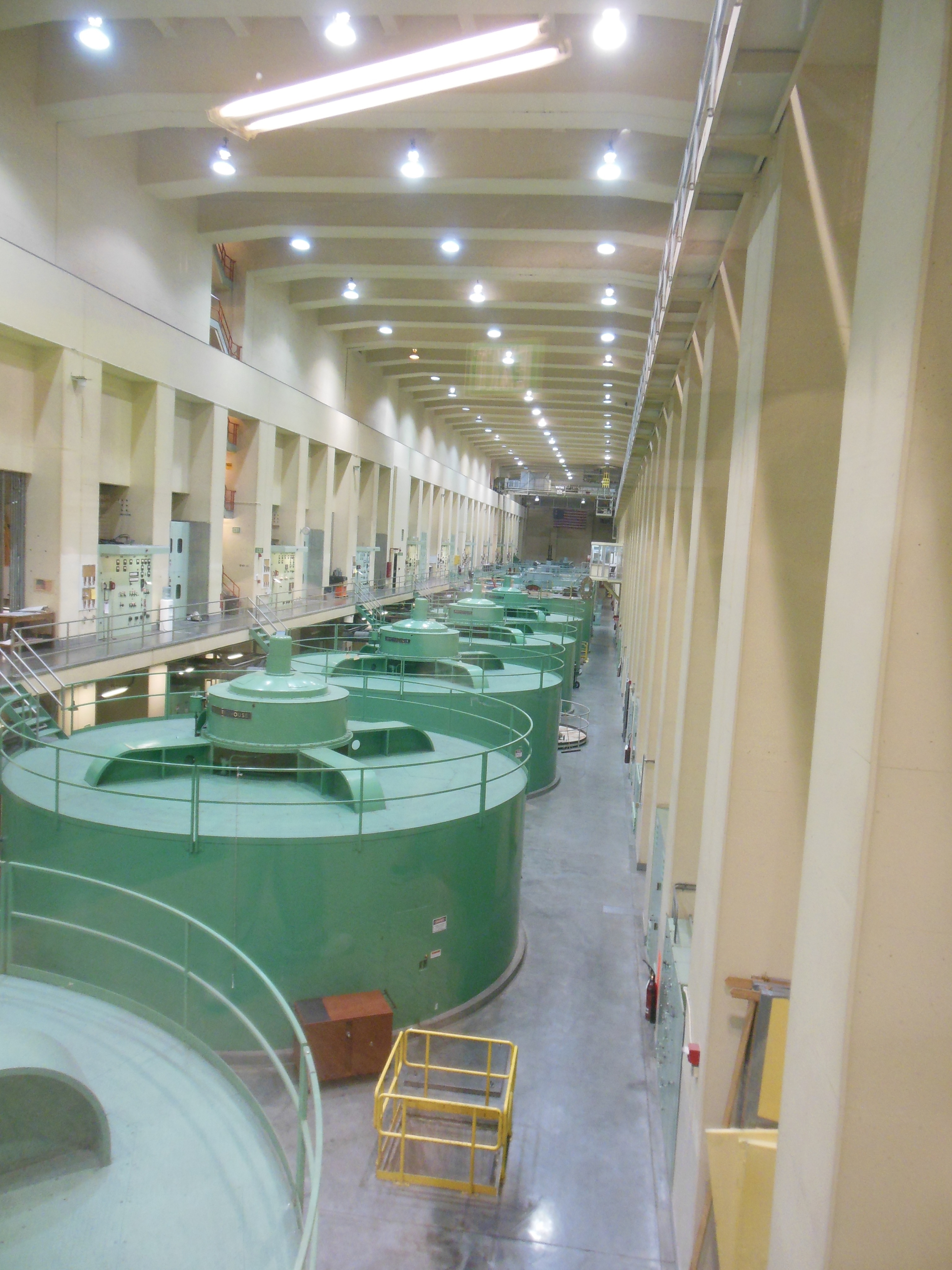
We spent most of Thursday at and around the Grand Coulee dam in Washington state. The Grand Coulee dam is larger and produces more electricity than Hoover dam. Construction started in 1933 and took eight years to complete. The original main purpose of the dam was to provide irrigation for farming.

Initial view of Lake Roosevelt behind Grand Coulee Dam.

Initial view of Lake Roosevelt behind Grand Coulee Dam.


We left Spokane (without really exploring the city) and on our drive to the dam the agricultural fields were green and prosperous. We noticed this and commented positively on it. It wasn’t until we had the tour that we understood the impact of the dam; that the irrigation creates very fertile fields in what is otherwise a semi-arid, high desert area.

Grand Coulee Dam

Grand Coulee Dam

This dam on the Columbia River was designed to maximize the amount of water that could be stored without backing water up into Canada. This backup water results in the creation of Lake Roosevelt, a major recreation area. It is 151 miles long. The Columbia River actually has its headwaters in British Columbia, close to where we will be staying in a month or so.

Power generating turbines

Power generating turbines

From Lake Roosevelt, the Bureau of reclamation pumps water into another lake for irrigation purposes. Banks Lake, as it is called, is another 26 miles long. This is the water that is sent into irrigation canals all over north east Washington state.

Looking down at the water going over the spillway

Looking down at the water going over the spillway

While the lake created by the dam is named for Franklin Roosevelt, the dam itself is named after a geological feature.
A coulee is a ravine. In this case, the Coulee was created by the multiple breakthroughs of ice from glaciers in Lake Missoula, Montana during the ice age period. The huge flows of water scoured out the Coulee, or ravine. In this case the ravine is quite large.

As always, numerous people were moved out of the 151 mile long area the new lake would create. American Indian tribes were also severely impacted. The tribes do receive some remuneration based on irrigation and power generated but no details as to its sufficiency were made known to us.

View of Banks Lake and coulee around edge

View of Banks Lake and coulee around edge

We were able to take a tour of the dam. 38 people are able to take a tour which is offered every hour on a first come, first served basis. The power produced here is some of the cheapest in the US and goes to areas in eleven western states.

We were able to see water rushing over the top of the spillway. Evidently, this is not common. Due to power generation, pumping for irrigation, snow melt and rainfall, most water is run through the power intake pipes or pumped into Banks Lake.

I am sure a detailed report on the building of the dam would bore you but suffice it to say that it was a massive project that had power struggles for decades before being built. It is an impressive sight.

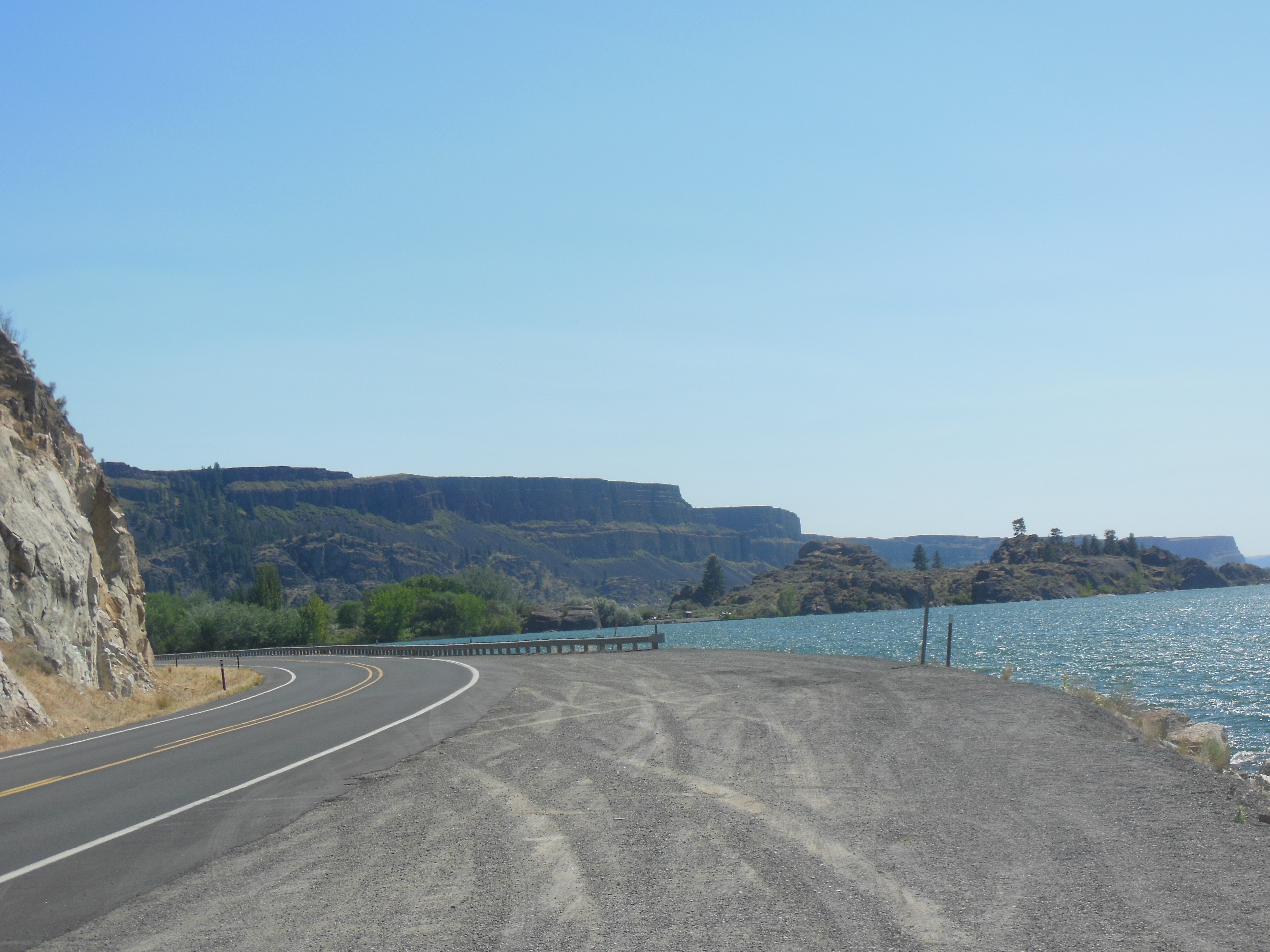
Dry Falls

Dry Falls

After the tour and time spent at the visitor center, we headed for Yakima, WA. On the way there, we also visited the Dry Falls state park. This is another major geological feature. At one time, a gazillion years ago, the falls here were larger than Niagara Falls. The cliffs which were carved by the Ice Age, are 400 feet high and over three miles wide. AND, the concession stand was still open and selling ice cream.

The final stretch of the drive brought us to the Cascade Mountains. The road, now mainly interstates, would rise and fall over 1,000 feet numerous times as we drove up and down the range foothills.

The next two days are in Mt. Ranier and we have been advised cell and internet coverage are normally unavailable.

Ed and Chris July 12 7 AM
Categories: road trip, travel | Tags: , , , | 2 Comments

2013 Trip Six, The Northwest, July 10

Wednesday, July 10 Traveling

Well, it was a long day. 14.5 hours to travel 425 miles from Calgary to Spokane. A number of factors come into play.

First, getting out of Calgary. As mentioned earlier, while there are limited access highways in Calgary, the direction we were going only had them for part of the way. City streets with traffic signals were a good portion of the road traveled.

Alberta lands with Rockies in background

Alberta lands with Rockies in background

Second, some might be cynical and ask if we chose the most direct, quickest route. The answer would be: Of course not. We chose a route that looked direct, scenic, easy to remember, explored new territory, and went by areas we wished to see. The route did all that.

Third, cynicism might continue when we state that we added time to our travel day since we chose a route with a bridge washed out from the mid June floods and which was not yet replaced. Could we not have checked that out before we left?? Probably. We didn’t. So we got to see additional, new territory as we had to detour around the washout.

Lunch in Longview AB

Lunch in Longview AB

Fourth, we were traveling two lane roads with 100 km/hr speed (62 mph) limits, frequently behind trucks and RVs and which roads travel through small towns where the speed is reduced to 50 km/h. There were no 4 lane, limited access highways as an option.

Fifth, we stopped to eat and see.

We left our Evergreen hosts at 9 AM. We drove south to pick up Alberta Highway 3 which crosses the Rockies at Crowsnest Pass, one of the only three passes over the Rockies in Canada. Our drive took us through the foothills of the Rockies, plains to the east, rolling hills where we were and the Rockies to the west. The road was called the Cowboy Trail and is prime ranching territory.

Bar U ranch in Alberta

Bar U ranch in Alberta

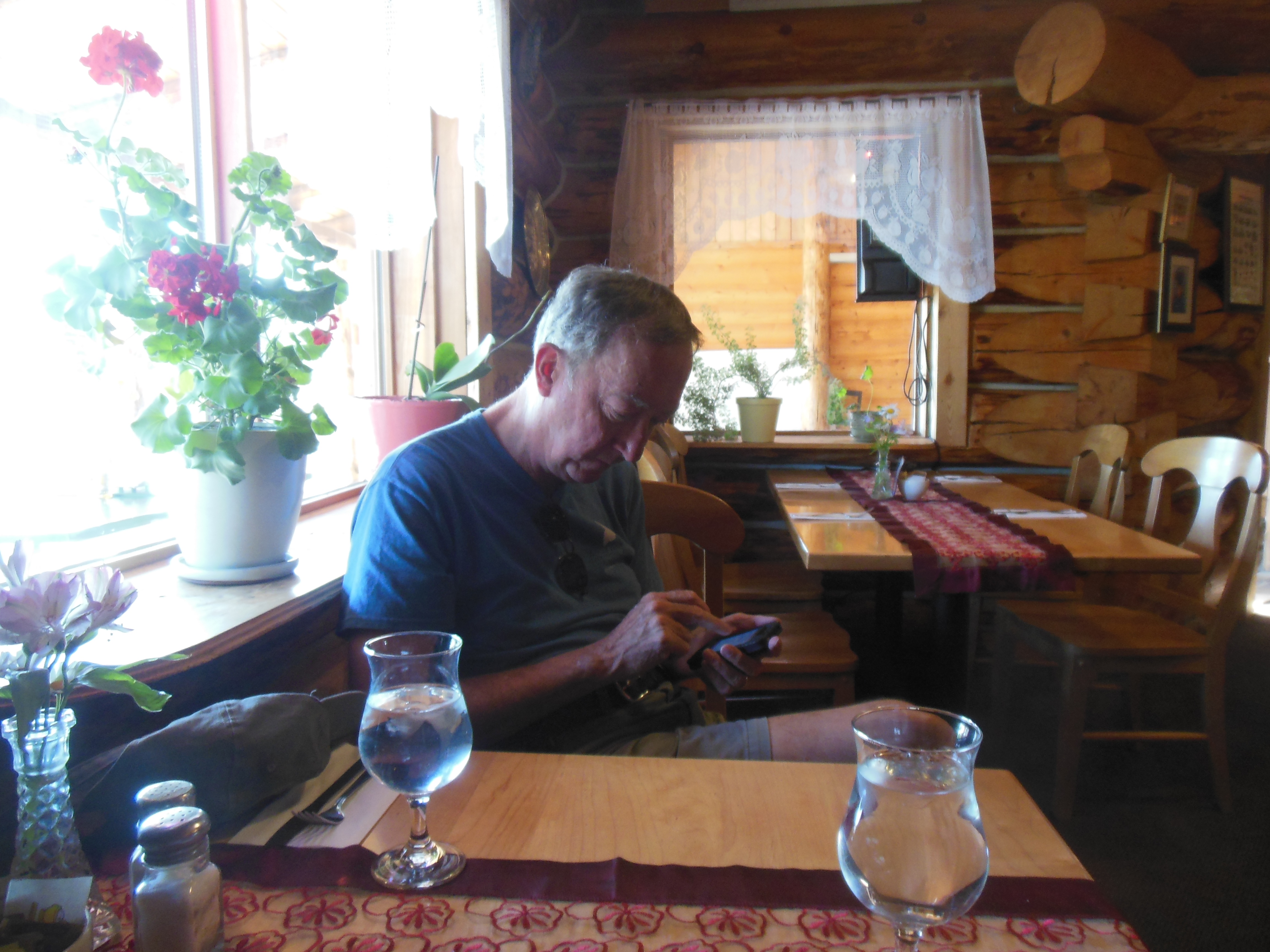
We made our first stop in the town of Longview where we had an excellent lunch at the New York Style Bistro. Longview is a small, ranching town. The restaurant had a log cabin type construction.

Alberta ranching land

Alberta ranching land

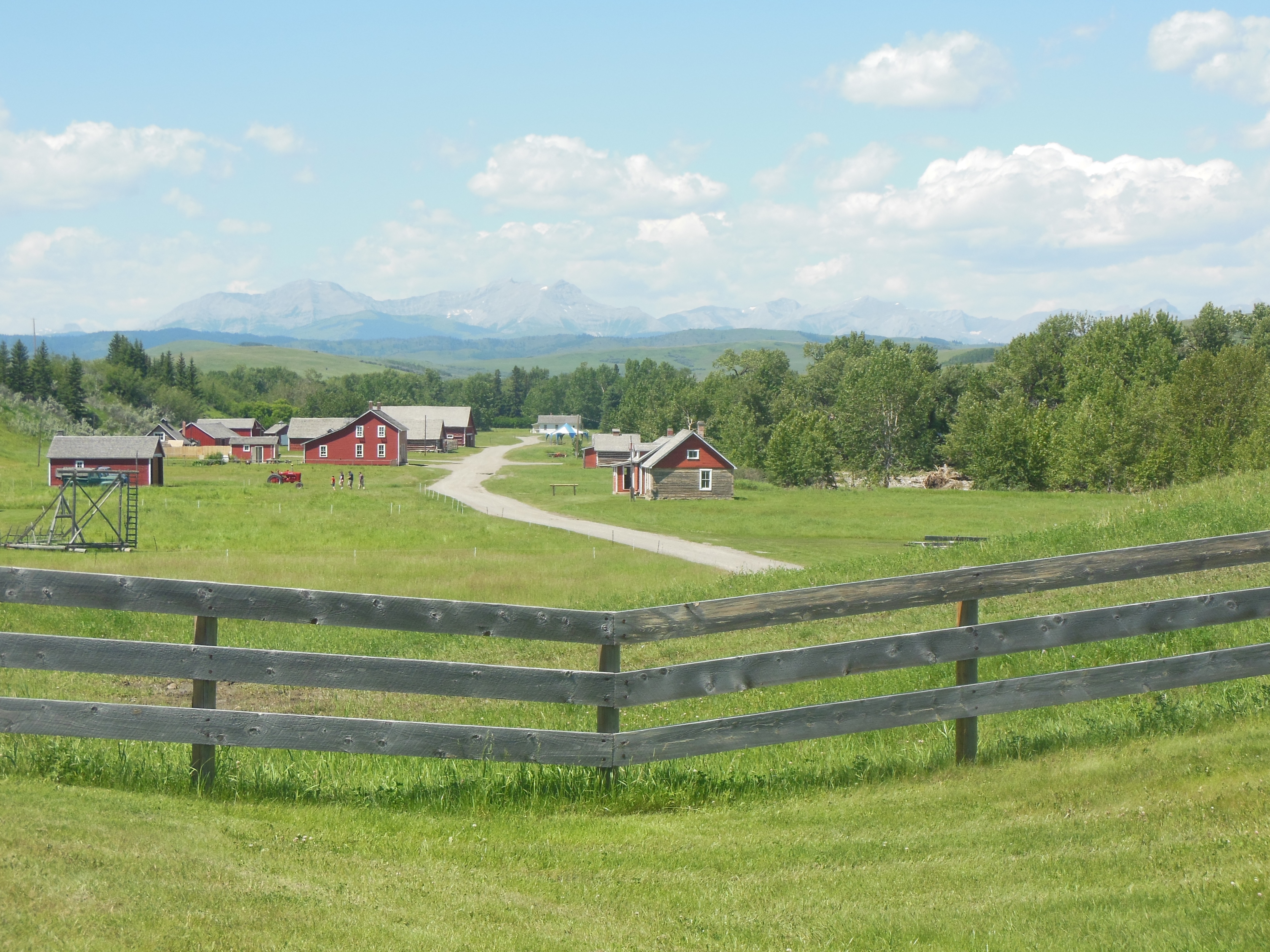
Our second stop was at the Bar U ranch national historical site. This ranch was started in the 1800s and was one of the largest in Canada for cattle ranching. In the early 1900s, it was also famous for its breeding of the Percheron horses. Its owner was one of the Big Four-financial backers of the initial Calgary Stampede.

Our third stop was at the Frank Slide interpretive center. The town of Frank located in the Crowsnest pass area had a landslide in 1903 which killed 90 people. While coal mining was occurring here, it is believed the landslide was due to natural forces. In the same geographic area, a coal mining accident killed 189 workers about a decade later.

Frank slide at Turtle Mtn in Crowsnest area

Frank slide at Turtle Mtn in Crowsnest area

From Crowsnest almost to Spokane, we were driving on two lane roads in a valley. Usually a river or creek was close to the road. Railroad tracks were frequently in sight. Mountains were on either side although as we drove further the mountains became shorter and more gently sloped. The area was usually forested. A pleasant scene.

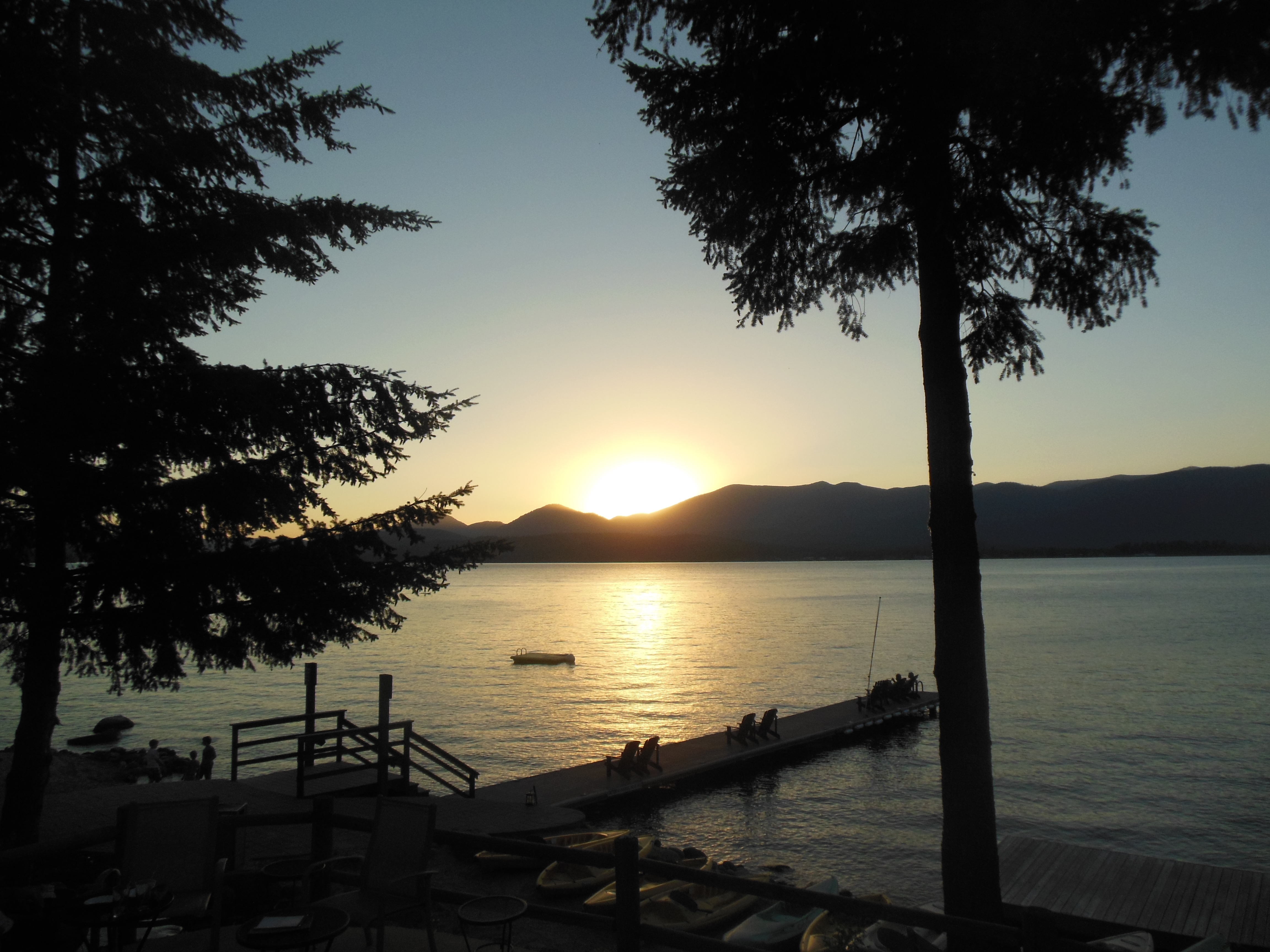
Our final stop was for dinner at a restaurant in Sandpoint Idaho. The restaurant is on the shores of Lake Pond Oreille, the fifth deepest in the U.S. at about 1,150 feet. We treated ourselves to a real meal and shared Steak Oscar and bread pudding.

Lake Pond Oreille Idaho

Lake Pond Oreille Idaho

We finally arrived at the Fairfield Inn in Spokane at 10:30 pm, pacific time.

Ed and Chris July 11 10:30 AM
Categories: road trip, travel | Tags: , , | 1 Comment

Blog at WordPress.com.