Monthly Archives: May 2013

2013 Trip Four, Out West, May 31

Friday, May 31

Even on a travel day we can make our day exciting and educational. Today was our day to go from Park City Utah to Jackson Wyoming for Grand Tetons National Park.

Our first stop was Promontory, Utah. This is 30 miles west of Ogden Utah and the location of the Golden Spike National Historical Monument. We took new roads to get there and observed a different area of the Wasatch Mountains.
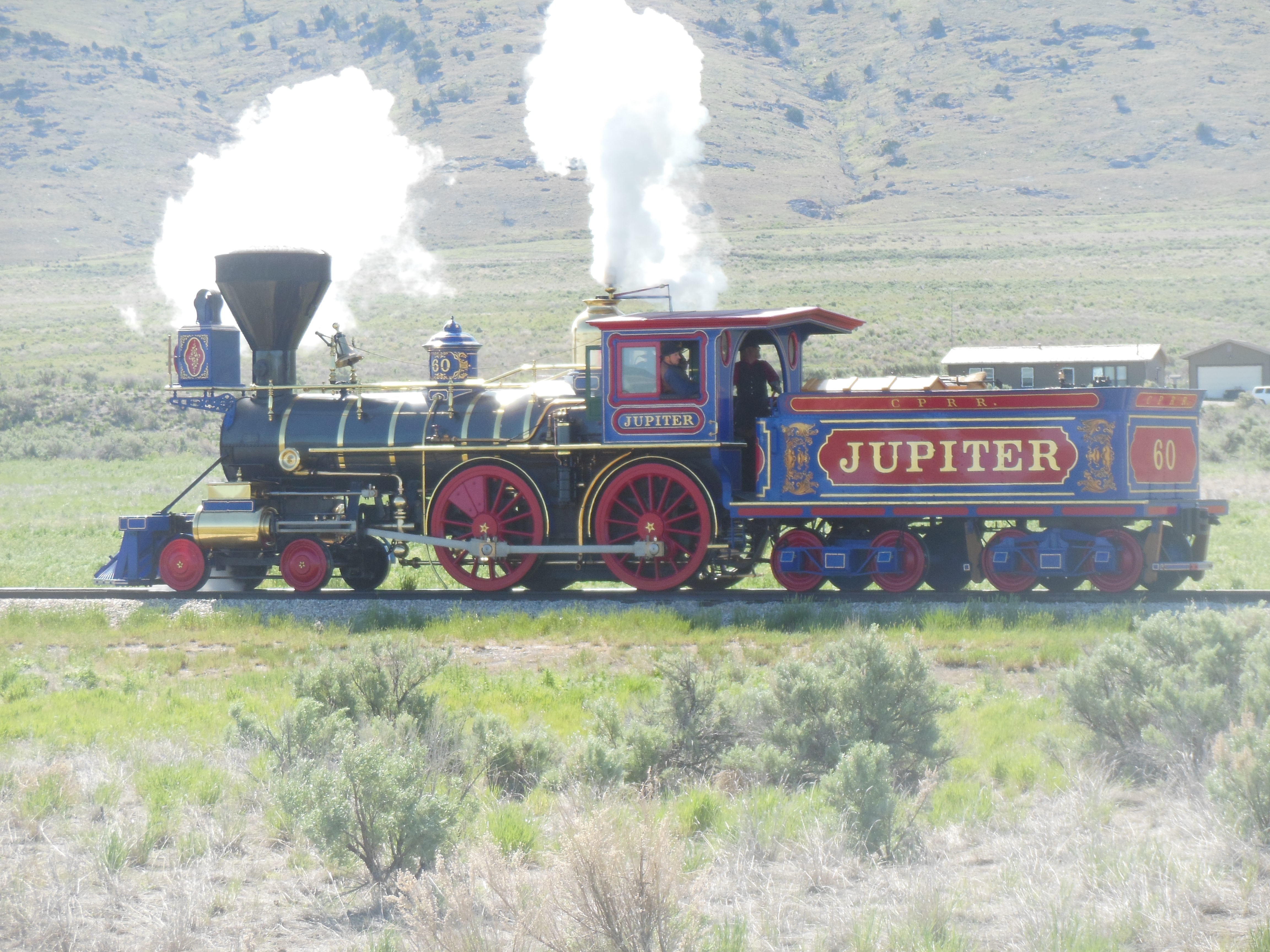
Golden Spike. Yes locomotives were colorful at that time.

Golden Spike. Yes locomotives were colorful at that time.

Golden Spike is a location where the first transcontinental railroad line was completed on May 10, 1869. The Central Pacific Railroad built its line eastward from Sacramento California. The Union Pacific railroad built its line westward from Omaha Nebraska. We arrived just in time to see one of the two replica locomotives steaming down the track.

The federal government authorized the action along with financial incentives. Interestingly, the US government did not act until extremely late in the process to authorize the exact point where the two railroads would meet. This resulted in the two railroads building lines into each other’s area. (More track built, more financial incentives.) Once the final point was selected, they had to build track back to the connection point.

This line continued to serve the transcontinental railroad traffic until 1904 when a new location to the south was built. This new location was more direct, was built across the Great Salt Desert, and avoided the excess mileage resulting from the tracks circling around to meet the connection point.
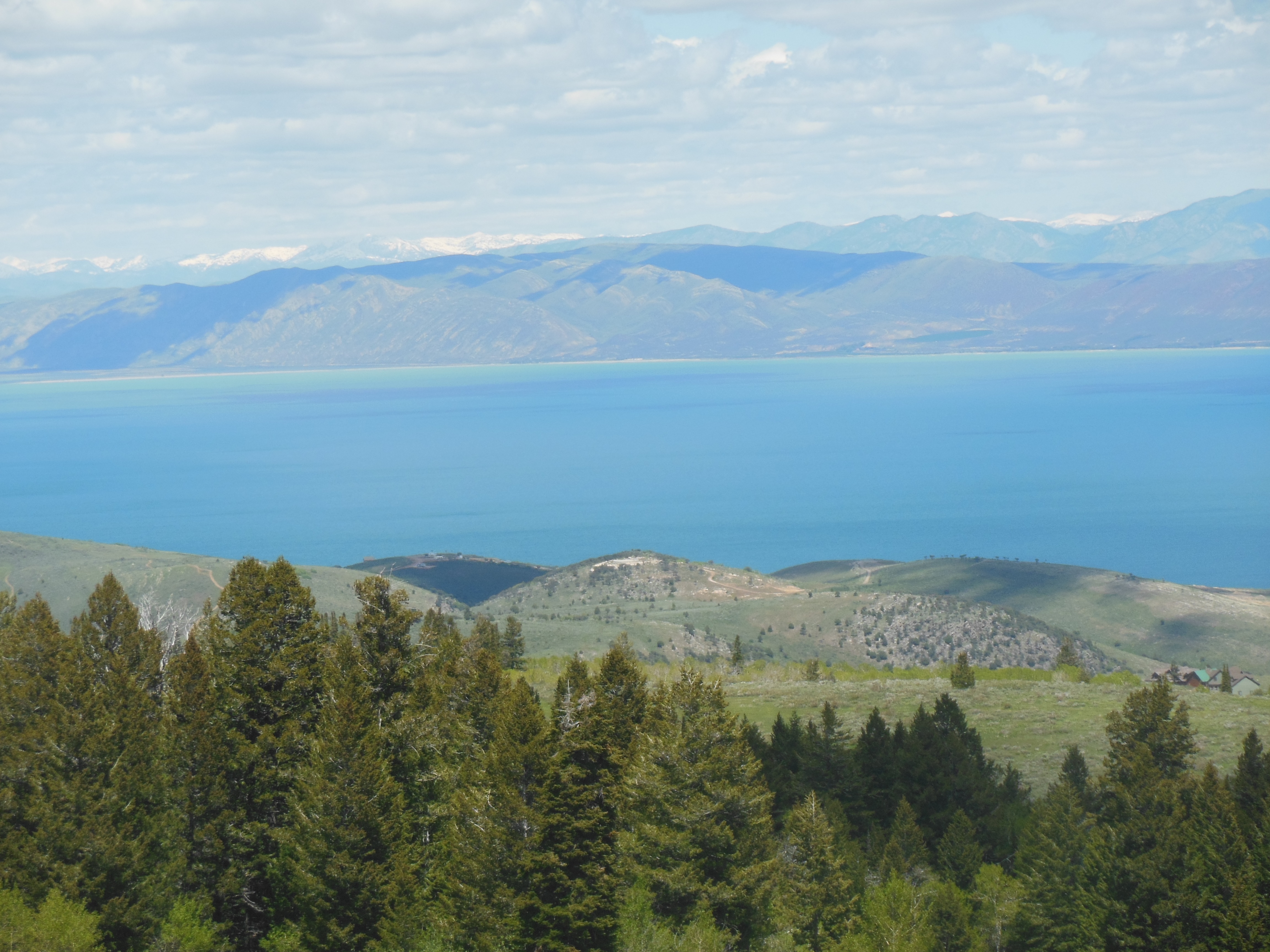
Bear Lake

Bear Lake

We had to back track a bit to continue our trek to Jackson, WY. We had lunch in Brigham City at a local diner. It was recommended in Road Food and AAA. $10 for a pot roast meal with au gratin potatoes, fresh steamed vegetables, salad, a roll and the meat. Not bad. Plus the malt (Ed) and shake (Chris) was only $3 each for a large serving with cookie and whip cream!

Our journey to Jackson Wyoming went over the Logan Pass. Just after the pass, we came upon Bear Lake. This is a large, very blue lake straddling the Idaho – Utah border. The drive continued primarily through valleys and several small towns until we came to Jackson.
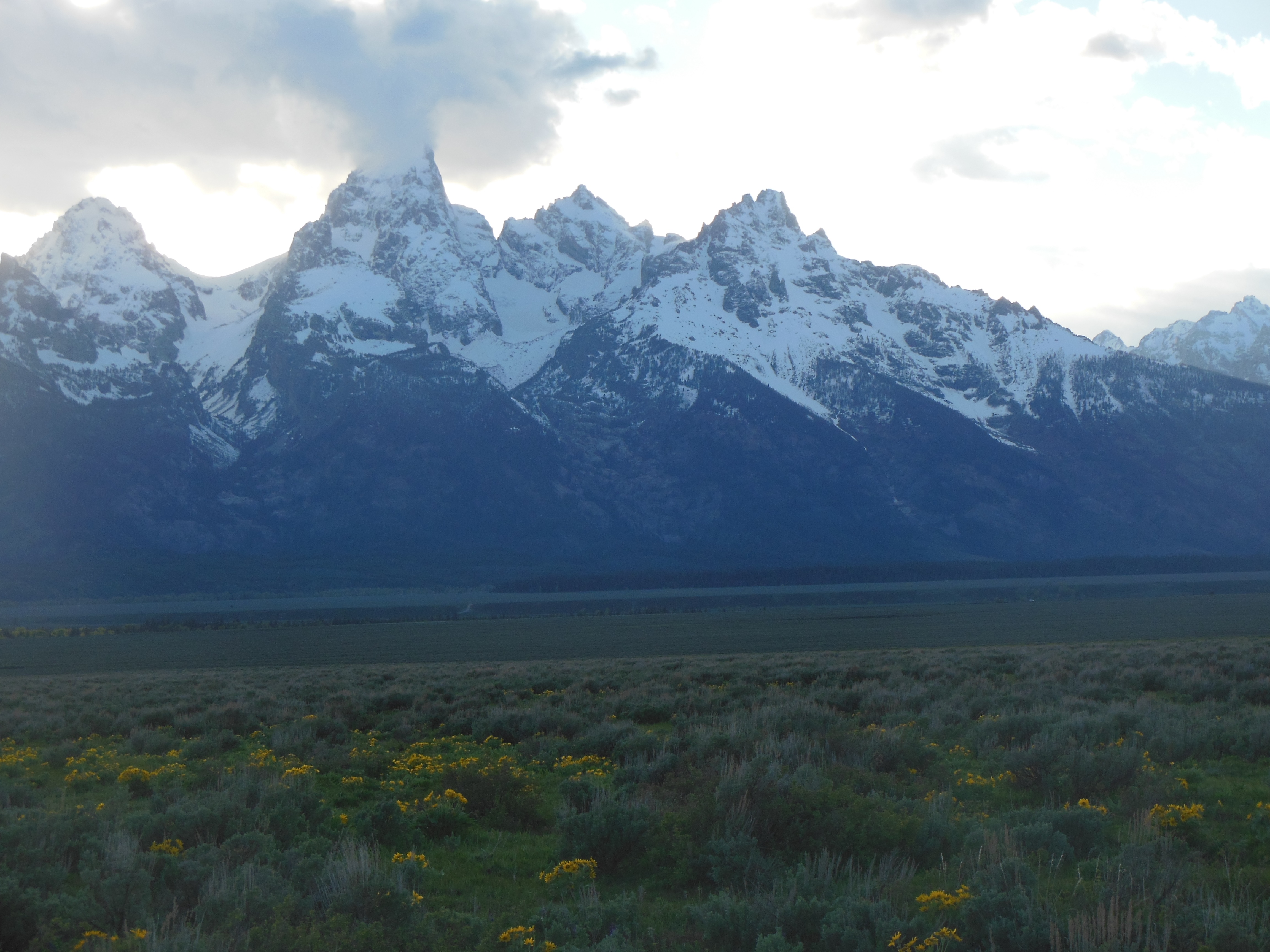
Grand Tetons

Grand Tetons

The first view of the Tetons was not overwhelming but as we drove around after checking in, we could see and appreciate their majesty. We will have more opportunities over the next two days to experience a greater portion of the park.
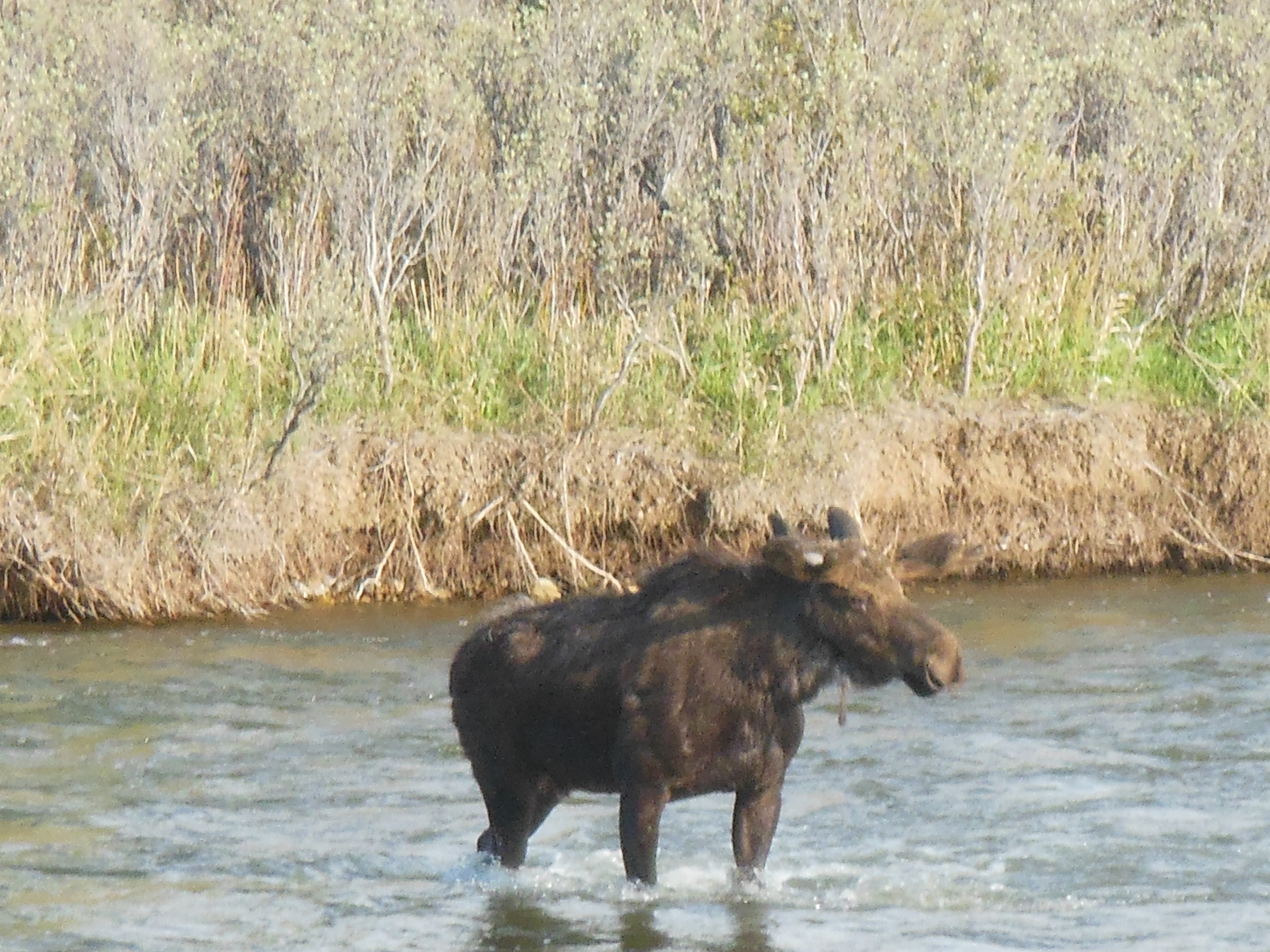
Moose sighting

Moose sighting


Chris makes a new friend

Chris makes a new friend


Our initial drive in the park resulted in views of moose, bison, and deer. We had only seen moose once before so this viewing was great. Bison are almost becoming blase by now.

Ed and Chris May 31 11 pm
Categories: road trip, travel | Tags: , , | Leave a comment

2013 Trip Four, Out West, May 30

Thursday, May 30

After a morning hike, we drove to the Utah Olympic Park. This is located just outside of Park City at the venue held for skiing and bobsledding. In all, 11 different sites were used to host the 2002 Winter Olympics. This particular site has been designated to maintain an ongoing museum about the Olympics and Utah skiing history. We spent some time getting teary-eyed watching 2002 videos and reading historical placards.

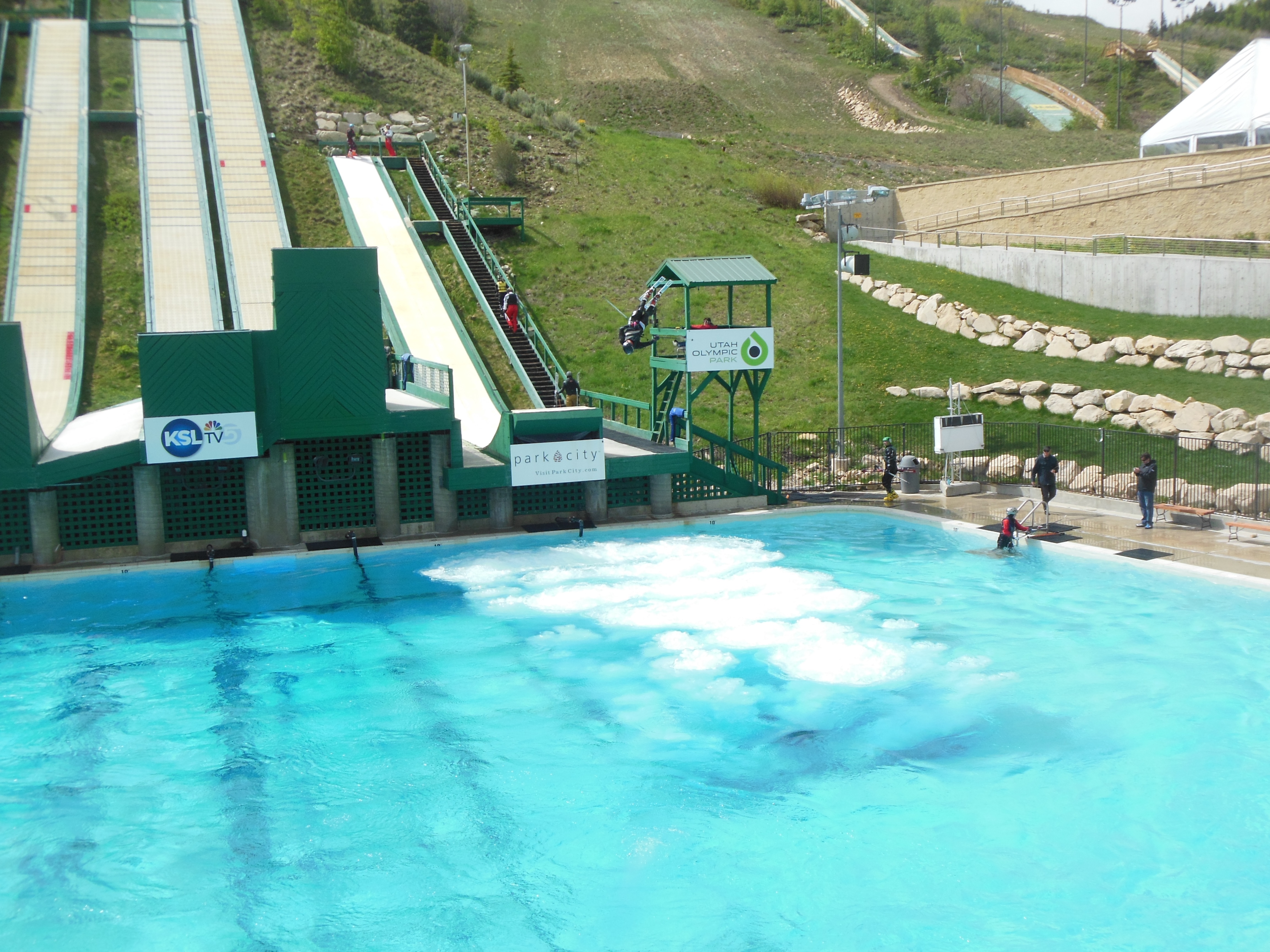
Aerial ski practice area with pool

Aerial ski practice area with pool

Ski practice

Ski practice


We were fortunate enough to observe some people practicing to be future Olympians. The aerial skiers have three slopes to go down for practice. Since this is the off season, they land in a pool of water. The pool was 10 foot deep and utilizes an air bubble system to cushion their fall. The pool is not heated. The skiers wear rubber suits to keep them dry as well as a life preserver.

Ski practice

Ski practice

We took a bus tour to several vantage points. These were at the bottom of the ski jump, the top of the ski jump, and the top of the luge – bobsled – skeleton kickoff point. Our tour guide was extremely informative and humorous. We will watch the 2014 Winter Olympics with new insight and greater appreciation.

(Lest anyone challenge our desire for adventure, let it be said that the bobsled, zip line, and other activities at the Olympic Park were not open today.)

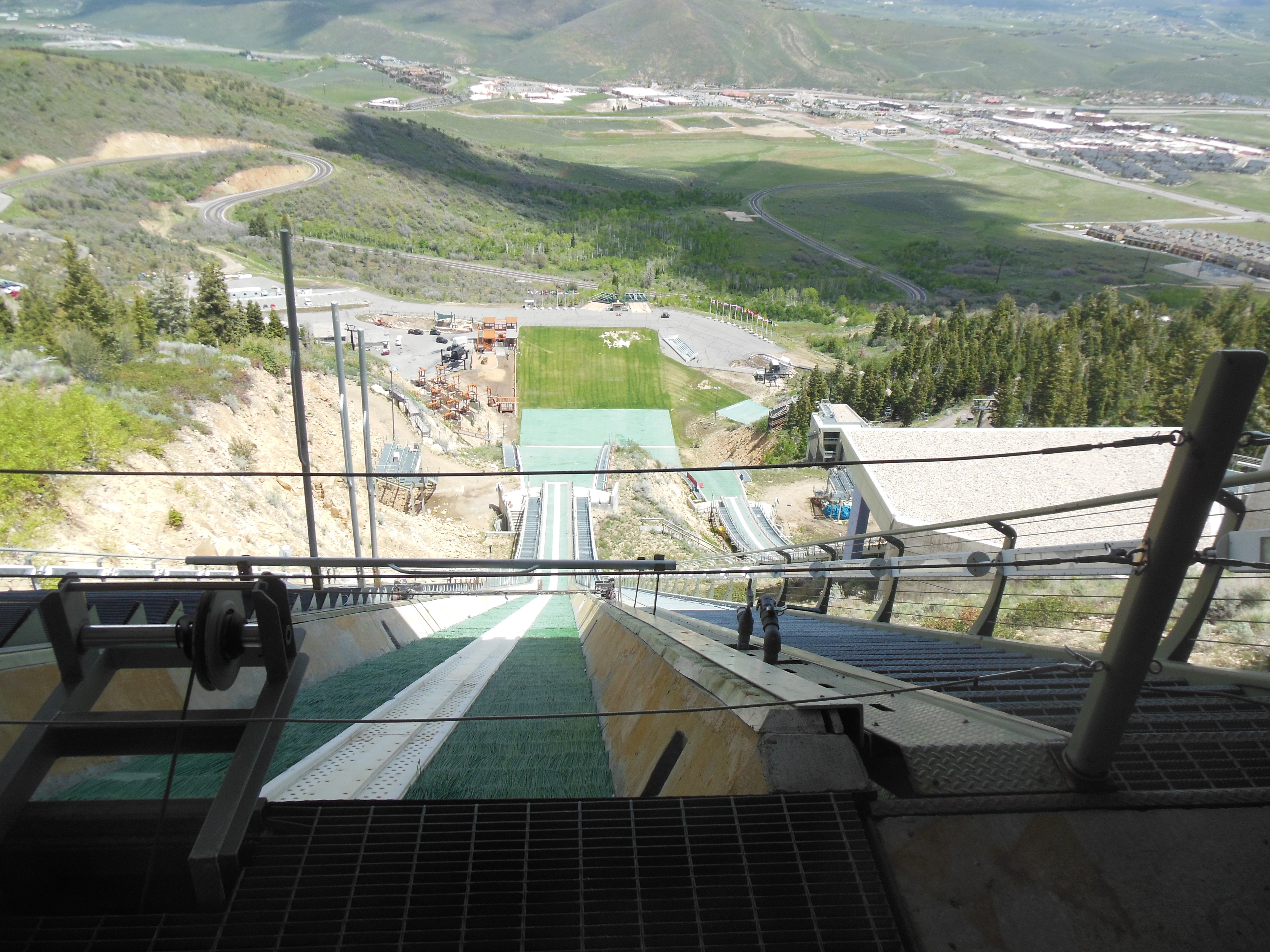
Our tour guide noted that before skiers go down the ski jump, two or three younger skiers are used as guinea pigs. They make the same jumps that the Olympians do, in order to test the wind and help the judges make adjustments to the starting points. One of these young skiers in 2002 ended up winning a medal eight years later. In 2002, he was 12 years old when he made the practice jump. These people are labeled as forerunners.

View from top of ski jump, skis go in white tracks on jump

View from top of ski jump, skis go in white tracks on jump


Ski jumps from a distance

Ski jumps from a distance


Utah Olympic Park is the practice site for several other teams besides the Americans. Australians and Jamaicans are based here. The South Koreans used to practice here but since they will be hosting a future Winter Olympics, they are building their own practice area. The US national team practices here and there is a school ($15,000 per year tuition) for aspiring athletes so they can study during the summer and then ski during the winter in Europe.

The 2002 Winter Olympics were great for Park City and the Salt Lake region. They installed a light rail system, made road improvements, added new winter skiing venues, gave grants to restaurants to expand their capacity, got great publicity and made a profit. Part of the profit was transferred into a Legacy Fund to support the non-profit venues into the future-like Utah Olympic Park.

Our late afternoon and evening activity was at Temple Square. I am not sure of my emotions here. The Mormons have a lot of good going for them but I come into this wondering about any religion that started with polygamy and racism. Then my skepticism of institutions and high commerce come into play as the Church of Latter Day Saints really seemed to dominate and control governmental and commercial activities here.

Flower bed at Temple Square

Flower bed at Temple Square


Salt Lake Temple.  There were at least four weddings going on tonight

Salt Lake Temple. There were at least four weddings going on tonight

That being said, Temple Square is a beautiful setting. New floral plantings had just been completed yesterday. The sun was shining and the buildings looked great. Volunteers were everywhere asking if you needed anything or had questions.

This is a major complex. We ate at one of the restaurants in the complex, after being told one was full and that the turkey pot pie would take 20 minutes at the second. Our final choice had good food for a reasonable price. This restaurant was located in Lion House, one of Brigham Young’s residences to hold his more than 20 wives and 50 some children.

Lion House

Lion House

We attended a practice performance of the Mormon Tabernacle Choir which was so-so. It is an open, free practice session and audience members can come and go as they please. The director spent considerable time going over short sections of the music so you rarely got to observe the group at full voice. Still it was worthwhile.

Tabernacle where  choir performs

Tabernacle where choir performs


Choir at practice

Choir at practice

Ed and Chris May 30 11:45 pm

Categories: road trip, travel | Tags: , | 1 Comment

2013 Trip Four, Out West, May 29

Wednesday, May 29th.

Ah Minnesota. We are 1500 miles from home and still you are all around us. We went for a walk along Main Street with a guide to explain some of the city’s history and stories behind the buildings.

With us on the walk was a Chinese-American woman from Orange County California who had spent five years in Minnesota in Winona, St. Cloud, and Minneapolis. There was a family. Senior woman was from Minnetonka, her father was one of the founders of LarsonAllen. LA is a firm of CPAs, big in the Midwest with a PA presence also. Son of senior woman was a grad of St. Mary’s in Winona. He, his wife and three sons now live in Wyoming. That was the group.

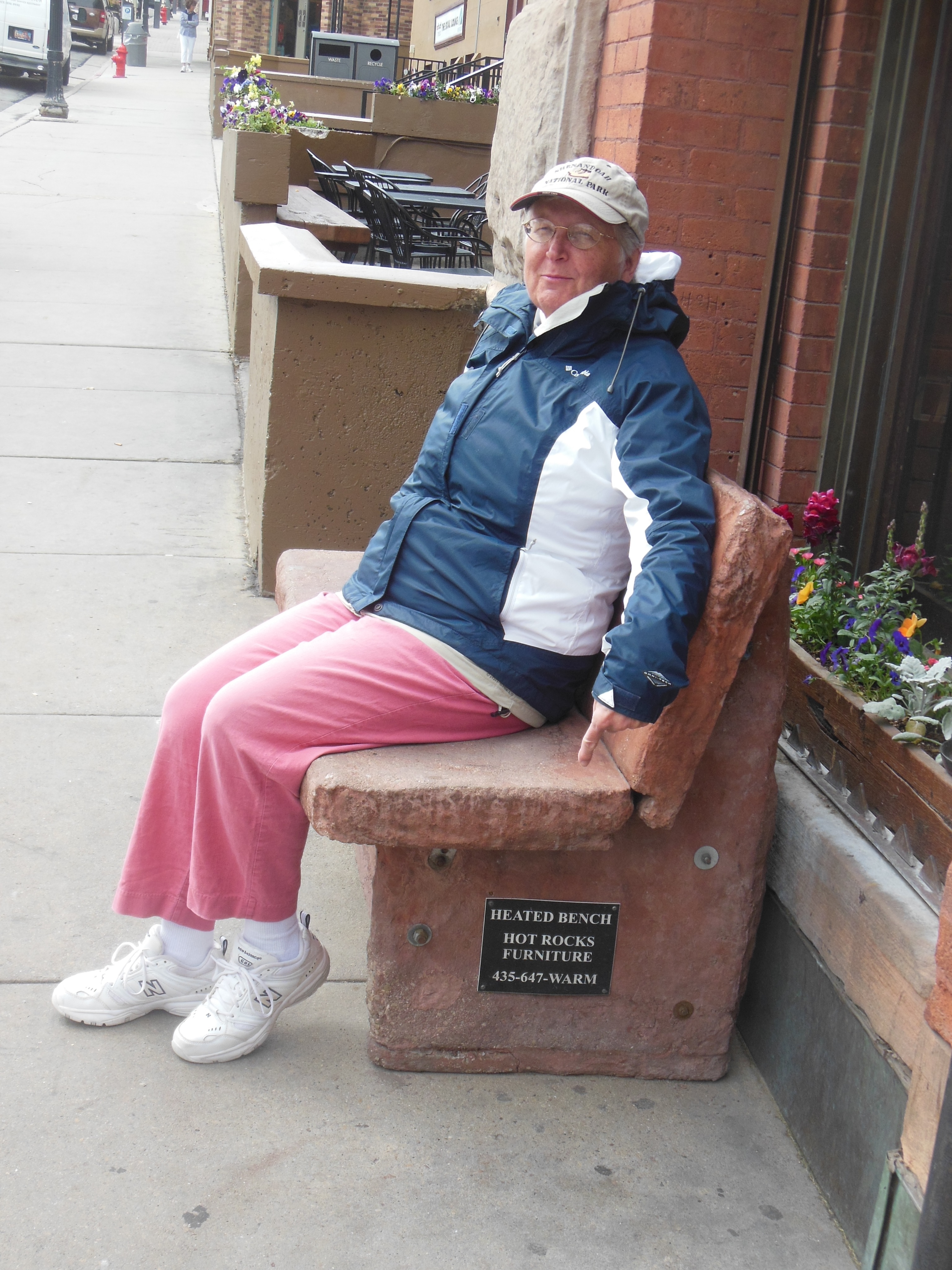
Park CIty heated bench

Park CIty heated bench

Park City is a town built on mining. Literally. The early town was quite small, mainly used for lumbering. When silver was discovered in the 1860s, the town grew more rapidly. At one time, there were about 30 mines in operation in the area. The town’s fortunes rose and fell based on the price and need for silver. After World War II, silver was a bust. So was the town.

The last mining company began a conversion to skiing as its main moneymaker. Growth was slow. Eventually in the late 1980s skiing began to have a major impact. There are currently three major ski slopes in the area. In fact, today there was an announcement that the Vail companies may be taking over one or more of the ski slopes.

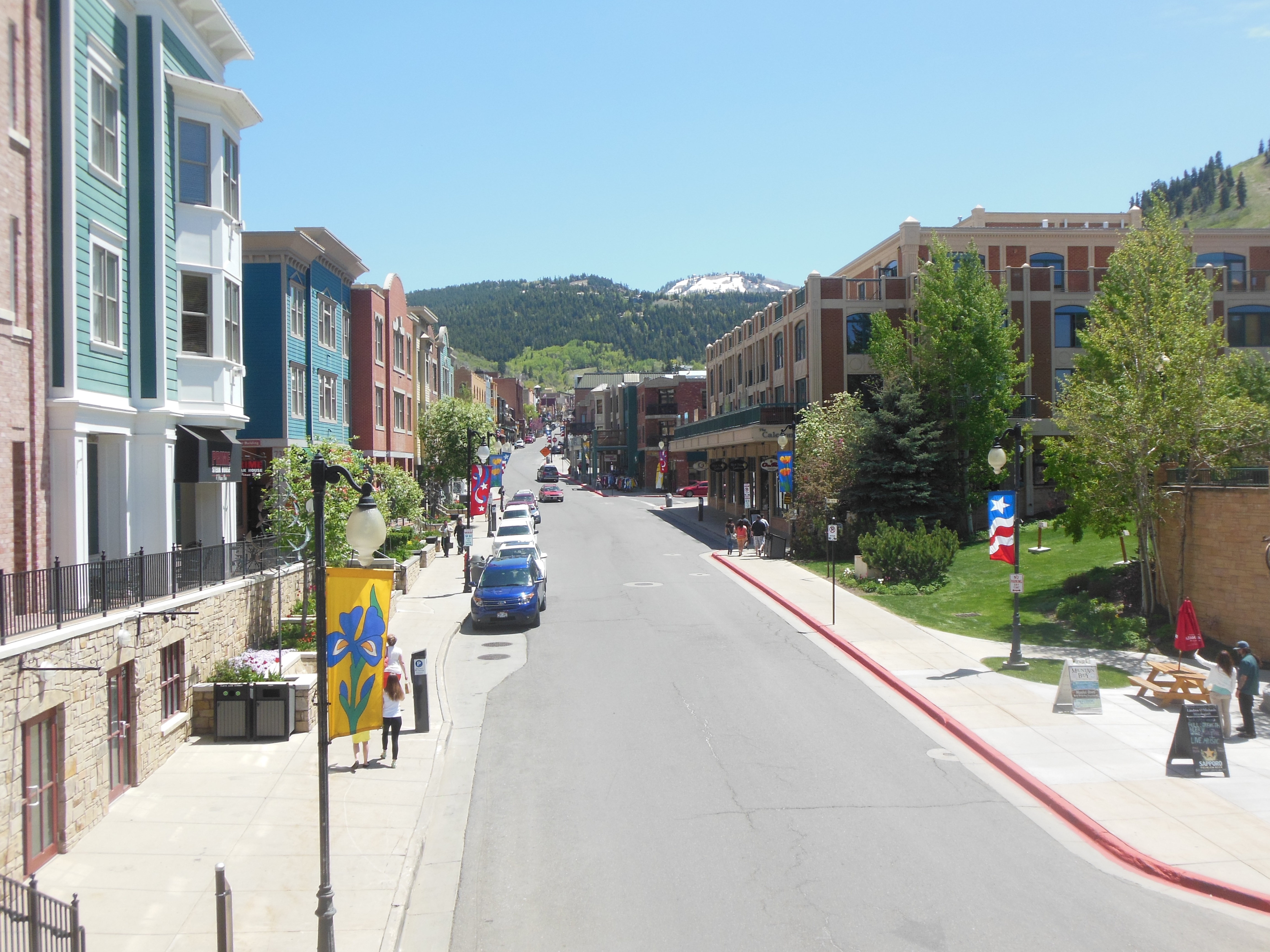
Example of historic district buildings

Example of historic district buildings

Also, in the early 1980s, the Sundance Film Festival moved to Park City. That helped to spur explosive growth. Nowadays, over 40,000 people attend the film festival, a greater than five fold increase over its population of 7600.

The ski resorts lease the land, the silver mines are closed but the tunnels still exist under the slopes. Technically silver could still be mined but they seem to be doing quite well mining tourist pockets. No mine tours are offered now. The walk pointed out the ski lift in town is in the same location as the aerial lift which transported the ore down from the mountain to the train station in town for transfer to the smelters in Salt Lake City.

A historical review board is responsible to approve all new development in the older part of town. For us, that explained the variety and attractiveness of the exterior colors used in the downtown area.

Right now, the town of Park City is installing new curbs and heated sidewalks. This is being done during the “mud” season mentioned yesterday. We thought increased crowds would come after Memorial Day. Evidently, Fourth of July is when the summer season really begins. Thus, the major construction season runs from April 15 to July 4.

During the peak ski season, many of the retail shops and restaurants are open practically 24 hours per day, seven days per week. When the mud season arrives, many of these establishments close down for several weeks, some for two months. There are enough open establishments to satisfy the needs of these two travelers who shop very little.

Homestead Crater

Homestead Crater

Our afternoon adventure was not quite a dud, but did not meet our expectations. We went on a trip, sponsored by the time share, to the Homestead crater. The crater is is Midway, about a 30 minute drive away. This is a 55 foot tall, beehive shaped limestone rock.

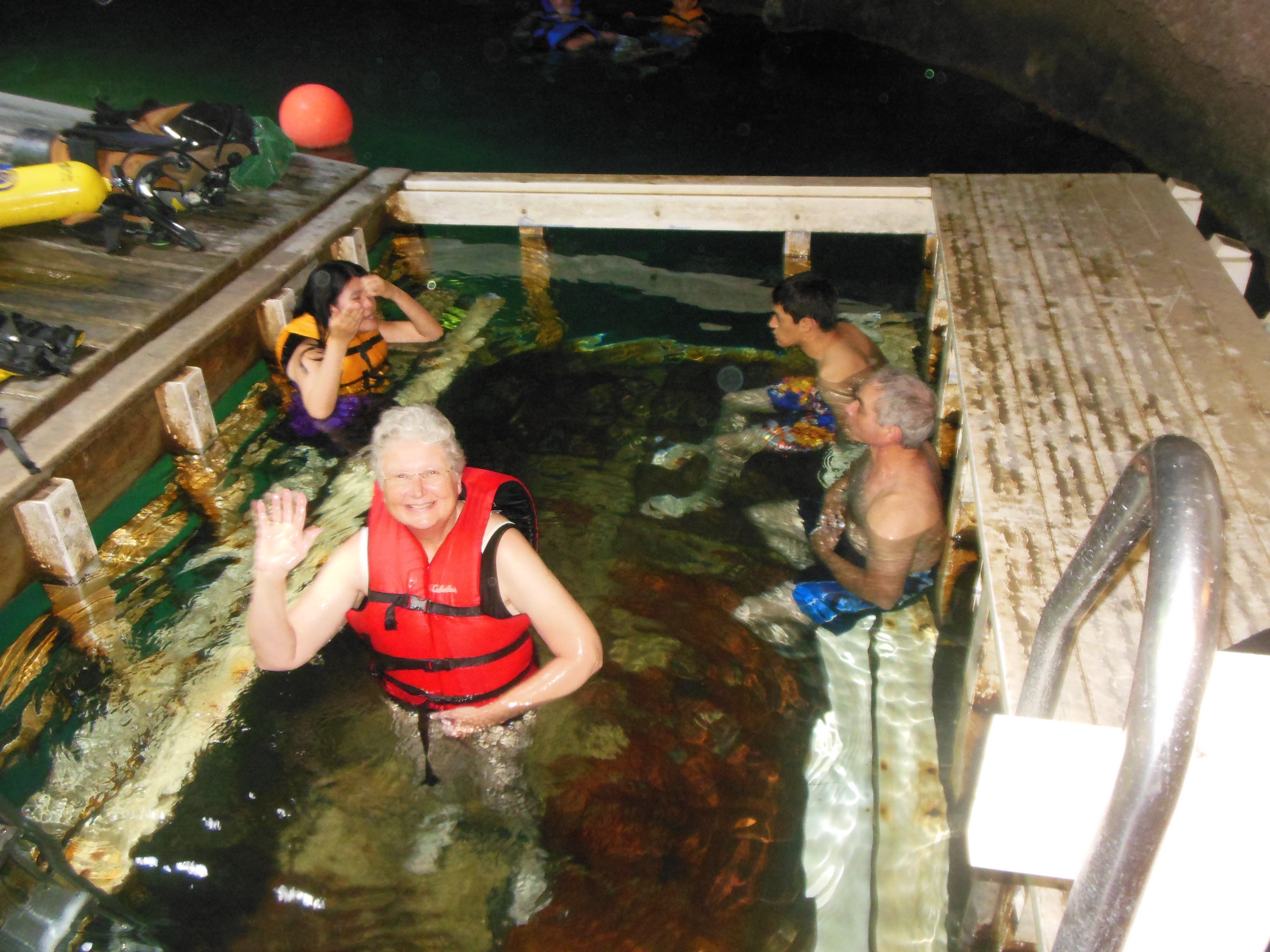
Hollowed out naturally inside the crater is a pool, fed by a geothermal spring, which brings in 90 degree mineral water. A 110 foot tunnel has been cut through the rock to reach the pool inside the crater. The pool is deep enough (65 feet) for scuba diving. We did a soak in the pool, in an area where there is a deck. There is an open area used by the scuba divers where other users are required to wear life jackets. We passed on the open area.

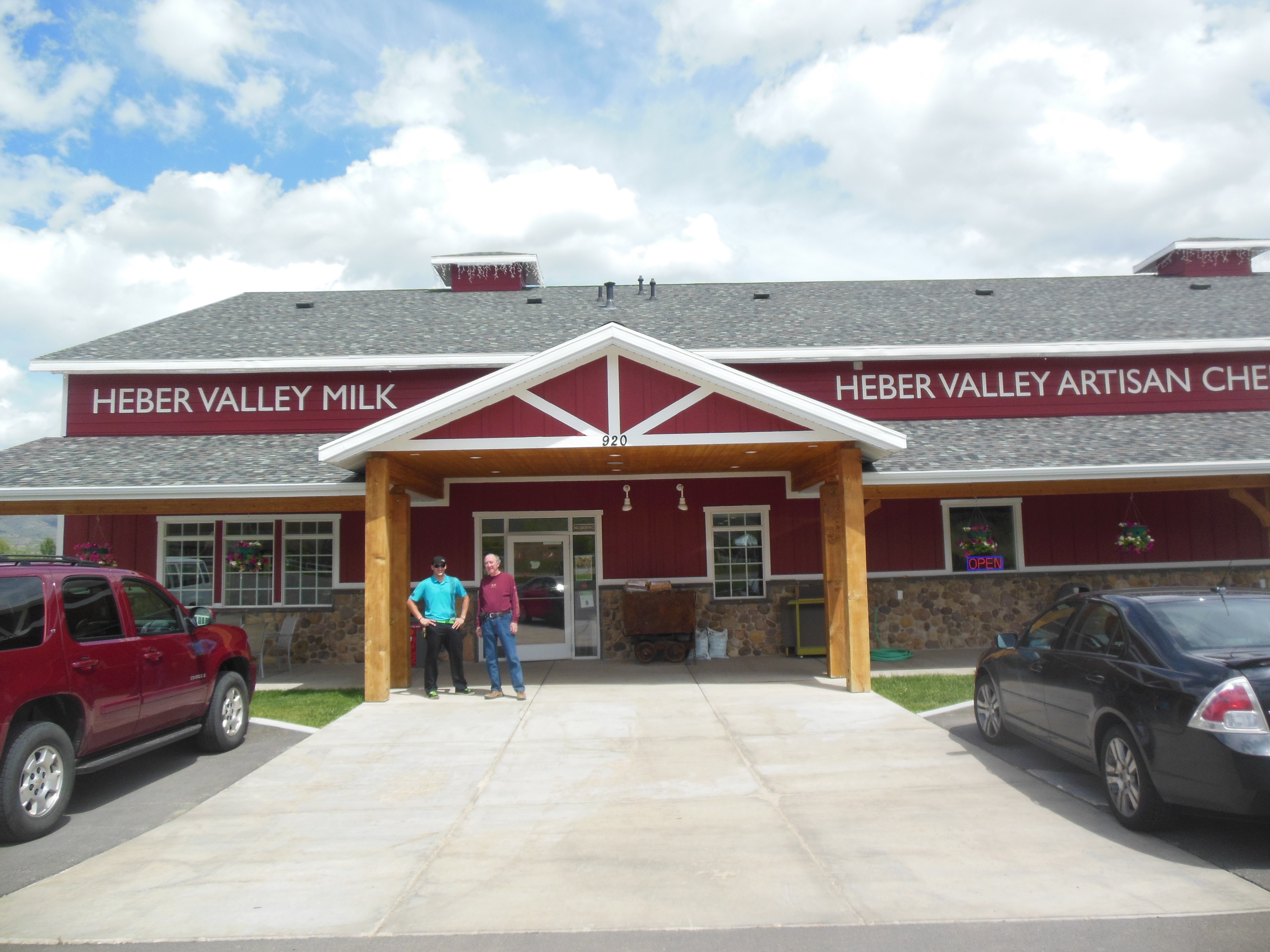
But, we stopped at a local dairy on the way back and got ice cream at prices way below the rate charged in Park City.

Ice cream makes it all better

Ice cream makes it all better

Our evening entertainment, high culture people that we are, was going to be a showing of The Hobbit in the pool area. With numerous young kids and too much sunlight on the screen, we passed on the movie. Trip planning, laundry, and this blog took its place.

All in all, a slow day. Tomorrow will be further Park City exploration and a trip to Salt Lake City. In SLC we will go to Temple Square of the Mormons and watch a 90 minute evening preview performance by the Mormon Tabernacle Choir.

Ed and Chris May 29th, 9 pm

Categories: road trip, travel | Tags: , | 1 Comment

2013 Trip Four, Out West, May 28

Tuesday, May 28

Regular readers of the blog who were breathlessly waiting the resolution to yesterday’s big question can breathe a sigh of relief. The answer is in. Park City streets were even more empty this evening than last night. Of course it is the time between ski and summer seasons. Mud season I believe they call it.

Today’s rain certainly put a damper on activities. It was our first washout since Virginia Beach back in mid April. The heavy rain did not come until about 1 pm so we were able to accomplish some of our daily goals.

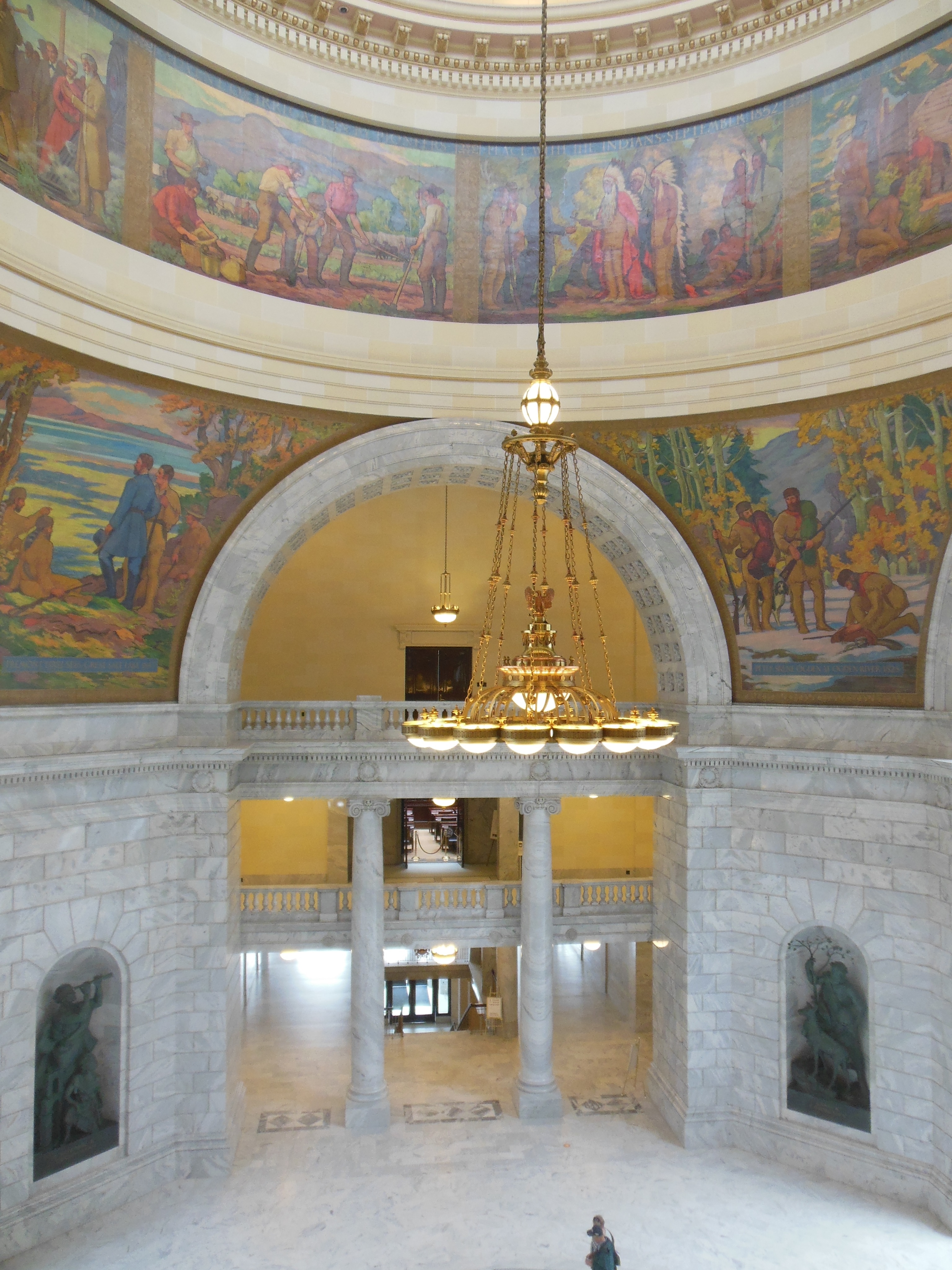
Utah state capitol

Utah state capitol


an inside view of state capitol

an inside view of state capitol

The Utah state capitol was our first stop. We like to visit state capitols, they are frequently a good source of state history. Utah’s, while attractive and recently modernized, did not accomplish much on the history side.

On dome, according to legend, seagulls helped save Mormon pioneers first harvest from insects

On dome, according to legend, seagulls helped save Mormon pioneers first harvest from insects

Our second stop was a drive-in featured in a book called Road Food. Our version is more than 10 years old, so anything listed that is still in business is doing pretty good. Hire’s Big H was open and the burgers were great with frosty mugs of root beer.

(Side note: This Hires is named for the owner, not the old time Hires root beer which is difficult to find anymore.)

We have traveled over 4000 miles so far with another 2000 or so to go. On the way to Hire’s, we passed a Jiffy Lube so we stopped in after lunch and gave the Saturn a mid-trip treat of an oil change. It is holding up well, getting 35-38 miles per gallon so a small preventive maintenance measure seemed appropriate.

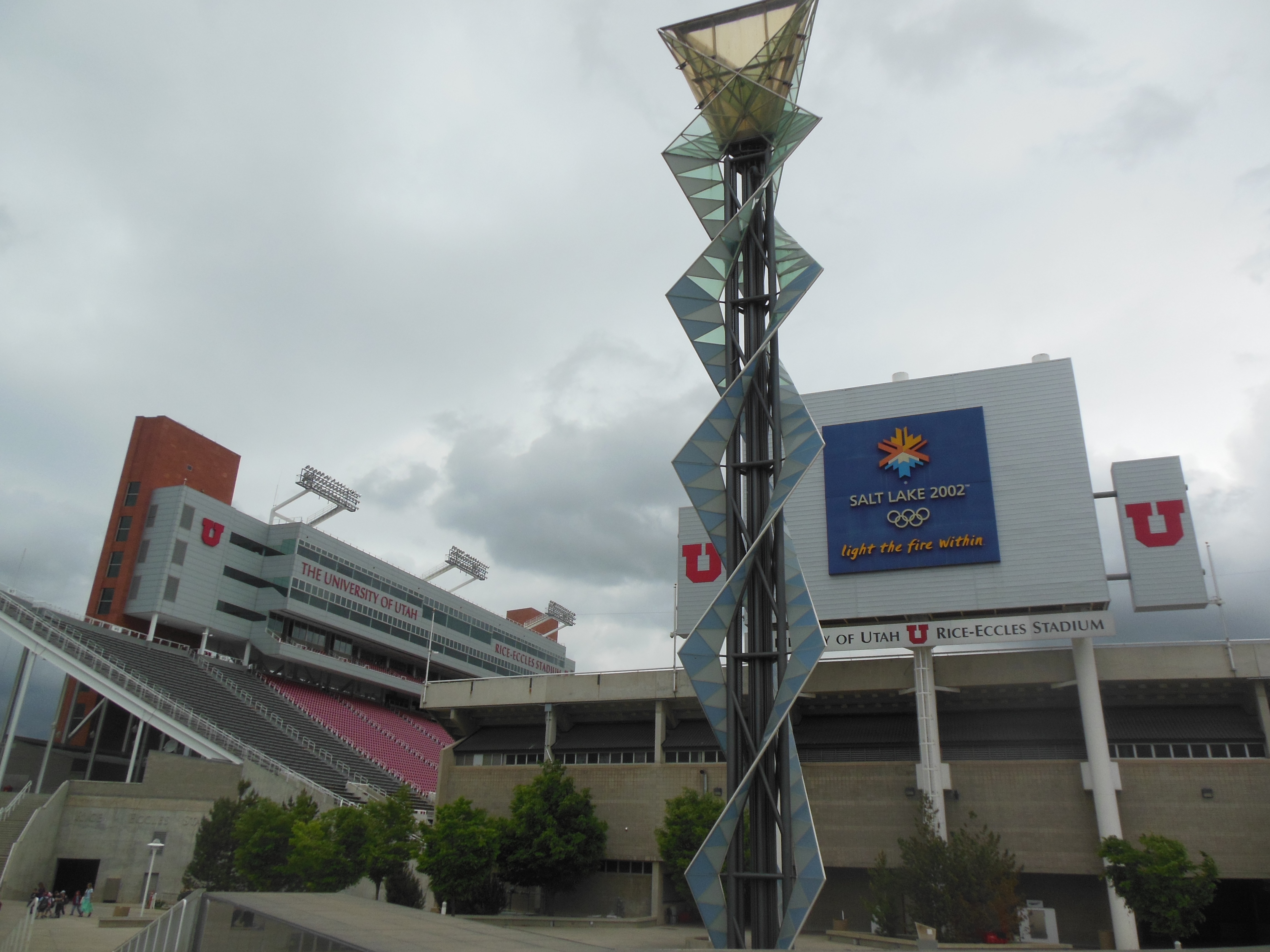
Our next stop was the 2002 Olympic stadium site in Salt Lake City. While much of the activities took place in Park City and elsewhere, opening and closing ceremonies were held at Rice-Eccles Stadium at the University of Utah.

2002 Winter Olympics cauldron

2002 Winter Olympics cauldron

We were only able to see the cauldron and some markers commemorating daily highlights. The irony is that other items are being moved to the Park City Olympic center which we planned to see this Thursday.

The deluge interrupted the day and we returned to Park City, a nap and a pleasant dinner out completing the day.

Dinner at Purple Sage

Dinner at Purple Sage

Ed and Chris, May 28 11:30 pm

Categories: road trip, travel | Tags: , , | Leave a comment

2013 Trip Four, Out West, May 27

Monday, May 27, Memorial Day

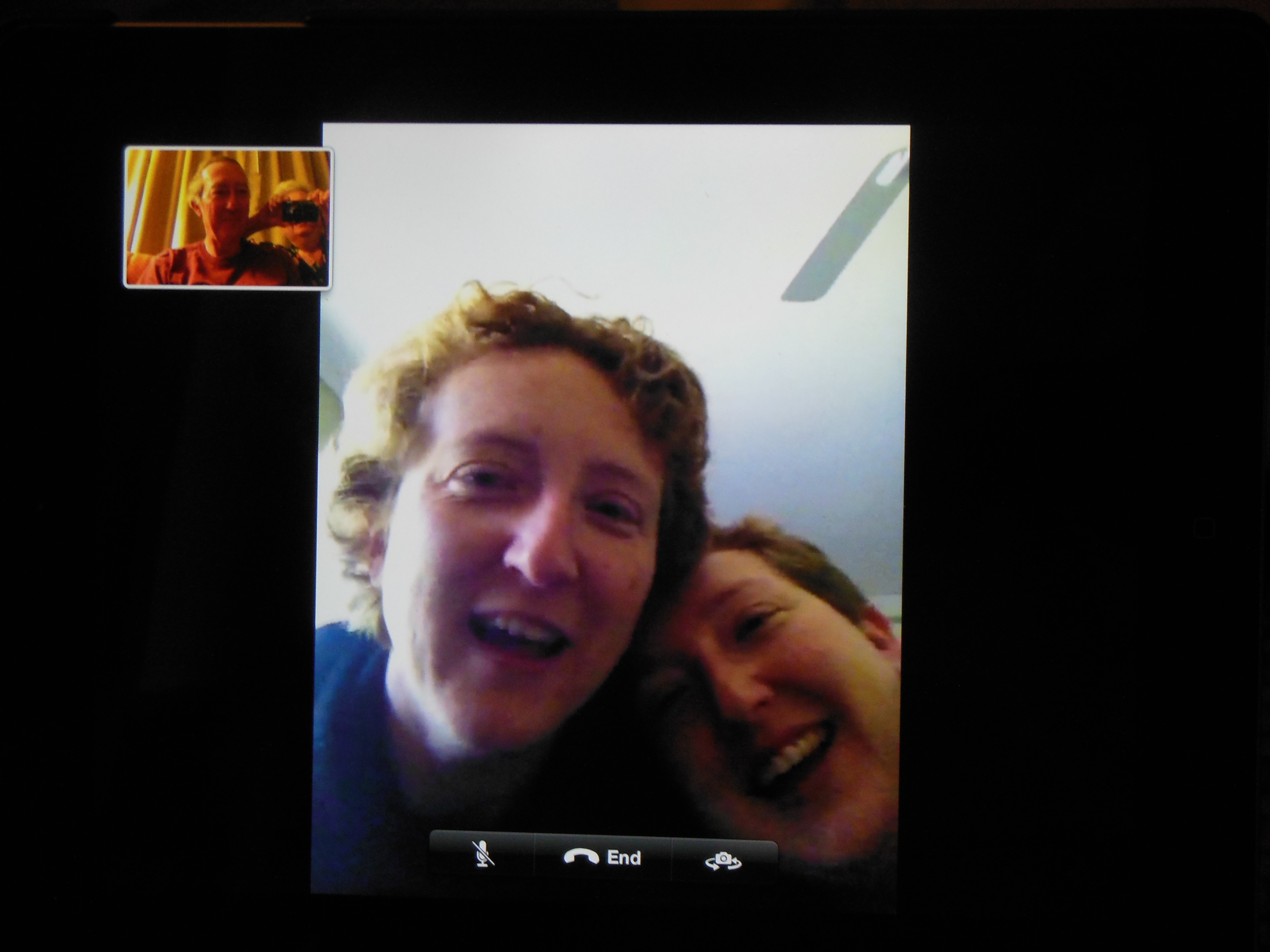
The best time of the day was in the morning. Sarah is visiting Deborah in Boston. We had a FaceTime, the Apple version of Skype, telephone conversation. It was a great opportunity to see the girls and catch up on their lives.

FaceTime conversation with the girls

FaceTime conversation with the girls

We had debated biking versus hiking for the day’s main activity. Hiking(walking) won out. Park City has an extensive system of trails. They can be used for walking, bicycle riding, and for mountain bike riding. The trails are not flat but the bus system is free and each bus has bicycle transporters on the front of each bus.

Vista at start of our hike

Vista at start of our hike


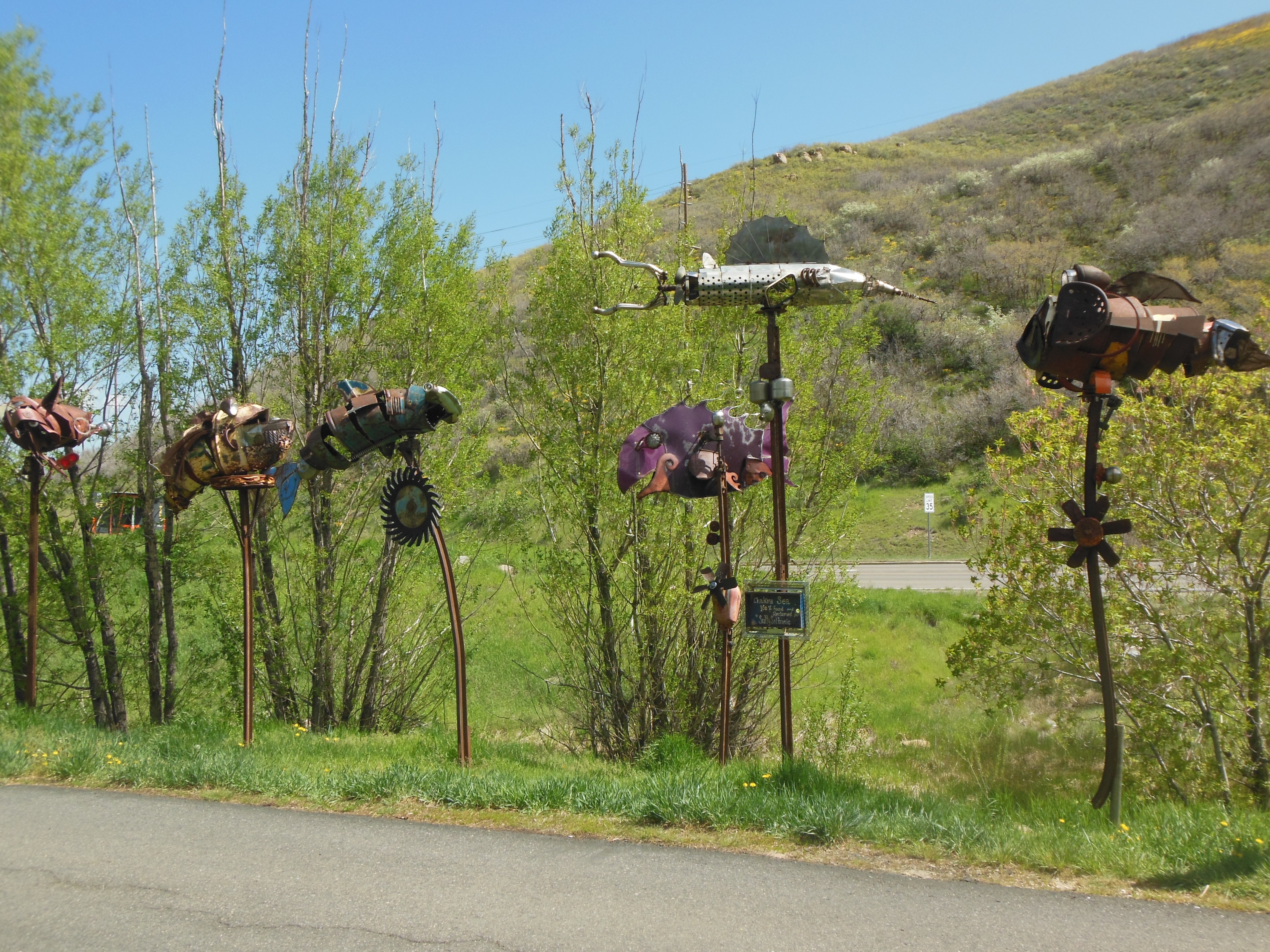
Sculpture along trail

Sculpture along trail


We thought a casual walk would be an enjoyable way to spend several hours. Other people did too. Bicycle riders zipped in and out, almost uniformly forgetting to give an audible warning. The trail was paved and the lilac, honeysuckle, and flowering fruit trees were in bloom.

Chris especially enjoyed the walk. In contrast to previous days, there was no concern about bears, rattlesnakes, or mountain lions.

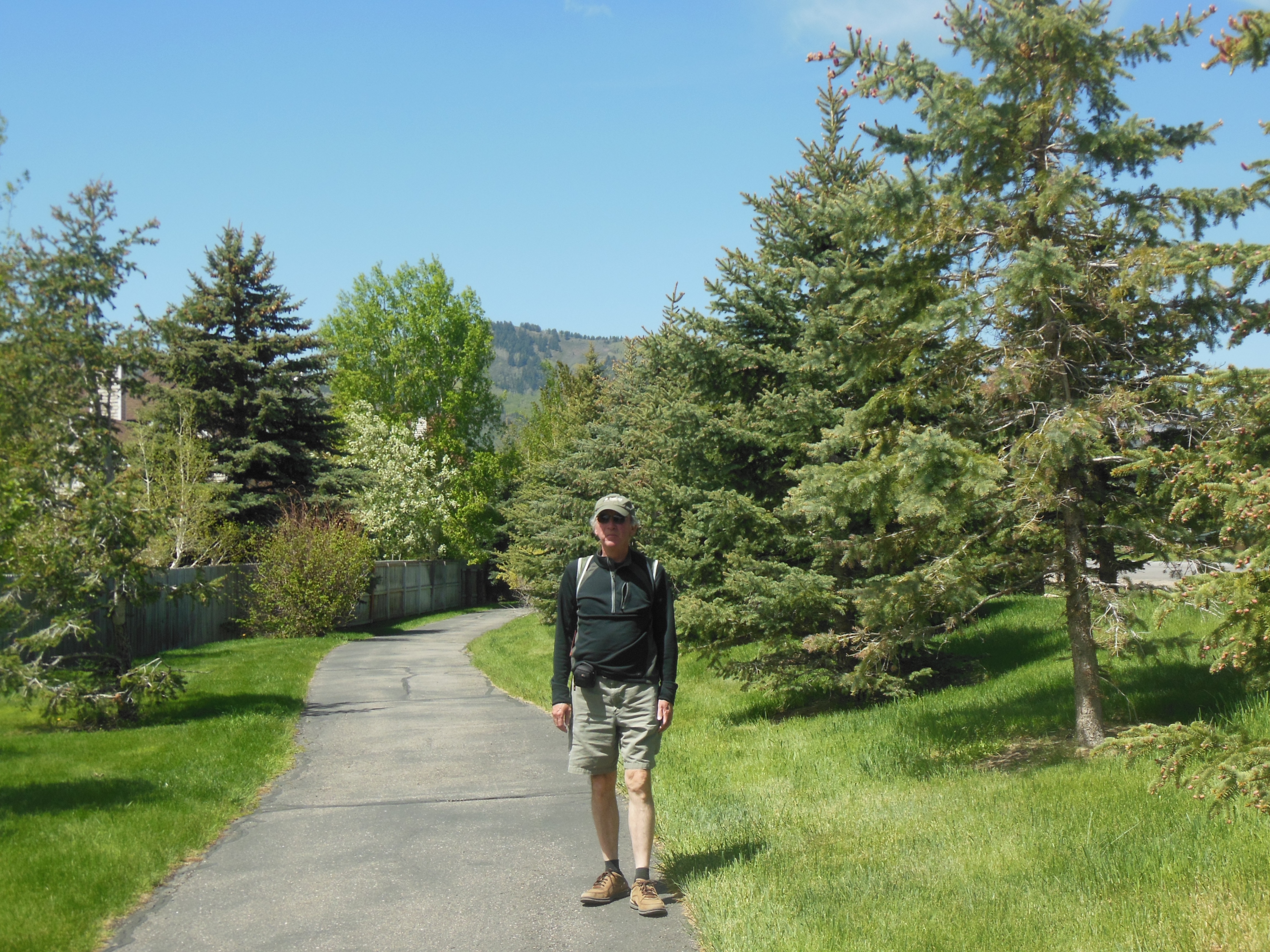
Ed on the trail

Ed on the trail


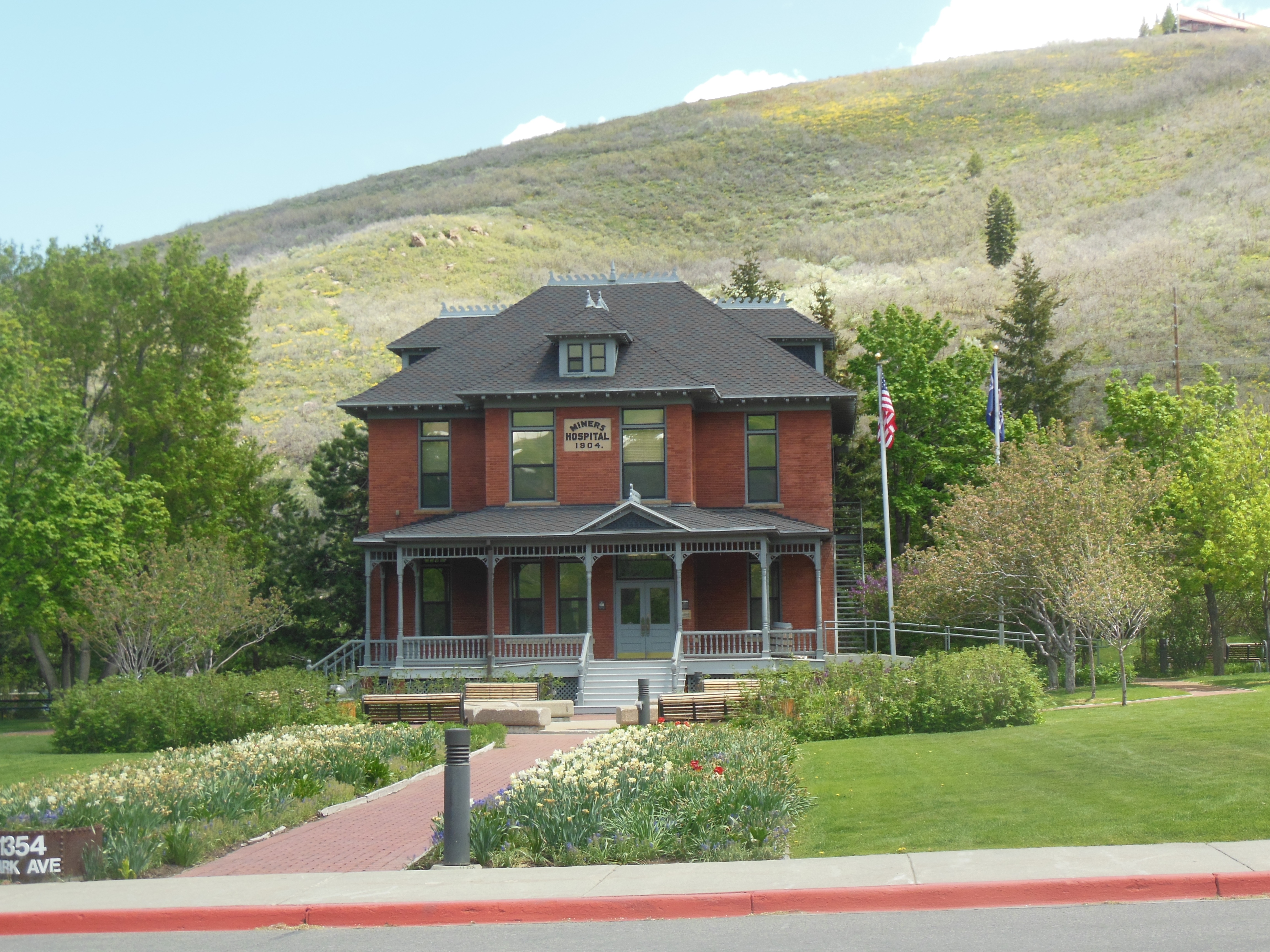
Restored Miners Hospital, a collaboration of town and union, not coal companies

Restored Miners Hospital, a collaboration of town and union, not coal companies


We had a quick bite to eat at a local deli, the woman doing the cooking was from Moorhead and has several relatives in the St. Paul area. After a long walk and something to eat, we just had to relax at the pool and hot tub area. So much of the day was spent enjoyably outside.

By this evening, it appears that the people who came up for the holiday weekend had gone home. Tomorrow will be a good indicator if the rest of the week will present empty or full sidewalks.

Park City keeps  alive its ties to Olympic history

Park City keeps alive its ties to Olympic history


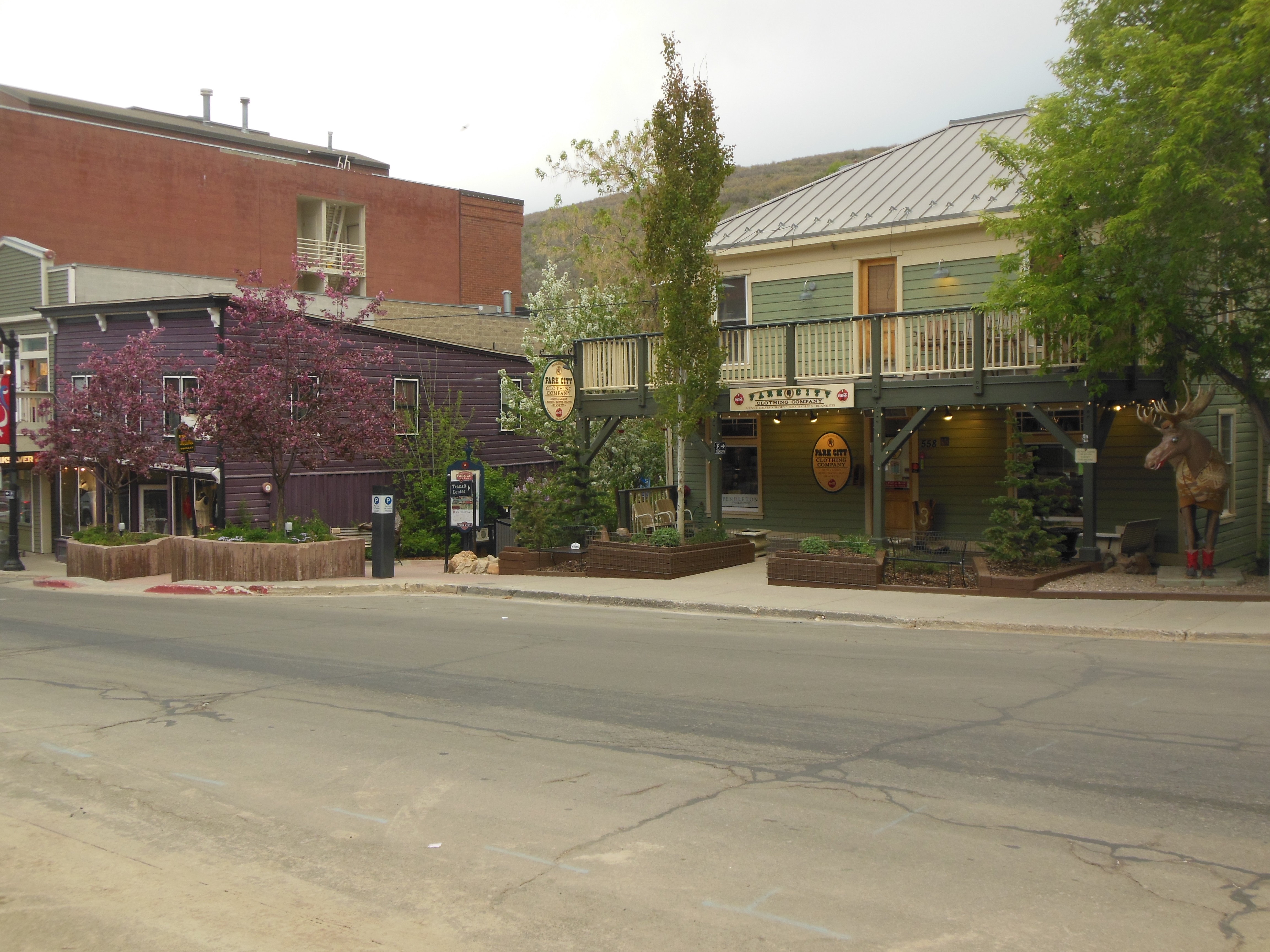
Main Street Park City this evening

Main Street Park City this evening


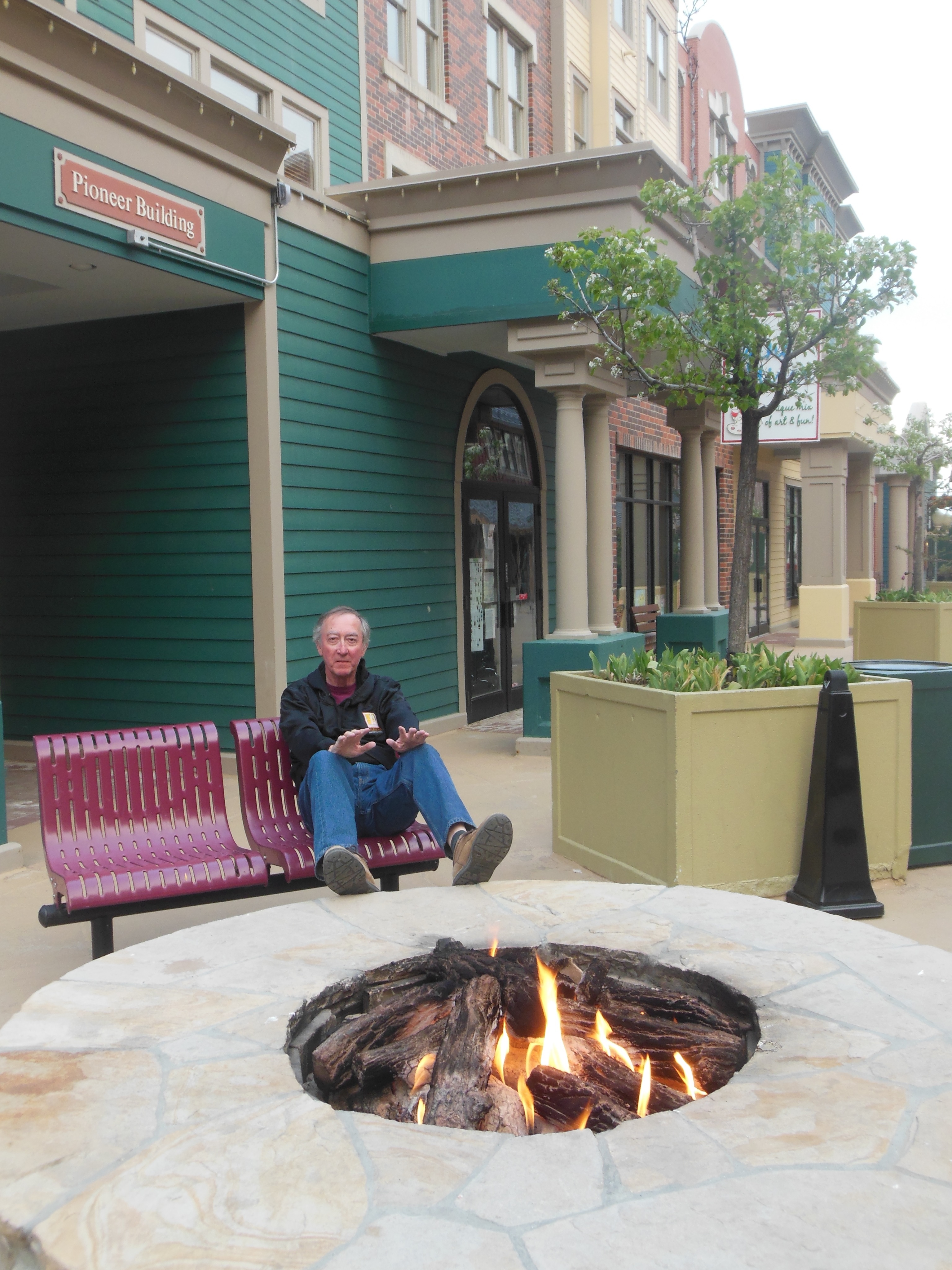
By the firepit  across from our building

By the firepit across from our building

Ed and Chris May 27, 10 pm

Categories: road trip, travel | Tags: | Leave a comment

2013 Trip Four, Out West, May 26

Sunday May 26.
We make it to 8 AM Mass at the oldest Catholic Church (built in 1883) still in use in Utah. (Not that Catholicism is real strong in Utah.) The priest recognizes that Chris is not a regular and asks her where she is from and greets her again after Mass like an old friend.

We are heading today to Antelope Island State Park, supposedly the best place to view the Great Salt Lake. It takes an hour to get there, the entrance sign says “biting gnats active today”. We could see them massed outside the car window. The web site had indicated “no-see-ums” were likely from April to June and that bug spray was not effective. Intrepid travelers that we are, we forge ahead anyway.

After driving over the 7 mile causeway to reach the island, we find that we are in luck again. A breezy day on the island seems to blow the bugs elsewhere.

Causeway view from Antelope Island

Causeway view from Antelope Island

image

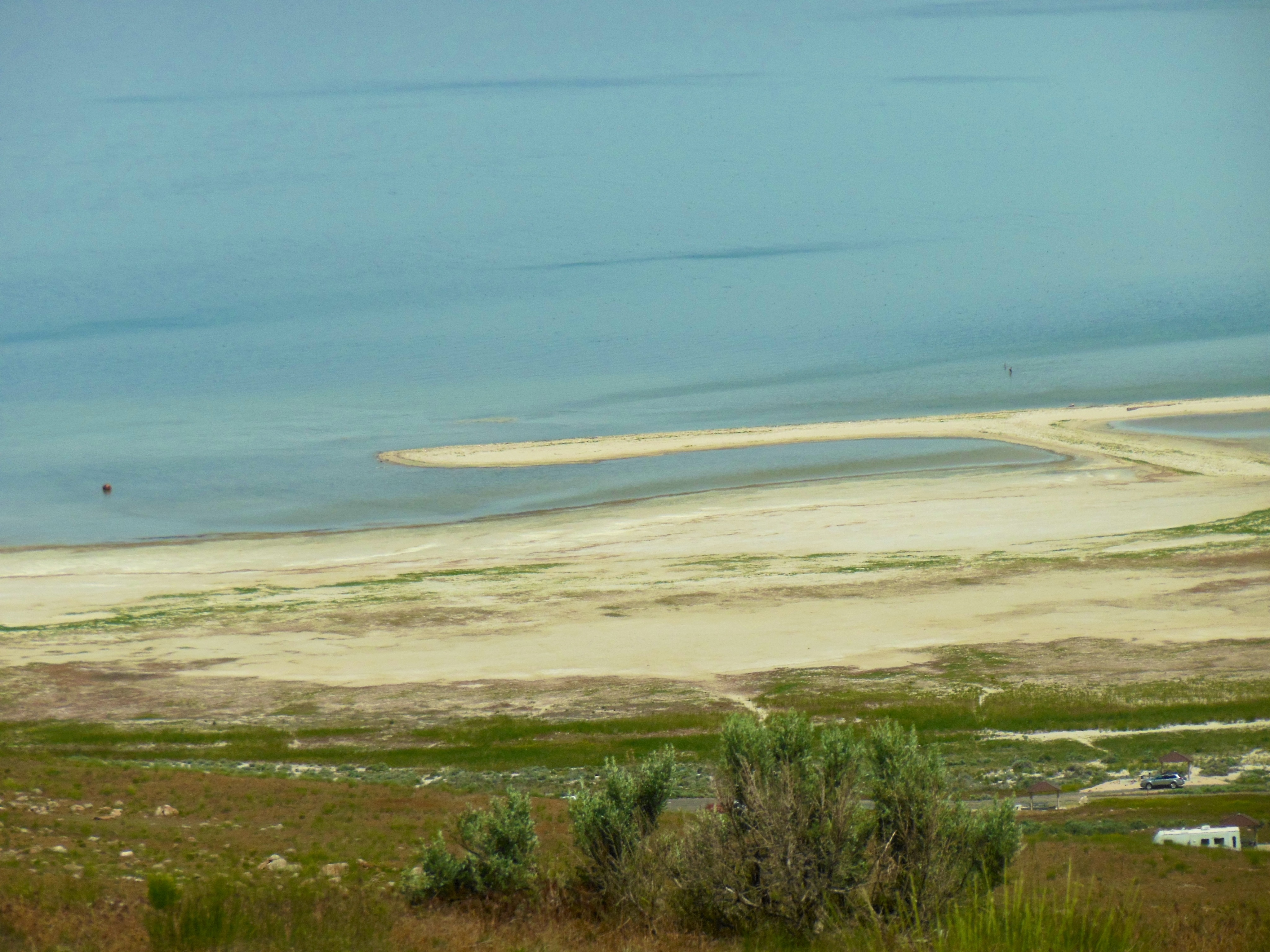
The Great Salk Lake is about 35 miles by 70 miles. It is salty since water flows into it but with no outlet, water evaporates leaving various minerals and salts behind. Like Mono Lake, it is inhabited by briny shrimp and algae that break down the salts and help keep the salinity reasonable. It is an important migratory bird refuge, who feed on the shrimp and algae. You can see reddish areas in the water where these are clustering. The average depth is about 13 feet.

Great Salt Lake from Antelope Island, looking south east

Great Salt Lake from Antelope Island, looking south east

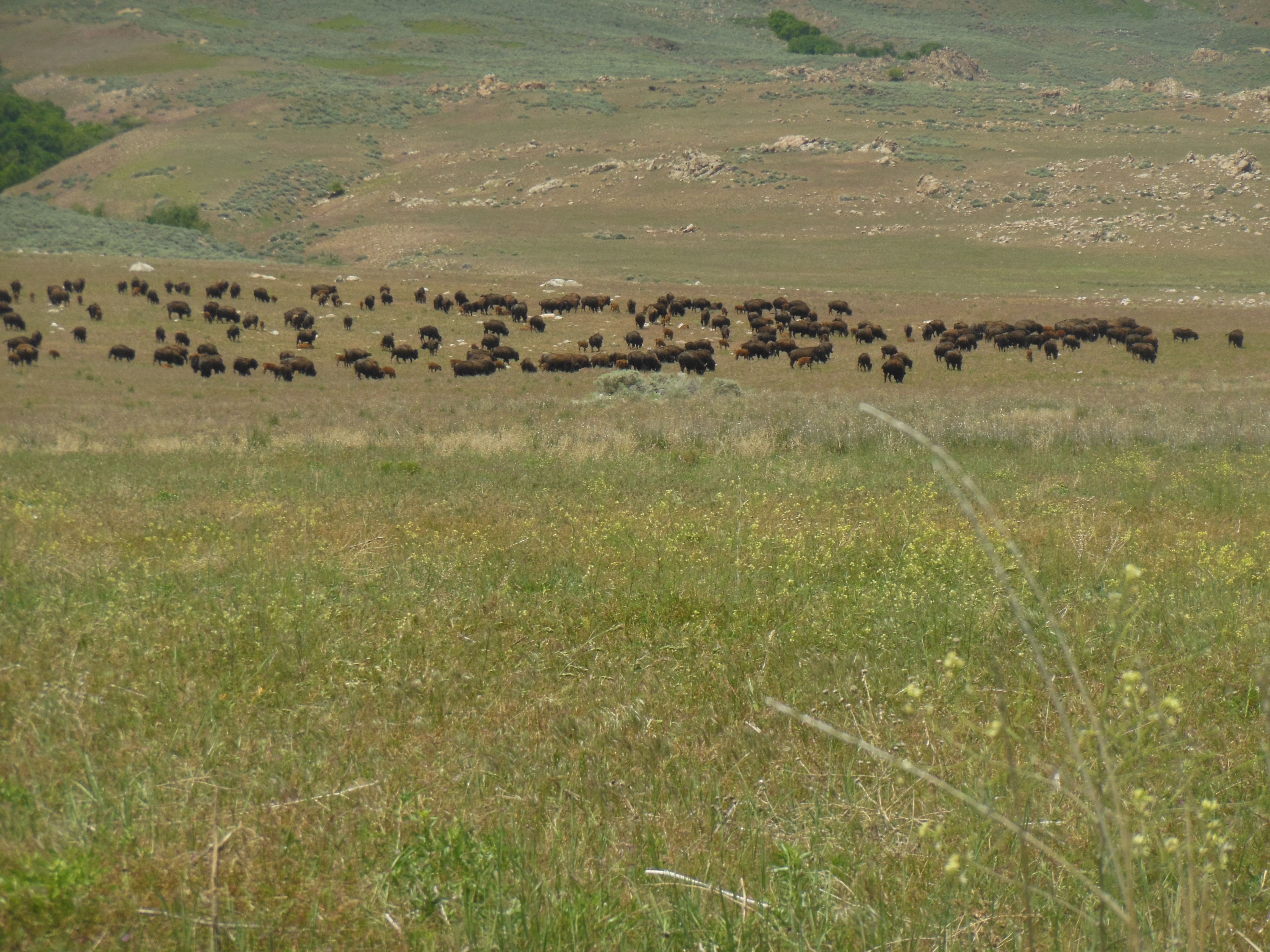
The lake has 9 islands in it, Antelope being the largest. Antelope was farmed for many decades. It is only in the last several decades that the state has owned it all and made it into a park. It is home to antelope, mule deer, big horn sheep, bison, etc. We come across the antelope and bison.

Great Salt Lake, looking west

Great Salt Lake, looking west

Bison, a herd of 500 to 700 is on the island

Bison, a herd of 500 to 700 is on the island

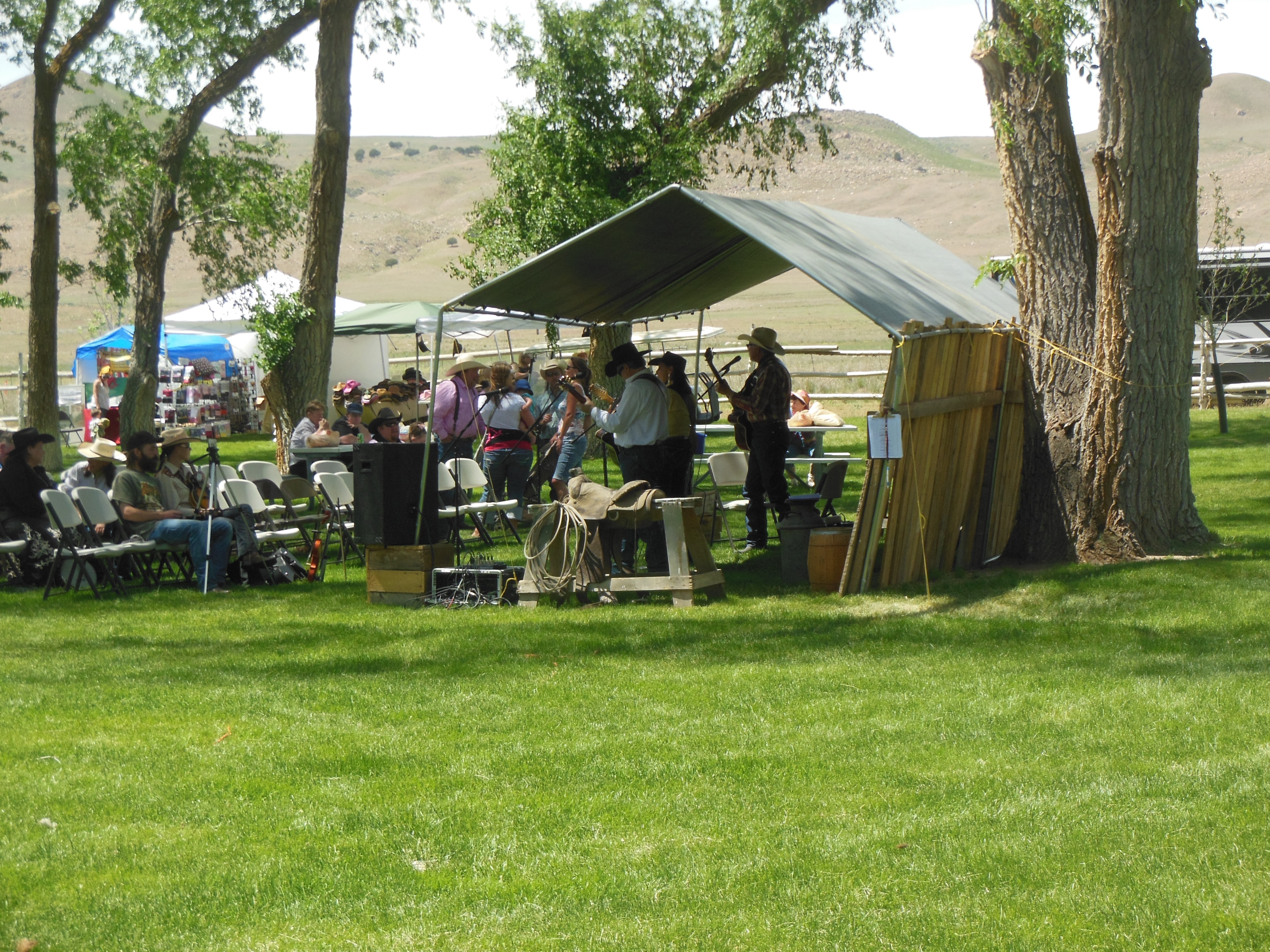
A second reason to visit the park is that this weekend it is hosting the Cowboy Poetry and Music festival and it is being held at the historical farm site on the island. It is a three day festival,with three stages. The cowboy singing alternates with poetry recital on each stage. When we first arrive, the crowd is light but it has picked up considerably by the time of our departure. We spend several comfortable hours listening to music and poetry on three stages.

image

On the return trip, we make a brief stop at the University of Utah”s Botanical Garden for a pleasant interlude.

Ed and Chris May 26 11:30 pm

Categories: road trip, travel | Tags: , , | 2 Comments

2013 Trip Four, Out West, May 25

Saturday May 25
A Zip drive to Park City Utah from Elko,NV. We successfully used the Internet at the Hilton Garden Inn to finish the pictures for the May 24 blog and then uploaded lots of pictures to Shutterfly.

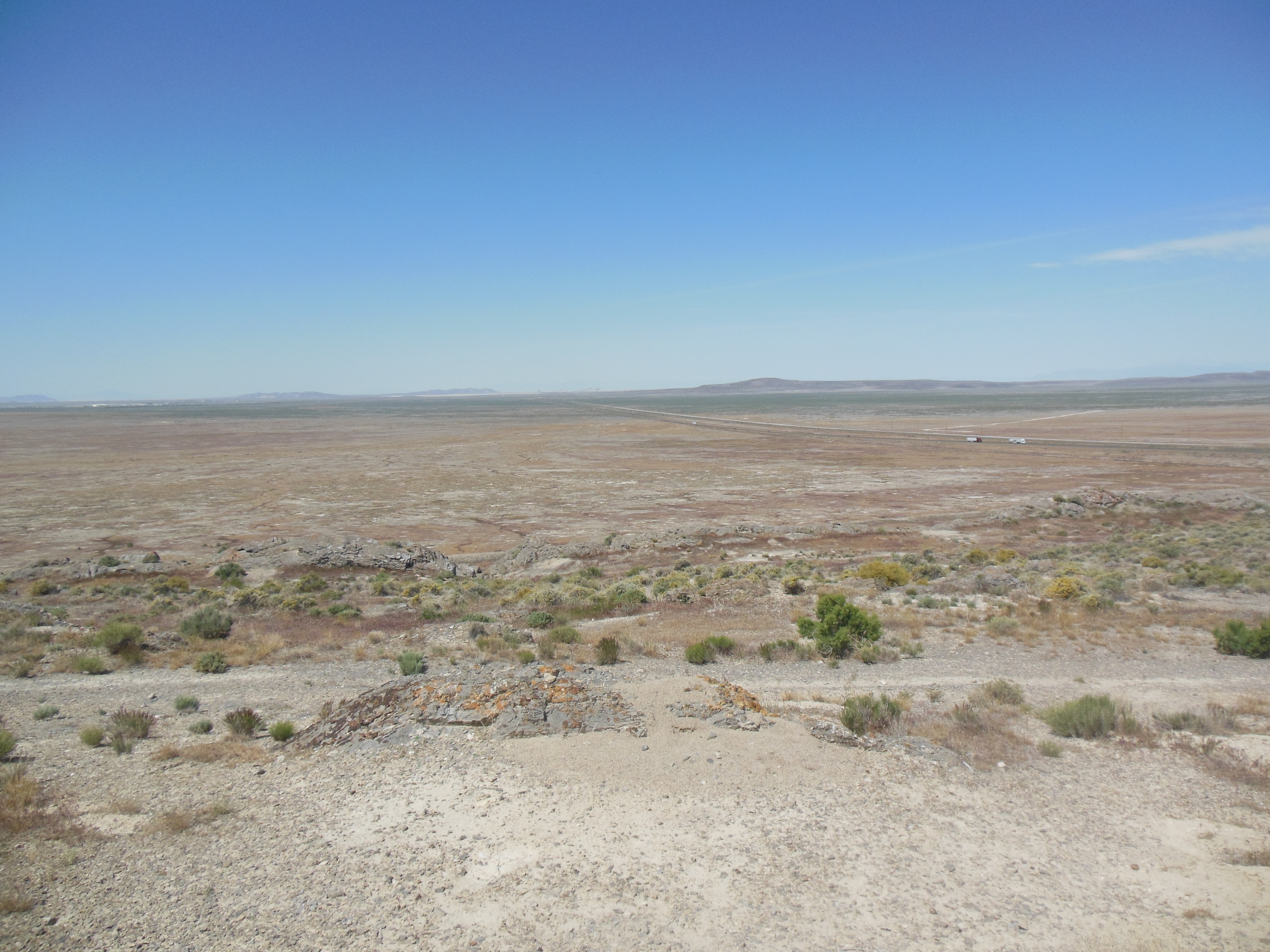
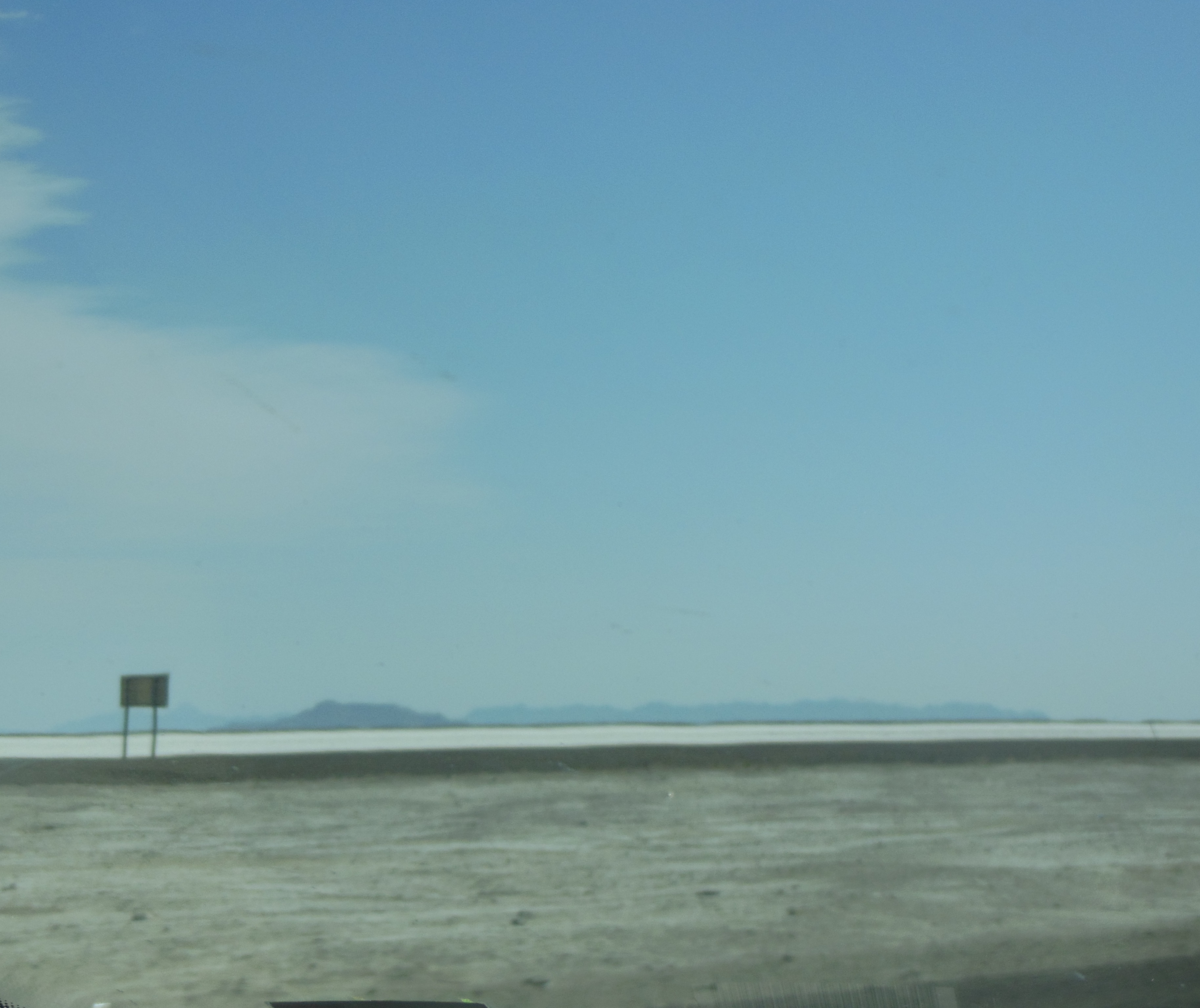
The drive to Park City made us realize again the good fortune we have to be able to drive around the country and experience first hand new and exciting vistas. When we left Nevada, we drove up a mountain and then at the top start descending into Utah. The Great Salt Lake Desert is spread out before you, white and immense with mountains along the edges and far side. The highway and railroad tracks are slender dark tracks across the whiteness. The edge of the horizon fades into a murky blue/gray scene. Another WOW result only experienced by driving.

We left behind Nevada. In its own way, quite beautiful even if I-80 is home to mining, railroads, ranching, power plants and correctional institutions.

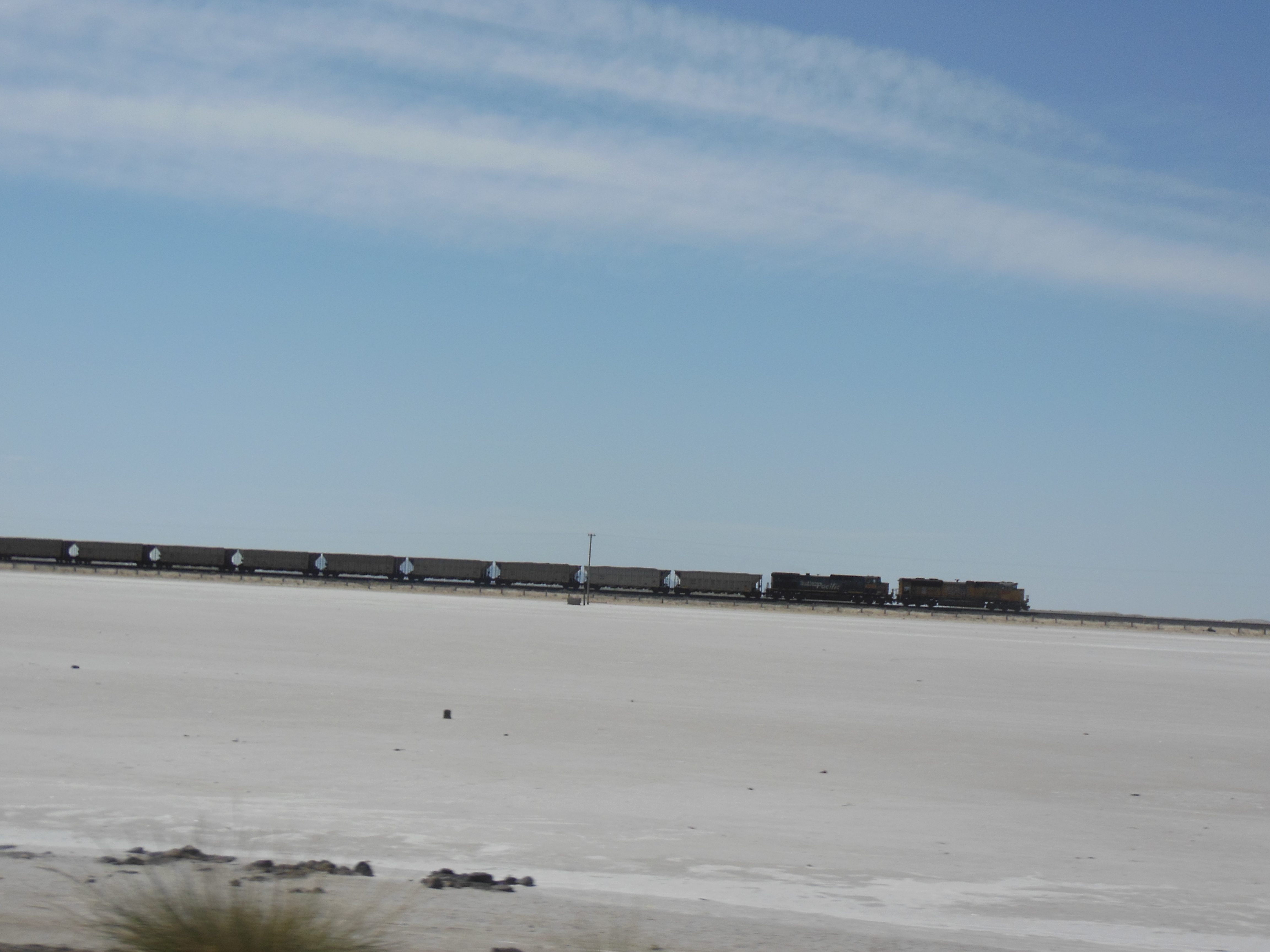
The Great Salt Lake Desert is an hour of eerie whiteness before we hit the Great Salt Lake and Wasatch Mountains. The famous Bonneville flats for speed records is on the north side as we drive through. Military land takes up part of both the north and south sides from the Interstate. Park City is a half hour past SLC and up several thousand feet. Aspen are starting to leaf out, real flowers can be seen.

Great Salt lake Desert

Great Salt lake Desert

Train crossing the salt desert

Train crossing the salt desert

Looking back westward at I-80

Looking back westward at I-80

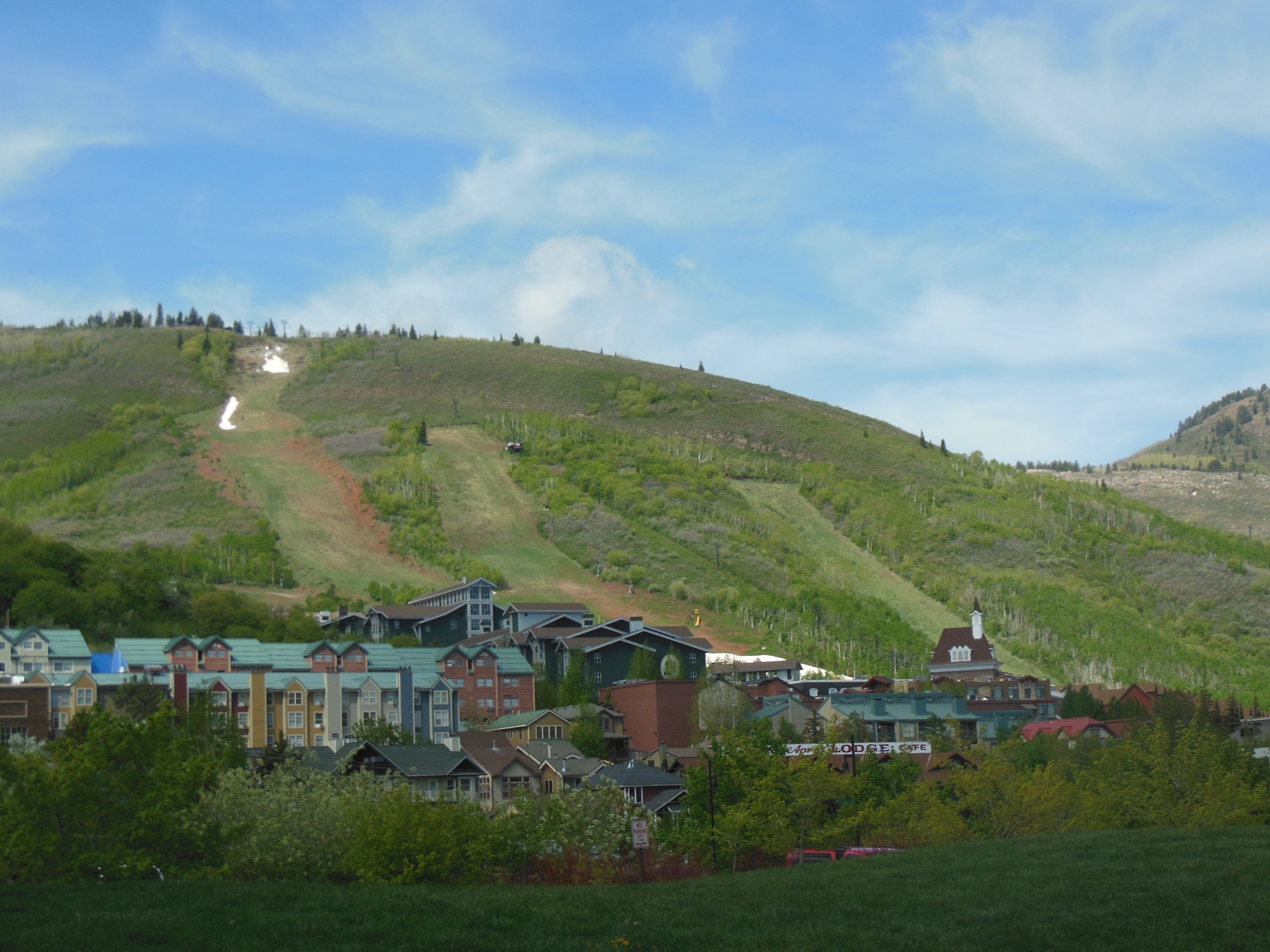
The town presents well; housing is colorful, not the bland, earth tones seen so often in many communities. Obviously though the housing costs are not inexpensive. You may recall that many of the 2002 Winter Olympic events were held here.

We have a week of excess capacity time share lodging here. It is between seasons. Skiing is over and summer has not truly begun. Unfortunately for us, the front entrance is undergoing construction and it takes us twenty minutes to find the check in. We are in downtown Park City so we can walk to restaurants and hiking trails, etc.

Main Street, Park City

Main Street, Park City

creek and flowers, Park City

creek and flowers, Park City

The rest of Saturday is spent catching up with laundry and exploring the town. Weather is still nice, rain is possible by the middle of the week.

Ed and Chris Sunday May 26 11 pm
Categories: road trip, travel | Tags: , | Leave a comment

2013 Trip Four, Out West, May 23 and 24

Editors note. This blog post was started on Thursday the 23rd while the 22nd was still languishing in non-Internet land and was eventually finished in Elko, Nevada on Friday night, the 24th. We decided to combine Thursday and Friday in one post.

    Thursday, May 23

Well I am typing this while the post for the previous day sits unfinished, waiting for pictures. Yosemite, Kings Canyon, etc have been grand but uploading pictures and trying to stay connected to the Internet while typing this has tried even my patience. Civilization here we come!

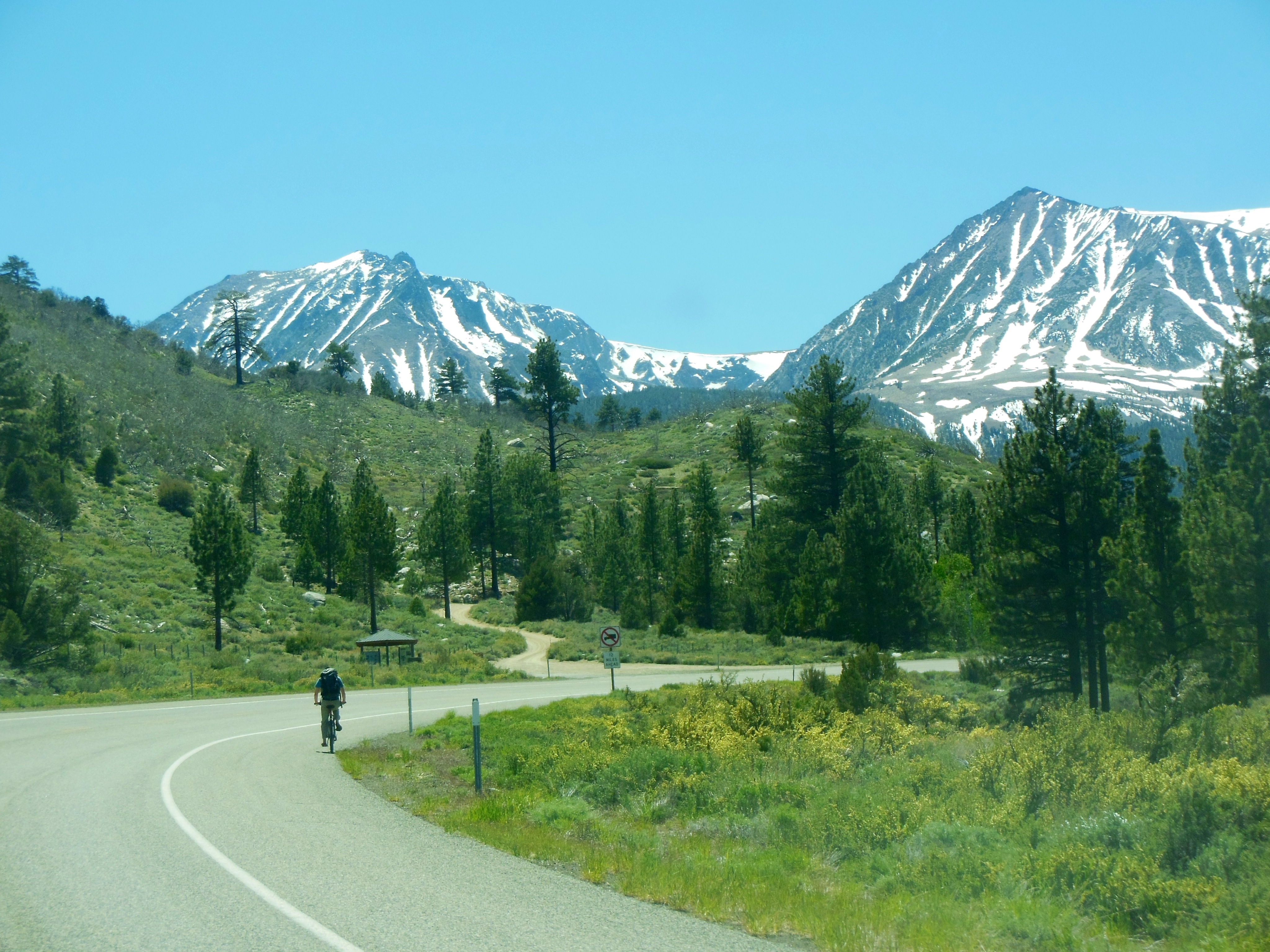
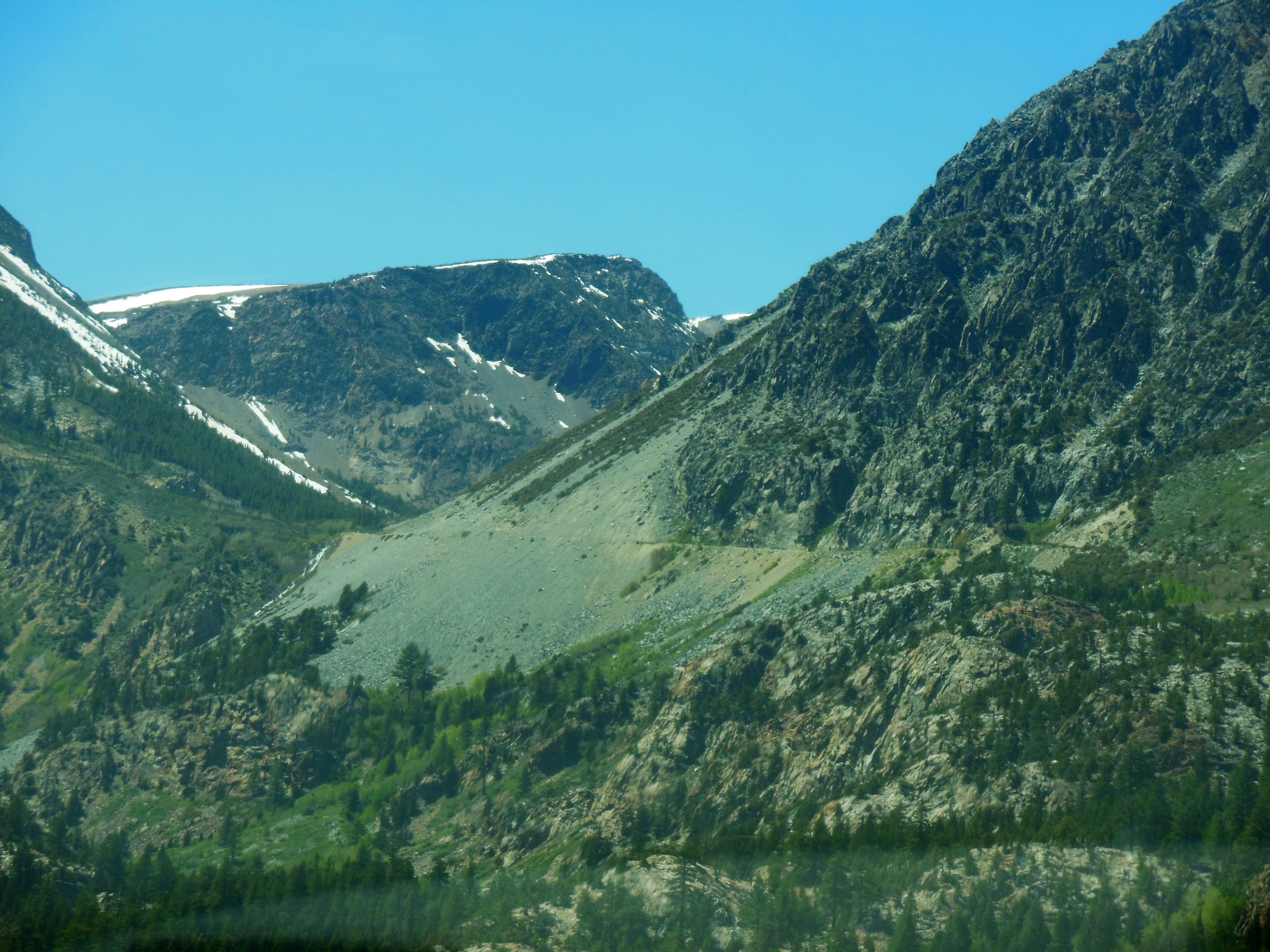
Thursday was our day to drive the Tioga Pass road. The Tioga Pass road is one of those roads going over the top of mountains. It is the only one for about 140 miles along the Sierras in this area. The road is usually open from about Memorial Day to early October, closed the rest of the year. Due to less snowfall this winter, it opened May 11.

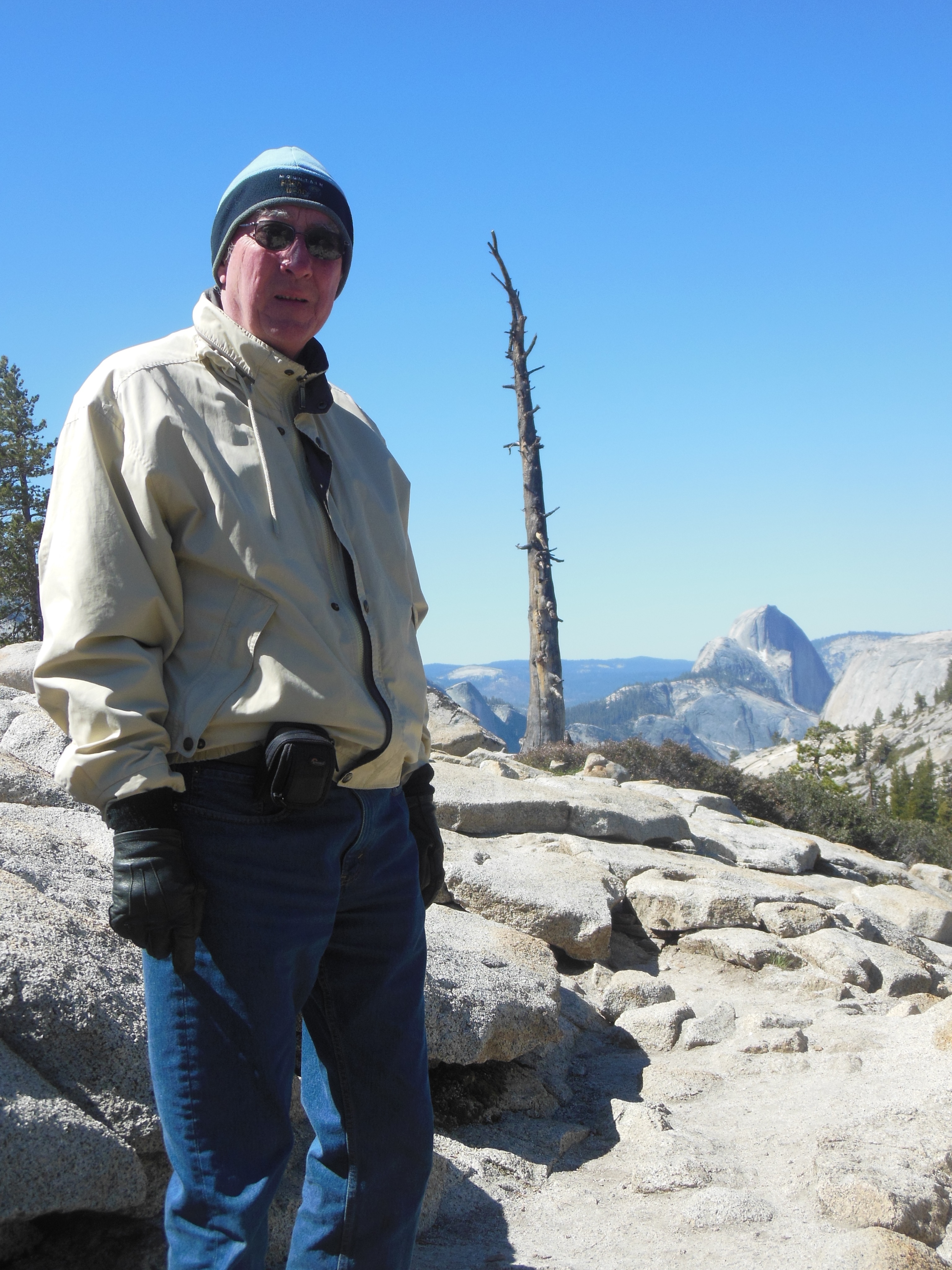
Ed at olmstead point, Half Done in background

Ed at olmstead point, Half Done in background

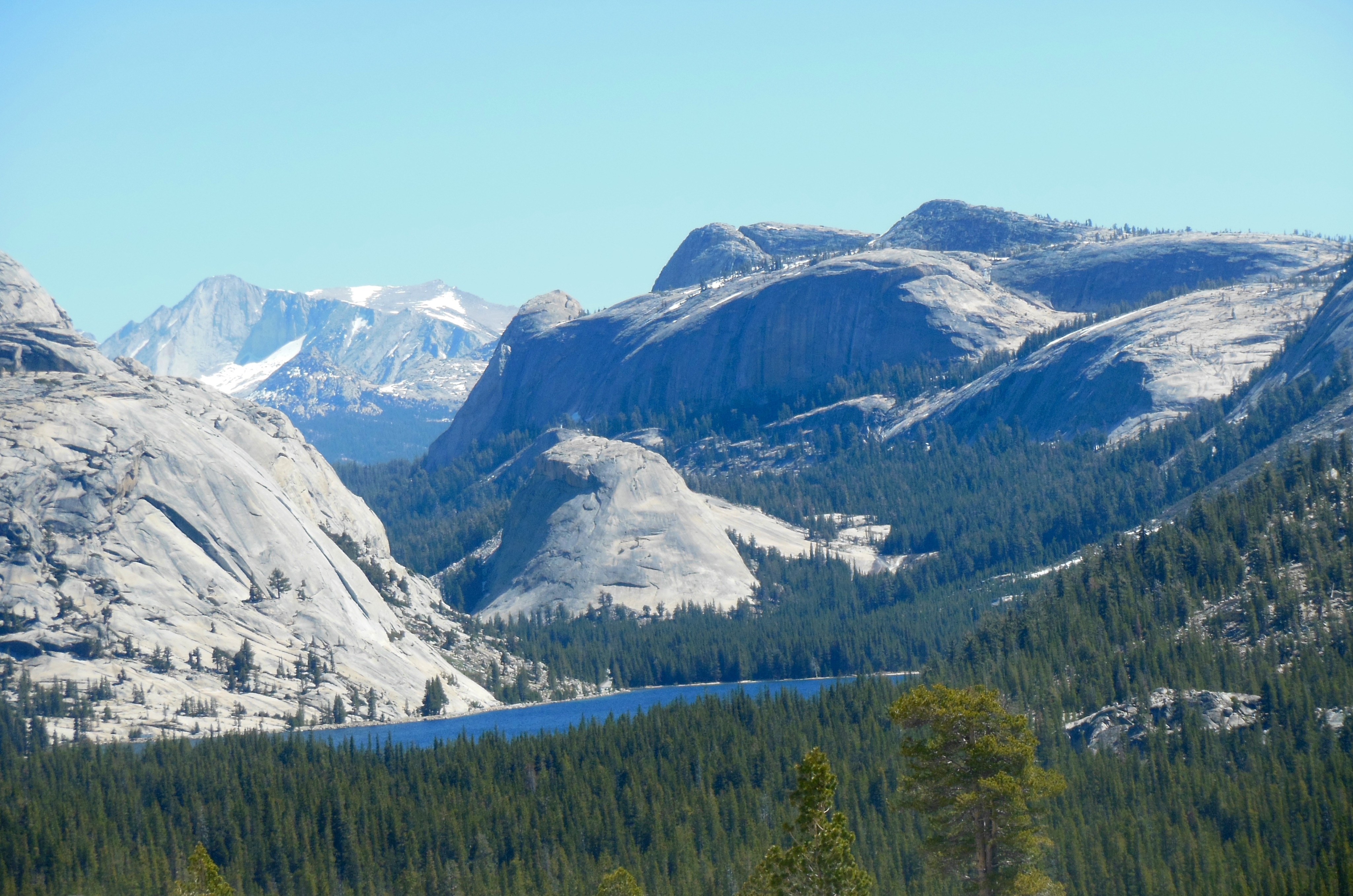
Tenaya Lake from olmstead point

Tenaya Lake from olmstead point

We will take the road Friday when we leave Yosemite and head for Utah. Given glowing reports for its scenery, we thought it worthwhile to drive it now, see the sights, make our stops and take our pictures separate from traversing it for travel purposes.

At its highest point, the road is at 9945 feet. It is the highest highway pass over the Sierra Nevadas. Just a walk in the park for our Saturn now. Given the late night Wednesday from the moonlight tour, we did not get out until 8:30.

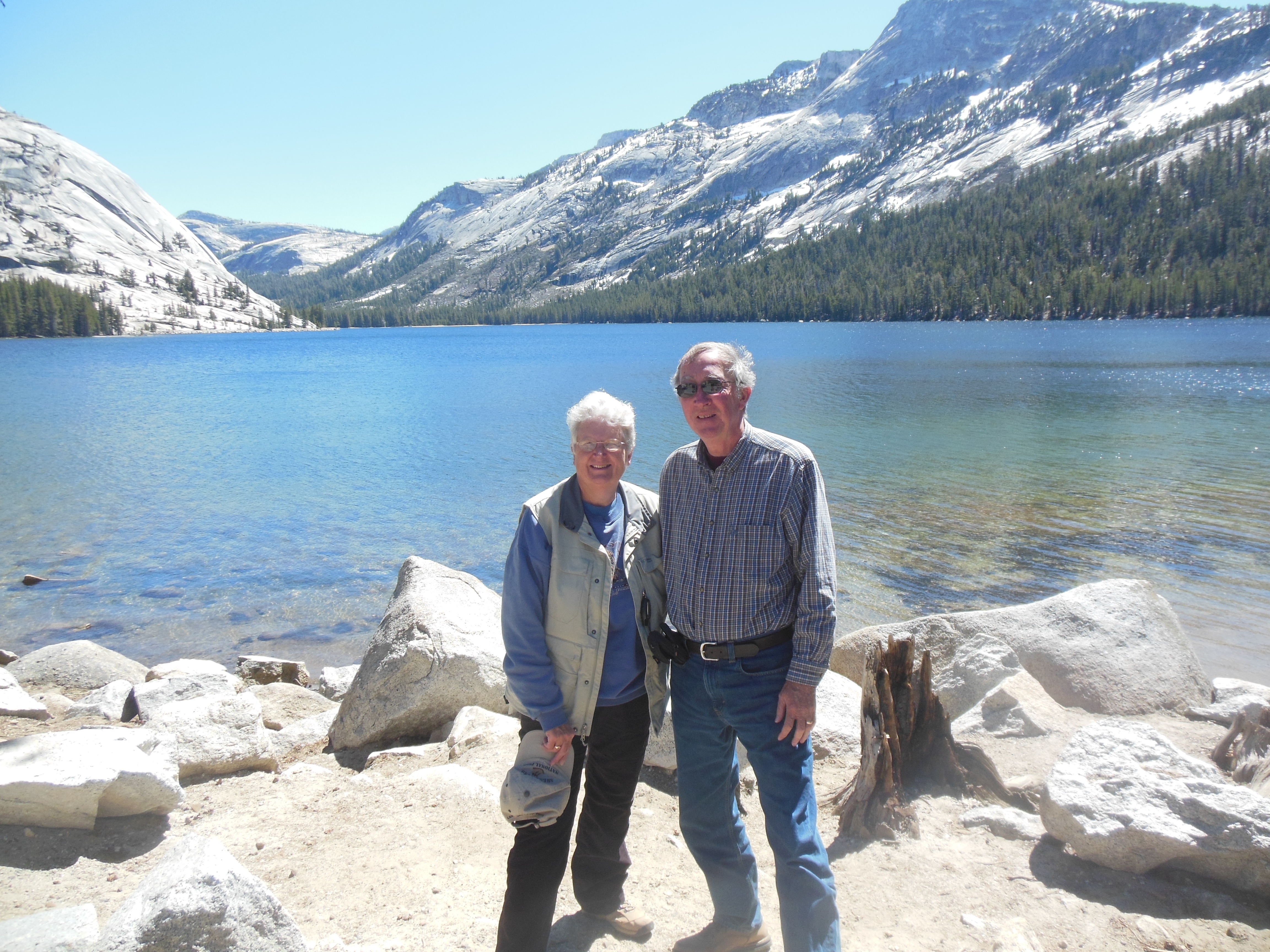
Tenaya Lake

Tenaya Lake, Yosemite National Park

The first hour was pretty standard forested mountain road. We considered turning around several times, thinking where is the WOW factor. At Olmstead point, named after Frederick Law Olmstead, there is a very nice view of the back side of Half Dome and you start to see the eastern side of the Sierra Nevada mtns. In the distance along the road not yet traveled, we saw Tenaya Lake, the start of Tenaya Creek which flows into Yosemite Valley. We decided to press on, we had not set up an alternate option if we returned early.

THe second half of the journey over the pass was more worthwhile. We saw several lakes and waterfalls, we came to alpine meadows not yet in bloom and then descended into Lee Vining, CA. This is the eastern entrance/exit to the park. At Lee Vining, there were two small but interesting items which we had wanted to check out.

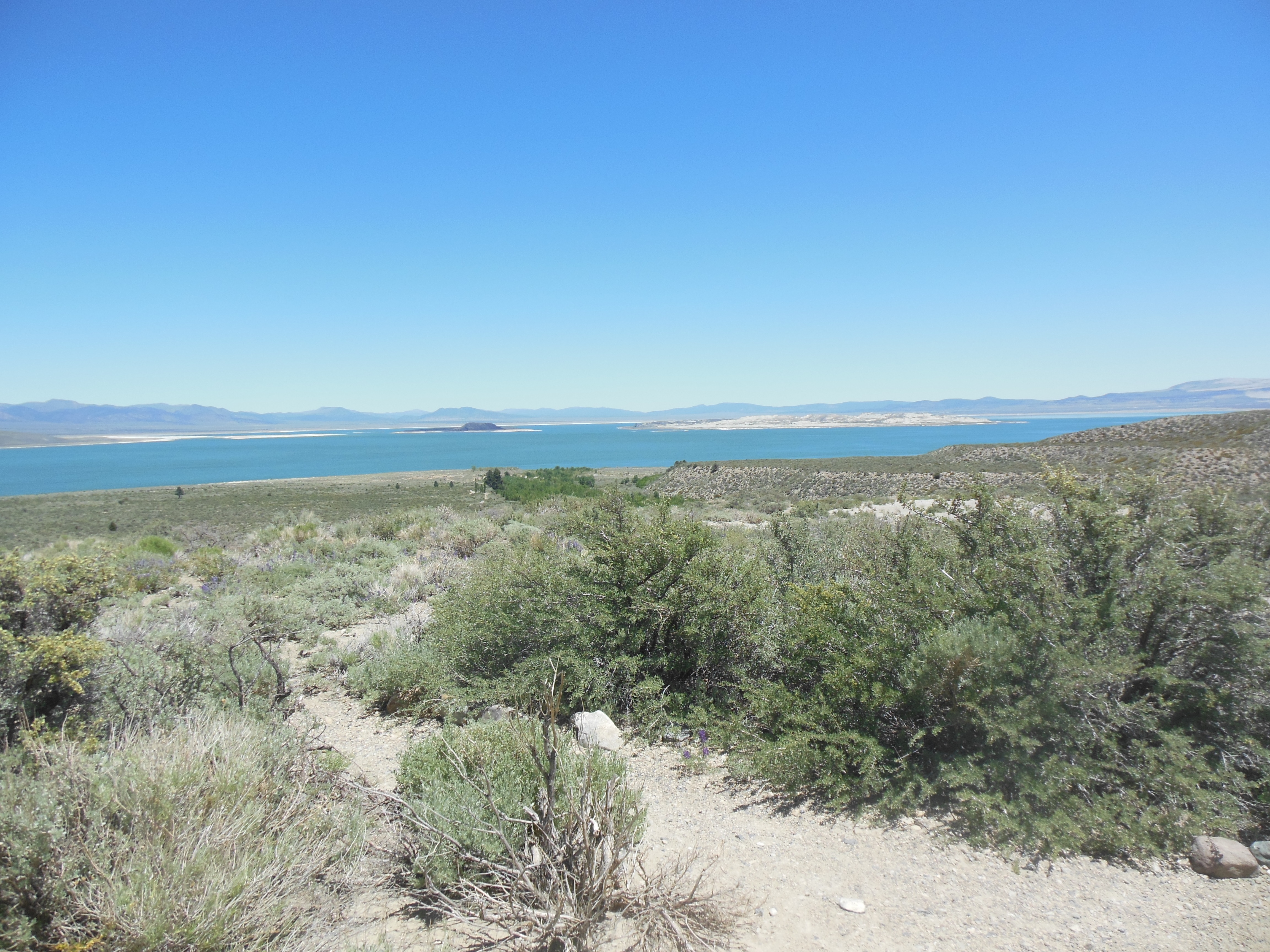
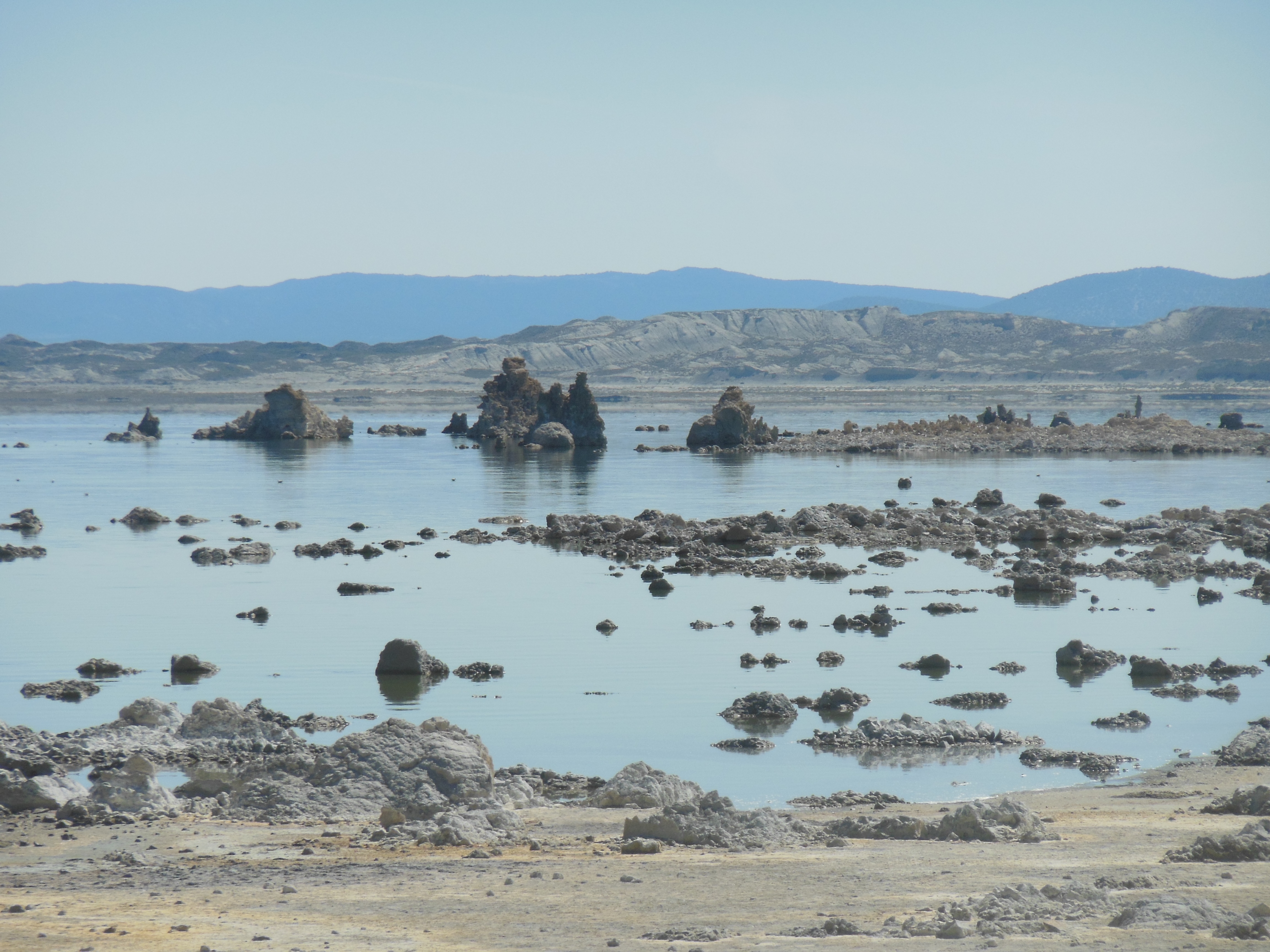
First, we stopped at Mono Lake Visitor Center. Mono Lake is a large body of water that at one point was almost drained due to Los Angeles water demands. It has a unique not quite fresh, not quite saline composition. It is a major migratory stopping point for birds. It has two islands in it that have volcanic origins. It has unique formations originally formed underwater composed of calcium carbonate that now stand like sand castles or rock formations. We hope to explore it a bit further Friday.

Mono Lake

Mono Lake

Mono Lake close up

Mono Lake close up

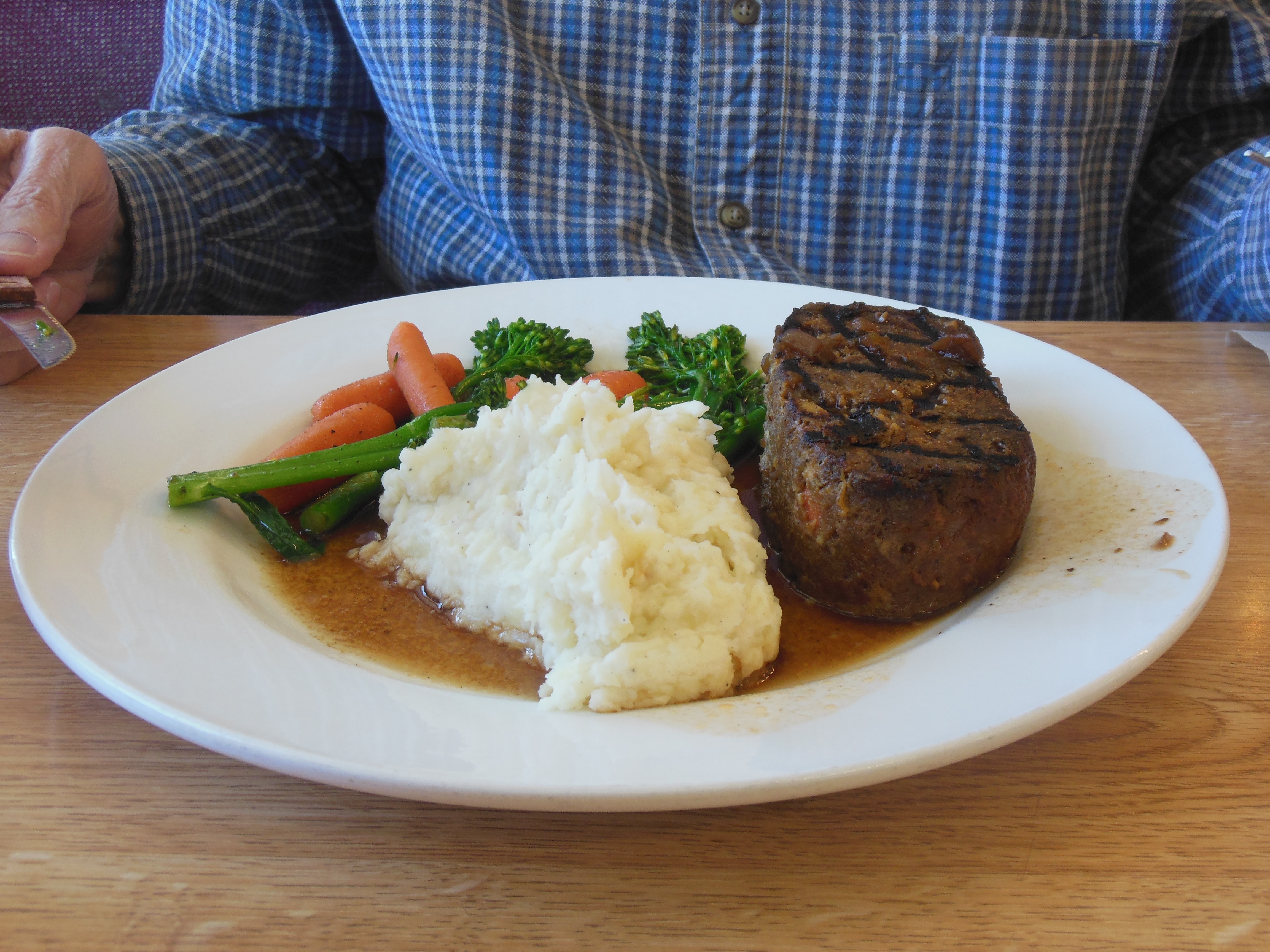
For lunch, we stopped at the local Mobil gas station. Inside was a unique restaurant started by the former chef at Mammoth Lakes Lodge, a major skiing stop just south of here. This was another find, written up in food magazines, etc. We had not read any of them prior to being here. I had their wild buffalo meatloaf, Chris the barbecued chicken sandwich. Both excellent.

Wild buffalo meat loat at Whoa Nellies deli

Wild buffalo meat loat at Whoa Nellies deli

The drive back was anti-climactic. All in all it was pretty much a full day activity. Given the wind and cold temperatures, we only took one short hike.

Heading back west over Tioga Pass

Heading back west over Tioga Pass

Back over Tioga Pass

Back over Tioga Pass

Ed and Chris May 23

Friday, May 24

It was goodbye to Yosemite and hello third time to Tioga Pass. We made only a quick stop at Mono lake and headed on to Elko, Nevada. Driving the country certainly gives one a greater understanding of the vastness of the US.

Our drive to Elko brought out several tidbits.
1. Nevada has an Army material depot and a Naval Air facility along our route.
2. We passed an Interstate highway sign that said: Report shootings from highway.
3. Our lunch stop in Fallon Nevada at the Courtyard Cafe had excellent food and homemade pies. At the door, the local Republican Women’s club was holding a raffle. The prize was a pistol.
4. We had forgotten that Nevada has legalized prostitution. The town of Winnemuca where we fueled the car and the town of Elko where we are spending the night are two of them. Sex workers must register their vehicles with the police. We did not, on a brief review, see any ads in the local yellow pages.
5. Due to the infrequency of towns, all of the towns of any size, say 500 or more, have the first letter of their town name on the hill overlooking the town. (All of the towns seem to be in valleys with hills, ranges, or mountains on at leasts two sides of them.) So Winnemucca had a “W”, Carlin a “C”, etc. Supposedly this is to help orient pilots of smaller aircraft.

Walker Lake Nevada

Walker Lake Nevada

The rest of Nevada

The rest of Nevada

Nevada seems to be a never ending view of valleys, ranges, hills, and mountains. We did pass one lake, Walker Lake, an important bird migratory stopping point. But as you can tell, they do have working Internet as compared to the mountains we just left.

Ed and Chris May 25, 10 pm
Categories: road trip, travel | Tags: , , , , , , | Leave a comment

2013 Trip Four, Out West, May 22

Wednesday, May 22
This day began early. We were out of the room by 5 am to seek out sunrise photos. We drove west towards the valley entrance, towards El Capitan. Not much purple or red this morning, but still the trip was worthwhile. We saw mule deer but no bears at any of our stops.
Sunrise El Capitan on left

Sunrise
El Capitan on left

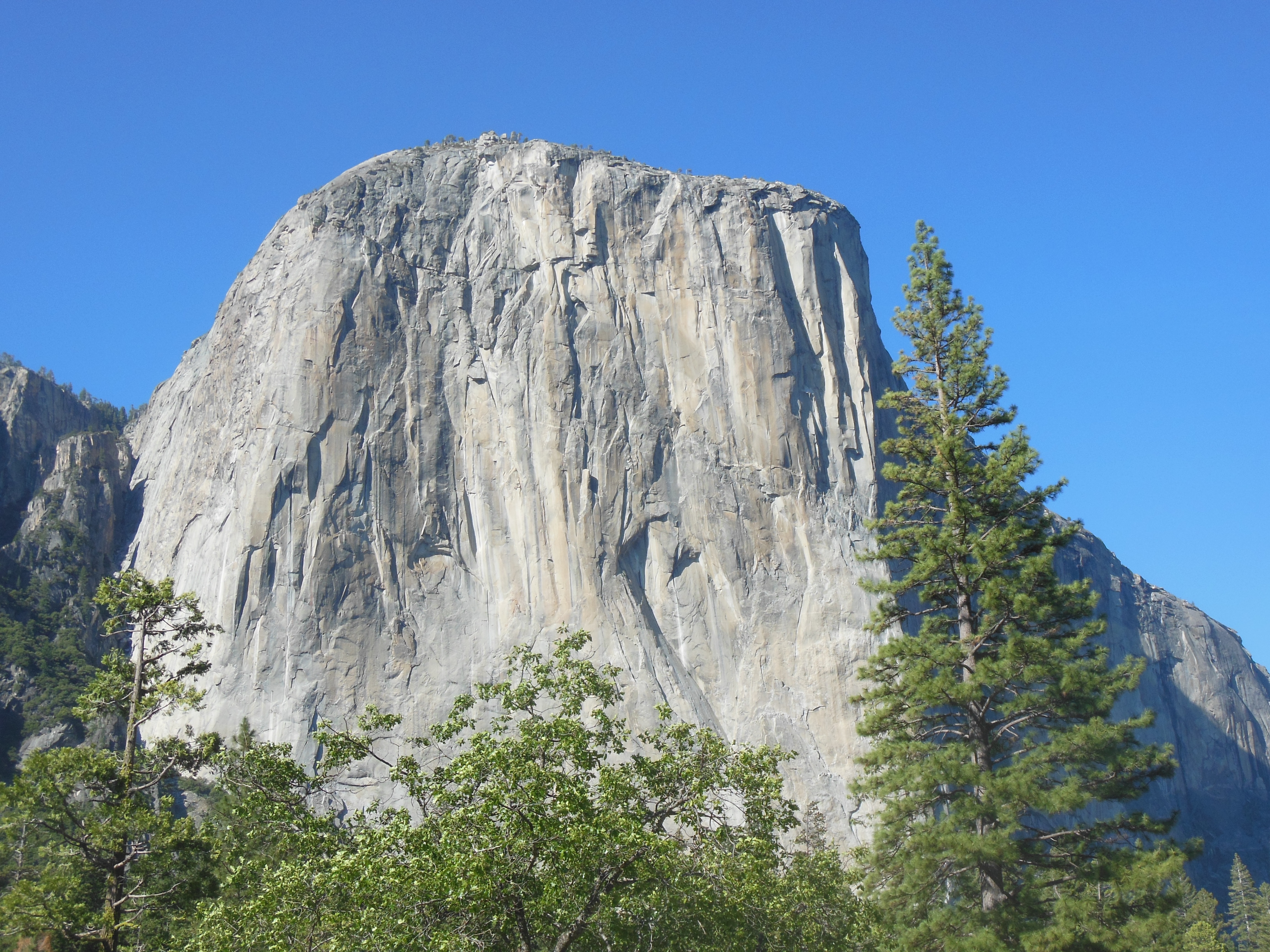
One of our photo stops was at the base of El Capitan. El Capitan is a 3600 foot granite monolith, one of the world’s largest. It’s sheer face makes it a world class destination for experienced climbers. It was first climbed in 1958. It may take several days to climb; climbers sleep on pads they haul up the face and attach to the wall or ledge.

A number of vehicles were parked near the base; we surmised they belonged to climbers since the vehicles looked unattended and there were bear proof food lockers in the area. At last night’s presentation, the ranger mentioned that a climber had died here Sunday; a rock slide had cut his rope and he fell. On the shuttles we have seen people with climbing equipment, including carrying portable bear proof food lockers.

El Capitan

El Capitan

Biking

Biking

There is a big, big push here, and in Sequoia-Kings Canyon, to remove human food from any place animals can get at it. Marmots, deer, bear, squirrels, coyotes, etc are all attracted to human food. When we parked our car for the night at all of our lodgings, we had to bring in anything that might attract animals. Crumbs, cans of Coke, aromatic dryer sheets, etc. We have to sign an acknowledgement that we know and will comply. Parking lots are patrolled and cars towed if they violate the rules.

After breakfast and showering, we headed out for a bike ride. Single speed coaster style bikes are rented here-we had brought our own helmets to wear. (One advantage to driving versus flying.) These bikes were just Chris’ style.

Biking at Yosemite

Biking at Yosemite

The bike path is 13 miles long and paved, shared with pedestrians. The ride is primarily flat and you are able to see much of Yosemite Valley. It could have been better marked but we found our way. It was so relaxing that we did it twice with a lunch break towards the end of the second loop.

We have commented before on the number of international visitors and the numerous foreign languages one hears. However, there are very few blacks and we might have seen one habib.

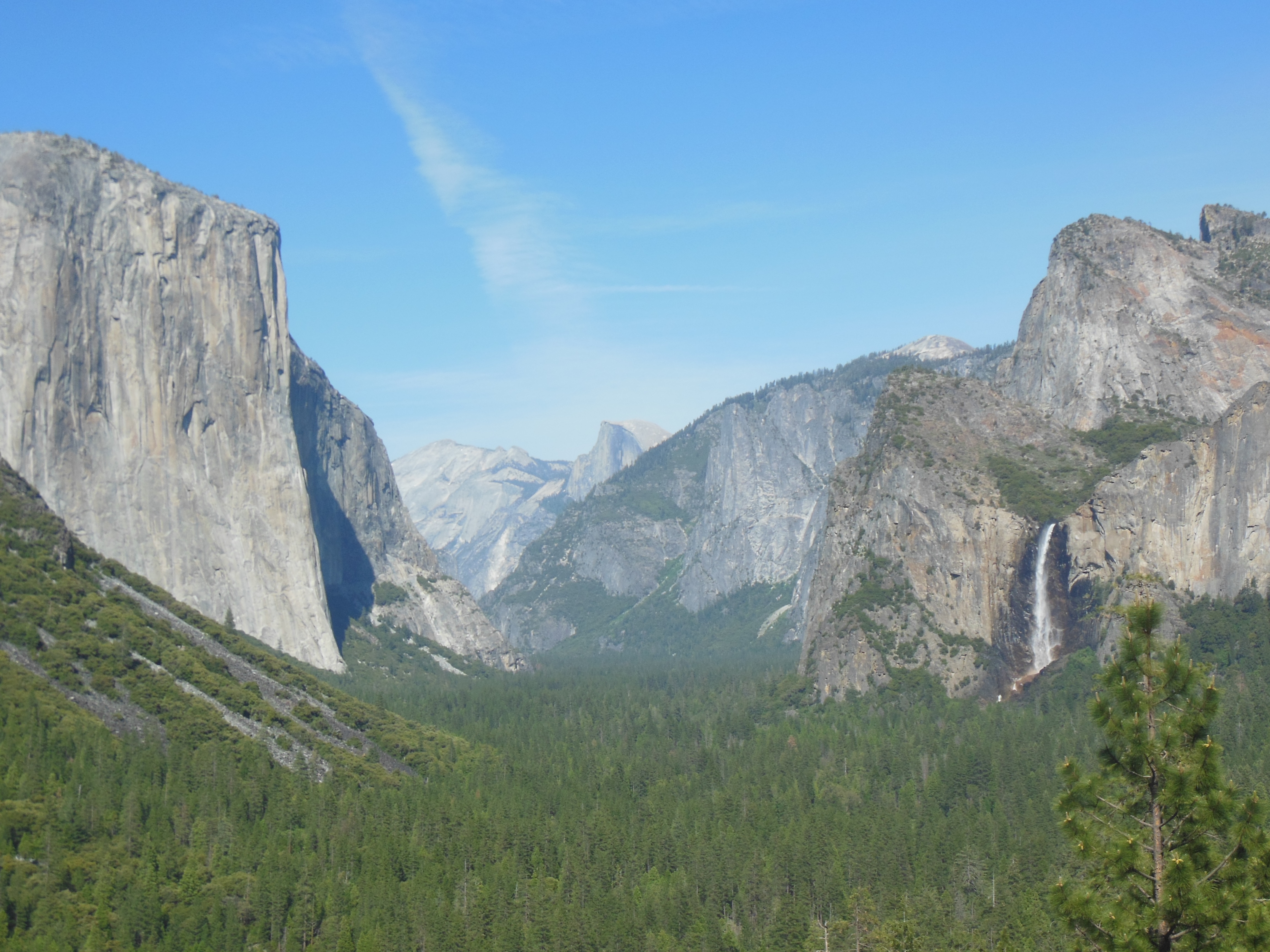
In the afternoon we went back to Tunnel View to get pictures of El Capitan, Bridalveil Falls, and the Valley. This is the location where our pictures on Sunday as we entered the park were a washout due to shooting into the sun. It was our first time in the car since Sunday. Mission was accomplished and we had dinner in the Yosemite Lodge at the Falls Food Court. For a mass feeding operation, the food has been surprisingly good.

El Capitan left Half Dome, back center Bridalveil falls, right

El Capitan left
Half Dome, back center
Bridalveil falls, right

Bridal veil falls up close

Bridal veil falls up close


Our big event was a 2.5 hour moonlight tour of the park on an openair tram. My camera is not sophisticated enough to show the stupendous views. Full moon is only a day or so away and the light effects were overwhelming.

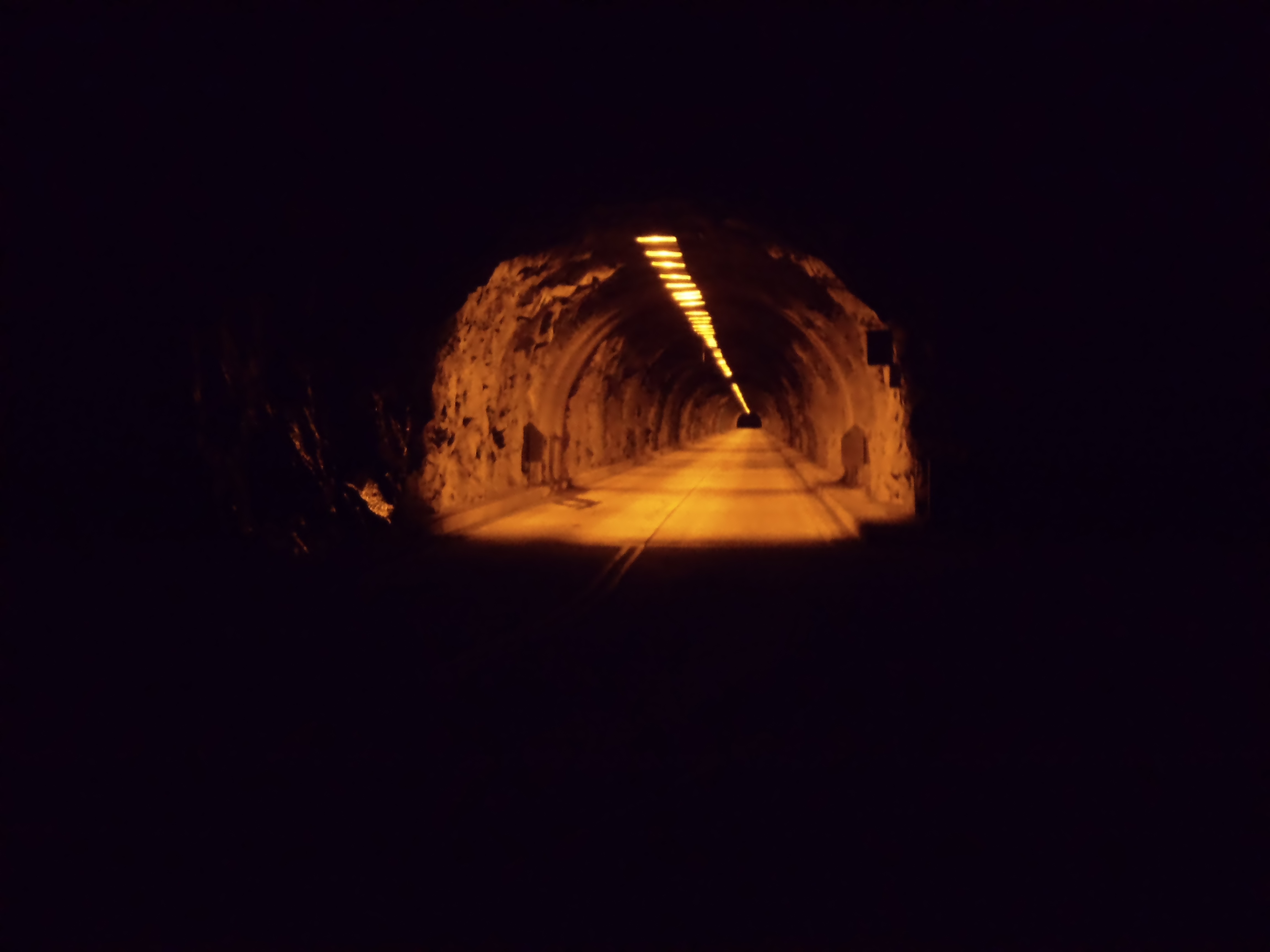
There are the usual views of trees and streams in full moonlight, pretty good by themselves. The view of the cliffs and waterfalls are even better, providing a spectacular, almost surreal effect. They will have to remain in our memories. We did get a shot of the tram and of the tunnel on the Wawona Road, the only items that had enough light to make a picture.

The tram goes the length of the Valley floor and we could see the lights from the headlamps of the climbers sleeping on their perches at various points on El Capitan. Evidently it normally takes two to four days to complete the climb, and a day to come down an easier route. The world record for speed climbing El Capitan is under three hours. One group of people camped on El Capitan for a month-perched on ledges, etc, not at the top.

It was cold and the speed of the tram added to the wind chill. We had bundled up and had brought two blankets we had stored in the car for the trip. The ride people provided two blankets for each four people, so the couple next to us got to use the two tram blankets. We put one blanket under us and one over and were cozy except for our faces during the windy drive.

Tunnel at night on moonlight ride

Tunnel at night on moonlight ride

image
The ride is narrated by a ranger who did a good job of combining humor, facts and music, along with some appropriate moments of silence to appreciate the views.

Ed Heimel and Chris Klejbuk
Sent. Friday from Fallon Utah.oasis of Nevada where military base means fast Internet

Categories: road trip, travel | Tags: , , , | Leave a comment

2013 Trip Four, Out West, May 21

Tuesday, May 21st

The weather has been very cooperative. Today was another day with a high around 80 and very few clouds. It does get cool at night though.

The pleasant weather was important today particularly since we had signed up for a 90 minute camera class. A professional photographer from The Ansel Adams Gallery led a class of 15 people out into Cook’s Meadow. Most people had fancy cameras, there were a few of us with the basic “point and shoot” cameras.

The class discussed various compositional aspects of taking pictures, using a variety of settings. She, the photographer, discussed the meadow, sunlight, birds, animals, water, and the rocks as we hiked through the meadow and were told to create our own story in our photographs.

Ruhter staff holding wet plate photo

Ruhter staff holding wet plate photo

Photo of Yellowstone Falls taken during photo class

Photo of Yellowstone Falls taken during photo class

Two weeks ago, her class had come across two bears in the meadow. Today we came across a professional photographer out shooting with a large crew. Ian Ruhter wet plate photography. He has one of the largest mobile cameras in the world and uses technology dating back to the 1850s. Very appropriate for Yosemite since photographers were critical to educating the world about Yosemite.

After the class, we took a little time to visit the American Indian museum here, The Miwok Indians lived in Yosemite until gold was discovered in the CA valleys and that swiftly ended their life here.

Our afternoon hike was to Mirror Lake, a pleasant journey through the woods. We practiced some of our class lessons, even comng across several of the other participants during the hike.

image

image

Tonight’s entertainment is another talk/video sponsored by the Yosemite Conservancy titled Yosemite Search and Rescue. Yosemite has over 300 volunteers working in the park, along with 700 rangers and over 1,000 employees working for Delaware North, the park concessionaire. Over 4.5 million visitors come here each year. Accidents do occur. And if you thought we were cautious people before, it will just increase.

Yes, I know, accidents and stupid/risky behavior occur everywhere. But somehow looking down a 1500 foot drop makes it a bit more dramatic. Actually, the ranger giving the presentation said more search and rescue (SAR) operations develop from hikers than from climbers. Of course, there are a lot more hikers.

Some of his examples involved places we had been too already. One hiker swept over Vernal Falls and his body was not found for over two months. A father taking his toddler into a stream and having the child saved from being swept downstream due to the actions of two bystanders. A climber losing both legs by going climbing unprepared for the most basic needs. All in all, a very moving presentation.

Ed and Chris May 22 10 AM

Ed and Chris

Categories: road trip, travel | Tags: , , | 3 Comments

Blog at WordPress.com.